8 Best APS-C Prime Lens of 2026: Buy for the Aperture You'll Use

Focus on the best APS-C prime lens for your shooting style, from budget manual primes to compact autofocus lenses that handle daily photography.

Most APS-C primes in this corner of the market come from third-party makers, not the camera brands themselves. Their listings advertise bright apertures and sharpness, but the real differences show up in how a lens focuses in low light, how its manual ring feels, and where the image goes soft at wide apertures.

The practical question is whether you want autofocus convenience or budget manual character. An AF prime gets you eye tracking and quick shooting; a manual prime costs less and can produce a distinctive look, but it asks you to handle focus yourself. That trade-off shapes every other decision in this guide.

What matters is matching the lens to the shooting you actually do: a 9mm-wide view for vlogs, a normal 35mm for daily carry, or a 55mm for portraits. Pick the focal length and focus system that fits your camera bag, and a modest third-party prime will cover most of it.

1

Best Overall APS-C Prime
Viltrox 35mm F1.7

91 /100
Studio Score High Confidence

Key details

Focus
AF (STM)
Mount
Sony E
Weight
180g
Aperture
f/1.7-f/16
Check Price on Amazon

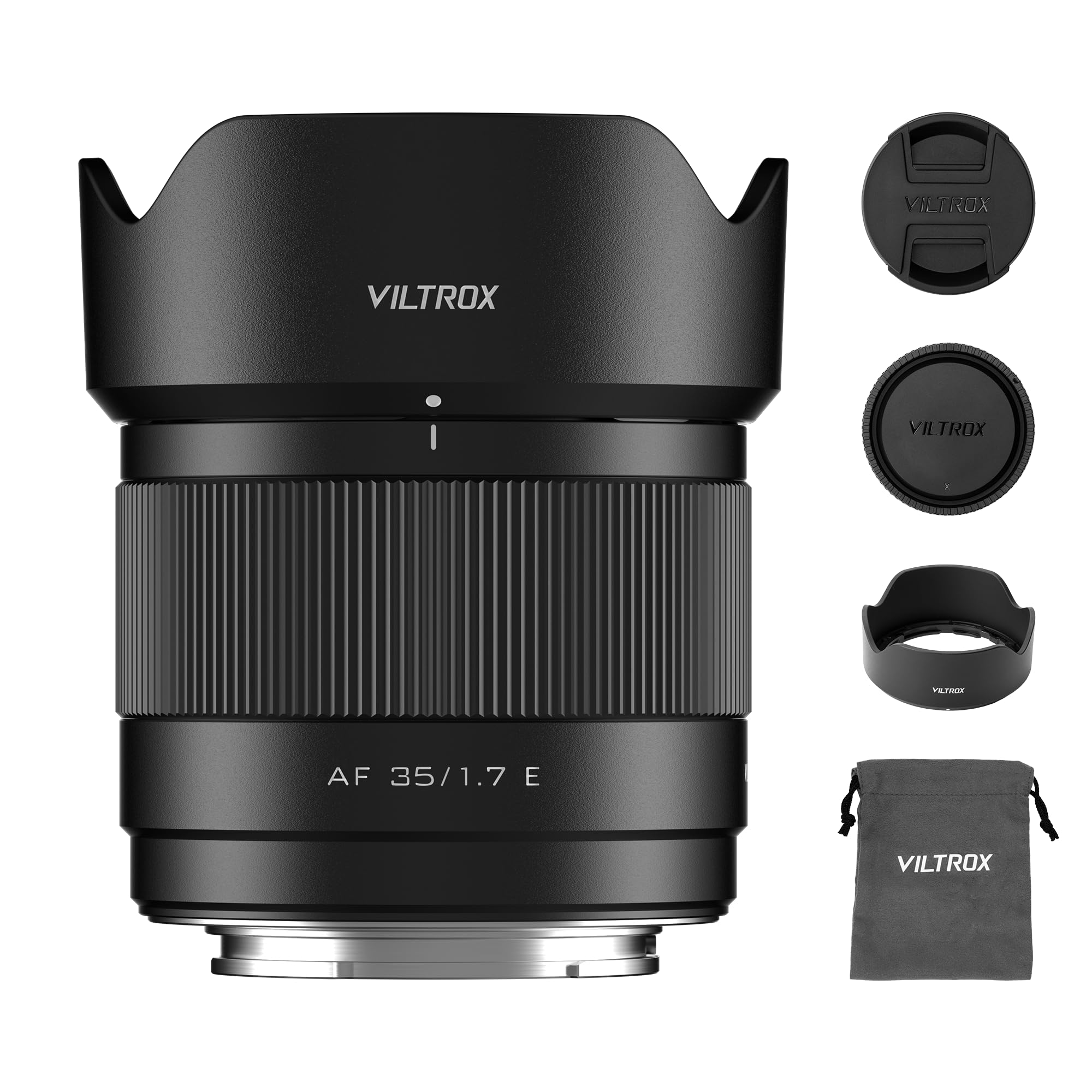
The Viltrox AF 35mm F1.7 Air gives Sony APS-C owners a normal-field-of-view prime with a 52.5mm-equivalent framing, f/1.7 aperture, and a 180g body. The aperture range runs from f/1.7 to f/16, so it covers shallow-background people shots and stopped-down street scenes. The focal length sits between wider APS-C primes and tighter portrait lenses, which makes it the easiest single-lens carry for general photography. The rendering gets close to faster f/1.4 primes in the same range without the size jump, and image quality is sharp with a clear value advantage over kit zooms. It suits the shooter who wants one lens on the camera for a full day.

Autofocus is quick in normal light and pairs with eye and face detection on Sony bodies, giving portrait work a capable assist. In daylight street shooting, focus locks without hunting, and the STM motor stays quiet. Bokeh from the f/1.7 aperture is pleasing for a budget lens, and the build feels sturdy enough for daily use. The 180g body does not unbalance a compact APS-C camera, so it remains comfortable on long walks. Once focus locks in ordinary conditions, the lens holds the subject without repeated searching.

First-time prime buyers, portrait and street photographers, and Sony APS-C vloggers looking for a normal angle of view are the right audience. This is not an ultra-wide option, and the lens is not weather-sealed, so wet outdoor work is a boundary. Low-light continuous tracking is the narrow caveat: autofocus can lag slightly until it locks, and once locked it holds well. Shooters who keep to single-shot focus or slower subjects will not feel that constraint.

The 35mm focal length also works for handheld video on APS-C bodies, and the STM motor keeps focus movement quiet while recording. Vloggers get a normal view rather than a wide-angle lean, and the compact body keeps the rig light for extended takes. The compact size also makes it easy to leave the lens mounted for street and travel work instead of swapping to a zoom. For one-lens kits, this is the normal-angle pick that makes the camera easy to grab.

๐Ÿ’ก In dim venues, single-shot AF gives the fastest lock; continuous tracking may pause while it latches.

Pros

  • Sharp image quality and f/1.7 speed at a budget-friendly price make it a strong first prime.
  • Autofocus is quick with eye and face detection for portraits and street work.
  • Sturdy build in a 180g body that balances well on compact Sony APS-C cameras.
  • Pleasing bokeh from the f/1.7 aperture gives smooth background separation.

Cons

  • In low-light continuous tracking, autofocus can lag slightly until it locks on.
Our verdict

For a Sony APS-C shooter who wants one compact prime for street, portraits, and casual video, this is the practical default.
Check Latest Price
2

Best Ultra-Wide for Vlogging

Viltrox 9mm F2.8

90 /100
Studio Score High Confidence

Key details

Focus
AF (STM)
Mount
Sony E
Weight
175g
Aperture
f/2.8-f/16
Check Price on Amazon

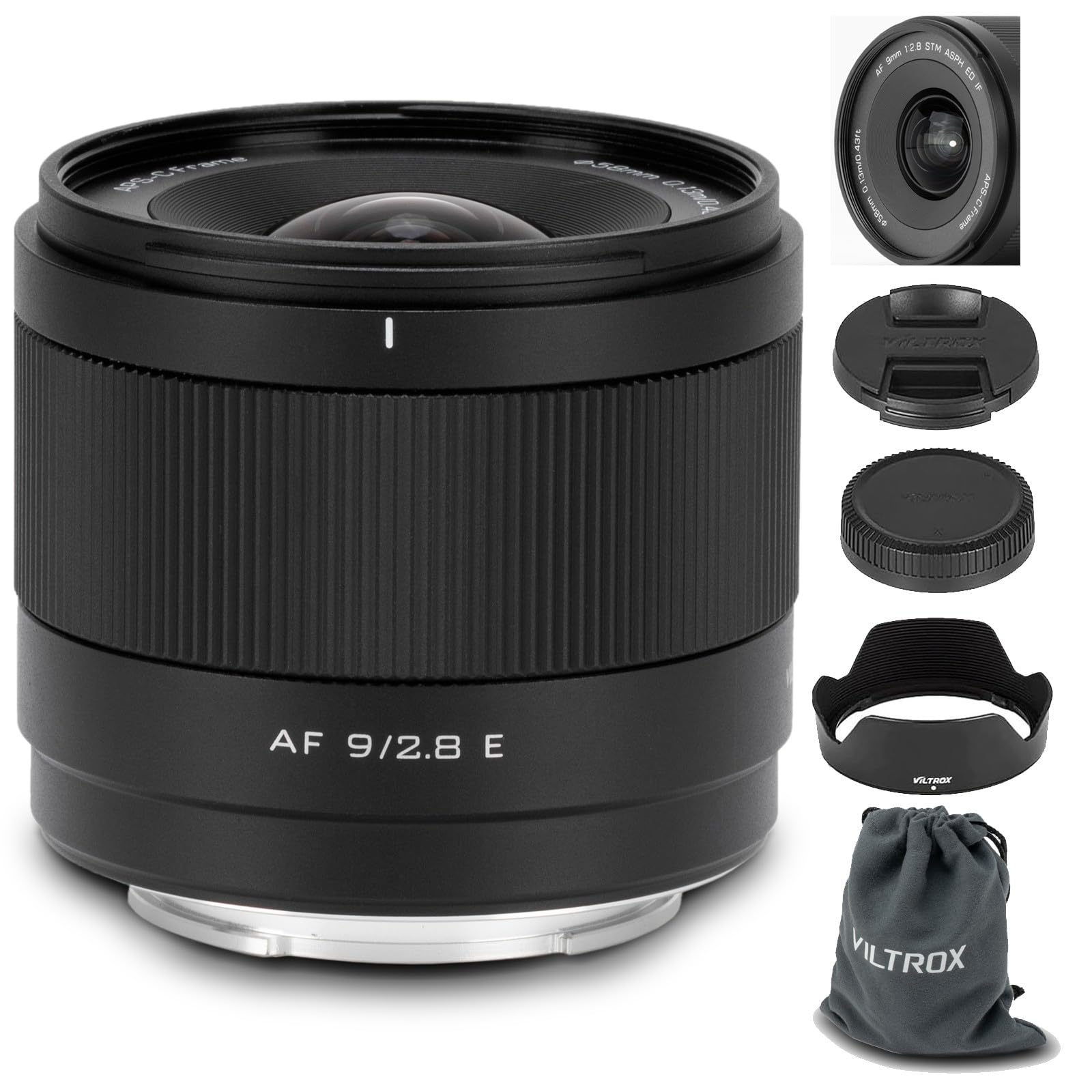
The VILTROX 9mm F2.8 is the ultra-wide prime for Sony APS-C shooters who want a 113-degree view in a 175g body with quiet STM focus. The top pick in this set covers a normal 52.5mm equivalent; this lens swaps that everyday framing for a much wider perspective that fits interiors, landscapes, and vlogs without stepping backward.

Autofocus keeps up with walking shots and subject changes, so the lens is practical for solo video and handheld stills. The f/2.8 aperture is modest by prime standards, but the wide view means handheld work in low-light interiors stays usable. Image quality remains crisp across the frame at the apertures landscape and interior work uses, and the 175g build makes it a natural walk-around companion.

This lens targets vloggers, landscape and travel photographers, and real-estate or interior shooters who need maximum width in a light kit. Portrait shooters looking for background compression should look at the 55mm sibling, and anyone wanting a normal field of view should check the 35mm options. Shooters who process raw files with lens corrections will be in familiar territory. The 113-degree field of view changes composition more than a typical focal-length jump; walls, ceilings, and foreground subjects all become part of the frame, so it rewards shooters who think in terms of leading lines and depth.

Pros

  • Sharp optics and a mid-range price make this an economical way into ultra-wide APS-C shooting.
  • Autofocus is quick and quiet, so video recordings don't pick up focus motor noise.
  • At 175g with a slim body, this lens disappears into a bag and stays comfortable on a gimbal.

Cons

  • Raw ultra-wide frames show barrel distortion and darkened corners until a lens profile or manual correction is applied.
Our verdict

Sony APS-C shooters who want extreme wide-angle reach in a light prime have a strong option here. Match it with a room, a landscape, or a vlog setup, not with portrait or normal-length expectations.

Check Latest Price
3

Best Low-Light Wide Prime

Sirui 16mm F1.2

89 /100
Studio Score Strong Evidence

Key details

Focus
AF (STM)
Mount
Sony E
Weight
384g
Aperture
f/1.2-f/16
Check Price on Amazon

The SIRUI Sniper 16mm F1.2 stretches the wide end of the APS-C prime set to a 24mm-equivalent view while keeping f/1.2 light-gathering and a 13-blade aperture for smooth highlight falloff. The 384g body is noticeably easier to support on a motorized gimbal than heavier cine lenses, and its compact footprint suits handheld video rigs.

Stopped down, the lens turns noticeably sharper while keeping a shallow depth of field. The solid build quality holds up on active shoots, and out-of-focus highlights stay rounded with city lights or foliage behind the subject. At f/1.2 you gain roughly a stop over an f/1.7 prime, which helps keep ISO down in dim interiors.

This lens works best for low-light video creators, environmental portrait shooters, and gimbal users who want a 24mm-equivalent field of view and can accept its tradeoffs: wide-open images are soft, f/2 to f/2.8 is the sharp zone, and autofocus can be inconsistent. Landscape shooters who pixel-peep at f/1.2 should pass; the top pick and slimmer 25mm primes in this set are easier everyday carries.

The price sits at the upper end of this set, but buyers looking specifically for an f/1.2 AF wide prime have few alternatives at this weight. That positions the Sniper as a targeted purchase for video-led kits rather than a casual second lens.

Pros

  • Sharp stopped-down images with smooth background blur and rounded highlights.
  • Strong value for an f/1.2 AF lens with this light-gathering and build.
  • Solid build and light 384g body for steady gimbal work.

Cons

  • Wide-open images are soft; stopping down to f/2 or f/2.8 sharpens them noticeably.
  • Autofocus can be inconsistent in low-light scenes, where a wide f/1.2 lens is most useful.
Our verdict

For gimbal-based video and environmental portraits, the f/1.2 look and 384g body create a wide prime option the normal-length top pick cannot match.

Check Latest Price
4

Best Portrait Bokeh

Meike 55mm F1.4

80 /100
Studio Score Strong Evidence

Key details

Focus
AF (STM)
Mount
Sony E
Weight
โ€”
Aperture
f/1.4-f/16
Check Price on Amazon

The Meike 55mm F1.4 pairs a dedicated 82.5mm-equivalent portrait view with autofocus and a nine-blade aperture, a combination that is hard to match at this price tier on Sony APS-C. The 55mm focal length lands close to the classic 85mm portrait framing, and f/1.4 helps separate a subject from busy backgrounds. The compact 33mm f/1.4 normal in this lineup covers more everyday scenes; the Meike trades some of that flexibility for a longer, compression-heavy look.

Portrait image quality is the reason to buy this lens. Backgrounds soften smoothly at f/1.4, and the longer focal length compresses facial features in a way that suits headshots and upper-body portraits. Autofocus is quick in normal light, and the aperture range extends to f/16 when you want more depth in a scene.

Put this lens on a Sony APS-C body if you want an 82.5mm-equivalent look without the high-end price. Not every unit will focus the same way, and low-light hunting is a possibility, so it fits deliberate portrait and headshot sessions better than event coverage. It is not a wide-angle optic, and the 55mm view is too tight for general walkaround use; shooters who need that range in one lens should keep the 33mm f/1.4 normal in mind.

๐Ÿ’ก If focus behavior seems inconsistent, check for a firmware update first.

Pros

  • Strong subject separation and smooth background blur for portrait and headshot work.
  • Budget-friendly AF prime that brings a dedicated 82.5mm-equivalent view to Sony E.
  • AF responds quickly in normal light for posed portrait sessions.

Cons

  • Autofocus consistency may vary between units; low-light hunting or aperture glitches can occur.
Our verdict

For portrait and headshot shooters on a budget, this lens delivers a compressed 82.5mm-equivalent look with real subject separation.

Check Latest Price
5

Best F1.4 Everyday Prime

Meike 33mm F1.4

87 /100
Studio Score Strong Evidence

Key details

Focus
AF (STM)
Mount
Sony E
Weight
โ€”
Aperture
f/1.4-f/16
Check Price on Amazon

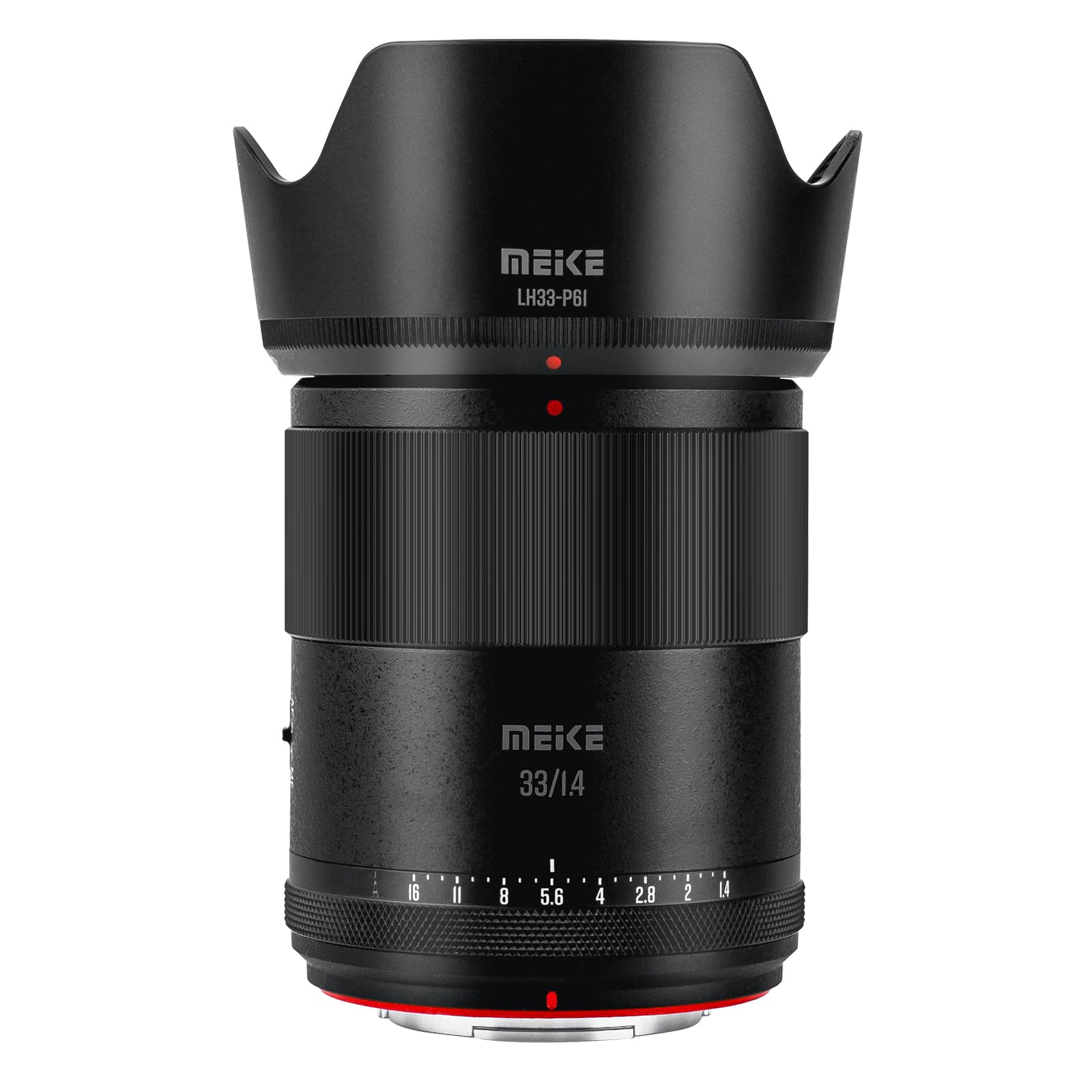
The Meike 33mm F1.4 gives Sony APS-C shooters a faster normal than the budget f/1.7 option in this comparison: 49.5mm-equivalent framing, nine-blade aperture, STM autofocus, and a physical aperture ring. The ring makes exposure adjustments direct rather than menu-based, which matters when working quickly. It is not a portrait-compression lens like the 55mm f/1.4 sibling; the 33mm keeps a natural, eye-level perspective for street and environmental portraits.

Wide open or stopped down, the lens holds sharpness in the center and renders out-of-focus areas smoothly enough to separate a subject from a busy background. The barrel has a solid, dense feel that sits above the usual budget-plastic norm, and the STM autofocus is quiet enough for candid street work. For someone coming from a kit zoom, the jump in light-gathering and control is immediate.

This lens suits Sony E shooters who want f/1.4 light on an everyday normal, especially street photographers working in mixed light and portrait shooters who prefer a 50mm-equivalent angle. Kit-lens upgraders gain a brighter aperture and more creative control without a heavy full-frame setup. If you need a wider or ultra-wide view, this focal length is not that lens. Mac users should also confirm access to an Android device before buying, because firmware updates are handled through an Android-only app.

Pros

  • Sharp center rendering and smooth background blur at f/1.4 on a 49.5mm-equivalent normal.
  • Premium, dense build that feels more expensive than its mid-range price suggests.
  • Compact Sony E normal with STM autofocus and a physical aperture ring for direct control.

Cons

No notable drawbacks to flag.

Our verdict

The Meike 33mm F1.4 is the control-oriented normal for Sony APS-C shooters who want f/1.4 light and an aperture ring without moving up to a larger system.

Check Latest Price
6

Manual Street Learners

TTArtisan 25mm F2

84 /100
Studio Score Strong Evidence

Key details

Focus
Manual focus
Mount
Sony E
Weight
โ€”
Aperture
f/2-f/16
Check Price on Amazon

The TTArtisan 25mm F2 pairs a compact all-metal body with a 37.5mm-equivalent view and 0.25m close focus, giving street shooters a small lens that frames easily. Its manual focus action rewards deliberate composition, while the f/2 aperture keeps dusk walking practical.

Manual-only operation and the f/2 aperture limit its flexibility next to autofocus primes, so moving subjects are better left to AF lenses. Strong vignetting at f/2 and backlit chromatic aberration are the trade-offs; for budget manual-focus learners and street photographers who set their own pace, those quirks stay within acceptable limits.

Pros

  • Budget-friendly entry point for learning manual focus on a compact street lens.
  • Sharp image quality with a bright f/2 aperture for low-light moments.
  • Compact all-metal body with 0.25m close focus makes it an easy carry for street kits.

Cons

  • Vignetting at f/2 can darken corners until the lens is stopped down.
  • Backlit scenes can show chromatic aberration along high-contrast edges.
Our verdict

If you shoot at your own pace and want a compact manual prime for street framing, this fits; if autofocus speed or clean wide-open corners are priorities, it does not.

Check Latest Price
7

Budget Bokeh Learners

7artisans 35mm F1.4 II

86 /100
Studio Score Strong Evidence

Key details

Focus
Manual focus
Mount
Sony E
Weight
228g
Aperture
f/1.4
Check Price on Amazon

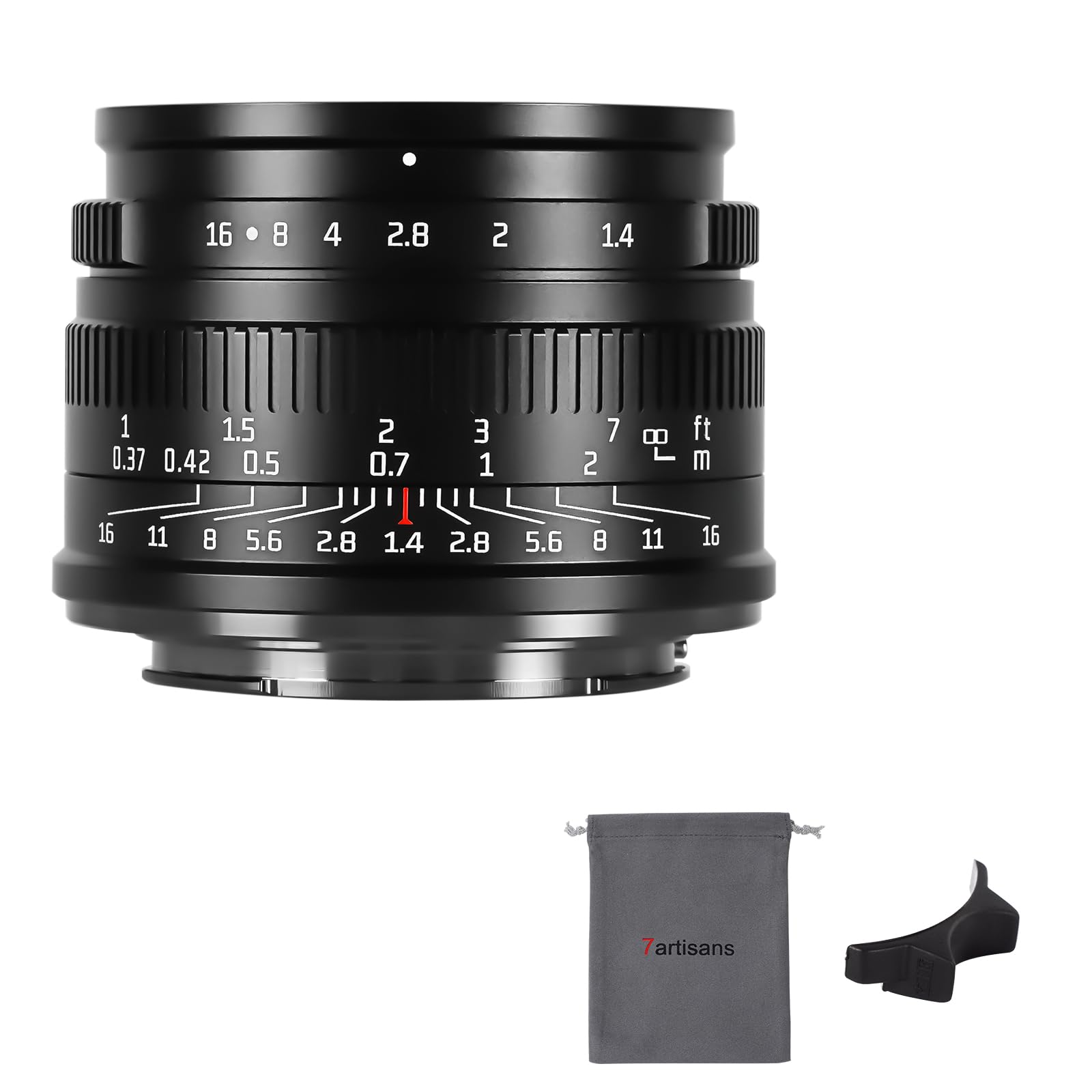
Despite the budget price, the 7artisans 35mm F1.4 II feels substantial: 228g, all-metal barrel, and a smooth damped focus ring. At f/1.4 it delivers real background separation for portraits and street details, and the 52.5mm-equivalent view suits compact Sony E bodies. Manual focus only, so fast-moving subjects or event work can outpace your prefocusing skills; this remains a deliberate-shooting lens for learners and budget bokeh seekers. If you want the fastest aperture per dollar and don't mind focusing yourself, it earns a place in a compact kit.

Pros

  • All-metal 228g body and smooth focus ring give it a dense, quality feel at a budget price.
  • True f/1.4 aperture delivers strong bokeh and background separation for portraits.
  • Damped manual focus ring is forgiving enough for learners practicing focus control.

Cons

  • Autofocus-dependent shooters may find the focus ring a hurdle during quick composition changes.
  • Event or fast-action coverage can outpace what a focus ring allows; street and portrait work stays comfortable.
Our verdict

For deliberate street and portrait shooting on a budget, this f/1.4 prime earns a spot in a compact kit.

Check Latest Price
8

Artistic Street Portraits

Fotasy 35mm F1.6

83 /100
Studio Score Strong Evidence

Key details

Focus
Manual focus
Mount
Sony E
Weight
110g
Aperture
f/1.6-f/16
Check Price on Amazon

The Fotasy 35mm F1.6 brings a dreamy wide-open character and heavy bokeh to a lightweight 110g manual prime on Sony APS-C. Budget creatives and manual-focus learners get a bright f/1.6 aperture for low-light street and portrait shots, with an image character kit lenses lack. The tradeoffs are budget-manual boundaries: corners soften wide open, and the focus ring may feel rough or drift on some units, so handle the ring before committing. That personality plus a missing price listing keeps it in the also-consider camp; for a more consistent everyday budget prime or autofocus, choose elsewhere. It suits artistic shooters who enjoy a slow, deliberate process, not event work or pixel-peeping.

Pros

  • Budget-friendly lens with a distinctive, dreamy wide-open character and strong background blur for artistic work.
  • Bright f/1.6 aperture holds up well in dim light while the 110g body keeps carry weight minimal.
  • Unique image look with smooth bokeh gives portraits and street scenes a more organic feel than kit zooms.

Cons

  • Corners and edges soften wide open, with the center holding sharpness.
  • Focus ring may feel rough or drift from the set position on some units.
Our verdict

For deliberate portrait and street work on a budget, the Fotasy 35mm F1.6 earns its keep when you want character over corner sharpness and are comfortable with manual focus.

Check Latest Price

How to Choose

Focal Length and Field of View

Focal length controls how much of the scene fits in the frame. A 35mm lens on APS-C gives a 52.5mm-equivalent view; a 9mm or 16mm lens captures a much wider field for interiors and selfie-style video.

The trade-off is perspective. Wide lenses exaggerate space and distort faces close-up; longer lenses compress distance and flatter portraits.

Aperture and Low Light

Maximum aperture controls light and background blur. F/1.4 and f/1.7 lenses shoot in dim rooms without pushing ISO and separate subjects from busy backgrounds more than f/2.8.

Wide-open shots tend to soften at the edges; stopping to f/2 or f/2.8 sharpens the frame. If you shoot landscapes or groups, aperture matters less than stopped-down sharpness.

Autofocus vs Manual Focus

Autofocus primes use a small motor to lock onto eyes and faces quickly. Manual primes put focus control in your hands, which slows shooting but removes reliance on a budget motor.

The trade-off is low-light behavior. Budget AF lenses can hunt in dim scenes; a manual lens with focus peaking can be more predictable. Autofocus suits events, manual suits staged work.

Weight and Portability

A 175g prime changes how often the camera leaves the bag; a 384g lens is heavier but still light for its aperture class. Weight also affects gimbal balance.

The mechanism is optical complexity: faster and wider lenses need larger glass, so mass climbs. A lighter f/1.7 is the all-day carry; a heavier f/1.2 balances a video rig.

Mount System

Mount compatibility decides which cameras can attach the lens and which autofocus protocols work. Native Sony E or Nikon Z mounts let the lens electronics talk directly to the body.

The trade-off is lock-in. A Sony E lens will not mount on Fujifilm X without an adapter, and adapters can slow autofocus. Choose the mount for your main body first.

Frequently Asked Questions