5 Best Standard Zoom Lens in 2026: Match Mount and Aperture

The best standard zoom lens for your camera depends on mount, sensor, aperture, and stabilization - this guide matches each to the right shooter.

Most standard zoom listings blur the line between a kit lens and a genuine upgrade. The real difference is whether the aperture stays constant across the zoom range. A variable f/3.5-5.6 zoom handles daylight well, but an f/2.8 or f/4 lens changes what you can shoot indoors and after sunset.

The next decision is sensor format and stabilization. An APS-C zoom is lighter and cheaper, but only covers crop-sensor cameras. A full-frame standard zoom costs more and weighs more, but gives you a path to future bodies. If your camera body has IBIS, you can skip lens-based stabilization and save weight; if it doesn't, in-lens stabilization keeps handheld shots usable.

The practical rule: set your budget and intended range first, then let constant aperture break the tie. A shorter f/2.8 zoom will save more indoor shots than a longer, slower superzoom.

1

Best Overall

Sigma 18-50mm f2.8 DC DN

93 /100
Studio Score High Confidence

Key details

Autofocus
Stepping motor AF
Max Aperture
f/2.8 constant
Stabilization
None (body IBIS)
Weight & Carry
290g
Check Price on Amazon

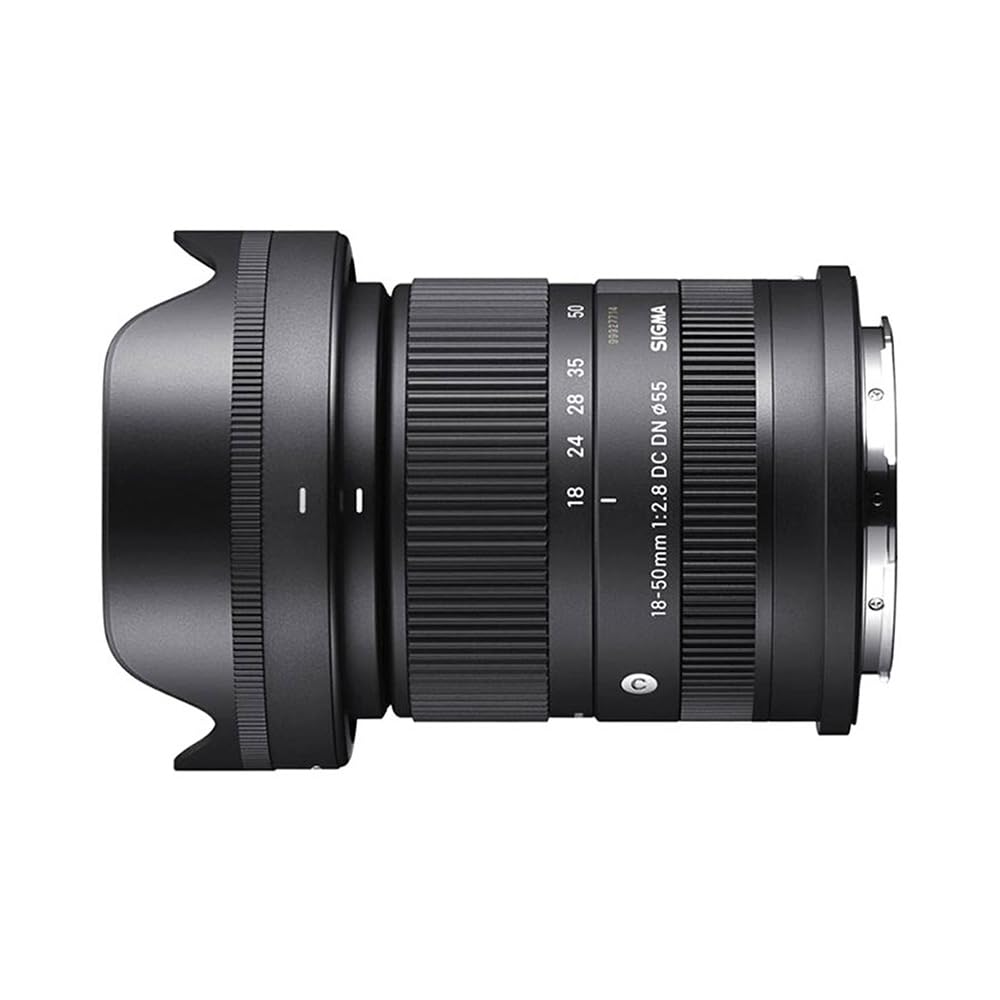
The Sigma 18-50mm f/2.8 DC DN holds a constant f/2.8 across its zoom range, and the optics stay sharp at that aperture. Kit zooms slow down as you zoom toward the long end and often soften in the corners; this one holds the same brightness and keeps detail across the frame. Wide open at f/2.8, center sharpness is strong, and the softer edges that plague many zooms are kept under control. The 18-50mm span translates to 27-75mm on APS-C, which sits right in the standard zoom territory most people use for daily photography. On a Sony APS-C body, that combination is enough to make the bundled kit lens feel unnecessary.

The 290g body is the first thing you notice. It does not drag on a neck strap or tip a small camera forward, so the lens can stay mounted between indoor and outdoor locations. The barrel is compact enough for a small bag, and the 27-75mm equivalent range reaches wide for tight rooms while still giving a short telephoto view for portraits. This is a lens that ends up on the camera more than in a case. The zoom ring has a sensible resistance, and there is no noticeable play in the barrel.

This is for Sony APS-C shooters who want one standard zoom for everyday photography. It suits travel, street, and portrait work where swapping lenses slows you down. It pairs best with a6600-series bodies that have IBIS, or with photographers who are comfortable raising ISO in low light. On non-IBIS bodies, handheld low-light shots need a faster shutter speed or a higher ISO, so the lens is less suited to handheld video on a6000/a6100/a6400. Full-frame shooters should skip it because the image circle is APS-C only; this is a crop-sensor lens.

Price reinforces the position. This lens undercuts full-frame f/2.8 zooms while offering a light build and a much lower price, making it a cost-effective step up from a kit lens. For someone who wants one lens for most days, it delivers the speed and image quality without the cost or weight of a full-frame system. The same mid-range price keeps it below the cost of adding a fast prime, which makes it a stronger first upgrade for many APS-C systems.

Pros

  • Sharpness holds up wide open across the zoom range.
  • Constant f/2.8 keeps exposure steady in changing light.
  • Compact body pairs naturally with APS-C Sony cameras.
  • 290g weight makes it easy to carry all day.
  • Everyday focal range covers walkaround shooting without lens swaps.

Cons

  • Autofocus can settle slowly in dim scenes.
  • No optical stabilization.
Our verdict

For Sony APS-C owners who want a compact standard zoom, the Sigma 18-50mm f/2.8 is the one that replaces the kit lens and stays mounted for everyday shooting.

Check Latest Price
2

Best Full-Frame Professional Zoom

Canon RF 24-70mm f2.8 L IS

94 /100
Studio Score High Confidence

Key details

Autofocus
Nano USM
Max Aperture
f/2.8 constant
Stabilization
5-stop IS
Weight & Carry
898g
Check Price on Amazon

The RF 24-70mm f/2.8 L IS pairs 5-stop optical stabilization with Nano USM autofocus and edge-to-edge sharpness, giving EOS R shooters a true workhorse standard zoom. The constant f/2.8 aperture keeps exposure stable in mixed light, and the L-series build holds up to daily professional handling. The compact APS-C f/2.8 zoom that tops this list covers different ground: this lens trades portability for full-frame coverage and L-series durability.

Autofocus is responsive and nearly silent, so it holds up in event spaces where other zooms hunt. The optical stabilizer extends hand-holdable shutter speeds by roughly five stops, which keeps dim churches and evening portraits usable. Zoom and focus rings move with damped, consistent resistance, making video pulls easier.

This lens is for Canon EOS R, R5, and R6 shooters who cover events, portraits, and commercial work for a living. The 898g body and premium price are real barriers for casual shooters; for working pros, they are the cost of L-series optics and a constant f/2.8 zoom. Travelers who want a lighter, longer range should stay with a 24-105mm f/4 or an APS-C zoom.

Compared with the Canon EF-S 18-135mm travel zoom on an APS-C DSLR, this RF lens is a different tier of standard zoom. The older lens offers broad daylight reach for a light kit; the RF 24-70 delivers low-light speed, precise autofocus, and a robust build for deadline work.

๐Ÿ’ก A battery grip or padded strap improves balance for all-day event work.

Pros

  • Constant f/2.8 with L-series optics keeps exposure stable and images sharp across the frame.
  • Edge-to-edge sharpness at 24-70mm covers portraits, landscapes, and event detail work.
  • Nano USM autofocus is quiet and quick enough for ceremony and candid work.
  • 5-stop optical IS extends hand-holdable shutter speeds in low light.

Cons

  • Premium price is a major investment for hobbyists; working photographers recover it through paid assignments.
  • At 898g it can be tiring during all-day shoots; a strap or grip helps but doesn't remove the weight.
Our verdict

This is the standard zoom EOS R professionals will build a kit around for event, portrait, and low-light assignment work.

Check Latest Price
4

Best APS-C Video / Power Zoom

Sony E PZ 18-105mm f4 G

92 /100
Studio Score High Confidence

Key details

Autofocus
Direct Drive SSM
Max Aperture
f/4 constant
Stabilization
OSS
Weight & Carry
427g
Check Price on Amazon

The 18-105mm f/4 G combines a constant aperture, optical SteadyShot, and a motorized zoom rocker in one APS-C lens โ€” a video-first configuration that stands apart from the full-frame travel zooms in this group. On Sony E bodies, the range covers wide-angle group shots through short telephoto portraits, and the power-zoom control makes focal-length changes while recording feel deliberate rather than abrupt. It is built around smooth handling, not around chasing the latest autofocus motor.

Optically, contrast and bokeh are strong at f/4, and the constant aperture keeps exposure stable across the zoom range. The power-zoom rocker responds to pressure, which matters when you are framing a shot one-handed or following a subject during video. OSS handles moderate handheld shake, and the G-series coating controls flare well in backlit scenes.

This lens is for Sony APS-C video creators and run-and-gun shooters who want one lens from wide to medium telephoto and who use zoom while recording. Autofocus can hunt in low light and the 427g weight is noticeable on small APS-C bodies, so it favors shooters who can work around those limits. Travelers who prioritize range and stabilization over low-light speed will find the f/4 aperture workable, but this is not the pick for sports/action photographers or anyone expecting a compact prime.

Pros

  • Power-zoom rocker responds to pressure, giving smooth focal-length changes without a manual twist.
  • Constant f/4 keeps exposure stable while zooming and pairs with OSS for handheld video.
  • Contrast and bokeh are strong at f/4, with solid optical performance across the range.
  • One of the more cost-effective ways into G-series optics on Sony APS-C bodies.

Cons

  • At 18mm, edge distortion or shadow noise can appear on some copies in high-detail scenes.
Our verdict

A video-first standard zoom for Sony APS-C shooters who want powered zoom and constant f/4; buyers who need quick AF or a compact prime should look at other options.

Check Latest Price
5

Best Canon DSLR All-Rounder

Canon 18-135mm f3.5-5.6 IS

90 /100
Studio Score High Confidence

Key details

Autofocus
DC motor AF
Max Aperture
f/3.5-5.6 variable
Stabilization
4-stop IS
Weight & Carry
455g
Check Price on Amazon

The EF-S 18-135mm f/3.5-5.6 IS is the one-lens travel option for Canon APS-C DSLRs: 18mm wide to 135mm portrait-length framing, backed by 4-stop stabilization. For a travel day, that range means one lens in the bag instead of two. The EF-S mount keeps it in Canon's APS-C lineup. Compared with the heavier RF full-frame standard zoom in this set, this Canon is the lighter, more reach-oriented alternative.

Image quality sits above Canon's basic 18-55mm kit lens, with solid center sharpness through the middle of the range. At 455g, it is easy to carry for a full day, and the white-box format brings the price down to mid-range without changing the optics. The value here is concentrated in focal coverage and stabilization, not fast glass.

First-time Canon APS-C DSLR buyers who want one lens for daytime travel and event days are the right match. The f/3.5-5.6 variable aperture and non-USM autofocus are the honest tradeoffs; they show when the light drops or the action speeds up. Full-frame Canon users should move on, since EF-S lenses won't mount on their bodies.

๐Ÿ’ก The 4-stop IS helps with static subjects; moving subjects need a faster shutter speed.

Pros

  • Covers an 18-135mm sweep, so daytime travel, event, and walk-around shots don't require a second lens.
  • Image quality is a clear step above Canon's 18-55mm kit lens, with solid center sharpness through the middle.
  • Four-stop image stabilization helps handheld shots stay sharp at slower shutter speeds.
  • Value is strong for the focal range and stabilization, making it a cost-effective one-lens kit.

Cons

  • Autofocus can hunt in dim scenes and lacks the smooth, quiet feel of Canon's USM ring motors.
  • At 135mm, f/5.6 is slow enough that indoor and evening scenes call for higher ISO or a faster prime.
Our verdict

For a Canon APS-C shooter who values reach and stabilization over a fast aperture, this is the travel zoom to keep on the camera.

Check Latest Price
6

Best Nikon DSLR Everyday Zoom

Nikon 18-105mm f3.5-5.6 VR

88 /100
Studio Score Strong Evidence

Key details

Autofocus
Silent Wave Motor
Max Aperture
f/3.5-5.6 variable
Stabilization
3-stop VR
Weight & Carry
422g
Check Price on Amazon

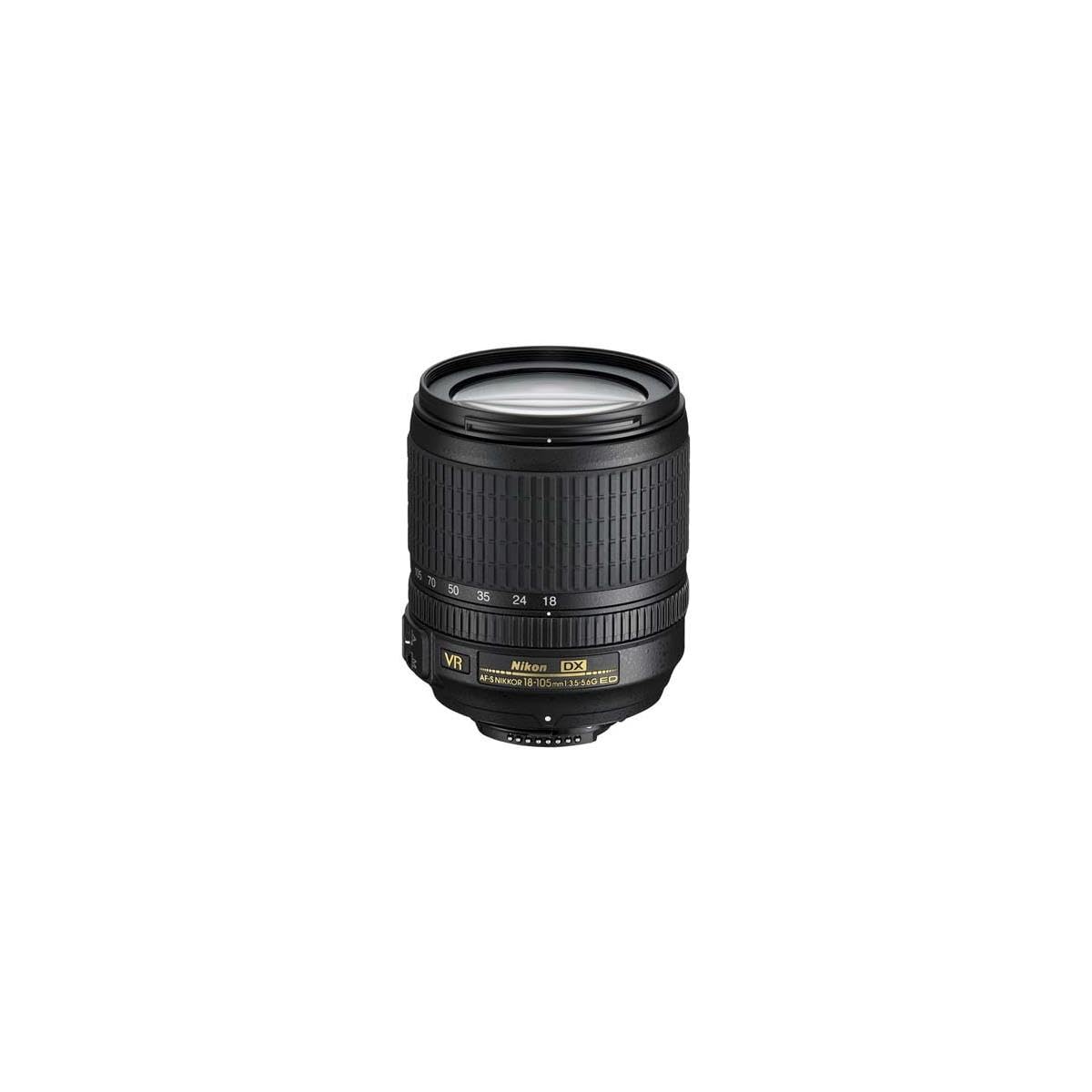
The 18-105mm f/3.5-5.6 VR gives Nikon D3xxx and D5xxx shooters a longer standard-zoom range than the usual 18-55mm kit lens, and it does so without adding the weight of a full-frame walk-around. Quiet SWM autofocus and three-stop VR make the extra reach easy to use in daylight. It is slower than a constant f/2.8 standard zoom, but this trade-off fits a travel bag better. It also trades a bit of telephoto reach compared with the 18-135mm Canon APS-C travel lens, while keeping the travel-zoom idea in a lighter package.

Daylight handling is where this lens earns its keep. Images come out crisp and clear across the standard zoom range. The 18-105mm reach is practical for street, landscape, and travel scenes, and the price keeps it a sensible standard-zoom investment.

The best match is a Nikon D3xxx or D5xxx owner moving up from the 18-55mm kit, or a value-conscious traveler who wants one standard zoom for the day. The plastic bayonet mount is a durability concern, and full-frame Nikon bodies will crop to DX mode, so this is not a full-frame walk-around. Low-light AF can also hesitate before confirming focus, so this suits daylight-heavy travel more than evening event work.

๐Ÿ’ก Carry the camera by the body, not the lens, so the plastic bayonet mount is not the load-bearing point.

Pros

  • Strong lens quality holds up across a range of shooting conditions.
  • VR steadies handheld shots, and autofocus handles daylight scenes smoothly.
  • Cost-effective Nikon DX zoom for budget-conscious shooters.
  • 18-105mm range covers group shots and short portraits without swapping lenses.

Cons

  • Plastic bayonet mount can crack or separate from the camera after a hard impact.
  • In dim interiors, autofocus may hesitate before confirming focus.
Our verdict

The 18-105mm VR covers the essential standard-zoom range with enough stabilization to make the kit-lens upgrade worthwhile for Nikon DX travel shooters.

Check Latest Price

How to Choose

Focal Length & Sensor Coverage

Match the lens format to your camera sensor. A full-frame lens projects a larger image circle; an APS-C lens cannot cover a full-frame sensor without heavy vignetting, so it locks you into crop cameras. The same focal length behaves differently on each format: 18mm on APS-C becomes a wide 27mm equivalent on Sony and 29mm on Canon, while 50mm is close to normal.

If you plan to move to full-frame later, buy full-frame glass now even if it costs more. A lens outlives a camera body, and swapping an entire standard zoom costs more than adapting it to a new mount.

Maximum Aperture

The aperture rating determines how much light reaches the sensor and how much background blur you can create. A constant f/2.8 zoom holds the same light transmission at every focal length; a variable f/3.5-5.6 zoom leaves you more than a stop slower at the long end. That makes the difference between a usable indoor shot and a blurry one.

A constant f/4 zoom is the middle path: it keeps exposure predictable and size manageable, but it still gives up one stop of low-light ability compared with f/2.8.

Image Stabilization

Stabilization is either in the lens or in the camera body. Lens IS moves an optical element; IBIS shifts the sensor. Many bodies combine both, but the system only works when the lens is compatible.

If your camera has IBIS, a non-stabilized lens can still produce sharp handheld shots. If it doesn't, in-lens stabilization is the difference between usable and unusable at lower shutter speeds.

Autofocus Type & Speed

Autofocus types differ in speed, noise, and tracking behavior. Ring-type USM, Nano USM, and Sony's Direct Drive SSM are fast and quiet; older DC-motor zooms can hunt in low light. A lens that focuses confidently in daylight can be slow to confirm focus on a dim stage or forest path.

Buyers who shoot moving subjects should prioritize AF motor type over a slightly longer zoom range.

Weight & Carry Comfort

Every extra stop of aperture and every added millimeter of range costs physical weight. Full-frame f/2.8 zooms often weigh 700-900g; compact APS-C f/2.8 zooms can stay under 300g. That weight rides at the front of the camera, so neck and wrist fatigue builds during a full day of walking.

A 900g lens may be fine for a shoot but miserable for a vacation. Pick the carry weight that matches your longest normal day with the camera.

Frequently Asked Questions