5 Best UV Filter in 2026: Pick the Right Size for Clear Photos

Find the best UV filter for your camera lens, from kit-lens protection to premium anti-reflective coatings, without wasting money on the wrong thread size.

Most UV filter listings lead with lens protection and a light transmission percentage, but the first decision is simpler: buy the diameter your lens actually uses. That number is printed on the lens rim with the Ø symbol and has nothing to do with focal length. Get that wrong and no coating will make the filter usable.

Once the size is right, the next trade-off is coating quality. A filter without anti-reflective layers can protect cleanly in normal light, but it may throw veiling flare into shots with the sun in or near the frame. Multi-coated glass controls that reflection without changing the protective job.

A good UV filter protects the front element, keeps contrast in backlit conditions, and fits without binding. Those three outcomes depend on thread size, coating, and frame design — not on price alone.

1

Best Overall

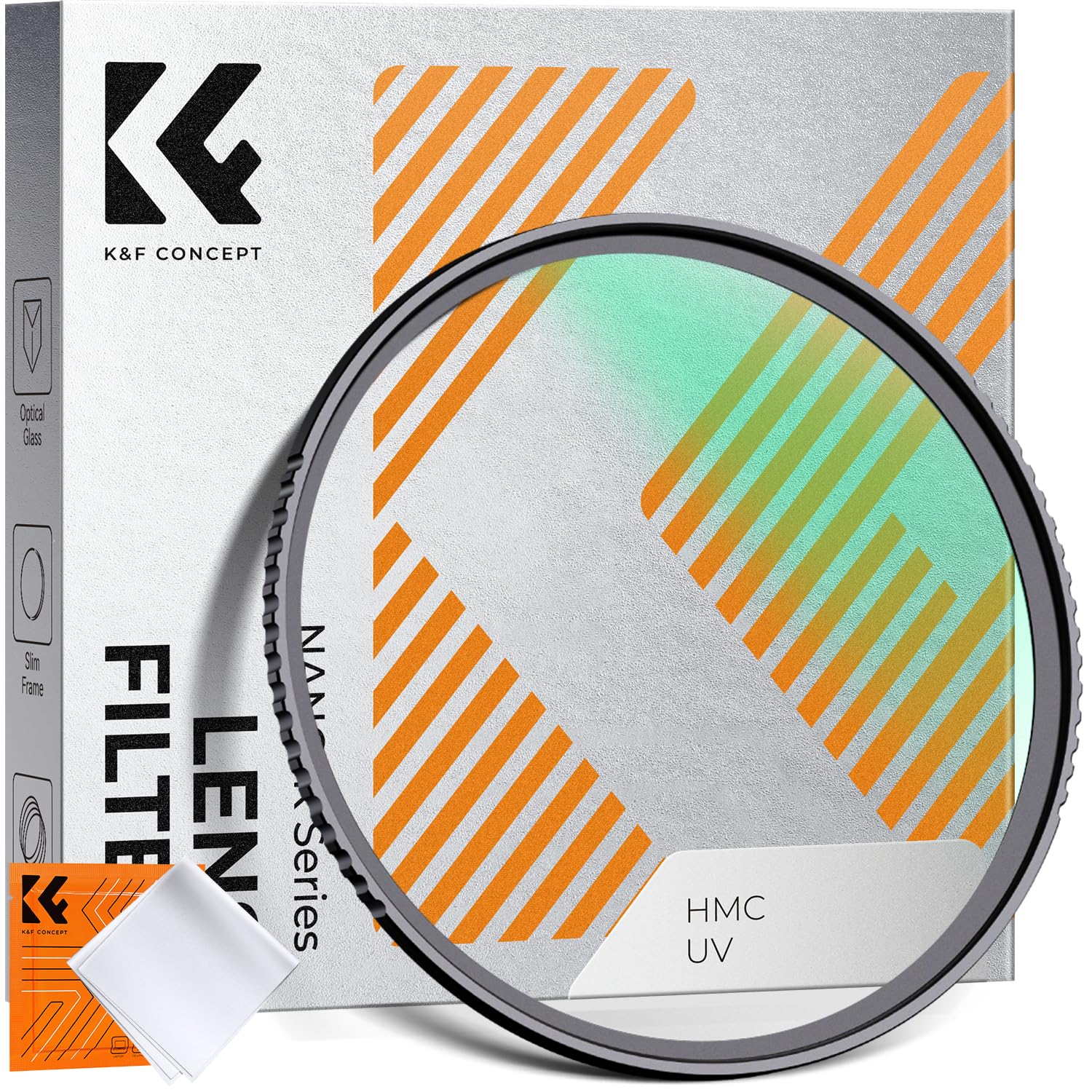
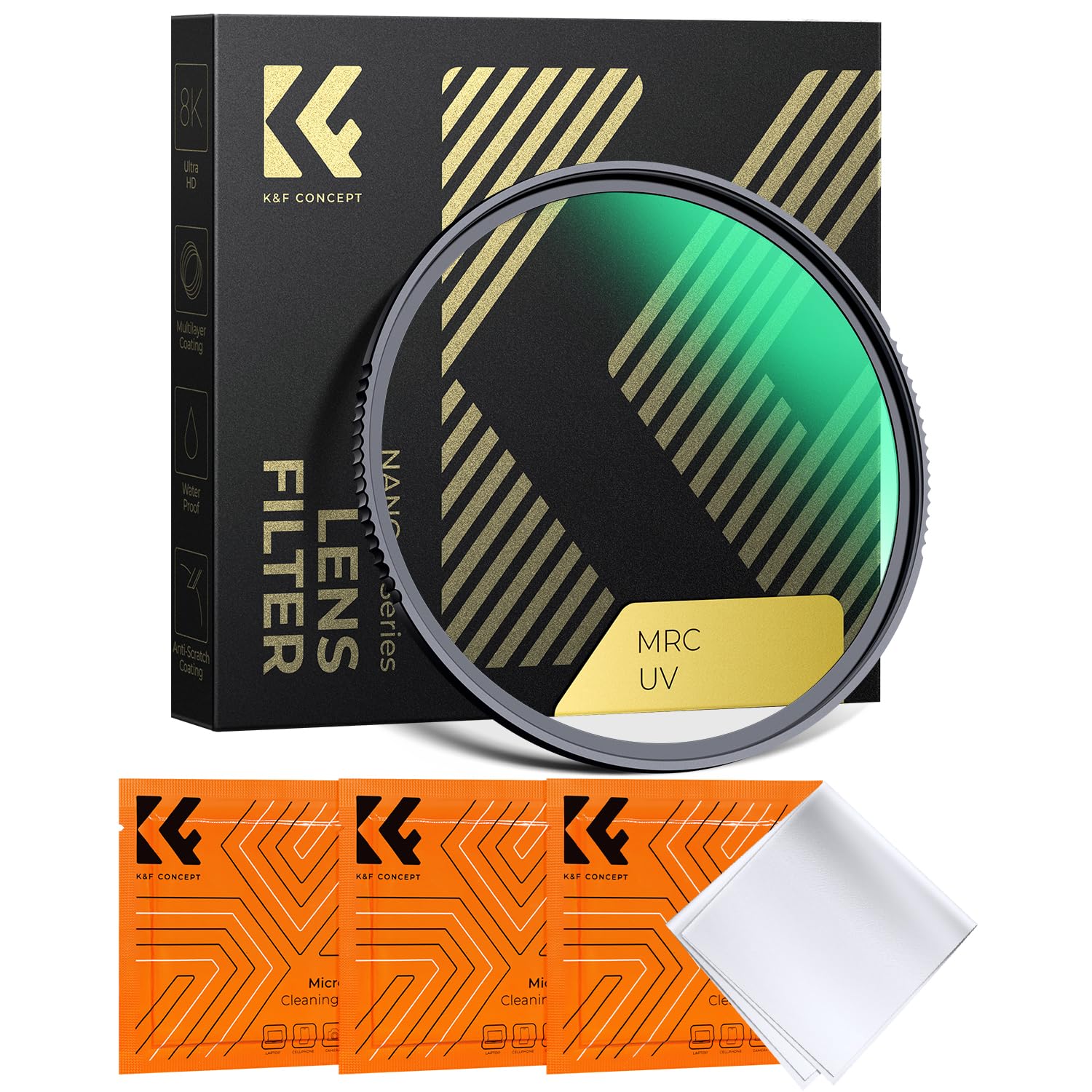
K&F Concept 58mm MCUV

96 /100
Studio Score High Confidence

Key details

Coating
18-layer multi-coated nano
Thread Size
58mm
Frame Thickness
3.3mm ultra-slim frame
Glass & Transmission
AGC optical glass, 94%
Check Price on Amazon

The K&F Concept 58mm MCUV pairs 18-layer multi-coated AGC optical glass with a 3.3mm ultra-slim aluminum frame, which gives 58mm kit-zoom owners a protective layer that also addresses flare. The multi-coating suppresses ghosting and reflections in backlit scenes without shifting color, so a daylight shot keeps the contrast and saturation of the bare lens. It does not reach the coating depth of premium 28-layer filters, but that difference matters mainly when the sun is in or near the frame. For ordinary outdoor photography, the neutral glass makes this filter easy to forget once it is mounted.

Screwing the filter onto a 58mm lens is smooth, and the low-profile ring sits flush against the front element without wobble. The 3.3mm frame adds little weight, which keeps the front of a kit zoom balanced, and standard hoods can still be fitted with the filter in place. Once installed, it does not interfere with autofocus or metering because those systems read through the glass as if it were not there. At normal apertures, sharpness and contrast remain consistent, and the multi-coating keeps chromatic haze from building up in bright scenes. It does not get in the way of framing, which matters for a filter that stays mounted through a full day of shooting.

Only fits 58mm filter threads, so it is aimed at the common 18-55mm kit zoom and compact primes that share that diameter. For those lenses it is a strong match: clear protection against scratches, dust, and minor impacts at a budget-friendly price. Travel shooters get a low-mass guard that does not shift the lens balance or add noticeable bulk. Photographers with 49mm, 67mm, 72mm, or 77mm threads need the matching size rather than this model. The boundary is about lens diameter, not image quality.

The 3.3mm frame is thin but sturdy, and the overall build feels more deliberate than its entry-level price suggests. The ring holds a consistent fit, does not add bulk to the front of the lens, and the matte finish keeps fingerprints from becoming a distraction. Budget-minded shooters get a filter that looks and handles like a permanent part of the kit rather than a temporary add-on. It also clears standard hoods, so it works as a keep-on protection option for everyday carry. That combination of slim geometry and multi-coated glass covers the two things a practical UV filter should do.

💡 Mount it with light pressure; backing off and realigning when removing prevents the ring from locking in place.

Pros

  • Shields the front element from scratches, dust, and minor impacts without visible image degradation.
  • Multi-coated optics keep color neutral and suppress flare in backlit scenes.
  • Threads onto 58mm lenses smoothly and sits flush against the front element.
  • Thin, sturdy frame feels more premium than its entry-level price suggests.

Cons

  • No hydrophobic or 28-layer NanoTec coating; wet-weather shooters will need a premium filter.
  • Metal threads can bind on some lens fronts during removal.
Our verdict

On a 58mm kit lens, the K&F Concept MCUV is an easy keep-on protector: it handles flare, stays out of the way, and does not ask for a big budget.
Check Latest Price
2

Best Budget 49Mm Protector

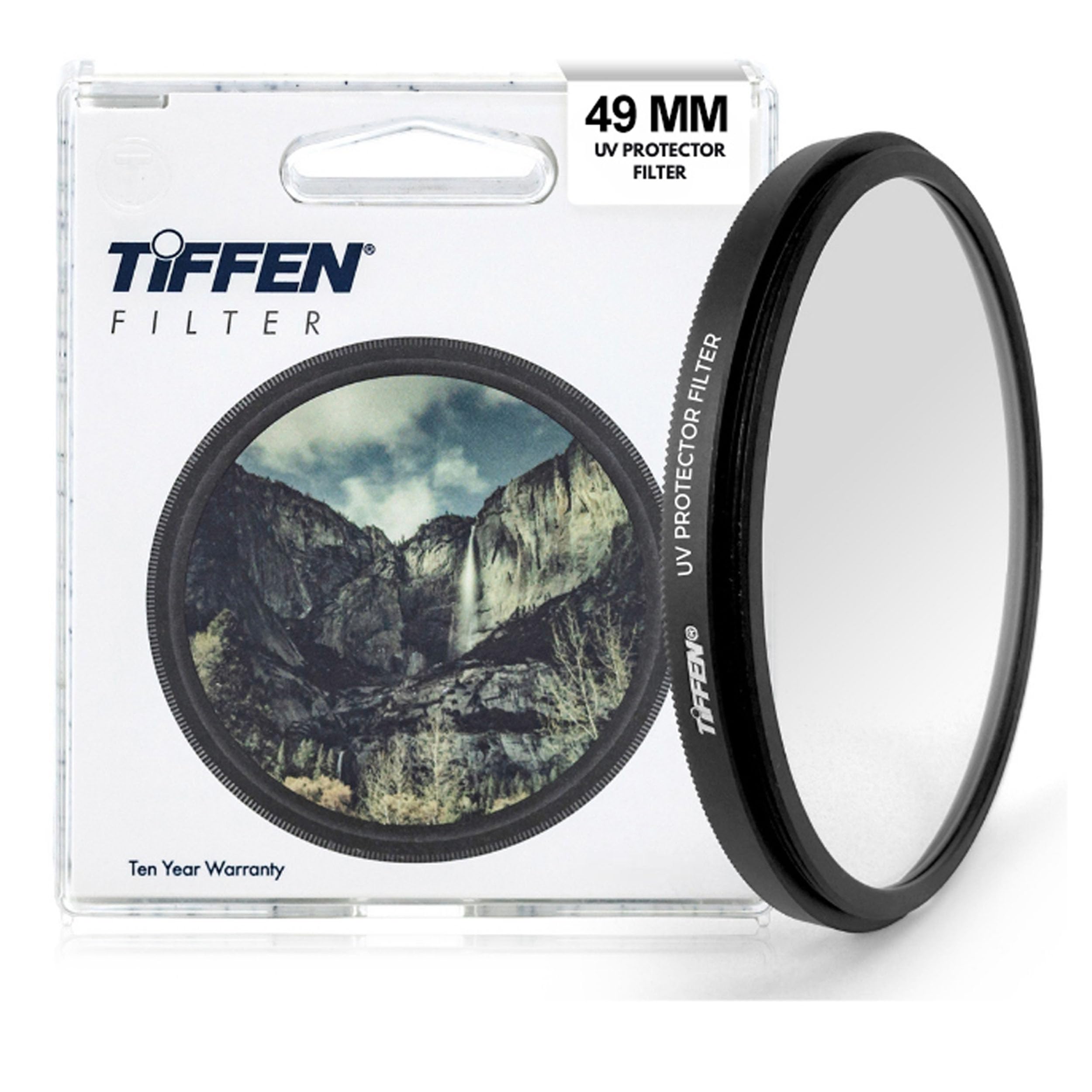
Tiffen 49mm UV Protector

93 /100
Studio Score High Confidence

Key details

Coating
Uncoated
Thread Size
49mm
Frame Thickness
Slim aluminum ring
Glass & Transmission
Optical glass
Check Price on Amazon

The slim 49mm aluminum ring carries a 10-year warranty and fits compact primes without adding bulk. The uncoated optical glass stays color-neutral in normal front-lit scenes, and the frame leaves enough room for the original lens cap. Mounting is simple: threads engage smoothly and the filter does not bind on standard 49mm lens barrels.

Budget-conscious shooters with 49mm threads get an inexpensive sacrificial layer in front of a valuable lens. Outdoor and high-altitude photographers also get basic UV blocking without a visible color cast. This uncoated filter is best for general and outdoor shooting rather than bright-light work, so backlit scenes are where a multi-coated filter earns its higher price. For shooters who keep the sun out of the frame, the optical compromise is a non-issue.

As a protective layer, the filter does exactly what buyers need: it keeps dust, scratches, and knocks off the front element. The aluminum ring is slim enough that hoods and caps still fit, and the 10-year warranty takes the sting out of replacing a worn budget filter. Predictable performance at a budget-friendly price is the whole appeal here.

💡 Tighten the filter snugly, not with force, and it will sit flush on the lens.

Pros

  • Shields the front element from dust, scratches, and light impacts.
  • Low-cost sacrificial layer for a valuable 49mm lens.
  • Clear and color-neutral in ordinary daylight shooting.
  • Fits 49mm threads without blocking standard lens caps.

Cons

  • In some cases the retaining ring can loosen and let the glass shift inside the frame.
  • Shooting toward bright light can introduce flare or ghosting because the glass is uncoated.
Our verdict

For compact-prime owners with 49mm threads, this is a low-cost protective filter for everyday outdoor shooting. If your work regularly points the lens at bright sources, the higher-priced multi-coated alternatives fit that need better.

Check Latest Price
3

Best for Large-Thread Lenses

K&F Concept 77mm MCUV

94 /100
Studio Score High Confidence

Key details

Coating
28-layer NanoTec multi-coating
Thread Size
77mm
Frame Thickness
3.3mm ultra-slim frame
Glass & Transmission
Japanese AGC glass, 99.6%
Check Price on Amazon

K&F Concept's 77mm MCUV puts 28-layer NanoTec multi-coating on Japanese AGC optical glass, with 99.6 percent light transmission and a 3.3mm slim frame. The smaller 58mm top pick serves kit zooms; this version targets the larger front elements on telephoto and wide-zoom lenses, with the same coating-first approach at a mid-range price.

The slim profile keeps wide-angle vignetting in check, and the coated glass holds detail in mixed or backlit scenes. Outdoor shooters get a scratch and dust barrier that sits close to the front element, so the filter becomes a working part of the lens rather than an add-on that changes the image. Image quality stays clean and color-neutral across the zoom range.

Confirm 77mm threads before ordering. This is aimed at owners of large telephoto or wide-zoom lenses who want near-premium coating without the German-brand price. Some examples can bind during removal, so seat the ring straight and keep it finger-tight; photographers who swap filters mid-shoot may prefer a smoother thread.

At this price, the 77mm MCUV is cost-effective insurance for an expensive front element, and the build quality matches that role: the frame feels sturdy and grippy in the hand.

💡 Start the ring straight and tighten only to finger-tight; that keeps removal simple.

Pros

  • Clean, high-contrast images hold up in backlit scenes thanks to the 28-layer NanoTec coating.
  • Cost-effective protection for valuable 77mm front elements without the usual premium-priced filter markup.
  • Sturdy frame and coated glass give large telephoto and zoom lenses a scratch and dust barrier.
  • Ultra-slim ring sits close to the front element, limiting vignetting on wide-angle zooms.

Cons

  • Photographers who change filters between shots will find the thread action snugger than on a premium brass-threaded filter.
  • The ring can hang up on some lens threads when mounted tight, making removal harder than expected.
Our verdict

The 77mm MCUV is for shooters who want coated protection on a large front element without paying German-brand prices.

Check Latest Price
4

Premium 72Mm Choice

ZEISS T* UV Filter 72mm

92 /100
Studio Score High Confidence

Key details

Coating
ZEISS T* anti-reflective
Thread Size
72mm
Frame Thickness
Glass & Transmission
ZEISS optical glass
Check Price on Amazon

The ZEISS T* UV Protection Filter pairs T* anti-reflective coating with waterproof optical glass in a precise 72mm ring. In bright backlight, the coating holds contrast by suppressing the internal reflections that uncoated filters turn into haze. That places it ahead of simple protective glass for shooters who pay attention to image quality as well as front-element safety.

The ring mounts cleanly and accepts lens shades, so the filter can stay mounted without interfering with hood positioning. Water slides off the front surface, which keeps rainy-day shooting from becoming a lens-cleaning session. This is a set-and-forget layer on expensive glass, combining physical protection with anti-reflection performance that standard UV filters do not offer.

Owners of 72mm Zeiss or high-end lenses who value German optical engineering and brand consistency are the right audience. The premium price is the main barrier, so budget-conscious 72mm shooters should consider mid-range multi-coated filters instead. Confirm the lens thread size is 72mm before ordering; this filter does not adapt to other front diameters. For photographers who keep one lens on a body for long assignments, the T* coating and exact fit become everyday tools rather than an extra piece of gear.

Pros

  • T* coating suppresses flare and ghosting in strong backlight.
  • Sits precisely on 72mm premium lenses with even thread engagement.
  • Waterproof optical glass protects against moisture on rainy shoots.
  • Works with attached lens shades, so it stays mounted during normal handling.

Cons

No notable drawbacks to flag.

Our verdict

For 72mm shooters, the ZEISS T* is the filter to leave on when image quality still matters.

Check Latest Price
5

Canon Rebel Kit Lens Companion

JJC 58mm UV Filter

91 /100
Studio Score High Confidence

Key details

Coating
12-layer multi-resistant coating
Thread Size
58mm
Frame Thickness
0.12in ultra-slim frame
Glass & Transmission
Japanese optical glass, 99.5%
Check Price on Amazon

The JJC 58mm UV Filter uses a 12-layer multi-resistant coating over ultra-slim Japanese optical glass, and the ring is sized for the Canon Rebel 18-55mm kit lens. That makes it a more targeted companion than the K&F 58mm MCUV top pick, which serves the broader 58mm market.

At 99.5% light transmission, images stay clear with no edge distortion or haziness in normal lighting, and the coating does not introduce a color shift. The filter shields the front element from smudges, dust, and scratches, which matters when the kit lens is the only lens in the bag. The 0.12-inch frame sits close to the glass, so it adds little bulk and works with standard lens caps.

This is for Canon Rebel T7/T6/T8i shooters who want a simple, affordable protector for the bundled 18-55mm lens, plus anyone with another 58mm lens who prefers a filter marketed for Canon bundles. Skip it if you already own a higher-end 58mm multi-coated filter or if your main goal is the absolute lowest-priced 58mm option; the K&F top pick is the better all-around value for general 58mm owners.

Pros

  • Cost-effective for kit-lens owners who want protection without upgrading glass.
  • Acts as a practical lens protector during normal shooting.
  • Shields the front element from smudges, dust, and scratches.
  • Keeps images clear with no edge distortion or haziness.

Cons

  • Threads can bind on some lens mounts, so the filter needs to be seated carefully before turning.
  • Glass durability can vary between samples, and a stress crack may appear without an obvious impact.
Our verdict

Canon Rebel T7/T6/T8i owners with the 18-55mm kit lens get a cost-effective protector that keeps the front element clean without adding bulk.

Check Latest Price

How to Choose

Match the Thread Size

The Ø symbol on the lens rim gives the filter diameter in millimeters, and that is the only measurement that matters. A 58mm filter will not fit a 67mm lens no matter how similar the lenses look. Skipping this check is the reason many UV filters get returned right after unboxing. A Canon Rebel kit lens and a Sigma zoom can live on the same camera yet demand different filter sizes.

Check the Coating Layers

Multi-coated filters use thin interference layers to cancel reflections from the glass surface. Without them, an uncoated filter can produce veiling flare, ghosted streetlights, and low contrast when a bright source sits near the frame. More coating layers usually raise the price, but they mean little if the underlying glass is poor. It also makes the surface easier to clean.

Choose a Slim Frame for Wide Lenses

A slim frame keeps the glass close to the front element and reduces the risk of vignetting at wide angles. A thicker frame can intrude into the image circle and darken corners in a way that cropping cannot fully recover. If most of your shots are at 50mm or longer, frame thickness matters less. Ultra-slim rings can be harder to grip on removal, so mount them gently.

Evaluate Glass Quality and Transmission

Optical glass quality controls how cleanly light passes and how neutral the color stays. Transmission figures above 99% look good on paper, but they only translate to visible quality when the glass and coating work together. Japanese and German optical glass brands are common in this category because material consistency reduces distortion and color cast. The best approach is to evaluate the two together, not as separate specs.

Warranty and Brand Reliability

A UV filter sits at the front of the lens and takes scratches, dust, and bumps first. A longer warranty covers manufacturing defects such as a loosening retaining ring or uneven coating wear. Brand reliability also shows up in the threading, because a filter that binds wastes time and risks frustrating removal.

Frequently Asked Questions