5 Best ND Filter of 2026: The Ones That Stay Neutral

The best ND filters for photographers and videographers who want clean color and no X-pattern, matched to the right stop range and thread size.

Most variable ND filters advertise no X-pattern and no color cast. In practice, those claims hold up only within a limited stop range, and the filter you choose needs to match the way you actually shoot.

A 1-5 stop variable ND is the reliable zone for clean, neutral frames. 9-stop filters add convenience but tend to show vignetting, banding, and color shifts at the darker end, especially on wide-angle lenses.

The right filter is the one whose thread size, stop range, and control style fit your lens and your workflow. That match matters more than the price tag or marketing language on the box.

1

Best Overall

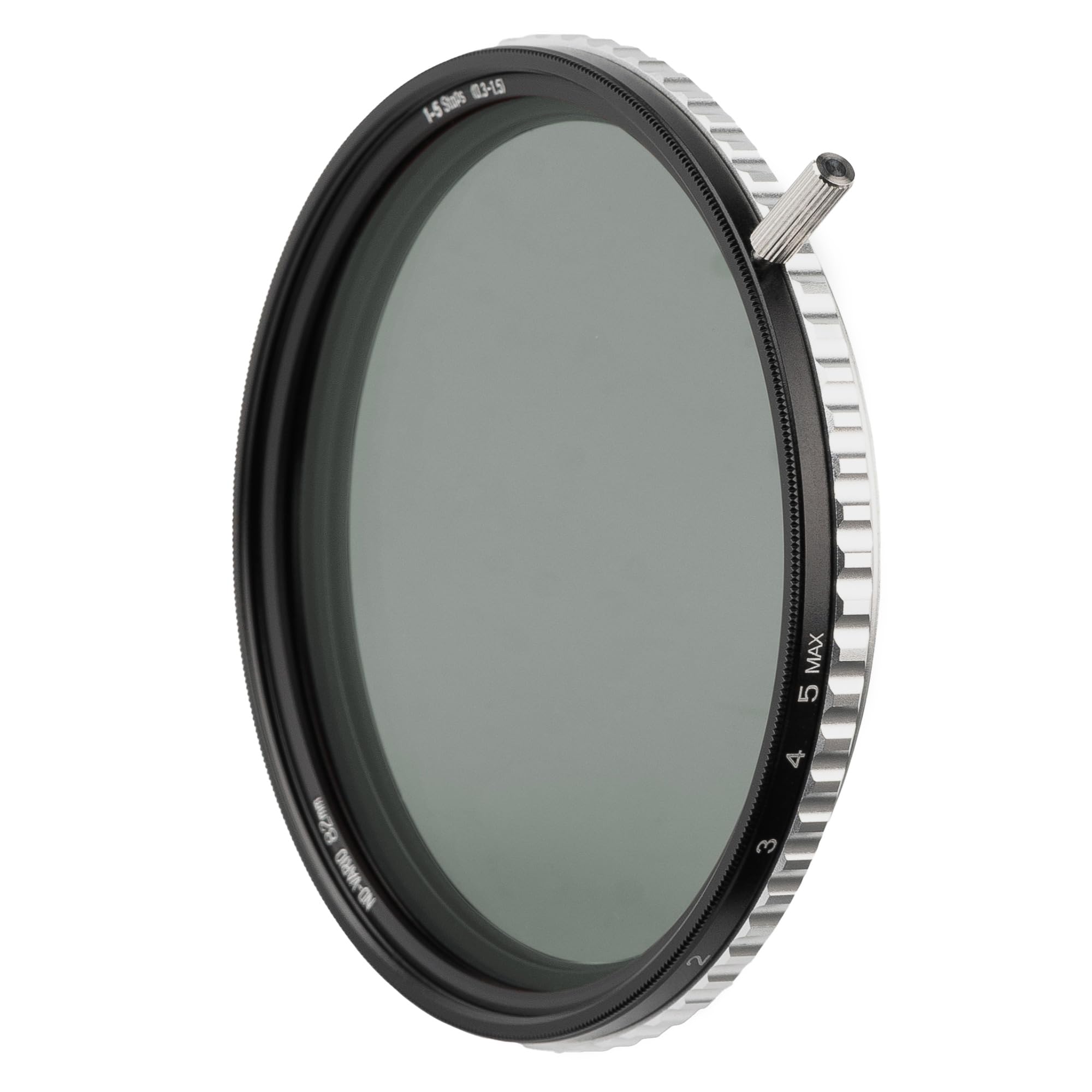
NiSi Swift True Color 67mm

91 /100
Studio Score High Confidence

Key details

Control
Rotating ring
ND Range
1-5 stops
Thread Size
67mm
Check Price on Amazon

True Color coating and a 1-5 stop range keep this variable ND clean where wider-range designs run into X-pattern and color cast at the dark end. The 20-layer nano coating supports neutral color, and the hard-limited ND2-ND32 span keeps you out of the dark-end artifacts that appear on 9-stop variable filters. For a 67mm shooter, the difference is visible in the footage: shadows stay neutral, highlights don't pick up a green or magenta push, and the frame doesn't develop a crossing pattern as you rotate the filter. This is the filter behaving like a set of fixed NDs with the convenience of a variable design. Color consistency across the rotation means you can lock exposure in the field and not chase a cast in post.

The rotation has a clear end-stop, so you know exactly when you're in the clean range. Build quality is a high point; the setting stays where you leave it during a shoot. The stopper mechanism also prevents accidental rotation past the 5-stop limit, which is where wider variable filters reveal their weaknesses. Because the dark end is capped at 5 stops, the optical compromises that show up in 9-stop VNDs are not part of this filter's behavior. The end-stop is a simple function, but it changes how quickly you can work: you know the filter is in its clean range before you press record.

Color-conscious photographers and videographers with 67mm lenses get the cleanest variable ND option in this set. The 1-5 stop range suits shutter-based exposure control in video and moderate light reduction in stills; it is not a 9-stop long-exposure tool. The premium price and 67mm-only thread are the boundaries, and occasional QC variance in the stopper or machining can appear in a small number of units, so a first-mount check is worth doing. If you already own 67mm lenses and shoot color-critical work, the higher entry cost buys a filter that doesn't need a color-grade rescue.

Within its 67mm frame, this filter delivers on the no-X promise without a color-grade rescue. The 72mm front thread and Swift System expansion path make it a usable base for building out a kit, and the True Color coating keeps skin tones neutral enough for client work. Against the budget 52mm hard-stop VND, the NiSi costs more but adds the larger mount and the more controlled optical range. For hybrid shooters who move between stills and video on the same lens, that combination is worth the premium.

๐Ÿ’ก Inspect the hard stop and front threads during the first mount, and keep the packaging until you've confirmed the filter rotates cleanly.

Pros

  • True Color coating keeps skin tones and scene color neutral across the 1-5 stop range.
  • The hard-limited range avoids the X-pattern that appears at the dark end of 9-stop VNDs.
  • Clear end-stop and firm rotation make exposure changes predictable.
  • 67mm rear mount with 72mm front thread fits the intended lens lineup and leaves room for accessories.

Cons

  • Premium price and a 67mm-only thread size limit this to a specific lens lineup.
  • Stopper mechanism or machining can vary between units, so inspect it before the first serious shoot.
Our verdict

For 67mm lens owners, this is the variable ND that behaves like a set of fixed NDs, with neutral color and no X-pattern across its range.
Check Latest Price
2

Best Budget No-X

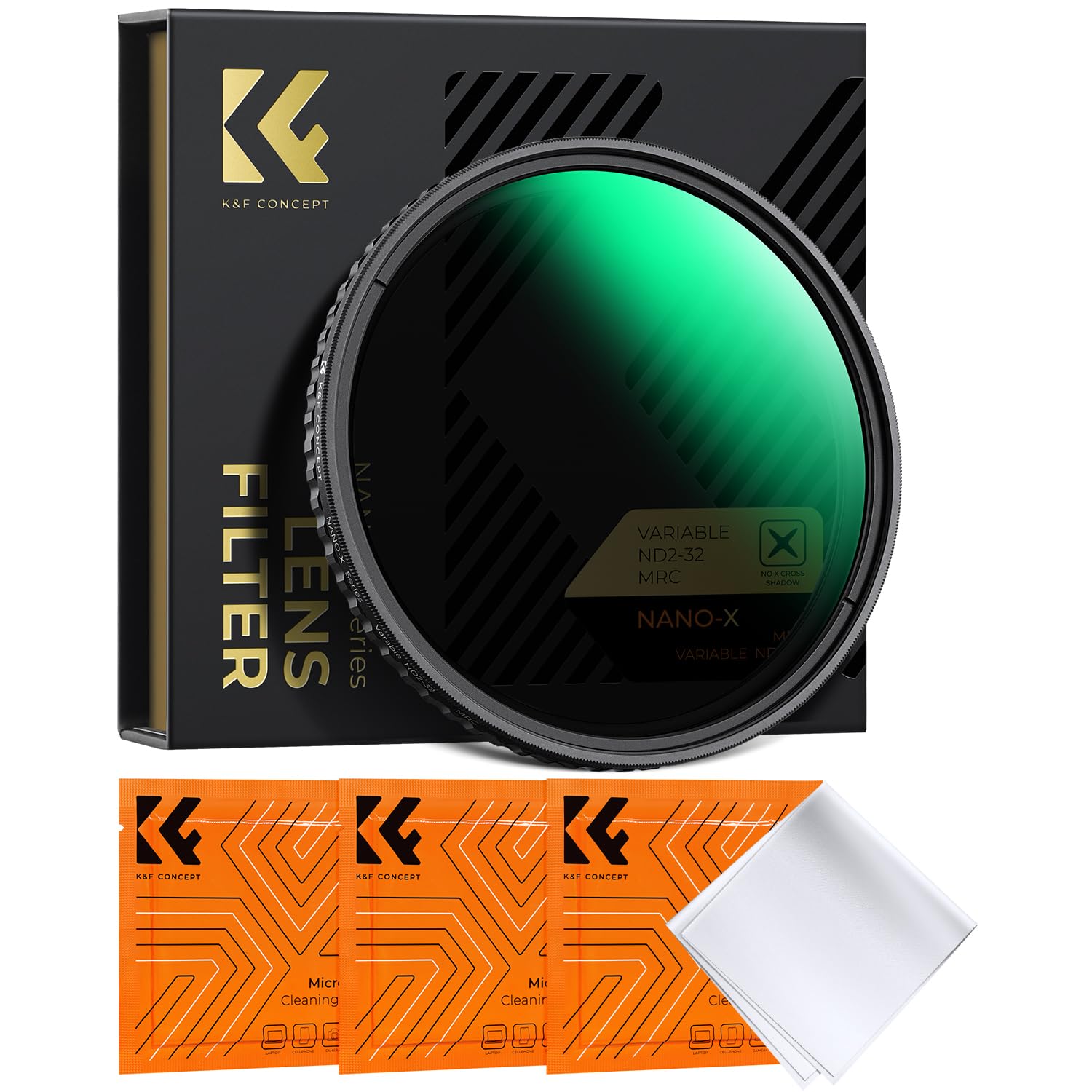
K&F 52mm ND2-32 No-X

92 /100
Studio Score High Confidence

Key details

Control
Hard-stop ring
ND Range
1-5 stops
Thread Size
52mm
Check Price on Amazon

Hard stops give the K&F 52mm Variable ND a repeatable 1-5 stop range, and the no-X design holds through the full rotation. That separates it from the lever-controlled 67mm video VND in this comparison, which offers faster density changes with a side lever but can add corner shading at the darker end. For stills or video where shutter speed needs to stay locked, the hard-stop K&F makes matching density between shots simple.

This is the budget pick for 52mm kit-lens owners, including video beginners who want hard-stop simplicity. The thread is fixed at 52mm, and the filter uses a 55mm cap, so stock-cap fit can be awkward; some units may bind while rotating on the lens, and larger-diameter glass is out of luck.

The 28-layer nano coating adds water resistance and helps with flare control for a filter in this price class, with good contrast through the middle stops. The 1-5 stop range covers daylight exposure work from one to five stops, enough for wide-aperture video in bright sun or modest shutter-speed control in stills. The physical hard stops at either end make it easy to find the limits of the filter without looking at the ring.

Pros

  • Hard stops and an X-free design keep exposure changes predictable across the 1-5 stop range.
  • Image clarity holds up well for a budget VND, with clean results through the middle stops.
  • Smooth adjustment ring makes density changes easy for photo and video work.
  • Budget-friendly price with a value that matches filters costing more.

Cons

  • Hood fit can be awkward for anyone who prefers to keep a lens hood mounted.
  • At the darker end, neutral color can shift slightly and banding may appear.
Our verdict

For a 52mm shooter on a budget, this is the no-X variable ND to pick; the hard-stop range and clean middle stops deliver more than the price suggests.

Check Latest Price
3

Professional 82Mm Hard-Stop

PolarPro 82mm PMVND 2-5

85 /100
Studio Score Strong Evidence

Key details

Control
Hard-stop ring
ND Range
2-5 stops
Thread Size
82mm
Check Price on Amazon

Premium quartz glass and haptic hard stops make this 82mm variable ND a repeatable 2-5 stop tool for outdoor cinematic exposure control. The ring action is precise enough to return to a familiar density between takes, and the 16-layer optical stack is built for bright daylight. It mounts cleanly on pro-size 82mm lenses.

Direct-sun shooting stays within the hard-stop range, so the filter handles the shutter-speed needs of a typical cinema setup without hunting for a setting. Stops are tactile enough to adjust by feel when the camera is rigged, and the narrower 2-5 stop range keeps you clear of the dark-end artifacts that show up on longer-range variable NDs. Bright-daylight handling is the strongest part of the experience.

This runner-up is for video-first creators on 82mm lenses who want repeatable hard-stop ND and don't treat standard lens-hood or lens-cap compatibility as a priority. Color-critical stills work is better served by the top pick. If guaranteed neutral color at every stop is the requirement, this is not that filter; if tactile repeatable exposure control is the requirement, it fits. It is a premium-priced alternative for working shooters rather than a budget entry.

๐Ÿ’ก Store the filter in a padded pouch with the included custom cap attached when it is off the lens.

Pros

  • Mounting is smooth and the build quality feels like it belongs on a pro lens.
  • Hard stops make 2-5 stop density changes repeatable for consistent outdoor shutter control.
  • Quartz elements with 16-layer coatings are suited to demanding outdoor light.

Cons

  • Standard 82mm lens hoods and caps will not fit; only the included custom cap works.
  • Color neutrality can vary between units, so verify the no-color-shift claim at your chosen stop.
Our verdict

For 82mm video-first creators, the hard-stop repeatability earns a place behind the top pick; color-critical stills work points the other way.

Check Latest Price
4

Best Lever-Control Video

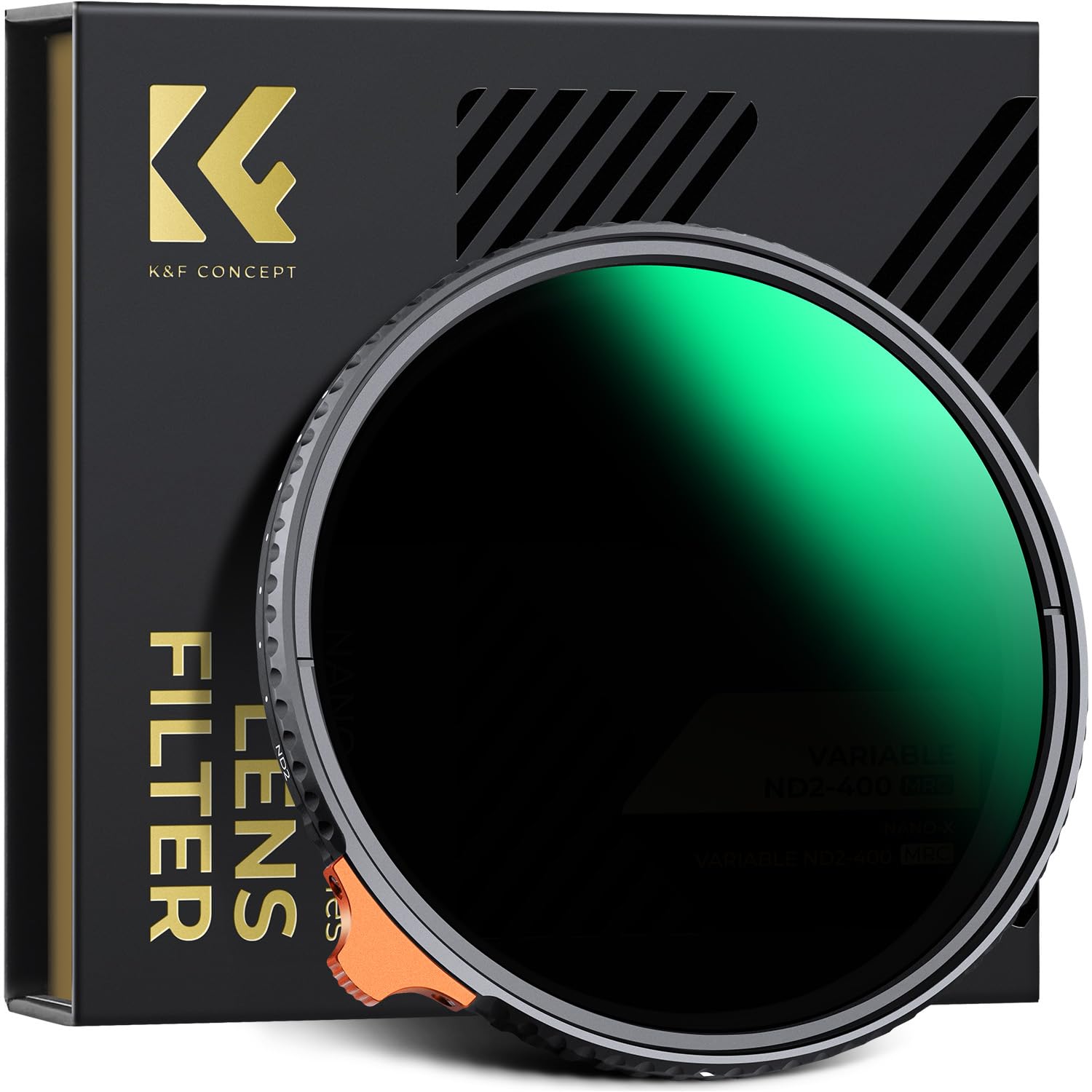
K&F 67mm Lever VND ND2-400

90 /100
Studio Score High Confidence

Key details

Control
Side lever
ND Range
1-9 stops
Thread Size
67mm
Check Price on Amazon

Side-lever adjustment is what separates this K&F from rotating variable NDs. You can move through the 1-9 stop range without breaking composition, which matters when a video shot is live. The waterproof frame and 67mm thread fit a standard lens kit for outdoor shooting, and the lever's reachable position means you don't have to grope around the front of the lens.

The marked lever provides a visible reference for approximate densities, so matching two lenses in a run-and-gun setup is less guesswork than with unmarked rings. The 28-layer coatings keep flare in check in bright conditions, and the 7.4mm frame stays slim enough to avoid adding bulk.

This is best for run-and-gun videographers with 67mm lenses who need density changes without taking their eye off the scene. Wide-angle stills at maximum darkening and color-critical work are better served by the hard-stop no-X filter in this roundup; those jobs demand the optical headroom this lever design doesn't promise.

If you remove the filter in the field, carry a 72mm lens cap; the filter ring won't accept the usual 67mm cap.

Pros

  • Side lever keeps framing intact while you change ND density.
  • Waterproof, scratch-resistant frame holds up on outdoor shoots.
  • Mid-range pricing brings lever control to a 67mm kit without a premium filter budget.

Cons

  • Lever marks are reference points, not detents, so exact stop placement is approximate.
  • At the darker end, corner shading and X-pattern can appear despite the no-vignetting claim.
Our verdict

For shooters who prioritize fast ND changes on a 67mm video rig, this filter earns its place in the bag. If your final frames demand maximum optical neutrality, step up to the hard-stop no-X alternative.

Check Latest Price
5

Budget 67Mm Shooters

NEEWER 67mm VND ND2-400

88 /100
Studio Score Strong Evidence

Key details

Control
Rotating ring
ND Range
1-9 stops
Thread Size
67mm
Check Price on Amazon

Affordable 67mm variable ND with a 1-9 stop range and a slim 9.5mm metal frame. Four-element glass with nano coatings keeps reflections low and the compact body sits easily on standard 67mm lenses. This is a budget pick for shooters who already trust NEEWER and can test the filter themselves; no customer review text is available to verify optical performance at the darker stops, so it can't outrank alternatives with confirmed clean optics. Color-critical shooters should look at the hard-stop 1-5 stop options in this set instead.

Pros

  • Slim 9.5mm metal frame suits standard 67mm lenses without adding bulk.
  • Single 1-9 stop range covers long exposures and video density changes.
  • Four-element optical glass with nano coatings keeps reflections low.

Cons

  • Neutral color may shift toward a cast at the darker stops, especially in long exposures.
  • At maximum density, cross-pattern and corner shading can appear.
Our verdict

For run-and-gun outdoor shoots with a 67mm lens, this single filter covers exposure control on a budget; when color accuracy decides the frame, switch to a hard-stop 1-5 stop VND.

Check Latest Price

How to Choose

Filter Thread Size

The thread size printed on your lens front, usually in millimeters, determines which filter fits. A 67mm lens needs a 67mm filter, and buying a step-up ring to adapt a larger filter is possible, but adding a ring changes the physical profile and can introduce vignetting on wide-angle lenses.

Variable ND frames are thicker than fixed ND filters, so the front thread size often changes. A 55mm VND may require a 58mm lens cap, and a 52mm VND may require a 55mm cap. Check the spec before ordering if you want to keep using your existing cap or hood.

Stop Range

The stop range determines how much light the filter blocks at maximum darkening. A 1-5 stop VND covers shutter-speed control in daylight and a bit beyond, while a 1-9 stop VND reaches long-exposure territory without stacking filters.

The trade-off appears at the upper end of 9-stop models. Because the two polarizers cross at extreme angles, the image can develop a dark X-shaped band, uneven exposure, and a color cast. A 1-5 stop filter keeps the polarizers in a more controlled zone, which is why it produces cleaner results.

Color Neutrality

No variable ND is perfectly neutral across its entire range. Most add a slight warm or cool shift, and some add a strong green or magenta cast at higher stops.

Filters with additional coating layers, such as NiSi True Color or PolarPro quartz glass, control this better, but the practical fix is to stay within the designed range. If you shoot color-critical work, test the filter at every marked stop and build a correction preset for the ones that shift.

Glass Quality

The glass determines sharpness and flare resistance. Multicoated optical glass reduces reflections and ghosting, while cheaper single-coated filters can soften images or produce flare in backlit scenes.

A filter with 8 to 28 coating layers is common across the budget-to-premium range. More layers generally mean better light transmission and less internal reflection, but the coating quality matters as much as the count. A budget filter with good coatings can outresolve a premium filter with poor quality control.

Control Mechanism

The control mechanism affects how quickly you can adjust density while shooting. Rotating-ring VNDs are the most common and let you dial in any value between the endpoints. Side-lever VNDs allow adjustment without touching the front of the lens, which is useful for gimbal or rigged video work.

Hard stops at the ends of the range prevent accidental over-rotation into the X-pattern zone. Free-spinning filters are harder to use repeatably because you can't feel when you've reached the limit. If you need consistent exposure from shot to shot, hard stops or marked detents are worth the extra cost.

Frequently Asked Questions