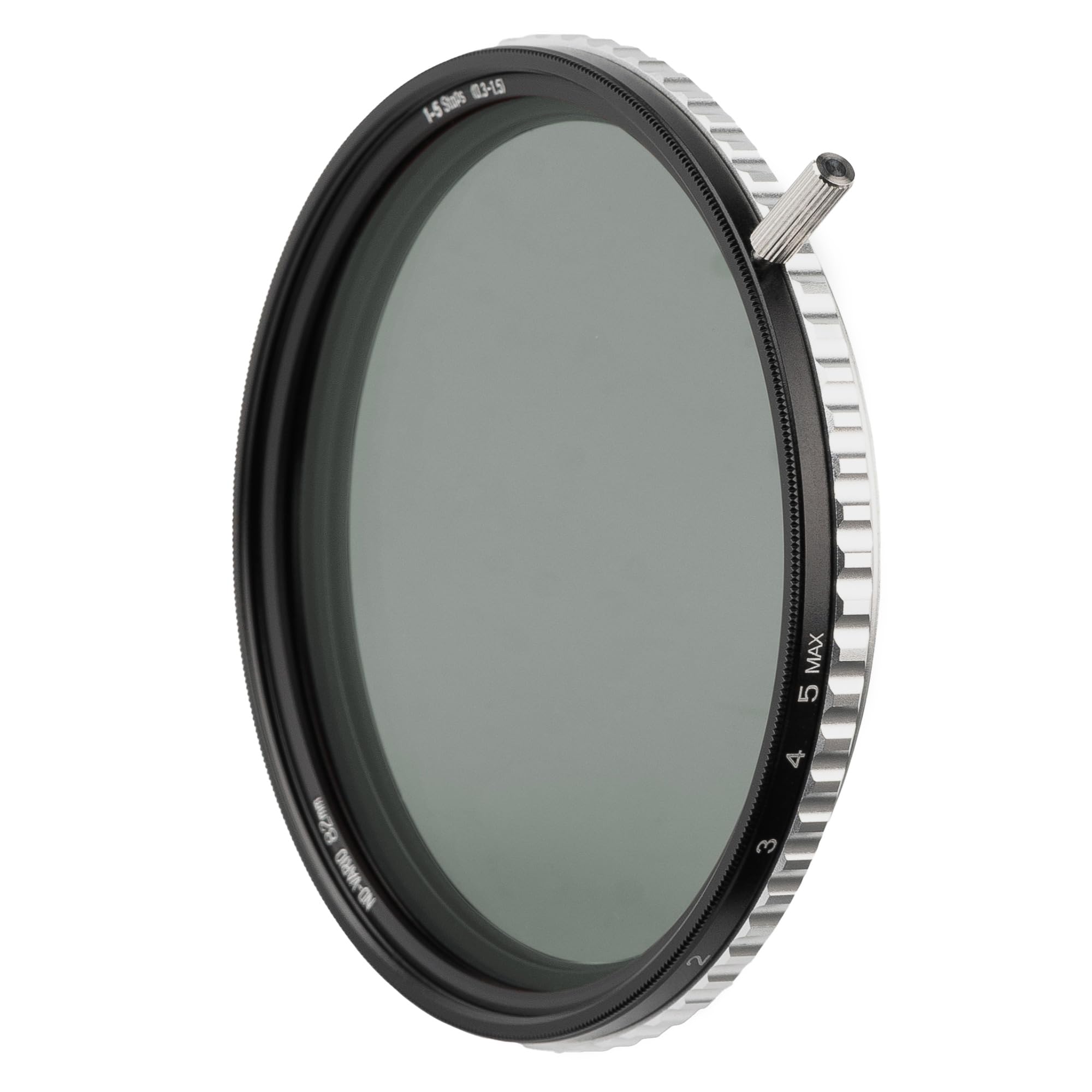
8 Best Variable ND Filter of 2026: Stops That Stay Clean

Pick a variable ND filter with the usable stop range your camera work actually needs, avoiding X-pattern, vignetting, and color cast.

Variable ND filters promise a wide stop range, but the last stops often deliver the X pattern, visible vignetting, and a color cast. Those artifacts show up when you need the filter most: bright midday landscapes, long exposures, and uncontrolled video shots.

The advertised number is a starting point, not a guarantee. The useful specification is the clean range, the stops that actually stay neutral and even, because that determines whether a 1-5 stop model or a 2-8 stop model fits your camera bag and your shooting day.

The real tradeoff is one of range versus control. A filter with hard stops and multi-coated glass will beat a wide-range filter that loses image quality before its maximum. For most shooters, that means choosing a range that ends before the artifacts start.

1

Best Overall VND/CPL Combo
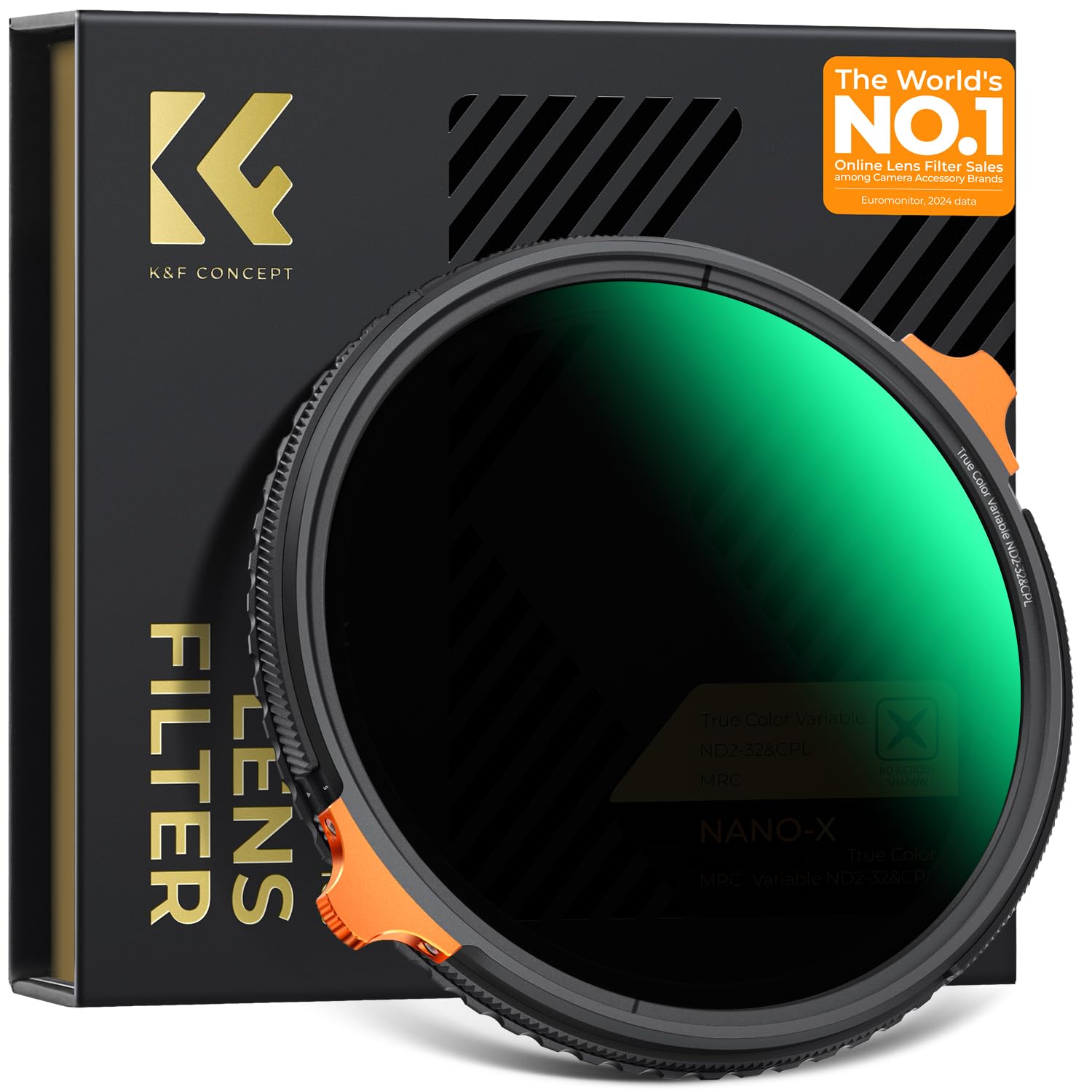
K&F 67mm True Color VND+CPL

92 /100
Studio Score High Confidence

Key details

Stop Range
1-5 stops
Filter Type
VND + CPL 2-in-1
Thread Size
67mm
Coating Quality
28-layer multi-coated AGC glass
Check Price on Amazon

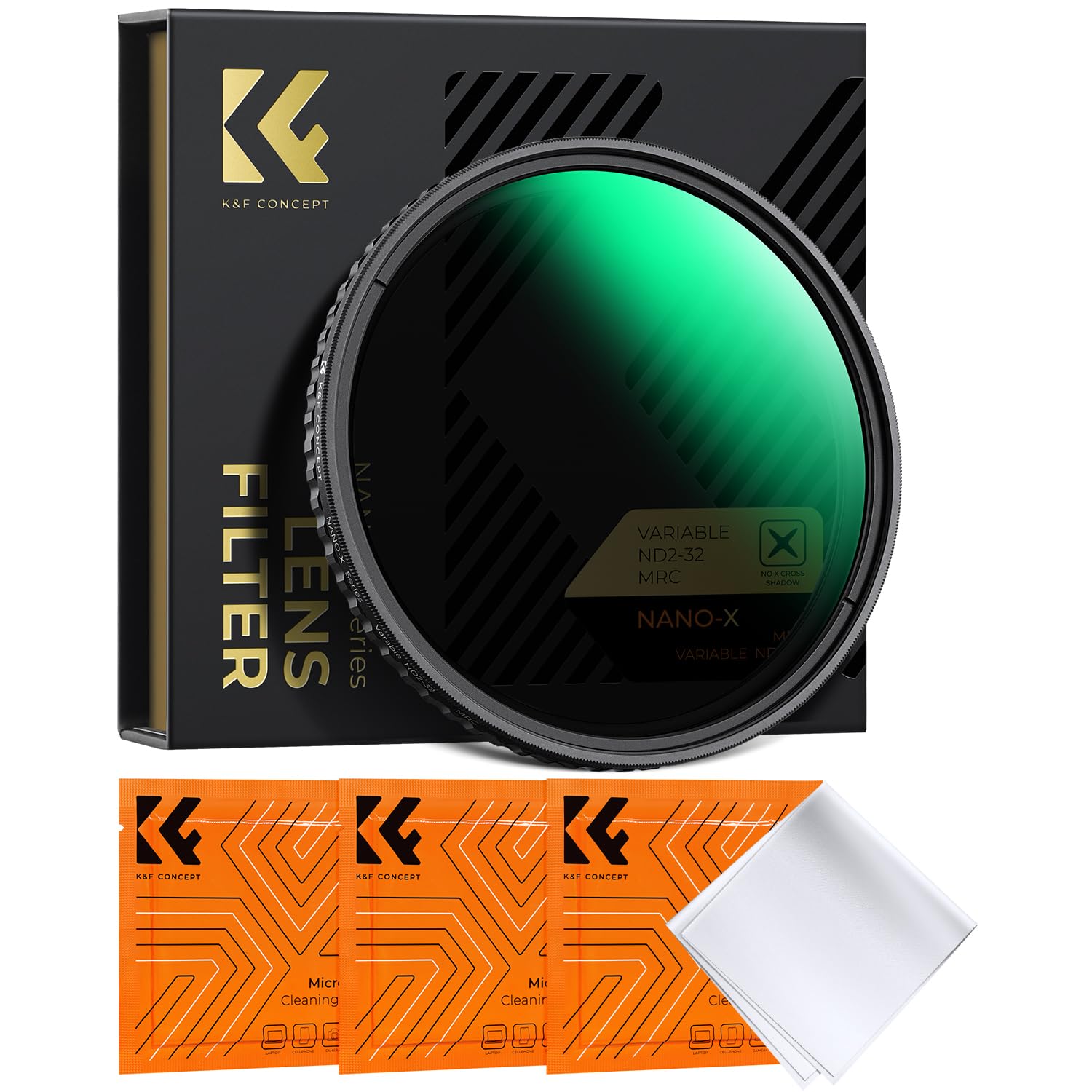
The 67mm True Color VND+CPL is a two-in-one that treats the stated stop range as a promise, not a sales figure. Its self-locking no-X frame keeps the dark crossing pattern out of the frame on 16mm lenses, and the 28-layer AGC glass holds the image together at the stronger end of the rotation. The True Color coating is the part that keeps the sky from shifting cyan and foliage from warming up, which is where budget variable NDs can give themselves away.

The CPL half does real polarization work rather than a token darkening effect. Reflections on water, leaves, and painted surfaces get cut while the ND half controls shutter speed, so landscape and video shooters can carry one filter instead of stacking a polarizer in front of a variable ND. That also removes the flare risk and vignetting that stacked filters introduce, which matters when you are switching between stills and video on the same lens.

On a 16mm lens, the crossing shadow stays absent through the rotation range, and the front ring turns with smooth resistance rather than the loose feel of budget VNDs. Build quality is solid enough for routine outdoor use, and the filter seats firmly on the 67mm thread. The front ring holds its position once dialed, so the filter stays put when the camera is slung or set down. The mid-range price sits between entry-level pure ND filters and premium true-color options, which reflects the CPL function and the frame engineering instead of a longer stop range on paper.

The buyer this suits is a hybrid shooter with a 67mm-thread lens who wants exposure and polarization control without a two-filter stack. The CPL ring can drift as the ND ring rotates, so polarization may need a second pass after the ND density is set; that is a workflow adjustment rather than a deal-breaker. 82mm shooters can still use it through a step-up ring, though that adds a small amount of depth to the front of the lens. Shooters with a 67mm kit lens will find the thread size already matches their standard zoom.

For video, the neutral output is the more valuable trait: rotating from ND2 to ND32 does not knock skin tones or white balance off course, so interview clips and b-roll stay consistent across shots. The 1-5 stop range covers daylight exposure for a 180-degree shutter without forcing the lens fully closed, which keeps depth of field in a comfortable place. That is the difference between a practical hybrid filter and a stills-only stopgap.

Pros

  • Combines VND and CPL in one filter slot, cutting the weight and flare risk of stacked filters.
  • No-X self-locking frame keeps the 1-5 stop range clean on 16mm wide-angle lenses.
  • True Color coatings and AGC glass hold color and sharpness through the range.
  • Build quality handles routine outdoor use without feeling like a budget accessory.

Cons

  • The included front cap can seat loosely, so it may not stay in place in a packed bag.
  • Lens hoods may not clear the rotating front ring, forcing a no-hood approach on some lenses.
Our verdict

67mm hybrid shooters who want daylight exposure and polarization from one filter get clean color and a usable 1-5 stop range, plus glare control that separate budget VNDs leave out.
Check Latest Price
2

Budget No-X Performer

K&F 55mm No-X VND

94 /100
Studio Score High Confidence

Key details

Stop Range
1-5 stops
Filter Type
Variable ND
Thread Size
55mm
Coating Quality
28-layer nano-coated AGC glass
Check Price on Amazon

The 55mm No-X VND is a dedicated variable ND with 1-5 stops, hard stops, a self-locking no-X frame, and 28-layer nano-coated AGC glass. Hard stops keep the rotation inside a defined range, so you don't accidentally push the filter into the X-pattern zone that shows up past a VND's clean limit. The self-locking frame also reduces ring drift during handling. For a budget pure ND, that controlled rotation is the feature that matters.

Image sharpness holds up well through the middle stops, and the nano coating keeps flare in check during backlit shots. The 1-5 stop range covers early morning and late afternoon light, which is the everyday working range for landscape shooters. Keeping the filter within that modest range is exactly how the no-X design stays useful.

This suits 55mm prime owners and budget landscape shooters who want no-X performance without paying for a multi-function filter. The 55mm thread limits native compatibility, so confirm your lens thread before ordering. Hoods or caps may not fit the oversized front ring, and that's the main physical boundary to manage. If your lens takes 55mm filters, the value is clear; if not, a larger-thread variable ND fits the same need.

Pros

  • Hard stops and a self-locking no-X frame keep rotation inside the usable range.
  • Optical clarity holds up well through the middle stops for a budget filter.
  • Budget price gets you a coated AGC-glass VND that doesn't ask for a multi-function premium.

Cons

  • The ring can be hard to unscrew from some lenses.
  • At the dark end, color can shift toward a tint and occasional banding may appear.
Our verdict

For 55mm shooters, this is the budget route to a hard-stop no-X VND that skips the multi-function premium.

Check Latest Price
3

Best Traditional Wide-Range VND

Tiffen 67mm VND 2-8 Stop

90 /100
Studio Score High Confidence

Key details

Stop Range
2-8 stops
Filter Type
Variable ND
Thread Size
67mm
Coating Quality
ColorCore optical glass
Check Price on Amazon

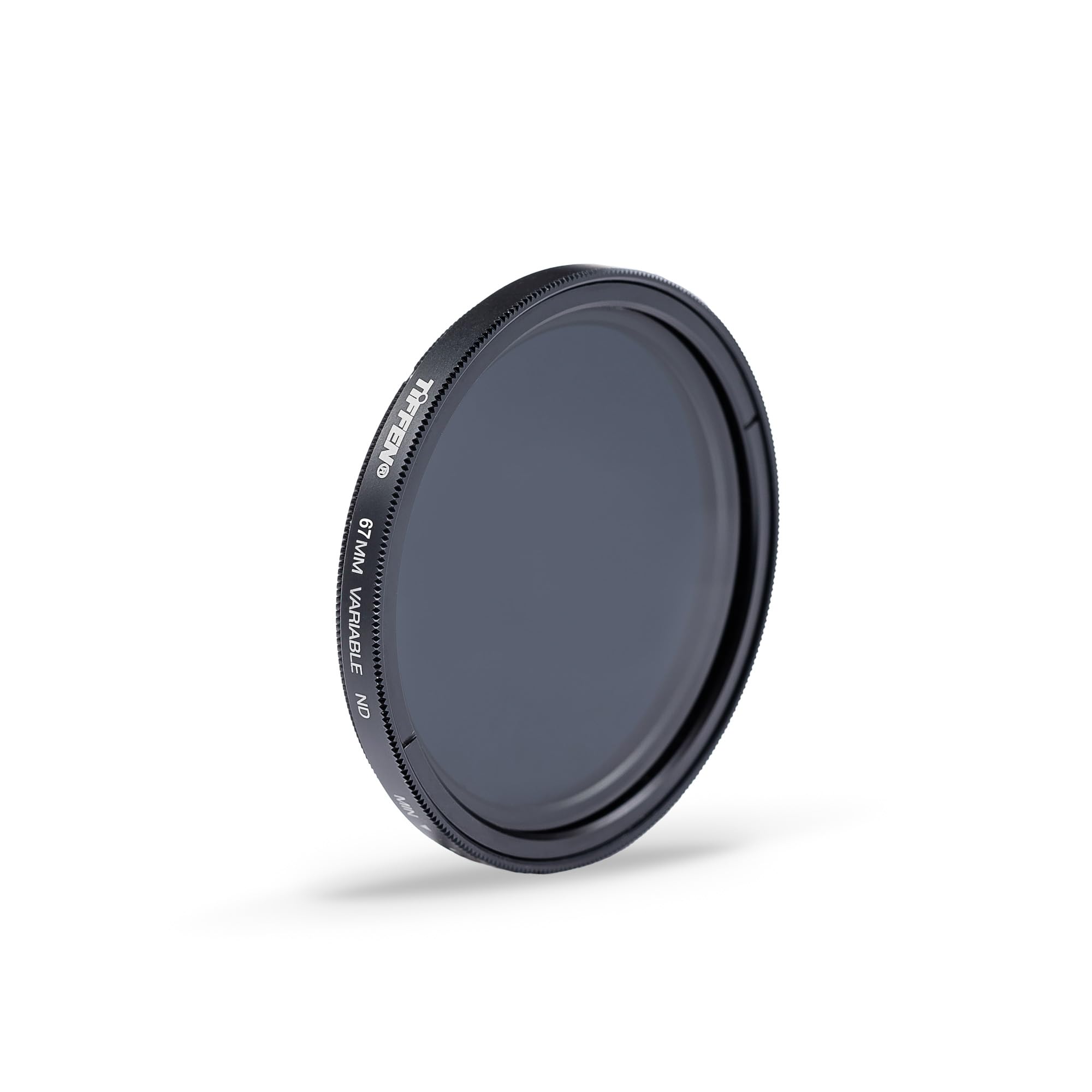
The Tiffen 67mm VND is a dedicated 2-8 stop variable ND built around ColorCore optical glass, with the brand name and optical experience to back it up. Unlike the top pick's VND+CPL hybrid, this filter skips the polarizer in exchange for a wider stop range and a simpler optical path for stills and video. For shooters who already own a separate CPL or rarely need polarization, that trade keeps the optical stack simple and the bag lighter.

Mid-range settings are where the filter earns its keep. From about 2 to 5 stops, exposure changes stay consistent, and the single-ring design makes adjustments quick when light shifts between shots or scenes. The smooth rotation gives you fine control over exposure without taking the camera from your eye, which is useful when shooting handheld video.

Buyers with 67mm lenses who need one filter for daylight video and landscape work are the right audience for this Tiffen. Treat the 8-stop maximum as an emergency range, because banding, vignetting, and color cast can appear there; ultra-wide lenses make those artifacts more visible. If your usual work sits at 2-5 stops, the Tiffen delivers the range and brand support without the premium price of color-critical filters.

Pros

  • Broad 2-8 stop range means one filter replaces several fixed NDs in a bag.
  • ColorCore glass keeps contrast and sharpness stable through the middle of the range.
  • Mid-range pricing keeps it below premium VNDs while still carrying an established brand name.

Cons

  • Threads may feel stiff when mounting, and occasional units have a loose front ring.
  • No hard stop at the 8-stop setting, so rotating past it creates the X pattern.
Our verdict

The Tiffen is a strong everyday VND for 67mm shooters who want a wide range and a recognizable name without the hybrid complexity of the top pick.

Check Latest Price
4

Premium Color-Critical Pick

NiSi 72mm True Color VND

91 /100
Studio Score High Confidence

Key details

Stop Range
1-5 stops
Filter Type
Variable ND
Thread Size
72mm
Coating Quality
20-layer nano coating, true color
Check Price on Amazon

The NiSi 72mm True Color VND is the color-neutral option in this group: its 1-5 stop range avoids the X-pattern and color shift that show up on wider-range rivals, and the 20-layer nano coating keeps reflection in check. Rotation is smooth and well-damped, so hand-pulled exposure changes stay predictable. That combination is what separates it from the wide-range 67mm option in this comparison.

The Swift System adds practical flexibility: optional adapter rings and specialty filters can ride on the same front thread, which matters when your lenses use different filter sizes. The 72mm thread is a common size on full-frame zooms, so suitable lenses can mount it without step-up rings. It is a pure variable ND, so there is no polarizing layer to complicate the optical stack. Build quality matches the premium asking price, with a solid barrel and evenly weighted rotation.

Choose this when color accuracy is the deciding factor and your shooting stays within 1-5 stops. The premium price buys that clean range, though it is a narrow range next to the 2-8 stop option in this group, and the hard stop can rotate past its limit on occasional units — checking the rotation range when it arrives is a reasonable precaution.

Pros

  • Color neutrality is the standout trait, with no X-pattern across the 1-5 stop range.
  • Rotation is smooth and well-damped, so hand-pulled exposure changes stay predictable.
  • Swift System accepts optional adapter rings and specialty filters, covering multiple lenses from one thread.

Cons

  • A yellow cast or corner vignetting can appear on some copies despite the true-color design.
Our verdict

For color-critical shooters who stay within 5 stops, this is the one to mount.

Check Latest Price
5

Budget VND+CPL Combo

NEEWER 67mm VND+CPL

90 /100
Studio Score High Confidence

Key details

Stop Range
1-5 stops
Filter Type
VND + CPL 2-in-1
Thread Size
67mm
Coating Quality
30-layer nano coating
Check Price on Amazon

The 67mm NEEWER combines a 1-5 stop variable ND with a circular polarizer in a single aluminum frame, and the 30-layer nano coating keeps colors lively from ND2 to ND32. It is a budget-friendly way to control exposure and glare on a common thread size, so video and stills shooters can carry one filter instead of two. The aircraft-grade aluminum body gives it a solid feel at this price.

The 1-5 stop range covers typical daylight exposure control with normal apertures; it will not replace a 6-9 stop filter for long exposures in noon sun, but it is enough for shallow-depth-of-field video and general outdoor stills. The ring turns smoothly, and the filter sits flush on 67mm lenses without reflections or vignetting in the frame. The CPL adds contrast to skies and water, which is the practical reason to choose this combo over a plain variable ND.

This suits 67mm owners on a budget who want a single affordable filter for daylight work and do not need independent CPL control. The ND and CPL rings are coupled, and there are no hard stops, so exact repeatable settings require attention; you set exposure, check polarization, and use two hands when needed.

Pros

  • Aluminum frame and 30-layer coating feel substantial; colors stay lively across the range.
  • Combines VND and CPL in one filter, saving money and bag space.
  • Spins smoothly and keeps reflections and vignetting out of the frame on 67mm lenses.

Cons

  • The ND and CPL rings are coupled, so rotating one can move the other and call for a second hand.
  • No hard stops means matching an exact ND position is approximate; you set each shot by eye.
Our verdict

For a 67mm shooter who wants one low-cost filter for everyday exposure and glare control, this combo delivers the essential functions. Just don't expect precise independent CPL or repeatable hard-stop positions.

Check Latest Price
6

Filmmakers

PolarPro 82mm PM VND 2-5

85 /100
Studio Score Strong Evidence

Key details

Stop Range
2-5 stops
Filter Type
Variable ND
Thread Size
82mm
Coating Quality
Cinema-grade quartz glass, 16-layer
Check Price on Amazon

The PolarPro 82mm Peter McKinnon VND delivers a hard-stop 2-5 stop range with cinema-grade quartz glass, and the detents are precise enough for repeatable exposure changes between shots. The no-X frame keeps cross-pattern artifacts away across the normal focal-length range, while bright-light footage stays clean and well-exposed. The tradeoff is at wide angles: color shift and vignetting can appear despite the no-color-shift marketing claim, so this filter sits below the cleaner color performers for ultra-wide work. Filmmakers using 82mm lenses who prioritize repeatable control over corner purity will still get what they pay for.

Pros

  • Hard stops return to the same density every time, speeding matched shots between takes.
  • The no-X frame cuts down cross-pattern artifacts through most of the 2-5 stop range.
  • Bright-light footage can remain clean and well-exposed with this glass.

Cons

  • The premium price is a barrier for budget-conscious 82mm shooters.
  • Standard lens hoods and lens caps are not compatible; the custom cap is the only cover.
Our verdict

For 82mm filmmakers whose priority is hard-stop repeatability, this premium VND fits.

Check Latest Price
7

Bright-Day Video

Freewell 82mm 6-9 Stop VND

88 /100
Studio Score Strong Evidence

Key details

Stop Range
6-9 stops
Filter Type
Variable ND
Thread Size
82mm
Coating Quality
18-layer multi-coated optical glass
Check Price on Amazon

Freewell's 82mm hard-stop VND covers exactly the 6-9 stop band that bright-day video work needs, with fixed endpoints for repeatable rotations and 18-layer multi-coated glass to keep reflections low. The range starts where typical variable NDs end, so it suits filming in midday sun rather than one-filter everyday use. That narrow band leaves shaded scenes and lower-stop stills work to other filters, and the zero-vignetting claim applies to the stated range, not to the 1-5 stop territory. For bright-day shooters this is a specialized tool; for anyone wanting a single general-purpose VND, the 6-stop floor is the boundary that rules it out.

Pros

  • Hard stops at 6 and 9 stops make exposure changes predictable for video.
  • 82mm thread integrates with larger front-element lenses without step rings.
  • 18-layer multi-coated optical glass targets low flare in bright conditions.

Cons

  • The 6-stop minimum blocks lower-stop work in overcast, shaded, or indoor settings.
  • The narrow 6-9 band skips the 2-5 stop range that typical run-and-gun video setups expect.
Our verdict

For one-filter general use, pass on this; for midday-sun video work where 6-9 stops are the job, the hard-stop range is exactly the point.

Check Latest Price
8

Budget Shoppers

NEEWER 67mm ND2-400 VND

88 /100
Studio Score Strong Evidence

Key details

Stop Range
1-9 stops
Filter Type
Variable ND
Thread Size
67mm
Coating Quality
Multiple nano coatings
Check Price on Amazon

The NEEWER 67mm VND covers 1-9 stops in a 9.5mm ultra-slim aluminum frame with multiple nano coatings, making it one of the least expensive ways to put a 67mm variable ND on a lens. The wide thread size and low-profile build suit landscape and daylight video setups where bag space is tight. At this price, the filter works best as an entry point into variable ND rather than as a precision tool.

The catch is that optical quality beyond the published claims is not yet demonstrated, which keeps this from climbing above the budget tier. It suits budget shoppers comfortable taking a chance; buyers who need confirmed optical performance before spending should look at the 55mm no-X option in this set instead.

Pros

  • Ultra-slim 9.5mm metal frame keeps added weight low on the lens.
  • A single filter covers 1-9 stops, enough for daylight blur and long-exposure shots.
  • Multiple nano coatings provide basic flare and smudge resistance at a budget-friendly price.

Cons

  • Shooters who want glare control in the same filter will not get it; this is a pure ND rather than a VND/CPL combo.
  • At the dark end of the range, X-pattern and color cast can appear, so the full 9 stops are not a clean-image guarantee.
Our verdict

For budget shooters ready to test variable ND with a smaller investment, this 67mm filter fills the slot; it is not the filter to choose when certainty matters.

Check Latest Price

How to Choose

Usable Stop Range

Variable ND filters work by stacking two polarizers. As you rotate them toward maximum density, the polarization angles become harder to control, which is why dark corners, uneven banding, and the X shape appear before the last advertised stop. Give yourself at least one stop of headroom from the stated maximum, and treat a named clean range as more useful than the box.

Thread Size and Compatibility

Thread size must match your lens front diameter; 67mm and 82mm are common, but step-up rings let you mount a larger filter on smaller lenses. The practical catch is that variable NDs often use a thicker front ring, so standard lens caps and hoods no longer fit. Check the front thread diameter and cap size before buying if you want to keep your current kit.

VND vs VND+CPL Combo

A pure VND controls exposure only. A VND+CPL adds a polarizer in the same stack to cut glare and boost saturation, which is useful for waterfalls, windows, and foliage. The tradeoff is that the controls are often linked, so rotating the ND ring can move the CPL, meaning you may need two hands and a fresh polarization check after each exposure change.

Hard Stops and No-X

Hard stops are physical limits that prevent over-rotation into the X-pattern. No-X frames add an internal mechanism that keeps the two polarizers aligned; the combination is what makes a variable ND repeatable on a gimbal or in a follow-focus setup. Without hard stops, you are relying on feel and a mark on the ring to find the same density twice.

Coating and Color Neutrality

Multi-coated glass reduces flare and ghosting when bright sources are in frame. Color neutrality depends on the coating recipe and glass, and cheaper filters often shift toward yellow, green, or blue as density increases. If you grade video or photograph products, choose a true-color coating; if you only need social clips, the shift may be correctable.

Frequently Asked Questions