7 Best Camera Lens Filter of 2026: Get the Right Thread Fit

Camera lens filters that fit, protect, and stay optically clean — from budget UVs to variable NDs and starter kits.

Most filter problems start before the filter touches the glass: a wrong thread size, a coating that cannot handle bright lights, or a lens hood that fights the filter ring. The two details that settle most purchases are the Ø mark engraved on the lens barrel and whether the glass is multi-coated.

A UV filter should disappear into the lens. A CPL or ND filter should change the light without adding a tint or softening the image. The trade-offs only show up in use: uncoated glass can flare around every streetlamp, and variable NDs lose contrast and gain vignetting at their darkest settings.

This guide sorts filters by the lens they fit and the job they do, because the right choice for a 58mm kit lens is not the right choice for a 72mm landscape lens. Matching the thread size and coating quality to your shooting conditions matters more than picking the most popular listing.

1

Best Overall

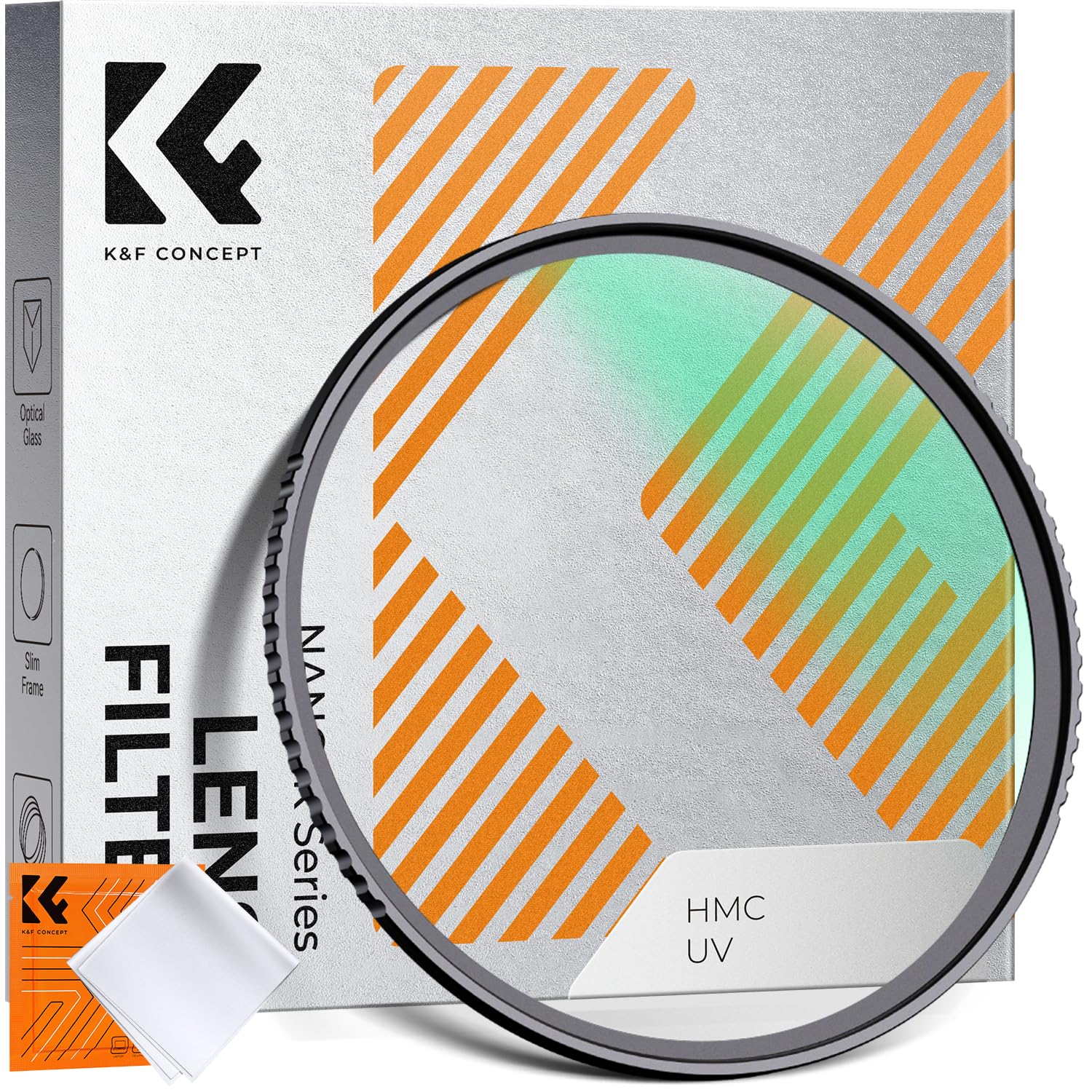
K&F 52mm MCUV Filter

96 /100
Studio Score High Confidence

Key details

Filter Type
UV/clear
Thread Size
52mm
Coating Quality
18-layer nano
Variable ND Range
None
Check Price on Amazon

The K&F Concept 52mm MCUV is a slim 3.3mm protective filter with an 18-layer nano coating on AGC optical glass and 94% transmittance. Its role is front-element protection, and the optics hold up in normal use: no visible contrast loss, color cast, or added ghosting in backlit frames. The multi-coated surface also prevents the haze that uncoated budget UV filters introduce when bright sources enter the frame. For a clear filter, that coating performance is what separates a simple lens cover from glass that leaves the image character untouched. It is a permanent protector rather than a do-everything attachment, and staying within that role is why the optical behavior stays clean.

Mounted on a 52mm prime for daily carry, the filter takes the kind of dust, sand, and incidental contact that would otherwise land on the front element. The coating sheds smudges and cleans up quickly with a lens cloth, which makes it practical in high-traffic outdoor conditions. The thin ring keeps the setup compact on small primes, so a permanently mounted filter does not feel like an extra piece of gear. Installation requires no tool: align the ring to the lens thread, rotate until snug, and the filter sits ready for the next shoot. The same slim profile means the filter face stays easy to wipe down without removing it.

Buyers should treat this as clear lens insurance for 52mm primes, not as a creative filter. It suits an owner who wants permanent protection and understands the glass is a sacrificial layer: a hard impact can crack the filter while absorbing the hit, and the slim ring may bind on some lenses with tight thread tolerances, so check fit before forcing it. Photographers who need CPL or ND functionality, or who own lenses with other thread sizes, should look elsewhere. For that 52mm protective use, the tradeoffs are minor next to the optical clarity and dust resistance it adds.

The value case is direct: this filter sits at budget-friendly pricing while using multi-coated glass, which puts it ahead of the uncoated UV filters still found at entry-level prices. Among 52mm protective filters, it offers the best mix of slim build, coating quality, and cost for a permanent front-element shield. The uncoated options at similar prices only make sense for shooters who rarely frame bright sources, and even then they trade away flare control for the same amount of physical protection.

Pros

  • Adds a protective layer over the front element without changing how the lens draws.
  • Multi-coated glass keeps backlit scenes free of the haze seen on uncoated UV filters.
  • Mounts without tools and cleans up with a quick lens-cloth pass.
  • Budget-friendly price for a slim, multi-coated 52mm protective filter.

Cons

No notable drawbacks to flag.

Our verdict

For 52mm prime owners who want a permanent clear protector, this filter is the default: coated optics, slim ring, and a price that makes the upgrade from uncoated glass an easy call.

Check Latest Price
2

Best Variable ND for Video & Long Exposure

K&F 67mm VND 1-9 Stop

91 /100
Studio Score High Confidence

Key details

Filter Type
Variable ND
Thread Size
67mm
Coating Quality
8-layer multi-coated
Variable ND Range
1-9 stops
Check Price on Amazon

The K&F Concept 67mm Variable ND2-400 packs a 1-9 stop range into a single rotating ring, which is the practical answer to carrying several fixed ND filters. That puts it on the creative end of the filter aisle, not the lens-protection end occupied by the category's slim UV filter.

At moderate settings, the 8-layer multi-coating keeps flare and ghosting in check, and the 7.4mm frame is slim enough to keep corner shadow from becoming a problem on wide lenses. The range covers daylight video and multi-second exposures, so a single rotation gets you from open shade to bright sun.

The 360-degree travel lets you dial exposure down on the fly. When the light is changing between shots, a quick turn keeps the shot moving, which is exactly what outdoor video and eclipse work need.

This is for videographers, eclipse shooters, and long-exposure landscape photographers who need quick outdoor light control and are comfortable around an optical ceiling. The 67mm thread is the hard size limit, and the darker end of the ND range is where the budget glass shows: color cast, softness, and vignetting appear if you push past roughly the midpoint of its range. That is the line between creative work and critical stills.

Pros

  • One rotating filter replaces several fixed NDs for video, eclipse shooting, and long exposures.
  • Budget-friendly entry into variable ND work without buying a full set of filters.
  • Adjustment ring moves smoothly, so exposure changes come without swapping glass.

Cons

  • Threads can bind on some lens barrels, so removal may take extra care.
  • At high stops, uneven darkening or an X-pattern can appear across the frame.
Our verdict

For outdoor video and long-exposure days, the rotating control is worth more than a pile of separate ND filters.

Check Latest Price
3

Best All-In-One Starter Kit

Neewer 58mm Kit (9pcs)

92 /100
Studio Score High Confidence

Key details

Filter Type
UV, CPL, FLD, ND
Thread Size
58mm
Coating Quality
Nano-coated
Variable ND Range
Fixed ND2/4/8
Check Price on Amazon

The nine-piece 58mm set bundles UV, CPL, FLD, ND2, ND4, and ND8 filters with two hoods, a snap cap, a pouch, and a cleaning wipe. That puts a full starter kit into one box for Canon Rebel and other 58mm kit-lens owners who are just beginning to explore standard glass filters.

Optical consistency can vary between units, and hood or filter-ring fit can be awkward on some lenses. This kit suits beginners who want to learn with UV, CPL, and ND options before committing to premium single filters, and it is not aimed at pixel-peepers chasing identical sharpness from every frame.

Build quality is solid for the budget class, and the filters thread on smoothly in common situations. The CPL reduces reflections from windows and water, the ND2/4/8 set provides graduated exposure control, and the UV doubles as front-element protection.

The included hoods and cap add basic flare control and lens security, while the pouch keeps the nine pieces organized in a camera bag. For a first filter kit, this is a practical spread that covers more ground than a single UV and leaves room to upgrade individual filters later.

Pros

  • Solid build quality at a budget price.
  • Strong value as an all-in-one starter set.
  • Filters handle general shooting situations well.

Cons

  • The FLD filter is only useful under fluorescent lighting, so it may stay in the pouch.
  • Threaded for 58mm only; photographers with 52mm or 55mm lenses need a different set.
Our verdict

Canon Rebel owners starting out with filters will get more variety from this kit than from a single UV, and at a budget-friendly price.

Check Latest Price
4

Best Budget 58Mm Protector

Amazon Basics 58mm UV

95 /100
Studio Score High Confidence

Key details

Filter Type
UV
Thread Size
58mm
Coating Quality
Uncoated
Variable ND Range
None
Check Price on Amazon

The Amazon Basics 58mm UV is the low-cost front-element guard for anyone with a 58mm lens thread; the aluminum frame keeps weight down and the water-resistant build suits outdoor use.

Mounted on a kit lens, the filter becomes the surface that takes scratches, dust, and moisture instead of the front glass. The uncoated design keeps the price down, which makes replacement after a rough shoot painless.

Budget-minded Canon 58mm kit-lens owners and outdoor shooters in dusty or wet conditions should keep this on the lens. The uncoated optics add flare and ghosting in backlit scenes, so anyone who routinely frames bright lights or the sun will want the multi-coated 52mm top pick. If your lens does not use 58mm threads, this filter won't help.

Pros

  • Budget-friendly enough to treat as a replaceable front element.
  • Performs the basic UV-protection job without getting in the way of normal shots.
  • Shields the front element from scratches, dust, and moisture on outdoor shoots.
  • Fits standard 58mm filter threads with no adapter needed.

Cons

  • On some 58mm lens barrels, the threads can resist engagement and make mounting a fiddly process.
  • The glass element can move in the aluminum frame over time, so the retaining ring may need occasional re-tightening.
Our verdict

For 58mm shooters who want cheap front-element protection without chasing maximum optical purity, this is the filter to mount and leave on.

Check Latest Price
5

Best Minimalist Budget Kit

Acuvar 52mm Filter Kit

90 /100
Studio Score High Confidence

Key details

Filter Type
UV, CPL, FLD
Thread Size
52mm
Coating Quality
Multi-coated
Variable ND Range
None
Check Price on Amazon

The Acuvar kit combines three multi-coated filters into one compact travel case at entry-level pricing. The 52mm rings thread onto standard lenses without excessive torque, and the small case drops easily into a camera bag. For first-time buyers, the glass keeps enough clarity that everyday photos don't inherit a soft or hazy look.

This is a deliberately small set. Where nine-piece starter kits add ND filters, hoods, and caps, this one keeps the footprint lean, so there are fewer pieces to track and less bulk in the bag. That simplicity is the main draw: UV protection, polarized-glare control, and fluorescent-light correction in a single case.

This suits casual 52mm shooters and first-time buyers who want lens protection and polarized-glare control without carrying a drawer of extras. It lacks ND filters, so long-exposure work stays out of reach; the FLD filter is only useful under fluorescent lighting. Travelers who shoot indoors under fluorescents can still find a use for it, while daylight outdoor shots are covered by the UV and CPL. For general walking-around photography, that is the core of what a starter filter set needs to do.

Pros

  • Glass clarity holds up well for an entry-level three-filter set.
  • The 52mm rings fit standard lens threads cleanly.
  • The set gives UV and CPL coverage at a price that suits a first kit.

Cons

  • Only fits 52mm filter threads; other lens diameters need a different set or a step-up ring.
  • Entry-level multi-coated glass can show more flare than premium-coated filters in backlit scenes.
Our verdict

A compact three-filter starter set for casual 52mm shooters who want UV protection and a polarizer without the bulk of a full kit.

Check Latest Price
6

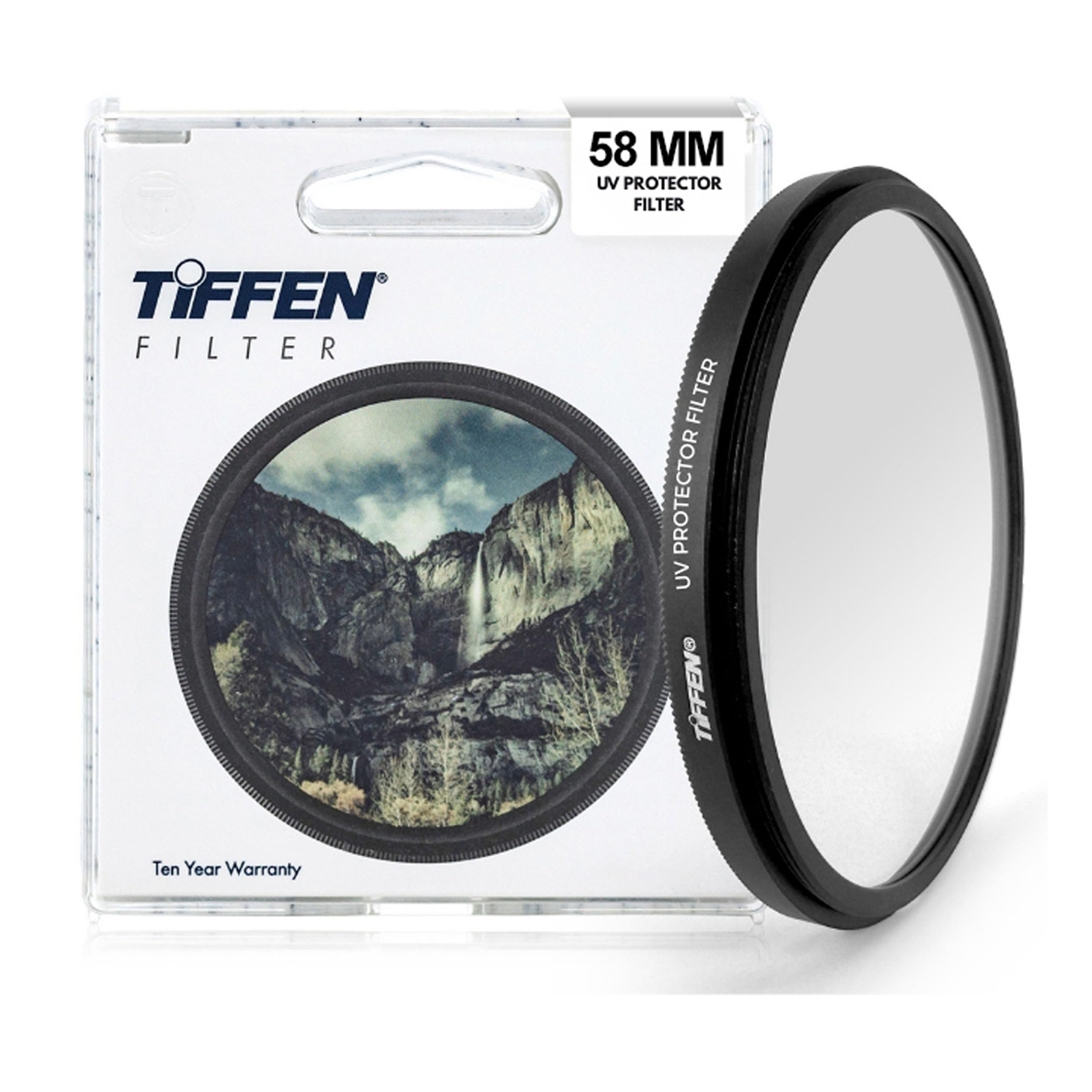
Established 58Mm UV

Tiffen 58mm UV Protector

93 /100
Studio Score High Confidence

Key details

Filter Type
UV
Thread Size
58mm
Coating Quality
Uncoated
Variable ND Range
None
Check Price on Amazon

Tiffen's 58mm UV protector is a budget-friendly shield from an established US brand with a 10-year warranty, and it does the protective-filter job for 58mm lenses. The uncoated glass can flare, and the retaining ring can loosen after mounting — the first limits it in night or backlit scenes, the second calls for a quick inspection. In normal lighting it behaves much like cheaper uncoated 58mm UV alternatives, leaving Tiffen's brand backing and warranty as the main reasons to pick it.

Pros

  • Budget-friendly 58mm UV filter backed by a 10-year warranty from an established US brand.
  • Protects the front element from dust, scratches, and minor impacts before the lens does.
  • Screws onto standard 58mm filter threads without forcing.

Cons

  • Retaining ring can loosen after mounting, leading to glass rattle or ring separation.
  • Uncoated glass can produce flare and ghosting with bright light sources in the frame.
Our verdict

For 58mm shooters who want a no-frills UV filter from a recognizable brand, the Tiffen fits when you stick to normal lighting.

Check Latest Price
7

Compact 52Mm Kit

Neewer 52mm Kit (9pcs)

90 /100
Studio Score High Confidence

Key details

Filter Type
UV, CPL, FLD, ND
Thread Size
52mm
Coating Quality
Nano-coated
Variable ND Range
Fixed ND2/4/8
Check Price on Amazon

Nine-piece 52mm set bundles UV, CPL, FLD, ND2/ND4/ND8, hood, cap, and pouch into one budget-friendly package for small-thread lenses. It shares its hardware family with the larger 58mm Neewer kit, so apart from thread size the set is redundant; choose this version only if your lenses take 52mm filters. Optical consistency and fit QC can vary between individual examples, which keeps it in starter territory rather than a precision tool. The assortment is still a low-cost way to experiment with polarizers and neutral-density filters before stepping up to higher-priced glass.

Pros

  • Broad filter selection covers UV, CPL, FLD, and three ND strengths in one purchase.
  • Budget-friendly price makes it easy to add a protective UV and creative filters without a large outlay.
  • Pouch, hood, and cap add carrying convenience for travel or a backup kit.

Cons

  • CPL clarity can vary, with some units producing softer results than the UV or ND filters.
  • Filter rings can seize on threads, making removal harder on certain lenses.
Our verdict

For a 52mm lens setup, this is a reasonable starter kit that covers common filter needs without demanding a big investment.

Check Latest Price

How to Choose

Thread Size

Every lens has a Ø diameter marked near the front element, and that number must match the filter's millimeter size. A 52mm filter will not engage with a 58mm thread, and a 58mm filter will simply sit over a 52mm lens. There is no 'close enough' tolerance.

A step-up ring lets you mount a larger filter on a smaller lens, but it moves the glass farther from the front element and can show at the edges of wide-angle frames. Buy for the largest thread you use to share filters across lenses.

Filter Type

UV and clear filters act as a physical shield. CPL filters block polarized reflections. ND filters lengthen shutter speed, and variable NDs combine two polarizers for adjustable reduction in one ring.

The trade-off is specialization: a UV filter does nothing for reflections, a CPL cuts light and can darken skies unevenly, and an ND that is too weak forces you back to a smaller aperture. Pick the filter that solves the light problem you actually shoot into.

Coating Quality

Uncoated glass reflects more light, so bright sources create flare, ghosting, and lowered contrast. Multi-coated glass suppresses those reflections, keeping the image clean with a lamp or the sun in the frame.

The difference shows up at night or in backlit scenes, not in a sunny test shot. Daytime-only shooters can use uncoated glass; night shooters should pay the small gap for multi-coated glass.

Included Accessories

A pouch or case stops grit and metal rings from grinding against each other in a camera bag, which is how stuck threads develop. A hood adds shading but can sit awkwardly on thick filter rings, so accessories only help if they fit your lens.

Variable ND Range

Variable NDs rotate two polarizers. At the low end the image stays neutral; past roughly half the maximum reduction, the second polarizer can create an X-pattern, vignetting, and a color cast.

Set the dial to the weakest reduction that still gives you the desired shutter speed. The sharpest results come from the first half of the range, not the labeled maximum.

Frequently Asked Questions