13 Best Trail Cameras 2026: Pick by Connectivity, Not Megapixels

The best trail cameras for your property depend on connectivity, power, night vision, and weather sealing - not megapixel marketing.

Trail camera listings often read like a spec-sheet arms race: more megapixels, longer night range, faster triggers. In practice, the real differences show up after a few weeks outside - batteries that drain before the first check, moisture inside a sealed housing, and a WiFi mode that only works when you are standing next to the camera.

The practical choice is not about brand names. It is about how much effort you want between the camera and your phone. Cellular models push images to you from anywhere but add data plans and battery draw; local WiFi and SD-only cameras keep costs low but require a visit to collect footage. Solar charging and multi-camera packs change that math by removing battery anxiety and expanding coverage for the same money.

This guide sorts out those trade-offs around connectivity, power, night-vision type, and weather sealing so you can pick a camera that fits your property and checking routine. Buyers who sort by those decisions first tend to be happier with their trail cameras than those who chase the highest number on the box.

1

Best Overall

MAXDONE Solar

85 /100
Studio Score Strong Evidence

Key details

Night Vision
Low-glow IR, 65ft
Trigger Speed
0.1s
Weather Sealing
IP66
Connectivity & Power
Solar + 6000mAh, local WiFi
Check Price on Amazon

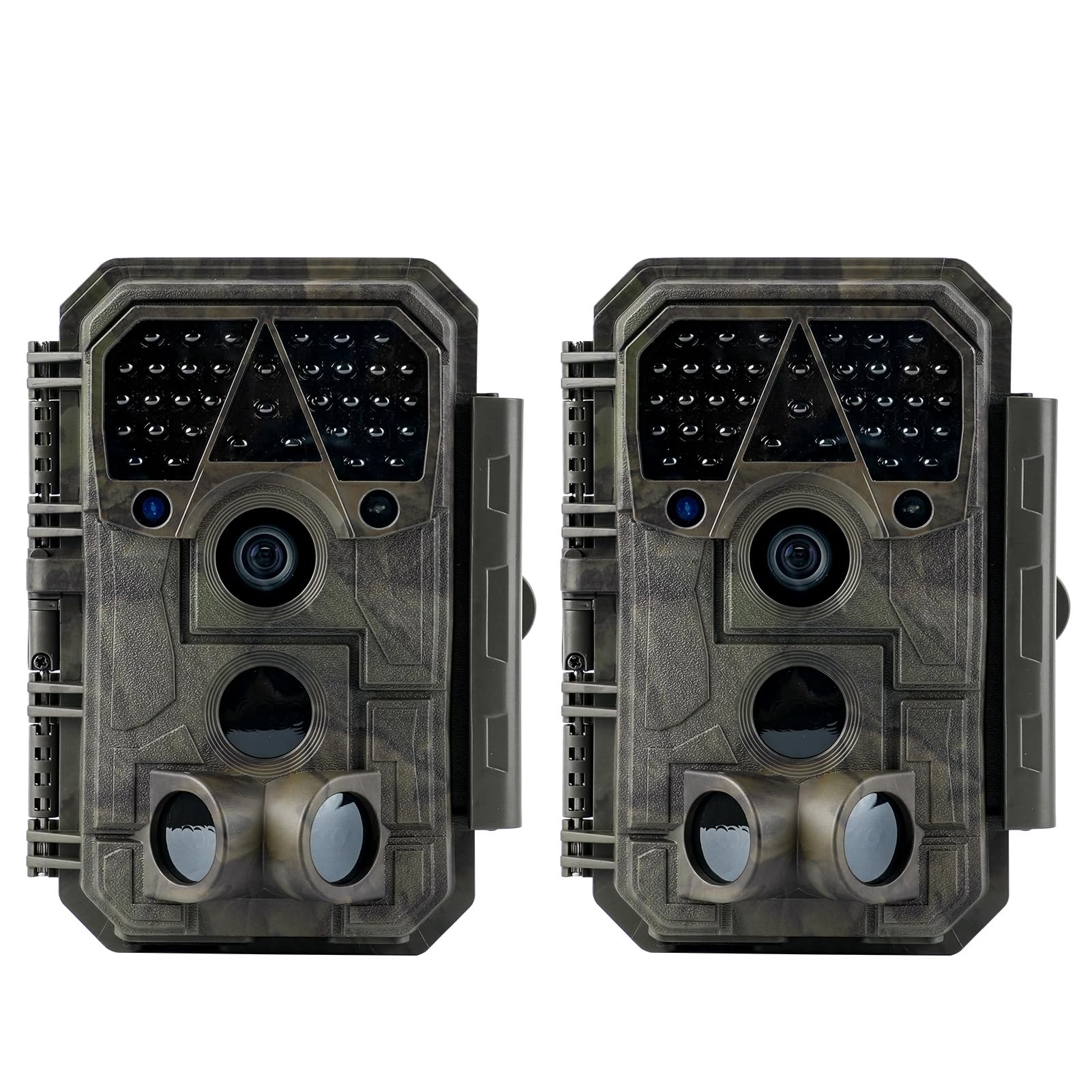
The MAXDONE PH970S combines solar charging with a 6000mAh battery, so it can stay in the field without regular battery swaps. It also packs 4K video, 64MP stills, and a 0.1s trigger into a budget-friendly price, giving sharp daytime detail and quick response when animals walk past. The included 32GB TF card and IP66 housing get a new deployment running without extra purchases.

The app handles setup and clip preview without removing the SD card, and the solar panel keeps the internal battery topped up during normal outdoor exposure. Daytime stills are sharp, and the low-glow IR reaches about 65 feet for nighttime video without lighting up the area. The night mode uses low-glow IR rather than a bright flash, so it is well suited to hidden monitoring near trails and feeders.

This is a fit for wildlife watchers, hunters, and backyard or off-grid owners who can walk the camera site to collect footage. The WiFi is local-only; remote image delivery is not possible, so it does not provide home WiFi cloud upload or cellular transmission. It also avoids subscription fees, meaning the total cost stays at the purchase price. If your routine depends on photos reaching you away from the camera, a cellular model fits that workflow instead.

πŸ’‘ Keep the phone within a few feet of the camera during the first WiFi link.

Pros

  • Solar panel keeps the internal battery topped up between visits, so the camera runs longer without interaction.
  • 4K video and 64MP stills provide clear daytime and low-glow night footage at a budget-friendly price.
  • App and on-camera menus make initial setup easy for first-time trail camera owners.

Cons

  • Initial WiFi pairing can be slow to complete from the app.
Our verdict

The PH970S is the solar-powered WiFi trail camera for owners who want 4K capture and no subscription costs.
Check Latest Price
2

Best Cellular Trail Camera

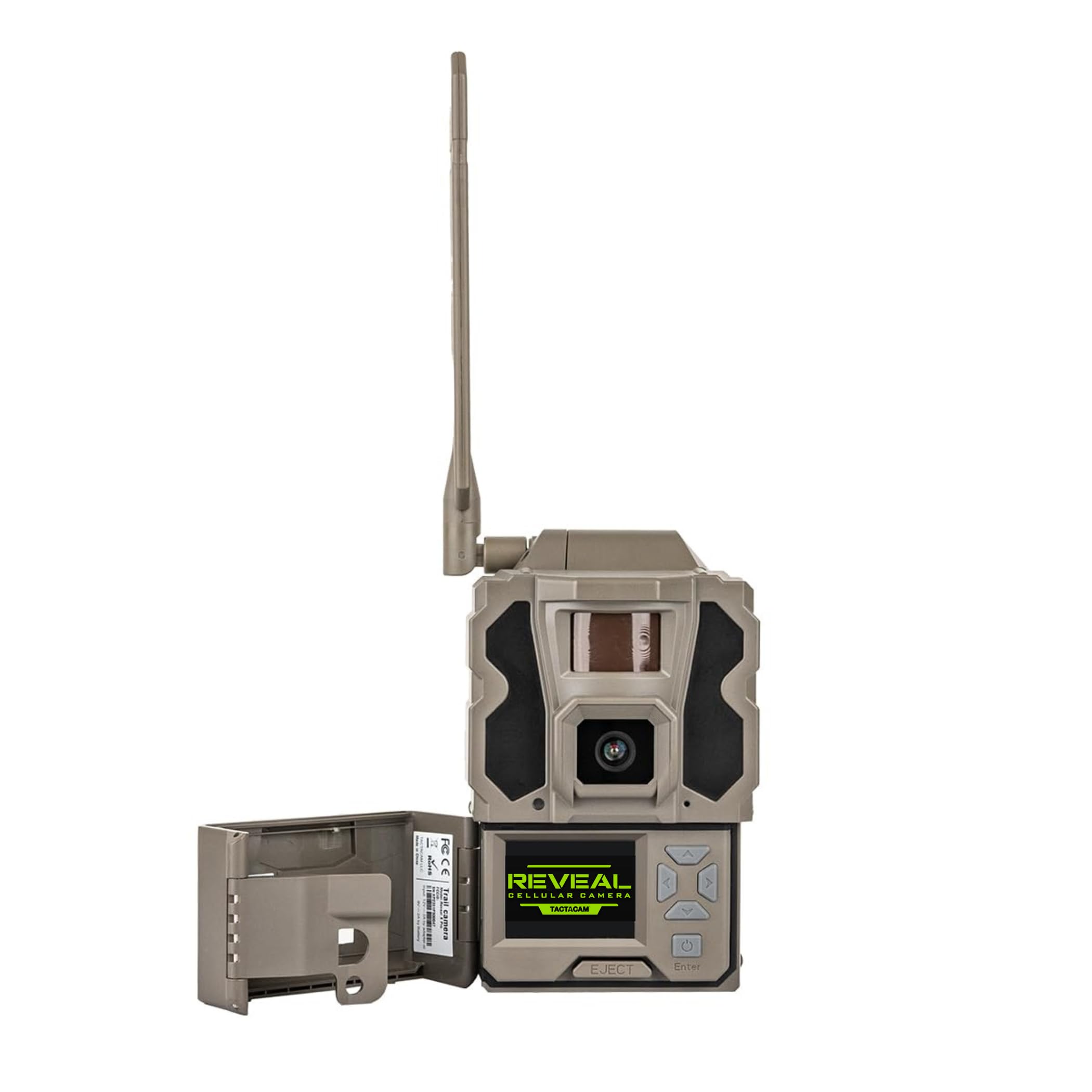
TACTACAM Reveal X 3.0

87 /100
Studio Score Strong Evidence

Key details

Night Vision
No-glow IR, 96ft
Trigger Speed
Sub-half-second
Weather Sealing
β€”
Connectivity & Power
4G LTE, AA
Check Price on Amazon

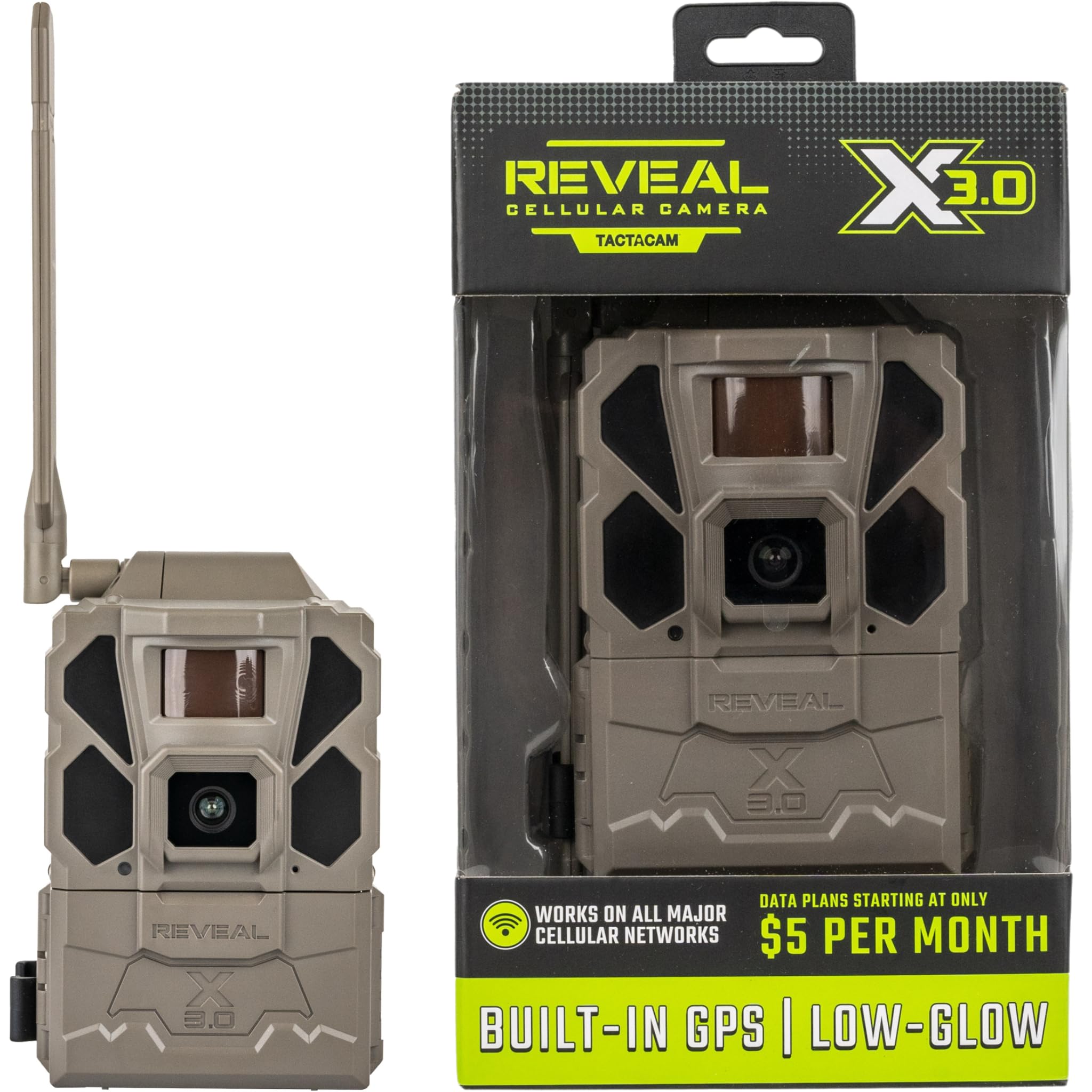
The Reveal X 3.0 pairs auto-connecting AT&T/Verizon 4G LTE with built-in 32GB storage, so clear daytime and infrared photos land in the app without an SD card. Setup is quick enough to move from unboxing to live photos in minutes. This is a cellular-first trail camera, not a do-everything unit.

It suits hunters and property owners who check cameras from home and want photo delivery without visiting card slots. Cellular operation requires a data plan, and battery life is signal-dependent, so weak-coverage properties should plan for more frequent battery changes. Anyone needing on-demand video or GPS should step up to the Reveal Pro.

Pros

  • Clear daytime and nighttime photos are sent directly to the phone.
  • Setup moves from unboxing to live photos in minutes.
  • Build quality holds up across field use.

Cons

  • Occasional units may need a reset or replacement when photo delivery stops unexpectedly.
Our verdict

For hunters who want app-delivered photos without pulling cards, this is a practical cellular option.

Check Latest Price
3

Best No-Glow 2-Pack Value

Meidase P70 2-Pack

87 /100
Studio Score Strong Evidence

Key details

Night Vision
940nm no-glow, 100ft
Trigger Speed
0.1s
Weather Sealing
β€”
Connectivity & Power
8xAA, no WiFi
Check Price on Amazon

The P70 2-Pack supplies two 64MP no-glow cameras with a 0.1-second trigger and a 2.4-inch LCD for field checks without a phone. There is no cellular plan or WiFi pairing to manage, which keeps setup simple and the running cost at zero after initial gear purchases. Each camera takes eight AA batteries, with an optional Meidase SP350 solar panel for longer unattended spells.

This is a two-pack for hunters who want stealth coverage in separate locations without a subscription. It is best mounted under cover or inside a shelter, because the battery door seal can let moisture through in heavy rain. Battery life is modest with frequent video clips, but photo-mode owners should get enough run time between checks to make the 0.1s trigger worth having.

Pros

  • Two no-glow 64MP cameras in one box, covering two scouting spots at once.
  • Clear daylight photos and sharp night images from both cameras.
  • Operation holds up over months of field use across a range of setups.

Cons

  • Durability may differ between the two cameras even under identical mounting conditions.
Our verdict

For hunters who want two no-glow scouting cameras without a subscription, this 2-pack delivers the essentials at a budget-friendly price.

Check Latest Price
4

Best Low-Light 2-Pack

GardePro A3S 2-Pack

86 /100
Studio Score Strong Evidence

Key details

Night Vision
940nm no-glow, 100ft
Trigger Speed
0.1s
Weather Sealing
IP66
Connectivity & Power
8xAA, no WiFi
Check Price on Amazon

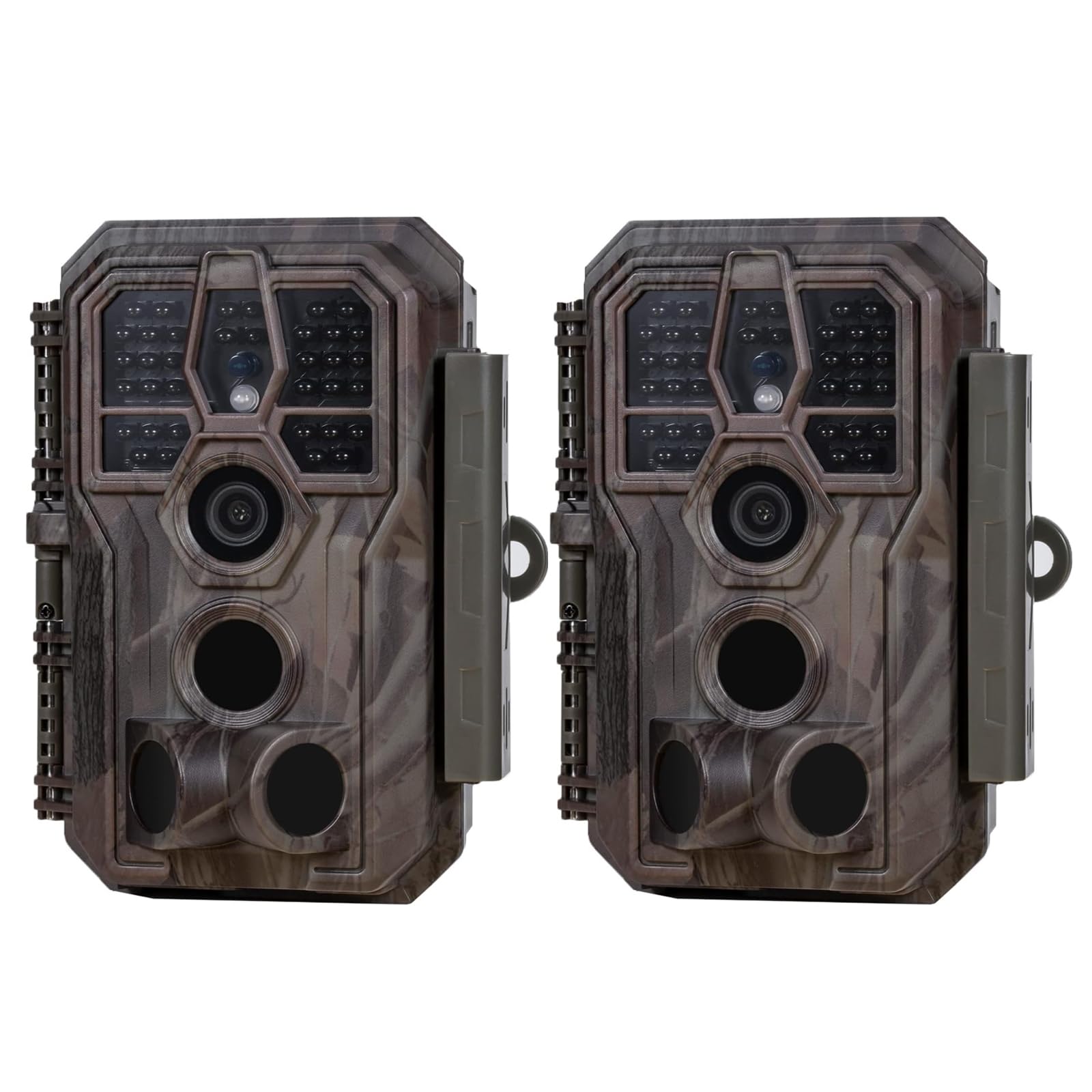
The GardePro A3S 2-pack centers on Sony Starvis low-light capture: 64MP stills, 1296P video with audio, a 0.1s trigger, and 100ft of 940nm no-glow IR per camera. Daytime images stay crisp, and night footage keeps enough detail for identifying game without a visible glow. Hunters running two nearby trails who prefer field checks over app alerts will find this a good fit without needing cellular or WiFi delivery. The 2-pack price spreads the cost per camera, which helps when setting up a perimeter. The IP66 seal has limits: sustained downpour can push moisture inside, so covered mounting is the workaround in wet climates.

πŸ’‘ Use rechargeable AA batteries and plan for more frequent swaps when trigger activity is high.

Pros

  • Day and night image clarity holds up across varied lighting conditions.
  • Two-camera bundle delivers broad coverage at a mid-range price.

Cons

  • Unit-to-unit consistency can vary, so an individual camera may need replacement.
Our verdict

A practical two-camera low-light setup for hunters scouting multiple trails without a data plan.

Check Latest Price
5

Best Budget 4K Single

WOSPORTS G600

87 /100
Studio Score Strong Evidence

Key details

Night Vision
940nm no-glow, 80ft
Trigger Speed
0.2s
Weather Sealing
IP66
Connectivity & Power
8xAA, no WiFi
Check Price on Amazon

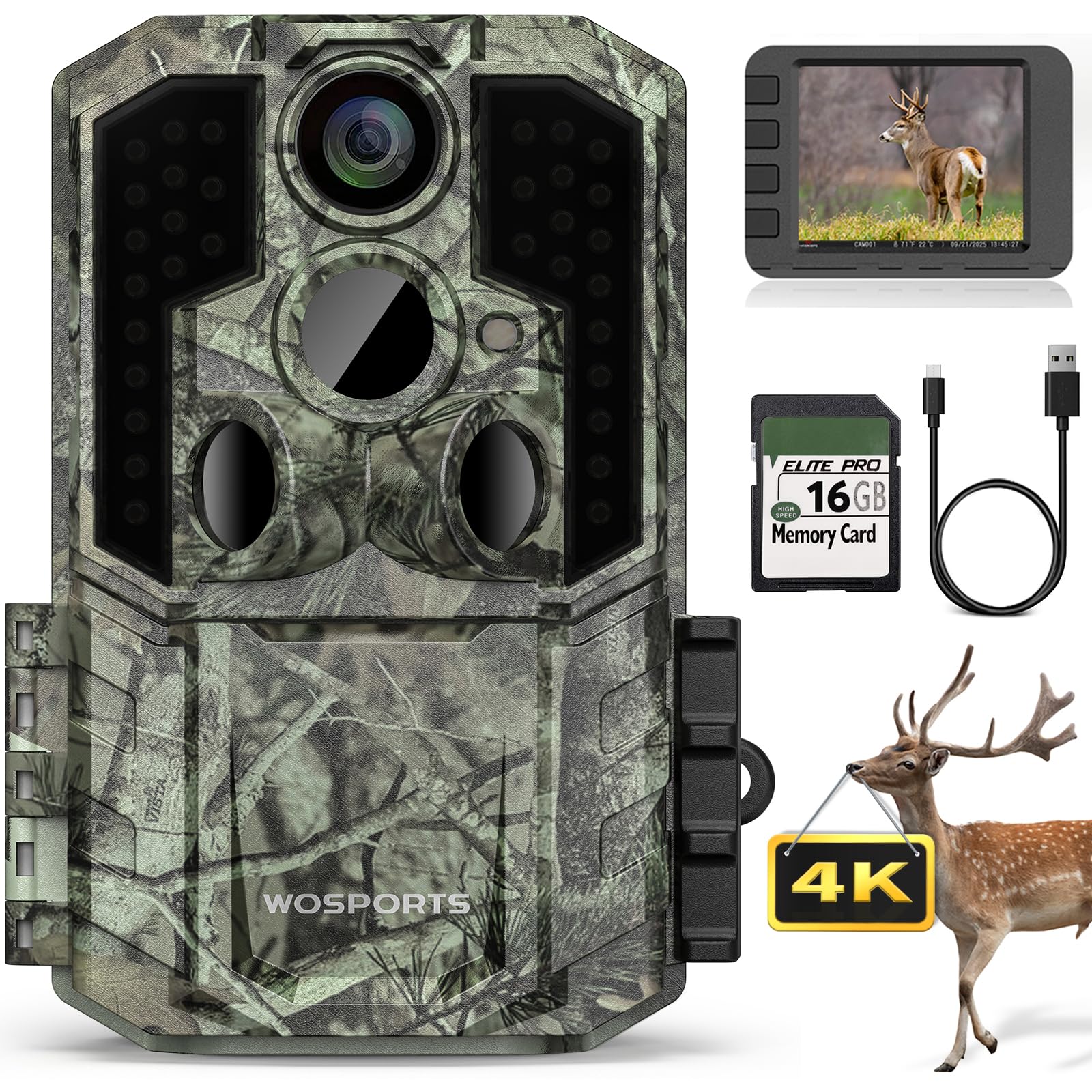
The G600 is the imaging flagship of the WOSPORTS lineup: 4K video, 56MP stills, a 0.2s trigger, and 940nm no-glow IR at a budget price. Daytime shots come out sharp, night images stay usable, and the menus are simple enough for a first-time trail-cam owner to set up without a manual.

This camera suits budget-conscious hunters and beginners who want one camera on a targeted trail without a cellular plan. Long-term outdoor exposure is not guaranteed, so treat it as a replaceable seasonal tool rather than a permanent installation.

πŸ’‘ For longer deployments, use photo mode or add an optional solar/lithium source so eight AA batteries last.

Pros

  • Sharp 4K video and 56MP stills with usable day and night images.
  • Budget-friendly price brings flagship imaging features to casual hunters.
  • Simple menus and setup for a first-time trail-camera buyer.

Cons

  • Night video capture can vary between units, so buyers who need overnight clips as their primary output should look elsewhere.
  • Battery drain depends heavily on settings; long video runs can chew through eight AA batteries quickly.
Our verdict

For a first targeted trail, the G600 delivers 4K/56MP imaging without a data plan and without overpaying.

Check Latest Price
6

Best Multi-Camera Coverage

WOSODA W300 4-Pack

86 /100
Studio Score Strong Evidence

Key details

Night Vision
65ft IR
Trigger Speed
0.3s
Weather Sealing
IP65
Connectivity & Power
4xAA, no WiFi
Check Price on Amazon

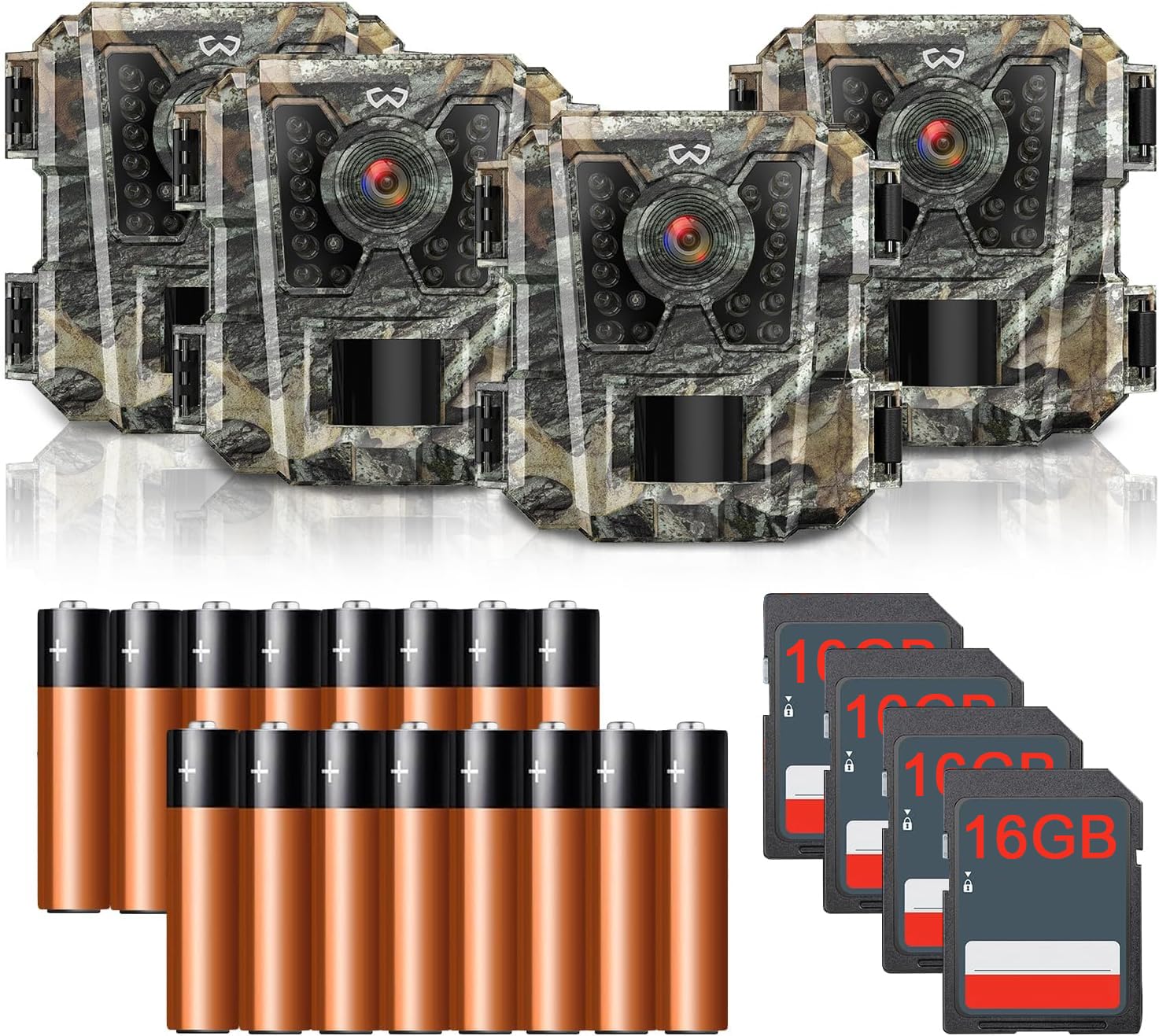
The W300 4-Pack puts four complete trail cameras on a property for roughly the price of one premium unit, with SD cards and batteries included so deployment starts immediately. This is a coverage-first bundle, not a single-camera image showcase: 30MP stills, 1080P video, and a 0.3s trigger handle typical scouting and property-watch duties well.

Best for landowners, groups, or lease members who need multiple entries and feeder locations watched at once without buying several singles. Boundaries are clear: no WiFi or cellular alerts, and quality control can vary within a pack, so one camera may need replacement.

Pros

  • Multi-pack build quality is strong for the price, and four cameras cover far more ground than one.
  • 30MP stills and night shots are clear enough for trail analysis and property checks.
  • Setup is fast because each camera ships with a 16GB SD card and AA batteries.

Cons

  • High-traffic spots can drain the four AA batteries faster than expected.
  • Night images can come out dim enough to limit identification at the far end of the IR range.
Our verdict

For groups or landowners spreading cameras across multiple entries, this kit is the most efficient way to watch many spots without paying per-camera premium prices.

Check Latest Price
7

Spec 2-Pack Value

GardePro E5S 2-Pack

87 /100
Studio Score Strong Evidence

Key details

Night Vision
β€”
Trigger Speed
0.1s
Weather Sealing
IP66
Connectivity & Power
8xAA, no WiFi
Check Price on Amazon

Two 64MP cameras with a 0.1s trigger make this the budget GardePro 2-pack, priced below the A3S. The IP66 body and 512GB SD support suit extended outdoor placement, and two cameras stretch the scouting area. The headline specs still need real-world verification before they become a purchase assumption.

Pros

  • Two 64MP cameras with 0.1s trigger cover more ground for less than the A3S pair.
  • IP66 weather sealing and 512GB SD compatibility keep outdoor placement simple.

Cons

  • No WiFi or cellular means image checks require retrieving the SD card in person.
Our verdict

Best for buyers who want broad two-camera coverage at a budget-friendly price and don't mind card-pull-only image access.

Check Latest Price
8

Casual Backyard Use

WOSPORTS Mini

85 /100
Studio Score Strong Evidence

Key details

Night Vision
850nm IR
Trigger Speed
β€”
Weather Sealing
IP66
Connectivity & Power
4xAA, no WiFi
Check Price on Amazon

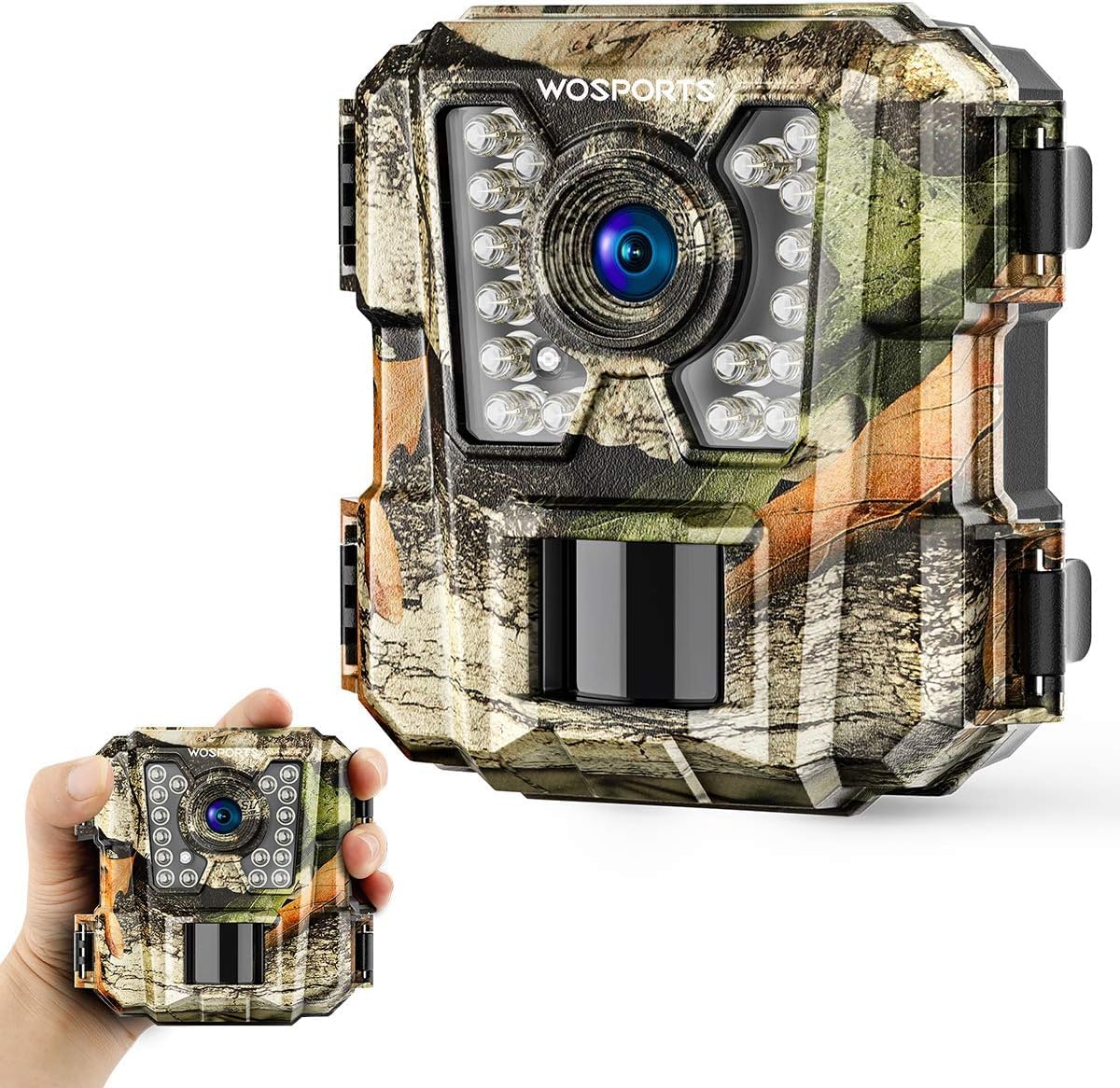
This compact 30MP/1080P camera keeps setup easy, runs on four AA batteries, and carries an IP66 rating. Its small body hides easily on a porch or fence. Low-light stills can be soft or grainy, and occasional blank clips mean it is best for casual use rather than serious scouting.

Pros

  • Setup is quick enough for first-time trail camera buyers.
  • Four AA batteries can last weeks in casual use, keeping maintenance trips short.

Cons

  • Some units may stop working within a few months of outdoor use.
Our verdict

Fine for a first-time buyer who wants a small, low-cost camera in the backyard; step up to a higher-tier model if your needs go beyond casual wildlife watching.

Check Latest Price
9

Cellular Power Users

TACTACAM Reveal Pro 3.0

86 /100
Studio Score Strong Evidence

Key details

Night Vision
No-glow IR, 96ft
Trigger Speed
β€”
Weather Sealing
β€”
Connectivity & Power
4G LTE, GPS, AA
Check Price on Amazon

The Reveal Pro 3.0 puts GPS, on-demand video, 4G LTE, and built-in storage in one cellular body, suiting hunters managing multiple remote properties through the REVEAL app. The price, data plan requirement, and battery draw are real costs, and cellular connectivity can be inconsistent. That keeps it behind the simpler Reveal model for cellular buyers who don't need those controls.

Pros

  • GPS and on-demand video let you check specific spots and locate cameras from the REVEAL app.
  • Clear 4K photos and 1080p video with no-glow night vision cover activity without spooking game.

Cons

  • Running GPS and cellular features drains AA batteries quickly, and a data plan adds a recurring fee.
Our verdict

For hunters who need GPS location and on-demand video across multiple remote properties, the Reveal Pro 3.0 fits despite the cellular plan and battery upkeep. Buyers who only want photos sent to their phone should choose the simpler Reveal model.

Check Latest Price
10

Starter 2-Pack

Punvoe 2-Pack

83 /100
Studio Score Strong Evidence

Key details

Night Vision
850nm low-glow, 100ft
Trigger Speed
0.2s
Weather Sealing
IP66
Connectivity & Power
AA, no WiFi
Check Price on Amazon

This 2-pack is the easiest entry into multi-point scouting: both cameras arrive with SD cards and AA batteries, so setup is immediate. Daylight stills are clear and the compact bodies hide well. The trade-off is battery life that can be short in some setups and video mode that may be inconsistent, making it a stills-first starter kit.

Pros

  • Each camera ships with an SD card and AA batteries, so two locations can be covered without extra purchases.
  • Daylight photos come out clear, which covers most trail-scouting needs.

Cons

  • Under rough outdoor use, durability can be uneven between units.
Our verdict

For a first-time buyer covering two nearby spots, this 2-pack works when daylight stills are the main need.

Check Latest Price
11

Solar WiFi Option

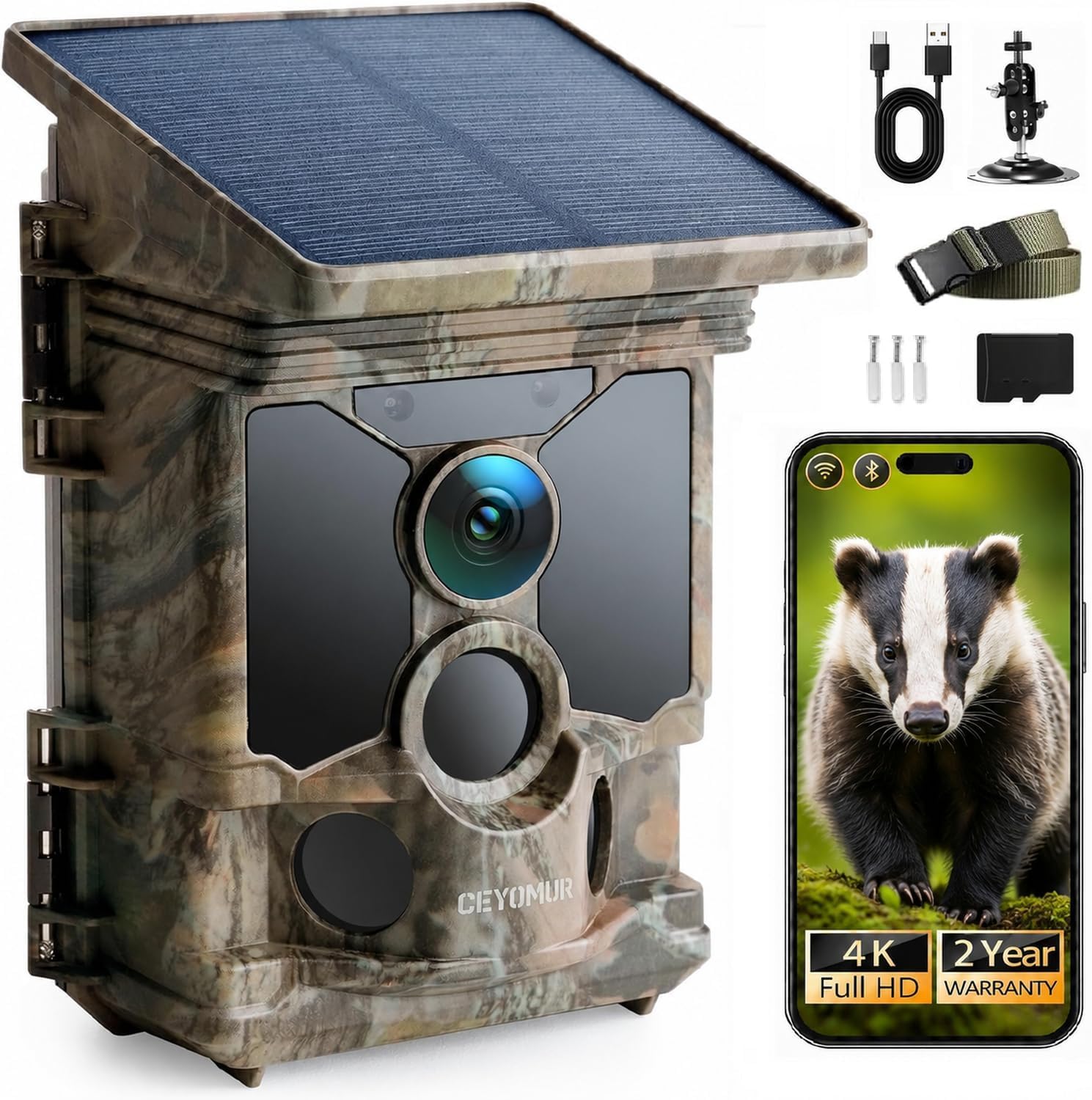
CEYOMUR CY95 Solar

86 /100
Studio Score Strong Evidence

Key details

Night Vision
850nm low-glow, 65ft
Trigger Speed
0.1s
Weather Sealing
IP66
Connectivity & Power
Solar + 5200mAh, local WiFi
Check Price on Amazon

CEYOMUR's CY95 bundles a 5200mAh solar battery, 68MP stills, 4K video, an included 32GB card, and local WiFi app preview without a subscription. That value is unverified compared with the top pick's solar WiFi setup, and local WiFi means no remote image delivery beyond its own hotspot.

Pros

  • Solar charging plus a 5200mAh battery extends time between off-grid site visits.
  • Included 32GB card and app preview require no subscription.

Cons

  • No cellular delivery means images stay on the camera unless you are within its local WiFi hotspot.
Our verdict

Best for budget-minded buyers who want a solar-powered, no-subscription trail camera within WiFi range of where they can retrieve images.

Check Latest Price
12

Full-Size Budget Single

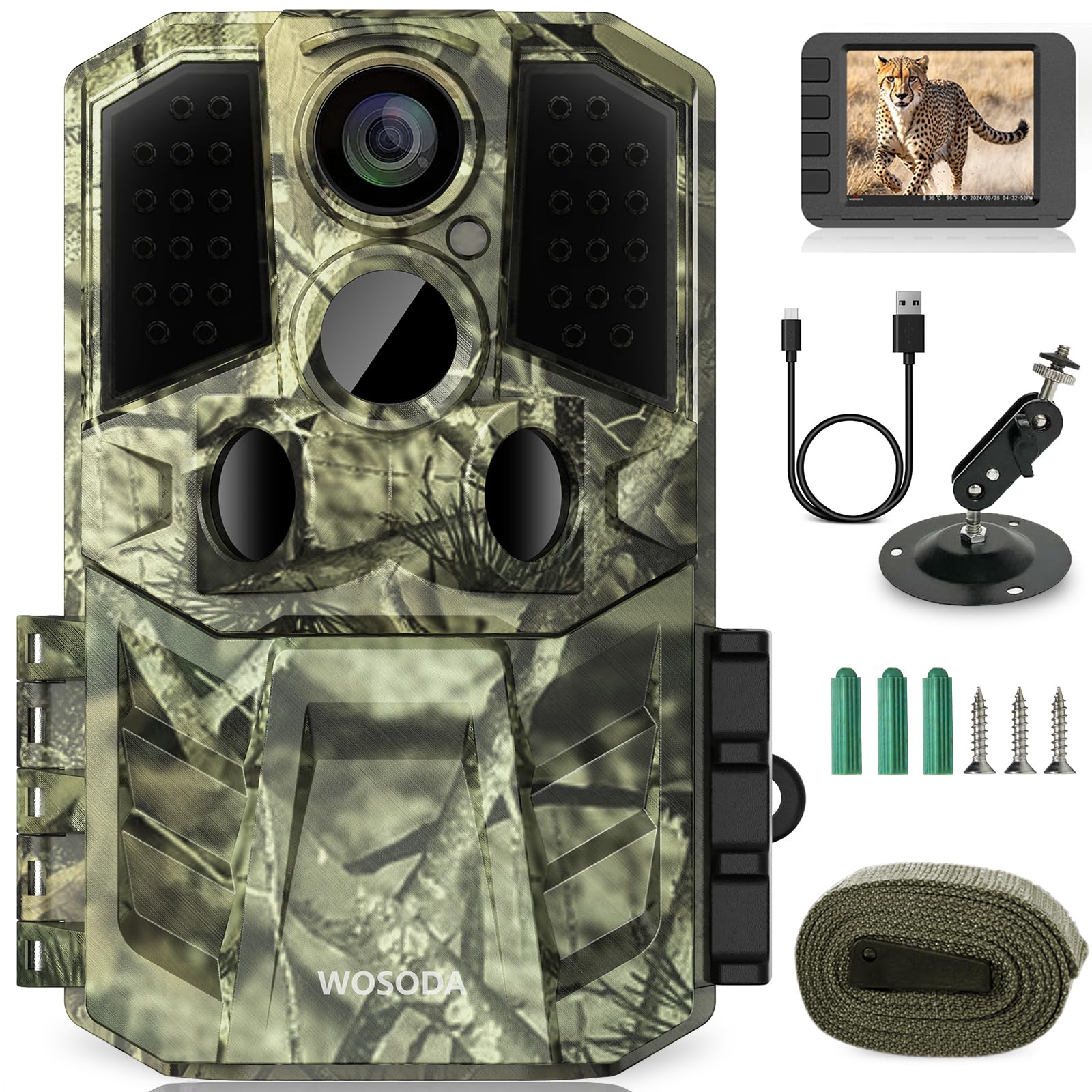
WOSODA G300

86 /100
Studio Score Strong Evidence

Key details

Night Vision
80ft IR
Trigger Speed
0.2s
Weather Sealing
IP66
Connectivity & Power
8xAA, Type-C
Check Price on Amazon

The G300 gives budget buyers a full-size, IP66-rated camera with clear 36MP stills, 1920P video, 0.2s trigger, and USB Type-C transfer for one trail. The 2-inch screen and simple menu keep setup quick. Durability can vary between units, and the 4K G600 adds imaging headroom for a modest step up; it suits one-spot scouting rather than long-term multi-unit coverage.

Pros

  • Clear 36MP stills and 1920P video in a full-size camera body.
  • The 2-inch viewing screen and menu layout make checking captures easy.

Cons

  • Battery draw rises in video mode and with frequent triggers, which can shorten field time.
Our verdict

For one monitored trail where you'll collect the SD card in person, the G300 keeps the routine simple and low-cost.

Check Latest Price
13

Entry No-Glow Single

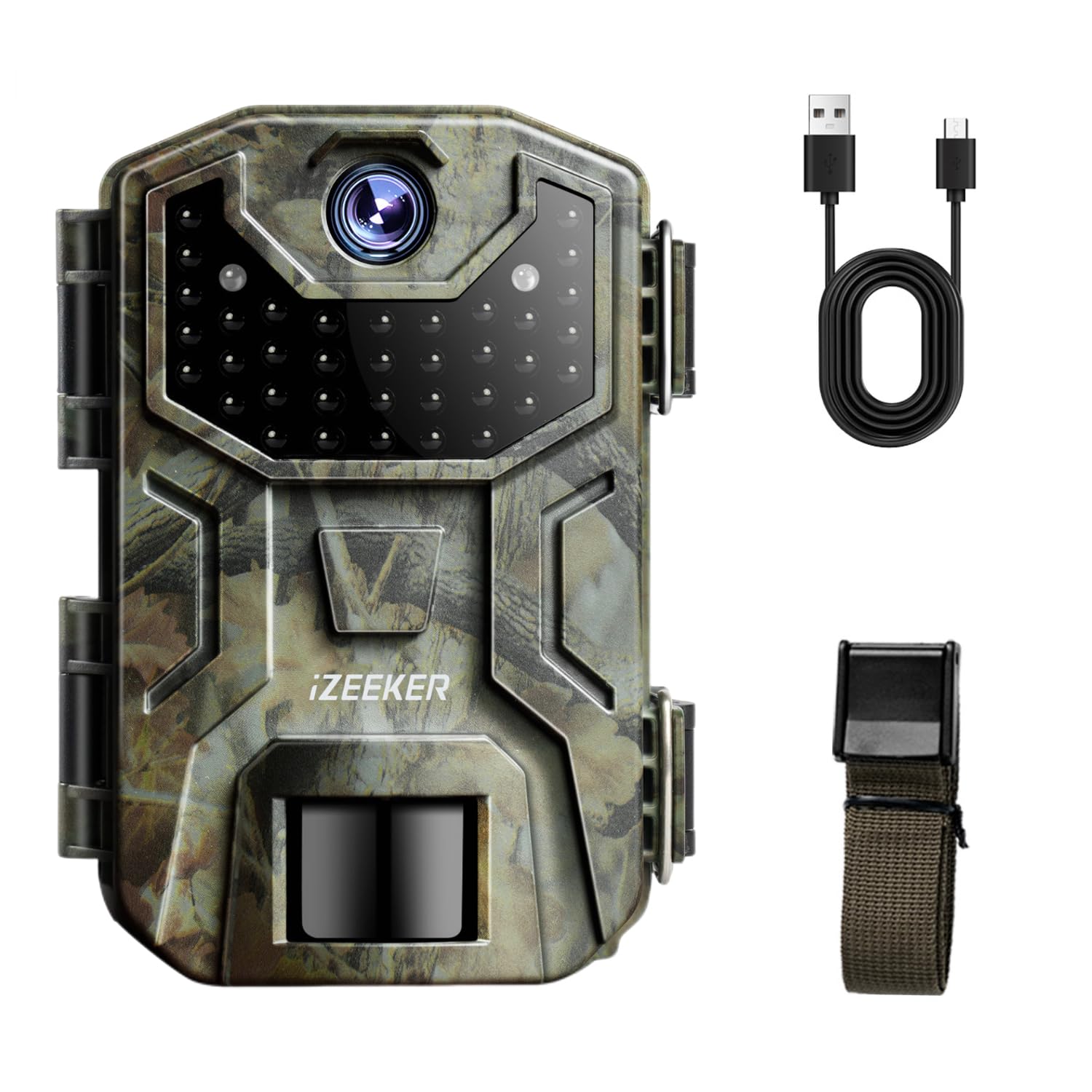
iZEEKER iG200

84 /100
Studio Score Strong Evidence

Key details

Night Vision
940nm no-glow, 65ft
Trigger Speed
0.2s
Weather Sealing
IP66
Connectivity & Power
8xAA, no WiFi
Check Price on Amazon

An inexpensive way to add 940nm no-glow IR, 36MP stills, and a 0.2s trigger to a casual wildlife watch. The IP66 housing and simple controls keep setup easy. Video capture and long-term outdoor durability can vary between units, so this fits best as a backup or short-term placement rather than a primary scouting camera.

Pros

  • Budget-friendly price gives new trail-cam users no-glow IR and 36MP stills.
  • Simple controls and quick setup suit first-time wildlife watchers.

Cons

  • Not the primary tool for full-season scouting when every event needs to be captured.
Our verdict

Fits a casual backyard watcher who wants a low-cost no-glow camera and accepts local SD-card review.

Check Latest Price

How to Choose

Trigger Speed

Trigger speed is the delay between motion detection and the first capture. A 0.1s camera starts recording almost instantly, which can be the difference between a deer's head and an empty frame on a fast-moving trail. A 0.3s camera is fine for feeders and backyard visits but will miss the important moment on active game trails. If you are scouting tight pinch points, choose the faster trigger.

Night Vision Type

Night vision type is a trade-off between what the animal detects and what the sensor records. 850nm low-glow LEDs cast a faint red glow but usually produce brighter night photos because the sensor is more sensitive at that wavelength. 940nm no-glow LEDs are effectively invisible to deer, which makes them better for bedding areas and close-in setups, though the images can look softer and range is shorter. Match the LED to the pressure level of your property, not the farthest number on the box.

Connectivity and Power

Connectivity defines how the camera gets images to you. Cellular models transmit over LTE automatically, which suits remote properties, but the transmission drains power and requires a per-camera data plan. Local WiFi cameras create a hotspot that only works when your phone is within range, so there is no remote delivery and no extra subscription.

Power follows the same decision. Solar panels and larger internal batteries offset the real-world drain from frequent triggers and weak signals; AA-only cameras can chew through a set of alkalines in weeks under heavy use. If you cannot visit often, buy solar or plan on lithium batteries.

Weather Sealing

IP66 is a water-jet rating, not a promise against a season of rain. Moisture usually gets in through the battery compartment or SD card door because gaskets age, latches are not fully closed, or temperature swings pull damp air inside. Mounting the camera under a tree canopy, facing slightly downward, and checking seals after every battery change prevents most water damage.

Total Cost of Ownership

The sticker price is only the first cost. Non-cellular cameras need SD cards and batteries; cellular cameras add a data plan; solar and WiFi models remove the subscription but still require a visit to download files. A cheap camera that needs battery changes every two weeks can cost more in maintenance time than a mid-range solar-powered unit.

Frequently Asked Questions