5 Best Refurbished Camera of 2026: Proven Entry DSLRs, Less Risk

The best refurbished camera for budget buyers is a dependable beginner DSLR rather than a long-zoom compromise — match it to how you shoot.

A refurbished camera can look like a bargain until the battery charger is aftermarket, the menu system fights you, or autofocus hunts at full zoom. That range of experiences is normal in this market: some renewed units behave like new, while others make buyers wonder what 'renewed' actually covers.

The distinction that matters most is between fixed-lens long-zoom compacts and entry-level DSLRs. Superzooms promise huge reach in a light body, but that reach usually comes with a slow autofocus penalty at telephoto and weaker low-light results. DSLRs give up some zoom range for larger sensors, interchangeable lenses, and more predictable all-around performance.

Inside DSLR territory, the trade-off is between raw specs and evidence. A higher-resolution body may cost less, but a model with a much larger base of owner feedback is usually the safer bet for a first-time buyer. Match the camera to your shooting style, and refurbished pricing becomes a genuine saving instead of a gamble.

1

Best Overall

Canon Rebel T6 DSLR Kit

89 /100
Studio Score Strong Evidence

Key details

Video
1080p, no mic jack
Wi-Fi
Built-in Wi-Fi, NFC
Autofocus
11-point AF
Lens System
Interchangeable 18-55mm
Check Price on Amazon

The Rebel T6 kit is the entry-level DSLR that makes the learning curve feel optional. The 18MP APS-C sensor and the EF-S 18-55mm IS II lens produce sharp, well-exposed stills from the first outing, and the guided menu system explains settings in plain language rather than dumping the user into a manual-only workflow. The optical viewfinder is bright enough for outdoor work, the 3-inch LCD is fine for reviewing shots, and the kit lens covers everyday focal lengths from group shots to portraits.

Moving subjects are the classic first-DSLR test, and the T6 clears it: active toddlers and family pets appear in focus with natural color. The camera handles normal family photography without fuss, and the 18-55mm lens is flexible enough for a first lens. The body is light enough to carry all day. Refurbished bodies in this listing can arrive looking and performing like new, which lowers the anxiety that can come with buying used gear.

This is a stills-first tool for first-time DSLR buyers, families, and anyone entering Canon's lens system without a big budget. It is not a vlogging camera: there is no external microphone jack, and the internal mic captures usable but basic audio. Photo-focused users will not feel that limit; videographers who want to record interviews or even run-and-gun audio should look elsewhere. That profile covers households looking for everyday pictures; it does not cover YouTubers or wedding videographers. Sports shooters and pixel-counters should also look elsewhere; the 18MP sensor and modest burst rate are aimed at everyday photography, not action sequences.

Wi-Fi photo sharing is a genuine plus, but the setup instructions are the least clear part of the package. A first-time user may spend more time than expected on the first Canon app connection; once the pairing succeeds, transferring images to a phone is a quick two-step process. The feature is worth the patience, though it is not flawless out of the box.

The mode dial reinforces the beginner mission: Auto handles exposure, while Creative modes introduce aperture and shutter priority at the user's own pace. That gradual path is why the T6 remains a sensible first DSLR even with newer options around, and why the renewed kit stands out as a cost-effective way into interchangeable-lens photography.

Pros

  • Sharp, natural-looking stills from an 18MP APS-C sensor and kit lens.
  • Controls and menu guidance keep first-time DSLR buyers moving quickly.
  • Refurbished bodies can arrive looking and performing like new.
  • Complete kit offers strong value at a beginner-friendly price.
  • Built-in Wi-Fi transfers photos to a phone after setup.

Cons

  • Video recording tops out at 1080p; 4K is not available on this body.
  • Refurbished condition can vary; a unit may show a scratched screen or arrive with a camera that does not power on.
Our verdict

The Rebel T6 is the stills-first starter kit to buy when you want a real viewfinder, a system you can grow, and a refurbished price that leaves room for lenses.
Check Latest Price
2

Best High-Resolution Nikon Value

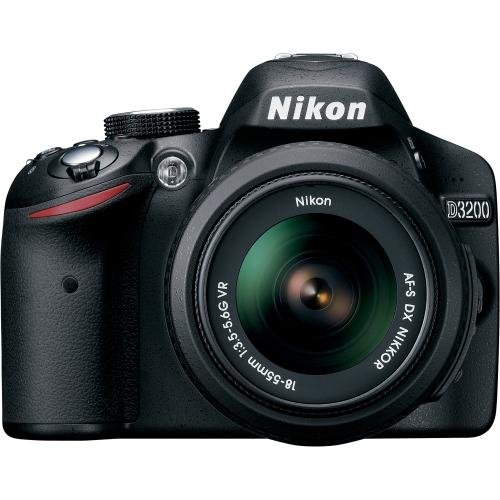
Nikon D3200 DSLR Kit

88 /100
Studio Score Strong Evidence

Key details

Video
1080p, no mic jack
Wi-Fi
None
Autofocus
11-point AF
Lens System
Interchangeable 18-55mm
Check Price on Amazon

The D3200 kit pairs a 24.2MP APS-C sensor with the AF-S 18-55mm lens, giving stills-focused beginners more resolution per dollar than other entry DSLRs in this set. Those 24MP files also leave room for cropping and larger prints without running out of detail.

Image quality holds up in ordinary shooting. Colors look vivid without heavy editing, details stay crisp at full resolution, and the kit lens can produce polished golden-hour portraits when the light cooperates. For a camera at this price, the stills output is the main event.

Refurbished condition can be indistinguishable from new, which makes the lower price easier to justify. The bundle covers the basics: camera body, 18-55mm lens, charger, and battery. The 18-55mm range handles everyday subjects from group shots to portraits, and the controls are laid out for traditional DSLR shooting.

Buyers who want the most stills capability for their money and don't mind a learning curve will find this a sensible first DSLR. Novices should expect a menu system that can be confusing, and refurbished kits may include an aftermarket battery or charger, so testing the included accessories before a first shoot is a useful habit. This is not a camera for phone-like simplicity; it earns its keep on stills.

Pros

  • 24.2MP sensor delivers crisp, vivid stills with strong color from the first shot.
  • Budget-friendly price for a high-resolution DSLR and kit lens.
  • Refurbished units can arrive looking and performing like new.
  • Stills quality supports professional-looking portraits in golden-hour light.

Cons

  • No external microphone input, so video sound is limited to the built-in mic.
  • No built-in Wi-Fi or touchscreen, so sharing photos on the go means a card reader or computer.
Our verdict

Stills-first buyers who value sensor resolution over convenience will get the best spec-to-price ratio in this comparison.

Check Latest Price
3

Best Complete Starter Kit

Canon Rebel T7 Bundle

86 /100
Studio Score Strong Evidence

Key details

Video
1080p, no mic jack
Wi-Fi
Built-in Wi-Fi, NFC
Autofocus
9-point AF
Lens System
Interchangeable 18-55mm
Check Price on Amazon

The one-box Canon Rebel T7 bundle stacks a 24.1MP APS-C sensor and 18-55mm kit lens with a 32GB card, tripod, padded case, and add-on wide-angle/telephoto lenses, so a first-time shooter can start without buying extra gear separately. The core appeal is one purchase, not a camera body plus a separate shopping list.

Image quality is a clear step up from phone snapshots, with the 24MP sensor delivering detailed stills and 1080p video for casual clips. The 9-point autofocus handles portraits and slow-moving subjects without fuss.

This bundle makes the most sense as a gift for a beginner who owns no camera accessories. Canon's guided menu system keeps the learning curve manageable, and the included card, tripod, and lenses cover the first few months of shooting. The tradeoff: the full kit is bulkier than a body and lens alone, and renewed-bundle accessory quality control can vary from box to box, so checking the advertised contents soon after delivery is a good habit. Budget-first buyers and photographers who already have a bag, cards, and a tripod will likely get more value from the slimmer T7 kit.

Pros

  • A 24.1MP APS-C sensor delivers strong first-DSLR image quality for stills and casual video.
  • The 32GB card, tripod, case, and add-on lenses let a beginner start shooting right away.
  • Guided menus and simple controls keep the learning curve manageable for new shooters.

Cons

  • The bundle carries a price premium over buying the T7 body and 18-55mm kit alone.
  • Canon's Wi-Fi transfer app can be slow, so wireless file transfers may test patience.
Our verdict

For a beginner starting from zero, this is a complete starter system in one box; anyone who already owns accessories should buy the body-and-lens-only kit instead.

Check Latest Price
4

Best Superzoom Bridge Camera

Nikon Coolpix P530

77 /100
Studio Score Established

Key details

Video
1080p, stereo audio
Wi-Fi
None
Autofocus
Contrast-detect AF
Lens System
Fixed 42x zoom
Check Price on Amazon

The P530 pairs a 42x optical zoom with a fixed lens, so a traveler can go from wide city scenes to distant wildlife without swapping glass. In good light, the 16.1MP sensor keeps detail strong, and 1080p video covers casual clips on the same memory card. The zoom range reaches far beyond the kit lenses on the interchangeable-lens bodies in this set, which is the whole point of this camera.

The tilting 3-inch LCD helps with overhead and ground-level framing, while the control layout stays uncomplicated for a bridge camera. The body is light enough for a day bag, which is the main draw for someone used to a DSLR kit who now wants one carry-everywhere camera.

This is the reach-first pick among these refurbished cameras, aimed at travelers, hikers, and former DSLR owners who shoot in daylight. Fast sports and dim venues are the boundaries; an interchangeable-lens option from this set is a better match for those assignments. Buyers who shoot during daylight hours and want to return from a trip with close-up wildlife shots and sharp travel scenes will get the most from the P530.

Pros

  • A 42x optical zoom makes far-off subjects reachable without carrying extra lenses.
  • Daylight stills come out sharp, with enough detail for close crops and moon shots.
  • Controls are uncomplicated for a feature-packed bridge, so beginners can get going quickly.

Cons

  • The electronic viewfinder can look soft, which makes fine manual focus checks harder.
  • Refurbished condition can vary; the occasional unit arrives unable to power on.
  • Autofocus is slow at full telephoto, so moving subjects blur when zoomed in.
Our verdict

For daylight travel and nature shots that need real reach, the P530 is the range-first pick.

Check Latest Price
5

Casual Daylight Shooting

Sony DSC-H300

80 /100
Studio Score Strong Evidence

Key details

Video
720p, internal mic
Wi-Fi
None
Autofocus
Contrast-detect AF
Lens System
Fixed 35x zoom
Check Price on Amazon

The Sony DSC-H300 is the budget long-zoom option in this set: 35x optical zoom, a 20.1MP sensor, and controls that beginners can pick up without a manual. Daylight shots are the sweet spot — color and detail are pleasing for the price. It does sit behind the Nikon P530 in a few specific ways. Unit-to-unit variation is higher than on that bridge, with occasional freezes, power-on issues, or lens errors possible. AA batteries are short-lived, so a full day out means carrying spares. Autofocus also hunts in dim indoor light, which is why this remains a daylight travel camera rather than an all-around primary.

Pros

  • 35x optical zoom and a 20.1MP sensor produce good daylight image quality for the price.
  • Simple controls are easy to learn, especially for a first-time superzoom buyer.
  • Budget pricing makes this one of the best value options for casual long-zoom use.

Cons

  • Video recording tops out at 720p, so playback on a large TV looks soft compared with 1080p bridges.
  • High- or low-angle framing is awkward with the fixed 3-inch screen; a tilting display would help.
Our verdict

For a casual daylight photographer who wants maximum zoom on the smallest budget, the Sony covers the basics. Treat it as a dedicated travel camera rather than an everyday primary.

Check Latest Price

How to Choose

Sensor Size and Resolution

APS-C sensors in entry-level DSLRs capture noticeably more light than the 1/2.3-inch sensors in superzoom compact cameras. That larger surface delivers cleaner low-light shots and more control over background blur.

Resolution matters less than sensor size for most buyers. A 24MP APS-C body lets you crop more aggressively, but a 16-18MP APS-C body still outperforms a 20MP compact sensor in dim light.

Lens System

Interchangeable lens DSLRs give you a path to better optics as your skills grow; fixed superzooms include 35x to 42x reach but permanently attach the lens to the body. An 18-55mm kit lens covers everyday shots, while a 42x zoom covers distant scenery and wildlife in daylight.

You cannot add a faster portrait lens to a fixed-lens camera, so the lens purchase is also a body-lifetime decision.

Autofocus Speed and Coverage

DSLRs use phase-detect autofocus, which is better at locking onto moving subjects. Superzoom bridge cameras often use contrast-detect autofocus, which can keep hunting at full telephoto and in low light.

A child running across the room is a manageable DSLR shot; a bird at full zoom is a challenge on many bridge cameras. If you shoot active family life, choose the DSLR; if you shoot still outdoor scenes in good light, a superzoom works.

Video and Microphone Input

If video is more than a test shot, the microphone input decides which body fits. Most refurbished entry DSLRs cap at 1080p and lack an audio jack, so the internal microphone picks up handling noise and room echo.

Confirm whether your camera has a jack before buying. Models without one cannot be upgraded later.

Wi-Fi Connectivity

Built-in Wi-Fi can move photos to a phone without a card reader, but older entry-level Wi-Fi is not app-level seamless. Setup often requires a one-time pairing, and many buyers end up watching a tutorial before transfers work.

Treat Wi-Fi as a convenience, not a core spec. A card reader is faster when you shoot one card per week.

Frequently Asked Questions