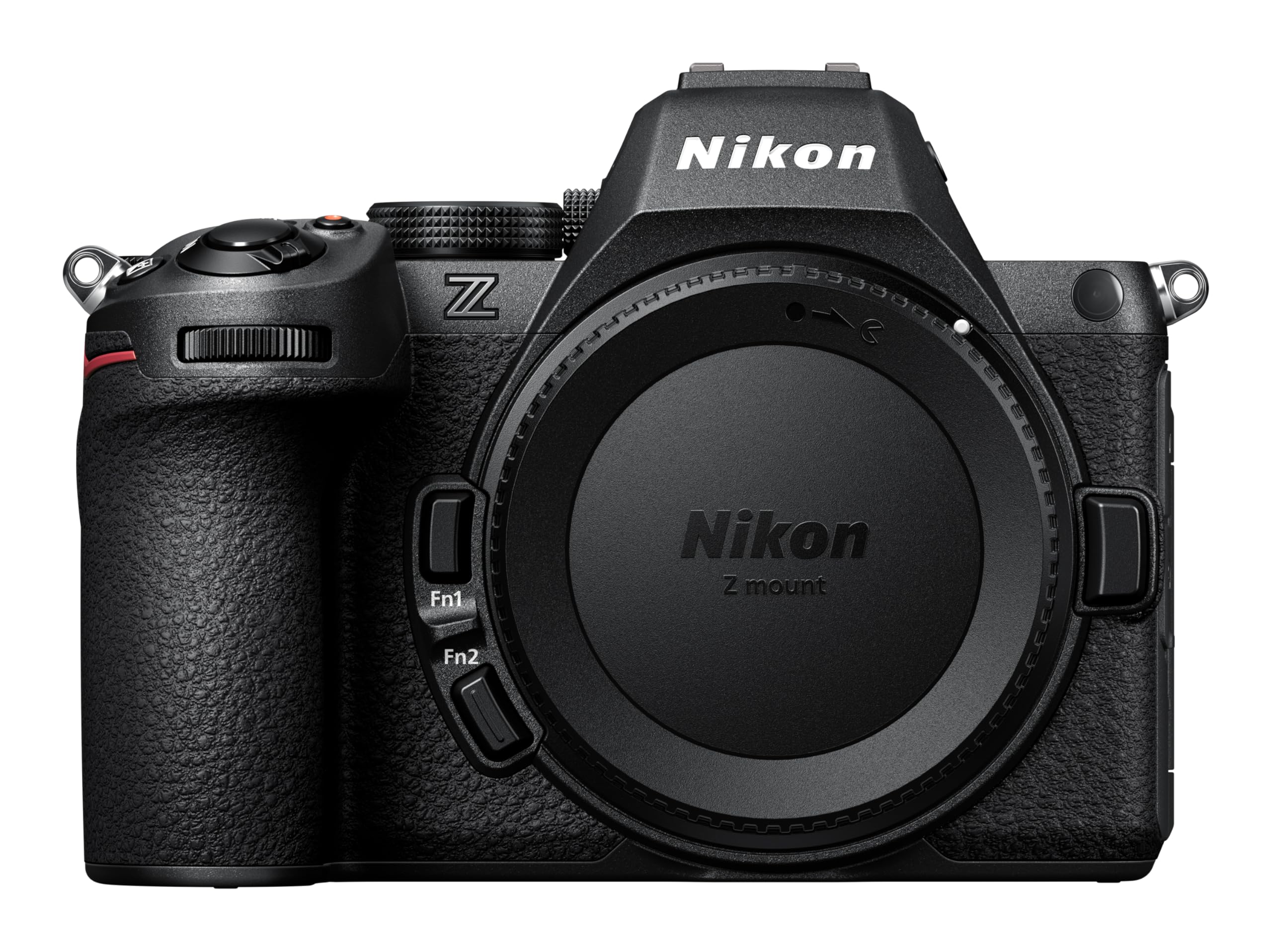
9 Best Nikon Mirrorless Camera of 2026: Right AF, Slots & Battery

Choose the right Nikon mirrorless camera by matching sensor size, autofocus generation, card slots, and battery needs to your actual shooting style.

Nikon's Z lineup now spans compact APS-C creator kits, full-frame all-rounders, and stacked-sensor pro bodies. The specs that get the most attention — megapixels, 8K video, burst rates — are not the specs that determine whether a camera fits how you shoot. Autofocus generation, card slot layout, and the battery ecosystem are the practical differences that show up after weeks of use.

That is why the choice often comes down to trading current AF speed and burst rate against proven build and a larger body of owner experience. A newer body can nail focus at 30fps, but if you mostly photograph portraits, travel, or events, a generation-older 24MP body with dual slots and 4K60 may serve you better.

The right Nikon mirrorless camera is the one that matches the sensor format, control layout, and power strategy to your shooting — not the one with the boldest spec sheet. AF generation, card slots, and battery behavior become the details that decide whether a body holds up in everyday use.

1

Best Overall

Nikon Z6 II Body

93 /100
Studio Score High Confidence

Key details

Card Slots
CFexpress/XQD + SD
Video Capability
4K60, full-pixel
Image Stabilization
5-axis IBIS
Sensor & Resolution
Full-frame 24.5MP
Check Price on Amazon

The Z6 II balances 24.5MP resolution with 5-axis sensor-shift stabilization, dual card slots, and 4K60 full-pixel readout. The 14fps burst with continuous AF covers events, portraits, and travel, while the Z-mount system now offers enough lenses—compact primes, f/2.8 zooms, telephoto options—to build one kit around the body. Image color and raw files stay consistent in mixed lighting. The 24.5MP full-frame sensor keeps card and hard-drive demands lower than 45MP bodies, which matters on long assignments and multi-day shoots.

The dual-slot layout gives working photographers a real backup: one card can write to fast CFexpress/XQD while the SD slot mirrors files or stores a second format. The body balances heavier lenses well, and the controls follow the typical Nikon layout, so shooters moving from a DSLR or earlier Z body can work without re-learning muscle memory. Event shooters can separate raw files and JPEGs between slots, while travel photographers can keep a backup card in the camera without changing the workflow.

This is for enthusiasts and working photographers who want one camera for portraits, travel, documentary, and assignments. AF tracking is a generation behind newer EXPEED 7 bodies, so shooters whose primary work is fast action will get better hit rates from a Z6 III or Z8. High-megapixel studio photography is also better served by a 45MP FX body; the Z6 II's 24.5MP files are a practical middle ground between resolution and storage demands. For the buyer who wants dual-slot safety, 4K60, and a mature lens system, the Z6 II covers the core needs without paying for stacked-sensor speed.

Within the Z line, the Z6 II occupies the sensible middle: more capable than entry-level full-frame bodies, less extreme than the 45MP and stacked-sensor flagships. That middle position suits a working photographer buying one body for mixed assignments—dual-slot safety, broad lens support, and 4K60 without chasing the highest-speed specs. The body-only format also means the buyer can pair it with the exact Z lens needed for their work rather than paying for a bundled kit.

💡 Use a CFexpress/XQD card in the fast slot to get the most from 14fps bursts and keep the SD slot for backup.

Pros

  • Dual card slots provide backup and file separation on paid shoots.
  • Image quality and color hold up in mixed light, with 24.5MP files that stay manageable.
  • Z-mount lens range and control layout make this a practical one-body kit for working photographers.
  • Mid-range full-frame body with a strong combination of IBIS, dual slots, and 4K60 for the price.

Cons

  • The top drive speed stays at 14fps, so shooters who need 120fps stills must move to a stacked-sensor body.
Our verdict

This is the Z body to pick when one camera has to cover events, portraits, and travel without the file load or price of a flagship. Sports-and-wildlife shooters should buy a different body, but for the core mid-range buyer it is the practical default.

Check Latest Price
2

Best APS-C Two-Lens Kit

Nikon Z50 II 2-Lens Kit

86 /100
Studio Score Strong Evidence

Key details

Card Slots
Single SD
Video Capability
4K60, 1080p120
Image Stabilization
Lens-only VR
Sensor & Resolution
APS-C 20.9MP
Check Price on Amazon

Nikon's current DX lineup reaches a complete state in the Z50 II two-lens kit: a 20.9MP APS-C body with 9-subject autofocus, 4K60 video, creative Picture Controls, and USB-C, bundled with 16-50mm and 50-250mm lenses. Together the lenses span roughly a 24-375mm full-frame equivalent, so one bag covers from wide group shots to telephoto candids.

The kit's practical strength is focal-length reach. The 16-50mm handles everyday scenes, the 50-250mm reaches for wildlife or sports without a second camera body, and the 231-point hybrid AF tracks nine subject types. It also shoots 4K60 or slow-motion 120p, while creative Picture Controls alter color science in-camera for a finished look before wireless transfers.

This is not the budget DX option; the vlogging-focused Z30 covers that entry angle. The Z50 II is the more complete stills-and-video hybrid, aimed at casual-to-enthusiast photographers who want travel, family, and creative color presets in one package. There is no in-body stabilization, so handheld video relies on the kit lenses' VR; full-frame low-light performance is a step above this APS-C body, and buyers who need dual card slots or weather-sealed bodies will find those on larger Z bodies. Shooters who can work within that lens-based stabilization boundary get a wide-ranging hybrid kit for a mid-range price.

💡 Setting up the i-menu and a favorite Picture Control slot before a shoot saves time later.

Pros

  • Nikon build quality produces sharp images across the kit's zoom range.
  • Two compact lenses cover wide-angle through telephoto for travel and family shooting.
  • Feature-dense hybrid kit delivers strong value for its mid-range price.

Cons

  • Menu and shooting-mode layout takes time to master, especially for newcomers.
  • A newly purchased unit may show autofocus or flash inconsistency shortly after unboxing.
Our verdict

This is the mid-range DX kit for shooters who want wide-to-tele reach, current autofocus, and creative presets in a travel-friendly package.

Check Latest Price
3

Best for Vlogging & Streaming

Nikon Z30 16-50mm Kit

85 /100
Studio Score Strong Evidence

Key details

Card Slots
Single SD
Video Capability
4K UHD, 1080p60
Image Stabilization
Lens-only VR
Sensor & Resolution
APS-C 20.9MP
Check Price on Amazon

Nikon's Z30 with 16-50mm lens is the most affordable Z-mount body-lens kit with a flip-out touchscreen, 4K UHD, and no-capture-card USB streaming in a body small enough for a day bag.

Autofocus is quick, face and eye detection hold during talking-head shots, and the control layout is easy to learn. The retractable 16-50mm zoom keeps the package compact, while 4K UHD capture and 60p FHD streaming modes cover the basics for YouTube and video calls. A single USB-C cable turns the camera into a webcam, which simplifies a desk setup.

This is a screen-first camera for vloggers, streamers, and first-time mirrorless buyers who prioritize compactness and video. There is no viewfinder, so framing stays on the flip-out LCD, and battery runtime when recording is modest enough that a spare pack belongs in the bag. Creators who want a two-lens hybrid kit with a more conventional stills grip should compare this against the newer DX two-lens option; the Z30 keeps its edge on price and simplicity.

Pros

  • Strong creator value for the price; image and video quality are evident in a compact kit.
  • Autofocus responds quickly and controls feel intuitive for a first mirrorless body.
  • Flip-out screen and webcam-style USB video make self-recording and streaming simple.

Cons

  • SnapBridge mobile transfers can be finicky and may need a second pairing attempt.
  • Charging consistency can vary between units after months of use.
Our verdict

The Z30 fits a video-first creator who wants a compact Z-mount kit; the newer two-lens DX hybrid is the better match when stills and video carry equal weight.

Check Latest Price
4

Best Value Full-Frame

Nikon Z5 Body

89 /100
Studio Score Strong Evidence

Key details

Card Slots
Dual SD UHS-II
Video Capability
4K30, 1080p60
Image Stabilization
5-axis IBIS
Sensor & Resolution
Full-frame 24.3MP
Check Price on Amazon

The Z5 is the most affordable full-frame Z body with 5-axis in-body stabilization and dual UHS-II SD slots. It uses a 24.3MP CMOS sensor and 273-point hybrid AF with eye detection for people, dogs, and cats. The newer Z5 II in this lineup adds EXPEED 7 AF and 30fps, but the Z5 keeps the full-frame essentials at a lower price.

This body is for portrait, landscape, and travel photographers who value composed shots over burst sequences. The 4.5fps burst and older AF generation limit sports and wildlife use; that is the boundary, not a hidden flaw. For stills-first work, the tradeoff rarely affects the output.

Image quality from the 24.3MP sensor is strong for its price tier, and in-body stabilization widens the range of usable handheld shutter speeds. The dual SD UHS-II slots give working photographers a backup option that is uncommon at this price. Focus accuracy in single-point mode is the main reason to choose the Z5 over cheaper crop-sensor bodies.

The 273-point hybrid AF locks on cleanly for portraits and travel candids, and the eye-detection modes cover people, dogs, and cats. That makes the Z5 a practical step up for shooters coming from APS-C without paying the full-frame premium.

Pros

  • Strong full-frame stills for portrait, landscape, and travel work.
  • 5-axis IBIS and dual UHS-II SD slots at the lowest full-frame Z entry price.
  • Eye AF for people, dogs, and cats simplifies portrait and travel candids.

Cons

  • 4K video stops at 30p with 8-bit internal recording, so video-first creators will want more.
  • Action shooters will want a faster body; this one suits composed single-shot work.
Our verdict

Entry-level full-frame price with dual-slot backup and in-body stabilization makes the Z5 the value pick for stills-first photographers.

Check Latest Price
5

Best Professional Hybrid

Nikon Z8 Body

88 /100
Studio Score Strong Evidence

Key details

Card Slots
CFexpress + SD
Video Capability
8K60, 4K120, N-RAW
Image Stabilization
Sensor-shift
Sensor & Resolution
Full-frame 45.7MP
Check Price on Amazon

The Z8 pairs a 45.7MP stacked sensor with 8K/60 internal recording and deep-learning subject detection, giving wildlife and hybrid shooters the larger flagship's core imaging performance without the integrated-grip body. Full-resolution bursts run at 20fps, with 120fps available at 11MP when the action gets tight.

Autofocus holds birds, animals, and vehicles through action bursts, and the deep buffer keeps the shutter rolling through extended sequences. The stacked sensor's fast readout keeps electronic-shutter effects out of typical wildlife work.

The dual card slots accept CFexpress Type B/XQD and SD, a practical setup for long 8K clips and full-res RAW bursts. Shooters moving from D850 or Z7 gain a meaningful jump in speed, autofocus, and video capability.

This is a professional hybrid body for shooters already carrying heavy telephotos and working long action days. The body is large and heavy by enthusiast standards, and sustained high-speed RAW bursts can trigger hot-card warnings with approved cards; a working pro with spare cards and a tripod or gimbal can plan around both.

💡 Use a high-endurance CFexpress card and let the camera idle a moment between long bursts.

Pros

  • 45.7MP stacked sensor delivers full-resolution detail and fast readout in one wildlife body.
  • Deep-learning AF keeps birds, animals, and vehicles in focus throughout sustained full-resolution bursts.
  • 20fps full-resolution shooting with a deep buffer covers fast action without forcing early pauses.
  • Shooters moving from D850 or Z7 gain a meaningful jump in speed, autofocus, and video capability.

Cons

  • On travel shoots and long handheld sessions, the body's mass can be felt.
  • In extended high-speed RAW bursts, a hot-card warning can interrupt a sequence.
Our verdict

For wildlife and hybrid professionals, this is the larger flagship's core speed and 8K in a body that drops the integrated grip.

Check Latest Price
6

Best for High-Resolution Work

Nikon Z7 II Body

91 /100
Studio Score High Confidence

Key details

Card Slots
CFexpress/XQD + SD
Video Capability
4K60
Image Stabilization
5-axis IBIS
Sensor & Resolution
Full-frame 45.7MP
Check Price on Amazon

The Z7 II is the high-resolution body in Nikon's Z lineup, pairing a 45.7MP full-frame sensor with dual card slots in a body lighter than a D850. Landscape, architecture, and studio shooters get the resolution needed for large prints without moving to a medium-format system. Dual slots mean one card can hold RAW files while the other stores overflow or backups, which matters for client work. The 24.5MP top pick in this set handles speed better, but the Z7 II's advantage is pixel count.

The sensor's dynamic range gives solid recovery latitude when shadows need lifting, and the 5-axis stabilization makes handheld work easier than the resolution suggests. The grip and control layout suit long sessions, and battery life carries through a day of tripod-based shooting. This is a body that rewards deliberate composition rather than spray-and-save shooting.

This is for photographers who prioritize resolution and card redundancy over burst speed. Startup and autofocus response sit a generation behind stacked-sensor bodies, so fast, erratic action belongs to the Z8 or the speed-oriented models in this lineup. Event shooters who want high-res flexibility and dual-slot backup are covered when the work is portraits or documentary rather than sports. Budget-conscious buyers can get full-frame entry for less, but the Z7 II makes sense when 45MP and dual-card backup are the requirements and the subject can wait for you.

💡 Use a CFexpress or XQD card in the primary slot to keep the high-resolution buffer moving during bursts.

Pros

  • Delivers 45.7MP stills with the detail and tonal range needed for large prints.
  • Resolution per dollar is strong for a full-frame body at a mid-premium price.
  • Lighter than a comparable DSLR, with a grip and control layout that suit long shoots.
  • Battery life covers a full day of stills work when you are not relying on constant playback.

Cons

  • From power-on to first shot, the camera takes a beat longer than stacked-sensor rivals.
  • AF tracking is a generation behind newer EXPEED 7 bodies, so erratic action will outrun it.
Our verdict

For 45MP landscape, architecture, and studio work, the Z7 II is the body to pick when resolution and dual-card backup matter more than burst speed.

Check Latest Price
7

Advanced Video Hybrid

Nikon Z6 III Body

87 /100
Studio Score Strong Evidence

Key details

Card Slots
CFexpress + SD
Video Capability
6K60 N-RAW, 4K120
Image Stabilization
5-axis IBIS
Sensor & Resolution
Full-frame 24.5MP
Check Price on Amazon

The Z6 III combines internal 6K/60 RAW, 4K120, and a 4000-nit EVF with a 24.5MP BSI sensor and 5-axis stabilization, giving advanced hybrid shooters a video-first full-frame body that the top pick does not match. Autofocus is a generation ahead of older Z6 models, with 299-point hybrid tracking and fast bursts that suit event work. Battery life can run short on a full event day. This is a specialist upgrade for video-focused shooters rather than the default all-round pick, so photography-first buyers should stay with the top pick.

Pros

  • Internal 6K/60 RAW and 4K120 give video-first shooters a capable full-frame body.
  • Fast 299-point hybrid AF and a deep buffer handle event and sports bursts.
  • Strong value for a body with 6K RAW video capability.

Cons

  • Menu and setup controls can feel less intuitive when you need to adjust settings quickly on a shoot.
  • Charging problems have been noted with the included battery.
Our verdict

Fit for video-first shooters who need internal RAW and 4K120; it is the specialist route rather than the default all-round recommendation.

Check Latest Price
8

Enthusiast Value

Nikon Z5 II Body

91 /100
Studio Score High Confidence

Key details

Card Slots
Dual SD UHS-II
Video Capability
4K60, 12-bit N-RAW
Image Stabilization
5-axis IBIS
Sensor & Resolution
Full-frame 24.5MP
Check Price on Amazon

The Z5 II pairs EXPEED 7 autofocus with a 24.5MP full-frame sensor and a 30fps burst, bringing current-generation speed to an approachable price for enthusiasts leaving crop-sensor DSLRs. Low-light and hybrid shooters get 5-axis stabilization, -10EV AF sensitivity, 4K/60p, and internal 12-bit N-RAW without moving to a flagship body.

The Z6 II remains the more settled choice in this lineup for buyers who value a longer owner history. The Z5 II is the better match for shooters who prioritize newer AF generation and faster burst capture.

Pros

  • EXPEED 7 autofocus with -10EV sensitivity makes low-light subject tracking practical in a full-frame body.
  • 30fps burst and internal 12-bit N-RAW cover action and hybrid shoots without a flagship body.
  • 5-axis stabilization and clean high-ISO output support handheld low-light work.

Cons

  • Landscape and studio shooters needing 45MP+ will find the 24.5MP sensor below their resolution target.
  • The in-camera menu system is deep, so first-time setup requires time to arrange custom controls.
Our verdict

The Z5 II suits an enthusiast moving up to full-frame who wants EXPEED 7 AF and 30fps without paying flagship money.

Check Latest Price
9

Retro Compact

Nikon Z fc 16-50mm Kit

88 /100
Studio Score Strong Evidence

Key details

Card Slots
Single SD
Video Capability
4K UHD
Image Stabilization
Lens/digital VR
Sensor & Resolution
APS-C 20.9MP
Check Price on Amazon

Classic dials and a compact DX body make this the rare camera that feels deliberate before you raise it to your eye. The 16-50mm kit keeps weight down, and the flip-out touchscreen simplifies self-framing. For style-focused street shooters comparing Z-mount kits, the appeal is the tactile shooting experience rather than headline specs. The slim grip and slab-side controls can feel less secure over long handheld sessions, and that style-first tradeoff keeps this a personal-style choice rather than the default Z-mount pick. Buyers who need a conventional hold should compare the full-frame retro body in this lineup.

Pros

  • Manual dials for shutter, ISO, and exposure compensation put core settings at your fingertips.
  • Compact DX body and kit zoom are light enough for everyday carry.
  • Autofocus locks on quickly, with 209-point hybrid coverage across the frame.

Cons

  • A single card slot leaves no in-camera backup for overflow during important shoots.
  • No in-body image stabilization; handheld 4K depends on lens VR or extra support.
Our verdict

For street and travel shooters who want the feel of analog controls in a compact Z-mount package, this kit is a satisfying daily camera.

Check Latest Price

How to Choose

Sensor Format and Resolution

DX bodies use an APS-C sensor with a 1.5x field-of-view crop, which makes 20.9MP telephoto reach feel longer while keeping lenses and bodies smaller. FX bodies use a full-frame sensor at 24MP or 45MP, which collects more light and gives you more control over background separation.

Resolution becomes a real trade-off after purchase: 45MP files allow heavy cropping and large prints, but they multiply storage, backup, and editing time. For most buyers, a 24MP FX sensor is the practical center, while 20MP DX is enough for web, travel, and family photos.

Autofocus Generation

Autofocus generation matters more than total point count. Newer EXPEED 7 processors run subject-recognition algorithms that stay locked on eyes, birds, and vehicles; older EXPEED 6 systems are capable but noticeably less sticky when the subject moves erratically.

Match AF generation to your subject, not your budget. Portrait, landscape, and travel shooters can save money with an EXPEED 6 body. People who photograph kids, sports, or wildlife will get a higher keep rate from an EXPEED 7 body and should treat AF as the deciding spec.

Video Capability

Video specs like 6K RAW and 4K120 matter only if your edit pipeline actually uses them. Internal RAW requires significant storage and processing power, and sustained high-bitrate recording puts more heat on the card and sensor.

For casual video, 4K30 or 4K60 with steady autofocus is the practical choice. If you do not color-grade or slow footage to 120fps, paying for internal RAW is a cost with no return.

Image Stabilization

In-body stabilization shifts the sensor to counter handheld shake, so every lens benefits from steadier shots. Lens-only VR does the same job only while the attached lens includes stabilization, and it disappears on non-VR primes.

For handheld video and low-light stills, IBIS is the more useful investment. DX bodies like the Z30 and Z50 lack IBIS, so their kit lenses need aggressive VR; full-frame bodies generally handle slower shutter speeds without adding camera shake.

Card Slots and Format

Dual card slots matter for paid work because a single card can stop working at the worst time; a second slot records a backup or overflow in real time. Event and wedding photographers should treat dual slots as a requirement, not a bonus.

Card format is the hidden cost. CFexpress is fast and necessary for high-bitrate video and long bursts, but the cards and readers are expensive. Dual SD UHS-II slots are cheaper and fast enough for most stills work; check which cards your camera requires before you buy.

Frequently Asked Questions