12 Best Rechargeable AA Batteries of 2026: Match Cells to Gear

Rechargeable AA batteries that hold a charge, fit camera flashes, and last through years of shoots without overpaying for inflated mAh claims.

Rechargeable AA listings lean hard on mAh because it is the easiest spec to headline. In actual use, a cell that keeps its charge after months in a drawer is often more useful than one that claims 2800mAh but sags in a speedlight. The trick is matching the cell to the device that will drain it.

Camera gear makes every nuance visible. NiMH rechargeables run at 1.2V, not the 1.5V of alkaline cells, so flashes and cameras can flag a low battery while the cell still has charge left. Physical fit matters too: a slightly wider high-capacity cell can bind in a tight battery tube.

The right choice depends less on the biggest number and more on how a cell holds up under load, in storage, and inside the battery compartment. This guide sorts those trade-offs by use-case so you can pick cells that stay ready, slide in easily, and keep working through a shoot.

1

Best Overall

Panasonic Eneloop AA 8

96 /100
Studio Score High Confidence

Key details

Fit
Standard AA
Capacity
2000 mAh
Cycle Life
Up to 2100 cycles
Pack / Value
8 cells, premium
Check Price on Amazon

Long-term consistency separates these cells from capacity-first alternatives. They arrive pre-charged, hold about 70 percent of their charge after 10 years of storage, and sustain steady voltage under a flash load. Photographers favor them for speedlights: output holds through a long burst instead of sagging after a few frames. The rated 2100 cycles cover years of regular use, and measured capacity lands at or above the rated 2000mAh minimum. Eight cells are enough for a two-flash kit or a controller rotation, so the pack handles both daily and backup duty without requiring constant charging discipline. This is where the premium makes sense: you pay for the long tail of usefulness, not for a higher number printed on the wrapper.

This pack suits camera flash users, photo hobbyists, and high-drain household devices like Xbox controllers. The 2000mAh minimum is the main boundary: demanding speedlight shooters may need extra swaps compared with the higher-capacity 2600mAh Pro sibling. If maximum runtime per charge is the only goal, that sibling is the one to choose; otherwise, the eight-cell set covers the rest of the household.

๐Ÿ’ก Store spare cells in a cool, dry place to preserve their long charge retention.

Pros

  • Holds a charge for years, so spare sets stay ready without needing monthly top-ups.
  • Rated for up to 2100 recharge cycles, which reduces long-term cost per use.
  • Sustains steady voltage in camera flashes and other high-draw gear.

Cons

  • Bulk budget packs offer more cells per dollar for casual household devices, where the long shelf life isn't needed.
  • Individual cells can drain faster than packmates, which may show up as shorter runtime in high-drain devices.
Our verdict

For flash-heavy loads and set-and-forget use, these eight cells are the practical pick.

Check Latest Price
2

High-Capacity Flash Pick

Eneloop Pro AA 4

95 /100
Studio Score High Confidence

Key details

Fit
Slightly wider diameter
Capacity
2500-2600 mAh
Cycle Life
Up to 500 cycles
Pack / Value
4 cells, premium
Check Price on Amazon

At 2,500โ€“2,600mAh, the Pro is the highest-capacity cell in the eneloop family, with steady output through long flash sessions. That extra runtime is the point: fewer battery swaps during a shoot, and less risk of missing a full-power burst.

This premium 4-pack suits photographers who already own an eneloop charger and want maximum runtime per charge, not households that need many cells at once. It is a capacity-first choice; the standard eneloop remains the endurance pick for those who count total cycles over a decade.

Pros

  • Highest usable capacity in the eneloop lineup, so swaps happen less often during long shoots.
  • Steady discharge keeps camera flashes and high-drain devices running through full sessions.
  • Long runtime in high-drain gear extends a full shoot between charges.

Cons

  • Slightly wider cells can bind in tight battery compartments.
Our verdict

The premium price buys real extra runtime between swaps for flash-heavy shooters. If total cycle count matters more, the standard eneloop covers that ground.

Check Latest Price
3

Best Household Bulk

Energizer AA 16-Pack

95 /100
Studio Score High Confidence

Key details

Fit
Standard AA
Capacity
2000 mAh
Cycle Life
โ€”
Pack / Value
16 cells, mid-range
Check Price on Amazon

This 16-pack puts 2000mAh Energizer cells into a familiar, broadly compatible format for radios, clocks, game controllers, solar lights, and flash units. The capacity is a step below the top pick's long-cycle Eneloop cells, so anyone shooting demanding flash sequences should choose that higher-capacity option instead of this household stockpile.

This set suits households that cycle through AA batteries in moderate-drain devices and want a brand-name bulk supply without paying a premium for peak per-cell capacity; it fits buyers comfortable giving new cells a top-off charge before first use. The 16-cell count keeps spares close at hand.

Pros

  • Solid performance across common household devices, from radios to game controllers.
  • Bulk 16-pack pricing keeps per-cell cost reasonable for a brand-name set.
  • Compatibility spans radios, solar lights, flashes, and controllers for most AA-driven gear.

Cons

  • Charge retention can vary from cell to cell, and initial charge state may be uneven.
Our verdict

For families that cycle through AAs in clocks, remotes, and controllers, this 16-pack is the practical household default.

Check Latest Price
4

Best Budget Bulk

Amazon Basics AA 24 2400

91 /100
Studio Score High Confidence

Key details

Fit
Oversize in some packs
Capacity
2400 mAh
Cycle Life
Up to 400 cycles
Pack / Value
24 cells, budget
Check Price on Amazon

A 24-pack of 2400mAh cells gives budget households one box to keep controllers, toys, and flashlights running between charges at a lower per-cell cost than premium-brand packs.

This pack suits buyers who already have a NiMH charger and want high-capacity AAs for normal-fit household devices. Some cells run slightly oversize, and occasional weak cells can get through quality control, so it is not for precision battery tubes or buyers who expect every cell to arrive working.

๐Ÿ’ก Keep two spare cells from this pack set aside for daily rotation.

Pros

  • 24 cells of 2400mAh in one box cover multiple high-drain devices without immediate restocking.
  • Per-cell cost undercuts premium rechargeable packs while keeping practical runtime in toys, controllers, and flashes.
  • NiMH chemistry with 2400mAh suits a whole-household AA rotation that includes controllers and flashlights.

Cons

  • In a household relying on the full 24-pack, a weak cell can leave one fewer usable spare.
  • In precision battery tubes such as some flashlights and toothbrushes, the slightly oversize diameter can bind.
Our verdict

For budget households with a NiMH charger and normal-fit AA devices, this 24-pack is the high-capacity, low-per-cell-cost way to keep a whole rotation topped up.

Check Latest Price
5

Best Pre-Charged Convenience

Duracell AA 4-Pack

95 /100
Studio Score High Confidence

Key details

Fit
Standard AA
Capacity
2500 mAh
Cycle Life
โ€”
Pack / Value
4 cells, premium
Check Price on Amazon

Four pre-charged 2500mAh cells drop straight into a game controller, and the NiMH chemistry holds its charge for up to a year in storage. That makes it a practical companion to a charger you already own, with enough staying power for baby monitors, remotes, and other low-drain devices.

This pack is for buyers who need a small top-up set, not a bulk AA refill. Only four cells are included, so multi-flash photographers or high-volume households can hit the limit quickly. Charge-holding can decline in individual cells after months of use, though that matters less in low-drain roles.

Pros

  • Pre-charged cells skip the initial charge cycle before first use.
  • NiMH rechargeability cuts disposable AA spending for small households.

Cons

  • Premium per-cell price limits its appeal as a budget buy.
Our verdict

Keep it by the controller drawer rather than the bulk battery shelf.

Check Latest Price
6

Budget High-Capacity Bulk

EBL AA 24 2500

93 /100
Studio Score High Confidence

Key details

Fit
Oversize in some packs
Capacity
2500 mAh
Cycle Life
โ€”
Pack / Value
24 cells, budget
Check Price on Amazon

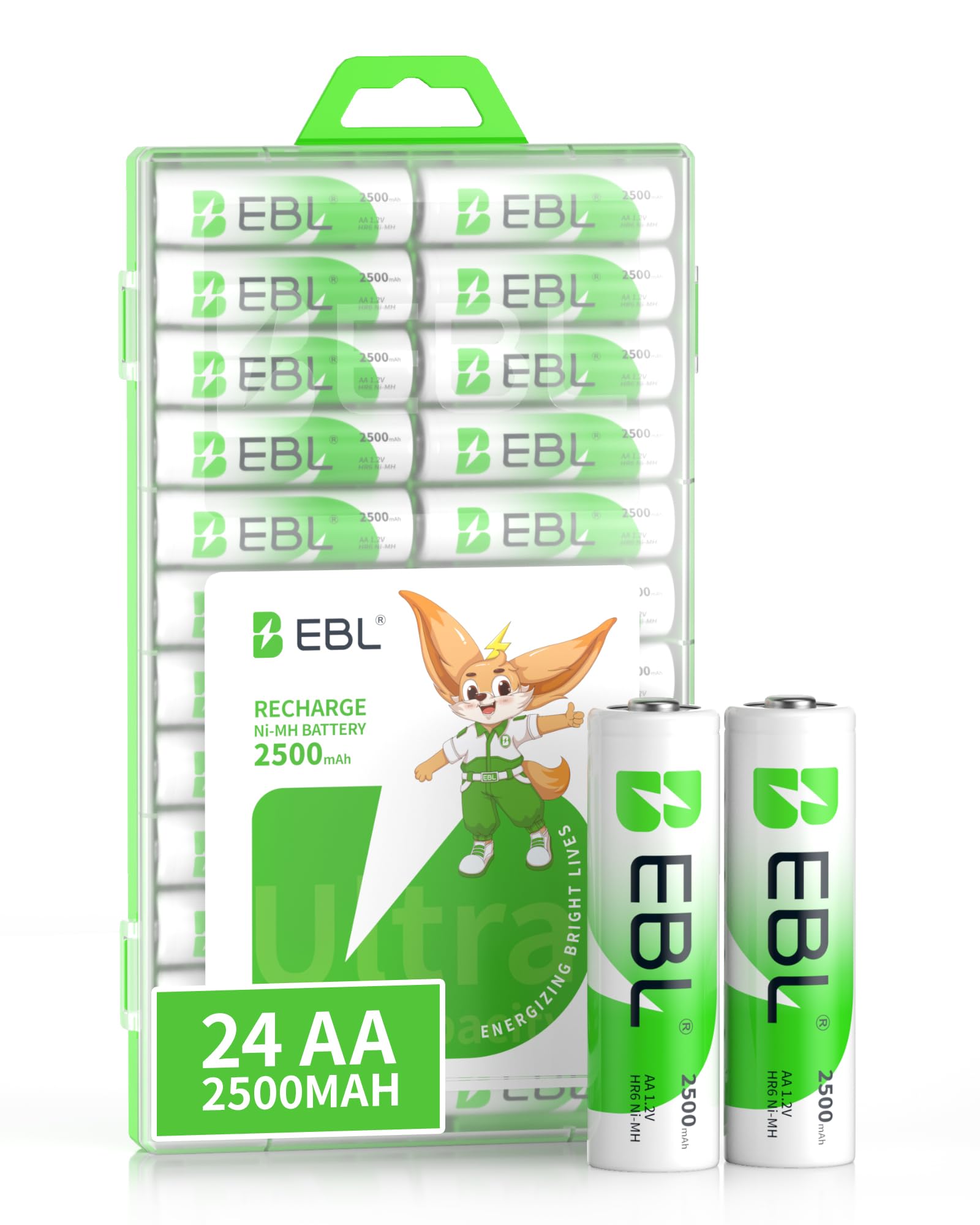
Twenty-four pre-charged 2500mAh NiMH cells at a budget-friendly per-cell price make this the volume pick for households that cycle through AAs. The capacity is respectable for daily use, and the bulk count is what separates it from smaller premium packs.

Best for LED candles, torches, game controllers, and other household gear with normal AA fit. Fit and charge retention can vary, so check for weak spots in the pack before relying on a full set; buyers with tight battery compartments or zero tolerance for uncharged cells should consider premium packs.

Pros

  • Strong per-cell value for households that burn through AA batteries in bulk.
  • Performs steadily in LED candles, torches, game controllers, and everyday household devices.

Cons

  • For buyers chasing maximum per-cell capacity, the brand's 2800mAh 8-pack goes higher than this pack's 2500mAh ceiling.
Our verdict

This is the cost-effective answer for households that go through AAs by the handful.

Check Latest Price
7

Compact 8-Pack Use

Energizer Power Plus 8

95 /100
Studio Score High Confidence

Key details

Fit
โ€”
Capacity
2300 mAh
Cycle Life
โ€”
Pack / Value
8 cells, mid-range
Check Price on Amazon

An 8-pack of 2300mAh NiMH AAs from Energizer balances capacity and pack size for moderate-drain households. Charge retention can vary from cell to cell, so an initial top-up is wise. The 16-pack offers lower per-cell pricing, making this a better fit for buyers who want 2300mAh without stockpiling 16 cells.

Pros

  • Works across household devices and cameras.
  • Offers good long-term value for moderate-drain household use.

Cons

  • Some cells may lose charge faster than expected, and initial charge state can vary.
Our verdict

This 8-pack suits moderate-drain households that want 2300mAh in a compact size and aren't chasing the 16-pack's per-cell value.

Check Latest Price
8

Low-Drain Devices

Amazon Basics AA 24 2000

89 /100
Studio Score Strong Evidence

Key details

Fit
Oversize in some packs
Capacity
2000 mAh
Cycle Life
Up to 1000 cycles
Pack / Value
24 cells, budget
Check Price on Amazon

This 24-pack puts a full household stockpile of 2000mAh AA cells at a budget-friendly price, with a 1000-cycle rating suited to remotes, clocks, and toys. Lower capacity keeps it behind the 2400mAh version for anyone wanting more runtime per cell. Quality-control variance can surface as weak cells, so a quick first-use check pays off.

Pros

  • Budget-friendly per-cell cost makes stockpiling a full household of AA batteries inexpensive.
  • Everyday NiMH quality handles remotes, clocks, toys, and other low-drain gear.

Cons

  • Cell diameter can exceed tolerance in devices with strict battery compartments, causing a snug fit.
Our verdict

Buy it for non-critical household AA needs when the low per-cell price matters more than peak runtime.

Check Latest Price
9

Budget High-Capacity Cells

EBL AA 8 2800

91 /100
Studio Score High Confidence

Key details

Fit
Oversize in some packs
Capacity
2800 mAh claimed
Cycle Life
โ€”
Pack / Value
8 cells, budget
Check Price on Amazon

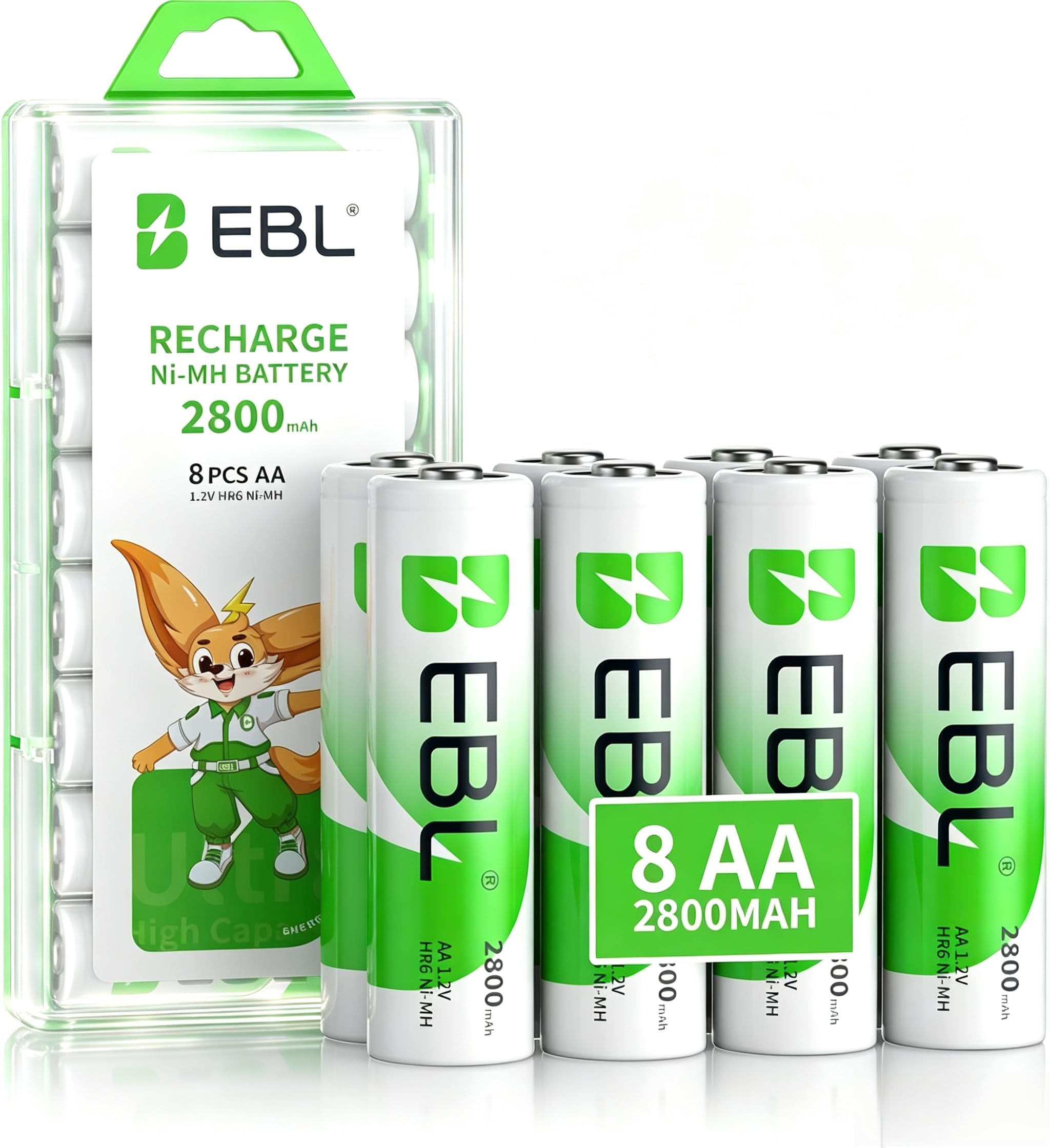
This 8-pack delivers a compact budget option for anyone who wants 2800mAh on paper without spending much. Claimed capacity is not always confirmed, and the cells can run oversized in tight compartments, so it suits solar lights and everyday household devices. The 2500mAh 24-pack offers more cells for the money, making this a smaller-scale budget entry point.

Pros

  • High claimed capacity per dollar for an 8-pack, a low-cost way to keep household AAs stocked.
  • Build quality is solid for the price, with sturdy wrappers and durable terminals.

Cons

  • Some cells may self-discharge faster than others, so stored batteries can vary in standby life.
Our verdict

For solar lights and everyday AA gadgets, this 8-pack is an acceptable budget reserve if you accept some variance.

Check Latest Price
10

Household High-Capacity Use

POWEROWL AA 16 2800

89 /100
Studio Score Strong Evidence

Key details

Fit
โ€”
Capacity
2800 mAh claimed
Cycle Life
Up to 1200 cycles
Pack / Value
16 cells, budget
Check Price on Amazon

High claimed capacity and a per-cell price below premium eight-packs make this a practical fill for clocks, remotes, flashlights, and toys. Long-term consistency is the tradeoff: cells can lose capacity sooner than premium alternatives, so keep this pack for non-critical household gear. Amazon's return policy is the safety net if a cell falls short.

Pros

  • Sixteen 2800mAh cells for less than most premium eight-packs.
  • Fits common household gear: clocks, radios, flashlights, cameras, and gaming controllers.

Cons

  • Cells can lose capacity at different rates, so heavy-drain or critical gear is a poor fit.
Our verdict

For a household drawer that needs a large rotation of spare AAs at low cost, this pack delivers โ€” as long as you don't rely on it for camera-critical endurance.

Check Latest Price
11

Solar Light Use

Brightown AA 12 1000

89 /100
Studio Score Strong Evidence

Key details

Fit
โ€”
Capacity
1000 mAh
Cycle Life
Up to 1000 cycles
Pack / Value
12 cells, budget
Check Price on Amazon

The 12-pack keeps solar landscape lights bright and handles remotes and clocks without the need for high-capacity cells. At 1000mAh, it is a low-drain specialist, not a camera or speedlight battery. Expect the typical tradeoff: capacity that suits frequent charging rather than long-term drawer storage.

Pros

  • Solar garden lights stay bright without high-capacity cells.
  • Twelve budget-friendly cells handle remotes and clocks without overpaying.

Cons

  • Some cells may not hold a charge after months in a drawer.
Our verdict

Pick this 12-pack for solar garden lights, remotes, and clocks when you want a low-cost battery that gets recharged regularly.

Check Latest Price
12

Also Great

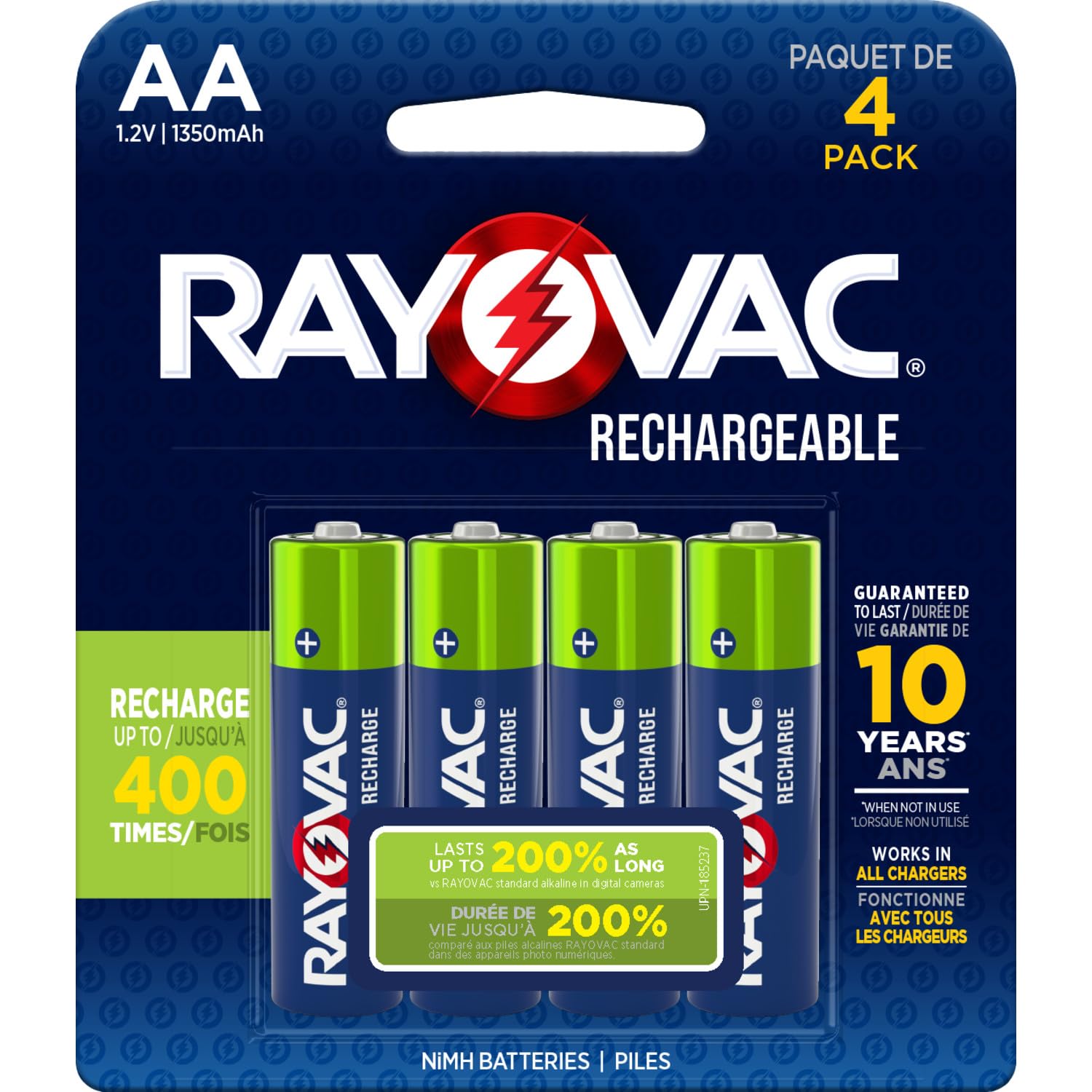
Four 1350mAh NiMH cells at a budget-friendly price make this an easy entry point for remotes, clocks, and toys. No strong low-self-discharge claim means long-stored cells may need a recharge before use. Serious flash work needs more runtime and more cells than this pack offers.

Pros

  • Good basic rechargeable quality for a budget price.
  • Works well in game controllers and everyday household devices.

Cons

  • Some cells can stop holding a charge after a short period; individual durability varies.
Our verdict

For basic low-drain devices, this four-pack is a low-cost way to test rechargeables.

Check Latest Price

How to Choose

Capacity

Rated mAh tells you how long a cell can deliver a given current, but it does not tell you how steady the voltage stays under a flash burst. A high-capacity cell that sags under load can produce fewer usable flashes than a lower-capacity cell built for high drain.

Camera flashes pull current in short pulses, so peak burst voltage matters more than total energy. If recycle time slows noticeably after a few shots, the cell is not holding its voltage under load.

Self-Discharge

Low self-discharge NiMH cells are formulated to hold most of their charge for months. Standard NiMH cells lose capacity much faster, so a freshly charged cell can sit in a camera bag and be nearly empty on shoot day.

For photographers who grab gear sporadically, low self-discharge is the difference between a working flash and a missed sequence.

Cycle Life

Rated cycle life shows how many full charge-discharge cycles a cell can handle before capacity drops. Cells rated for 500 cycles can still be a good value if you shoot a few times a month, but weekly users wear them down quickly.

For regular flash work, paying for a 1500-2000 cycle cell usually means years of use before replacement. For occasional use, shelf life matters more than cycle count.

Physical Fit

NiMH cells are supposed to follow a 14mm diameter standard, but some high-capacity wrappers are slightly wider. In a tight flash tube or flashlight, that fraction of a millimeter makes cells bind and difficult to remove.

Since manufacturers rarely list exact dimensions, check fit-specific buyer comments before buying a bulk pack for precision gear.

Pack Value

Bundling cuts per-cell cost, but it also concentrates risk: a 24-pack with several weak cells is more hassle than an 8-pack with one. A photographer who rotates four cells through one flash needs quality more than volume.

Buy enough cells to cover the devices you use today, not a warehouse stock that will self-discharge before it gets used.

Frequently Asked Questions