12 Best AAA Rechargeable Batteries of 2026: Match Cell to Use

Which AAA rechargeable batteries actually hold a charge for years vs. budget bulk packs that fade? Pick the right cell for your gear and budget.

Rechargeable AAA batteries look interchangeable on a spec sheet, but 1.2V NiMH chemistry and self-discharge behavior decide where each pack makes sense. A 1000mAh budget cell can drain flat in a drawer, while a lower-capacity low self-discharge cell still holds a charge after years. The first question is not 'how many mAh' but 'how long will it sit between uses'.

The main trade-off is max runtime per charge versus long-term cycle life. High-capacity cells generally wear out faster, while lower-capacity low self-discharge cells can last thousands of cycles. A camera flash drains a set in one afternoon; a TV remote may go months between battery changes. Those two jobs need different cells.

Capacity claims and pre-charged labels deserve scrutiny, too. Advertised mAh often runs ahead of real output, and any new pack should get one full charge before it goes into important gear. Sort by actual use-case and the right rechargeable becomes obvious.

1

Best Overall

Eneloop 12pk 850mAh

96 /100
Studio Score High Confidence

Key details

Capacity
850mAh
Shelf Life
70% after 10 yrs
Pre-Charged
Yes
Cycle Rating
2100 cycles
Check Price on Amazon

The standard Eneloop AAA carries a 2100-cycle rating and holds 70% of its charge after ten years β€” the durability benchmark for NiMH cells. The 12-pack arrives pre-charged with enough capacity for immediate use, delivers consistent output during discharge, and maintains performance through hundreds of recharge cycles. This combination of cycle life and shelf charge is what separates it from cheaper NiMH cells.

In low-drain rotation, this set is a decade-long replacement for alkaline batteries in remotes, clocks, and thermostats. Between uses, the low self-discharge chemistry means a device picked up months later still responds. Wireless keyboards and game controllers get long pulls between charges. Camera owners with occasional flash use can leave a set in the bag and still get shots without a fresh charge. That makes the 12-pack practical for whole-house rotation rather than a single gadget.

This 12-pack suits households that cycle through AAAs and want fewer single-use batteries in the bin. The premium per-cell price is acceptable when the payoff is a decade of service; emergency kits also benefit from a cell that stays ready after years in storage. The 12-pack size covers remotes, clocks, and controllers without a separate purchase. Budget-first buyers who won't use 12 cells will find better fits elsewhere.

πŸ’‘ For flash-heavy days, keep a spare set charged; the higher-capacity Pro cell adds runtime but carries a much lower cycle rating.

Pros

  • Holds 70% charge after ten years and is rated for 2100 cycles
  • Arrives pre-charged, works immediately, and charges quickly in a standard NiMH charger.
  • Cells behave consistently across the set, so paired devices draw evenly.

Cons

  • Occasional cells have arrived with partial charge despite the pre-charged label.
  • In high-drain gear, the 800-850mAh capacity means extra swaps compared with 950mAh+ cells.
Our verdict

For households that want to stop buying alkalines, the standard Eneloop is the set that will still be in the drawer years later. If maximum runtime between swaps is the priority, the higher-capacity sibling is the better match.

Check Latest Price
2

Best Budget Bulk

Amazon Basics 24pk 800mAh

93 /100
Studio Score High Confidence

Key details

Capacity
800mAh
Shelf Life
80% after 2 yrs
Pre-Charged
Yes
Cycle Rating
Up to 1000 cycles
Check Price on Amazon

This 24-pack delivers 800mAh pre-charged AAA cells at a per-cell price that makes disposables hard to justify. It is the volume play in this lineup: households moving through multiple devices get a full rotation of cells without paying for the top pick's long-term consistency. The lower 800mAh capacity and 2-year self-discharge rating are the tradeoff for that bulk pricing.

The right buyer is a household that burns through AAA batteries and already has a charger. A cell can lose capacity after a year or two, and another may lose the ability to recharge while the rest keep working. For that buyer, the per-cell cost and 24-cell count make those quirks acceptable.

πŸ’‘ Top off stored spares periodically and rotate cells across devices so a slow cell shows up in a clock before it lands in something critical.

Pros

  • 24 cells at a per-cell price that makes disposable AAAs hard to justify.
  • Cells work straight from the pack in remotes, toys, and clocks, with no charging wait.

Cons

  • Charge retention can vary between cells, so one cell may fade before the rest.
  • Individual-cell QC varies: one cell may lose the ability to recharge while the pack continues.
Our verdict

This is the volume pick for households that cycle multiple AAA devices and accept per-cell quirks in exchange for a low per-cell price.

Check Latest Price
3

Best High-Capacity for Photo Gear

Eneloop Pro 4pk 950mAh

95 /100
Studio Score High Confidence

Key details

Capacity
950mAh
Shelf Life
85% after 1 yr
Pre-Charged
Yes
Cycle Rating
500 cycles
Check Price on Amazon

With 950mAh typical capacity, this is the runtime-first AAA in the comparison and keeps camera flashes cycling quickly through long shoots. The payoff is visible mainly in high-drain devices, where it outlasts the standard Eneloop between charges.

This pack suits camera flash, headlamp, and camping users who want maximum runtime per charge and are comfortable with a 500-cycle rating and a premium per-cell cost. The extra capacity pays off during all-day hikes or event shoots, where swapping batteries is an interruption. If your AAAs primarily sit in remotes or clocks, the lower-priced standard Eneloop makes more sense.

πŸ’‘ These cells arrive pre-charged, but a topping charge before a long shoot ensures consistent flash recycling.

Pros

  • 950mAh capacity keeps camera flashes and high-drain accessories running longer per charge.
  • Sturdy construction and steady output through repeated high-drain use.
  • Pre-charged cells hold 85% of charge after a year in storage.

Cons

  • Cell-to-cell self-discharge can vary, so a fresh pack is worth checking before critical use.
  • The high-capacity chemistry gives up some long-term endurance; heavy users get fewer total recharges than standard Eneloop.
Our verdict

For flash-heavy shooters, the extra capacity translates into more shots per charge and fewer mid-shoot swaps.

Check Latest Price
4

Best Budget High-Capacity

EBL 16pk 1100mAh

93 /100
Studio Score High Confidence

Key details

Capacity
1100mAh
Shelf Life
80% after 3 yrs
Pre-Charged
No
Cycle Rating
β€”
Check Price on Amazon

The EBL 16-pack bundles 1100mAh claimed capacity with a per-cell price that undercuts the four-pack options in this lineup. The 16-cell count makes it a bulk buy for households that burn through AAAs quickly. Compared with the 24-cell budget pack, this set trades total cell count for a higher per-cell rating.

The right buyer already owns a NiMH charger and cycles cells often enough to keep them active. Some cells can lose capacity after a year, and an occasional one may arrive unable to take a charge, so this suits active rotation better than emergency kits where batteries sit idle.

Pros

  • Bulk 16-count lowers the per-cell cost for high-use households.
  • Claimed 1100mAh supports longer stretches in everyday devices.
  • Works with standard NiMH chargers, so no proprietary dock is required.

Cons

  • Independent checks can measure capacity below the 1100mAh label.
Our verdict

The practical bulk reload for households switching everyday devices off single-use batteries.

Check Latest Price
5

Best Starter Kit with Charger

POWEROWL 8pk + Charger

91 /100
Studio Score High Confidence

Key details

Capacity
1000mAh
Shelf Life
70% after 3 yrs
Pre-Charged
No
Cycle Rating
Over 1200 cycles
Check Price on Amazon

The bundled eight-bay charger handles one to eight AA/AAA cells independently, so odd-number batches charge without pairing up. That makes it a practical entry point for households that do not already own a charger.

It fits first-time rechargeable buyers and families cycling AAAs through toys, remotes, and clocks. The 1000mAh cells retain about 70 percent power after three years, but the charger can signal full before a cell actually reaches full charge - learn the indicator behavior on your first few cycles. Camera-flash-heavy users should step up to higher-capacity cells instead.

Pros

  • Independent slots charge one to eight AA/AAA cells, so odd-number batches are easy.
  • Bundled charger and eight AAA cells form a complete starter set for homes new to rechargeables.
  • Rated for over 1200 recharge cycles, so cells can handle years of household use.

Cons

  • In high-drain devices, a cell can drain in about two hours, so its per-charge runtime may be short.
Our verdict

This is the set to buy when you need the charger as much as the cells. Keep it for everyday AA/AAA household cycling and step up to dedicated high-capacity cells for photo gear.

Check Latest Price
6

Best Mainstream 8-Pack

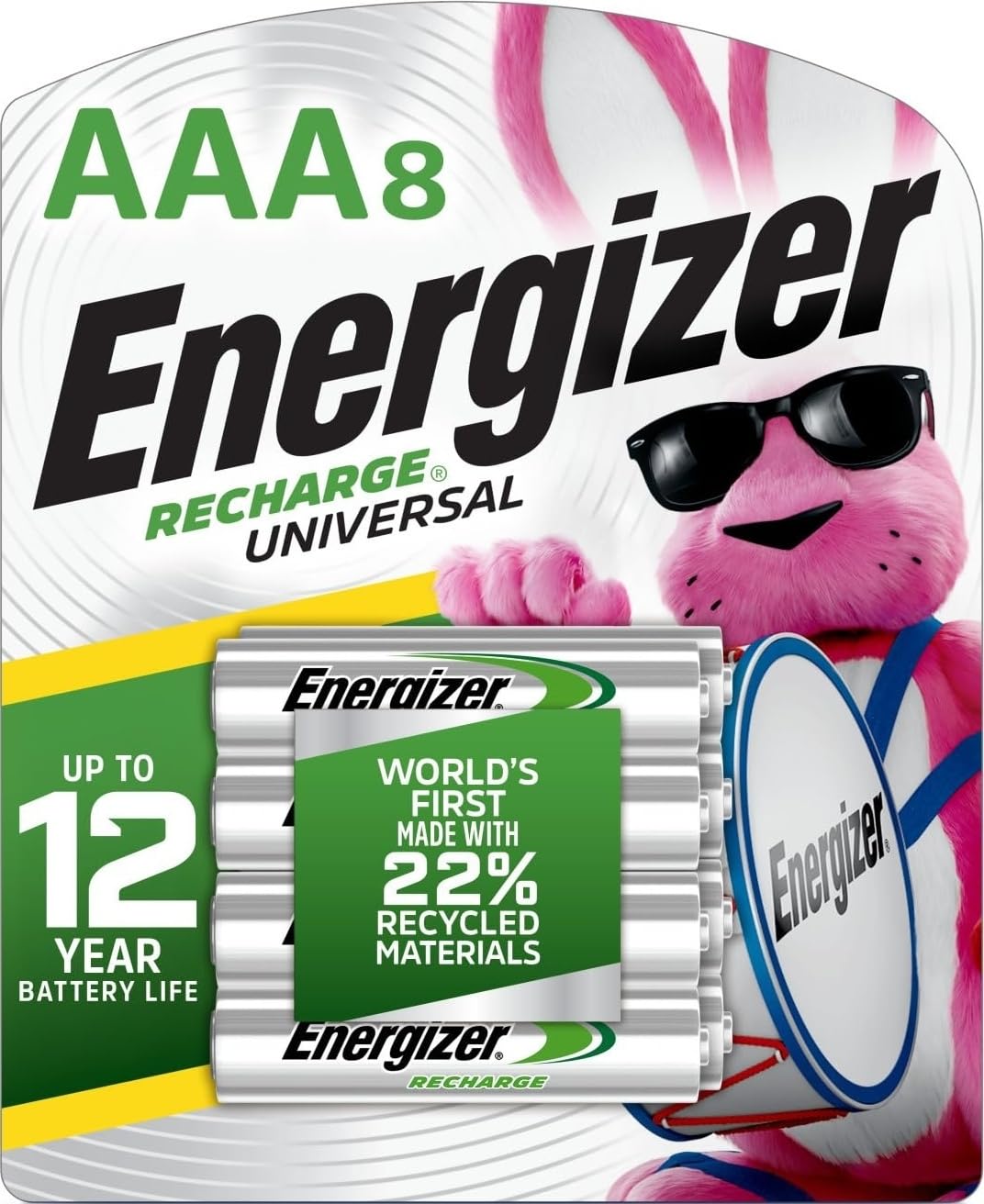
Energizer Recharge 8pk

95 /100
Studio Score High Confidence

Key details

Capacity
700mAh
Shelf Life
12 yr storage
Pre-Charged
No
Cycle Rating
β€”
Check Price on Amazon

This eight-pack pairs a 12-year storage life with enough cells to keep remotes, clocks, and cordless phones rotating in one box. Low-drain devices draw so little current that a full set lasts a long stretch between swaps, and the familiar brand keeps the experience predictable. It is a more volume-oriented option than the entry-level four-pack in this lineup.

At 700mAh, this is the lowest-capacity AAA in the lineup, so high-drain gear will need frequent swaps; keep this pack with remotes, clocks, and cordless phones. It suits households that want a name-brand 8-pack without chasing the highest capacity per cell.

πŸ’‘ Give all eight cells a full charge before first use; some may arrive without a complete pre-charge.

Pros

  • Eight cells cover remotes, clocks, and cordless phones in one household rotation.
  • Energizer's 12-year storage life keeps spare cells ready after long drawer time.
  • Works well for cordless phones and other low-drain household devices.

Cons

  • Occasional cells may not hold a full charge.
Our verdict

Households running clocks, remotes, and cordless phones get a full rotation from this box.

Check Latest Price
7

Small Household Use

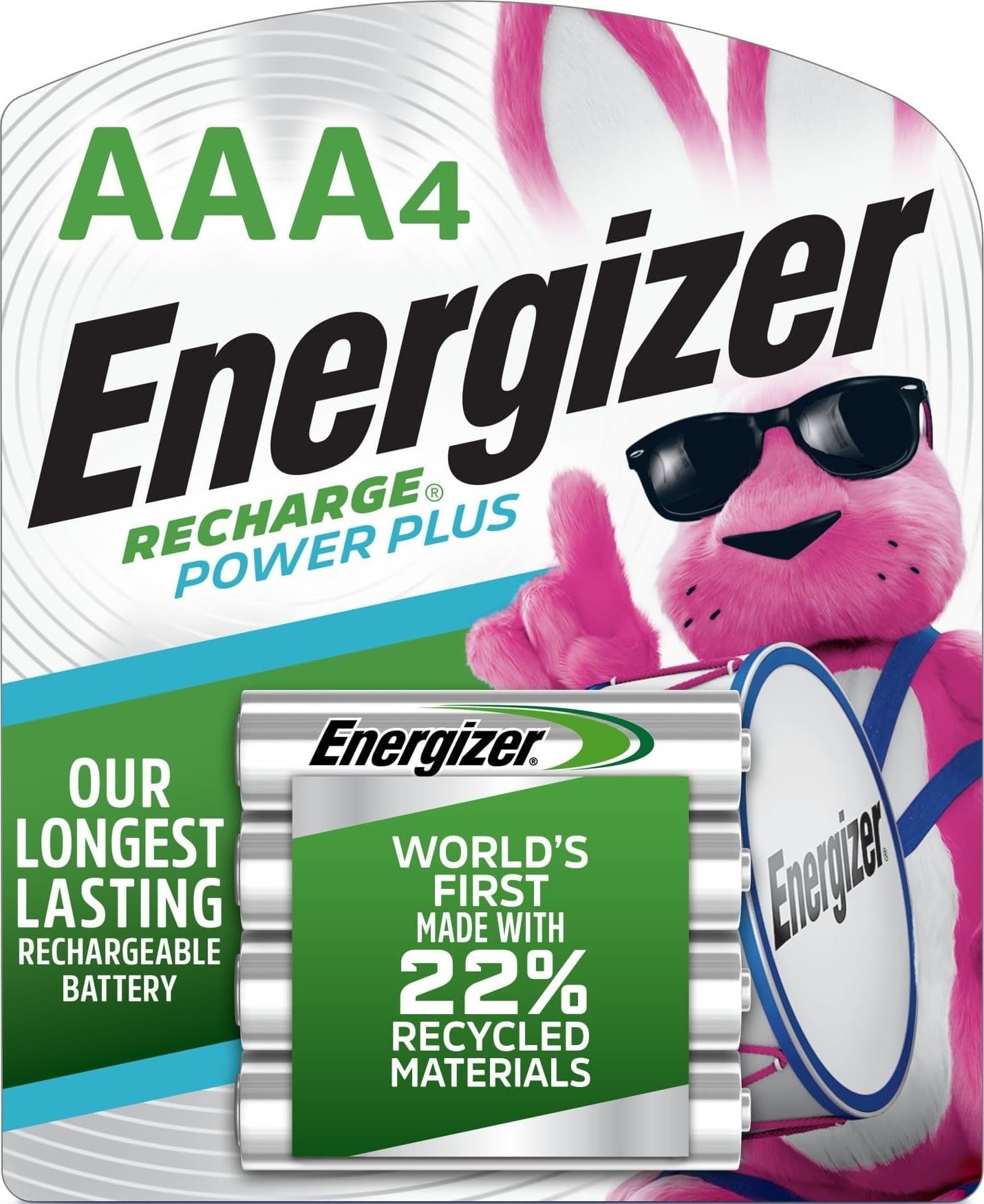
Energizer Power Plus 4pk

95 /100
Studio Score High Confidence

Key details

Capacity
800mAh
Shelf Life
β€”
Pre-Charged
No
Cycle Rating
β€”
Check Price on Amazon

Energizer's 800mAh four-pack offers familiar name-brand quality in remotes, controllers, and flashlights at a low entry price. The catch is the pack size: four cells and 800mAh mean per-cell economics favor larger bulk packs, and there's no long self-discharge claim. An initial full charge helps align with expectations.

Pros

  • Familiar brand with standard 800mAh output that behaves like a normal AAA in everyday devices.
  • Low-cost way to test rechargeables without committing to more cells than you need.

Cons

  • In a daily-use device, one cell may drain noticeably faster than the rest of the pack.
Our verdict

For a small household that wants to try rechargeables without overspending, this four-pack fits; larger households should buy in bulk.

Check Latest Price
8

Compact Premium Pack

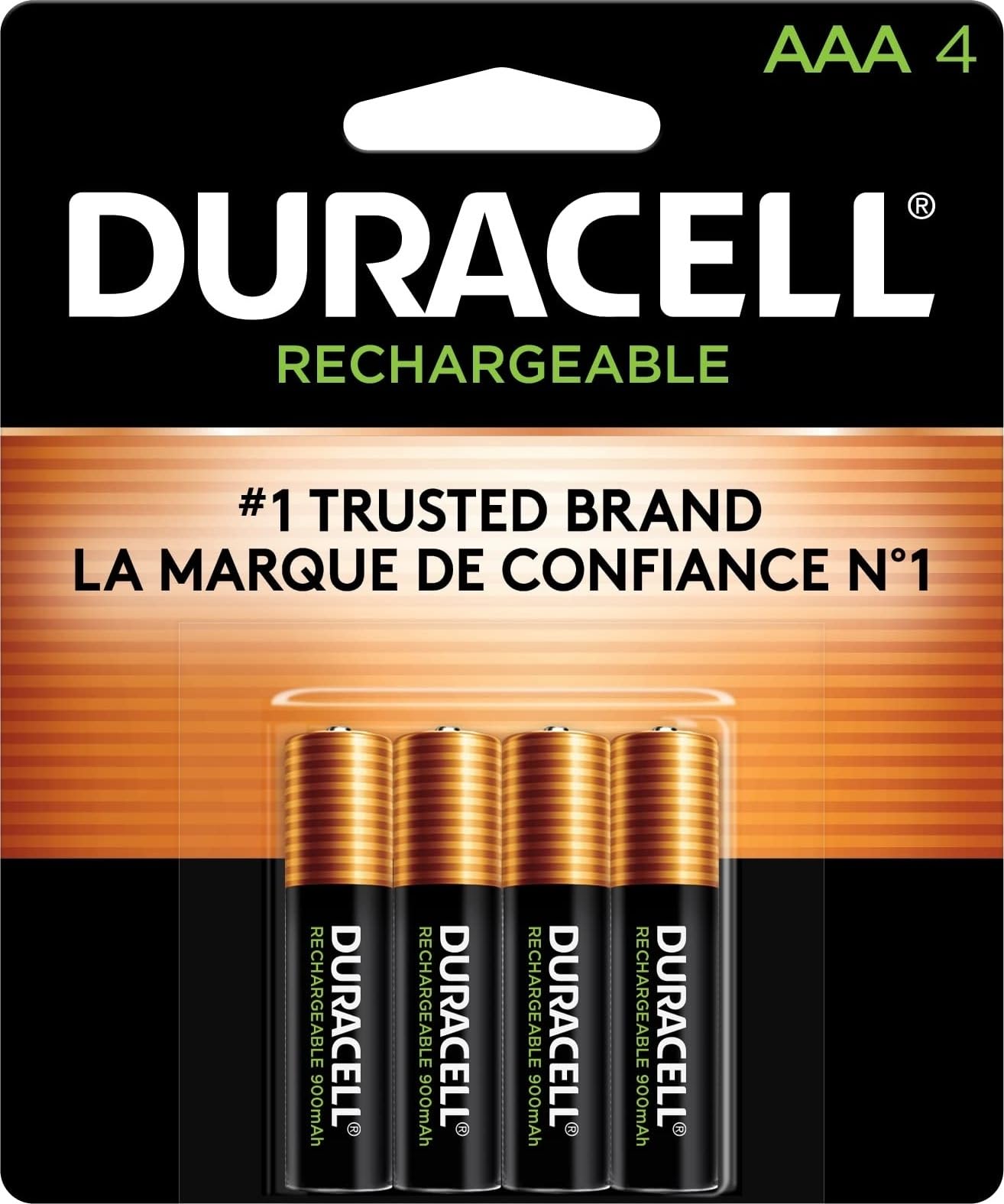
Duracell Rechargeable 4pk

95 /100
Studio Score High Confidence

Key details

Capacity
900mAh
Shelf Life
1 yr shelf charge
Pre-Charged
Yes
Cycle Rating
β€”
Check Price on Amazon

Duracell's 900mAh AAA cells arrive pre-charged and slot into wireless controllers and cordless phones with no fuss. The four-pack is compact and the Duracell charger compatibility makes top-ups quick. The per-cell price is high compared to bulk options, and later-life fade can vary more than the benchmark cell in this lineup, so it suits modest household rotation and brand loyalty.

Pros

  • Name-brand loyalists get 900mAh in a compact four-pack without committing to bulk.
  • Works with Duracell chargers and tops up quickly.

Cons

  • Per-cell cost runs high, and later-life fade can shorten usable charge over time.
Our verdict

Small households that already own a Duracell charger and only need four AAA cells get a no-fuss rechargeable setup. Buyers chasing per-cell value or benchmark-level longevity will find better options elsewhere in this lineup.

Check Latest Price
9

Ultra-Budget Household Use

HiQuick 8pk 1100mAh

93 /100
Studio Score High Confidence

Key details

Capacity
1100mAh
Shelf Life
80% after 3 yrs
Pre-Charged
Yes
Cycle Rating
1200 cycles
Check Price on Amazon

Eight pre-charged 1100mAh NiMH AAA cells at an ultra-low price make this one of the cheapest ways to move a household off disposables. As long as the duty stays low β€” remotes, clocks, toys β€” it delivers. Charge consistency varies between cells, and some battery compartments can feel snug, so it's not the pick for tight-fit or high-drain gear.

Pros

  • Eight pre-charged cells at a budget price make switching low-drain devices to rechargeables easy.
  • Plenty of capacity for remotes, clocks, and other low-drain devices at a very low cost.

Cons

  • Cell-to-cell charge consistency can vary, so one or two cells may run short before the rest.
Our verdict

For clocks, remotes, and other low-drain household gear, this 8-pack is a budget-friendly buy β€” provided you don't need exact rated capacity or a guaranteed fit in tight compartments.

Check Latest Price
10

Existing Charger Owners

POWEROWL 24pk 1000mAh

91 /100
Studio Score High Confidence

Key details

Capacity
1000mAh
Shelf Life
70% after 3 yrs
Pre-Charged
No
Cycle Rating
Over 1200 cycles
Check Price on Amazon

POWEROWL's 24-cell pack gives existing charger owners the lowest per-cell cost in this roundup. It is best for toys, remotes, and LED lights, where an occasional dud is tolerable. Advertised 1000mAh capacity can overstate real output, and individual cells may lose charge-holding ability after repeated cycling β€” a budget bulk buy with less predictability than premium cells.

Pros

  • 24 cells at a per-cell price that makes disposables hard to justify for high-volume households.
  • Good battery behavior in toys, remotes, and LED lights.

Cons

  • Individual cells may not hold a charge after repeated cycling.
Our verdict

For high-volume households with a charger already in the drawer, this is the cheapest way to move toys and remotes off disposables β€” if you can tolerate an occasional dud.

Check Latest Price
11

Solar Garden Lights

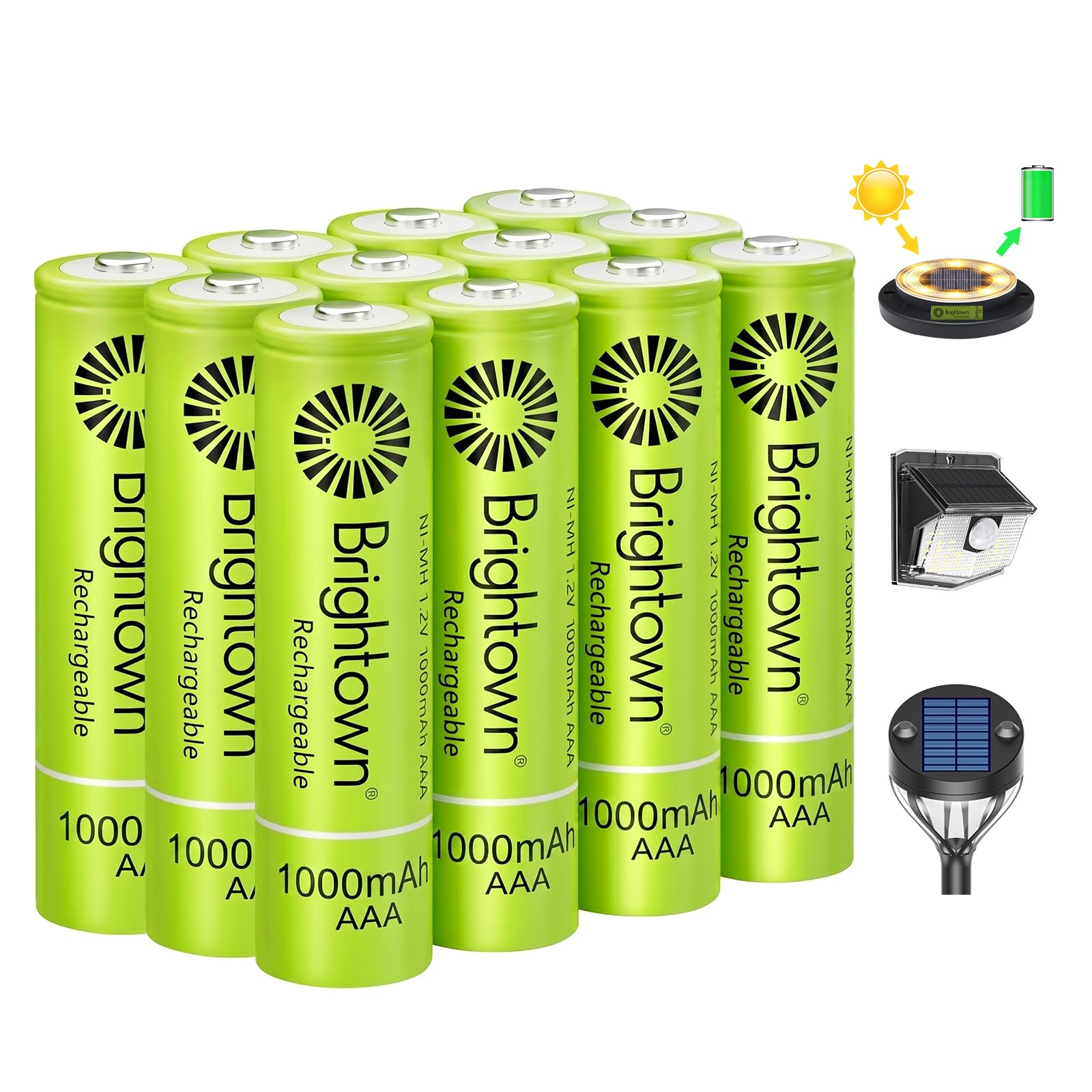
Brightown 12pk 1000mAh

91 /100
Studio Score High Confidence

Key details

Capacity
600-1000mAh
Shelf Life
Low self-discharge
Pre-Charged
No
Cycle Rating
1200 cycles
Check Price on Amazon

This 12-pack is a cheap fix for solar garden lights and outdoor fixtures, where it performs well for the price. The listing's capacity conflict β€” 1000mAh in one section, 600mAh in another β€” leaves true capacity uncertain. Cell-to-cell charge retention varies, so this is not the pick for camera/flash use.

Pros

  • Budget-friendly 12-pack that revives solar garden lights and handles outdoor fixtures well.
  • Good quality for the price, with enough cells for string lights and outdoor fixtures.

Cons

  • Listed capacity is 1000mAh in one section and 600mAh in another, leaving true capacity uncertain.
Our verdict

If your use is limited to solar lights and outdoor fixtures, the budget price makes sense; for camera or flash work, choose a cell with a verified capacity label.

Check Latest Price
12

DECT Phone Repair

Panasonic DECT 4pk

93 /100
Studio Score High Confidence

Key details

Capacity
750mAh
Shelf Life
β€”
Pre-Charged
No
Cycle Rating
β€”
Check Price on Amazon

Four-cell OEM replacement for Panasonic DECT handsets that restores talk time and fits exactly. But that specialization is the boundary: no low self-discharge rating, so long storage is not its strength. General household devices are better served by the top pick, whose cycle-to-cycle consistency matches that role.

Pros

  • Exact OEM fit for Panasonic DECT handsets and restores lost talk time.
  • Simple swap that costs much less than replacing a cordless phone system.

Cons

  • One cell can lose capacity sooner than expected and reduce talk time before the rest of the set.
Our verdict

For Panasonic DECT phone repairs, this four-pack is the right part; general household use calls for a different AAA.

Check Latest Price

How to Choose

Capacity

Higher mAh means longer runtime only when the cell is actually under load. Many budget 1100mAh AAA cells deliver less real-world capacity than premium 800-850mAh cells because rated capacity is measured under controlled conditions, not in a camera flash.

For high-drain devices like a flash, capacity matters at every shot. For a remote or clock, extra mAh is invisible; the cell's self-discharge will flatten it before the device does.

Charge Retention

Low self-discharge (LSD) chemistry slows the chemical reaction that drains a battery while it sits. Standard NiMH can lose several percent of its charge per month; LSD cells hold most of their charge for years.

If a pack is going into emergency gear, half-used drawer duty, or infrequent photo accessories, this spec matters more than any other. A non-LSD cell can be flat in six months while an LSD cell still has most of its charge.

Cycle Life

Cycle rating tells you how many full charge-discharge cycles a cell can handle before its capacity drops. High-capacity electrode formulations wear faster, which is why some 950mAh AAA cells are rated for 500 cycles while 800mAh LSD cells are rated for 2100.

For a daily-drain camera flash, 500 cycles still equals years of use. For a battery that gets swapped once a year, a 2100-cycle cell will likely outlast the device.

Pre-Charged Cells

'Pre-charged' means the cell left the factory with charge, not that it arrives full. Warehousing and shipping drain every rechargeable, so new cells routinely land below full capacity.

Give every new pack one full charge before trusting it in a flash, remote, or other important device. That also reveals dead or weak cells before they cause gear problems.

Cell Consistency

Cell-to-cell consistency is the hidden QC issue in multi-packs. One bad cell in a 24-pack is annoying but manageable; if several cells fade at different rates, matching them in two-cell devices becomes a problem.

Premium LSD cells typically match each other better. Budget packs can still be a good value, but label cells as sets, rotate them, and retire weak cells early.

Frequently Asked Questions