9 Best Power Bank for Camera 2026: Real Capacity for Shoot Days

Best power bank for camera buyers: USB-C PD wattage, honest runtime, and airline-safe capacity without inflated mAh claims.

The camera bag power decision usually comes down to one number on the label: mAh. But the label doesn't tell you how fast a bank can feed a camera, how much of that capacity survives real discharge, or whether it fits in a carry-on. Most shooters discover this difference after a dead battery in the field.

A general 20,000mAh USB-C PD bank with 45-65W output covers most mirrorless cameras, phones, tablets, and laptops. A 99Wh V-mount battery serves cinema rigs with D-Tap/DC ports. The tradeoff is flexibility versus direct pro power, and the right choice depends on whether your camera mounts on a V-mount plate or charges over USB-C.

For action-camera owners, dedicated battery packs add recording time, but waterproofing only holds when port covers are sealed. The useful takeaway: capacity alone doesn't predict performance. Match the bank to the camera's power demands, not the biggest number in the listing.

1

Best Overall for Most Cameras

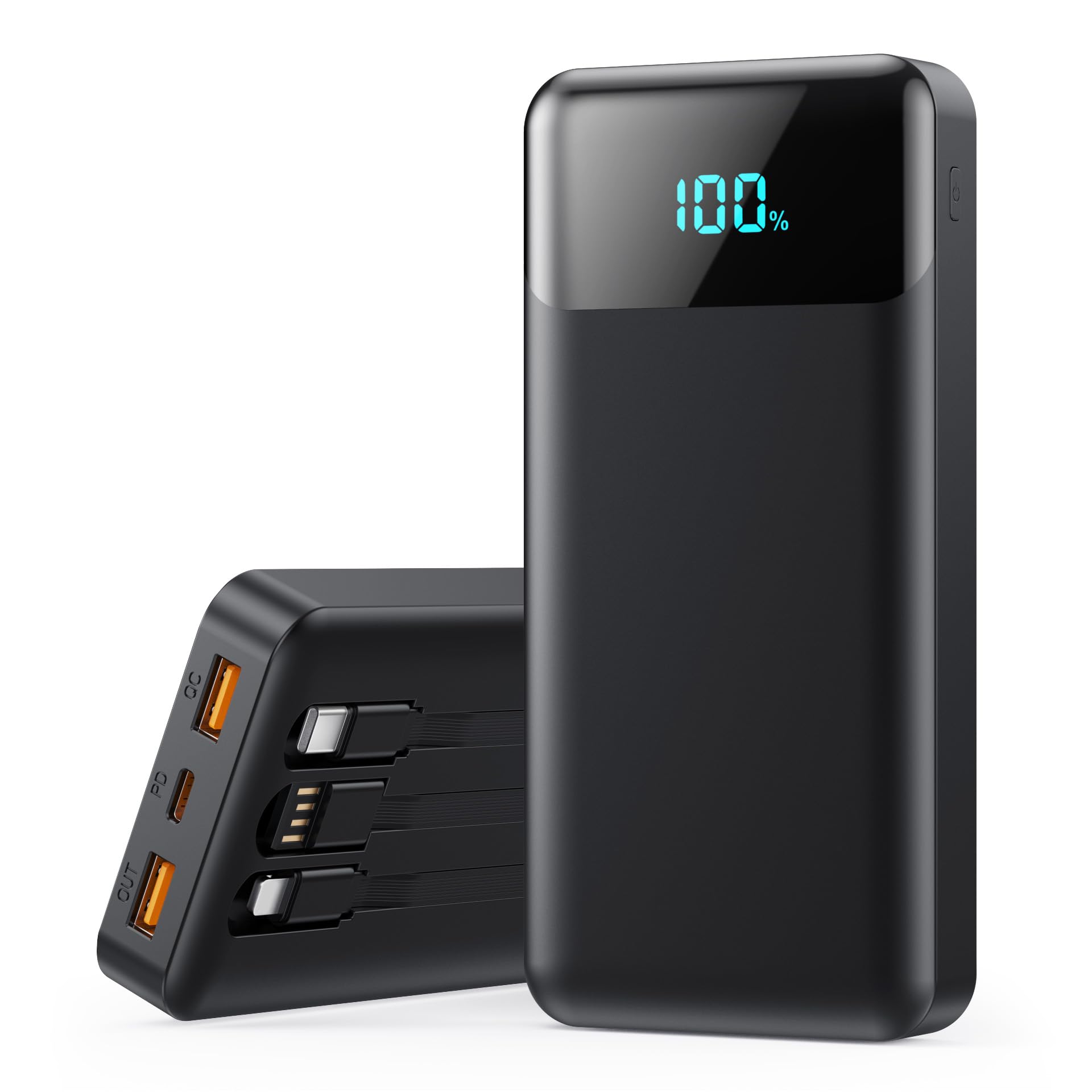
Anker Power Bank 20K 87W

93 /100
Studio Score High Confidence

Key details

Ports
USB-C, USB-A, built-in cable
PD Output
65W USB-C PD
Form Factor
Compact, built-in cable
Capacity & Flight
20,000mAh, 74Wh, safe
Check Price on Amazon

With 65W USB-C PD and a built-in cable, this Anker bank delivers the power needed to charge a mirrorless camera, a tablet, or a 14-inch MacBook Pro to 50 percent in under 40 minutes. The 20,000mAh cell translates to four or five phone charges, and the separate USB-C and USB-A ports let a camera body, a phone, and wireless earbuds share the 87W total without re-cabling.

The built-in cable is the detail that carries on a shoot. It removes the need to remember a separate USB-C cord, stays attached when the bank is packed, and frees the remaining ports for other gear. The phone-sized footprint slides into a side pocket of a camera cube, even with the 20,000mAh capacity inside, and an 18-month warranty covers the bank. Output remains steady when a camera and phone are drawing power at the same time, which is where cheaper banks lose ground.

This is the bank for a travel photographer who carries one USB-C camera, a phone, and a laptop and wants to top all three from a single pack. The 74Wh rating stays under airline limits, so it moves from a camera bag to a carry-on without a second thought. It is not a V-mount or D-Tap source for cinema rigs, and the weight of a 20,000mAh body is noticeable in a day bag; ultralight shooters who only need a phone top-up will be better served by a smaller 10K bank.

The 65W USB-C delivery covers Steam Deck, tablets, and laptop-class devices, while the total 87W output keeps a phone and camera topped up at the same time. When the built-in cable is powering a camera, the separate USB-C port still charges a phone. This sustained output is the difference between a bank that works through a shoot and one that only tops up a phone.

The built-in USB-C cable holds up through repeated packing and unpacking, and the capacity covers a weekend away without hunting for a wall outlet. The cable stays with the bank, so a travel day does not start with a search for a spare cord.

At a mid-range price, the feature set lines up with the realities of travel shooting: one bank, one attached cable, and enough power for camera and laptop work. For a hybrid shooter, this is a direct single-bank answer to camera, phone, tablet, and laptop charging.

๐Ÿ’ก Place it against the back panel of a camera bag to keep the 20,000mAh weight from shifting a small daypack.

Pros

  • 65W USB-C PD tops a laptop to 50 percent in under 40 minutes while a phone charges.
  • 20,000mAh delivers four to five phone charges plus laptop top-ups across a full shooting day.
  • Built-in USB-C cable reduces cable clutter and stays attached through regular packing.
  • Phone-sized footprint despite 20,000mAh capacity makes it easy to slide into a camera bag.
  • 65W delivery handles Steam Deck, tablets, and laptop-class devices while the 87W total supports simultaneous charging.

Cons

  • The 20,000mAh body is heavier than a 10K pocket bank, and that weight is felt in a fully packed bag.
Our verdict

One mid-priced, airline-safe bank that covers camera, phone, tablet, and laptop charging for a full day of hybrid shooting.

Check Latest Price
2

Best Pro V-Mount for Filmmakers

SmallRig VB99 SE V-Mount

93 /100
Studio Score High Confidence

Key details

Ports
USB-C, D-Tap, DC, BP
PD Output
65W USB-C PD
Form Factor
V-mount, OLED display
Capacity & Flight
99Wh, V-mount, safe
Check Price on Amazon

The VB99 SE is a 99Wh V-mount built for cinema rigs: one plate-mounted cell carries 65W USB-C PD, D-Tap, DC, and BP outputs, so a camera, monitor, and wireless transmitter can draw power together.

Runtime sits around three to six hours of nonstop camera and monitor use, depending on draw. The OLED readout gives a clear capacity check between takes, and the casing feels dense enough for field work without being fragile.

This battery is for documentary and event shooters whose rigs already run on V-mount plates. Compact mirrorless owners without that plate are better off with a general USB-C PD bank; this is not an everyday-carry cell. The package does not include a wall charger, so a separate USB-C PD charger should be on your kit list unless you already own one.

The multi-output arrangement is what separates the VB99 SE from a USB-C-only power bank: a V-mount rig can keep a camera, monitor, and accessories powered from one source without extra adapters. That is why the runner-up slot in this category belongs here for shooters already committed to V-mount hardware.

๐Ÿ’ก Use a 65W USB-C PD wall charger to top up the VB99 SE between shoots.

Pros

  • One 99Wh cell powers a camera and monitor for a three- to six-hour work block.
  • 65W USB-C PD, D-Tap, DC, and BP outputs run a multi-device rig from a single mount.
  • OLED readout and dense casing make on-location power checks dependable.
  • Premium V-mount output at a lower price than most comparable cells.

Cons

  • No wall charger is included, so a separate USB-C PD charger is required for refills.
Our verdict

For documentary and event crews with a V-mount plate, this 99Wh cell is the practical answer to all-day camera and monitor power.

Check Latest Price
3

Best Compact Laptop-Capable Bank

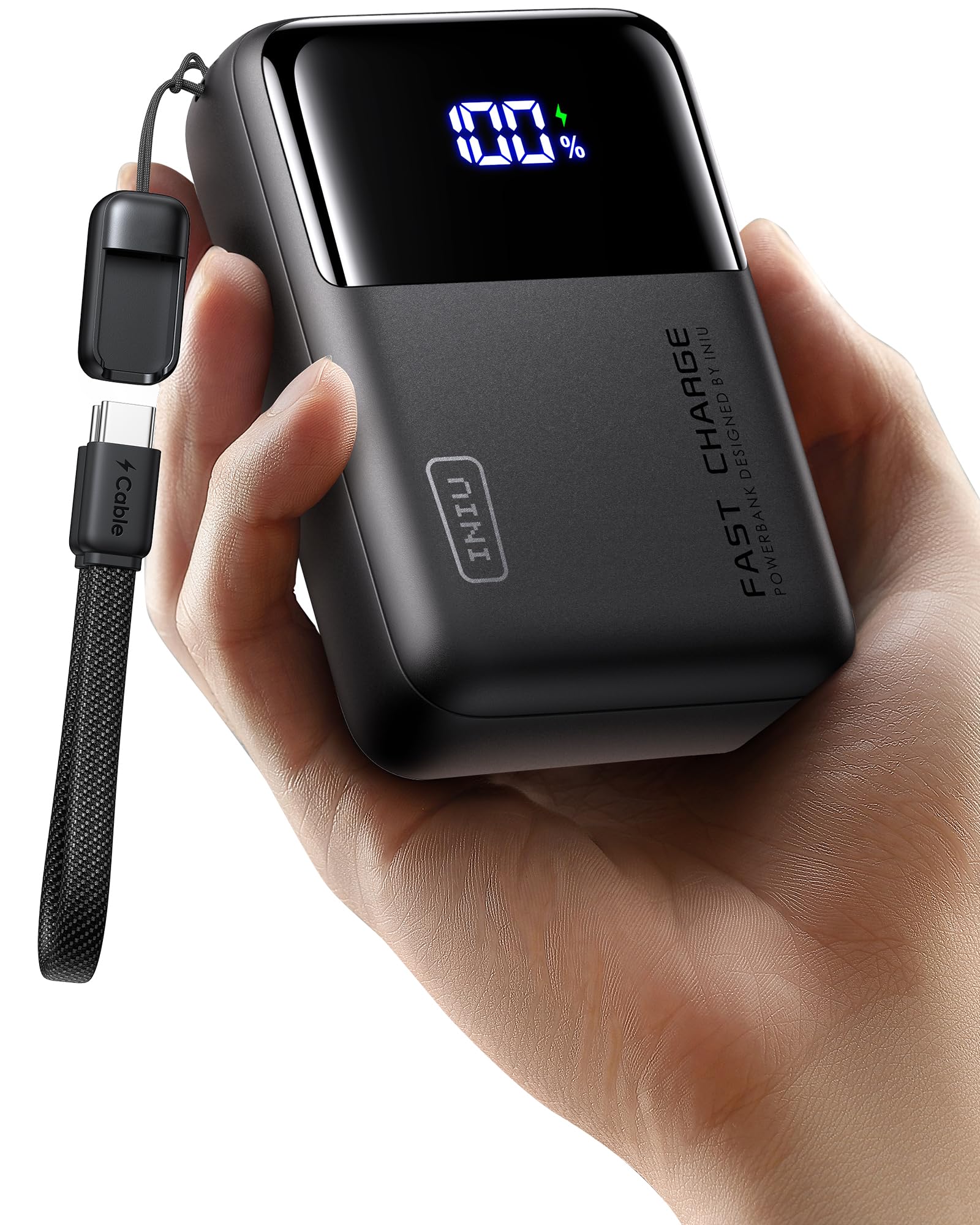
INIU 65W 20K Power Bank

89 /100
Studio Score Strong Evidence

Key details

Ports
2 USB-C, USB-A
PD Output
65W USB-C PD
Form Factor
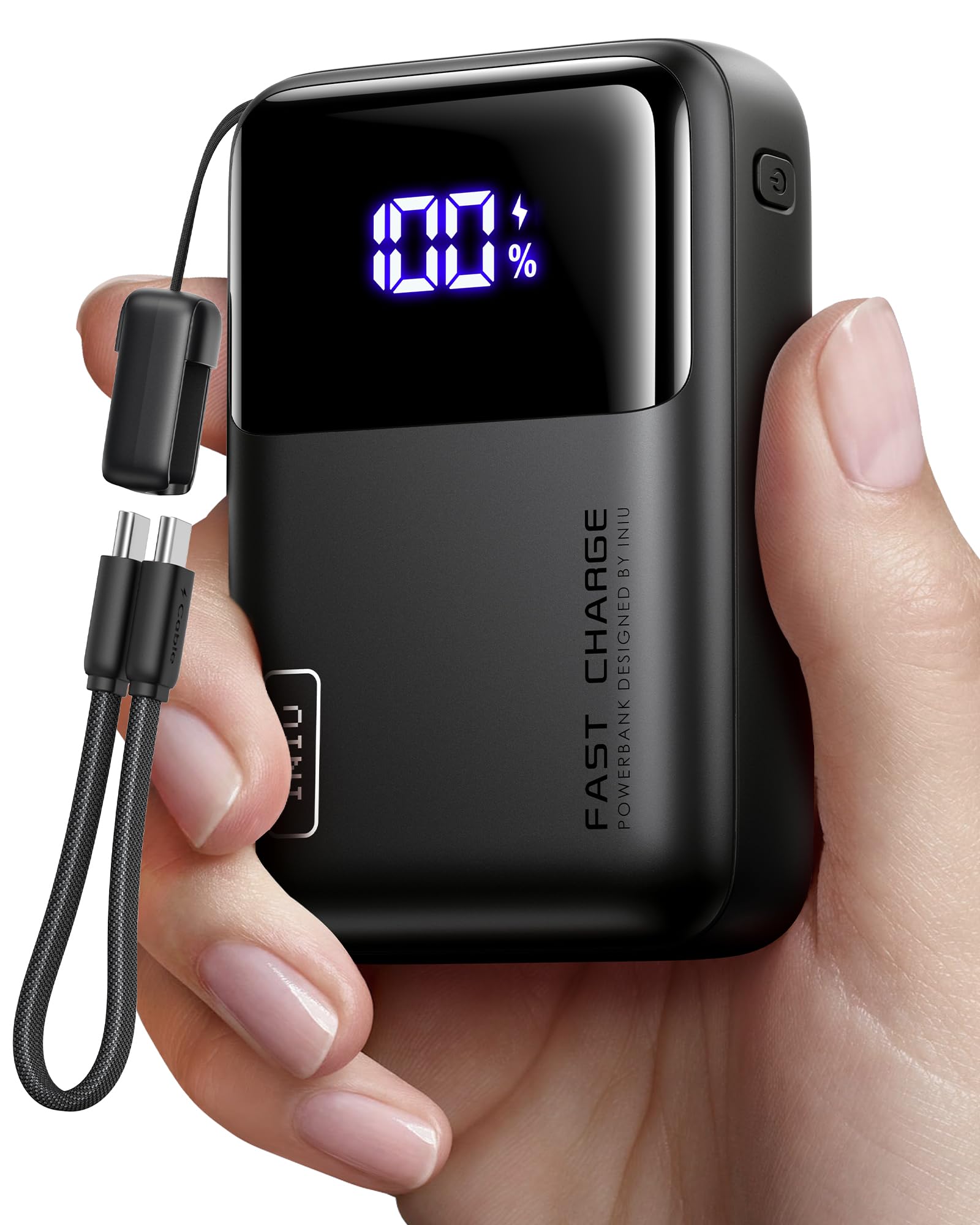
Compact, lanyard cable
Capacity & Flight
20,000mAh, 74Wh, safe
Check Price on Amazon

The INIU 65W delivers true 65W USB-C PD in a body that is noticeably easier to pack than other 20,000mAh packs, which makes it a natural fit for a mirrorless camera bag that also holds a laptop. Two USB-C ports and one USB-A cover a camera body, phone, and tablet from a single outlet, while the detachable lanyard cable keeps the working area tidy.

On a shoot, the practical difference is that this pack can refill a mirrorless camera battery several times and still leave enough for a phone. The 20,000mAh/74Wh capacity covers a weekend of stills and short clips without becoming too heavy for a small bag.

Charging a 13-inch laptop from empty takes a meaningful chunk of the pack, but the 65W output is enough to bring it to a usable level while keeping a camera battery topped up. The two USB-C ports let the camera and phone charge at the same time without unplugging the laptop.

This is the right pick for travel photographers who want one small airline-safe block for a mirrorless body, a phone, and a laptop up to 65W. It is not for 100W laptops or V-mount cinema rigs. The main caveat is durability: some units can develop charging quirks or refill slowly, so a three-year warranty is the backstop.

Pros

  • Compact, wallet-friendly body carries 20,000mAh and 65W without weighing down a camera bag.
  • Strong value for laptop-class charging without the cost of 100W models.
  • Dual USB-C and one USB-A cover a camera, phone, and tablet from a single pack.
  • TSA-approved capacity and slim shape make it easy to carry in a purse or backpack.

Cons

  • Self-charging can take three or more hours, so overnight refills are the practical rhythm.
  • Some units can lose charging ability within months; a three-year warranty backs the purchase.
Our verdict

If your camera kit travels with a laptop, the INIU 65W is a cost-effective way to keep both charged from one compact, airline-safe block.

Check Latest Price
4

Best 100W High-Speed Multi-Device

INIU 100W 25K Power Bank

87 /100
Studio Score Strong Evidence

Key details

Ports
2 USB-C, USB-A
PD Output
100W USB-C PD
Form Factor
Compact, 25K body
Capacity & Flight
25,000mAh, 90Wh, safe
Check Price on Amazon

The INIU 100W delivers laptop-class USB-C PD from a 25,000mAh pack that is surprisingly small for the output class. Two USB-C ports and one USB-A port charge a laptop, camera, drone, and phone at the same time, and the ~90Wh capacity stays within airline limits. The 100W ceiling matters for creators: it can keep a mirrorless body and a laptop on charge together without forcing a tradeoff.

Charging speed holds up when the bank is under load. A drained MacBook Pro can reach roughly full on one charge, and a mirrorless camera or drone battery tops up on the same cycle while a phone shares the USB-A port. The high-density cells keep the body smaller than older 25,000mAh packs, and the bank handles Steam Deck, CPAP, and camera gear from the same outputs without shutting down under combined load.

This suits hybrid shooters and travel photographers who need one power source for a camera, laptop, drone, and CPAP without an AC outlet. Idle drain can surface after weeks unused, and long-term durability can vary between units; weight is typical for the 100W class, so ultralight packers will prefer the slimmer 65W option in this set. Budget buyers who only need phone top-ups can save money with a lower-wattage pack. It is a workhorse to pack for a shoot, not a pocket backup.

Pros

  • 100W USB-C PD tops up a laptop or camera at full speed without a wall outlet.
  • 25,000mAh body is compact for a 100W bank, so it slips into a sling bag.
  • Two USB-C ports and one USB-A output charge a camera, laptop, drone, and phone at the same time.
  • Travel-friendly at ~90Wh, it passes airline limits without sacrificing output.

Cons

No notable drawbacks to flag.

Our verdict

For creators who need 100W laptop power in an airline-safe body, this is the fastest multi-device bank in this lineup. The price sits in the mid-range, but the output and compact body make it a strong value for hybrid shoots.

Check Latest Price
5

Best Action-Camera Companion

Suptig Action Cam Power Bank

85 /100
Studio Score Strong Evidence

Key details

Ports
USB-C, Micro-USB
PD Output
5V USB only
Form Factor
Action-cam mounts included
Capacity & Flight
7,800mAh, safe
Check Price on Amazon

The Suptig is an action-cam power bank with a mount-ready body built around GoPro frames. It attaches directly to GoPro frames, keeps the 7,800mAh cell behind or beside the camera, and extends recording time without a separate battery in a pocket. The built-in mount pattern is the defining feature: no pouch, strap, or extra bracket is needed to keep the battery with the camera. Output is 5V USB, so this is aimed at GoPro and similar action cameras rather than mirrorless or V-mount rigs.

On a helmet or chest mount, the integrated design keeps the battery from swinging on a cable, and the controls stay reachable while the camera is secured. The same mounting integration changes how the rig behaves on a selfie stick; the battery sits behind the camera instead of dangling below it. That is the practical difference from a generic brick in a pocket.

This is for GoPro and action-cam owners who want extended recording time and already carry a sealed housing for wet work. The waterproof rating depends on port covers being closed; a separate GoPro housing is required for actual underwater use. Certain GoPro recording modes reject external power, so confirm the camera accepts it before a long session.

Pros

  • The mount-ready body attaches to GoPro frames, so the battery stays with the camera.
  • 7,800mAh capacity extends action-cam recording sessions well beyond internal batteries.
  • USB-C and Micro-USB inputs make recharging easy with cables already in a camera bag.

Cons

  • Specific GoPro mounts may not align with the integrated port door, so attachment compatibility varies.
  • Long-term durability can vary; occasional units lose charging ability after months of use.
Our verdict

At a mid-range price, it is a niche action-cam power source with the right mounting hardware for shooters who want the battery attached to the rig.

Check Latest Price
6

Best Budget 45W All-Rounder

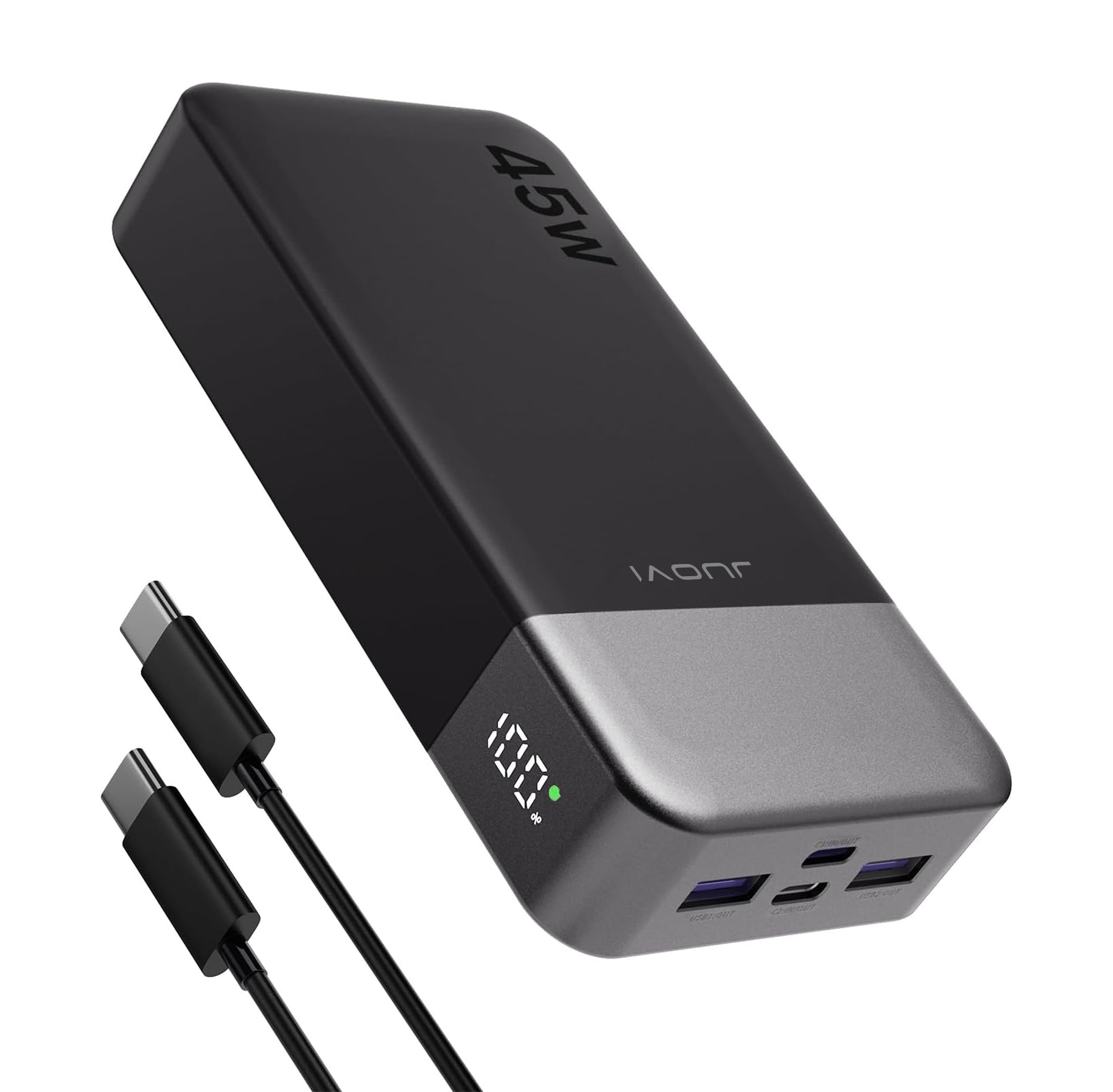
JUOVI 45W 20K Power Bank

89 /100
Studio Score Strong Evidence

Key details

Ports
2 USB-C, 2 USB-A
PD Output
45W USB-C PD
Form Factor
Four ports, LED display
Capacity & Flight
20,000mAh, 74Wh, safe
Check Price on Amazon

The JUOVI combines 45W USB-C PD, two USB-C and two USB-A ports, and an LED display in a budget-friendly 20,000mAh body that fits easily in a camera bag. It handles mirrorless camera and tablet top-ups without the premium price of the 65W travel bank above.

Charging an iPhone 15 Pro to roughly 60% in 30 minutes confirms the 45W output is real. The 20,000mAh capacity keeps a mirrorless body topped up through a long day, and the 74Wh rating stays within airline carry-on limits.

The four-port layout lets a small crew share one bank instead of juggling separate chargers, and the LED display gives a clear read on remaining charge. That combination makes it a practical bag partner for budget-conscious shooters.

Budget shooters who want USB-C PD power for cameras and tablets are the right audience. This is not for V-mount or D-Tap rigs, and long-term reliability varies between units: occasional units can develop charging issues after months, so treat it as a capable everyday bank rather than a rental-house workhorse.

Pros

  • 45W USB-C PD tops up cameras, tablets, and phones quickly.
  • Two USB-C and two USB-A ports let several devices charge at once.
  • Build quality is better than the entry-level price suggests.
  • 20,000mAh capacity covers a shoot day and stays airline-friendly.

Cons

  • A 45W ceiling means large laptops charge slowly; cameras and tablets are unaffected.
  • Idle drain can leave a stored bank low after several days in a bag.
Our verdict

For budget-focused shooters who want 45W PD and four ports without paying extra for V-mount hardware, the JUOVI is the entry-level pick.

Check Latest Price
7

Solo Videographers

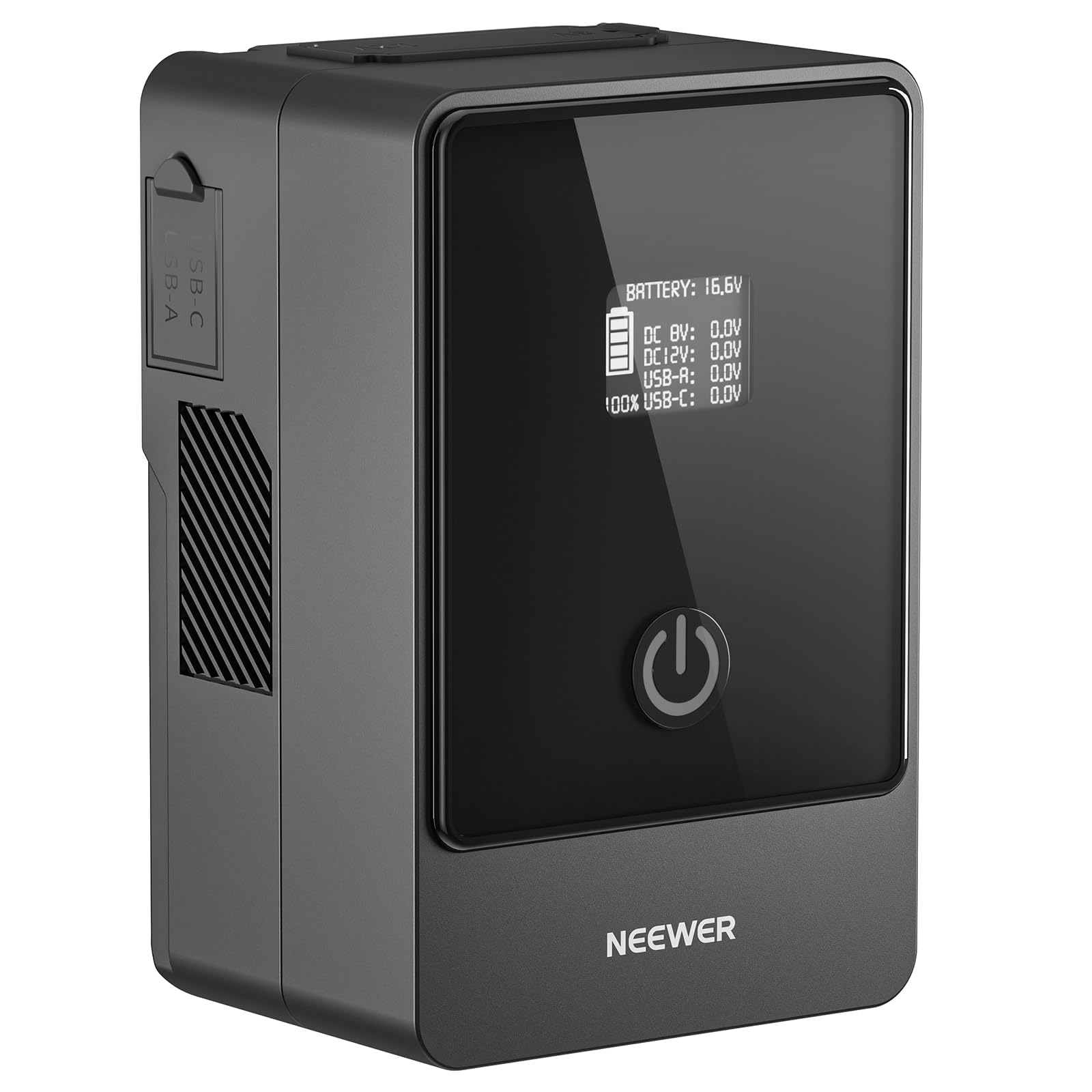
NEEWER Mini V-Mount 6800mAh

92 /100
Studio Score High Confidence

Key details

Ports
USB-C, D-Tap, DC, BP
PD Output
65W USB-C PD
Form Factor
V-mount, OLED display
Capacity & Flight
99Wh, V-mount, safe
Check Price on Amazon

This NEEWER V-mount delivers 99Wh of on-rig power in a palm-sized body, with D-Tap, dual DC, BP, and 65W USB-C PD covering FX3/FX6-class cameras, monitors, and accessories. That makes it a natural entry into V-mount power for solo videographers who run a V-mount plate and want longer runtime than a general USB-C bank can offer. The tradeoff is no wall charger in the box, so a 65W USB-C adapter is an extra purchase, and long-term owner history is limited compared with the established pro V-mount in this roundup. Buy it for run-and-gun days where one compact battery feeds the camera and monitor; step up to the pricier V-mount if you need a deeply documented rental-fleet battery.

Pros

  • Powers an FX6 or FX3 with monitor and accessories through long shooting sessions.
  • One battery feeds camera, monitor, and accessories from D-Tap, dual DC, BP, and 65W USB-C PD.
  • Palm-size body keeps a run-and-gun rig light without sacrificing 99Wh capacity.

Cons

  • On large cinema builds, a 99Wh cell can require a spare for a full day of shooting.
  • Requires an existing V-mount plate on the camera; it cannot substitute for a general USB-C power bank.
Our verdict

Use this when you need one lightweight V-mount battery to power both camera and monitor during run-and-gun shoots without paying the established pro-rival premium.

Check Latest Price
8

Off-Grid Users

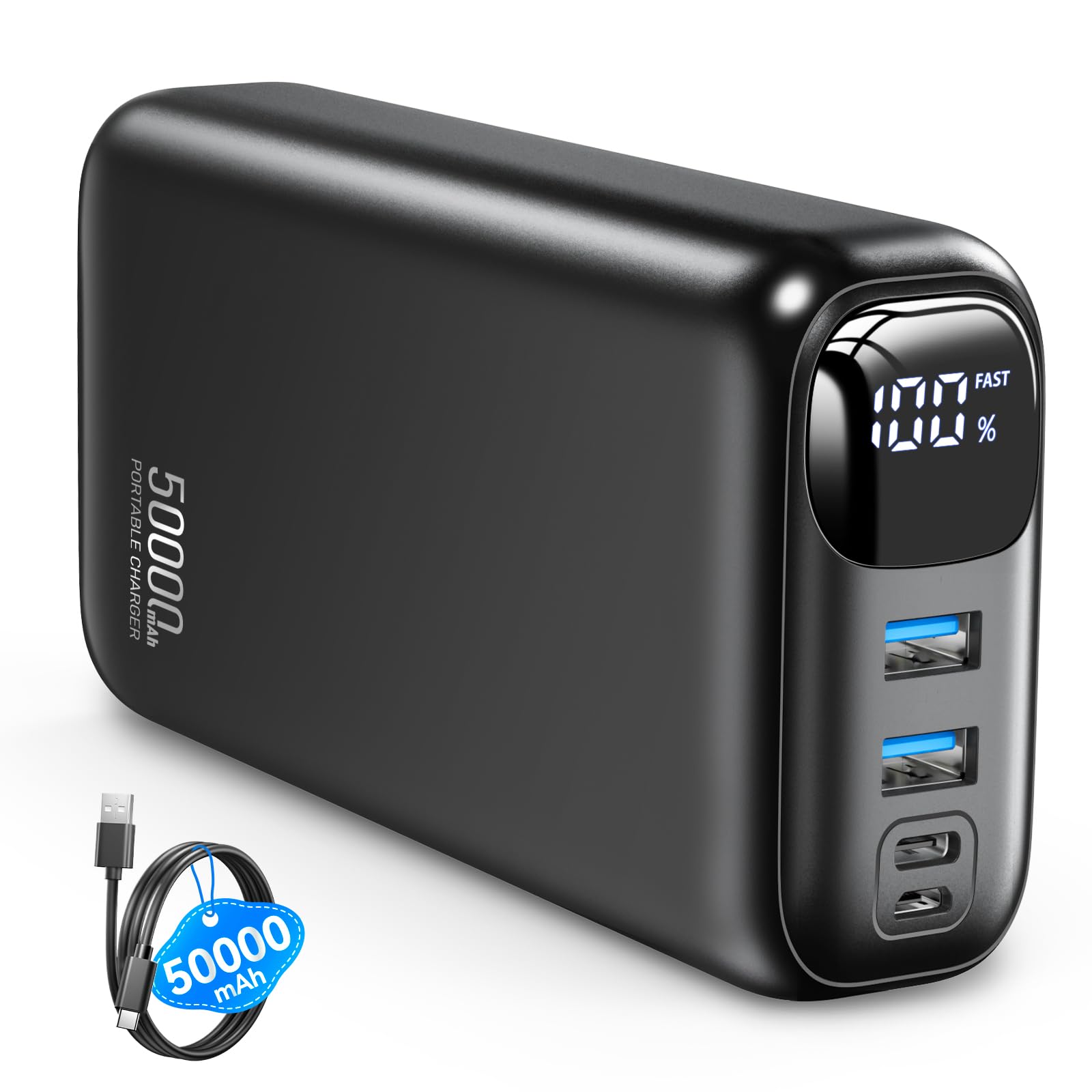
OHOVIV 50K 22.5W Power Bank

86 /100
Studio Score Strong Evidence

Key details

Ports
2 USB-A, USB-C
PD Output
22.5W USB-C PD
Form Factor
LED display, multi-port
Capacity & Flight
50,000mAh, no flights
Check Price on Amazon

The OHOVIV's 50,000mAh capacity and budget price make it a practical off-grid charging station for USB-C mirrorless cameras, action-cam batteries, and phones over a multi-day trip. The LED display and three output ports allow a small camera kit to recharge without wall outlets, and the additional input port means the bank itself can be topped up from a car charger between stops. It earns an also-consider slot rather than a top pick because its role is narrow: this is a ground-based charging station for standard USB-C camera gear, not a general-purpose camera power pack.

Pros

  • Massive 50,000mAh capacity stretches across multi-day off-grid trips for cameras and phones.
  • LED display shows remaining charge, helpful for rationing power over a long weekend.
  • Three output ports plus an additional input let a small kit charge together from one bank.

Cons

  • 22.5W USB-C PD stops short of laptop-class camera accessories that need 45-65W.
  • Manufacturer states the battery cannot be carried on airplanes, so air travel is off the table.
Our verdict

For campsite and road-trip setups that stay on the ground and charge at standard USB-C speeds, this bank delivers a huge amount of budget capacity.

Check Latest Price
9

Road-Trip Groups

LanLuk 40.8K 25W Power Bank

85 /100
Studio Score Strong Evidence

Key details

Ports
USB-C, built-in cables
PD Output
25W USB-C PD
Form Factor
Built-in cables, LED display
Capacity & Flight
40,800mAh, no flights
Check Price on Amazon

The 40,800mAh capacity and three built-in cables make this a practical charging hub for road-trip and campsite shoots. It tops up phones, tablets, and smaller camera batteries several times before needing a wall outlet, so a small crew can stay powered through a long day. The build is blockier than a pocket bank, and it is not approved for airline carry-on, so it belongs in a trunk or campsite rather than a flight bag. The integrated cables and LED display make it especially convenient for groups who would rather not sort through loose cords.

Pros

  • Large 40,800mAh capacity delivers multiple full charges for phones and smaller camera batteries during multi-day trips.
  • Three built-in cables eliminate the need to pack separate cords for phones, tablets, and USB-C devices.
  • A budget-friendly price for this capacity makes sense for group charging away from wall outlets.

Cons

  • 25W USB-C PD output remains below the needs of laptops and high-power cinema cameras.
  • Charging output can be inconsistent, with occasional stops or warmth during a full top-up.
Our verdict

When you drive to the shoot and need one box to charge everyone's gear, the built-in cables and 40,800mAh capacity fit the trunk well.

Check Latest Price

How to Choose

USB-C PD Wattage

USB-C PD controls how much power the bank can send. 45W covers mirrorless cameras, tablets, and laptop top-ups; 65W leaves room for simultaneous charging. Below 30W, a recording camera often draws more than the bank can supply, so the battery still drains.

On a shoot, 4K recording, a phone, and a monitor can exceed a 22.5W bank's total output. The bank then prioritizes one device, and the camera may lose ground. Match PD wattage to your heaviest simultaneous load, not just the camera spec.

Capacity and Flight Limit

mAh is misleading because it ignores voltage. A 20,000mAh bank is typically 74Wh; a 99Wh V-mount is around 6,800mAh. Watt-hours is the number airlines use, and anything above 100Wh is not carry-on approved.

Many '50,000mAh' budget packs exceed 100Wh and are not allowed on flights, so they only suit car or campsite use. For travel shooters, a 20,000mAh/74Wh or 25,000mAh/90Wh bank keeps gear alive without grounding it. For V-mount users, 99Wh is the legal pro ceiling.

Ports and Protocols

The port list determines which rigs can draw power. A USB-C bank works for USB-C cameras and phones; a V-mount battery adds D-Tap and DC ports for cinema cameras, monitors, and follow-focus systems. D-Tap supplies unregulated 14.4V-ish power; USB-C PD negotiates exact voltage.

If the camera uses a dummy battery with USB-C input, any 45-65W bank will work. If the rig is built around a V-mount plate, you need D-Tap or DC output. Check the camera's input first, because a D-Tap-to-USB-C adapter is not true power delivery.

Form Factor and Mounting

Form factor decides whether the bank lives in a bag or on the camera. A USB-C PD bank fits in a backpack side pocket; a V-mount battery mounts under or behind the camera. Built-in cables and waterproof housings add convenience but create weak points if a port cover is left open or a cable is stressed.

Action-camera packs include mounts so the battery rides on the rig. That helps for run-and-gun video but ties you to one camera ecosystem. Consider whether the bank needs to survive rain, fit on a gimbal, or stay in a bag for top-ups.

Frequently Asked Questions