Best Overall
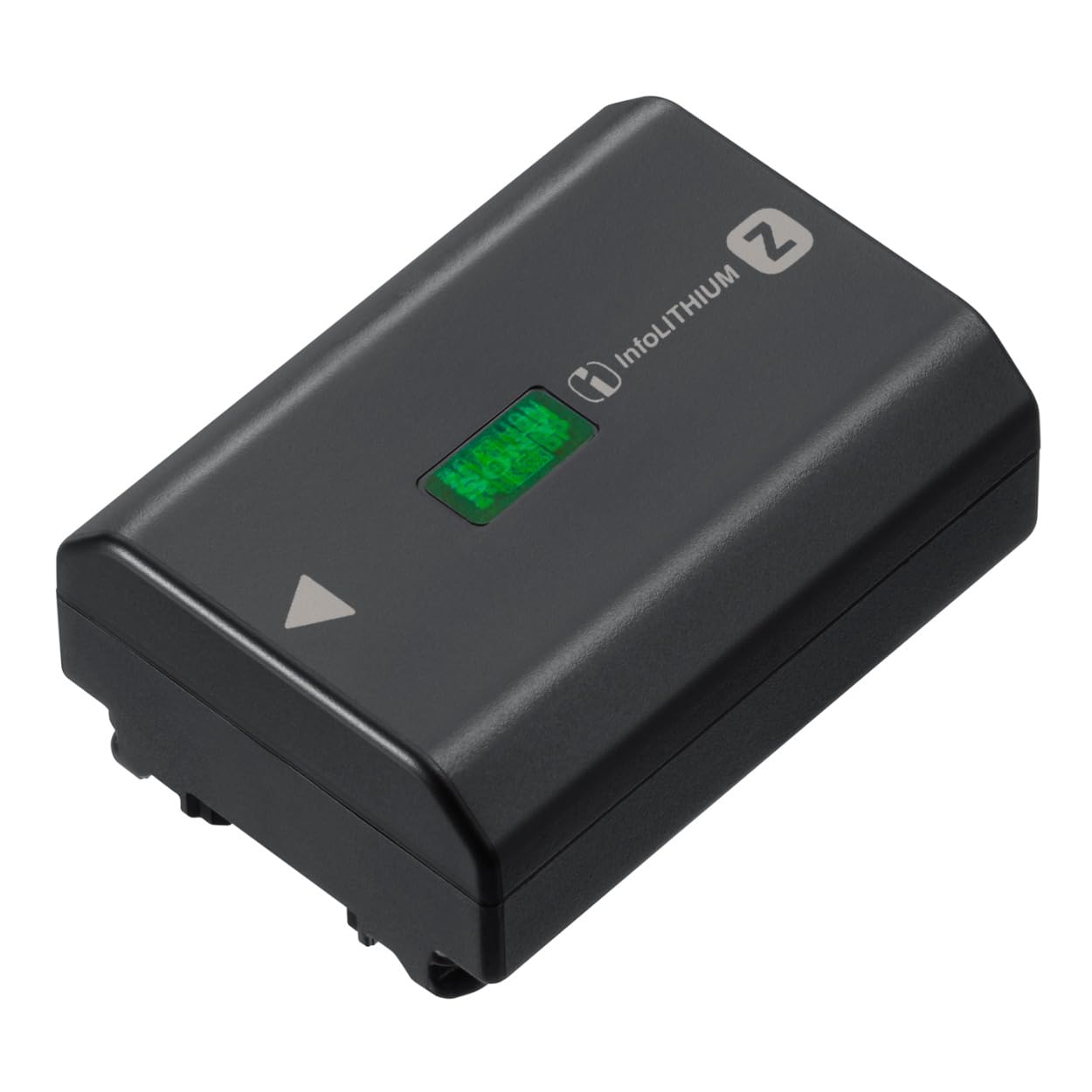
Sony NPFZ100
Key details
- Capacity
- 2280mAh, 16.4Wh
- Charging
- In-camera or external charger
- Kit Contents
- 1 battery
- Compatibility
- Sony Alpha A7 III/A9/A6600/A1
The Sony NP-FZ100 delivers long stills sessions and roughly 1–1.5 hours of 4K recording per charge in Alpha bodies that use the Z-series slot. Sony's iNFOlithium protocol keeps the camera's percentage readout honest through the discharge curve, and the 2280mAh capacity is a clear step up from the older NP-FW50. For a photographer moving from an A7 II to an A7 III, the runtime jump is immediately obvious: the older body depends on a smaller NP-FW50, so the Z-series battery is a different class of cell.
A single charge covers a full day of intermittent still shooting, and video shooters can plan around the 4K runtime instead of guessing. The battery locks into the same bodies as the factory original, so there is no fitment worry and no third-party compatibility quirk when the camera updates firmware. Sony's one-year limited warranty also follows the cell, which is meaningful when the battery sits inside a camera body that costs several times the price of this battery. The same OEM cell is the specified accessory for the A7 III, A7R III/IV, A9, A6600, and A1, so there is no adapter or shim involved.
This is for photographers who want the factory-matched battery for a premium-priced body and who treat a fresh charge as a pre-flight check. It is not for A7 II or A7R II shooters, which use the NP-FW50. The premium price buys one battery, not a multipack, so budget-minded photographers may prefer third-party two-packs for casual work. If you buy from an unauthorized seller, verify authenticity before you rely on it; the same caveat applies to any premium electronics purchase.
The NP-FZ100's 2280mAh / 16.4Wh capacity is the reason it outlasts older Sony cells, and the 7.2V output stays stable under video load. The single-cell format makes a second NP-FZ100 the practical backup for event work; a third-party two-pack may be cheaper, but it gives up the OEM warranty and the charge-reporting behavior Sony builds into its own batteries. For stills-only casual use, that tradeoff is easy to accept.
Sony's battery chemistry and firmware communication are already accounted for in the camera's operational logic, so a genuine NP-FZ100 gives the camera meaningful battery state data instead of a generic voltage reading. That matters for shooters who will not risk an unbranded cell inside a full-frame body. When you are carrying one body and one battery, the extra cost is easier to justify than when you are packing three spares for a hobby trip.
💡 Keep a second NP-FZ100 charged when shooting events; the single-cell format works best with a spare.
Pros
- Genuine Sony NP-FZ100 construction keeps charge reporting and camera compatibility aligned.
- Long runtime covers full stills sessions and roughly 1–1.5 hours of 4K video.
- Authentic iNFOlithium cell confirms as genuine Sony hardware in camera menus.
- Substantially more capacity than the older NP-FW50, reducing spare-battery swaps.
Cons
- Premium pricing buys a single battery rather than a multipack of third-party cells.
- Charging can be inconsistent in isolated units; a cell may arrive discharged or stop before full.
The NP-FZ100 is the battery Sony Alpha bodies reference in their own spec sheets; for 4K-heavy shooters, it removes the guesswork from runtime.