8 Best Portable Power Station for Photographers 2026: Capacity Fit

Find the portable power station for photographers with right capacity and USB-C for on-location camera, drone, laptop, and light charging.

The first number on a portable power station listing is usually the one that gets the sale: peak wattage. On location, what actually matters is continuous AC output, watt-hour capacity, and the USB-C PD wattage that will charge your laptop and cameras. Choosing a station on surge numbers alone is how photographers end up with a unit that can't run a light and a laptop at the same time.

The right station matches the kit you carry: a 300W unit with 250-300Wh can handle a mirrorless body, drone batteries, a laptop, and small LED panels, while a sub-200Wh compact model is better treated as a top-up companion. The trade-off in this category is between portability and sustained power. Lighter stations are easier to carry, but they have less runtime and often weaker USB-C PD.

Buying for continuous AC output and USB-C PD instead of peak wattage gives you a station that finishes the shoot instead of becoming extra camera-bag weight.

1

Best Overall for Photographers
BLUETTI Elite 30 V2

87 /100
Studio Score Strong Evidence

Key details

Weight
9.5 lb
Capacity
288Wh
Output Ports
9 ports
USB-C PD Output
140W
Check Price on Amazon

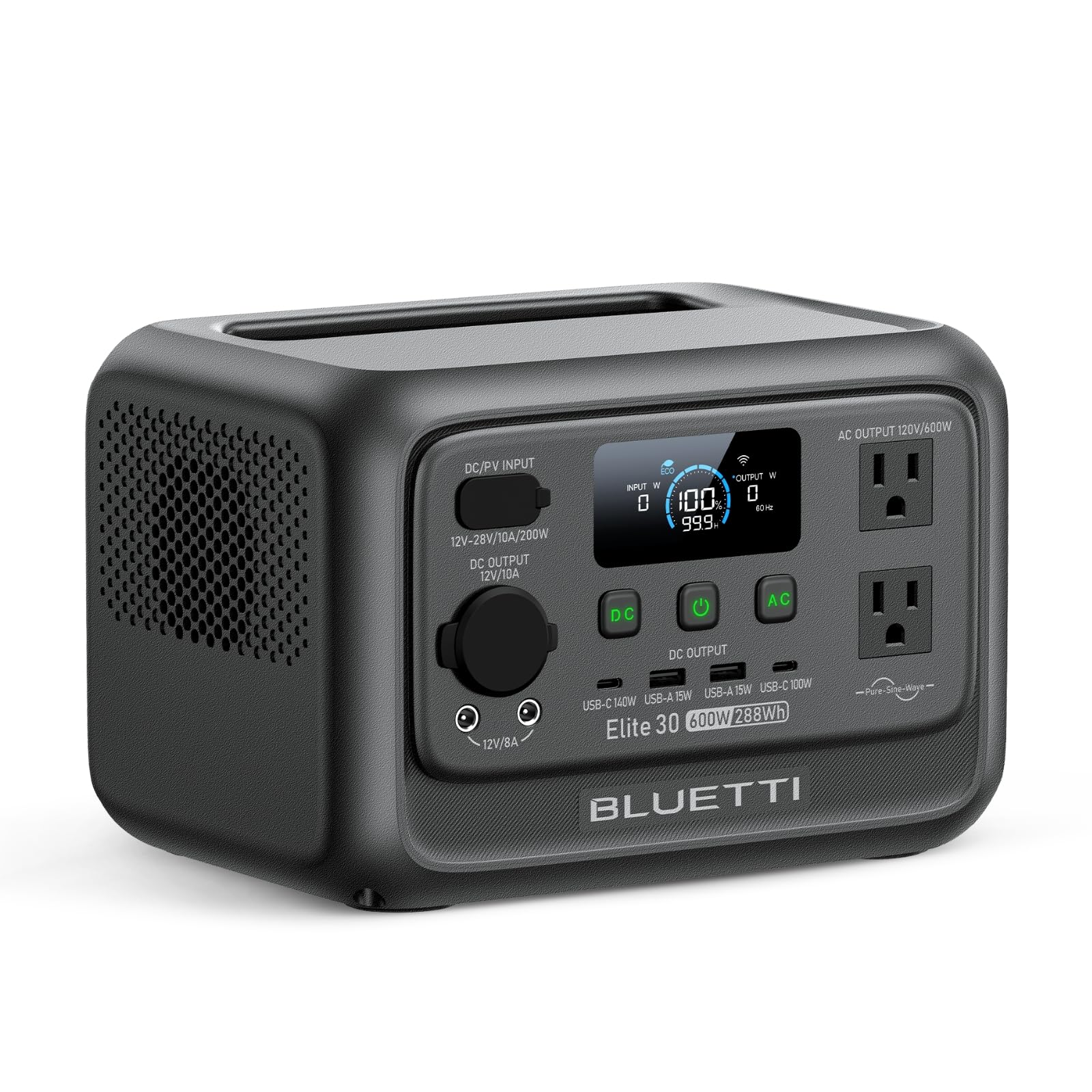
The Elite 30 V2 supplies 600W of continuous AC power, 288Wh of capacity, and a 9.5 lb body in one package. For a location photographer, that means a camera battery charger, a drone pack, and a laptop can run from the same outlet while a small LED fixture still has headroom on the AC side. The 140W USB-C PD port is another practical layer: it handles a high-draw laptop without the laptop's own AC adapter, cutting one more item from a packed camera bag.

Wall recharge takes roughly 70 minutes, so a short break between locations can recover the station. That works well for event days with quick turnarounds: while you eat or travel, the station fills, and you start the next stop with a usable reserve. The 288Wh capacity is best treated as a charging hub for a working day rather than a generator for sustained high-wattage lighting, so keep the big lights on the AC side only for short bursts.

This station is for event and outdoor photographers who need to keep camera batteries, drones, and laptops alive between locations. At 9.5 lb, it travels in a gear bag or shoulder-carry kit rather than a backpacking load. Photographers who only need occasional phone or camera top-ups will find this more station than the job requires; the premium price makes sense once a laptop, drone pack, or small light is part of the load. Before a full day without wall access, test charge retention with the exact gear you plan to run; that measurement will tell you whether the 288Wh pack covers your route or needs a midday top-up.

Plugged into wall power, the station behaves as a UPS-style buffer for studio or venue setups. A brief outage does not interrupt a laptop or router that is connected through it, and the pack refills when grid power returns. That gives a working photographer protection from a tripped circuit without adding a second dedicated UPS unit.

The outboard ports cover mixed gear: USB-C, USB-A, AC, and DC outlets let a drone charger and camera batteries charge while the laptop runs. Use the 600W continuous rating as the planning number; the 1500W surge capacity only matters for brief inrush peaks, not for steady loads. The station's compact footprint also leaves room in a camera bag for lenses and bodies, so it works as a base-camp charger that moves between tripod spots.

๐Ÿ’ก Plan AC loads against the 600W continuous rating rather than the 1500W surge figure; that keeps the station within its steady-output comfort zone.

Pros

  • 600W continuous AC output runs a laptop, camera charger, and small LED light from one station.
  • AC wall recharge returns a full station in about 70 minutes, fitting a short break between locations.
  • 9.5 lb body travels in a gear bag or shoulder-carry kit without dominating the load.
  • 140W USB-C PD handles a high-draw laptop without carrying a separate AC adapter.
  • Plugged into wall power, it keeps laptops and studio gear running through brief outages.

Cons

  • Battery run-time consistency can vary between units; a full-shoot hold time is not guaranteed by the capacity rating.
  • Charging faults can appear in isolated units, so an AC-load test after delivery is worthwhile.
Our verdict

For photographers who need a field charger with real AC output and laptop-class USB-C, the Elite 30 V2 is the station to grab when the job is bigger than a phone bank and smaller than a generator.

Check Latest Price
2

Best Heavy-Duty 600W Option

VTOMAN Jump 600X

89 /100
Studio Score Strong Evidence

Key details

Weight
14.6 lb
Capacity
299Wh
Output Ports
9 ports
USB-C PD Output
60W
Check Price on Amazon

The VTOMAN Jump 600X is the heavy-duty workhorse of this set: 299Wh LiFePO4 storage, 600W continuous AC output, expansion to 939Wh with an add-on battery, and a car jump-start function. A wall recharge takes about three hours, and pass-through charging lets camera batteries and laptops keep pulling power while the pack refills.

The 600W AC inverter is enough to run two small LED panels while a laptop and drone batteries charge from the AC outlet or USB ports. That is the point where smaller 300W-class stations run short, and it is why the VTOMAN suits base-camp and campsite work rather than walk-around street shooting. The optional expansion battery is the backup for longer days: clip it on when the built-in 299Wh pack is not enough.

This is for photographers who drive to the location and need power for lights, drone batteries, laptops, and occasional appliances, plus the option to jump-start a vehicle. The 14.6 lb body and 60W USB-C PD cap its appeal for travel and street photographers who need under 10 lb or 100W+ USB-C laptop charging; those shooters will prefer the lighter 600W option with 140W PD.

๐Ÿ’ก Before a remote shoot, run the station under your expected lighting load and watch the discharge readout; the 299Wh pack is honest about its limits under continuous AC draw.

Pros

  • Solid build quality keeps the Jump 600X stable in a cargo area or campsite table.
  • 600W continuous AC output powers two LED panels plus laptop and camera battery charging.
  • LiFePO4 pack expands from 299Wh to 939Wh for multi-day shoots without a second station.
  • Built-in car jump-start adds roadside backup for photographers who drive to remote locations.

Cons

  • USB-C PD tops out at 60W, so large laptops charge slower than with 100W+ ports.
  • At 14.6 lb, this is the heaviest station in the set; keep it in the vehicle rather than a camera bag.
  • Battery life under sustained load can vary, so confirm charge retention before a full shoot.
Our verdict

The Jump 600X is the right call when the shoot and the vehicle share the same site: it powers the location and can jump-start the rig. If the plan is hiking your power in, the lighter 600W station with 140W PD is the better fit.

Check Latest Price
3

Best Budget LiFePO4

DARAN NEO300L

83 /100
Studio Score Strong Evidence

Key details

Weight
8.2 lb
Capacity
288Wh
Output Ports
7 ports
USB-C PD Output
60W
Check Price on Amazon

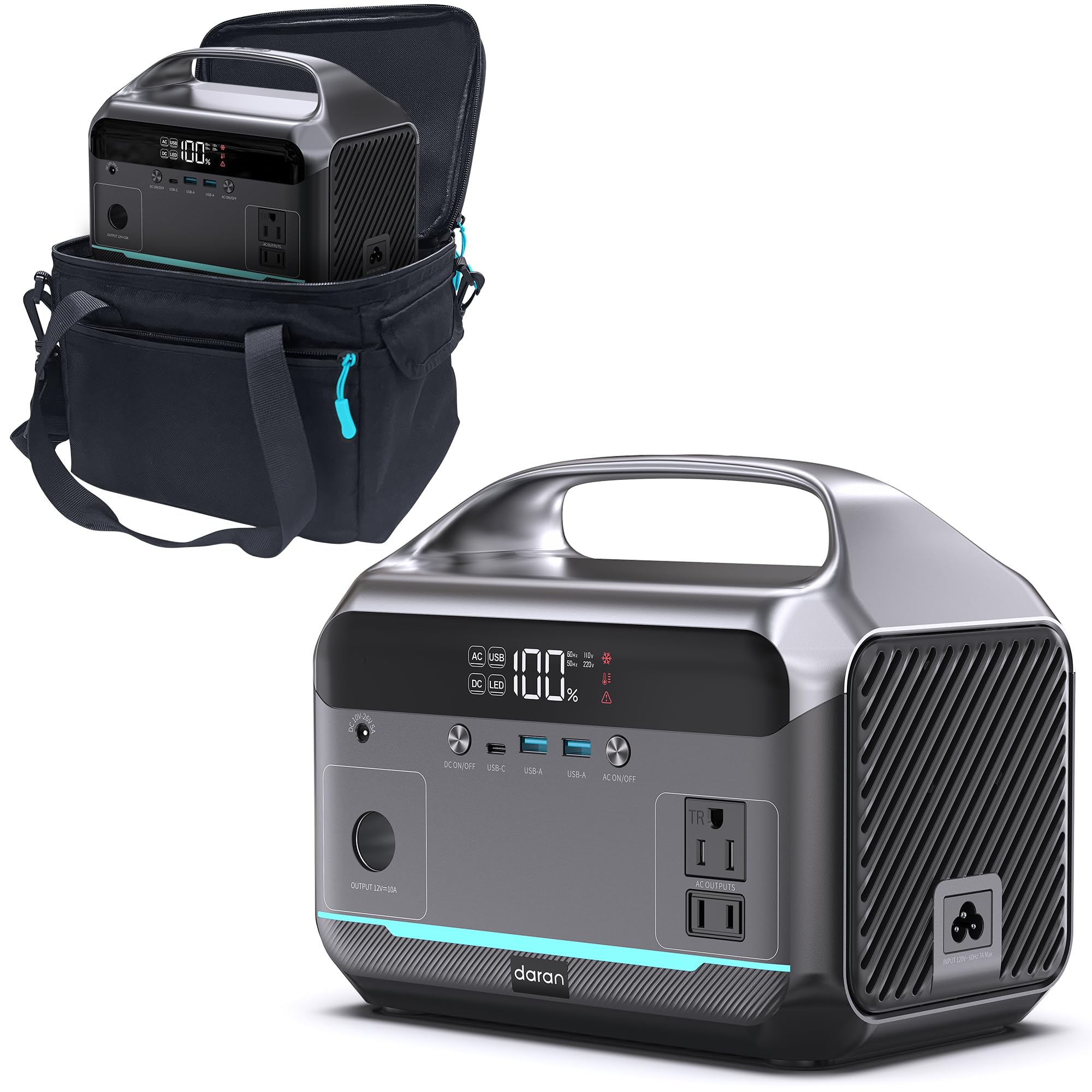
The DARAN NEO300L pairs 288Wh of LiFePO4 storage with 350W AC output and 60W USB-C PD in an 8.2 lb frame. Its value comes from the battery chemistry and price, not from being the lightest or the most powerful station in this set; the expandable heavy-duty option is a different tool for a different carry style.

A 350W continuous AC outlet and seven ports let one pack charge a laptop over USB-C while topping up camera batteries, drone packs, and a modest LED panel from AC at the same time. The 600W surge number gets the attention, but continuous wattage is what determines whether a setup stays on.

This suits location photographers who want LiFePO4 longevity without paying a premium and who will carry the pack between car and setup rather than on a multi-day trail. It is not an ultralight sub-5 lb companion, and the recharge behavior needs a check before a long shoot: recharge speed and charge retention can vary by unit, and the cooling fan is audible during AC charging.

๐Ÿ’ก Let USB-C handle the laptop and reserve AC outlets for lights, so the power budget goes further.

Pros

  • LiFePO4 chemistry at a budget price makes long-cycle battery tech approachable.
  • 60W USB-C PD charges a laptop without needing an AC adapter.
  • 288Wh capacity handles a laptop and camera-battery charging at the same time.
  • 8.2 lb body fits in a bag or behind a car seat with room to spare.

Cons

  • 350W continuous AC is enough for modest gear, but large lighting setups will need a bigger station.
  • Long-term capacity retention varies; some units lose usable energy after months of use.
Our verdict

For value-focused location shooters, this is the budget-side choice that still supplies a real AC outlet and laptop-grade USB-C.

Check Latest Price
4

Best Ultra-Portable 300W

MARBERO M823 300W

86 /100
Studio Score Strong Evidence

Key details

Weight
4.6 lb
Capacity
237Wh
Output Ports
8 ports
USB-C PD Output
18W
Check Price on Amazon

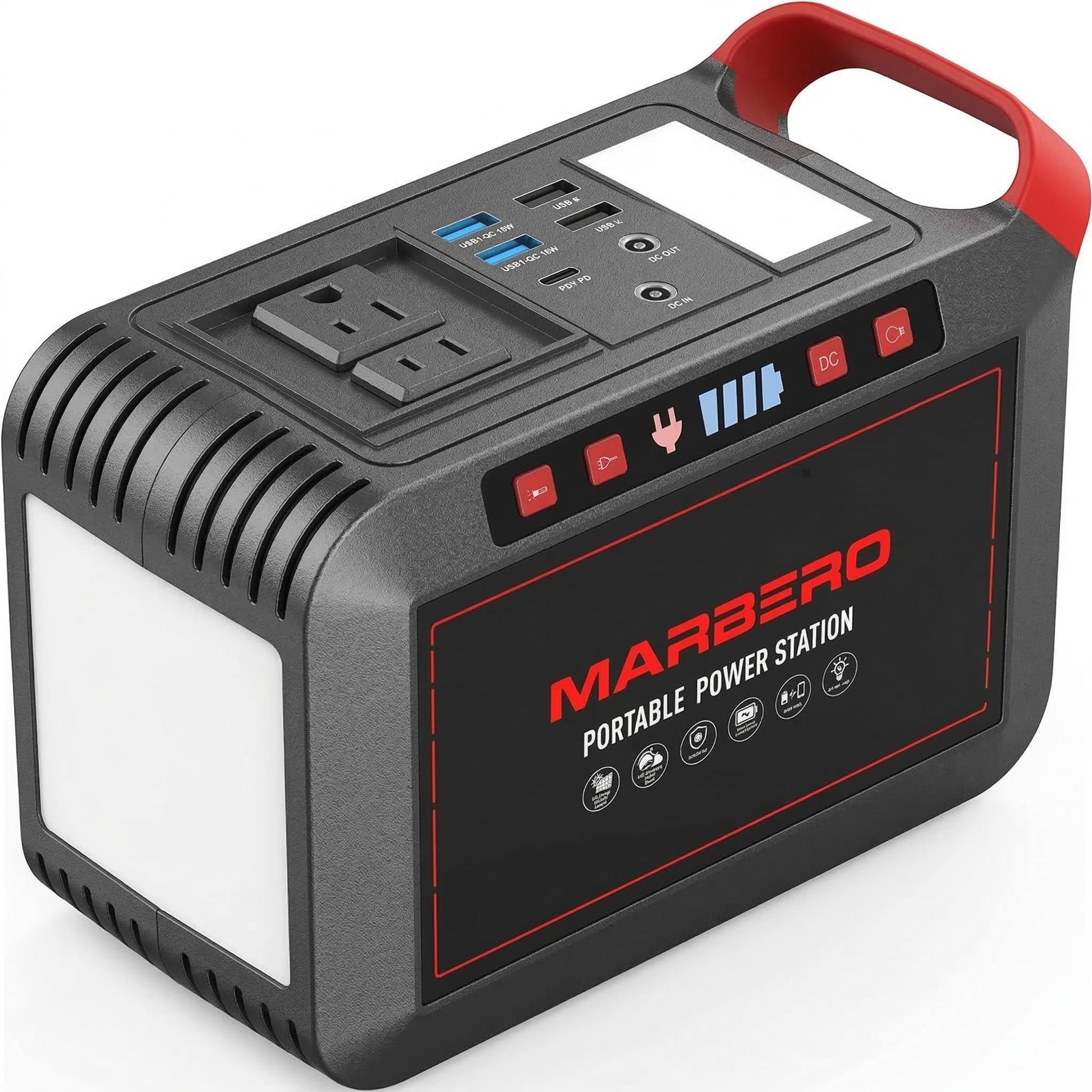
At 4.6 lb, the MARBERO M823 puts a genuine 300W AC outlet and 237Wh capacity into a shell that slides into a daypack. The eight-port layout covers AC, USB-C, USB-A, and DC outputs, so camera batteries, a phone, a drone, and a compact LED panel can share one box. Compared with the 100W USB-C option in this set, the MARBERO gives up fast USB-C power for a lower price and a heavier-duty AC outlet.

This is for travel and street photographers who top up two camera batteries, a phone, and a compact drone mid-shoot, then recharge the station overnight. It carries enough output for those bursts without becoming the heaviest thing in the bag. Photographers planning continuous LED lighting should look at a larger station; this one is a top-up tool, not a location lighting generator.

The 18W USB-C PD port handles small devices, but a laptop needs the AC outlet and its own adapter. Long-term charge retention can vary between units, so run a full charge-hold test before a paid shoot. With those boundaries respected, the MARBERO is a predictable lightweight power source for camera batteries and phone top-ups.

Pros

  • A genuine 300W AC outlet in a 4.6 lb body, so small chargers run anywhere a camera bag goes.
  • Eight ports give cameras, phones, drones, and small accessories their own plug without an extra hub.
  • The compact shell and low weight make it an easy emergency AC source while traveling.

Cons

  • The 300W continuous AC rating is a ceiling; a laptop charger plus a high-wattage LED panel leaves little headroom.
  • Per-charge runtime can vary between units, so verify expectations before a half-day shoot.
Our verdict

For travel and street photographers whose power needs fit in bursts, the MARBERO keeps real AC output at backpack weight.

Check Latest Price
5

Best Pure Sine Wave Value

EnginStar R300 300W

84 /100
Studio Score Strong Evidence

Key details

Weight
6.5 lb
Capacity
296Wh
Output Ports
8 ports
USB-C PD Output
18W
Check Price on Amazon

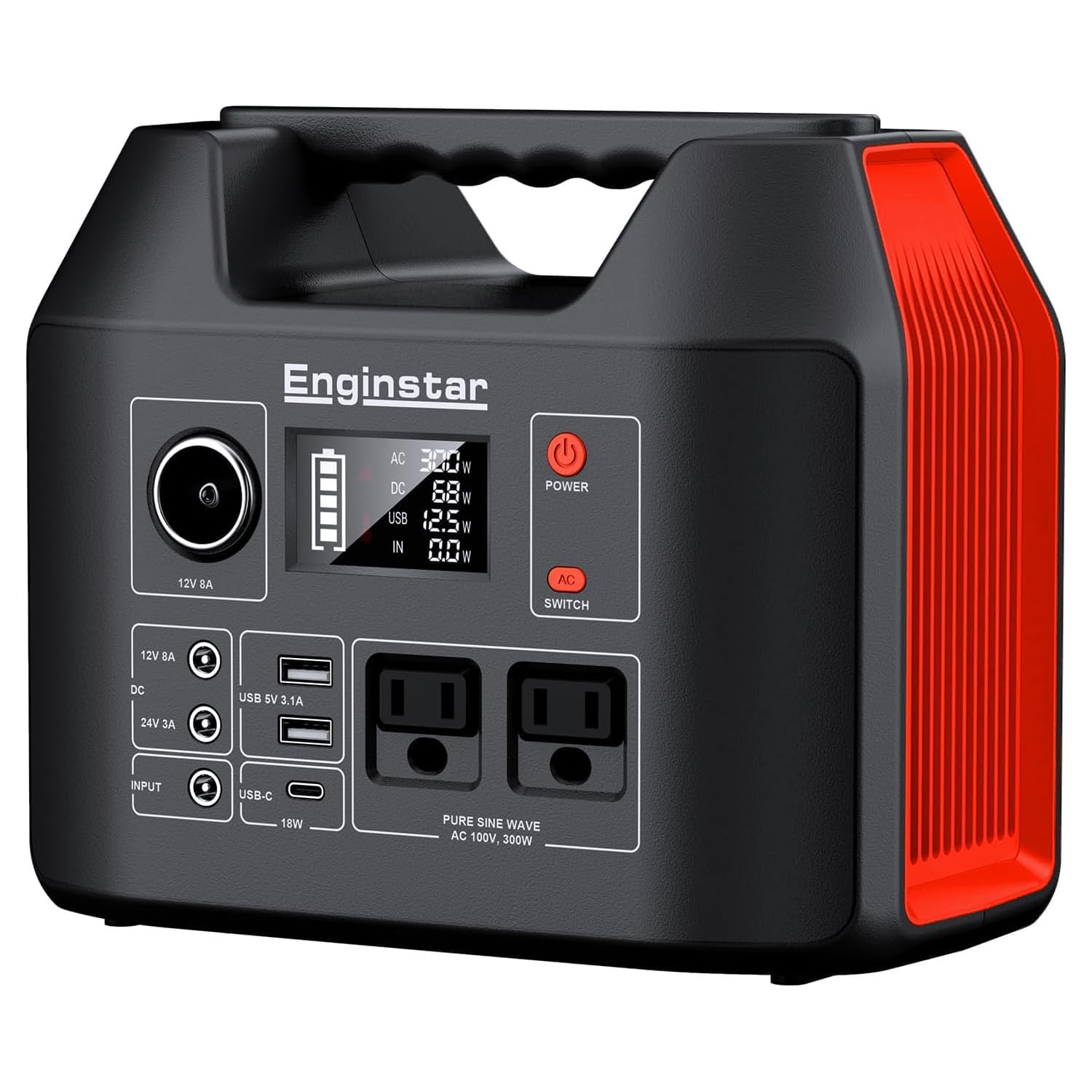
The EnginStar R300 pairs 296Wh capacity with 300W of pure sine wave AC in a 6.5 lb body, giving photographers a lighter alternative to the 600W workhorse without giving up clean outlet power. It is not the lightest station in this roundup, but the AC waveform is what keeps camera battery chargers and laptops happy on location.

The eight-port panel pairs a 300W AC outlet with USB-C, USB-A, and DC outputs, so an outdoor setup can charge a mirrorless camera battery, top off a phone, and keep a laptop running without swapping cables mid-shoot. The 18W USB-C PD is a top-up port rather than a fast laptop charger; larger laptops draw through their own adapter on the AC outlet, which the pure sine wave inverter handles cleanly.

The R300 fits location photographers and car-campers who want a 6.5 lb station that moves between trunk and set, not a base-camp generator. The 300W continuous output has a clear ceiling for strobes; a photographer running high-wattage monolights needs a 600W-class station. At 6.5 lb it is too heavy for an ultralight backpack, but easy to move from car to shooting setup. Before a paid shoot, test your unit's recharge behavior and long-term charge retention, since those can vary between units.

๐Ÿ’ก Run one full charge and discharge cycle before a paid shoot; individual units can behave differently.

Pros

  • The 6.5 lb body and compact footprint make it easy to move from car to shooting position.
  • Pure sine wave 300W AC output supplies clean power for camera chargers and laptops on location.
  • 296Wh capacity covers a laptop plus small LED panel with room left for camera battery charging.
  • AC, solar, and car charging inputs give flexible ways to restore power between locations.

Cons

  • For a full-day shoot, recharge pace and battery-life consistency can vary, so a second setup may come up short on power.
  • After months of use, a unit may lose charge retention and need replacement sooner than expected.
Our verdict

For a photographer who needs 300W of clean AC and wants to stay under 7 lb, the EnginStar R300 is a practical middle path between a pocket top-up pack and a 600W workhorse.

Check Latest Price
6

Budget Camping Use

ZeroKor 300W 280Wh

84 /100
Studio Score Strong Evidence

Key details

Weight
5.1 lb
Capacity
280Wh
Output Ports
7 ports
USB-C PD Output
โ€”
Check Price on Amazon

The ZeroKor 300W 280Wh is a budget-friendly station that pairs 280Wh capacity with a 5.1 lb body, making it an easy pack-along for modest photo gear. It charges camera batteries, small drones, and laptops through the AC outlet while camping or on location. The rated 300W AC output should be treated as a ceiling: loads near the upper range may exceed what a given unit can sustain, and the lack of USB-C PD means laptops need their own AC adapters. That keeps it below heavier 600W-class stations but well matched to shooters who pack light and keep expectations realistic.

Pros

  • Sturdy build for the price.
  • Dependable for camping and emergency use with TVs, phones, and small gear.
  • Lightweight 5.1 lb body is easy to carry for day trips.

Cons

  • Wall recharge can be slow, so overnight top-ups are the practical default.
  • Solar recharging can be slow enough that field sessions depend on pre-charged capacity.
Our verdict

For photographers with day-trip loads, this is a cost-effective way to keep small gear running away from outlets. The budget price and 5.1 lb carry make the compromises easier to accept.

Check Latest Price
7

Light Travel Kit

Westinghouse iGen400s

80 /100
Studio Score Strong Evidence

Key details

Weight
5 lb
Capacity
183Wh
Output Ports
9 ports
USB-C PD Output
100W
Check Price on Amazon

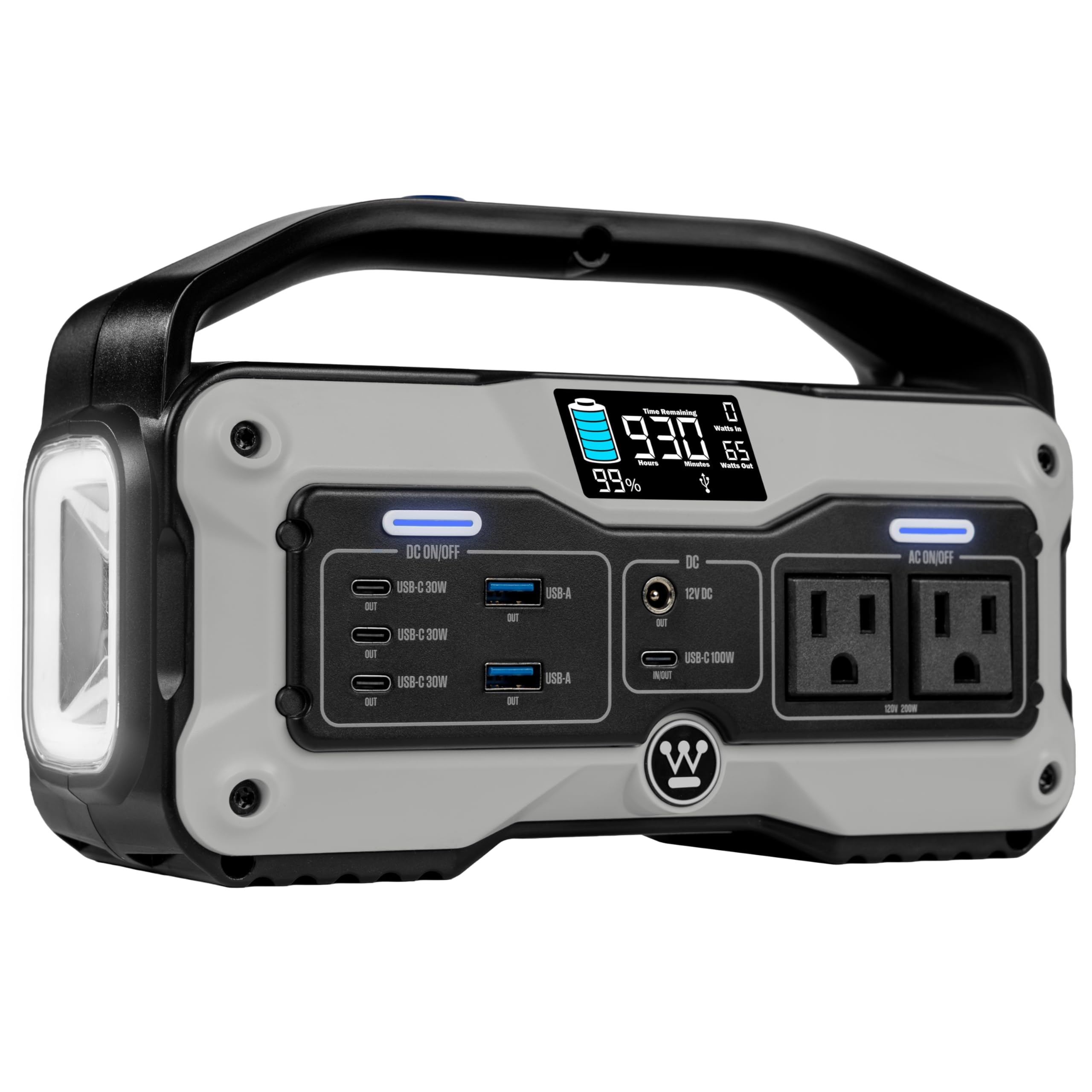
A 5 lb body with 100W USB-C PD and a 400W surge rating gives the Westinghouse iGen400s a clear role: a lightweight laptop and camera top-up station for short shoots. The 183Wh capacity means continuous lighting or multi-day sessions without solar are out of scope โ€” think drone batteries and camera packs rather than LED panels. The same price tier offers 237โ€“296Wh units with more runtime, which is why the iGen400s sits as a consideration rather than a pick. For a scout kit or quick location session, that portability is the reason to keep it on the shortlist.

Pros

  • 5 lb body with top handle slips into a camera bag without slowing you down.
  • 100W USB-C PD charges a laptop directly, no separate AC adapter needed.
  • Nine outlets, including 100W USB-C and AC, handle small camera and drone kits.

Cons

  • Before a paid shoot, verify the unit accepts and holds a charge
  • Plug in an LED panel and the 200W continuous AC output is quickly maxed out.
Our verdict

For short shoots where a laptop and camera batteries need a top-up, the 5 lb body and 100W USB-C make this Westinghouse an easy carry.

Check Latest Price
8

Phone Top-Ups

HOWEASY 120W Station

86 /100
Studio Score Strong Evidence

Key details

Weight
2.3 lb
Capacity
88Wh
Output Ports
8 ports
USB-C PD Output
18W
Check Price on Amazon

The 2.3 lb HOWEASY station tops up phones, camera batteries, and small USB-C accessories without weighing down a shoulder bag. Its AC/DC/USB port set and 18W USB-C PD slot cover small-device charging on a walk-around shoot. The 88Wh capacity and 120W AC outlet sit below what a photographer needs for laptops, drone batteries, or LED lighting, so this is a day-pack companion rather than a main power source. Budget-minded shooters who recharge devices one at a time will find it a useful reserve.

Pros

  • Backpack-friendly 2.3 lb body stays practical for walk-around shoots and day hikes.
  • Eight ports handle phones, tablets, camera batteries, and small electronics in one compact unit.
  • Entry-level price keeps it a useful emergency and camping power reserve.

Cons

  • Continuous device charging can drain the battery sooner than expected.
  • In a regularly packed bag, durability can vary; an occasional unit may stop charging, while others keep working.
Our verdict

For photographers who only need to charge small devices, this is an ultra-light option.

Check Latest Price

How to Choose

Capacity in Watt-Hours

Watt-hours determine how many camera batteries, drone packs, and laptop charges you can get before the station needs a wall outlet. A 237Wh unit roughly covers a day of camera and drone top-ups for a mirrorless kit, while 288Wh adds meaningful headroom for laptop work.

The catch is that inverters and idle electronics draw power even when no gear is connected. Small stations under 200Wh quickly become top-up companions rather than location power sources.

Continuous AC Output

Continuous AC watts control what you can plug in. A 300W station can run small LED lights and charge laptops through their adapters, but continuous output near the limit may cause the inverter to shut down when a strobe or light draws extra.

Surge ratings give a brief starting allowance for motors, not sustained camera or lighting use. Check the continuous rating, not the peak, and leave about 20 percent headroom between the load and the rated output.

USB-C PD Output

USB-C PD wattage determines how fast a modern laptop charges directly from the port. 60W handles many ultrabooks and mirrorless camera chargers, while 100W or 140W supports larger laptops and faster top-ups.

An 18W USB-C port is fine for a phone but will not fast-charge a laptop; if you need laptop power, use the AC outlet with the laptop's own adapter instead.

Output Ports

Port count and type decide whether you can charge a camera body, drone batteries, phone, and laptop simultaneously. A typical 7-9 port station with two USB-A, one USB-C, and an AC outlet covers a small location kit.

The catch is that total USB output shares the station's internal power budget. Plugging in multiple high-draw devices may reduce charging speed even when ports remain available.

Weight

Weight is the cost of capacity and battery chemistry. A 4.6 lb station is easy for street and travel shoots, but it usually carries less runtime and lower USB-C PD than a 9 lb unit.

Lithium iron phosphate cells add weight per watt-hour compared to standard lithium-ion, yet they last through more charge cycles. If you carry gear between locations, keep the station under 10 lb; if it lives in a car, heavier expands your options.

Frequently Asked Questions