5 Best Pocket Gimbal Camera of 2026: Match the Camera to the Shoot

Find the pocket gimbal camera that matches the way you actually shoot: steady walking shots, indoor low light, and wireless audio without adapter clutter.

Most pocket gimbal cameras sell on resolution numbers, but real-world footage depends more on three things: steady gimbal motors, a sensor that handles evening indoor scenes, and audio inputs that don't force a bag of adapters. Marketing still leads with pixels because pixels are easy to count; stabilization and low-light behavior only show up when you review the footage.

Zoom is the other trap. Buyers expect reach from a small camera, yet most pocket gimbals only offer digital zoom, which crops into the frame and lowers sharpness as you go. If telephoto reach matters, look for a dual-lens design or a camera with true optical zoom rather than assuming the lens will do it.

This guide is built around matching the camera to the way you shoot: travel days, selfie-style vlogs, low-light interiors, or scripted interviews. A 1-inch sensor is the line where pocket gimbal quality starts; below it, budget savings come at the cost of visibility in shadow detail.

1

Best Overall

DJI Osmo Pocket 3

91 /100
Studio Score High Confidence

Key details

Video Specs
4K up to 120fps
Screen Design
2-inch rotatable touchscreen
Sensor & Low Light
1-inch CMOS
Gimbal Stabilization
3-axis mechanical gimbal
Check Price on Amazon

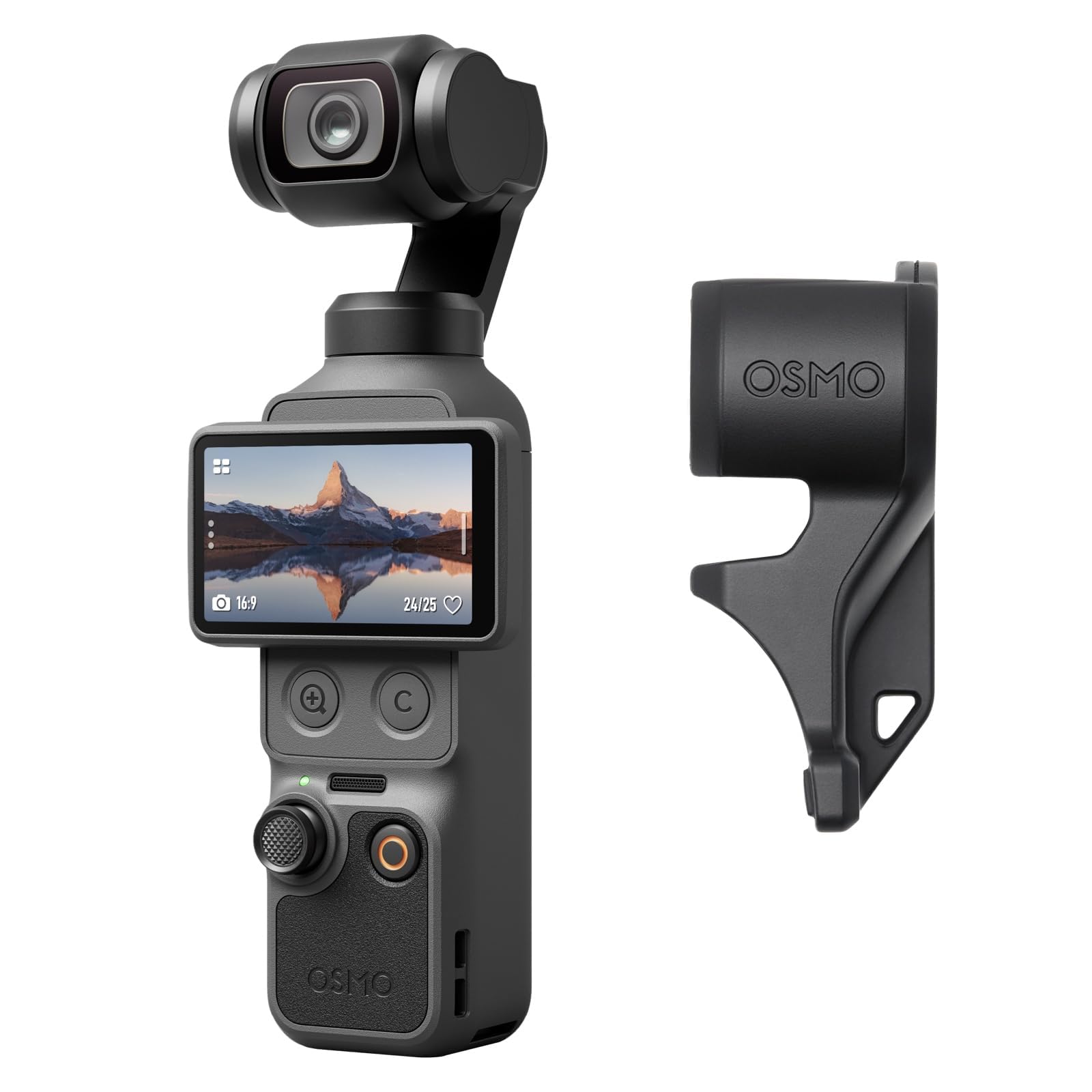
The Osmo Pocket 3 packs a 1-inch CMOS sensor and a 3-axis mechanical gimbal into a 179g body that slips into a pocket. The 2-inch rotatable touchscreen flips for front-facing vlogs, and video records 4K at up to 120fps with sharp detail, vibrant color, and strong low-light behavior. Smooth walking shots come without the usual learning curve of larger gimbal systems. The sensor's larger surface area gives a real advantage over phone-sized sensors when the light drops, while the mechanical gimbal removes the need for software-heavy stabilizing after the fact.

Build quality holds up under regular use, and video results stay consistent in varied lighting. The gimbal keeps handheld movement steady, and the rotating screen makes it simple to switch from subject-focused work to self-recording. DJI Mic transmitters pair with the camera directly, giving creators in DJI's audio ecosystem a compact vlogging setup without extra adapters.

The 179g weight matters after a long day of sightseeing; the camera stays in a small bag or jacket pocket instead of becoming a separate carry item. Because the gimbal is built in, there is no folding-and-balancing routine before each shot. The rotatable screen also lets you drop to odd angles for tabletop or low-angle framing without kneeling. Small enough to be an everyday plus-one, it is the kind of camera that ends up recording more moments than a bigger rig left at home.

Travel vloggers and content creators who need 4K/120 footage from a minimal kit are the core audience. Beginners get a short learning curve because the gimbal and menu layout do most of the work, while creators who already own DJI Mic transmitters get the most benefit from the accessory ecosystem. This is a situational tool: it fits owners who want a grab-and-go camera rather than a modular production rig.

For the right user, the package feels complete. The premium price is a serious purchase for casual shooters, and long-term durability can vary between units. Buyers who plan to shoot regularly and want a self-contained gimbal camera will find the package easier to justify than one-off event users.

Pros

  • A 179g body that fits in pockets and small bags, making it easy to carry on trips.
  • Sharp 4K video with strong low-light performance from the 1-inch sensor.
  • The 3-axis gimbal smooths walking shots with no extra hardware needed.
  • Controls and menus are approachable for first-time gimbal users.
  • Overall build quality and video performance hold up well across shooting conditions.

Cons

  • Fixed wide-angle lens keeps distant subjects small; there is no telephoto reach.
  • The lens cannot be swapped, so framing flexibility depends entirely on the built-in optic.
Our verdict

For travel vloggers and first-time gimbal users, the Osmo Pocket 3 sets the standard for stabilized pocket video without adding bulk or setup time.
Check Latest Price
2

Best 8K Powerhouse with Telephoto Zoom

Insta360 Luna Ultra

81 /100
Studio Score Strong Evidence

Key details

Video Specs
8K30fps Dolby Vision
Screen Design
Detachable touchscreen
Sensor & Low Light
Dual Leica, 1-inch, telephoto
Gimbal Stabilization
3-axis gimbal, AI tracking
Check Price on Amazon

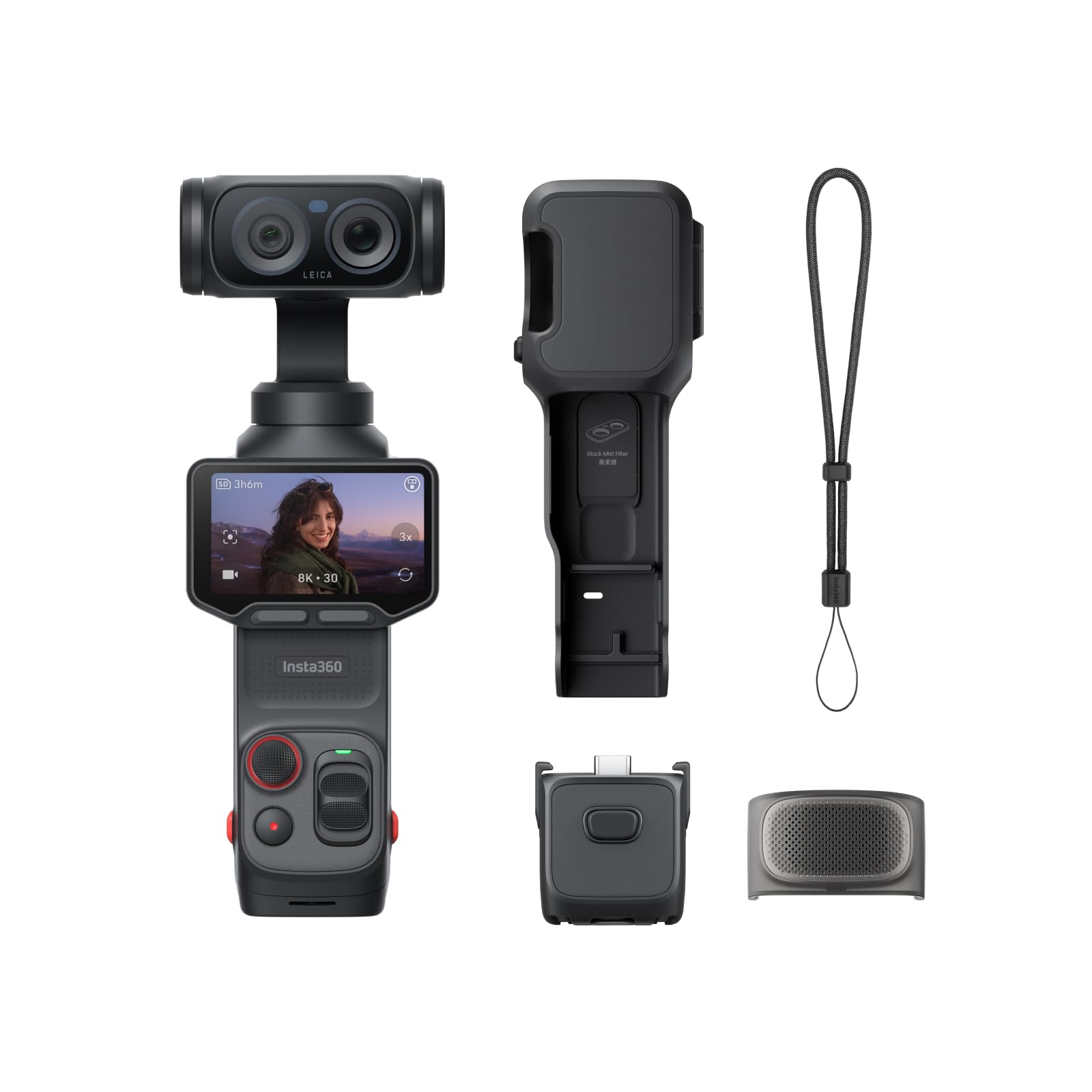
The Luna Ultra pairs dual Leica lenses with a 3-axis gimbal in a body that fits a jacket pocket. The 1-inch main sensor covers wide-angle vlogs, while the 1/1.3-inch telephoto adds 6x lossless and 12x total zoom — enough reach to isolate a distant subject without switching lenses. 8K Dolby Vision capture retains fine detail and color for editorial-style travel work. That combination gives it an edge over single-lens pocket gimbals when the subject is across the room rather than at arm's length.

The detachable touchscreen doubles as a wireless remote, so a solo shooter can frame, start, and let AI tracking follow a subject around a house or outside. Battery life extends to four hours, and an 80-percent charge lands in 23 minutes for a quick midday top-up. The gimbal body feels substantial for its size.

This is for prosumer creators who will export 8K, shoot telephoto bokeh, and use the remote-screen workflow; travel videographers wanting one compact body with high-end color science fit here too. The luxury price and early-adopter risk are the main boundaries; in some units, recording can stop mid-clip. Test the camera thoroughly before a paid assignment.

💡 Before a paid shoot, run a test clip and review the touchscreen response; it takes under a minute and avoids surprises.

Pros

  • 8K Dolby Vision footage keeps fine detail and strong color in a jacket-pocket body.
  • Dual Leica optics add telephoto reach and natural bokeh without a second lens.
  • Detachable touchscreen works as a wireless remote for solo framing and AI tracking.
  • Gimbal build feels substantial for the size and holds the dual-lens assembly securely.

Cons

  • Casual vloggers may pay for 8K and telephoto capability they rarely use.
  • In some cases, the touchscreen can glitch while framing; a playback check before wrapping a shot helps.
Our verdict

For creators who export 8K and need telephoto bokeh, the Luna Ultra delivers a combination no other pocket gimbal in this roundup offers.

Check Latest Price
3

Best Value DJI Alternative

Xtra Muse

84 /100
Studio Score Strong Evidence

Key details

Video Specs
4K up to 120fps
Screen Design
2-inch touchscreen
Sensor & Low Light
1-inch CMOS
Gimbal Stabilization
3-axis gimbal stabilizer
Check Price on Amazon

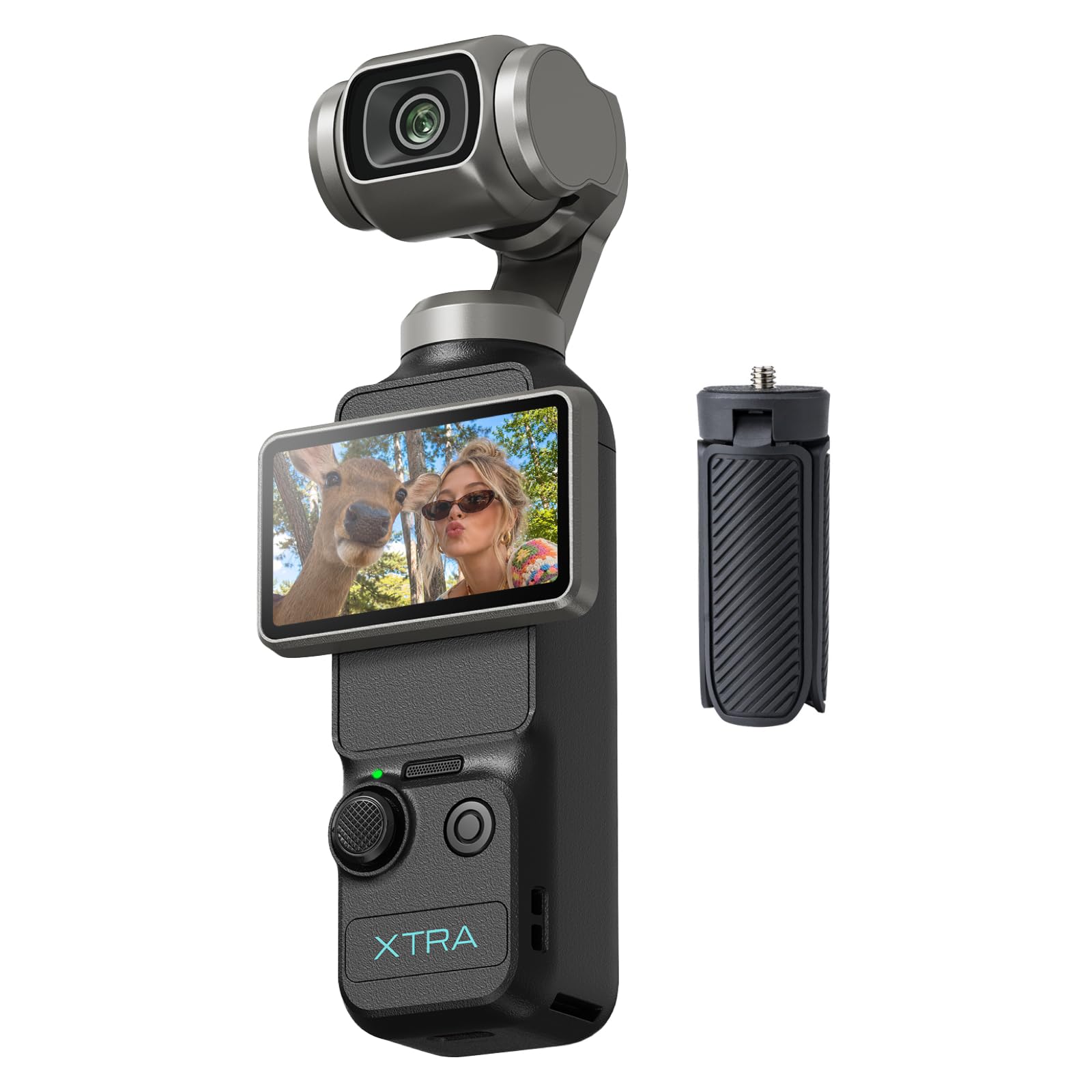
The Xtra Muse packs the pocket-gimbal formula into a more accessible price: 1-inch CMOS, 4K/120, 10-bit X-Log, 3-axis stabilization, and a rotating 2-inch touchscreen. Walking shots stay smooth, and 4K footage comes out sharp with vibrant color in real shooting conditions. Overall quality sits close to the top pick for a notably lower cost.

The touchscreen flips between horizontal and vertical framing without menu hunting, and face/object tracking keeps subjects centered while the operator moves. The 10-bit X-Log profile gives editors room to grade color, and the small body fits in a pocket or small bag. The bundled mini tripod covers static desktop shots when you want to set the camera down.

This is a mid-range price for what is normally a premium-spec camera body. The extra money for the top pick goes toward a more mature accessory system and tighter firmware polish, not a dramatic jump in everyday image quality.

This is the value play for creators who want Pocket 3-level imaging at a lower cost and can accept two boundaries: wireless mics require a receiver or wired adapter, and the rotating screen hinge can loosen in some units, so a quick check on arrival is wise.

Pros

  • 1-inch 4K/120 video with 10-bit X-Log color gives footage a clean, cinematic look.
  • 3-axis gimbal smooths walking shots without extra gear.
  • Face and object tracking keep subjects centered while moving.
  • Compact body fits in pockets and small bags for travel-friendly vlogging.

Cons

  • Wireless mic pairing is not native; a receiver or wired adapter is required.
  • Battery life can drain faster than expected on all-day shoots.
  • The rotating screen hinge can loosen in some units and may stop locking correctly.
Our verdict

The Xtra Muse is the value pick for pocket-gimbal shooters: near-flagship imaging, smooth stabilization, and compact carry at a mid-range price.

Check Latest Price
4

Best Budget Pick with Night Vision

ORDRO M5

76 /100
Studio Score Established

Key details

Video Specs
5K30fps, 4K60fps
Screen Design
3.5-inch IPS touchscreen
Sensor & Low Light
1/2.5-inch CMOS
Gimbal Stabilization
3-axis mechanical gimbal
Check Price on Amazon

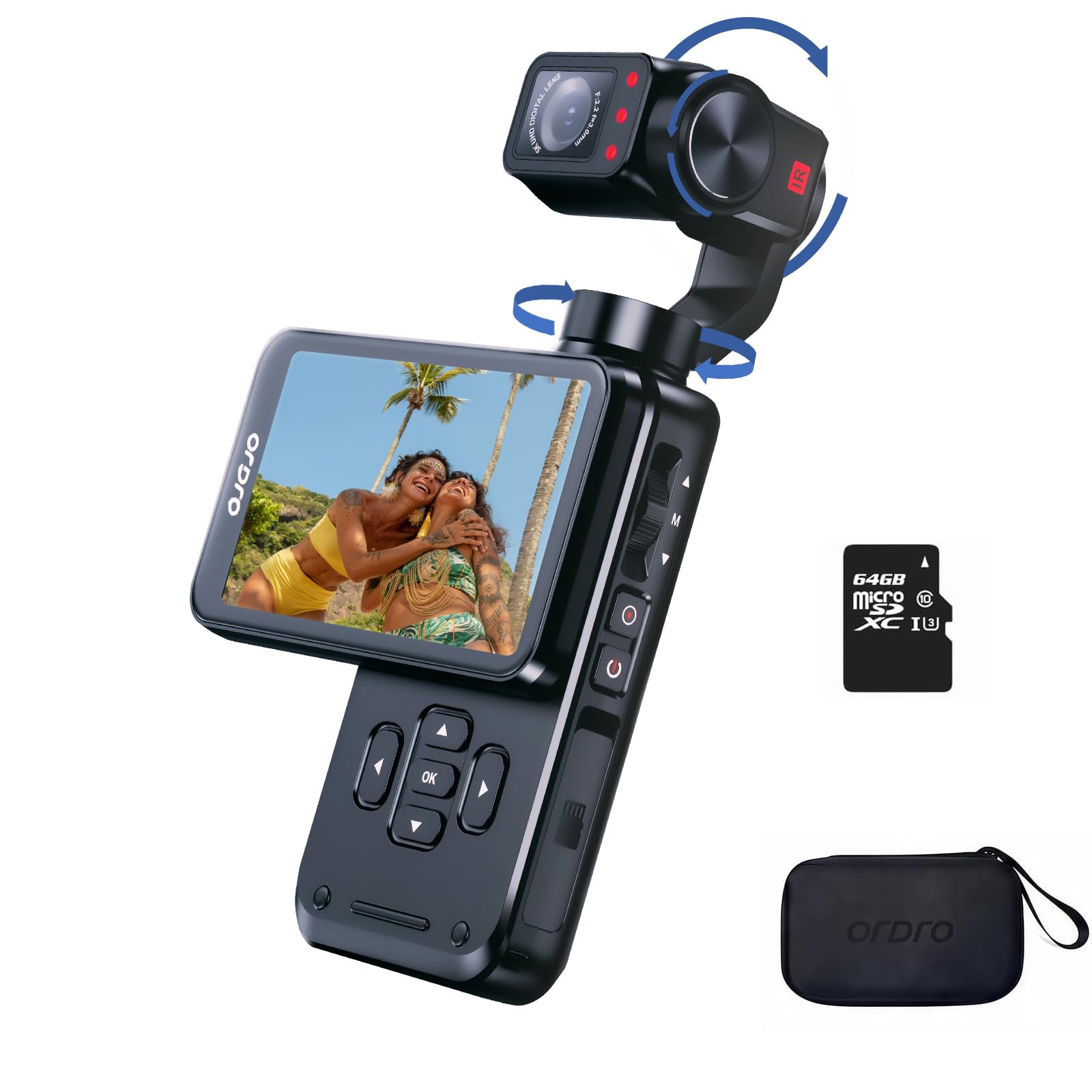
The ORDRO M5 packs a true 3-axis mechanical gimbal, 5K/4K60 video, a 180-degree rotating lens, and IR night vision into a pocket-sized body at an entry-level price. The rotating lens is the standout for vloggers: framing yourself is as simple as twisting the lens head, and the touchscreen keeps controls visible while recording. That combination of gimbal, resolution, and night vision is difficult to match in the budget tier.

Walking shots stay level during normal movement, and slow pans hold their line without the micro-jitter that marks cheaper handheld footage. IR mode comes through in near darkness, which is a genuine advantage for indoor or outdoor night clips. The touchscreen also responds well enough for quick exposure changes, and the 5K mode gives extra crop room in post.

This is a first-camera fit for budget-first beginners who want a real gimbal without spending premium money, and for solo vloggers who need a rotating selfie lens. The webcam-capable hybrid mode extends its usefulness beyond shooting trips. The intended owner is not a low-light purist or an action-sports shooter: the 1/2.5-inch sensor sets the standard low-light boundary, and the manufacturer warns against fast movements. Those limits are acceptable for walking-pace, daytime, or IR-assisted scenes.

💡 Run through the gimbal range and screen touch test soon after unboxing.

Pros

  • True 3-axis gimbal keeps walking and panning footage smooth at a budget-friendly price.
  • Rotating lens and touchscreen simplify selfie-style framing for solo vloggers.
  • IR night vision records usable footage in near darkness without extra lighting.
  • 4K video is sharp and 5K mode provides extra detail for cropping and export.

Cons

  • The manufacturer warns against fast movements; hard panning or running can outpace the gimbal.
  • An individual unit can arrive with a frozen screen or gimbal fault.
  • Standard non-IR low-light performance is limited by the 1/2.5-inch sensor; indoor shadow detail thins out.
Our verdict

For budget-first vloggers, the M5 is the low-cost route to gimbal-stabilized 5K video with a rotating selfie lens and IR night vision.

Check Latest Price
5

Spec-Forward Early Adopters

DJI Osmo Pocket 4

84 /100
Studio Score Strong Evidence

Key details

Video Specs
4K up to 240fps
Screen Design
Sensor & Low Light
1-inch CMOS
Gimbal Stabilization
3-axis mechanical gimbal
Check Price on Amazon

The Osmo Pocket 4 carries the boldest spec sheet in this pocket-gimbal set: 4K/240 slow motion, 2x lossless zoom, and 107GB built-in storage on a 1-inch CMOS behind a 3-axis gimbal. Shoppers who want the highest slow-motion ceiling and a built-in storage workflow get the most future-forward body here.

The tradeoff is the ecosystem around the camera. The 3-axis gimbal and 1-inch sensor deliver steady high-frame-rate capture, but premium money buys the spec lead while the top pick has a more settled owner and accessory community. Early adopters who enjoy being first can accept that; anyone who wants backup from the crowd should choose the more established model.

Pros

  • 4K/240 slow motion delivers the highest frame-rate ceiling in this pocket-gimbal lineup.
  • 107GB built-in storage lets you shoot without carrying or swapping microSD cards.
  • 2x lossless zoom extends reach without dropping 4K resolution or gimbal stability.

Cons

  • The Standard Combo omits a wall charger, so a separate USB-C adapter is required.
  • Extended 4K/240 recording fills the 107GB internal storage quickly compared with standard frame-rate shooting.
Our verdict

Buy the Pocket 4 when the 4K/240 ceiling and 107GB onboard storage are the two specifications you refuse to trade away.

Check Latest Price

How to Choose

Sensor Size and Low Light

Sensor size dictates how much light each pixel can collect. A 1-inch sensor captures visibly more detail in evening street scenes and indoor rooms than the 1/2.5-inch sensors common at budget prices.

The trade-off is physical: larger sensors need larger lenses and gimbal motors, so the camera body grows. If most of your shooting happens outdoors in daylight, the smaller sensor saves money and weight; if you film after sunset or inside homes and restaurants, prioritize 1-inch.

Video Resolution and Frame Rate

Resolution and frame rate are marketing numbers until you match them to playback. 4K/120 lets you slow motion to 20 percent speed in a 24p timeline; 8K adds cropping headroom and future-proofing but produces massive files.

Frame rate matters more than resolution for action scenes, but pocket gimbals with smaller sensors often deliver high frame rates at the cost of low-light sharpness. Buy for the highest frame rate you will regularly use, not the number that looks best on a spec sheet.

Gimbal Stabilization

All of these picks have true 3-axis mechanical gimbals, but stabilization quality is not binary. Motor torque and tuning determine whether a slow walking shot stays level or whether sudden pans cause a wobble that electronic correction cannot fix.

Fast movements are the boundary of this category. A few budget models explicitly warn against running, and no pocket gimbal replaces a full gimbal rig for sports. Keep it to normal walking, panning, and handheld vlogs and the hardware will hold up.

Screen and Framing Flexibility

The screen is the control center for a solo shooter, and its hinge is the most common mechanical stress point. Rotating touchscreens give you a proper selfie preview and quick horizontal-to-vertical switching, but every rotation adds stress to a small assembly.

If you plan to pocket the camera constantly, use the included clamp or cover when storing it and avoid forcing the screen past its stop. Detachable screens add remote framing options but introduce another battery and pairing step.

Wireless Audio Compatibility

Wireless microphone compatibility is more complicated than most listings suggest. Some pocket gimbals pair natively with one brand of transmitter, others need a receiver plugged into a USB-C port, and a few require a wired lavalier adapter.

Before buying, check which transmitter you own and how it connects. Ignoring this turns a one-piece vlogging kit into a tangle of adapters, which defeats the pocket-sized point.

Frequently Asked Questions