5 Best 360 Camera of 2026: Match Resolution to How You Edit

Choose the best 360 camera for how you actually shoot: resolution, lens protection, and app reliability decide which model earns your money.

Most 360 camera listings sell you on resolution. After a few weeks of ownership, what matters is whether the exposed lenses survive bumps, whether the editing app turns raw spheres into watchable clips, and whether the battery lasts longer than a short outing. The right camera matches those realities, not the spec sheet.

Resolution still matters, but only as far as your output goes. 8K gives you room to crop and reframe before quality drops, while 5.7K handles social media and casual viewing without the heavy files. If you mostly edit in a phone app and post to Instagram or YouTube, the extra resolution is less valuable than lens protection and a stable workflow.

The trade-off comes down to capability: larger sensors and replaceable lenses improve low light and repairability, while a waterproof 8K body at a lower price covers the majority of travel and action use.

1

Best Overall

Insta360 X4

93 /100
Studio Score High Confidence

Key details

Editing App
Insta360 app
Waterproofing
10m waterproof
Lens Protection
Removable lens guards
Video Resolution
8K30fps 360
Check Price on Amazon

The Insta360 X4 delivers 8K 360 spherical video, 10m waterproofing, and removable lens guards at a mid-range price. That combination puts it ahead of older 5.7K models without requiring a flagship budget. The 2.5-inch Gorilla Glass touchscreen is responsive, and the app's AI editing suite turns 360 clips into shareable flat footage with automatic tracking and templates. In 8K mode the camera records 30fps; switch to single-lens mode and it shoots 4K for a conventional action-cam image without post-editing.

Shooting modes cover travel, mounted sports, and vlogging: 8K leaves room to punch in during editing, while 4K single-lens mode handles standard action-cam framing without a reframe step. FlowState stabilization keeps handheld movement smooth for walking or cycling shots, and daylight footage shows vibrant color and strong detail. The 10m waterproof rating handles rain, surf spray, and pool use without an extra housing; an optional dive case extends that to 50m.

This is the 360 camera for travelers, action shooters, and family vloggers who want 8K spherical capture without flagship pricing. It rewards buyers who rely on the app workflow instead of only shooting raw footage, and it is not aimed at professionals who need a larger sensor for night work or at shoppers who will never use the 360 reframe workflow. Unit-to-unit quality control can vary, and battery life in heavy 8K use may fall short of the rating, so an arrival check and a spare battery are sensible precautions. If your use is primarily social-first clips, the older 5.7K generation can save money, but the X4's higher resolution gives noticeably more cropping freedom.

In daylight and typical action scenarios, the X4's footage stays clean and detailed, with strong 360 stitching and natural colors. Low-light work is where a larger-sensor flagship pulls ahead, and shooters who need replaceable lenses will find that upgrade at a notably higher price. The X4 trades sensor size for accessibility rather than resolution, which leaves nighttime work as the main boundary and daytime travel, sport, and family shooting as the core use. Its 8K output is the best reason to choose it over the previous 5.7K generation, while the app's editing tools close the gap between shooting and posting.

💡 Check the battery latch and camera startup after unboxing so any unit-level issue surfaces before you head out.

Pros

  • 8K 360 video captures sharp, vibrant detail and leaves room for reframing.
  • The X4's overall quality lands among the stronger 360 options at its price.
  • Touchscreen menus are intuitive, so new 360 users can start shooting quickly.
  • AI reframing in the app turns 360 clips into shareable shots fast.
  • Shooting modes suit travel, sports, and vlogging without swapping cameras.

Cons

  • Battery runtime in heavy 8K use can fall short of the rating, so a spare battery is a normal part of the kit.
  • The standard lens guard can soften image sharpness, and a direct impact can damage the lens.
  • Unit-to-unit quality control can vary; a camera may arrive non-functional or with a loose battery.
Our verdict

The Insta360 X4 Standard Bundle is the model to buy for true 360 video without a flagship sensor.

Check Latest Price
2

Premium Flagship for Low-Light and Pro Usage

Insta360 X5

92 /100
Studio Score High Confidence

Key details

Editing App
Insta360 app
Waterproofing
Waterproof
Lens Protection
Replaceable lenses
Video Resolution
8K30fps 360
Check Price on Amazon

Dual 1/1.28-inch sensors and true replaceable lenses give the X5 the strongest low-light 360 footage in the lineup. The upgrade over the value-anchored 8K model is clear: night shots carry usable detail without the noise that keeps small-sensor 360 cameras in daylight territory. Replacing a scuffed lens is a quick fix compared to sending an entire unit in for service, and that matters for working shooters who cannot afford downtime.

Serious night shooters and working creators who treat lens scuffs as an expected cost are the right audience. The premium price is justified only for demanding use. The top pick's balanced package remains the sensible choice for shooters whose work stays in daylight and whose 360 reframing is occasional rather than constant. If you fit that profile, the X5's low-light edge will not earn its premium in your bag.

The AI editing workflow handles the tedious reframing steps that derail 360 projects, and the final output holds up in client-facing work. That combination of low-light capability and efficient post-production gives the X5 a professional finish that goes beyond novelty b-roll. The 8K resolution is a bonus, but the larger sensor and AI tools are the reasons this model earns its place in a serious kit.

Pros

  • Flagship 8K resolution delivers fine detail that survives aggressive reframing.
  • Larger sensors and triple AI chip give the lineup's cleanest low-light footage.
  • Build quality and output consistently meet pro expectations.
  • AI editing tools cut the time spent on 360 reframing.

Cons

  • Battery can drain quickly in heavy 8K use, so longer outings call for spares.
  • Sustained 8K recording can stop due to heat after about 15 minutes.
Our verdict

The X5 is the 360 camera to pick when low-light work and lens repairability are on the critical path; for daylight-first shooters, the top pick's balanced 8K package is the better buy.

Check Latest Price
3

Best Alternative Ecosystem / DJI Integration

DJI Osmo 360

85 /100
Studio Score Strong Evidence

Key details

Editing App
DJI Mimo app
Waterproofing
—
Lens Protection
—
Video Resolution
8K/30fps 360
Check Price on Amazon

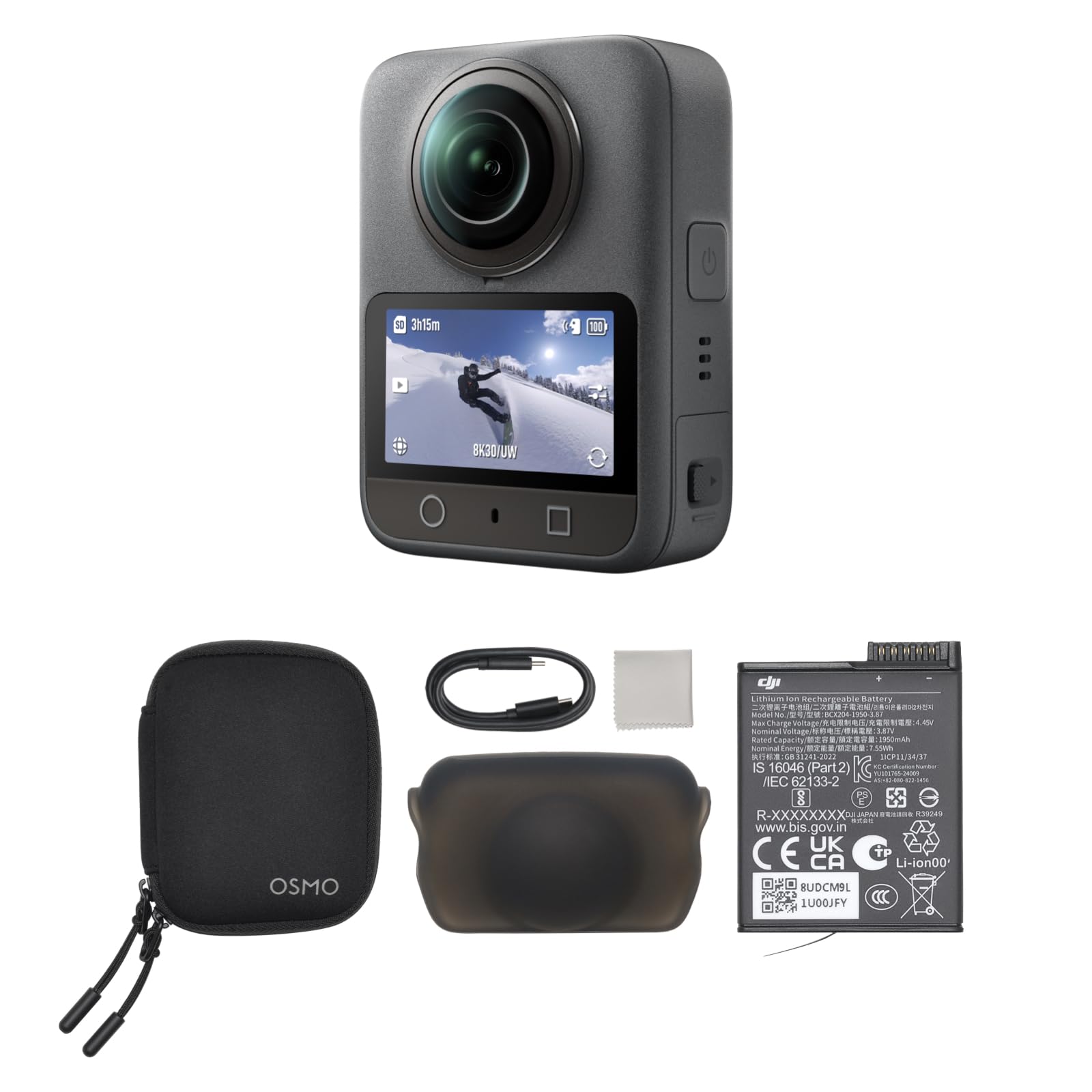
The DJI Osmo 360 is the hardware-first entry in this 360 action camera comparison: 105GB of built-in storage, up to 190 minutes of battery life, and a 1-inch class sensor separate it from the GoPro 8K option and Insta360 alternatives. The body has a dense, well-machined feel that some owners compare favorably with GoPro Max, and the controls are simple to use from the first power-on.

This is the pick for DJI Action ecosystem owners and travelers who want a long shooting day without external memory cards. Android users should expect a manual Mimo app download before first use, and the camera suits buyers who edit on a desktop rather than on a phone. The battery compatibility with the DJI Action line means existing owners can rotate spares without adding a separate charging system.

The capture system delivers 8K/30fps 360 video with fine detail in good light, and 120MP stills leave room to reframe after the fact. The lens handles daytime travel scenes cleanly, and the sensor retains enough dynamic range for sunny outdoor work. For the buyer focused on hardware value, this package explains its position in the lineup without needing sticker-price math.

Pros

  • Dense, well-machined body and lens assembly that some owners compare favorably with GoPro Max.
  • The hardware package at this price covers the essentials: storage, battery, and a 1-inch sensor.
  • Out-of-box setup takes minutes, and the controls behave as labeled.
  • Runtime suits full-day shooting, and the battery shares the DJI Action ecosystem.

Cons

  • 360 mode can look soft or inconsistent in mixed lighting despite the 8K headline.
  • The Mimo app can crash or glitch during editing, making phone-first workflows a gamble.
Our verdict

The Osmo 360 is a hardware-led 360 camera with enough onboard storage and battery to carry a full travel day.

Check Latest Price
4

GoPro 360 for Fans of Quik and HyperSmooth

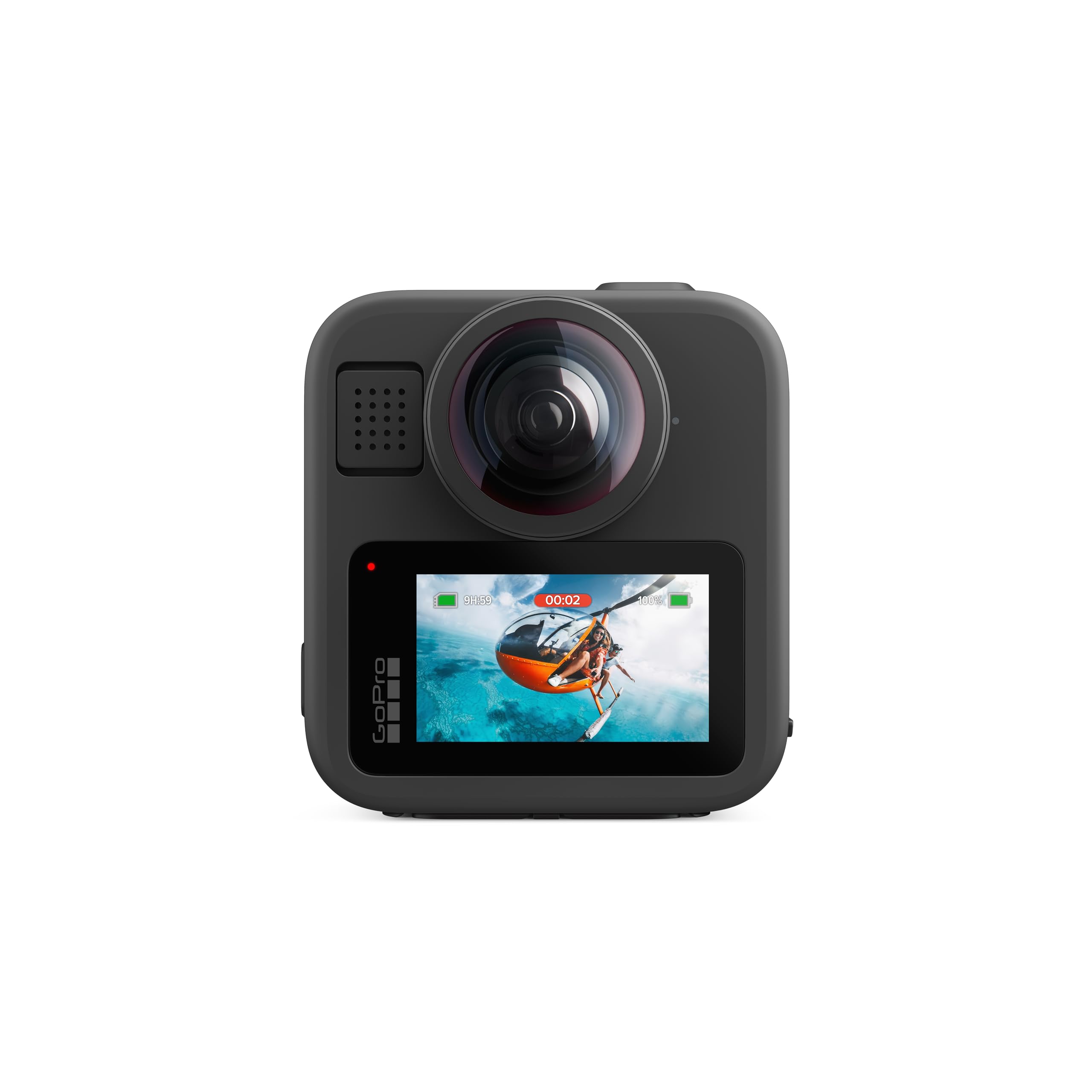
GoPro MAX2

83 /100
Studio Score Strong Evidence

Key details

Editing App
Quik app
Waterproofing
Waterproof
Lens Protection
Replaceable glass
Video Resolution
8K 360
Check Price on Amazon

HyperSmooth stabilization, Horizon Lock, replaceable glass lenses, and six microphones put the MAX2 in a specific lane: an 8K 360 camera for GoPro users who also want a standard action cam. The dual-role design is rare among spherical models, and the 29MP still resolution covers photo work without a second camera. The hardware-first rival in this set counters with built-in storage and longer battery life, but the MAX2 answers with GoPro stabilization and the Quik reframe loop.

8K 360 footage reframes cleanly in Quik, so a spherical clip becomes a normal 16:9 shot without heavy editing. Switching between 360 and standard 8K action modes is quick, which makes the MAX2 feel like two cameras in one. The waterproof body also removes the need for a housing in surf or pool shooting.

GoPro owners already comfortable in Quik are the natural audience, especially if they want one camera for both spherical and traditional action shots. Video quality can be inconsistent in some conditions, and the desktop workflow is less mature than the top Insta360 models, so desktop-first editors should weigh the leading 8K option in this lineup instead.

Pros

  • Strong 360 capture with HyperSmooth and Horizon Lock keeps spherical footage stable and level.
  • 8K resolution gives enough detail to reframe in Quik and still export sharp 16:9 clips.
  • Replaceable glass lenses cut the cost of scratch damage compared with fixed-lens rivals.
  • Six microphones deliver audio separation that single-mic 360 cams lack.

Cons

  • Low-light scenes can look soft and noisy; this is a daylight-first 360 cam.
  • Large 8K clips can fill a memory card quickly and make transfers and storage a chore.
Our verdict

GoPro-first shooters who want an 8K 360 and a traditional action cam in one body get a strong match with the MAX2 when they already live in Quik.

Check Latest Price
5

Best Budget 360

AKASO 360

85 /100
Studio Score Strong Evidence

Key details

Editing App
—
Waterproofing
Water-resistant only
Lens Protection
—
Video Resolution
5.7K 360
Check Price on Amazon

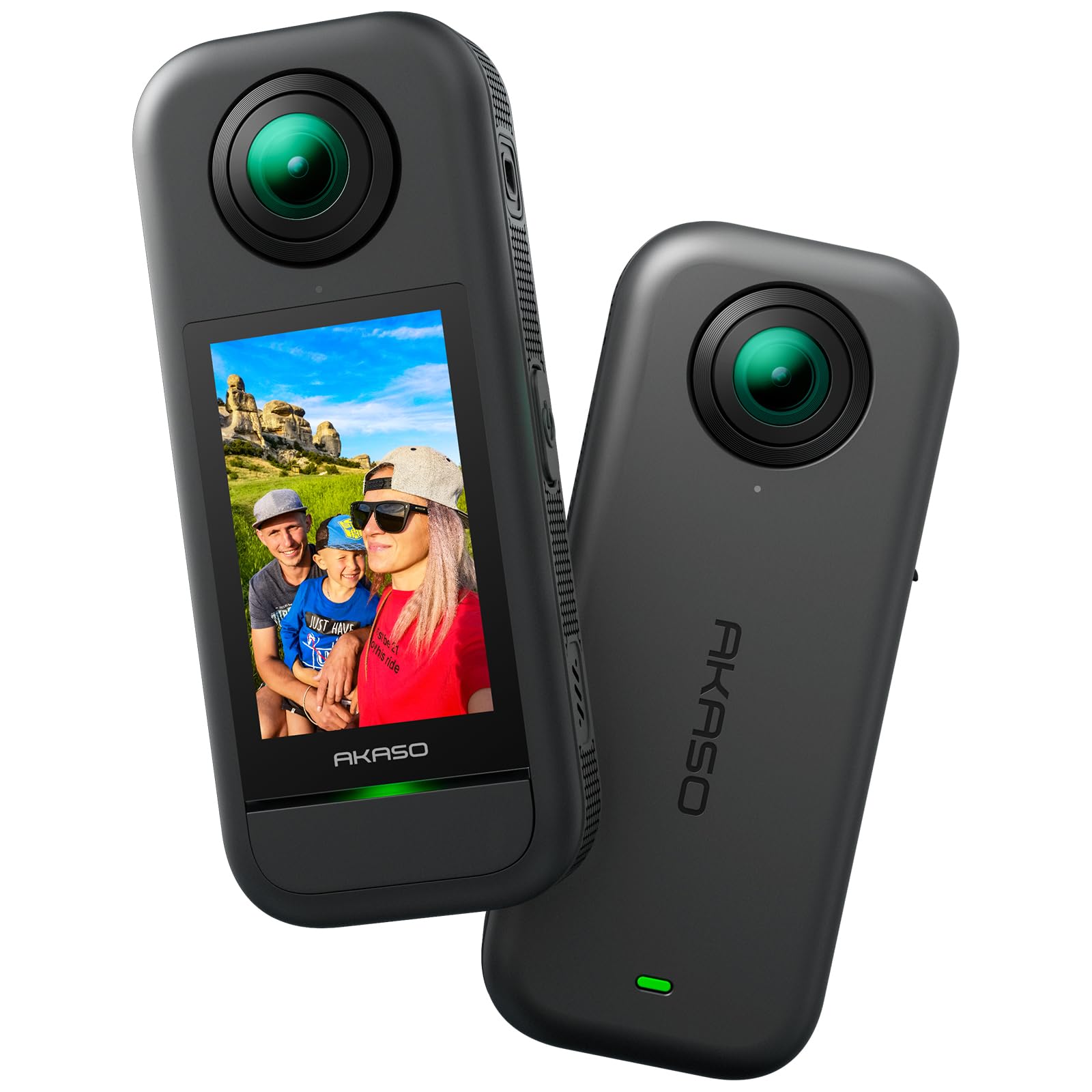
Daylight 5.7K footage, 72MP stills, and AI tracking arrive at an entry-level price, making this the least expensive way to start shooting true 360 content. The dual 1/2-inch sensors capture a full sphere, and 360° Horizon Lock keeps the horizon steady when the camera spins through a scene. Photo resolution reaches 72MP for stills pulled from the sphere, while video tops out at 5.7K 360.

The AI tracking and auto-editing tools make it easy to produce a finished clip without a steep learning curve. Users can record a wide scene, then let the app reframe the action around the subject. The results hold up well on phone screens and social feeds, where the 5.7K resolution is more than enough.

Who this fits is clear: a first-time 360 buyer who wants to learn the format on an inexpensive body and post daylight outdoor clips. The camera is water-resistant rather than waterproof, battery life is short, and low-light footage gets noisy, so night shoots, underwater recording, and long backcountry sessions without power belong on a different model. The starter feature set covers timelapse and AI-assisted subject tracking without demanding a pro workflow, and the companion app's reframing tools let you choose the active view after capture.

💡 Keep both batteries charged and treat water resistance as splash-only; this is a short-session, daylight body.

Pros

  • Outstanding value for a first 360 camera; an affordable way to learn the format without major commitment.
  • Quality exceeds price expectations, with 5.7K daylight clips that look like they came from a higher-tier 360 camera.
  • Daylight video is clear and vibrant, with enough 5.7K detail for social-first edits and phone viewing.
  • AI tracking, timelapse, and editing tools give first-time users a practical starting point for 360 workflows.

Cons

  • Water resistance is limited to splashes; true underwater shooting requires an accessory housing rather than direct submersion.
  • Low-light footage loses detail and picks up visible noise, which limits night or indoor evening use.
  • Battery life is short; the bundled pair drains quickly during active recording, so spare batteries are part of the kit.
Our verdict

The lowest-cost way into true 360 capture, best for short, bright, dry-land shoots and first-time creators.

Check Latest Price

How to Choose

Video Resolution

8K 360 video gives you more room to crop, pan, and reframe before the image softens. The cost is large files, longer export times, and more heat during continuous recording.

5.7K is enough for social media and casual viewing, where the final clip is 1080p or a 9:16 crop. If you rarely export 4K from a wide 360 frame, the extra resolution is a workflow burden, not a benefit.

Sensor and Low-Light Capability

Bigger sensors — 1/1.28-inch or 1-inch class — collect more light and hold detail in night scenes. Smaller sensors deliver acceptable daylight footage but get noisy once the sun drops.

That trade-off usually shows up as price and heat. A larger sensor can justify a premium if you shoot concerts, city nights, or dawn patrol; if your footage is mostly daytime action, it is not a must-have.

Waterproofing

Waterproof means the body can be submerged to a rated depth, commonly 10m. Water-resistant means it handles light rain but not immersion.

Check the depth rating before you shoot. A camera rated for 10m can go snorkeling or poolside without a housing, while scuba and salt water need a dive case and a freshwater rinse afterwards.

Lens Durability and Replaceability

360 cameras use protruding lenses on both sides, which makes glass scratches a common problem. Any contact with sand, zippers, or a rough mount surface can mark the lens.

Models with removable lens guards or replaceable lens assemblies let you swap damaged glass instead of replacing the camera. Fixed lenses are cheaper upfront but turn a scratch into a costly repair.

Editing App and Software Reliability

Shooting 360 is the easy part; reframing the sphere into a usable video is where the real work happens. A stable app makes that process quick, while a crash-prone workflow can leave good footage unusable.

Long 8K clips also strain phone storage and processing. If you shoot extended projects, desktop software and a high-capacity device matter more than any extra megapixel.

Frequently Asked Questions