8 Best Action Camera in 2026: Match the Format to Your Filming

Match the right action camera to how you shoot, from budget 4K kits to 8K and 360 models that demand editing.

On paper, many action cameras look identical: 4K video, waterproof housings, image stabilization, and a bag of mounts. In practice, the differences show up after you buy. Small sensors struggle in low light, advertised runtimes assume 1080p with Wi-Fi off, and waterproof ratings rely on seals that need checking.

The bigger fork is format. A traditional fixed-lens camera records what you point at and produces a ready-to-edit clip. A 360 camera records every direction around you, but you have to reframe the footage later in an app. The right pick depends on whether you want speed at the mount or flexibility after the shot.

So the guide sorts recommendations by the trade-offs that actually affect your footage: sensor size, stabilization, waterproof depth, battery endurance, and the editing workflow you will accept. Match those to how you shoot, and the camera becomes a tool instead of a compromise.

1

Best Overall

DJI Osmo Action 4

93 /100
Studio Score High Confidence

Key details

Stabilization
RockSteady+ / HorizonBalancing
Waterproofing
18m bare
Battery & Runtime
Replaceable battery
Format & Workflow
Traditional fixed lens
Check Price on Amazon

The Osmo Action 4 combines a 1/1.3-inch sensor with 2.4μm pixels, 4K120 capture, RockSteady+ stabilization, and 18m bare waterproofing, giving it a clear step over smaller-sensor mid-range cameras. RockSteady+ irons out handlebar vibration, while HorizonBalancing holds the horizon level on off-camber trails. The magnetic quick-release mount swaps between helmet, chest, and handlebar positions in seconds, and dual touchscreens make selfie framing work without an extra screen. Footage carries the 10-bit D-Log M color profile for editors who want grading headroom, while casual shooters can stay in normal color mode and cut clips directly.

The large sensor holds shadow detail and skin tones in mixed light, which is where budget action cams tend to fall apart. It also keeps low-light clips usable after sunset, avoiding the muddy look that comes from smaller pixels. Low-light performance is one of the clearest separators between this camera and entry-level kits in the category. The 1/1.3-inch sensor also renders white balance consistently across changing weather, so a ski edit shot between bright snow and shaded trees holds together without heavy color correction.

This is the balanced choice for motorcycle, bike, ski, and water-sport shooters who want one camera that covers daily outdoor work with simple editing. This camera tops out at 4K120, so anyone who needs 8K or 360 capture should look at the specialty models in this set. Vloggers who value clean 4K and a direct edit route will find the dual-screen workflow and magnetic mounting more useful than raw resolution. Strict budget shoppers can find cheaper kits with more accessories, but those give up the large sensor and slow-motion frame rates.

The 18m bare waterproof rating means surf, paddle, and jet-ski sessions start without a housing, which cuts setup time and reduces the chance of a leaking case. Between waves, the magnetic mount moves the camera from water-level to helmet shots without fumbling with threaded adapters. Build quality supports that outdoor use: the sealed body feels dense without adding bulk, so it disappears on a helmet or chest strap. The sensor keeps colors consistent across snow, dirt, and water, which reduces matching work in a multi-day edit. The mid-range price buys a large sensor, stabilization, and waterproofing, making this the balanced all-round performer in the set.

Pros

  • Sealed body and large 1/1.3-inch sensor produce clean, steady footage in normal outdoor conditions.
  • Low-light performance keeps usable detail after sunset, where smaller-sensor action cameras turn muddy.
  • Mid-range pricing covers a large sensor, smooth stabilization, and 18m bare waterproofing without extra hardware.
  • Magnetic quick-release and dual touchscreens speed up helmet-to-handlebar changes and selfie framing.

Cons

  • All-day sessions may need a spare battery; endurance is good but not class-leading.
  • Extended continuous recording in heat can trigger a shutdown near the 20-minute mark.
Our verdict

This is the default starting point for riders, skiers, paddlers, and vloggers who want one camera that covers everyday outdoor shooting without a secondary editing workflow.
Check Latest Price
2

Premium 8K Traditional

DJI Osmo Action 6

90 /100
Studio Score High Confidence

Key details

Stabilization
360° HorizonSteady / RockSteady 3.0
Waterproofing
20m bare
Battery & Runtime
4-hour runtime claim
Format & Workflow
Traditional fixed lens
Check Price on Amazon

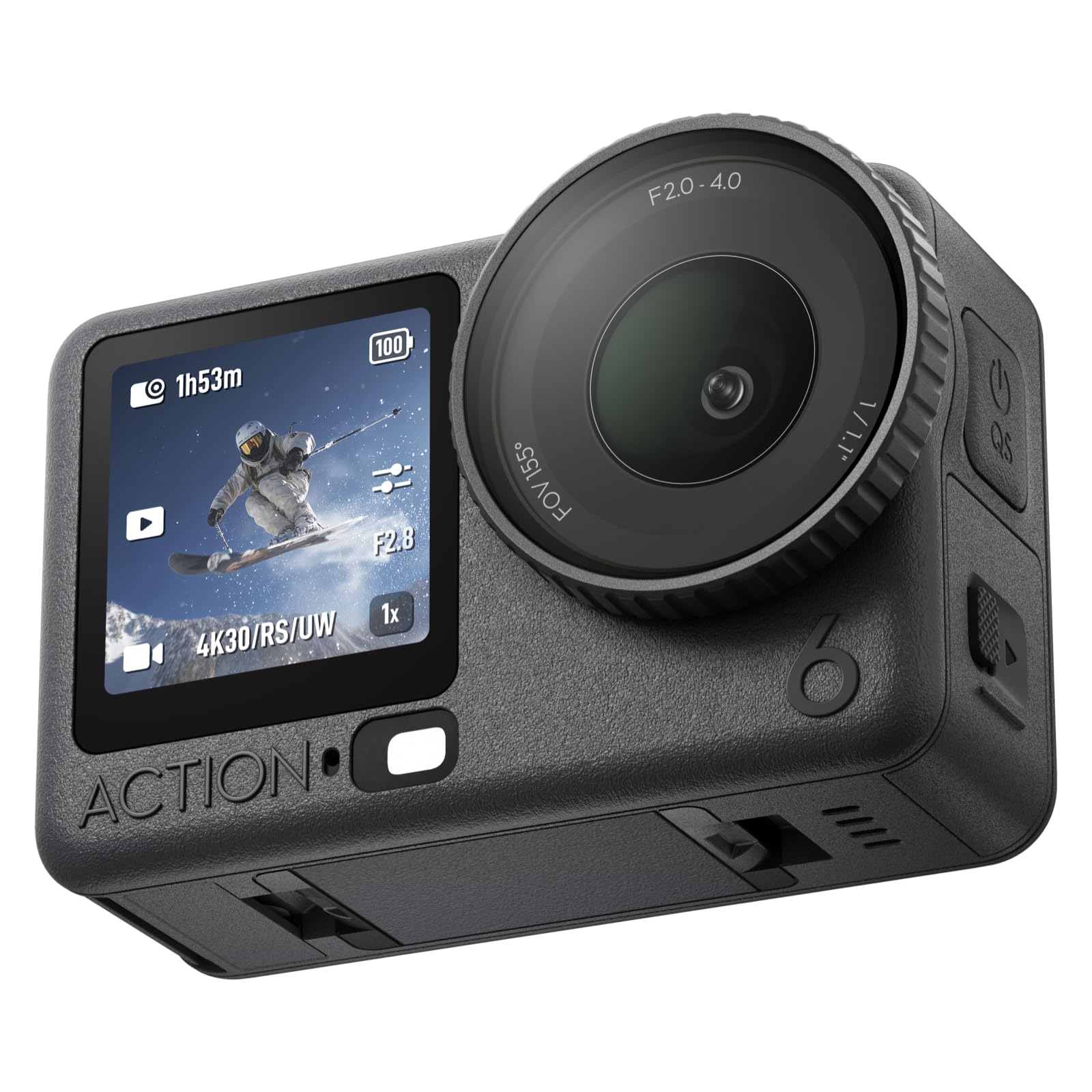
The Osmo Action 6 is the premium traditional action-cam upgrade, trading the top pick's 4K-only simplicity for a larger 1/1.1-inch sensor, a variable f/2.0-f/4.0 aperture, and 8K capture. The 50GB built-in storage and a battery rated up to four hours mean a long ride or shoot day can begin without juggling cards and power packs. The practical payoff is the 4K Custom Mode: extra resolution leaves room to reframe vertical or square clips in editing without carrying a second camera.

Moto vloggers, skiers, divers, and other session-heavy shooters are the right audience. The body handles bare waterproofing to 20m, which reduces the need for a bulky housing during dives and wet shoots. If your delivery format stops at 4K and you never crop or reframe, the top pick's simpler fixed-lens kit is the better fit.

On a healthy unit, the camera performs like a serious workhorse. Quality control can vary between copies, and freezes or hardware faults may show up on individual units, so a short test session before an important shoot is a sensible ritual. This is a boundary to plan around, not a reason to avoid the camera entirely.

💡 Run a short test recording before a critical shoot to confirm the unit is behaving normally.

Pros

  • Overall output quality holds up in mixed lighting, which matters for moto and ski shoots.
  • 8K capture plus 4K Custom Mode leaves generous room for cropping and reframing.
  • Battery life covers long sessions without chasing chargers mid-shoot.
  • HorizonSteady and RockSteady 3.0 keep footage level during fast motion.

Cons

  • The premium price is hard to justify for 4K-only workflows that do not reframe.
  • 8K recording fills the 50GB built-in storage quickly, so a high-capacity card is still part of the kit.
Our verdict

The Action 6 gives long-session shooters who edit, crop, and reframe real 8K headroom with enough battery for full days; 4K-only buyers should stay with the top pick.

Check Latest Price
3

Best 360 Value

Insta360 X3

93 /100
Studio Score High Confidence

Key details

Stabilization
FlowState + Horizon Lock
Waterproofing
No housing required
Battery & Runtime
Replaceable battery
Format & Workflow
360 plus single lens
Check Price on Amazon

The X3 is the affordable bridge between a standard action cam and a dedicated 360 rig: it records 5.7K spherical footage for reframing later, then switches to a 4K30 single-lens mode when a normal POV shot is enough. FlowState stabilization and housing-free waterproofing keep it usable on a bike, board, or boat without extra gear. The same body handles both capture styles, which is the main difference from fixed-lens action cams.

In 360 mode, the camera captures everything around you, which makes it a strong travel and motorcycle companion. The stitching is handled in the Insta360 app or desktop suite, so the final clip is whatever you choose to frame — not the raw sphere. The 2.29-inch touchscreen keeps resolution changes quick, even when the camera is mounted on a handlebar.

This suits motorcyclists, travelers, and vloggers who plan to edit before sharing. Every 360 clip needs a reframe pass, the exposed lenses scratch easily, and full-day 360 shooting runs through batteries fast — use a lens guard and carry a spare cell if the day will be long. Low-light purists and buyers who want a true point-and-shoot will be happier with a fixed-lens action cam.

💡 Use the desktop app when exporting multiple reframed clips; it moves through long takes faster.

Pros

  • The 5.7K 360 capture and overall handling offer strong quality for the price.
  • The companion app and desktop software make finding and reframing shots easier than expected.
  • The 360-degree field of view catches action beside and behind you, so a clip is never missed.
  • Single-lens 4K mode delivers a conventional action-cam shot when spherical capture isn't needed.

Cons

  • Full-day 360 shoots need spare batteries; one cell suits short sessions, not continuous capture.
  • Exposed front and rear lenses are vulnerable to scratches; a guard or careful handling is nearly required.
  • A single unit can become unresponsive in the middle of recording; test yours before a long trip.
Our verdict

The X3 is the 360 action cam to choose when you plan to reframe shots and also want a normal 4K mode. If editing is not part of your routine, a fixed-lens action cam will suit you better.

Check Latest Price
4

Best Budget Starter

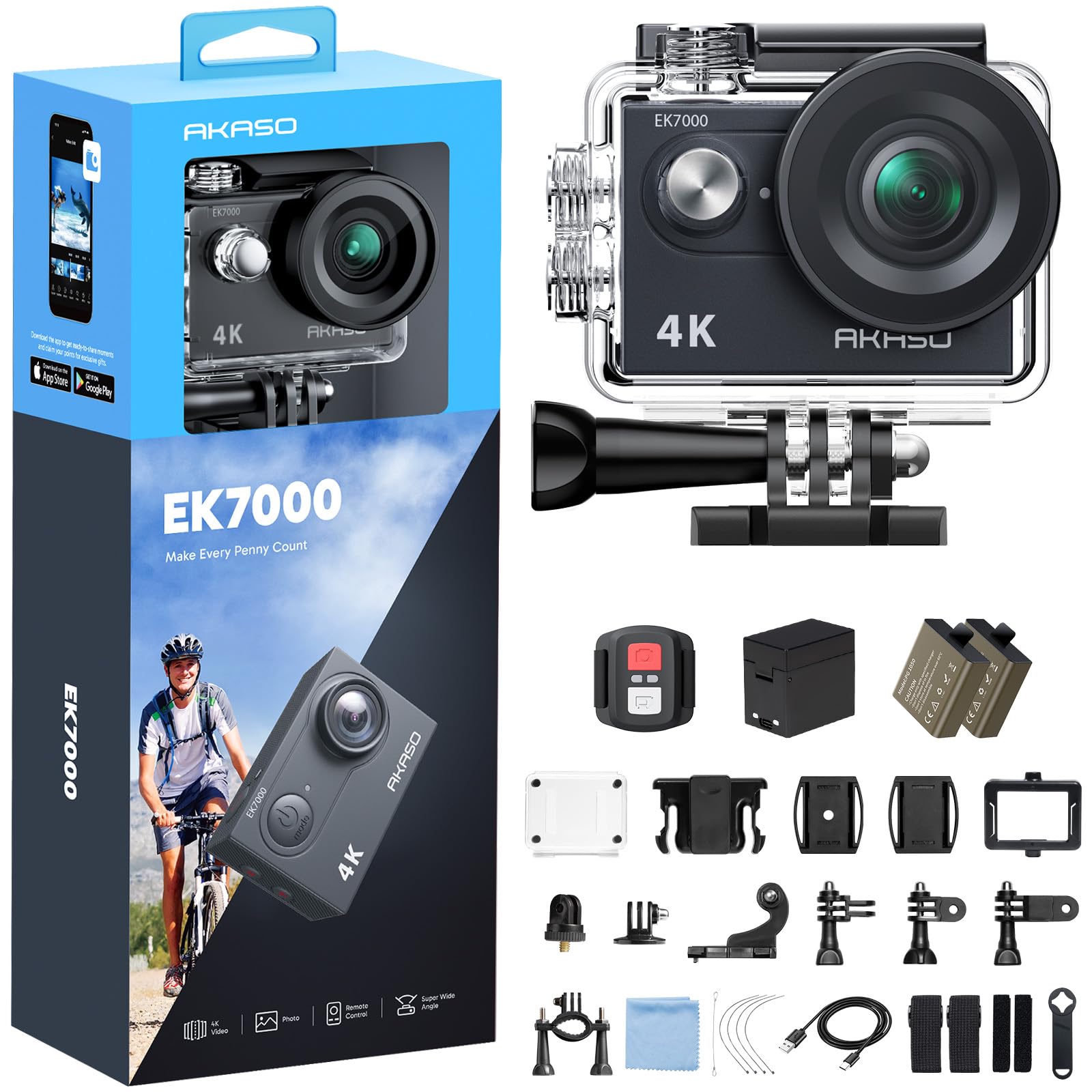
AKASO EK7000

89 /100
Studio Score Strong Evidence

Key details

Stabilization
EIS
Waterproofing
131ft with case
Battery & Runtime
Dual batteries included
Format & Workflow
Traditional fixed lens
Check Price on Amazon

The AKASO EK7000 is a starter kit as much as a camera: 4K30 with EIS, 20MP stills, a 131-foot waterproof case, two batteries, a wrist remote, and a full mount set at an entry-level price. It undercuts the front-display option in this guide on price while keeping the core POV setup intact.

Daylight footage is the sweet spot. 4K30 holds up for travel recaps and action clips, EIS smooths out walking and bike motion, and the wrist remote makes start/stop easier while the camera is mounted. Wi-Fi handles quick phone transfers for social posts, and 20MP stills are fine for fast sharing rather than large prints.

The included case reaches 131 feet, so snorkeling and pool sessions are covered without extra purchases. There is no weather-sealed body, so the case needs to be latched correctly whenever water is involved.

This is the default for first-time action-camera buyers, casual water sports, and family travel. Low-light performance is basic, so plan for daytime and well-lit scenes.

Pros

  • The bundled kit covers most mounts and setups: waterproof case, wrist remote, dual batteries, and assorted brackets.
  • Daylight images are clean enough for travel and social sharing at an entry-level price.
  • Simple controls, Wi-Fi, and a wrist remote get first-timers shooting without setup friction.
  • EIS smooths walking and bike motion in normal daylight use.

Cons

  • 4K30 is the ceiling; 4K60, 8K, and 360 capture are left to higher-priced models.
  • Battery endurance in 4K is modest; the included second battery is the practical workaround.
Our verdict

If your shooting happens in daylight and your budget is tight, the EK7000 is the cost-effective starting point for POV and water-sports clips.

Check Latest Price
5

Best Budget Vlogging/Selfie

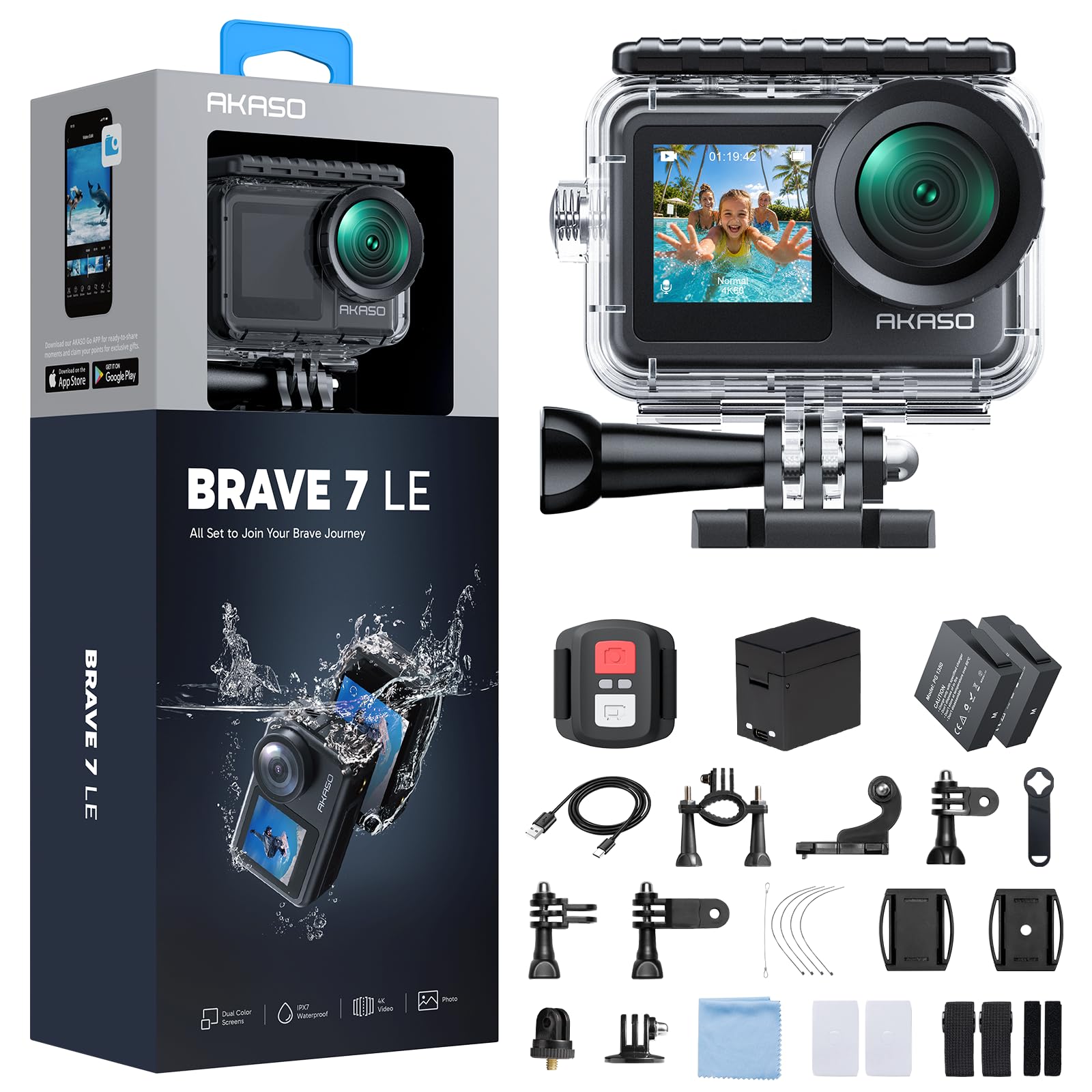
AKASO Brave 7 LE

89 /100
Studio Score Strong Evidence

Key details

Stabilization
EIS 2.0 6-axis
Waterproofing
IPX7; 131ft with housing
Battery & Runtime
Dual batteries included
Format & Workflow
Traditional fixed lens
Check Price on Amazon

The Brave 7 LE pairs 4K30 video with a front display, rear touchscreen, IPX7 weather-resistant body, wrist remote, and two batteries in one mid-range package, giving selfie-first shooters a practical starting point without a premium price.

The rear touchscreen handles menu changes quickly, and the front display makes vlog framing easier than relying on a phone app. The included housing takes the camera to 131ft, while the bare body is fine for rain and splash during hiking or coastal trips.

The bundled spare battery and wrist remote keep the camera going through a full day of stops and starts without recharging before the activity is done.

This is the runner-up for budget-conscious vloggers and outdoor creators who want a full kit rather than a bare-bones starter. Color and image processing are a step below premium DJI and Insta360 models, and the top video mode is 4K30, so buyers who need cinematic grading or high frame rates should look at the top pick.

Pros

  • Overall quality is strong for the price, with a body that suits outdoor handling.
  • The full kit of mounts, wrist remote, and two batteries adds practical value.
  • 4K30 footage with EIS 2.0 covers casual action and travel video acceptably.
  • IPX7 body handles rain and splash, with the included case reaching 131ft.

Cons

No notable drawbacks to flag.

Our verdict

For vloggers and weather-exposed shooters on a budget, the Brave 7 LE is the practical dual-screen action kit.

Check Latest Price
6

GoPro 360 Loyalists

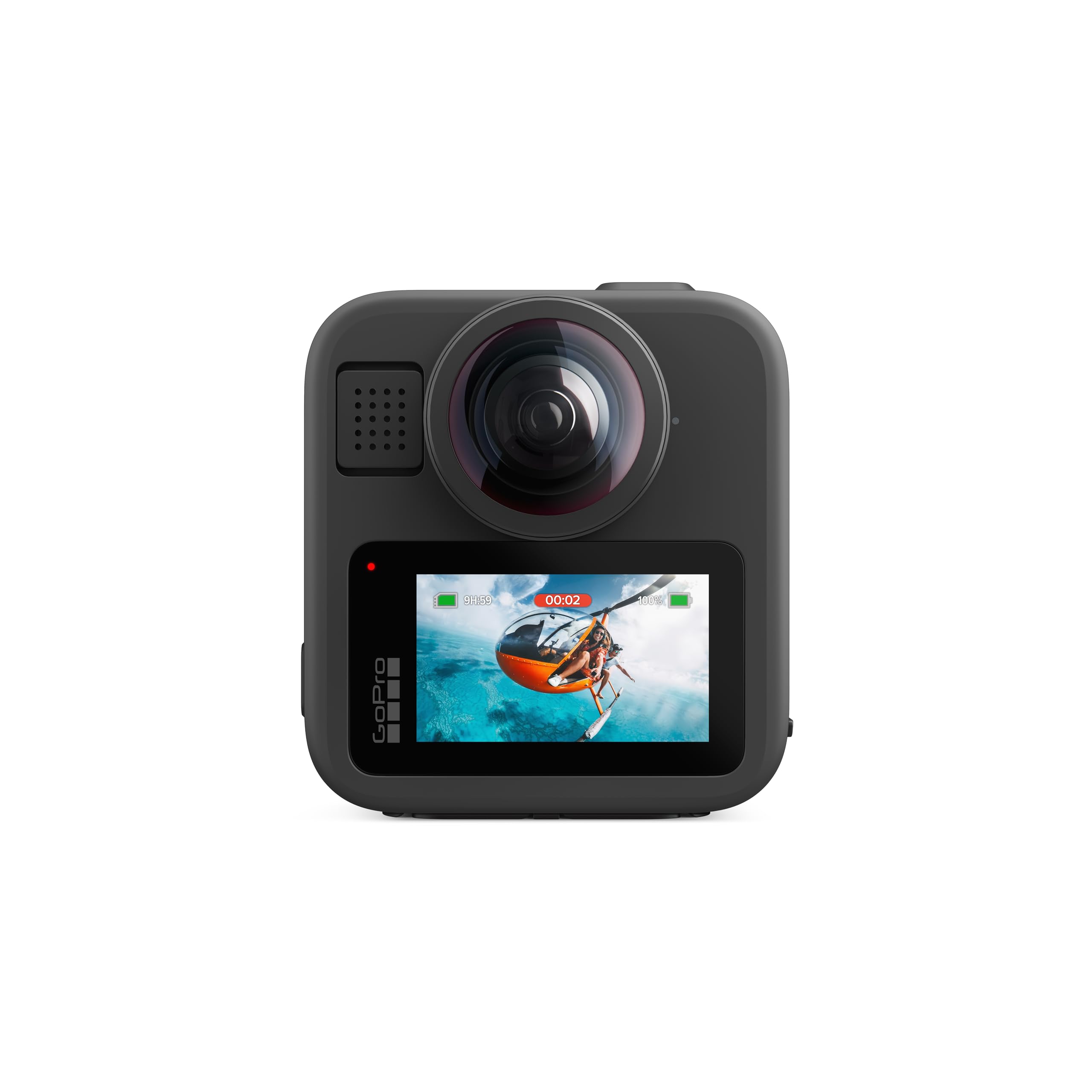
GoPro MAX2

83 /100
Studio Score Strong Evidence

Key details

Stabilization
HyperSmooth + Horizon Lock
Waterproofing
Waterproof design
Battery & Runtime
—
Format & Workflow
360 plus traditional mode
Check Price on Amazon

GoPro MAX2 records true 8K 360 spherical video with HyperSmooth stabilization and Horizon Lock, and the replaceable glass lenses mean a scratched front element is a quick field swap rather than a repair. It also shoots traditional action-cam footage from the same waterproof body, giving GoPro users one camera for both 360 and fixed-frame work. The demanding 360 file workflow keeps it from being the friendly 360 value option in this set; this is a premium 360 tool for creators who already edit. GoPro ecosystem loyalists who want 8K 360, invisible pole shots, and replaceable lenses are the right audience, but casual users should look at simpler fixed-lens alternatives.

Pros

  • Strong overall image quality across 360 and traditional modes, with natural color and usable detail.
  • Replaceable glass lenses turn a scratched front element into a quick field swap rather than a repair.
  • Six-microphone audio captures enough spatial detail for 360 scenes.

Cons

  • Every 360 clip needs an editing and reframing pass before sharing, so this is not a no-edit camera.
  • Large 360 clips can exceed 4GB, and desktop software integration is limited.
Our verdict

For GoPro loyalists who want 8K 360 and replaceable lenses, the MAX2 fits best as a dedicated 360 body beside a fixed-lens action camera.

Check Latest Price
7

Tiny Clip-On POV

Sixmou i3

85 /100
Studio Score Strong Evidence

Key details

Stabilization
EIS 3.0 6-axis
Waterproofing
131ft with case
Battery & Runtime
150-min runtime claim
Format & Workflow
Traditional fixed lens
Check Price on Amazon

The Sixmou i3 packs 4K recording into a 35.7g magnetic body, and the bundle adds a 64GB card, spring clip, lanyard, and seven mounts for quick POV placement. Image quality is strong for the size, and the 131ft waterproof case handles wet outings. The WiFi/app connection can be inconsistent, and 4K battery life may fall short of the 1080p estimate, so this is a niche wearable rather than a universal action camera. It suits travelers and daily vloggers who want a clip-and-go companion.

Pros

  • Full mount kit — magnetic body, spring clip, lanyard, and seven mounts
  • Image quality holds up well in this size class, giving POV clips a clear 4K look.
  • The 35.7g body disappears in a pocket or on a helmet, so daily vlogging stays hands-free.

Cons

  • All-day event recording isn't this camera's role; it works best for short clip-and-go sessions.
  • If you prefer a camera that runs without a phone, the app-based clip transfer will feel limiting.
Our verdict

For travelers and daily vloggers who want a clip-and-go POV companion, the i3 is a budget-friendly way to get 4K video in a tiny package.

Check Latest Price
8

Budget Beginners, Kids

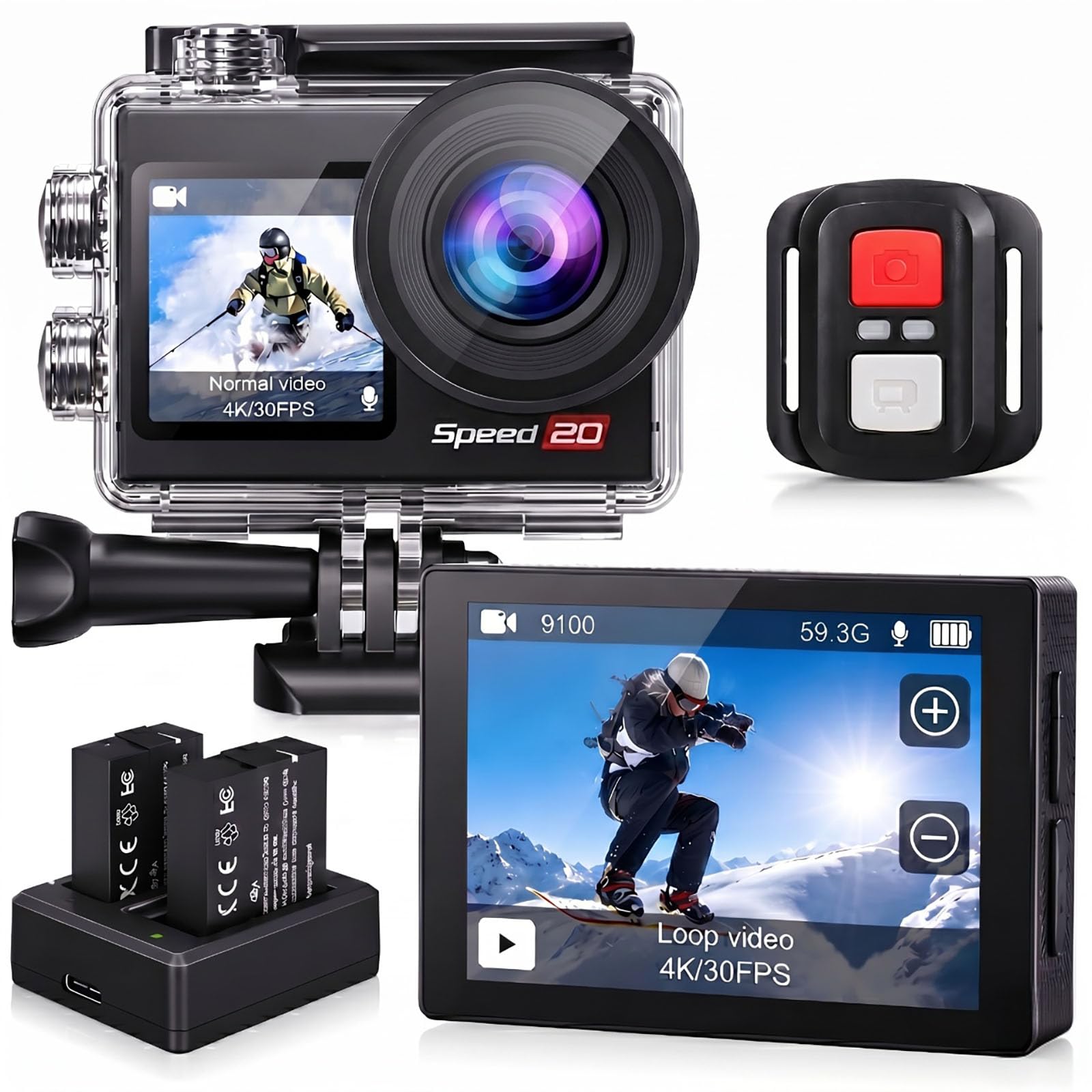
Hiicam Speed 20

90 /100
Studio Score High Confidence

Key details

Stabilization
EIS
Waterproofing
131ft with case
Battery & Runtime
Dual batteries included
Format & Workflow
Traditional fixed lens
Check Price on Amazon

The Hiicam Speed 20 puts a complete starter setup in one box: 4K30 video, a rear touchscreen, a front display for self-framing, dual batteries, and a 131ft waterproof case at an entry-level price. That combination handles family travel, snorkeling, and casual outdoor clips without demanding a premium budget. Image quality is built around bright outdoor scenes, and EIS smooths normal handheld movement. Long-term durability under heavy, repeated use is the main boundary for anyone expecting one camera to survive years of hard action. For light seasonal adventures, the Speed 20 is a sensible budget option and a secondary recommendation rather than a do-everything main camera.

Pros

  • Full kit at an entry-level price: touchscreen, front display, dual batteries, and waterproof housing.
  • 4K30 video holds up for bright outdoor scenes and family travel.
  • Waterproof case handles snorkeling depths for casual beach days.

Cons

  • Submersion requires the included case; the body is not rated for direct water contact.
  • No 4K60 or 8K, so fast-action follow-cam work is out of scope.
Our verdict

This fits a light-duty family travel kit where a complete, low-cost set matters most.

Check Latest Price

How to Choose

Sensor Size and Low-Light Performance

Larger sensors use bigger pixels that collect more light, so a 1/1.3-inch camera stays clean at dusk while a small-sensor budget model gets noisy. This matters for mountain biking in forests, night skiing, and travel after dark.

A 4K label only tells you output resolution, not sensor size. The same camera that looks sharp in noon sun can soften under cloud cover. Match the sensor to the light you actually shoot in.

Stabilization Quality

Electronic stabilization crops into the sensor and uses gyroscope data to counter motion. Stronger stabilization means more crop, which can soften edges. Basic EIS reduces shake; premium systems like RockSteady and FlowState add horizon leveling.

For handheld running shots or a camera mounted to a motorbike, stronger stabilization is worth the cost. For static helmet shots in good light, basic EIS is enough.

Waterproof Depth and Housings

A waterproof rating assumes clean, fully seated seals around the battery and card doors. One grain of sand can break that barrier. A housing makes the case the waterproof layer and adds impact protection.

Budget cameras often need a housing to reach rated depth; bare-rated cameras are still easier to grab for a quick shot. Inspect the o-ring before every submersed session.

Battery Runtime and Replaceable Batteries

Advertised runtimes assume 1080p, Wi-Fi off, and moderate temperatures. 4K and 360 recording push the processor harder and generate heat, which cuts real-world runtime.

Two included batteries or a fast external charger matter more than a slightly larger built-in cell. For all-day shoots, plan around spares rather than a single runtime claim.

360 vs Traditional Capture and Editing Workflow

A traditional camera records what you aim at, and the file is ready to trim and upload. A 360 camera records every direction, so you never miss a moment behind you, but you pay for that with an editing pass.

360 suits creators who enjoy post-production; traditional suits anyone who wants footage out fast. Buying a 360 camera without accepting the reframe process leaves large files and stalled projects.

Frequently Asked Questions