8 Best NVMe SSD for Video Editing in 2026: Match Your M.2 Slot

The best NVMe SSD for video editing depends on your M.2 slot, cooling, and budget — this guide matches drives to the right workflow.

The marketing numbers on NVMe drives focus on peak sequential reads, but video editing actually stresses sustained writes, thermal behavior, and platform support. A drive that looks fast on paper can throttle during a long export or run at Gen4 speeds in a Gen4 slot.

The practical question is not which drive has the highest number, but which one fits your motherboard, cooling, and workflow. Editors on mature PCIe 4.0 systems often get more real-world value from a proven drive with large capacity than from a Gen5 model that can't reach its ceiling.

This guide matches drives to the way you actually edit — 4K timelines, 8K RAW, laptop work, or budget builds — so you spend on the performance you can use.

1

Best Overall

Samsung 990 PRO

96 /100
Studio Score High Confidence

Key details

PCIe Generation
PCIe 4.0 x4
Capacity & Space
2 TB
Read/Write Speed
7,450 / 6,900 MB/s
Heatsink Requirement
Not required
Check Price on Amazon

The 990 PRO pairs 2TB of capacity with 7,450 MB/s sequential reads and 6,900 MB/s writes, giving editors enough bandwidth for 4K and 6K timelines without stepping up to a Gen5 platform. The 1,200 TBW endurance rating is sized for sustained editing sessions and repeated large-file writes, and the PCIe 4.0 x4 interface fits current desktops, laptops, and the PS5 expansion bay. This combination suits editors who keep camera original files, proxies, and exports on the same drive. The interface is fast enough for current camera workflows without forcing a platform upgrade.

Footage moves quickly: over 1TB can transfer in minutes, and 4K scrubbing stays responsive with multiple high-bitrate clips on the timeline. The drive's sustained write behavior matters more than peak reads when offloading camera media or rendering long timelines. Because the 2TB capacity holds an entire project library, editors avoid the stop-and-swap workflow of smaller high-speed drives. That capacity also makes the 990 PRO a practical primary drive for systems where a single M.2 slot does most of the storage work. For editors working from a laptop with one internal drive, the extra space turns the notebook into a finishing station rather than a transfer hub.

Serious 4K/6K editors on Gen4 desktops and laptops are the main audience, and PS5 owners have a compatible expansion option. Premium pricing is the main barrier; budget shoppers will feel the cost, while editors who need a single 2TB volume for active projects will absorb it. Buyers who fall outside that profile—budget-first or Gen5-focused—should look elsewhere, not because the 990 PRO underperforms, but because their needs point in a different direction. Firmware updates and regular backups remain part of the workflow for owners logging heavy write volume.

The 990 PRO is a Gen4 drive, so it will not match Gen5 sequential numbers; those only appear on PCIe 5.0 systems with proper cooling. For editors still on Gen4, the practical difference in 4K/6K work is small, and the larger capacity plus broad compatibility covers the priorities that matter most. Buyers building a fully Gen5 workstation may prefer a drive that can use that bandwidth, but they would also take on additional heat and platform requirements. The 990 PRO's job is to be the last storage decision for a Gen4 editing rig, not the fastest number on a chart.

💡 For daily 4K/6K export sessions, run the vendor's drive health utility alongside your normal backup schedule.

Pros

  • Operational consistency holds up through long editing sessions and repeated large transfers.
  • Moves 4K/6K footage quickly, with responsive scrubbing and fast export times.
  • 2TB capacity at this price keeps per-gigabyte cost reasonable for editors who need high-speed storage.

Cons

  • Endurance can vary between units under sustained high-write workloads, and firmware-related health degradation has been reported.
Our verdict

For 4K/6K editors on Gen4 systems, the 990 PRO is the volume you install once and keep working.

Check Latest Price
2

Best PCIe 5.0 Speed

Samsung 9100 PRO

93 /100
Studio Score High Confidence

Key details

PCIe Generation
PCIe 5.0 x4
Capacity & Space
1 TB
Read/Write Speed
14,700 / 13,300 MB/s
Heatsink Requirement
Needed for sustained load
Check Price on Amazon

The 9100 PRO tops the current Gen5 field with 14,700/13,300 MB/s sequential reads and writes. On a PCIe 5.0 desktop, that translates to smoother 8K/RAW timeline scrubbing, faster large-file transfers, and shorter waits around render and export tasks.

This is a scratch-drive play for desktop editors who already have a PCIe 5.0 M.2 slot and a motherboard heatsink that can move Gen5 heat away from the controller. Without that cooling, sustained 8K or RAW writes can run hot. The drive belongs in a current Gen5 build, not as a speed upgrade for an older platform.

Installation is plug-and-play in a compatible M.2 slot, and boot times land around 15 seconds when the system uses the full interface. Large-file transfers move at 14.7GB/s-class speed as long as the rest of the platform keeps up, which is where this drive separates itself from the 2TB Gen4 workhorse in this set.

The 1TB capacity is the main boundary: 8K and RAW workflows fill scratch space quickly. Editors who need more working room should look at the 2TB Gen4 workhorse; editors who need maximum Gen5 throughput on a 1TB scratch drive will find this hard to match.

Pros

  • Class-leading sequential reads and writes move large 8K and RAW files quickly.
  • Accelerates demanding creative workloads such as 8K editing and AI-assisted exports.
  • Easy installation in compatible M.2 slots.
  • Boots and loads quickly on systems that use the full PCIe 5.0 interface.

Cons

  • Peak sequential speed only appears in a PCIe 5.0 slot; Gen4 or older systems cannot use the drive's full headroom.
  • In some cases, a unit can become unresponsive within the first weeks; maintain a backup for project files.
Our verdict

The 9100 PRO is the fastest 1TB Gen5 scratch drive for 8K and RAW editing.

Check Latest Price
3

Best for Laptops & Handhelds

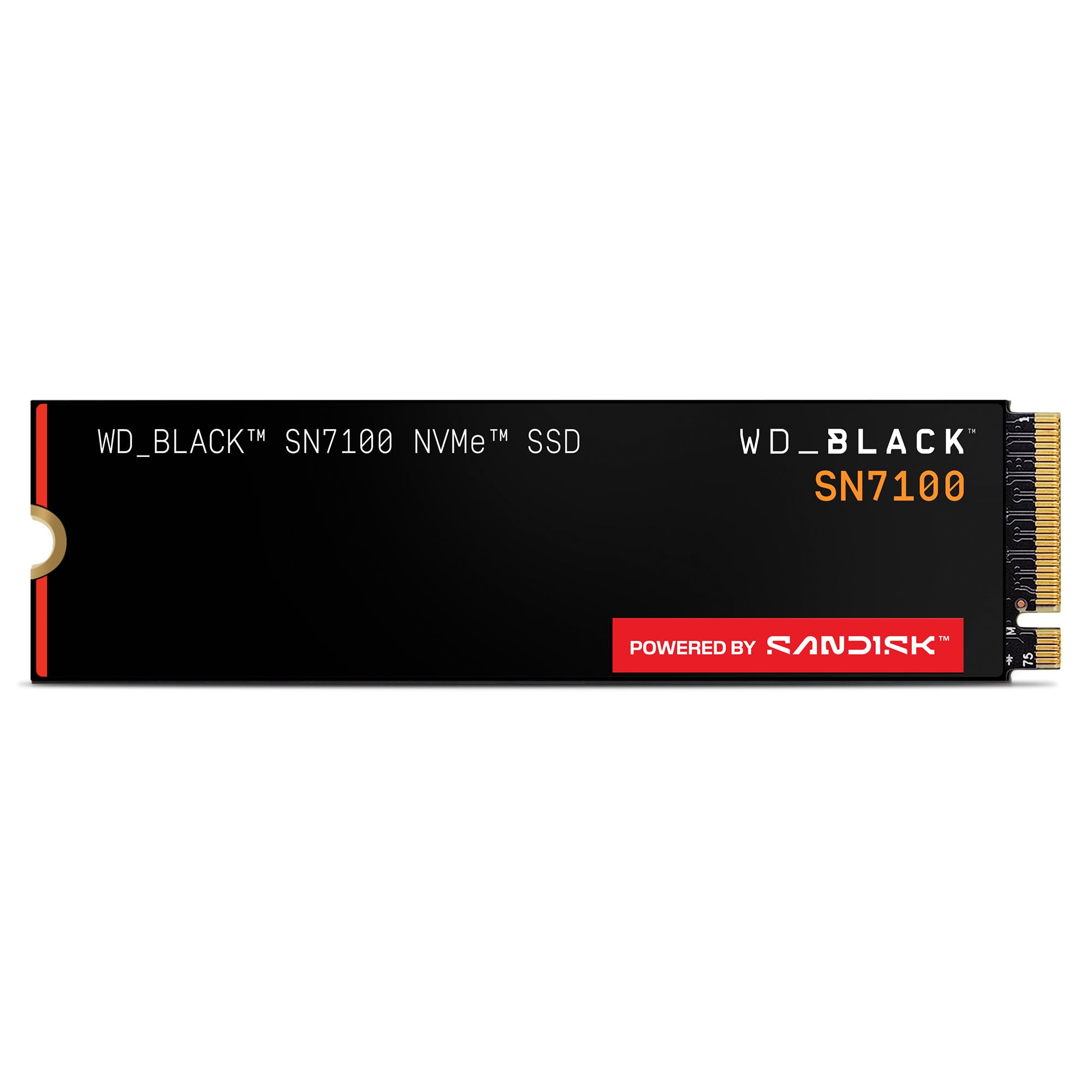
WD_Black SN7100

96 /100
Studio Score High Confidence

Key details

PCIe Generation
PCIe 4.0 x4
Capacity & Space
1 TB
Read/Write Speed
7,250 / 6,900 MB/s
Heatsink Requirement
Not required
Check Price on Amazon

The WD_Black SN7100 delivers 7,250/6,900 MB/s Gen4 transfers with low power draw and modest heat, making it a natural fit for compact laptop and handheld chassis. That low-power profile sets it apart from the heavier Gen4 workhorses in this roundup, and it gives editors solid throughput without a dedicated cooling setup or a larger power budget.

Large project files move quickly: a 200GB transfer finishes in under a minute, and cold boots land around 5-10 seconds. The drive's sustained write performance holds up through extended transfers, which is where an editing workflow spends its time.

This drive suits laptop and handheld video editors, plus PS5 expansion when a single M.2 2280 slot is the available route. Unit-to-unit variation can surface as early data loss or recognition trouble, so keep active projects on a backup copy.

💡 Store a second copy of active projects on an external drive or cloud folder before long editing sessions.

Pros

  • Quick boots and large file transfers keep editing sessions moving.
  • Low heat output suits slim laptops and handhelds even without a heatsink.
  • Works across laptops, desktops, and PS5 expansion bays.
  • Cost-effective 1TB entry into fast Gen4 storage.

Cons

  • Gen4 sequential ceiling below Gen5-class drives limits large transfer bursts on PCIe 5.0 systems.
  • For editors on a single-drive workflow, unit-to-unit variation can surface as early data loss or recognition trouble.
Our verdict

The SN7100 is the efficient Gen4 pick for editors whose main constraint is heat or power draw in a compact build.

Check Latest Price
4

Best for Adobe/Mac Creatives

Crucial T500

96 /100
Studio Score High Confidence

Key details

PCIe Generation
PCIe 4.0 x4
Capacity & Space
1 TB
Read/Write Speed
7,300 / 6,800 MB/s
Heatsink Requirement
Not required
Check Price on Amazon

Crucial's T500 pairs 7,300/6,800 MB/s Gen4 sequential performance with a one-month Adobe Creative Cloud subscription, making it the only creator-facing bundle in this group. Adobe-centric editors get a practical reason to choose it over the mainstream Gen4 workhorses here, and the price-to-capacity ratio lands in the premium segment without feeling inflated for what's included.

Sustained writes track the advertised figures during long export sessions, the key metric for video editing. MacBook installs behave cleanly enough for daily system use, and component quality feels noticeably stronger than the budget Gen4 alternatives in this comparison.

The T500 sits near the top of what PCIe 4.0 can deliver, which makes it the right ceiling for editors on current MacBooks and mainstream desktops. Moving to Gen5 would require a newer platform, a compatible heatsink arrangement, and a higher price per gigabyte — none of which changes the editing experience on a Gen4 system.

Best for Adobe Creative Cloud users, Mac/PC video editors, and PS5 owners who want premium Gen4 speed without Gen5 platform requirements. Unit-to-unit durability can vary, so the drive fits workflows where backups are already standard practice rather than buyers who want the hardware itself to be the safety net.

💡 Schedule regular backups of project files so the workflow doesn't depend on any single drive.

Pros

  • One month of Adobe Creative Cloud in the box lowers the first-month cost for editors.
  • Holds 7,300 MB/s reads and 6,800 MB/s writes during sustained editing workloads.
  • Build and component quality feel strong for a Gen4 drive at this price point.
  • M.2 installation requires minimal effort on laptops and desktops.

Cons

  • Durability can vary from unit to unit.
Our verdict

Adobe-centric editors who already back up their projects get premium Gen4 speed and a useful Adobe month from the T500.

Check Latest Price
5

Best Budget Gen4

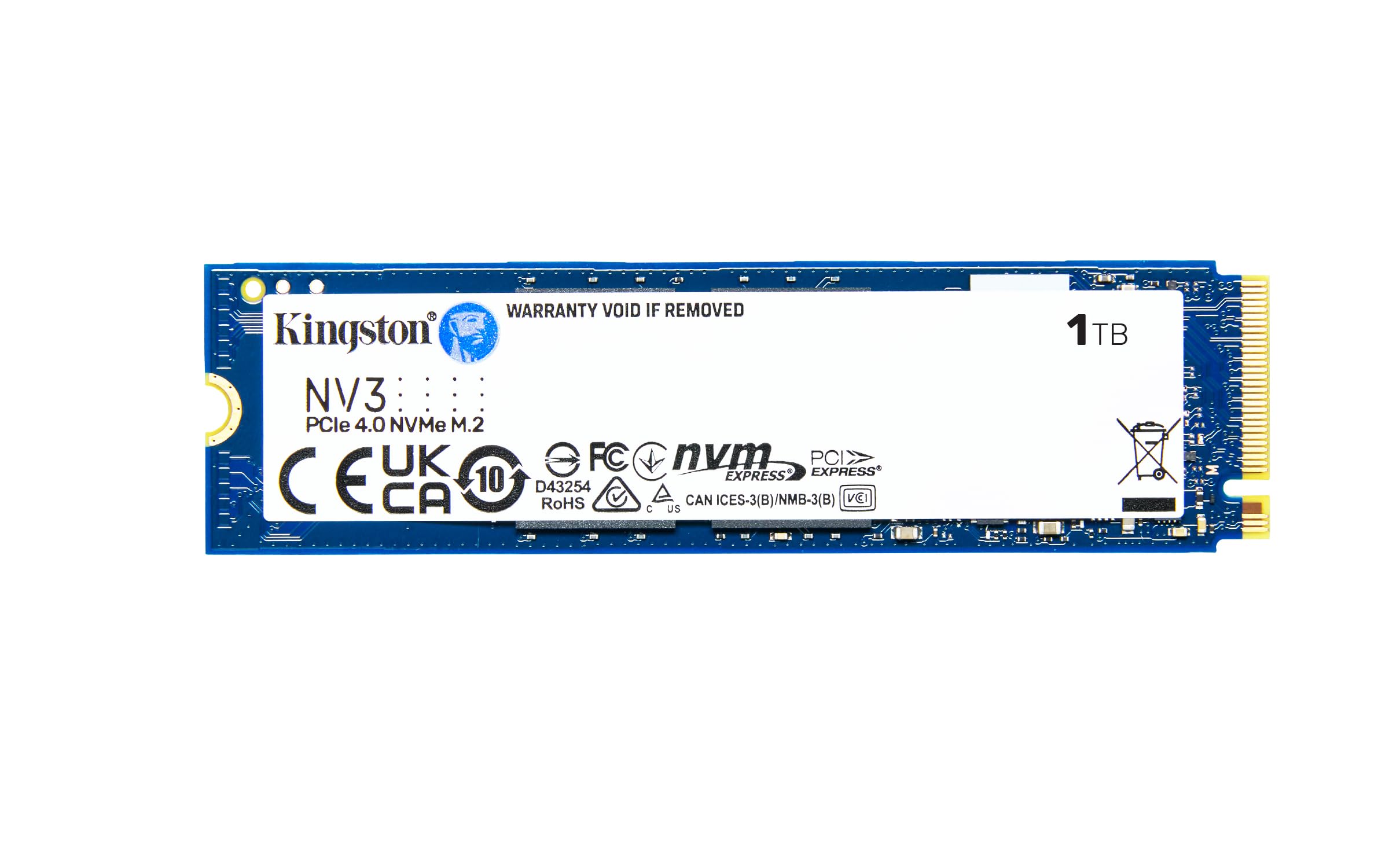
Kingston NV3

95 /100
Studio Score High Confidence

Key details

PCIe Generation
PCIe 4.0 x4
Capacity & Space
1 TB
Read/Write Speed
6,000 / 4,000 MB/s
Heatsink Requirement
Not required
Check Price on Amazon

The Kingston NV3 is a budget Gen4 drive with 6,000 MB/s reads and 4,000 MB/s writes, enough for snappy 4K timeline editing and rapid app launches. It pairs mainstream Gen4 performance with budget pricing for entry-level editors and secondary-drive shoppers. It also avoids the premium price attached to flagship Gen4 storage. For editors moving short clips, that combination is the point.

For everyday editing, the NV3 boots quickly after a clean install, opens applications without lag, and handles short 4K clips, project files, and media caches comfortably. Installation is a standard M.2 2280 fit, and recognition is immediate across systems, including older desktops and laptops still on a Gen3 bus. The 1TB capacity covers an operating system plus an active project library, leaving room for media caches.

This suits budget 4K editors, secondary media drives, and laptop upgrades more than heavy 8K rendering sessions. For a single 4K timeline with effects, the NV3 has enough throughput to keep playback smooth. Sustained writes sit below premium Gen4 drives, and a drive can stop being recognized after months of heavy use, so backups are mandatory.

💡 Keep active 4K projects on this drive and store large finished raw footage on a separate archive drive.

Pros

  • Everyday performance feels strong for boot, app loading, and clean installs.
  • Budget-friendly price for a 1TB Gen4 drive with this speed class.
  • Easy M.2 installation on laptops and desktops.
  • Compatibility covers older systems and common laptops.

Cons

  • Sustained write speed sits below premium Gen4 drives, slowing large raw-footage transfers.
  • A drive can stop being recognized after months of heavy use, so backups are required.
Our verdict

The NV3 is the sensible runner-up for budget 4K editors and secondary media drives, delivering most of the Gen4 experience at a lower price as long as backups are part of the routine.

Check Latest Price
6

Cool-Running Gen5

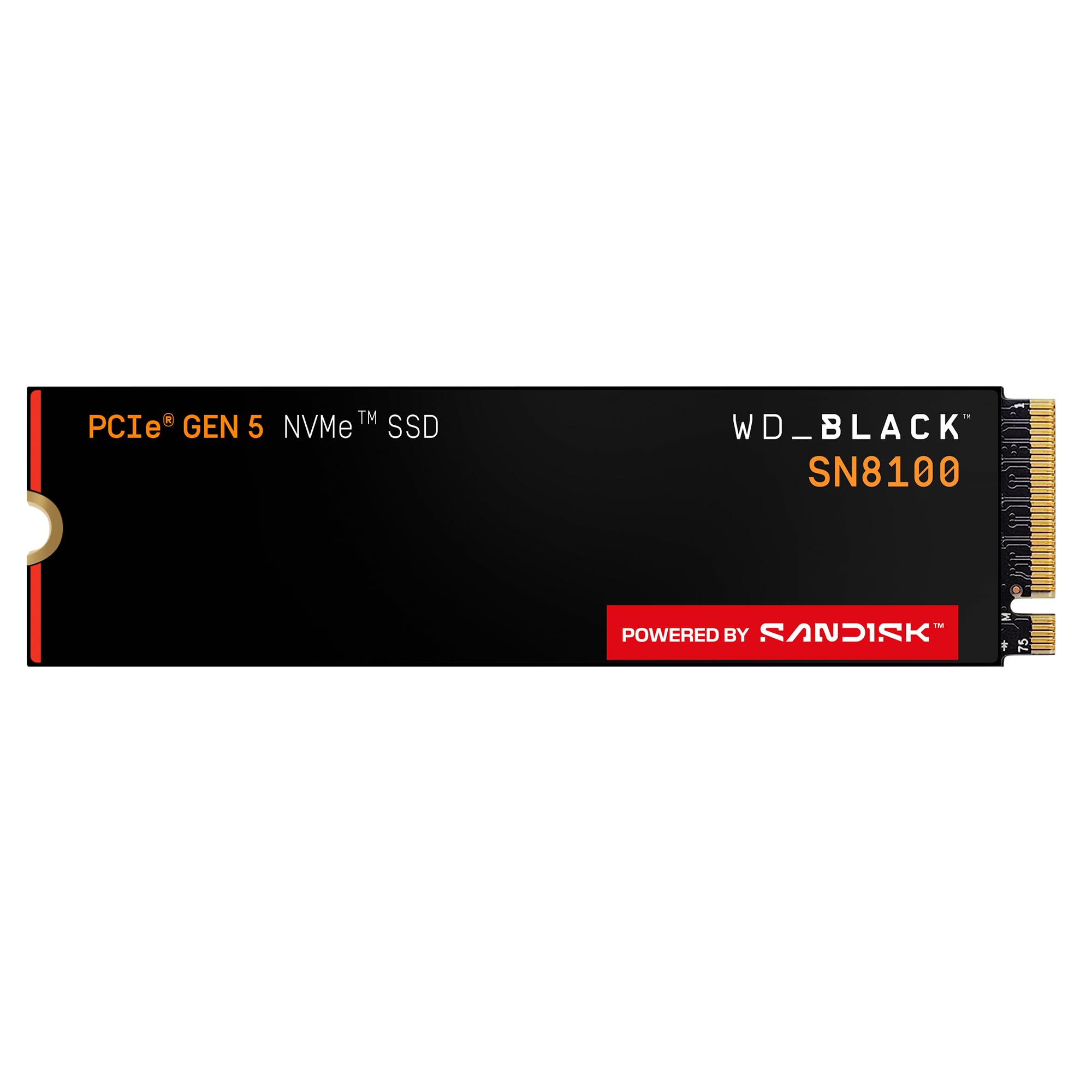
WD_Black SN8100

92 /100
Studio Score High Confidence

Key details

PCIe Generation
PCIe 5.0 x4
Capacity & Space
1 TB
Read/Write Speed
14,900 / 11,000 MB/s
Heatsink Requirement
Recommended
Check Price on Amazon

WD_Black SN8100 delivers 14,900 MB/s reads and 11,000 MB/s writes, with thermal behavior that holds up better than several Gen5 rivals when a heatsink is present. Large 8K transfers finish quickly, preview scrubbing feels immediate, and export times shrink noticeably. Occasional early loss keeps it behind the top pick for buyers who want a set-and-forget storage layer. The premium price makes sense only for workloads that can use the bandwidth, not for everyday boot-drive tasks.

Pros

  • Sequential transfers reach 14,900/11,000 MB/s, so 8K source files and project archives move quickly.
  • Runs cooler than several Gen5 rivals in open slots, which helps sustained editing sessions.
  • Installs cleanly in desktop M.2 slots and external docking stations.

Cons

  • Gen4-only systems miss the speed advantage, so the full investment only pays off with a PCIe 5.0 slot.
  • Some motherboards may not recognize the drive until BIOS or slot settings are updated.
Our verdict

Use the SN8100 in a Gen5 editing build with a known-good motherboard, active cooling, and a backup routine; choose a Gen4 workhorse if you want fewer platform conditions.

Check Latest Price
7

Laptops & Desktops

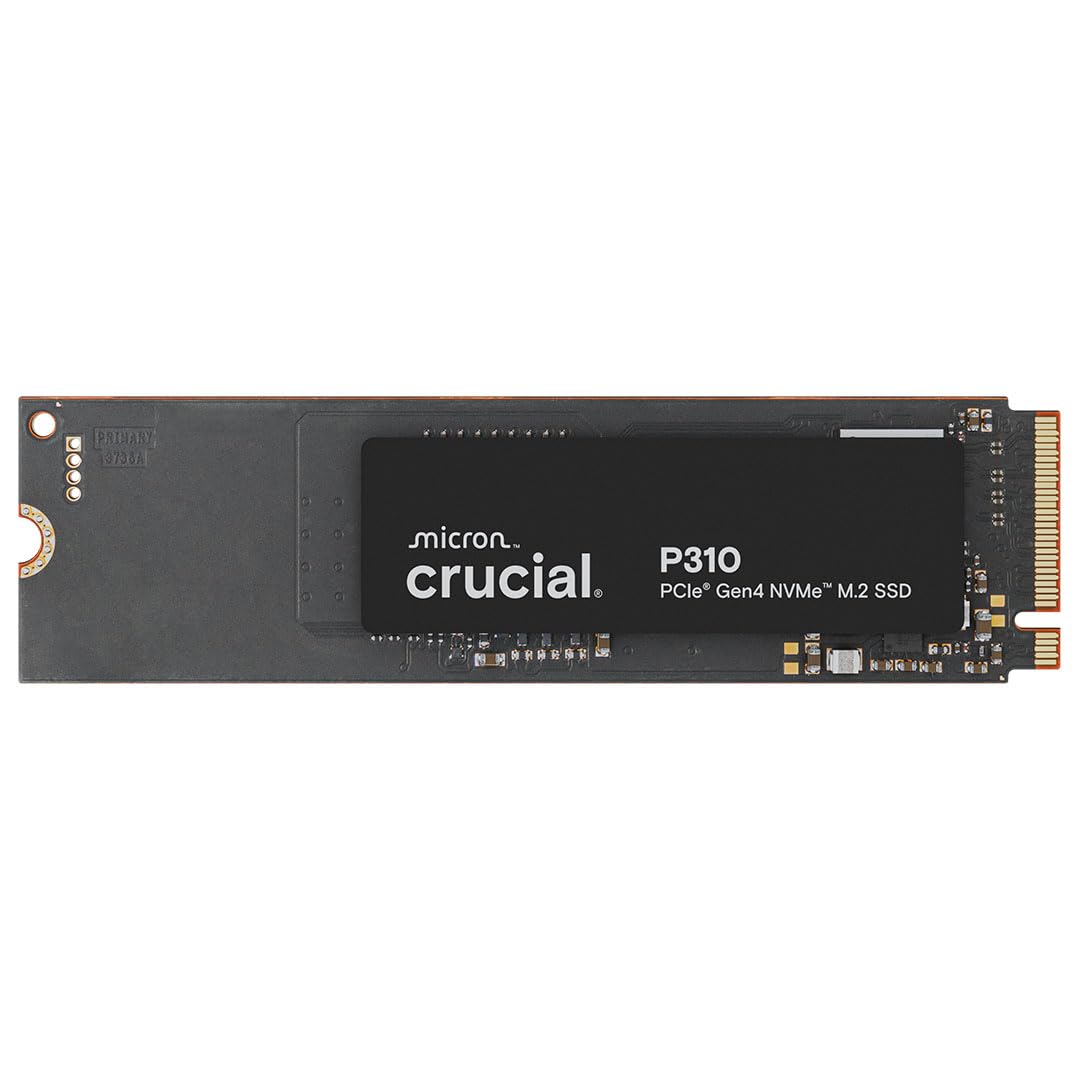
Crucial P310

95 /100
Studio Score High Confidence

Key details

PCIe Generation
PCIe 4.0 x4
Capacity & Space
1 TB
Read/Write Speed
7,100 / 6,000 MB/s
Heatsink Requirement
Not required
Check Price on Amazon

The Crucial P310 is the high-volume mainstream Gen4 pick here: 7,100/6,000 MB/s sequential speed, broad laptop and mini-PC compatibility, and a price that undercuts the polished creator-focused models. It handles everyday editing timelines, game installs, and large file transfers without fuss. The caveat is that high-write 8K workflows exceed its sustained-write comfort zone, and its sustained-write ceiling is lower than the premium Gen4/5 options in this lineup. Reliability can vary between units — an occasional drive may arrive non-functional or become unresponsive in the first weeks. That makes it a better fit for value-first editors and console owners than for buyers who need maximum write endurance or cannot tolerate early-drive variance.

Pros

  • Fast Gen4 reads and writes for everyday editing, game loading, and large transfers.
  • Cost-effective mainstream pricing with performance close to pricier Gen4 models.
  • Simple M.2 installation with broad support for laptops, mini PCs, and handheld consoles.

Cons

  • Sustained write throughput sits below the premium Gen4/5 tier, so long 8K render queues will slow down.
  • Reliability can vary; an occasional unit may arrive non-functional or become unresponsive within weeks.
Our verdict

Fits when the workflow is mostly 1080p/4K edits, large libraries, and console use; skip it for sustained 8K writes or if early-drive variance is unacceptable.

Check Latest Price
8

Budget Gen4 Speed

BIWIN NV7400

92 /100
Studio Score High Confidence

Key details

PCIe Generation
PCIe 4.0 x4
Capacity & Space
1 TB
Read/Write Speed
7,450 / 6,500 MB/s
Heatsink Requirement
Included heatsink
Check Price on Amazon

The BIWIN NV7400 brings near-flagship Gen4 sequential speeds — 7,450/6,500 MB/s — to budget 4K editing builds, and the graphene aluminum heatsink is already in the box. Project files move quickly and 4K timelines stay responsive once the drive is recognized. That recognition step is the catch: compatibility can vary by system, so verify your motherboard or laptop slot before purchase, and PS5 owners who need guaranteed console detection should look elsewhere. The support network is also slimmer than major brands, which keeps this a budget alternative rather than a top-tier pick despite the price-to-speed value.

Pros

  • Strong 4K editing performance for the price, with smooth timeline operation and no lag.
  • Large project files transfer quickly, so moving 4K footage between drives is fast.
  • Simple cloning and setup for laptop or desktop upgrades.

Cons

  • Full advertised speed needs a PCIe 4.0 slot; Gen3 systems cap well below 7,450 MB/s.
  • 1TB capacity can fill quickly when 4K source footage and exports share the same drive.
Our verdict

If your editing machine has a Gen4 slot and 1TB fits your project storage, this drive delivers near-flagship speed for less — without a separate heatsink.

Check Latest Price

How to Choose

Read/Write Speed

Sustained write speed after the cache fills matters more than peak sequential reads, because video editing writes large files for minutes at a time. A fast SLC cache can look strong in benchmarks, then drop to slower raw NAND speed once full. Prioritize drives that hold sustained writes under your project load.

PCIe Generation

PCIe 5.0 doubles the bandwidth of PCIe 4.0, but only when the drive sits in a Gen5 M.2 slot with a compatible CPU. In a Gen4 slot, a Gen5 drive negotiates down to Gen4 speeds, so the extra cost buys no measurable improvement.

Check your motherboard manual for the primary slot's generation and any bandwidth sharing with other components; a second M.2 slot may run at Gen4 or Gen3.

Heatsink and Cooling

Gen5 controllers run hot under sustained load. Without a heatsink or decent motherboard airflow, the drive can reduce its write speed mid-export.

Gen4 drives run cooler and tolerate less aggressive cooling, which is why many laptop editors prefer a high-end Gen4 drive over a Gen5 model.

Endurance and Warranty

Endurance ratings (TBW) estimate how many terabytes you can write before the NAND cells wear out. For 4K editing, a 1TB drive rated around 600 TBW is comfortable, but sustained 8K rendering can consume that budget faster.

The practical limit is often controller or firmware trouble, not raw NAND wear, so check the warranty length and use the manufacturer's monitoring software to track drive health.

Capacity and Space

Video files grow quickly; a single minute of 8K RAW can exceed 20GB. A 1TB drive holds projects and working files, but 2TB gives you room for footage, proxies, and cache without juggling drives.

Editors who shoot events or long interviews should lean toward 2TB.

Frequently Asked Questions