7 Best ND Filter for Video in 2026: Choose the Range Without X

Find the best ND filter for video without X patterns, vignetting, or color casts — one that matches your lenses and shooting style.

Variable NDs are the standard video fix for bright light: they cut exposure while keeping your shutter angle and motion blur where you want them. Many listings promise no X and true color at every setting. Those promises expire once a variable ND goes much past ND32, where cross-polarization, vignetting, and color casts start appearing in footage.

For video, a 1-5 stop (ND2-ND32) filter handles most outdoor conditions without crossing into the range where artifacts bloom. Wider 1-9 stop filters sound more flexible, but that flexibility comes with visible tradeoffs at the dark end.

So this roundup starts from the range that works, then matches filter size, rotation feel, and extras to the way you actually shoot. The result is a filter that solves your exposure problem instead of adding a new one.

1

Best Overall

K&F 58mm VND ND2-32 No X

92 /100
Studio Score High Confidence

Key details

Stop Range
1-5 stops (ND2-32)
Color Neutrality
No visible color cast
Thread And Cap Fit
Rotating frame blocks stock caps
X-Pattern Behavior
No X to ND32
Check Price on Amazon

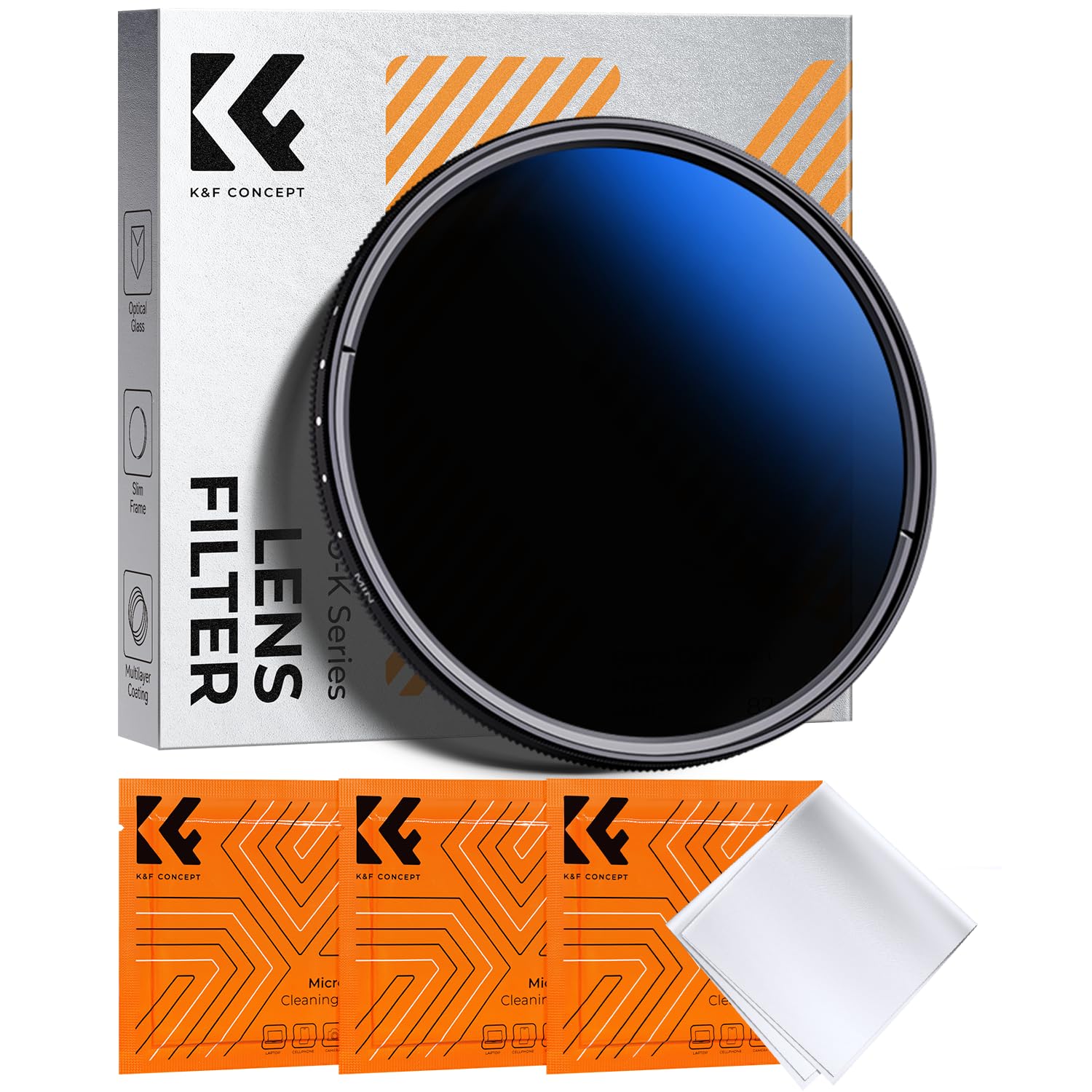
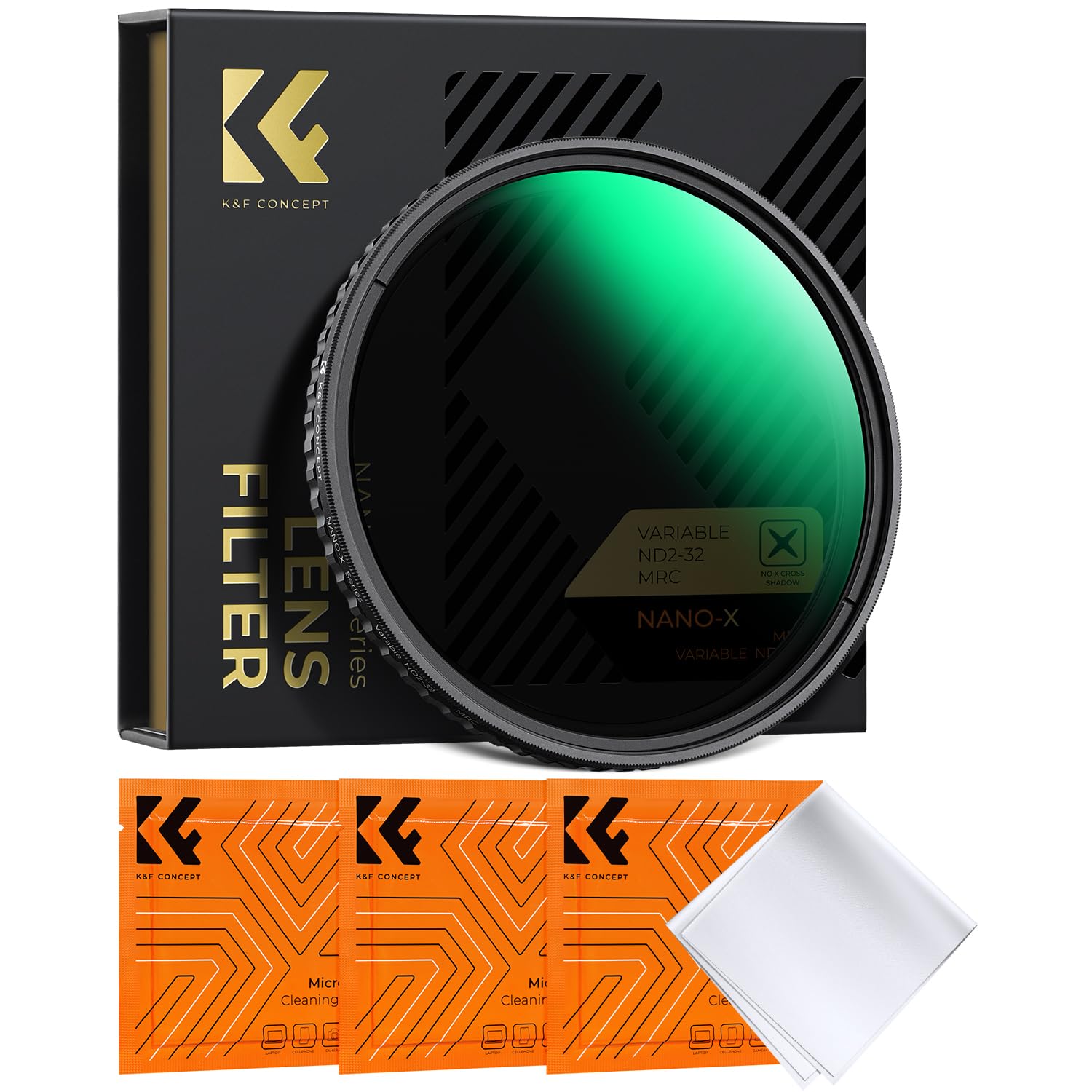
The 58mm K&F Concept VND covers the 1-5 stop range where variable neutral density filters behave predictably: no X cross, no visible vignetting on typical kit lenses, and a smooth rotate-to-adjust ring. Japanese AGC glass with a nano coating keeps the image sharp, and the ultra-slim aviation-aluminum frame threads onto 58mm lenses without adding bulk. Keeping the range to ND2-ND32 is the design decision that matters: wider-range VNDs concentrate artifacts at the dark end, while this filter stays clean where video work actually happens.

On a gimbal or run-and-gun rig, dialing in exposure without breaking framing is the whole job. The ring rotates smoothly enough to move from ND2 to ND32 between shots, and the no-X behavior holds through the densities that matter for daylight video. Hybrid shooters get the same clean optics for stills, with limited color shift compared with wider-range VNDs. Because the moving elements sit in a slim frame, corner performance stays predictable on the 58mm kit zooms these filters are made for.

This filter is for video creators on 58mm kit lenses — particularly run-and-gun and gimbal shooters who need one front element that adapts as light changes. It also suits hybrid stills/video users who want a single filter for daylight exteriors. The rotating frame can interfere with original lens caps and hoods, so expect to store those while the VND is mounted; some units arrive with a tight adjustment ring, so check rotation before heading out. Photographers who must keep the stock hood on are better off with a slim fixed ND or a step-up setup that accepts the hood. This is not the tool for long-exposure stills that need more than five stops; that job calls for a fixed ND or a wider-range filter.

Compared with the ultra-budget 40.5mm option in this lineup that stretches to 1-9 stops, the 58mm version trades unusable dark-end headroom for consistent results through the range video shooters actually use. Extra stops on budget VNDs concentrate X patterns, color casts, and vignetting at the exact settings you would turn to in harsh light. The mid-range price undercuts dedicated cinema VNDs while keeping the build quality and no-X optics that make outdoor exposure changes predictable. Skies and highlights stay clean when you push past the middle of the range, which is where budget filters reveal their limits.

Pros

  • Clean video output with no X or vignetting through the 1-5 stop range.
  • Solid 58mm build with Japanese AGC glass and a slim aluminum frame.
  • Smooth rotate-to-adjust ring for quick exposure changes while filming.
  • Cost-effective no-X VND that undercuts dedicated cinema filters.

Cons

  • Original lens caps and hoods may not fit once the rotating frame is mounted.
  • Unscrewing can be fiddly because the thin fixed ring may spin the adjustment ring instead.
Our verdict

A practical 58mm VND that gives video shooters a clean 1-5 stop range, smooth control, and no-X optics at a price that sits well below cinema-grade alternatives.
Check Latest Price
2

Premium True-Color Choice

NiSi Swift 67mm VND 1-5

91 /100
Studio Score High Confidence

Key details

Stop Range
1-5 stops (ND2-32)
Color Neutrality
True Color coating
Thread And Cap Fit
67mm Swift system expandable
X-Pattern Behavior
No-X design
Check Price on Amazon

The NiSi Swift 67mm VND is the true-color option for color-critical video, pairing a 1-5 stop range with hard-stop rotation and Swift System expandability. It separates itself from the mid-range top pick by holding neutral color through the whole ND2-ND32 range, a point where variable NDs can start to show a cast. It also gives 67mm shooters a path into the Swift ecosystem without switching brands.

The 1-5 stop range is the practical sweet spot for video work: motion-blur control stays intact without the deep-end X-pattern and vignetting that wider-range filters bring. The True Color coating and 20-layer nano coating keep the image clean, and the smooth rotation with firm hard stops makes density changes predictable on set. At the 5-stop end, the filter holds up well enough for commercial color work, with no white-balance shift when turning from ND2 to ND32.

This is for 67mm lens owners doing color-critical video where cast-free glass and repeatable ND settings are non-negotiable, and for shooters already in NiSi's Swift system. The premium price is the entry fee; before a paid job, check each unit's color and rotation because individual samples can vary. If you do not need hard-stop repeatability or true-color accuracy, a simpler filter will do the same exposure job for less.

💡 Check the hard-stop ring on your copy before relying on repeatable ND settings.

Pros

  • True Color coating and 20-layer nano coating keep the glass neutral across the full 1-5 stop range.
  • Hard-stop rotation provides a firm endpoint for returning to the same density mid-shoot.
  • Swift System compatibility lets 67mm shooters expand into a modular filter setup.
  • The housing feels substantial and the ring rotates smoothly, matching the optical quality.

Cons

  • The hard-stop ring can rotate past its limit after extended use, so repeatable settings need periodic checking.
  • An individual filter can show yellow-center or corner vignetting, a concern in color-critical work.
Our verdict

For 67mm shooters who need true color and repeatable hard stops on a paid set, the premium price buys exactly what the workflow demands.

Check Latest Price
3

Best Budget ND+CPL Combo

NEEWER 67mm VND+CPL

90 /100
Studio Score High Confidence

Key details

Stop Range
1-5 stops (ND2-32)
Color Neutrality
Neutral image quality
Thread And Cap Fit
67mm front thread
X-Pattern Behavior
No-X behavior
Check Price on Amazon

NEEWER's 67mm VND+CPL pairs a 1-5 stop variable neutral density filter with a circular polarizer, so outdoor video shooters cut glare and tame bright light through a single lens-mounted filter. Unlike a fixed ND set, it adapts to changing light without swapping filters, and the 1-5 stop range stays clear of the color casts that can appear at the dark end of wider-range NDs. The CNC aluminum frame and 30-layer coated HD glass give it a solid feel in direct sun and keep weight down for handheld gimbal work.

This filter suits 67mm lens owners who want one filter for daylight run-and-gun video and can accept combined ND/CPL control. Adjusting ND can rotate the CPL, so precise one-handed changes are difficult; those who need independent alignment should look elsewhere. That tradeoff is easier to absorb when the CPL is doing real work on water, glass, and foliage rather than sitting as an afterthought.

Bright-sun video is where this combo earns its place: the polarizer cuts reflections while the ND brings shutter speed down to a usable motion-blur look. Build quality is strong enough for a full day of handheld work, and the price stays mid-range despite the two-in-one design. The combined filter also leaves less glass in front of the lens than stacking separate VND and CPL rings, which helps with flare control.

Pros

  • CNC aluminum frame and 30-layer coated HD glass stay secure in bright, outdoor shooting.
  • VND and CPL in one filter means fewer lens changes and less stacked glass on run-and-gun video.
  • 1-5 stop range covers daylight video needs without the color shifts of wider variable NDs.

Cons

  • Adjusting ND can rotate the CPL, so one-handed exposure changes may shift polarization.
  • Original lens hoods and caps may not fit over the rotating collar, so check clearance before mounting.
Our verdict

High-value 2-in-1 for 67mm run-and-gun shooters who want one filter for outdoor video without carrying separate ND and CPL rings.

Check Latest Price
4

Wide-Range Flexibility

Tiffen 58mm VND 2-8 Stop

90 /100
Studio Score High Confidence

Key details

Stop Range
2-8 stops (ND4-256)
Color Neutrality
Cast at high stops
Thread And Cap Fit
Standard 58mm threads
X-Pattern Behavior
Banding near 8 stops
Check Price on Amazon

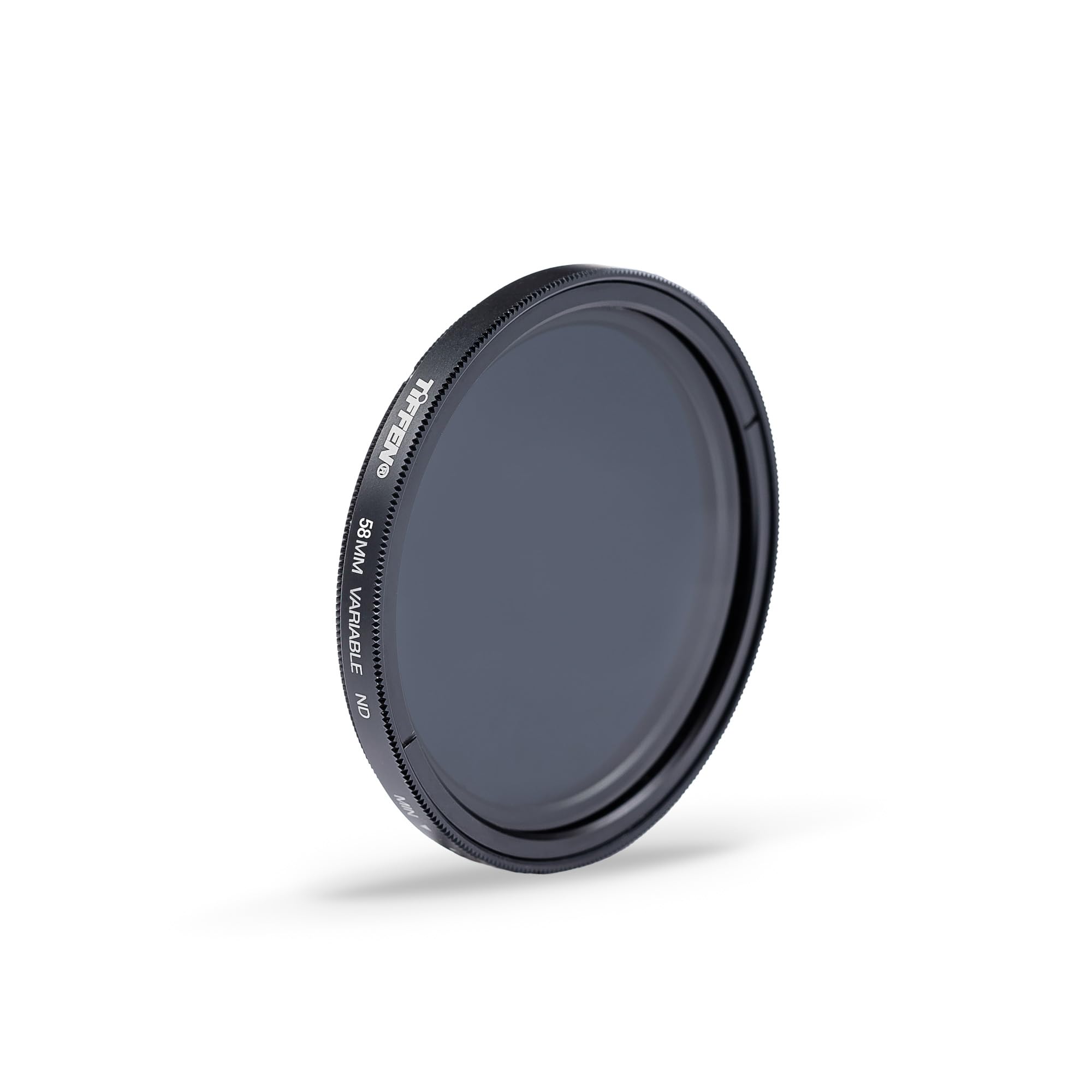
Tiffen's 58mm Variable ND packs ColorCore glass into a single threaded filter that spans 2-8 stops. That reach goes beyond the top pick's 1-5 stop window, which suits a run-and-gun shoot moving from open shade to full sun without stopping to swap filters. The middle of the dial, roughly 2-5 stops, is where the glass does its best work.

Between 2 and 5 stops, exposure changes stay even and daylight video keeps natural color. The darker end adds range, but it behaves like a backup zone rather than a primary working range. The filter remains useful for event and interview work if you plan around that boundary.

Color casts and uneven density appear near the 8-stop end, and the mounting threads can be stiff, so the right buyer is a 58mm video shooter who needs one VND for mixed daylight and stays at or below the 5-stop mark. It is not a match for color-critical filmmakers pushing maximum density or for users with sensitive lens threads.

💡 Keep the ring in the 2-5 stop zone for even density and reserve the 8-stop setting for high-glare emergencies.

Pros

  • Covers 2-8 stops in one threaded filter, so exposure changes don't require swapping glass.
  • Holds color and contrast steady through the middle stop range in sunny outdoor video.
  • Single-filter setup reduces the need to carry multiple fixed ND densities.

Cons

  • Mounting threads can resist smooth engagement.
  • At higher stops, footage can develop a blue tint that is difficult to correct.
  • At the 8-stop setting, vignetting and banding may appear across the frame.
Our verdict

A 58mm VND with real range for outdoor video, as long as you treat the top stops as a reserve and keep the dial in the 2-5 stop working zone.

Check Latest Price
5

Hard-Stop Pro VND for 82Mm

PolarPro PM VND 82mm 2-5

85 /100
Studio Score Strong Evidence

Key details

Stop Range
2-5 stops (ND4-32)
Color Neutrality
Color shifts possible
Thread And Cap Fit
82mm, magnetic case
X-Pattern Behavior
Hard-Stop no-X design
Check Price on Amazon

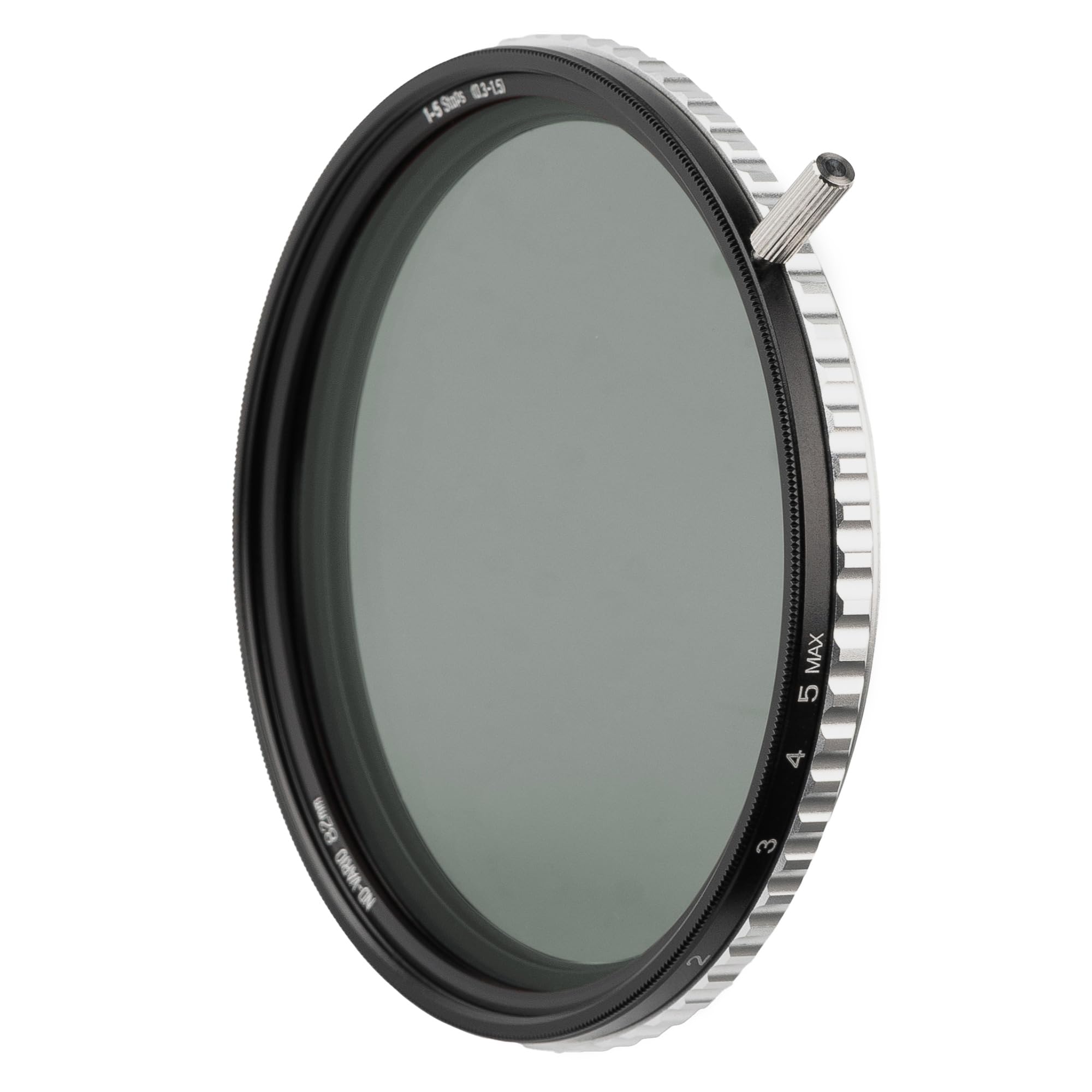
The PolarPro PM VND 82mm is built around a hard-stop system that gives every rotation a firm, repeatable detent, so dialing 2-5 stops on a run-and-gun shoot feels deliberate and consistent. The cinema-grade quartz glass and 16-layer coating produce strong clarity in bright daylight, and the magnetic Defender360 case keeps the filter protected between setups. This is the kind of mechanical polish that makes a filter feel like part of the camera rather than an accessory.

The hard-stop action is the real workflow advantage: you can find the same density by feel, without watching for X patterns or hunting for a smooth position. That mechanical certainty makes it a faster filter to operate than smooth-rotation variable NDs when you're changing exposure between takes. The 2-5 stop range covers the core video densities without dipping into the wider ranges that can introduce X patterns and color casts.

This is for pro creators with 82mm lenses who value repeatable hard stops more than absolute color neutrality. The premium price, possible color shifts, and corner vignetting on ultra-wide zooms are the tradeoffs you accept for this build; color-critical shooters should look at the NiSi true-color option, and budget-conscious shooters may prefer a mid-range VND.

Pros

  • Firm hard stops deliver repeatable exposure changes without hunting for a position.
  • Cinema-grade quartz glass and 16-layer coating hold up well in bright daylight.
  • Magnetic Defender360 case makes quick storage and lens swaps safer on location.

Cons

  • Priced above competing 82mm variable NDs.
  • Wide-angle zooms can show corner vignetting at 24mm.
  • Color neutrality can vary, with a yellow cast possible.
Our verdict

For filmmakers who want their 82mm variable ND to feel as controlled as a follow-focus, this is the filter.

Check Latest Price
6

40.5Mm Beginners

K&F 40.5mm VND ND2-400

90 /100
Studio Score High Confidence

Key details

Stop Range
1-9 stops (ND2-400)
Color Neutrality
Blue/green casts
Thread And Cap Fit
Ultra-slim 7.4mm frame
X-Pattern Behavior
X at high stops
Check Price on Amazon

The K&F Concept 40.5mm VND gives compact mirrorless shooters a slim, low-cost way to control video exposure and motion blur with one standard threaded filter. The 7.4mm frame stays out of the way on small lenses, and the 1-9 stop range covers overcast to bright-sun conditions. The dense end is where the price shows: mixed image quality and color feedback keep it in casual-entry territory rather than professional delivery, and that gap is why the 58mm no-X sibling remains the stronger optical option. Fast or ultra-wide glass can amplify X-pattern and vignetting, so this suits compact kit lenses and moderate stop settings best.

Pros

  • Solid budget performance on compact lenses, with a slim ring that leaves small mirrorless kits easy to handle.
  • The low entry price makes it an affordable first VND for learning motion blur and ND video.
  • One filter spans 1-9 stops, covering sun and shade without changing glass.

Cons

  • Blue or green casts can appear at certain stop positions and stand out in neutral scenes.
  • Sharpness can soften near the dark end on some lenses, so high-stop video may lose fine detail.
Our verdict

For a beginner on a compact 40.5mm lens who keeps the dial away from the densest stops, this is a low-cost way to learn ND video technique.

Check Latest Price
7

77Mm Long Exposure

NEEWER 77mm ND Filter Kit

92 /100
Studio Score High Confidence

Key details

Stop Range
Fixed ND2-ND16
Color Neutrality
Neutral for price
Thread And Cap Fit
77mm, four fixed filters
X-Pattern Behavior
No X; stacking limits
Check Price on Amazon

Four fixed ND densities give 77mm stills shooters a low-cost entry into long-exposure and motion-blur work, with smooth enough threading for beginners. The highest single filter is ND16, so longer daytime exposures require stacking filters together. For video run-and-gun use, there is no variable control, so it cannot adapt on the fly; the NEEWER variable ND+CPL sibling suits that workflow better. Color neutrality holds up at this price, and the fixed stops teach exposure control without guesswork, keeping the kit viable as a training set.

Pros

  • Four filters plus cleaning pen and pouch at a budget price.
  • Fixed stops make long-exposure and motion-blur learning easy, with threading that stays smooth.
  • Stacked filters keep color neutral enough that beginners are not fighting a cast.

Cons

  • Stacking filters to reach higher density can soften detail and add edge shading.
  • Even with all four filters stacked, some very long daytime exposures remain out of reach.
Our verdict

For a 77mm stills beginner learning long exposure, this fixed four-filter kit is a sensible budget starting point; video shooters should pick the variable ND+CPL sibling.

Check Latest Price

How to Choose

Thread and Cap Fit

Thread size is the first compatibility gate: a 58mm filter only mounts on a 58mm lens. VNDs also add a rotating outer ring, so the front thread and cap fit can differ from a standard filter.

If you rely on a factory lens hood or original lens cap, check whether the VND frame leaves room for them. Many shooters switch to a push-on cap or leave the hood off once a variable ND is installed.

Stop Range

A 1-5 stop filter delivers ND2-ND32, enough to shoot wide open in most daylight and keep a 180-degree shutter for natural motion blur. A 1-9 stop filter reaches ND400 by rotating the polarizers much closer to their fully crossed position.

That is where X patterns, banding, and color shifts appear. For video, the smaller range is the practical one.

X-Pattern Behavior

The X is not a defect; it is the physical result of two polarizing elements nearly blocking each other. As the front element approaches perpendicular to the rear element, light is blocked unevenly across the frame, creating a dark cross.

A filter with a hard stop near ND32 prevents you from entering that zone. If a listing says no-X, the stop range tells you whether that claim is believable.

Color Neutrality

Neutral density only works if the density is neutral. Polarizing film and glass coatings can shift the image toward blue, green, or yellow, and the shift becomes more visible as density increases.

For video, a color cast is harder to correct cleanly than a small exposure difference. Filters with true-color coatings and Japanese optical glass generally hold neutrality better through their range.

Build and Hard Stops

A video ND filter gets twisted on every shot change, so the ring needs a firm but smooth drag. Too loose and the density drifts mid-clip; too tight and you introduce gimbal bumps when reaching for the ring.

Hard stops provide a physical endpoint for repeatable exposure settings, which is useful when you need to return to the same density between setups. Metal frames and multi-coated glass handle packing and mounting better than basic plastic.

Frequently Asked Questions