9 Best Monopods of 2026: Locks That Hold Your Camera Steady

The best monopods for mirrorless, telephoto, and video kits depend on lock reliability, not just load ratings. Find the one that holds your camera steady.

Most monopod listings lead with payload ratings and carbon-fiber shafts. After a few shoots, the details that decide whether a support is usable are different: do the leg locks stay tight under a gripped body, and does the foot pivot hold when you lean into a shot?

The practical trade-off is between complete convenience and speed. An all-in-one monopod with a fluid head, base, and quick-release plates is ready for hybrid work; a foot-pedal lock lets you adjust height without taking your eye from the viewfinder. Both approaches work, but they suit different assignments.

Matching the pole to the way you shoot matters more than chasing the longest spec sheet. Quick height changes for event stills, smooth panning for video, long-lens support for wildlife, and ultralight travel all reward different designs. The right support holds your setup firmly and lets you focus on the shot.

1

Best Overall

Avella CD324 Video Kit

89 /100
Studio Score Strong Evidence

Key details

Head Type
Fluid head
Load Capacity
6kg
Max Height Vs Folded
181cm / 70cm
Leg Material & Weight
Carbon fiber, —
Check Price on Amazon

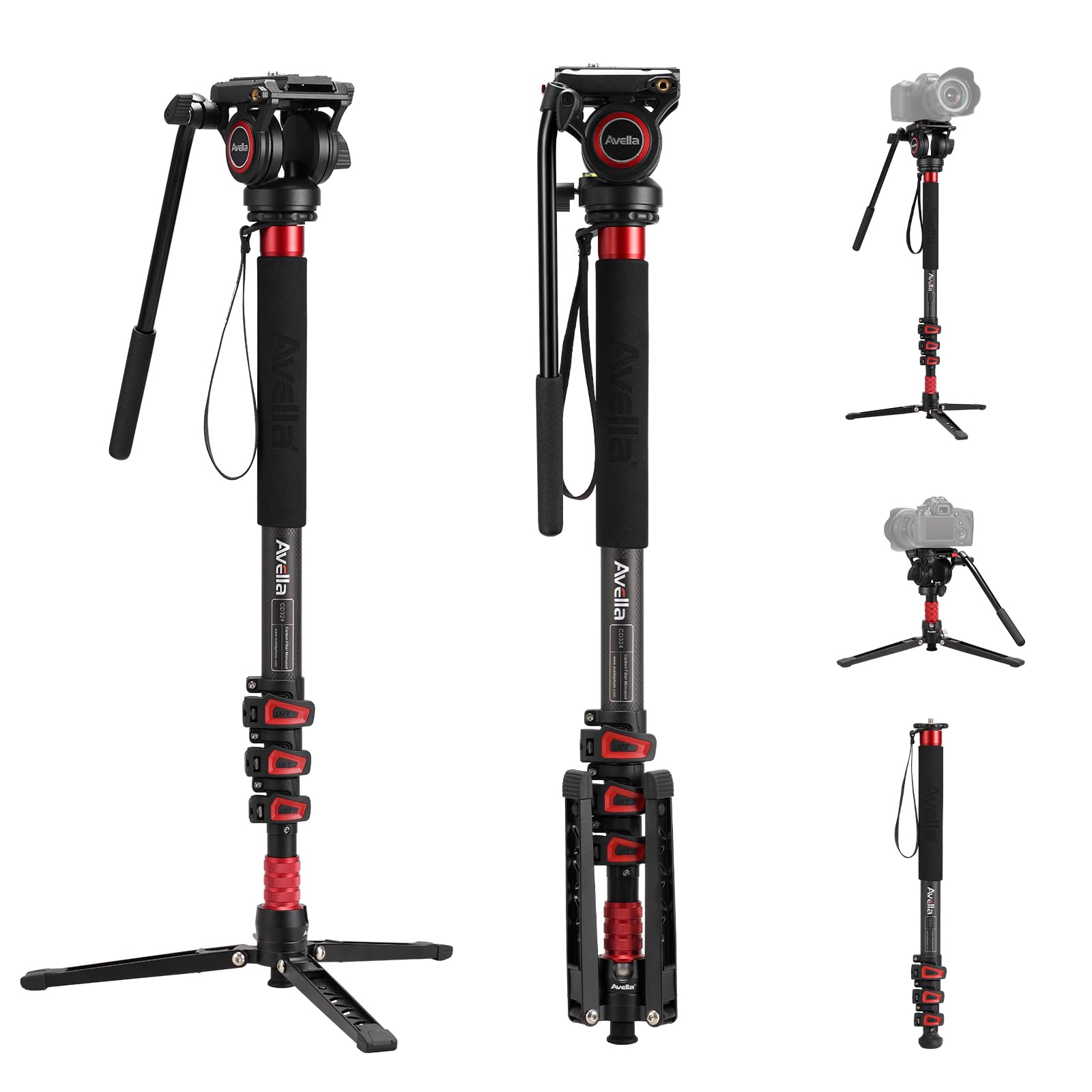
The CD324 bundles a carbon-fiber shaft, fluid head, three-foot support base, QR plates, and carry bag into one ready-to-run video monopod kit. A hybrid shooter can mount a plate, set the drag, and move into event coverage without buying separate head hardware.

The fluid head delivers smooth pan and tilt for tracking shots, and the 6kg load rating covers a typical mirrorless body with a 70-200mm f/2.8 or a compact cinema camera. The carbon body also keeps the carry weight lower than comparable aluminum poles.

The three-foot base steadies static shots, but the base leveling can sit uneven on some units after shipping. Check the base lock before a paid shoot and adjust the feet if needed.

This is for wedding and event content creators who want one package that covers stills and video, as well as first-time video users who prefer not to assemble a head and base separately. It is a monopod with stabilizing feet, not a full tripod, so it won't replace a tripod's independent legs. Shooters carrying 10kg+ telephoto lenses or wanting a bare ultralight pole should look at other options.

Pros

  • Bundles carbon shaft, fluid head, 3-foot base, QR plates, and bag into one package.
  • Carbon body keeps carry weight down while handling typical DSLR and mirrorless rigs.
  • Fluid head delivers smooth pan and tilt for video tracking shots.
  • Three-foot base provides a stable rest for static event and interview setups.

Cons

  • With a 70-200mm or longer lens, wind can push the camera into a slow drift at full extension.
  • Some units ship with leg latches that feel lazy; check each section locks before a shoot.
Our verdict

For event and wedding shooters who want one ready-to-run video monopod, the CD324 delivers the full kit without a separate head or bag purchase.

Check Latest Price
2

Best Premium Pedal-Lock Monopod

IFOOTAGE Cobra 3 C180F-P

88 /100
Studio Score Strong Evidence

Key details

Head Type
No head
Load Capacity
8kg
Max Height Vs Folded
180cm / 69cm
Leg Material & Weight
Carbon fiber, 1.27kg
Check Price on Amazon

The IFOOTAGE Cobra 3’s foot-pedal 360° lock is the reason to pick it over the all-in-one carbon kit that leads this comparison. One foot releases the pan, leaving both hands on the lens during sports and wildlife action. The carbon column weighs 1.27 kg and carries an 8 kg load, so it travels well for a support that can stay beside you all day.

This monopod suits sports, wildlife, and wedding shooters who want to swing the camera without resetting a ball head, plus travel videographers who like the 3-in-1 flexibility of a monopod, mini base, and QR plate. Use the pedal lock when you need a rigid hold; the unlocked foot-pan is for movement, not static support. It is not a full-size tripod substitute, and casual buyers who rarely foot-pan will be paying for a feature they won’t use.

The lengthened feet give the base a wider footprint than standard monopod boots, which is noticeable on grass and uneven sidelines. Build quality shows in the leg-lock tension and pedal action; the column feels solid with a heavy camera and telephoto lens. The 8 kg load rating leaves room for heavier glass, and the mini tripod base adds a ground-level option without a separate support in the bag.

Pros

  • Foot-pedal lock gives 360° panning with one foot, so hands stay on the lens during action.
  • Carbon construction keeps carry weight at 1.27 kg while supporting an 8 kg camera and lens combo.
  • Lengthened feet widen the base for steadier ground contact than a standard monopod boot.
  • Mini tripod base and QR plate cover monopod and ground-level setups in one package.

Cons

  • Premium pricing places it above entry-level carbon poles, so casual shooters pay for pedal speed they may not use.
  • At full extension with the pedal released, the base can sway; the pedal lock adds rigidity but stops one-foot panning.
  • Base assembly has needed replacement in some cases, so check the pedal lock and foot screws on arrival.
Our verdict

Sports and wildlife shooters who want one-foot panning with a stable carbon column will get more from this than from a bundled kit.

Check Latest Price
3

Best Ball-Head Monopod for Still Photography

SmallRig Carbon Ball Head

83 /100
Studio Score Strong Evidence

Key details

Head Type
Ball head
Load Capacity
15kg leg, 5kg head
Max Height Vs Folded
166.5cm / 68cm
Leg Material & Weight
Carbon fiber, 1.73kg
Check Price on Amazon

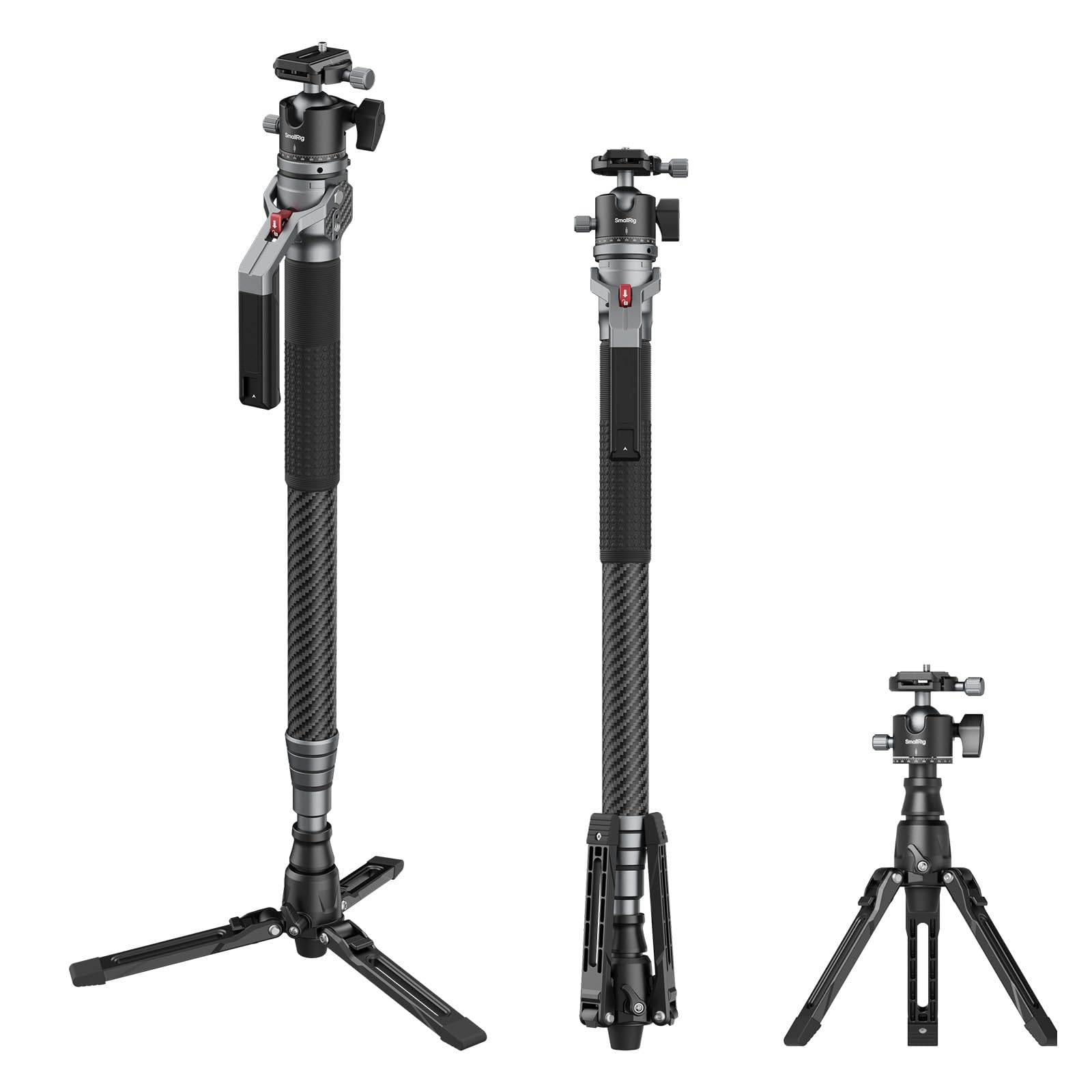
The SmallRig Carbon Fiber Ball Head Monopod pairs a one-hand height lock with an included ball head, so event and sports photographers can raise or lower the support without mounting a separate head. Bare carbon poles in this category require owning and attaching a head before the camera is ready to fire.

The carbon shaft and alloy hardware carry a 15 kg leg rating and 5 kg head rating, which covers DSLRs and mirrorless bodies with telephoto zooms. The ball head locks firmly for still framing and loosens for quick tilt adjustments. Folded length is 68 cm and max height reaches 166.5 cm, so most standing shooters can frame without hunching.

The one-handed lock changes how you work between shots: release, set new height, re-lock without taking your eye from the finder. That suits sideline sports and packed event rooms where a tripod setup would slow you down.

This fits shooters who want a ready-to-shoot support at eye level: event coverage, sideline sports, and wildlife photography. It is not the choice for videographers who need fluid movement. Since units can vary at the factory, check the leg locks and ball-head clamp plate before a paid shoot.

💡 A padded shoulder strap makes the monopod easy to carry between shooting positions.

Pros

  • Faster height changes than a twist-lock pole during event and sports work.
  • A solid ball head and carbon shaft support DSLR and mirrorless telephoto setups without extra accessories.
  • Packs to 68 cm and extends to 166.5 cm, covering standing eye-level shots from a shoulder carry.

Cons

  • Carbon fiber still lands at 1.73 kg, so hikers expecting an ultralight pole will notice it in the pack.
  • Leg locks and the ball-head clamp plate can arrive with minor looseness in some cases.
Our verdict

For stills-focused event and sports photographers, this monopod puts a ball-head camera support on a one-hand height lock and skips the video-centric fluid head entirely.

Check Latest Price
4

Best Professional Video Monopod

Manfrotto XPRO+ Video

89 /100
Studio Score Strong Evidence

Key details

Head Type
500-series fluid head
Load Capacity
—
Max Height Vs Folded
203cm / 78cm
Leg Material & Weight
Aluminum, 4.6lb
Check Price on Amazon

The XPRO+ Video Monopod is the one-piece video support in this lineup that builds smooth pan/tilt directly into the pole: a 500-series fluid head sits on an aluminum shaft with a FLUIDTECH base, so event shooters can track a subject without adding a separate head.

Fluid drag on both head and base is why this beats a bare carbon pole for video. Pan and tilt stay even through the movement range, and the three-way swivel lets you pivot the foot for low shots without lifting it. The tradeoff is physical: this is a video support, not a hiking stick.

This is for wedding and event videographers, documentary run-and-gun shooters, and content creators who need controlled fluid motion from a single leg. If your goal is ultralight travel or photo-only work, a slimmer pole without a head is the better fit; it runs heavier and taller than travel monopods. Normal handling is stable, but a hard drop can damage leg-latch or base hardware in isolated cases.

The FLUIDTECH base supports sweeping pan moves from a planted foot, and the 203 cm max height clears standing eye level for most operators.

💡 Keep the leg locks snug before each event; a quick twist of each collar prevents play from developing.

Pros

  • Integrated 500-series fluid head and FLUIDTECH base deliver smooth pan and tilt for event video.
  • Head and base work as one unit, so run-and-gun videographers get fluid motion without a separate head.
  • Three-way swivel keeps the foot planted while the shaft angles for low or working-height shots.
  • Aluminum shaft reaches 203 cm, enough for standing coverage of ceremonies and events.

Cons

  • At 4.6 lb and 78 cm folded, it is heavier and taller than travel-oriented monopods.
  • Latch-pad wear can appear after repeated heavy use; normal handling otherwise stays stable.
Our verdict

This is the monopod for event and documentary videographers who want fluid motion without a separate head; leave it home when the goal is a light travel stick.

Check Latest Price
5

Best Budget Travel/Hiking Monopod

ULANZI TB12 Travel Monopod

91 /100
Studio Score High Confidence

Key details

Head Type
No head
Load Capacity
5kg
Max Height Vs Folded
155cm / 43cm
Leg Material & Weight
Aluminum, 378g
Check Price on Amazon

A 378-gram aluminum pole with a 43-centimeter folded length and a walking-stick mode sets the ULANZI TB12 apart from the all-in-one carbon kit at the top of this list. It is the budget pick for shooters who want a monopod that already has a hiking purpose before it becomes a camera support.

Five sections telescope to 155 centimeters, and the rated 5-kilogram load covers compact mirrorless bodies and small telephoto lenses. The aluminum build feels firmer than its price tier suggests, and the short folded length keeps it easy to carry in a daypack.

The walking-stick mode turns this from a simple camera support into a dual-purpose trail tool: it keeps pace on a hike and then steadies a camera without adding a second piece of gear to your bag.

The TB12 fits hikers and travelers carrying compact or mirrorless cameras who want a secondary support and don't need heavy-DSLR rigidity. For that buyer, the detachable foot and connector deserve a quick retighten before long hikes. Shooters with large telephoto lenses will find better support in the heavier carbon options in this roundup, but anyone keeping loads light gets a capable travel stick for a budget price.

Pros

  • Budget-friendly price for a five-section aluminum camera support.
  • 378-gram weight and 43-cm folded length fit a daypack without notice.
  • Dual-purpose as a camera monopod and a hiking stick.
  • Sturdy feel for the entry-level price class.

Cons

  • On rocky trails, the detachable foot spike and connector can loosen; retighten before setting out.
  • Under tension from a mounted camera, the plastic tensioners can wear out after about a month of use.
Our verdict

A light, low-cost support for compact-camera hikers who want one pole to walk with and shoot from.

Check Latest Price
6

Best Heavy-Lens Monopod

Sirui AM-404FL

84 /100
Studio Score Strong Evidence

Key details

Head Type
No head
Load Capacity
12kg
Max Height Vs Folded
193cm / 58cm
Leg Material & Weight
Aluminum, 2.1kg
Check Price on Amazon

Sirui's AM-404FL is built around load capacity: the aluminum column holds 12kg and stays steady under 100-400mm and 200-800mm telephoto setups. The detachable 3-foot base adds low-angle shooting and 360° panning without a second support. Carbon poles in this set save pack weight, but none offer this load headroom at this budget. The maximum height reaches 193cm, which suits standing eye-level work.

The quick-release plate is fast in the field: slide a plate in, lock it, and move between handheld and supported positions without hunting for screws. The 3-in-1 base doubles as an extension rod or low-angle support, which matters when a bird or animal drops below eye level. The 58cm folded length keeps it manageable for car-based or short walks. The 360° pan ring makes it easier to track a moving subject without resetting the base.

This is the right support for photographers carrying 100-400mm or larger lenses who want a stable base on uneven ground and a low-angle option. At 2.1kg it is not a hiking pole, and it lacks a fluid head for video. Before attaching a heavy lens, check the QR collar and reversible stud: a unit can arrive with loose mounting hardware.

Pros

  • High load capacity keeps long telephoto lenses steady enough for active shooting.
  • Quick-release plate speeds up transitions between supported and handheld shooting.
  • Detachable base expands the pole into low-angle support or extension-rod duty.

Cons

  • At 2.1kg, the aluminum build is heavier than carbon travel poles for long walks.
  • The quick-release collar can arrive loose, so mounting hardware needs a check before use.
Our verdict

For long-lens shooters who can accept 2.1kg, this is the practical low-angle monopod in the aluminum tier.

Check Latest Price
7

Gimbal Rig Users

NEEWER TP71 Video

86 /100
Studio Score Strong Evidence

Key details

Head Type
Fluid head
Load Capacity
6kg
Max Height Vs Folded
182cm / 72cm
Leg Material & Weight
Carbon fiber, —
Check Price on Amazon

The TP71 is built around DJI RS gimbal quick-switching: the QR plate mates directly with RS2/RS3/RS3 PRO mounts, and the carbon-fiber leg with a 6 kg fluid head keeps the package ready for both gimbal and tripod modes. The adjustable multi-angle base helps on uneven ground, though the base can wobble when you lean into active pans — verify it holds before sideline sports work. This is a specialized hybrid tool rather than a complete-kit rival to the top pick: you pay for gimbal-specific QR speed and a fluid head in one pole, not for a bag or multiple mounting options. For shooters who want one monopod that bridges a DJI RS gimbal and a video tripod setup, this fits.

Pros

  • The DJI RS quick-release plate makes gimbal-to-tripod switching fast without rebalancing.
  • Carbon-fiber build and a 6 kg fluid head give a stable platform for hybrid kits.

Cons

  • The fluid head can feel stiff or slow when starting a pan, which slows down run-and-gun movement.
Our verdict

This is the monopod for shooters who live in a DJI RS workflow and want one transportable pole with a fluid head when the gimbal isn't the right tool.

Check Latest Price
8

Travel, Birding Shooters

Manfrotto 290 Carbon

87 /100
Studio Score Strong Evidence

Key details

Head Type
None included
Load Capacity
10kg
Max Height Vs Folded
151cm / 49cm
Leg Material & Weight
Carbon fiber, 0.5kg
Check Price on Amazon

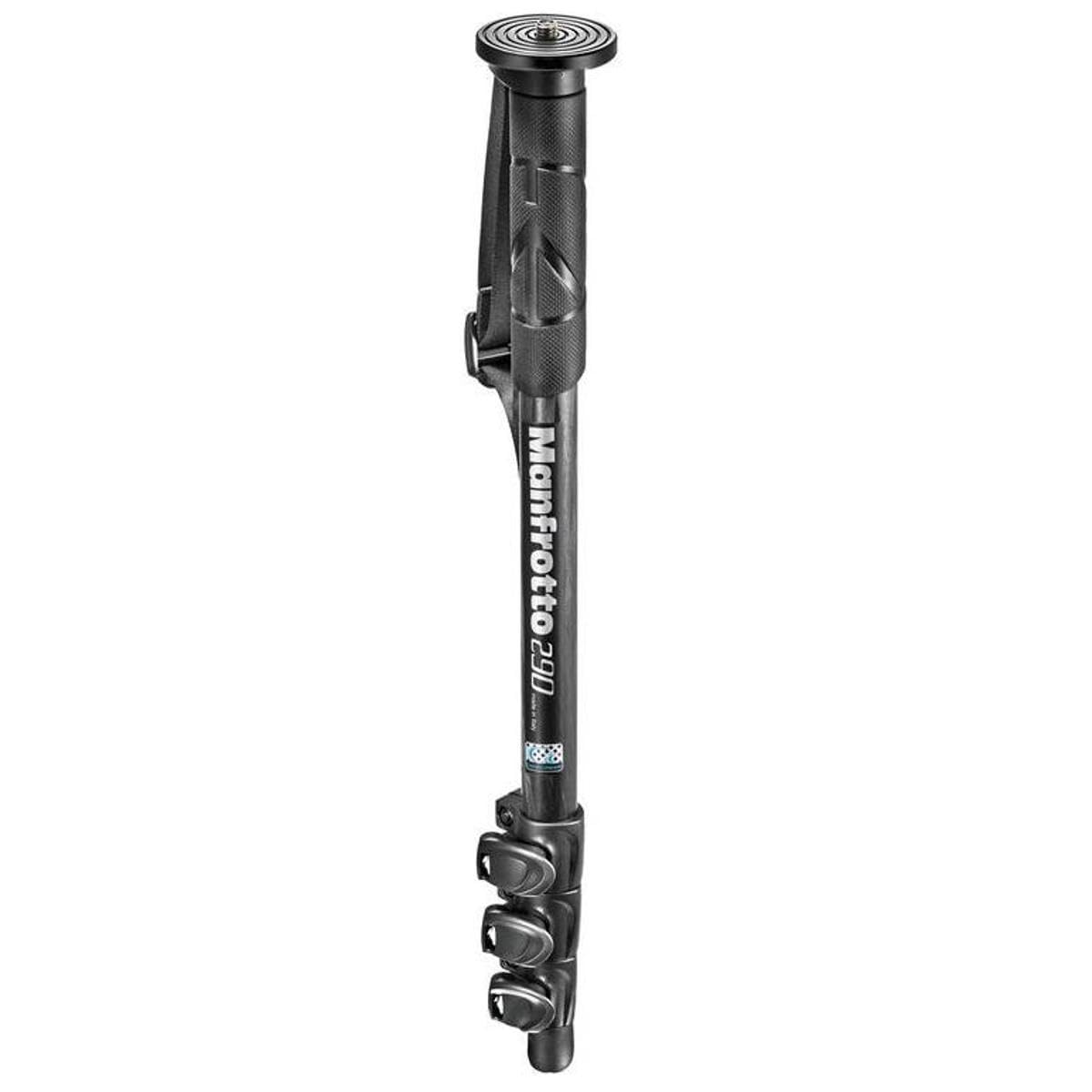
The 290 Carbon's 0.5kg shaft and 10kg load rating make it a light platform for 400mm-class telephoto work, and the 49cm folded length packs into a travel bag without taking over. The carbon build stays comfortable to carry during long birding walks, which is where this pole earns its keep.

It is a bare carbon pole rather than a ready-to-shoot monopod, and the 151cm max height means tall photographers will need their own ball head and a lower stance. These limitations leave it in also-consider territory, but for pairing with existing camera-locking hardware, the portability payoff is clear.

Pros

  • Carbon shaft weighs 0.5kg and is easy to hand-carry on long shoots.
  • Rated for a 10kg load, so a 400mm DSLR lens fits the working range.
  • Folded length of 49cm makes it genuinely easy to pack for travel.

Cons

  • No head included, so direct camera mounting locks portrait and landscape orientation.
  • Max height of 151cm can leave taller shooters below eye level.
Our verdict

For travel and birding photographers who already own a ball head, this carbon pole is the lightweight, packable support to grab.

Check Latest Price
9

Travel, Compact Mirrorless

K&F Concept MS16

82 /100
Studio Score Strong Evidence

Key details

Head Type
No head
Load Capacity
5kg
Max Height Vs Folded
160cm / 43cm
Leg Material & Weight
Aluminum, 395g
Check Price on Amazon

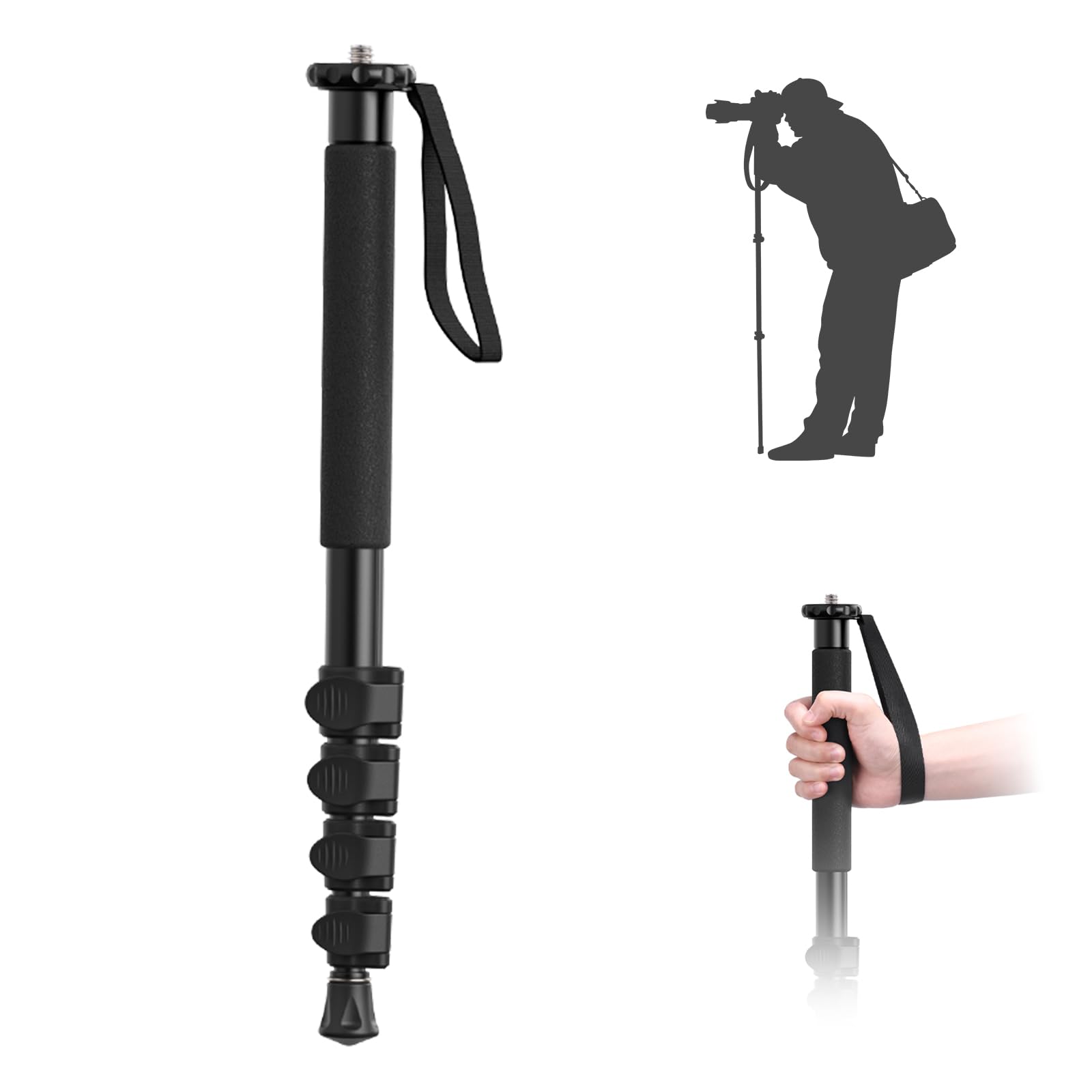
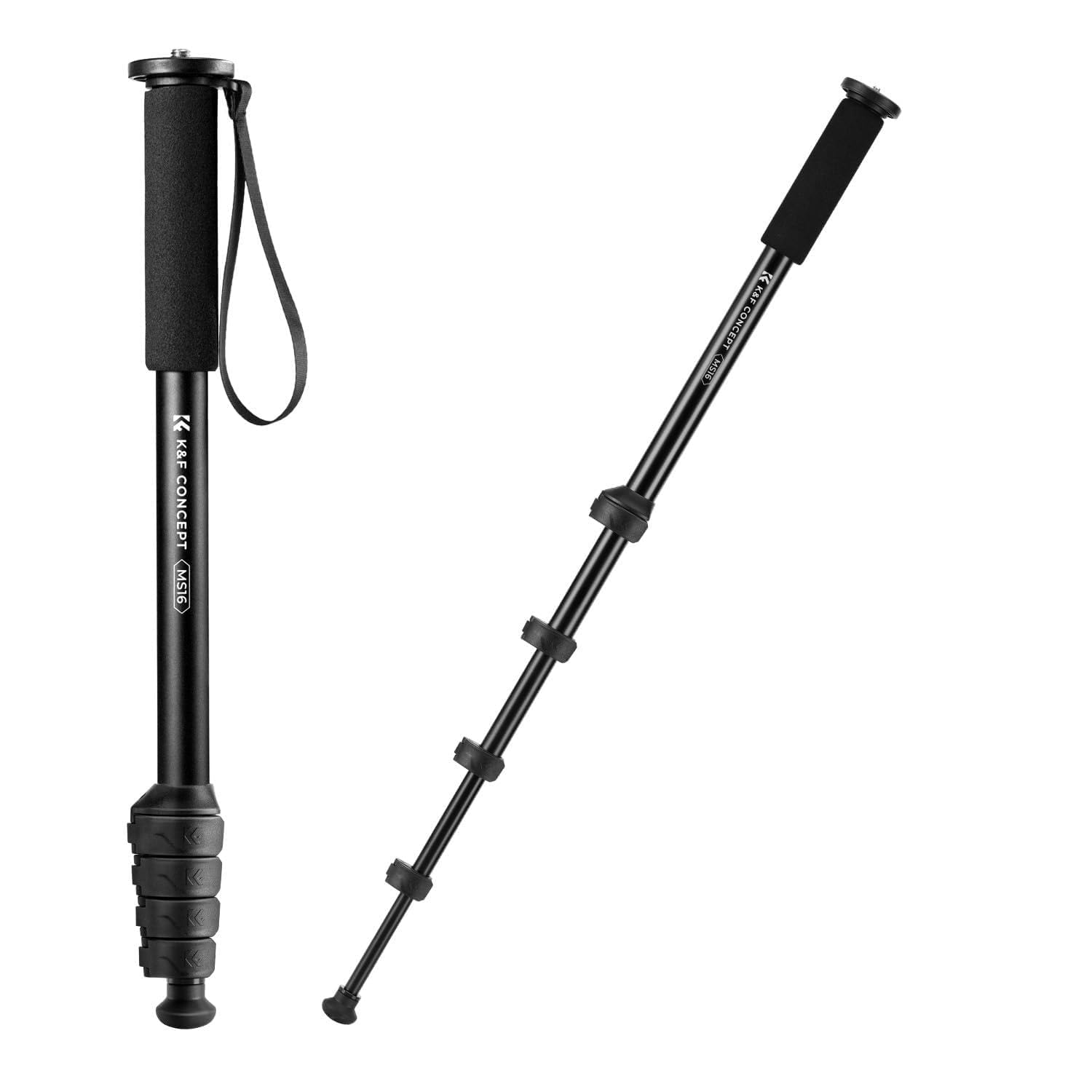
At 395 g and 43 cm folded, the MS16 rides in a daypack without adding noticeable weight, and the aluminum build feels good for the money. Its five-section design and 2-in-1 foot suit a compact mirrorless camera on hiking trails. The lower sections can flex at full extension, so this stays a budget travel stick for moderate-height use rather than a tall support. Beginner nature photographers get an easy-to-operate stick for a light body and small zoom. It also folds shorter than the dual-purpose hiking-stick option in this roundup.

Pros

  • Light 395 g body and 43 cm folded length make it easy to carry on the trail.
  • Aluminum build feels good for the price on a compact mirrorless setup.
  • 2-in-1 rubber/metal foot adapts to indoor floors or outdoor ground.

Cons

  • Heavy telephoto lenses can push past this pole's stiffness range, so large glass is a poor match.
  • At 160 cm max height, taller shooters may end up hunching over the viewfinder.
Our verdict

Pick this up for a hiking kit built around a compact camera and a light zoom; it does that job without weighing you down.

Check Latest Price

How to Choose

Leg Material and Weight

Carbon fiber saves weight only when the rest of the package keeps up. A carbon shaft paired with a steel base, fluid head, and quick-release plates can weigh as much as aluminum, so check total weight rather than the tube material. For hikers, every 100g matters over a full day; for event work, the difference between 1.3kg and 2.1kg matters less than the stability it buys.

Max Height vs Folded Size

Maximum height and folded length pull in opposite directions: more sections make a shorter folded stick but add flex points and setup friction. A five-section monopod slips into a carry-on, but its thinner lower sections are the first to bend under a heavy lens at full extension.

Choose the shortest folded length that still lets you shoot comfortably without extending the smallest sections under load.

Load Capacity

Load ratings are leg ratings, not real-world limits. A monopod rated for 15kg can still sway with a 2kg camera if the head, locks, and base flex independently. Pay attention to how the rated load is split: a ball head rated for 5kg is the ceiling for a camera on a 15kg leg set.

For long telephoto work, look for a substantial base and a head or QR system that does not become the weak link.

Head Type

Ball heads give fast one-handed re-framing for stills but don't produce smooth video pans. Fluid heads use damped drag to move a camera evenly, which is why run-and-gun videographers accept the extra weight.

If you shoot both, choose the mount by your dominant use or pair a bare pole with your own head.

Locks and Base Stability

Locking hardware is the first thing to loosen or the last thing you notice when it works. Flip locks are quick but collect debris and lose grip as cams wear; twist locks are cleaner but slower and can jam if overtightened.

The base and feet matter just as much: a small pivot foot lets you angle the pole, but it must lock solidly or it will sway during a fast pan.

Frequently Asked Questions