9 Best Heavy-Duty Tripod of 2026: Leg Locks That Actually Hold

The best heavy-duty tripods for shooters who need leg locks and fluid heads that stay solid under real loads, not just high load numbers.

The search for a heavy-duty tripod usually starts with load capacity, but the number on the spec sheet is only part of the story. A tripod rated for 17.6 lb can still sway under a long lens if its leg locks are plastic or its head connection is loose. Real rigidity comes from the leg-lock design, the bowl/base joint, and how well the head is damped.

The main fork is fluid head vs ball head. If even occasional video pans matter, a fluid head is worth the extra cost and weight; a ball head cannot produce controlled pans no matter how high its load rating is. If you shoot stills and travel heavy, a high-capacity ball-head tripod with solid locks may fit better.

The right pick depends on whether video pans, portability, or raw load capacity comes first; choose the trade-off you can live with.

1

Best Overall Heavy-Duty Tripod

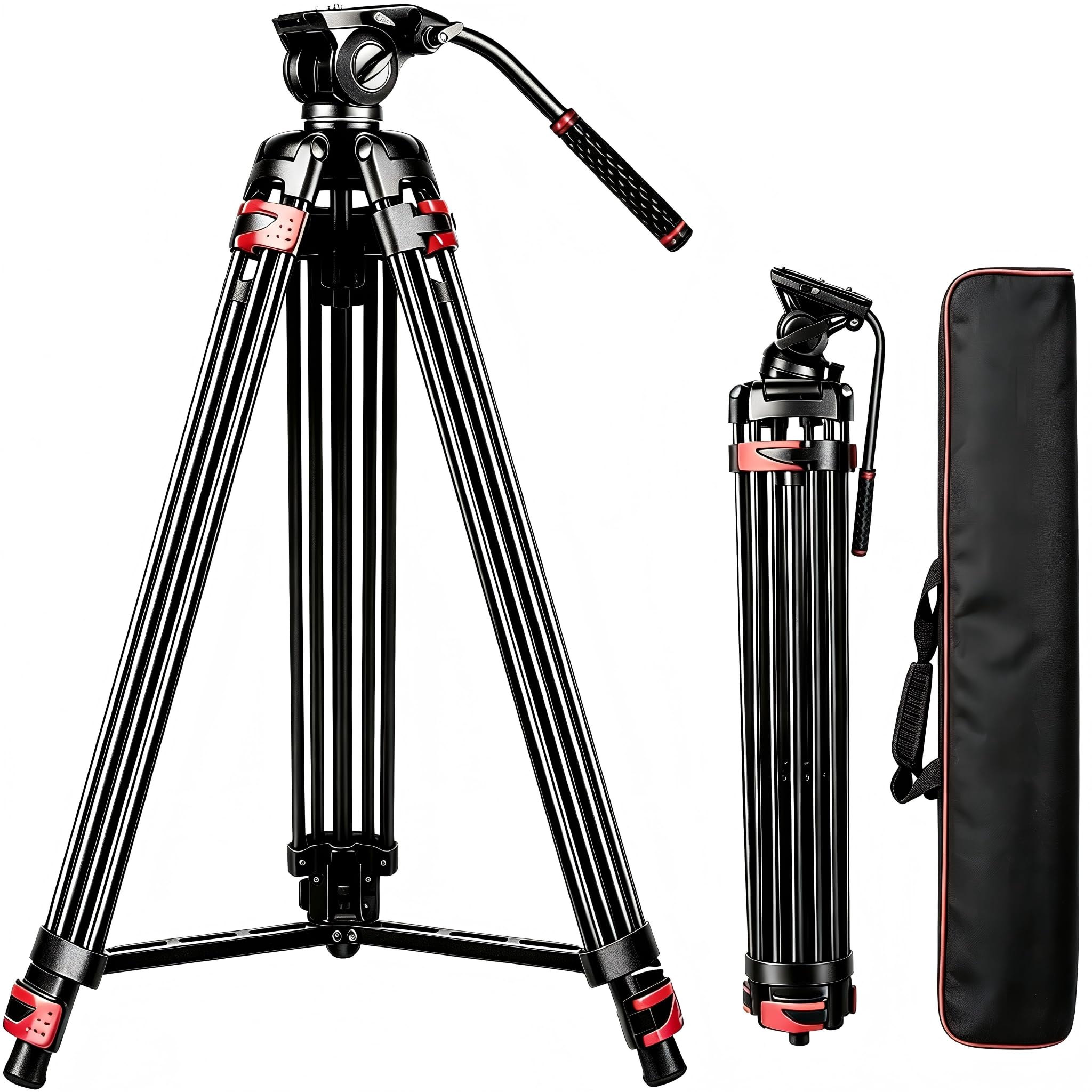
NEEWER TP74 Video Tripod

93 /100
Studio Score High Confidence

Key details

Weight
10.9 lb
Max Load
17.6 lb
Head Type
Fluid drag pan head
Height Range
34-74 in
Check Price on Amazon

The TP74 pairs a 75mm bowl fluid head with dual QR compatibility and steady legs, giving hybrid shooters a single full-size tripod for photo and video. The head’s damped drag keeps pans smooth, and the machined bowl-to-leg connection keeps the camera platform locked when you switch from stills to motion. With a large telephoto zoom mounted, the legs stay planted and resist the flex lighter tripods show.

On uneven asphalt, the tripod holds a leveled horizon without re-adjusting all three legs. The dual QR plates matter once you own a gimbal: the same baseplate slides into the tripod head, so swapping between stabilizer and sticks takes seconds instead of a screwdriver. That is the kind of workflow detail that keeps this tripod on a working shooter’s kit.

This is aimed at serious video/photo hybrid shooters who move heavy mirrorless or DSLR rigs and can transport a tripod in a car or production bag. The 10.9 lb frame is the boundary — it buys stability, but this is not a backpacking or one-bag travel tripod, and height changes take more time than flip-lock rivals. If your work is planned sessions rather than quick run-and-gun setup, that tradeoff is easy to absorb.

The head-to-leg junction is where cheap video tripods develop play; the TP74 uses a 75mm bowl and locking collar that hold tight under load. The damped fluid head returns to center without drifting, so locked-off shots keep their framing shot after shot. It is a premium-priced support, but the head feel and leg rigidity are what make it worth the investment for this buyer.

💡 Use the 75mm bowl for minor leveling instead of re-adjusting each leg.

Pros

  • 75mm bowl fluid head delivers smooth damped pans with predictable control.
  • Heavy mirrorless and DSLR bodies with long lenses stay steady on the legs.
  • Dual QR plates let you move from a gimbal to the tripod without changing baseplates.
  • Machined aluminum frame feels dense and precise for its price class.

Cons

  • Height changes take more rotations than flip-lock rivals, which slows multi-height event work.
  • Carrying the 10.9 lb frame over distance is noticeable; this is a car-rig tripod, not a hiking tripod.
Our verdict

For heavy hybrid kits, the TP74 delivers the fluid-head control and steady legs this purchase is really about.

Check Latest Price
2

Best Value Video Tripod

Cayer BV30L

93 /100
Studio Score High Confidence

Key details

Weight
8.8 lb
Max Load
13.2 lb
Head Type
Fluid head (K3)
Height Range
33.4-72.5 in
Check Price on Amazon

The BV30L pairs a K3 fluid head and a 72.5-inch maximum height in a video tripod aimed at budget-conscious shooters. It also ships with two quick-release plates, which gives DSLR and compact camcorder users a professional-feeling support for event work without the cost of dedicated pro video tripods.

Fluid-head damping stays smooth through pans and tilts with DSLR and compact camcorder kits, and the 33.4-inch minimum height covers low-angle framing that expands shooting positions beyond eye-level only. The leg locks hold position during adjustments, so the frame stays composed when the head is in motion.

The 72.5-inch top height gives tall shooters a comfortable standing position, and the second QR plate keeps camera swaps quick when you need to move between a camera body and a compact camcorder. That reach keeps the head at a useful working height for interviews and event setups.

This tripod fits budget-conscious videographers working with DSLRs, compact camcorders, and small mirrorless rigs in event or interview settings. The 13.2-lb max load is lower than true heavy-duty rivals, so it is not the support for cinema cameras or large studio builds. Compact camcorder users get the most from the fluid head because the load stays inside the rated capacity.

Pros

  • K3 fluid head gives smooth pan and tilt for DSLR and compact camcorder video.
  • Two quick-release plates speed up camera swaps during event coverage.
  • 72.5-inch maximum height suits tall shooters and standing-eye interview setups.
  • Build quality reads as professional for the price, with stable leg and head connection.

Cons

  • Horizontal pan can feel sticky until the drag is set, so smooth moves take practice.
  • The 8.8-lb frame can feel heavy on a long carry; stable legs are the payoff.
Our verdict

For event shooters running DSLR and compact camcorder kits, the BV30L covers the fluid-head video support they need without a premium price.

Check Latest Price
3

Best for Heavy Loads & Travel

Victiv H85 80" Tripod

88 /100
Studio Score Strong Evidence

Key details

Weight
3.8 lb
Max Load
35 lb
Head Type
Ball head
Height Range
18.5-80 in
Check Price on Amazon

A 35-lb rated capacity in a 3.8-lb frame makes this the strongest lightweight option among the full-size tripods here. The five-section legs extend to 80 inches, the center column reverses for low-angle and macro shots, and one leg detaches into a monopod. That spread of configurations gives it a practical edge over fixed-form tripods when the plan shifts from trail to studio.

That profile fits travel and hiking stills photographers, birders, and spotting-scope users who want a monopod without carrying a second support. This is a photo-first head: video panning is not fluid, so video shooters should focus on the fluid-head options in this set. The multi-section twist locks can loosen under hard use — a checkpoint before long shoots rather than a reason to pass on this tripod.

A reversible center column lowers the camera to 18.5 inches for ground-level work, and the detachable leg becomes a monopod in seconds. The H85 carries heavier mirrorless and DSLR rigs within its 35-lb rating, and it does so in a package that fits a daypack routine. It is not an ultra-compact minimalist travel pod, but it brings full-size support to hikers who don't want to carry a heavier base.

Pros

  • Professional-quality build at a mid-range price, with leg locks and head that feel more expensive than the tag suggests.
  • Sturdy for a 3.8-lb frame, with enough rigidity for heavier mirrorless and DSLR kits.
  • Tripod, monopod, low-angle, and macro modes let one kit stretch across multiple shooting styles.

Cons

  • Ball-head clamp can loosen while panning if left less than snug
  • Twist locks on the five-section legs can work loose over time, so a quick snug-down before long sessions is wise.
Our verdict

The H85 is the pick for stills shooters who want full-size capacity from a hiking-friendly frame, with a monopod and low-angle modes that stretch the same kit.

Check Latest Price
4

Best Budget High-Capacity Fluid Head

COMAN FF16LS Tripod

89 /100
Studio Score Strong Evidence

Key details

Weight
—
Max Load
22 lb
Head Type
Fluid head
Height Range
32.7-73.2 in
Check Price on Amazon

The COMAN FF16LS puts a 22-lb load rating, a 60mm bowl, and a fluid head behind budget event video rigs that a lower-capacity value rival can't hold. Dual-tube legs and a 74-inch working height give heavier DSLR and camcorder packages a planted base without moving up to cinema-priced support. For event shooters, the frame stiffness at this price is the headline.

The fluid head responds with enough control for interview and event pans, and the dual-tube legs stay predictable with the rig near the 22-lb ceiling. Setups on uneven floors are helped by the adjustable three-section legs. This is a working tripod for the field, not a showpiece head.

The same frame handles location stills too; the fluid head lets you frame precisely without fighting a ball head's flop. For small production teams, it is a multi-use support that can move from photo to video between setups.

This is for budget event video shooters and semi-pro users who need extra load margin for heavier DSLR and camcorder rigs. Bolt and latch QC can vary, and one leg may not lock consistently in some units, so checking fasteners and leg locks before a paid session is part of ownership. Users expecting flawless out-of-box operation should budget for that inspection time.

Pros

  • Dual-tube legs and a 22-lb load ceiling give heavier DSLR and camcorder rigs a stable base.
  • Fluid head controls pans and tilts well enough for interviews and event coverage without budget head wobble.
  • The 60mm bowl and 74-inch working range add useful flexibility on uneven event floors.
  • Build stiffness for the money is strong enough that a heavy rig stays planted in breezy outdoor shots.

Cons

  • Shooters packing light will find the dual-tube legs and 74-inch reach a car-to-set proposition, not a backpack companion.
  • If you already own 75mm-bowl accessories, the 60mm bowl won't swap them over.
Our verdict

Budget event teams with heavy mirrorless or camcorder rigs get a genuine 22-lb ceiling and a fluid head in one tripod without paying pro rental prices.

Check Latest Price
5

Best Tall Heavy-Duty Value

NEEWER TP-M200

91 /100
Studio Score High Confidence

Key details

Weight
12.43 lb
Max Load
17.6 lb
Head Type
Fluid drag head
Height Range
34.6-78.7 in
Check Price on Amazon

The NEEWER TP-M200 reaches 78.7 inches and supports 17.6 lb with a fluid drag head, giving tall event and studio shooters video-smooth panning at a lower price than the top pick. The three-section legs lock solidly, and the head holds position during pans, which is what a camera rig needs on an event floor. This is a full-size support that does not feel like a budget stand-in.

This is for tall event and studio videographers working with DSLR or camcorder kits who need eye-level framing without an extended center column. The 12.4-lb body is the tradeoff for that height and stability, so it is not an ultralight travel piece; the head-to-leg joint can also loosen over time, making a quick check before a long shoot part of the routine.

Compared with the top pick, the TP-M200 skips the 75mm bowl and the finer pan-drag tuning, which keeps the price down. The tradeoff is easy to live with for straightforward event video: set the drag, lock the legs, and the fluid head delivers usable pans without the refined head of the flagship. Shooters who need interchangeable heads or precise drag control will want to budget for the higher-tier model, but for direct DSLR and camcorder work this is the taller value pick.

Pros

  • Build quality holds up at a mid-range price, with firm leg locks and no obvious weak points.
  • Sturdy stance keeps 17.6-lb rigs stable during pans and locked-off shots.
  • Fluid drag head delivers smooth pan and tilt movement for video work.
  • Full-size height and load capacity pack strong value into a mid-range price.

Cons

  • The 12.4-lb frame is a carry-around-venue tripod, not a hike-to-location piece.
  • The head-to-leg joint can work loose through regular use, so re-tightening before a long shoot is worth doing.
Our verdict

Tall event and studio shooters who want 78.7 inches of reach, a 17.6-lb load rating, and fluid drag without flagship pricing will find exactly that here.

Check Latest Price
6

Tall Heavy Rigs

MACTREM VT72 Tripod

85 /100
Studio Score Strong Evidence

Key details

Weight
9.8 lb
Max Load
33 lb
Head Type
Fluid head
Height Range
82 in max
Check Price on Amazon

The MACTREM VT72 gives tall shooters an 82-inch fluid-head support with a 33-pound load rating, and the three-section legs feel rigid under heavy DSLR and camcorder setups. It suits fixed studio or outdoor positions where height and capacity matter more than packing light. The tradeoff appears in two places: the pan and tilt have no drag/tension adjustment for fine-tuning, and the leg locks can loosen with use, so a quick check before long shoots is worthwhile. That combination keeps it behind the runners in this set, which offer better damping and more consistent lock-up for a similar mid-range budget.

Pros

  • Rigid 82-inch frame handles heavy DSLR and camcorder rigs in fixed positions.
  • Metal-heavy construction gives a professional feel without a premium price.
  • Three-section legs set up quickly for studio or outdoor shoots.

Cons

  • Pan and tilt damping is fixed, so drag can't be tuned for different payloads.
  • Leg locks can loosen with use and may need periodic re-tightening.
Our verdict

For tall shooters whose heavy rigs stay in one spot, the VT72 delivers the height and capacity without the price of a premium video tripod.

Check Latest Price
7

Studio Video

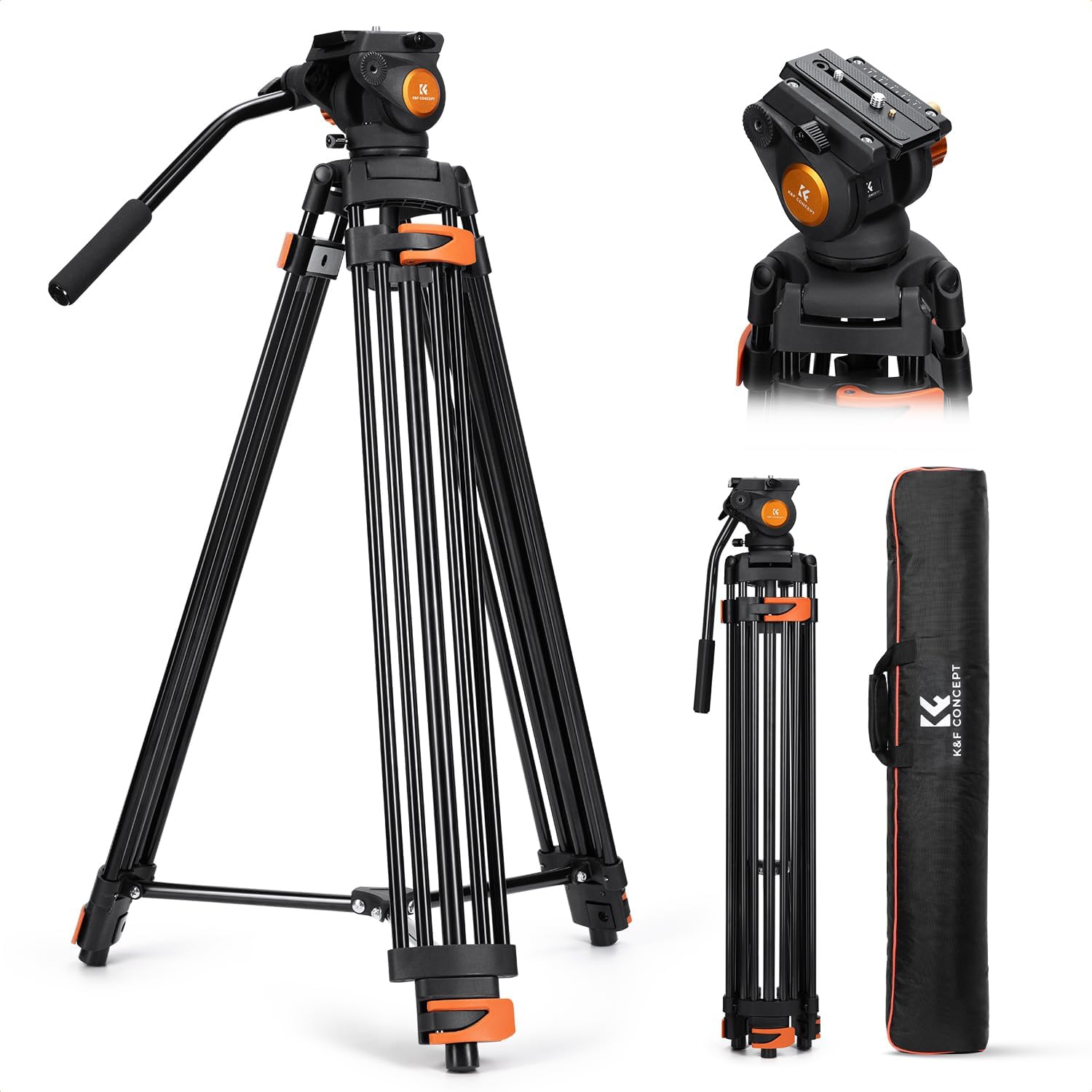
K&F Concept VA3+BV70

88 /100
Studio Score Strong Evidence

Key details

Weight
9.9 lb
Max Load
17.6 lb
Head Type
Fluid head
Height Range
34.6-79.5 in
Check Price on Amazon

This 80-inch fluid-head tripod gives event and studio shooters a stable base at a height that keeps the camera above the crowd. The head handles pan and tilt smoothly for video, while the 17.6-lb rating covers typical DSLR and mirrorless builds with a follow focus or external monitor. Leg-lock consistency can vary between units: a leg may not stay extended once set, so it is worth checking each lock before a paid shoot. That inconsistency, rather than the head's response, is what keeps it below the top pick. In controlled studio and event spaces, this is a capable tall support.

Pros

  • Stable base keeps the camera composed during event and studio pans.
  • Fluid head delivers smooth pan and tilt response for video work.
  • Three-section legs make height changes quick between setup positions.

Cons

  • The 17.6-lb limit leaves extremely heavy cinema rigs outside this tripod's range.
  • Leg-lock consistency can vary between units, so a leg may not stay extended.
Our verdict

For event and studio shooters with rigs up to 17.6 lb, this tall fluid-head tripod is a capable match — just verify each leg lock before relying on it.

Check Latest Price
8

Gimbal Video

SmallRig AD-01

90 /100
Studio Score High Confidence

Key details

Weight
8.8 lb
Max Load
17.6 lb
Head Type
Fluid head, dual QR
Height Range
33-73 in
Check Price on Amazon

The AD-01 pairs dual QR plates for DJI and Manfrotto bases with a fluid head in an 8.8-lb frame, suiting gimbal shooters who switch between handheld and tripod work. Setup is quick, and the 17.6-lb rating covers compact mirrorless and DSLR rigs.

The fluid head tracks well for entry-level video, and the 33-73-inch height range suits studio spaces. Leg-lock and base-wobble issues can appear after light use in some units, so this is not the tripod for daily field work. That boundary keeps it behind the top pick in this set for heavy-duty service, but for a compact studio gimbal workflow it does what it needs to.

Pros

  • Easy, fast setup gets you from case to locked position with little fuss.
  • Dual QR plates accept DJI and Manfrotto bases, so gimbal-to-tripod changes take seconds.
  • Fluid head pans and tilts smoothly for compact mirrorless and DSLR video rigs.

Cons

  • Small screws and locking hardware may loosen with regular use, putting a limit on long-term durability.
  • The 'Heavy Duty' label overstates its ceiling: this suits compact rigs, not heavy builds or daily field abuse.
Our verdict

For studio gimbal work where quick plate swaps matter most, this tripod fits the bill while staying within its stated load limit.

Check Latest Price
9

Budget Hybrid

Victiv AT26 78" Tripod

89 /100
Studio Score Strong Evidence

Key details

Weight
3.3 lb
Max Load
22 lb
Head Type
Ball head
Height Range
19-78 in
Check Price on Amazon

The Victiv AT26 is a budget-friendly 22-lb tripod with a monopod conversion, a 19-to-78-inch working range, and a 3.3-lb carry weight that makes travel duty practical. It sets up quickly and holds light-to-mid DSLR and phone kits steadily for stills. The main boundary is video: a ball head can't substitute for fluid-head panning, so this is a photo-first support. That video gap, plus a less refined build, is why it trails the brand's higher-tier H85 for serious long-term use.

Pros

  • Pro-quality feel at a budget price
  • Sturdy and stable support for photo cameras at a light carry weight
  • Tripod-to-monopod conversion covers two travel support needs in one unit

Cons

  • Heavy telephoto rigs sit outside the ball head's practical stability range.
  • Leg locks and center column can loosen over time, a durability limit for owners who use them heavily.
Our verdict

For stills-focused beginners and hobbyists with light-to-mid DSLR or phone kits, the AT26 is a practical first tripod at a budget price.

Check Latest Price

How to Choose

Max Load Capacity

Load capacity sets the ceiling, but it is a static rating measured at the center column with no panning or wind. A 17.6-lb tripod can carry a 15-lb rig on paper, yet long lenses and camera movement add leverage that makes the real safe load lower.

Leave at least 30 percent headroom. A 17.6-lb rating suits bodies with a 70-200mm f/2.8; a 22-lb rating gives comfortable margin for video cages and monitors. At 13.2 lb, keep to DSLRs and compact camcorders.

Head Type: Fluid vs Ball

The head determines whether your tripod can do video work. A fluid head uses internal drag to smooth pans and tilts; a ball head releases tension and moves in free arcs, which appears as jerky footage.

If you only shoot stills, a ball head is lighter, faster, and cheaper. If even occasional event pans or wedding videos are part of the job, choose a fluid head with damped movement — no load rating makes a ball head pan smoothly.

Max Height and Folded Length

Height is useful for tall shooters and crowd-line work, but every raised center column raises the center of mass and adds sway. A tripod at full extension with the column up is less rigid than the same tripod at chest height with the column low.

Folded length matters more than most buyers expect. Three-section legs fold long but have fewer joints to loosen; five-section legs pack smaller but add more lock points. Match the folded size to your car trunk or gear bag rather than chasing the tallest spec.

Leg-Lock System and Build Quality

Leg locks decide whether the tripod stays where you put it. Twist locks grip the inner leg with friction; flip locks use a cam and are faster to adjust. Both need clean, dry sections to hold properly.

Metal lock hardware and dual-tube legs are the durable choice for heavy loads. Plastic clips and stamped cams are the first parts to wear out on budget tripods, especially when you extend all sections under a heavy camera.

Weight and Portability

A stable tripod is usually a heavy tripod. Aluminum legs with a fluid head often land between 9 and 12 lb; that weight absorbs vibration and keeps pans steady. A 3.8-lb travel tripod is easier to carry but cannot match that inertia.

Decide where the tripod will live. For studio and event work, weight is a minor cost. For hiking, a 35-lb-capacity ball-head tripod around 4 lb is the better fit even though it gives up smooth video pans.

Frequently Asked Questions