9 Best Carbon Fiber Monopod of 2026: Locks That Actually Hold

The best carbon fiber monopod for photographers who need secure locks, compact travel, and steady telephoto support.

Many carbon fiber monopods list the same payload and height, yet the difference shows up after months of field use. Lock mechanisms—twist, flip, or one-click—are the first parts to wear, and a pole that sinks or binds mid-shot forces you to trust gear at the wrong moment. The right monopod is one whose locks hold consistently, not one with the highest number on the box.

The practical trade-off comes down to bare poles versus loaded systems. A simple carbon stick with proven locks is lighter, more compact, and easier to maintain; an integrated head or foot base adds speed and convenience but introduces more parts that can loosen or need adjustment. Choose based on how you shoot—event coverage, travel, or telephoto work—and the spec sheet becomes much easier to read.

1

Best Overall

Sirui P-326

91 /100
Studio Score High Confidence

Key details

Head / Base
No head, reversible mount
Weight Vs Capacity
400g / 10kg
Review Track Record
1,273 reviews
Lock Type & Sections
6-section twist locks
Check Price on Amazon

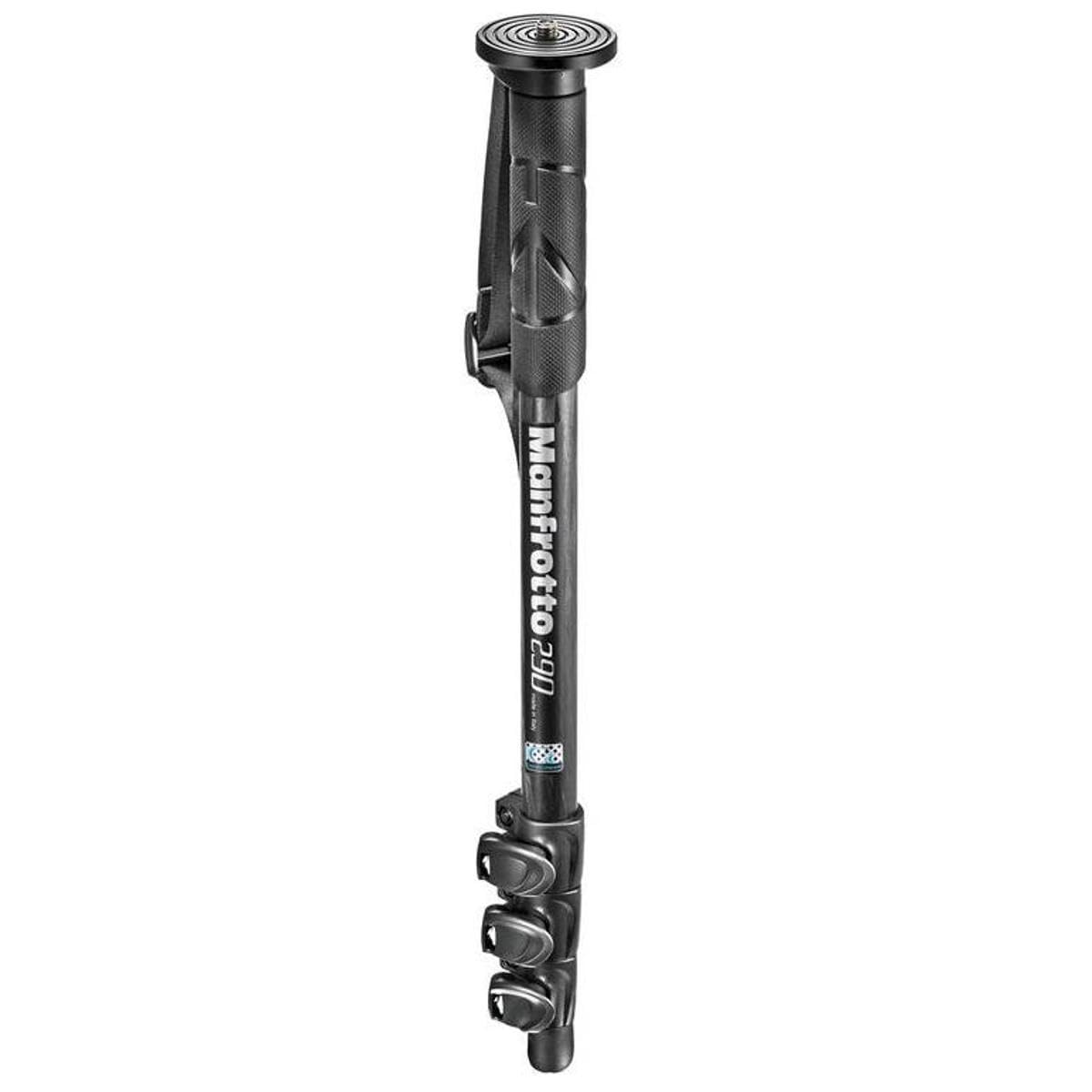
The P-326 collapses to 38cm and weighs 400g, yet it holds a 600mm lens with no sway. The 10kg load rating shows up in the rigid top section, and the reversible 1/4 and 3/8 mount accepts whatever head or plate you already own. It is the shortest folding pole here that still handles 600mm-class work, and that compact-plus-stable balance is the reason it anchors the category.

Travel and hiking photographers can slide the folded pole into a carry-on bag or a daypack side pocket, then deploy all six sections in seconds. The twist locks grip firmly and work with winter gloves, which matters on cold-morning shoots. Six sections mean more collars than a three-section pole, but that is the price of a 15-inch collapsed length. Once extended, the pole stays planted on uneven ground when braced against your foot.

This is the bare pole for shooters who already have a head, quick-release plate, or support base. If you need a fluid head or integrated feet, the all-in-one video monopods in this set handle that workflow; the P-326 stays deliberately minimal. The 154cm maximum height is the boundary: average-height travelers and hikers get heavy-lens stability without the bulk, while shooters around 6-foot-2 or taller should check a longer pole. At 400g, it disappears in a pack, which makes it an easy choice for long approaches.

The carbon build resists trail wear without adding weight, and the top section stays rigid when you lean into a telephoto shot. The 10kg capacity leaves headroom for a gripped body with a 150-600mm, though the full pole should be braced for the heaviest lenses.

Paired with a small ball head, the P-326 becomes a stable support for wildlife and airshow shooting where a tripod is impractical. The lack of an integrated head keeps components simple and the weight low, but you will need to supply a head or plate if you do not own one.

💡 Extend from the thickest section down and seat each twist lock before moving on; this keeps the six-section stack running smoothly.

Pros

  • Folds to 38cm and weighs 400g, so it fits in carry-on baggage.
  • Holds a 600mm telephoto lens steady at full extension.
  • Carbon construction keeps weight low while carrying heavy loads.
  • Twist locks are easy to operate, even with winter gloves.

Cons

  • Twist locks can bind or develop play, and a section may move when pressure is applied.
  • On some units, the bottom leg section can detach or retract stiffly.
Our verdict

The P-326 remains the reference point for a bare carbon monopod: it folds to 15 inches, weighs under a pound, and carries a 600mm lens at a budget-friendly price. If you already own a head or plate, it is the one to build a lightweight telephoto kit around.
Check Latest Price
2

Best with Integrated Ball Head

SmallRig Ball Head Monopod

85 /100
Studio Score Strong Evidence

Key details

Head / Base
Ball head included
Weight Vs Capacity
1.73kg / 5kg head
Review Track Record
221 shared reviews
Lock Type & Sections
4-section one-click
Check Price on Amazon

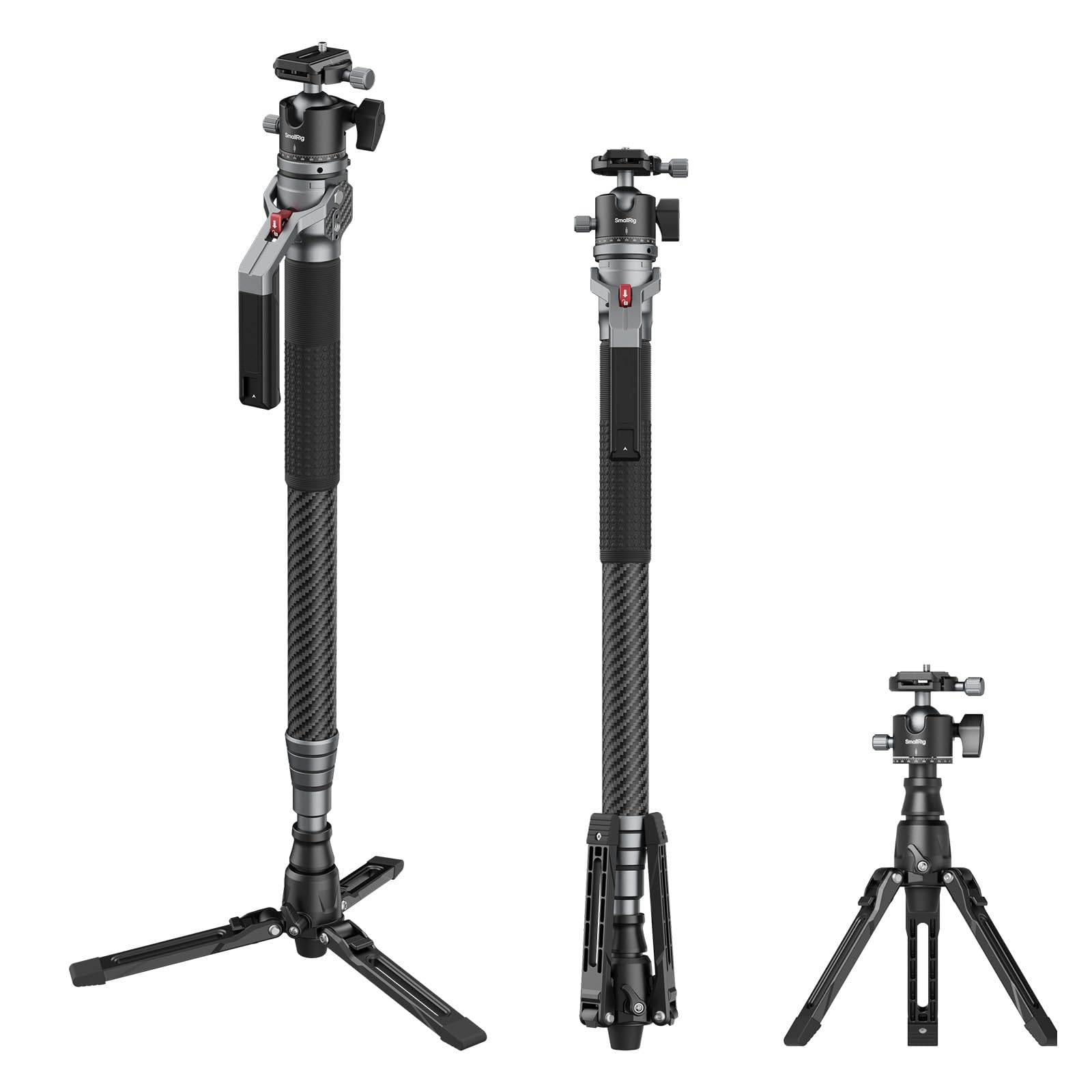
The one-touch height release is the defining feature: press, slide to height, release, and the camera returns to eye level without a second hand on the pole. The integrated ball head removes the need for a separate head purchase, so a sports or event shooter can move from bag to shooting position in one step. Threaded accessory mounts on the pole add a place for a monitor or remote trigger without cluttering the grip.

Event and wedding photographers who need one-hand height changes, sports and wildlife shooters with telephoto lenses, and creators who want a ball head included all fit this monopod. The 3.8 lb build is reasonable for all-day carry, but hikers counting grams will prefer a slimmer bare pole. Video users should move up to the fluid-head SmallRig model; the integrated ball head is for stills. Before a paid shoot, check the quick-release plate tension and lock.

The four-section pole reaches 166.5 cm and folds to 68 cm, with a 15 kg leg rating and a 5 kg head rating. A gripped body with a telephoto zoom stays within the head limit, and the carbon construction keeps the group manageable during event days. One-touch height changes are fast enough to use in active sequences instead of treating the monopod as a static pole.

💡 For flight bags, the 68 cm collapsed length fits a carry-on but takes up more space than a 38 cm travel pole.

Pros

  • One-touch height release lets you raise or lower the camera without taking your hand off the grip.
  • Integrated ball head means stills shooters can mount a body and lens straight out of the bag.
  • Carbon construction at 3.8 lb is light enough for all-day event and wildlife carry.

Cons

  • At 3.8 lb it is heavier than minimalist carbon sticks aimed at ounce-counting hikers.
  • The ball-head clamp plate can show play/gap, a concern when shooting with heavy telephoto lenses.
Our verdict

For event and sports shooters who want an integrated ball head and one-touch speed in a single package, this is the strongest match in the roundup; travel-first buyers should still look at the top pick.

Check Latest Price
3

Best Video Monopod Kit

Avella CD324

89 /100
Studio Score Strong Evidence

Key details

Head / Base
Fluid head, pan bar, base
Weight Vs Capacity
— / 6kg
Review Track Record
346 reviews
Lock Type & Sections
4-section flip locks
Check Price on Amazon

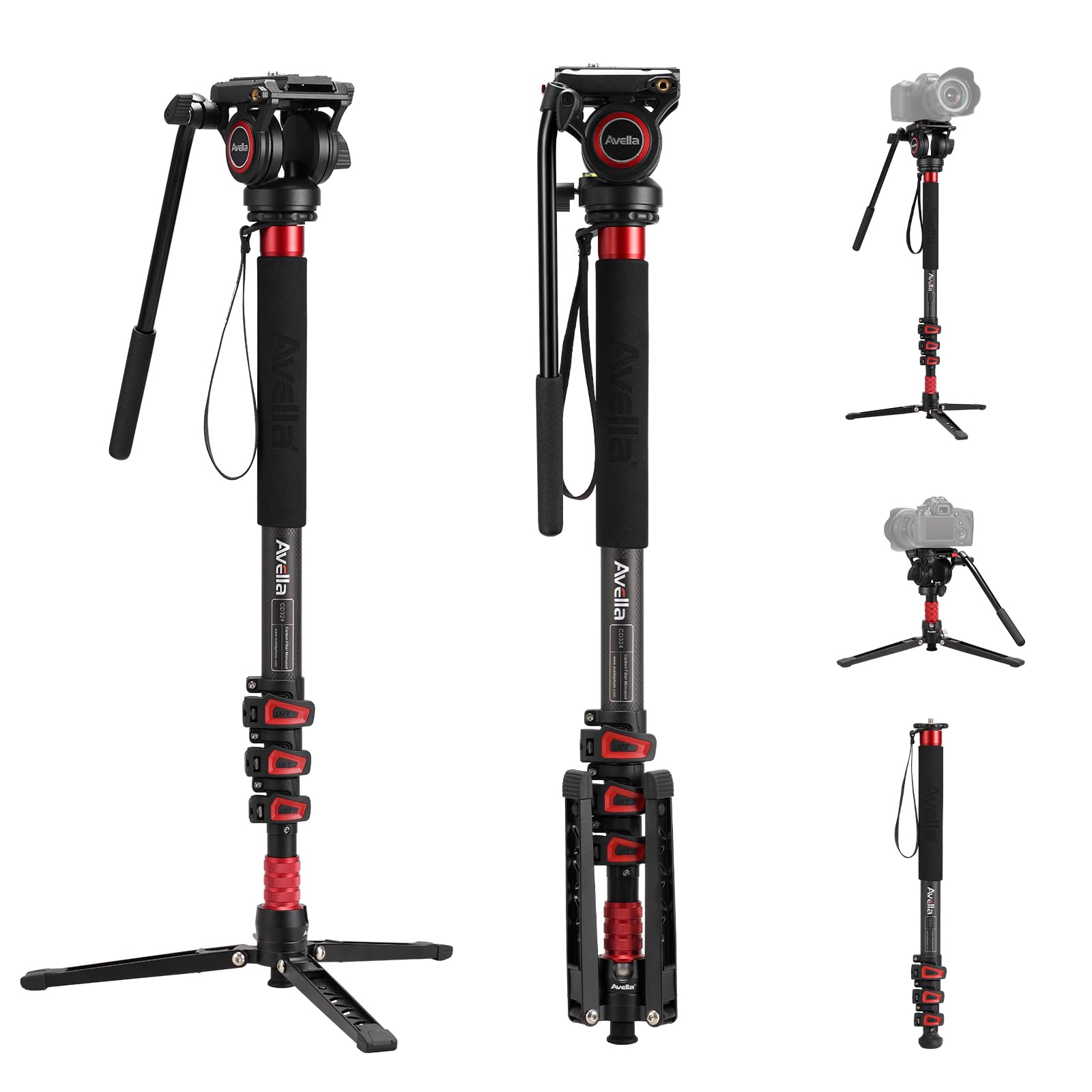
Avella CD324 is a video-first monopod kit: the included fluid head, removable pan bar, and three-leg base turn a carbon pole into a run-and-gun event support without add-on costs. A budget detachable-base stills pole stays photo-oriented; this kit is configured for video from the first mount.

Build quality reads above its price: four-section carbon legs reach 181 cm, fold to 70 cm, and support up to 13.2 lb. Most mirrorless and compact cinema rigs fit within that limit, and the fluid head tracks motion smoothly enough for event pans.

At 70 cm collapsed, it is not the shortest travel pole in this group, but event users get integrated video controls without a heavy tripod build.

Best fit is an event or wedding videographer who wants quick setup, smooth panning, and a low base for static shots, or a hybrid shooter who wants a monopod plus tabletop footprint in one kit. Heavy stills telephoto loads beyond 13.2 lb are outside its range, and it is not a true freestanding tripod; some units can develop loose leg/base locks, so a quick tension check before a paid event is sensible.

💡 Keep the pan bar attached while carrying between setups; it doubles as a handle and reduces stress on the fluid head during transit.

Pros

  • Smooth fluid head and removable pan bar make event pans and tracking shots easy from the first setup.
  • Carbon build feels pro-quality for the price and keeps the kit light during all-day coverage.
  • Four-section legs reach 181 cm and fold to 70 cm, covering most operator heights.
  • Head, pan bar, and base are included, so no extra support parts are needed.

Cons

  • The 3-leg base is a stability aid, not a tripod replacement; extended use can feel top-heavy.
  • Leg and base locks can loosen over time on some units, so check tension before important shoots.
Our verdict

Event and wedding videographers get a smooth, compact video support with the pieces many rivals sell separately. Treat the three-leg base as a stabilizer rather than a tripod, and the CD324 stays within its lane without demanding a premium price.

Check Latest Price
4

Best Tall / Maximum Reach

Benro MSD46C

84 /100
Studio Score Strong Evidence

Key details

Head / Base
No head, folding base
Weight Vs Capacity
0.59kg / 40kg claimed
Review Track Record
96 reviews
Lock Type & Sections
6-section twist locks
Check Price on Amazon

The Benro MSD46C is the tallest bare carbon pole in this comparison: 72.8 inches when open and 17.9 inches when folded. That reach is the reason to choose it over the all-rounder in this set, which is shorter at full extension. The six-section carbon shaft supports 400/500mm-class telephoto lenses, and the folded length works for overhead-bin travel.

The carbon stiffness holds up with long glass, so 400mm and 500mm lenses stay steady enough for wildlife and sports work. The folding base adds a stable rest when tripods are not permitted, and the twist locks hold position when tightened.

The buyer here is a stills photographer with an existing ball head: the bare-pole format keeps the system light and simple. Twist-lock O-rings are the vulnerable part, and a worn collar may require service.

At 1.3 lb, the MSD46C is light enough to carry through a refuge or airshow, but it is not the lightest carbon stick in this set. The reach makes that weight worth carrying: photographers over six feet can frame without hunching, while ounce-counting hikers may prefer a slimmer travel pole. For tripod-restricted venues where height matters, this pole fits the job.

💡 Clean the twist-lock threads and inspect the top O-ring before mounting heavy telephoto glass.

Pros

  • Reaches 72.8 inches, so tall shooters can frame at eye level without bending.
  • Six-section carbon shaft folds to 17.9 inches for overhead-bin-friendly travel.
  • Holds 400mm and 500mm telephoto lenses with solid support.
  • Weighs 1.3 lb, so it stays comfortable on a strap all day.

Cons

  • No head is included, so shooters who don't own one face an extra purchase.
  • A worn O-ring in a twist collar can make the lock bind rather than loosen smoothly.
Our verdict

At a mid-range price, the MSD46C delivers the longest reach in this group while folding to carry-on size. Tall stills photographers get the height they need in a portable carbon stick.

Check Latest Price
5

Best Foot-Pedal Action

IFOOTAGE Cobra 3

88 /100
Studio Score Strong Evidence

Key details

Head / Base
Quick-release top, base
Weight Vs Capacity
1.27kg / 8kg
Review Track Record
181 reviews
Lock Type & Sections
Pedal-lock base
Check Price on Amazon

The Cobra 3's foot-pedal base gives you a full 360-degree swivel and then drops the pole into a low three-leg stance without taking a hand off the camera. The carbon-fiber column supports an 8 kg load, and the quick-release top keeps lens changes fast. That combination makes it a different tool from the integrated-ball-head speed-first poles in this group.

The three-leg base folds into the column, so setup is one motion: flip the feet out, press the pedal, and start shooting. The low base stays planted while the upper column rotates, which suits sideline, airshow, and wildlife work where you need to follow action instead of repositioning the whole pole. The three feet also grip uneven ground better than a standard rubber tip.

This is for sports, wildlife, airshow, and video shooters who want a stable panning platform without moving their feet. Ultralight travelers and budget-first buyers are better served by slimmer or lower-cost poles, but for active shooters the pedal-lock behavior is the right tradeoff.

For that buyer, the 360-degree pedal control replaces the usual lift-turn-lock shuffle with one foot motion, and the spread legs become a tabletop platform when needed. The 8 kg load rating gives it room for a body-plus-telephoto rig.

💡 When panning, keep the pedal lock slightly engaged; full release is best for repositioning rather than smooth tracking.

Pros

  • Foot-pedal base allows fast 360-degree swiveling and doubles as a low mini-tripod.
  • Carbon-fiber build keeps the package carry-friendly for a base-equipped monopod.
  • 8 kg load rating supports long telephoto lenses without losing the low-stance advantage.
  • Quick-release top and three-leg pedal base work across full-height, mid-height, and tabletop positions.

Cons

  • Fully unlocked pedal base can sway side-to-side instead of tracking a clean pan.
  • Base-locking pins can bind and require warranty replacement in some cases.
  • Premium price places it above entry-level carbon poles, so budget buyers should weigh the pedal control.
Our verdict

The Cobra 3 turns a monopod into a foot-controlled panning platform for sports and wildlife shooters; a bare carbon pole cannot match that range of motion.

Check Latest Price
6

Budget Travel

Koolehaoda MP-286C

88 /100
Studio Score Strong Evidence

Key details

Head / Base
No head, reversible mount
Weight Vs Capacity
360g / 10kg
Review Track Record
143 reviews
Lock Type & Sections
6-section twist locks
Check Price on Amazon

The Koolehaoda MP-286C pairs a 360g carbon shaft with a 38cm collapsed length, so it disappears into a pack while still offering a 158cm working height and a 10kg load rating. The bare reversible 1/4 and 3/8 mount accepts any standard head, keeping the system light. This is a travel-first pole: compact and budget-friendly for mirrorless shooters who are not relying on heavy telephoto lenses. Video users needing a fluid head or base will need a different setup. Six sections keep the collapsed package small; lock collars need to be snugged before mounting gear. For buyers who plan heavy-telephoto work, the top pick is the stronger reference.

Pros

  • Light 360g build keeps carrying fatigue low on long travel days.
  • Folded to 38cm, it fits in a daypack or carry-on without hogging space.
  • Entry-level pricing makes this one of the least expensive ways to get a carbon-fiber pole.

Cons

  • No head is included, so a separate ball head or quick-release plate adds to the total spend.
  • The added joints of a six-section pole can feel less rigid at full extension than fewer sections.
Our verdict

If your kit is a compact camera or a mirrorless body with a standard zoom, the MP-286C's light weight and folded size pay off on long walkaround days.

Check Latest Price
7

Stills Versatility

Avella C324D

90 /100
Studio Score High Confidence

Key details

Head / Base
No head, detachable base
Weight Vs Capacity
0.94kg / 6kg
Review Track Record
179 reviews
Lock Type & Sections
4-section locks
Check Price on Amazon

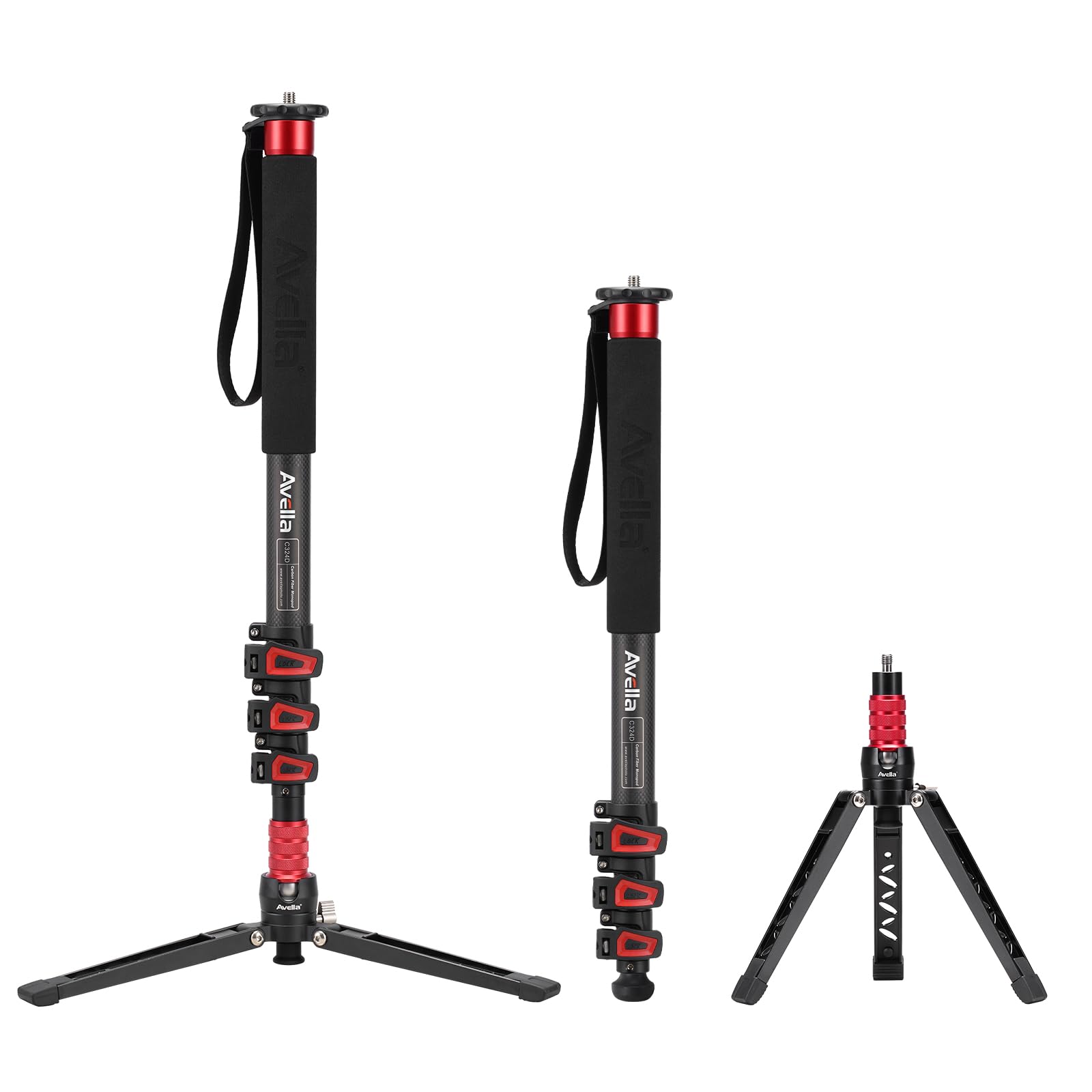
The Avella C324D pairs a carbon-fiber pole with a detachable three-leg base, which makes it a practical choice for stills shooters who want one support that can handle telephoto work and double as a hiking stick. At 2.1 lb and 24 inches collapsed, it travels reasonably well, and the four-section build reaches a usable 66.9 inches without an extra head.

Owners using 200-500mm lenses report steady support, and the removable base adds low-angle options that a bare pole lacks. The tradeoff is the plastic tabs that hold the base legs in place: one video user found that area fragile, with the base separating after the tab broke. Rubber foot covers can also work loose in some cases, so checking those points on arrival is worthwhile.

Pros

  • Detachable base adds low-angle shooting and walking-stick utility without extra cost.
  • Carbon build feels solid for the money, especially with long telephoto lenses.
  • Budget price point undercuts most carbon monopods with a similar feature set.

Cons

  • Plastic tabs on the folding base can be fragile and may allow the base to separate.
  • Rubber foot covers can detach, which is worth checking before field use.
Our verdict

The Avella C324D fits budget-minded stills photographers who want a versatile telephoto support with walking-stick capability, provided they treat the base tabs and foot covers as checkpoints rather than long-term guarantees.

Check Latest Price
8

Budget Hiking

INNOREL RM325C

89 /100
Studio Score Strong Evidence

Key details

Head / Base
No head, reversible screw
Weight Vs Capacity
480g / 12kg
Review Track Record
97 reviews
Lock Type & Sections
5-section twist locks
Check Price on Amazon

INNOREL's RM325C is a light 5-section carbon pole with a 170cm maximum height, a 47cm collapsed length, and a 12kg load rating at a budget price. The bare 1/4 and 3/8 screw mount accepts standard camera plates without adding weight, so stills shooters can keep their existing quick-release hardware. Lock durability under sustained telephoto loads has less field history than the top pick in this set, so daily long-lens users should account for that before buying.

Pros

  • A 1.1 lb carbon body that reaches 170cm makes it a light option for hikers and travel stills shooters.
  • 12kg load capacity covers long-lens stills work when paired with a proper head or plate.
  • Budget-friendly price with strong owner approval.

Cons

  • No integrated head; video creators need to add their own head before mounting a camera.
  • No foot/base; run-and-gun video work needs a separate base for stable support.
Our verdict

Hikers and travel stills shooters with existing mounting hardware get a lightweight carbon pole with generous reach and capacity for the price.

Check Latest Price
9

Telephoto Travel

Manfrotto MM290C4

87 /100
Studio Score Strong Evidence

Key details

Head / Base
No head
Weight Vs Capacity
0.5kg / 10kg
Review Track Record
197 reviews
Lock Type & Sections
4-section flip locks
Check Price on Amazon

The MM290C4 is a 1.1 lb carbon monopod with flip locks that hold firmly and a 49cm collapsed length that fits into carry-on luggage. As a bare pole, it ships without a head or base, and the 151cm max height is shorter than some rivals. That combination keeps the price mid-range and the weight low, but it also means you must supply a ball head before mounting a camera. For stills photographers who already have a head and want a simple, light stick from a well-known support brand, this Manfrotto is a comfortable fit; video shooters who need a base or fluid drag should look at integrated-head models.

Pros

  • Weighs 1.1 lb, supports up to 10kg, and stays stiff enough for long telephoto work.
  • Flip locks hold securely and allow tension adjustment.
  • Folded length fits carry-on luggage and small bags.

Cons

  • At 1.1 lb it is light, though heavier than the lightest bare poles in this comparison.
  • Folded length is carry-on friendly but longer than the slimmest option in this set.
Our verdict

For stills shooters with a ball head already on hand, this is a light bare monopod worth considering.

Check Latest Price

How to Choose

Max Height vs Folded Length

A taller maximum height is useful only if the pole also compresses into your travel bag. Folded length comes from section count and tube overlap, so a 72-inch monopod can fold down to 18 inches by adding more sections.

Every extra section adds another lock and another joint that can bind or loosen. A 4-section pole is simpler and stiffer; a 6-section pole packs smaller but gives you more points to inspect before a shoot.

Lock Type & Sections

Twist locks use a threaded collar to clamp the tube; they are compact and light, but the O-rings inside need clean surfaces to hold. Flip locks clamp with a lever and provide visible tension, though they can loosen over time. One-click locks are the fastest to adjust but add moving parts inside the leg.

Match the mechanism to your shooting pace. Event and sports shooters benefit from one-hand height changes; travel and landscape shooters are usually better served by a simple lock with a long record of holding position.

Weight vs Load Capacity

Carbon fiber's advantage is stiffness per gram, but the weakest point on any monopod is the lock holding a section, not the tube itself. A low weight with a high load rating can still feel flexy under a long telephoto when the bottom sections are thin and the lock collars are small.

For a 600mm lens, look for a pole that owners have used with similar gear. For hiking, a sub-400g stick saves real energy over a full day, though it will not feel as planted as a slightly heavier 4-section pole.

Head / Base

Integrated heads and bases make a monopod ready to use out of the bag, but they also set the ceiling for the system. A ball head rated for 5kg limits a monopod whose legs can carry 15kg, and a fluid head is only as good as its quick-release clamp.

Feet and mini bases widen the footprint for video pans, yet the center of gravity stays high. Use them for support and smooth movement while holding the pole, not as a tripod replacement.

Review Track Record

Spec sheets describe what a monopod should do; owner feedback shows what it does after a season of field use. Recurring comments about locks that slip or bind are more meaningful than a payload number, because those issues only surface with real handling.

A product with thousands of reviews and clear consensus is a safer bet than a newer model with similar specs but little field history. This matters most for twist-lock and one-click designs.

Frequently Asked Questions