5 Best Monitor for Photography of 2026: Calibration That Holds

Find the best monitor for photography by matching color gamut, pixel density, and connectivity to the way you actually edit.

A factory calibration report is a starting point, not a guarantee. Photo-editing monitors in the same model line can vary in backlight uniformity, tint, and long-term port reliability. The practical question is whether a display holds its color and connectivity under real editing loads.

That means matching the monitor to your color workflow first. Editors who deliver to web and social can work in sRGB/Rec.709 without paying for Adobe RGB. Photographers printing for clients or grading video need wide-gamut coverage and, in some cases, hardware calibration with a 3D LUT.

Pixel count is part of the decision, but not the deciding factor. A calibrated 1440p panel can be more trustworthy than a 4K panel with uneven color. Choose the resolution and color space that fit the files you actually deliver.

1

Best Overall

ASUS ProArt PA278QV

92 /100
Studio Score High Confidence

Key details

Panel Type
IPS
Resolution
QHD 2560 x 1440
Calibration
Calman Verified, Delta E <2
Color Gamut
100% sRGB, Rec.709
Check Price on Amazon

The PA278QV pairs a 27-inch 1440p IPS panel with Calman Verified calibration targeting Delta E <2 and full sRGB/Rec.709 coverage, which aligns it directly with the color spaces used for web, social, and client-review photo work. Whites stay neutral and color transitions remain clean in the default modes, so the first edit does not start with a profile-chasing session. The calibrated sRGB/Rec.709 setting is a practical match for color-managed output destined for standard displays and print proofs. The factory calibration also means an editor can trust the initial image preview before bringing up a calibration tool.

Tilt, swivel, pivot, and height adjustments come from a stand that feels solid without swallowing a desk. The 1440p panel keeps fine texture, editing panels, and image preview readable at normal seating distance, and the brightness range covers bright offices and darker rooms without forcing a single lighting setup. Off-center viewing remains stable enough for a second person to eyeball an edit without a distracting color shift. For an editing workstation that moves between day and evening sessions, the adjustability is not an afterthought.

This is the budget-friendly ProArt for photographers whose delivery target is sRGB/Rec.709. If final files leave the desktop for 4K or Adobe RGB/DCI-P3 work, the 4K wide-gamut ProArt in the same lineup is the boundary to watch. Screen and port consistency can vary between units, so buying through a return-friendly channel is part of a smart purchase. For sRGB/Rec.709-only workflows, this model covers the essentials without paying for a larger color-gamut or 4K pipeline you will not use.

The input set includes DisplayPort, HDMI, DVI-D, Mini DP, and a 4-port USB 3.2 hub, which gives desktop towers and older workstations a practical connection path without extra adapters. The QHD canvas also suits hybrid office/photo use: spreadsheets have room, palettes do not crowd the image, and the adjustable stand makes a split editing/viewing position easier. The unassuming gray finish and uncluttered design keep attention on the panel rather than the housing.

The on-screen menu includes calibrated presets and a quick way to reset the panel to a neutral starting point, reducing guesswork during color review. The 1440p resolution is also lighter on GPUs than 4K, a useful edge when Lightroom, Photoshop, and a browser are running at the same time.

๐Ÿ’ก Mac users can connect through a USB-C-to-DisplayPort or USB-C-to-HDMI cable; this model does not provide power over USB-C.

Pros

  • Calman Verified color targeting Delta E <2 covers the sRGB/Rec.709 spaces photo editors export to.
  • 27-inch 1440p IPS panel keeps image detail and editing palettes readable in one view.
  • Tilt, swivel, pivot, and height adjustments support a comfortable editing position.
  • Brightness range is usable in both bright offices and darker rooms.
  • Understated design fits a studio or shared workspace without drawing attention.

Cons

  • Individual panels can show dead pixels, so a hassle-free exchange policy matters when buying this display.
  • DisplayPort black-screen dropouts may appear after months of use; the HDMI input provides a fallback.
Our verdict

For sRGB/Rec.709 photo editing, this is the budget-friendly 27-inch panel to start with.

Check Latest Price
2

Wide-Gamut 4K for Mac

ASUS ProArt PA279CRV

83 /100
Studio Score Strong Evidence

Key details

Panel Type
IPS
Resolution
4K UHD 3840 x 2160
Calibration
Calman Verified, Delta E <2
Color Gamut
99% Adobe RGB, DCI-P3
Check Price on Amazon

The ASUS ProArt PA279CRV pairs a 27-inch 4K IPS panel with 99% Adobe RGB and DCI-P3 coverage, and its USB-C port carries video plus 96W power to a Mac laptop. Factory pre-calibration targets Delta E under 2, and the stand adjusts through height, tilt, swivel, and rotation. The 1440p top pick stays with sRGB/Rec.709, while this model adds a wider color palette for photo and video work that crosses into Adobe RGB or DCI-P3.

Photo editing at 4K reveals fine texture and shadow detail, and IPS viewing angles hold the image steady off-axis. The 96W upstream port keeps a 14-inch MacBook Pro topped up through an edit session.

This monitor is best for Mac-based photographers who deliver in Adobe RGB or DCI-P3 and want a single USB-C cable for display and charging. For sRGB-only delivery, the 1440p top pick gives you calibrated color at a lower price. The PA279CRV's extra color volume and USB-C charging make sense only if your export pipeline actually uses those spaces. Buyers who want maximum confidence in backlight and color uniformity at this price should prefer the 1440p top pick; green tint, backlight bleed, and brightness shifts can appear on individual units, so inspect a plain white screen before settling.

Pros

  • The 4K IPS panel shows fine detail and holds color at wide viewing angles
  • Factory pre-calibration brings Adobe RGB and DCI-P3 coverage to print and video delivery workflows
  • A single USB-C cable carries 96W power and video to a Mac laptop for a clean desk setup
  • The stand adjusts in height, tilt, swivel, and rotation for extended editing sessions

Cons

  • Long static edits can leave temporary image persistence or light leak on some panels
  • MacBook Pro wake/connect via USB-C can require a power-cycle or cable reseat
Our verdict

For Mac photographers working in Adobe RGB or DCI-P3, this is a cost-effective way to get a wide-gamut 4K canvas and one-cable desk setup. sRGB-only shooters get more value from the 1440p top pick.

Check Latest Price
3

Hardware-Calibration Specialist

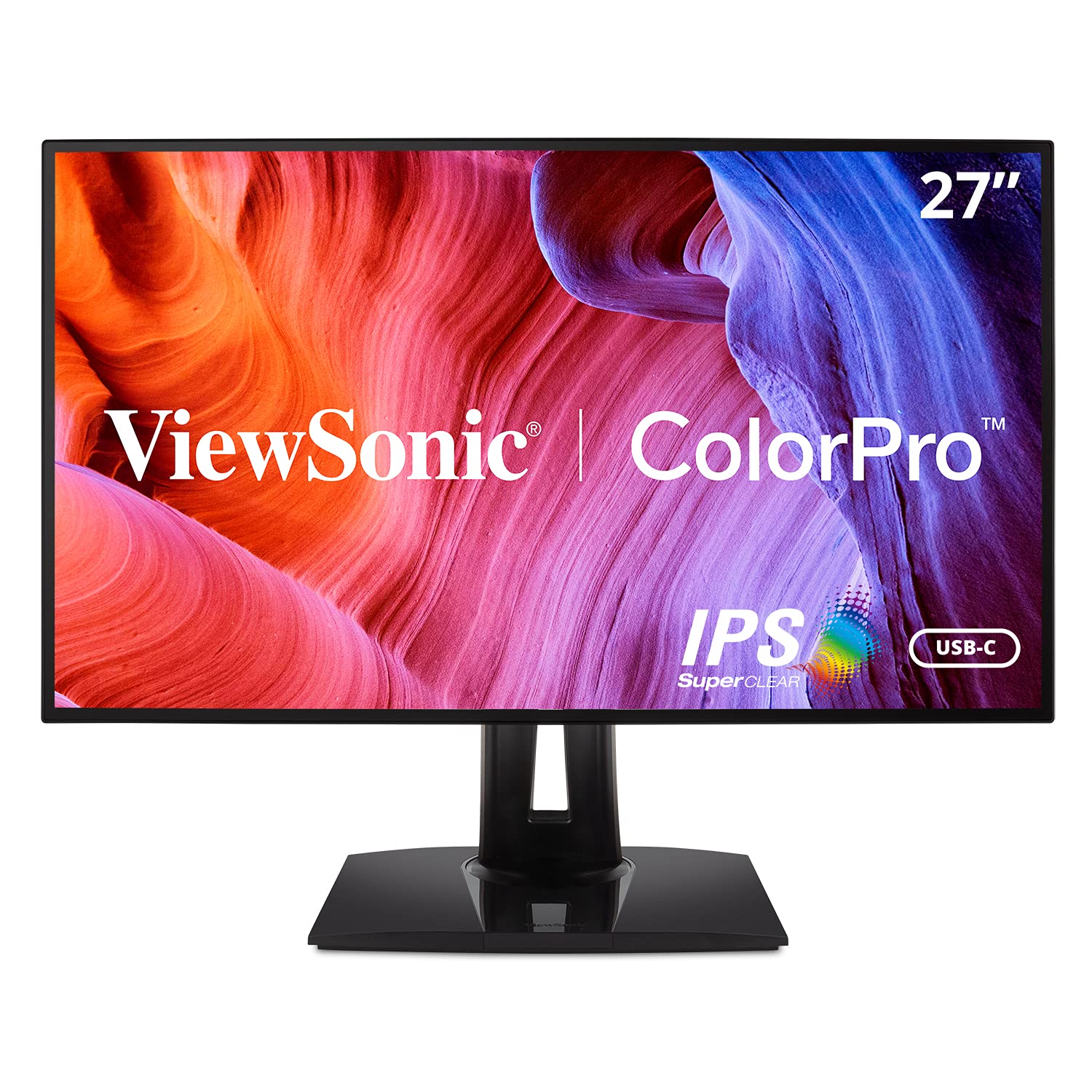
ViewSonic VP2768 Pro

85 /100
Studio Score Strong Evidence

Key details

Panel Type
IPS
Resolution
QHD 2560 x 1440
Calibration
14-bit 3D LUT, Delta E<2
Color Gamut
100% sRGB, Rec.709, EBU
Check Price on Amazon

The VP2768 Pro's 14-bit 3D LUT hardware calibration and Delta E <2 tolerance make it the color-control specialist in this 1440p group. The hardware LUT stores calibration in the monitor, so the host GPU stays out of the color chain. The 27-inch SuperClear IPS panel covers 100% sRGB plus Rec.709, EBU, SMPTE-C, and DICOM-SIM, pointing at print and broadcast workflows rather than the wider Adobe RGB/DCI-P3 gamuts that video editors need.

The 1440p IPS panel resolves fine detail cleanly, keeping retouching and proofing work sharp on screen. Calibrated sRGB and Rec.709 targets hold through a working session, which is the core requirement for print deliverables.

This monitor suits print-focused photographers and graphic designers who deliver in sRGB/Rec.709 and want a 27-inch 1440p desktop canvas. The wired input set โ€” HDMI, DisplayPort, Mini DP, and USB 3.0 โ€” handles a desktop workstation, but there's no USB-C input and only one HDMI port, so MacBook users expecting single-cable power and video will need adapters or the dock-style ColorPro from this roundup. Those working in Adobe RGB or DCI-P3, or shopping for a 32-inch 4K canvas, should look at other models.

Pros

  • Strong 1440p IPS panel with crisp edges and spec-accurate performance.
  • Sharp, clean image that holds up for photo and video detail work.
  • Out-of-box color calibration is close enough for print and web editors to start working right away.
  • 14-bit 3D LUT hardware calibration locks color targets in the monitor, leaving the video signal intact.

Cons

  • For exposure-critical print work, backlight uniformity can vary and the anti-glare coating may dim edges.
  • A black screen or power dropout mid-session is disruptive; this can appear on individual units after extended use.
Our verdict

For print-focused sRGB/Rec.709 deliverables, the VP2768 Pro is the 1440p monitor with the calibration depth to match the job.

Check Latest Price
4

Premium 32-Inch Thunderbolt

BenQ PD3225U

87 /100
Studio Score Strong Evidence

Key details

Panel Type
IPS Black, 2000:1
Resolution
4K UHD 3840 x 2160
Calibration
Pantone, Calman, Delta E <=2
Color Gamut
98% DCI-P3, 100% sRGB
Check Price on Amazon

The PD3225U is the 32-inch 4K IPS Black display with Thunderbolt 3, 98% DCI-P3 coverage, and 2000:1 contrast, giving Mac-based photo editors a larger color-critical canvas than the 27-inch wide-gamut ProArt alternative in this set. The factory-calibrated panel arrives with Pantone validation and Delta E <=2, so a MacBook shows neutral tones from the first boot without the usual gray-cast wrestling.

One Thunderbolt 3 cable carries 85W to a MacBook Pro and feeds the built-in USB hub, which keeps editing desks tidy without sacrificing display bandwidth. Beyond Mac-native convenience, the same panel covers 100% sRGB and Rec.709 alongside 98% DCI-P3, so print deliverables and video masters stay in range without bringing in a second monitor. This is a color-managed stills and video workspace, not a gaming panel with a 4K sticker.

This monitor is aimed at Mac-based professional photographers, videographers, and print/photo pros who want one large, Pantone-validated display and are comfortable inside a Thunderbolt ecosystem. It skips budget buyers who only need sRGB/1440p and users who prefer a compact 27-inch screen. A bright, sunlit room can make the 250-nit panel look dim next to 350-nit alternatives, so its natural habitat is a controlled-light studio.

Pros

  • 32-inch IPS Black panel gives photo editing a broad canvas with rich contrast and 4K detail.
  • Out-of-box color matches MacBook output, so editing can start without lengthy manual profiling.
  • Sharp 4K acuity makes tight crops and fine texture edits easy to judge at full size.
  • Premium pricing compares favorably against Apple's displays for the same color-critical workspace.

Cons

  • In a bright room, the 250-nit ceiling can look dim next to 350-nit rivals.
Our verdict

Mac photographers who edit wide-gamut files and want a single-cable Thunderbolt workflow get a 32-inch IPS Black canvas with Pantone-validated color.

Check Latest Price
5

Office/photo Hybrid

ViewSonic VP2768A

81 /100
Studio Score Strong Evidence

Key details

Panel Type
IPS
Resolution
QHD 2560 x 1440
Calibration
Pantone Validated, Delta E<2
Color Gamut
100% sRGB, Rec.709
Check Price on Amazon

The VP2768A pairs a Pantone-validated 1440p IPS panel with USB-C 90W charging, RJ45 Ethernet, and DisplayPort daisy-chain, making it the dock-style ColorPro for a photo-editing desk that wants one cable to handle data and power. Factory calibration and Delta E <2 keep sRGB work honest, and the adjustable stand makes long edits comfortable. The tradeoff is consistency: panel-to-panel behavior varies more than the ASUS picks, and some units can show uneven color or early display artifacts. That places it behind the ASUS options for most editors, but it's a solid fit for hybrid photo/office setups where USB-C docking matters more than print-grade hardware calibration.

Pros

  • Pantone-validated 1440p and Delta E <2 keep sRGB edits accurate without extra profiling.
  • USB-C 90W, Ethernet, and daisy-chain turn the monitor into a one-cable dock for a photo-editing laptop.
  • Adjustable stand with a clean frame makes long editing sessions comfortable.

Cons

  • Edge color variation and a yellow cast can appear out of the box on individual panels.
  • In the first weeks, occasional units can develop colored lines or green ghosting artifacts.
Our verdict

If your photo editing happens mostly in sRGB and the desk needs dock-style wiring, this ColorPro covers both roles โ€” just verify the panel early.

Check Latest Price

How to Choose

Resolution: QHD vs 4K

On a 27-inch screen, QHD gives you enough pixel density for most web and print work, while 4K adds room for tool panels and 100% zoom inspection. The practical trade-off is scaling: 4K on Windows can shrink interface elements or require display scaling, which changes how much canvas you actually see. On a Mac, 4K usually produces a sharper, more Retina-like editing surface.

Color Gamut: sRGB vs Adobe RGB

Most output for web and social lives in sRGB/Rec.709, so a calibrated sRGB monitor covers the files you deliver every day. Adobe RGB becomes necessary when you print for clients or need to preserve colors outside the sRGB gamut; an sRGB-only panel clips those colors before they reach the screen. DCI-P3 matters mainly for video editing and broader Mac color workflows, not for still-photo print work.

Factory Calibration and 3D LUT

Delta E < 2 is a manufacturing target, not a per-unit guarantee. It means the measured color error is low enough for photo editing, but unit-to-unit tint and backlight bleed can still occur. A monitor with a 14-bit 3D LUT and hardware calibration stores the correction in the monitor itself, so it stays active across different computers and inputs. Software-only calibration adjusts the graphics card output, which can reduce color depth and complicate proofing.

Panel Type and Contrast

IPS is the default for photo editing because it keeps color and brightness stable across wide viewing angles. IPS Black raises contrast from around 1000:1 to 2000:1, giving blacks more depth without shifting color; that helps most in dim rooms where black levels are visible. VA panels can offer higher static contrast but color shifts with angle, which makes them less predictable for critical edits.

Connectivity: USB-C and Docks

USB-C power delivery lets one cable carry video, data, and laptop charging, which turns the monitor into a dock. The practical catch is that USB-C compatibility is not guaranteed across laptops; some Mac and PC connections need a specific port or firmware update. Thunderbolt adds bandwidth and daisy-chain options, but it is not the same as USB-C. If your desk relies on one cable, keep HDMI or DisplayPort as a fallback.

Frequently Asked Questions