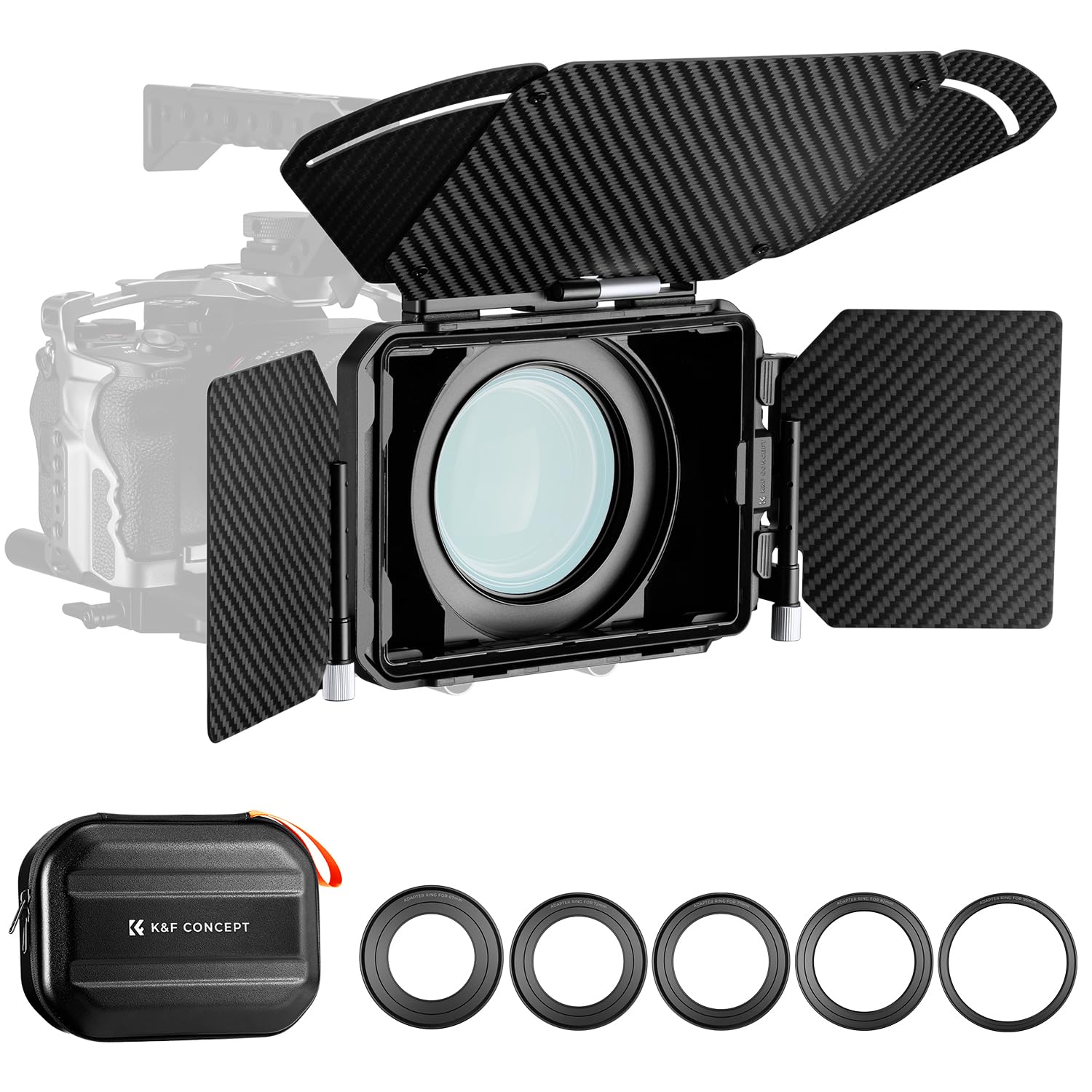
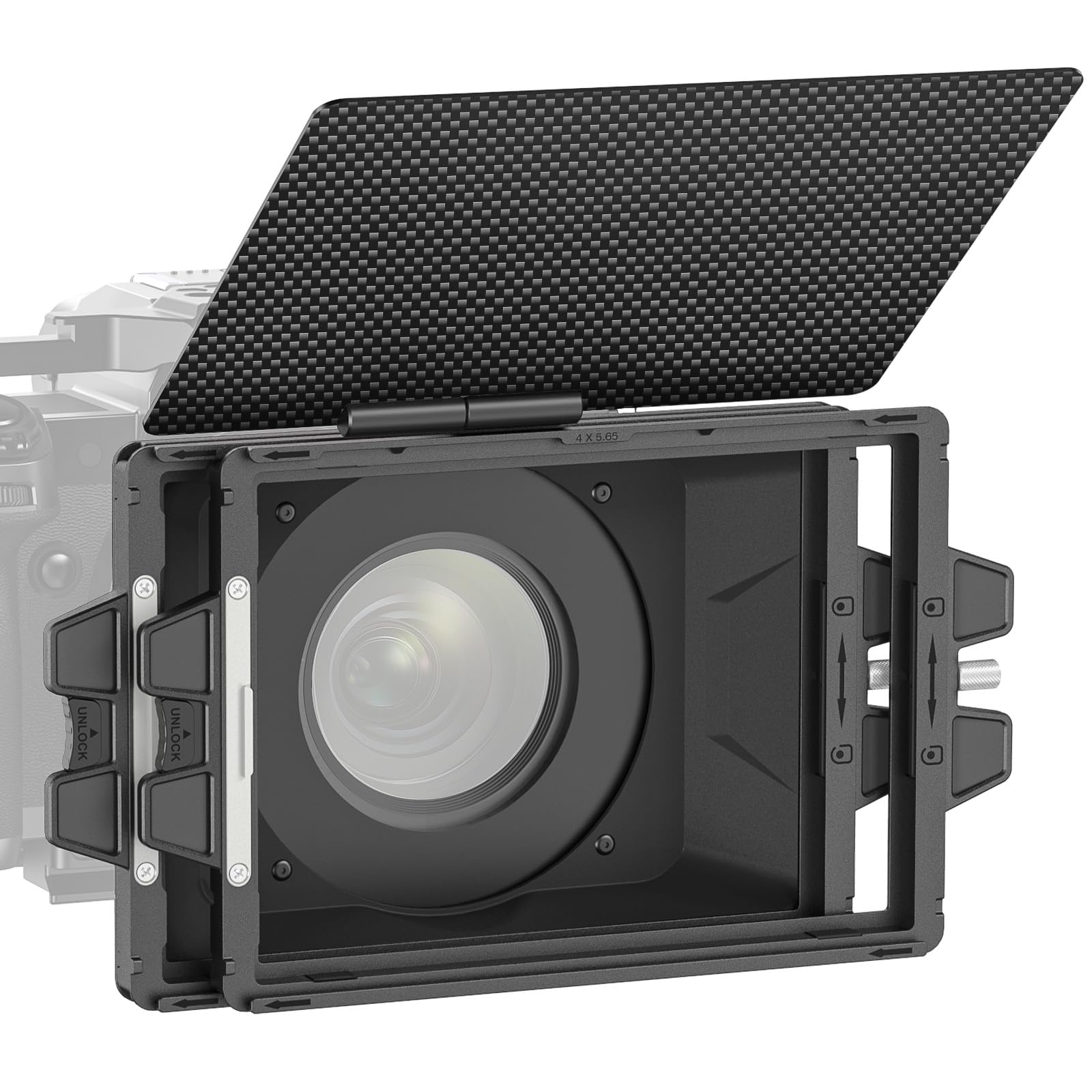
9 Best Matte Box 2026: Match Filters to Your Actual Lens

Find the best matte box for your camera and lens setup, whether you need a compact clamp-on for run-and-gun shoots or a rod-mount system for cinema rigs.

The biggest matte box mistake isn't choosing between brands — it's misreading lens compatibility. A 95mm adapter ring fits a threaded still lens; a 95mm cinema barrel is a different physical size, and 114mm cine lenses need a larger body entirely. That confusion is why so many boxes end up returned.

This guide separates clamp-on and rod-mounted designs by the job they actually do. Compact clamp-ons suit run-and-gun mirrorless rigs, while rod-mount boxes add stability and space for big cine glass. The trade-off usually comes down to filter capacity and convenience versus a more secure, cinema-ready setup.

You'll also need to decide how many 4x5.65 trays matter to your workflow, whether variable ND is worth its wide-angle limits, and how much flag adjustability you expect. Match those choices to your lenses and shooting style.

1

Best Overall

Tilta Mini Matte Box

90 /100
Studio Score High Confidence

Key details

Mount Type
Clamp-on, 15mm rod adapter
Filter Format
1x 4x5.65, circular
Lens Diameter
67-95mm threaded
Flag Adjustability
Adjustable top flag
Check Price on Amazon

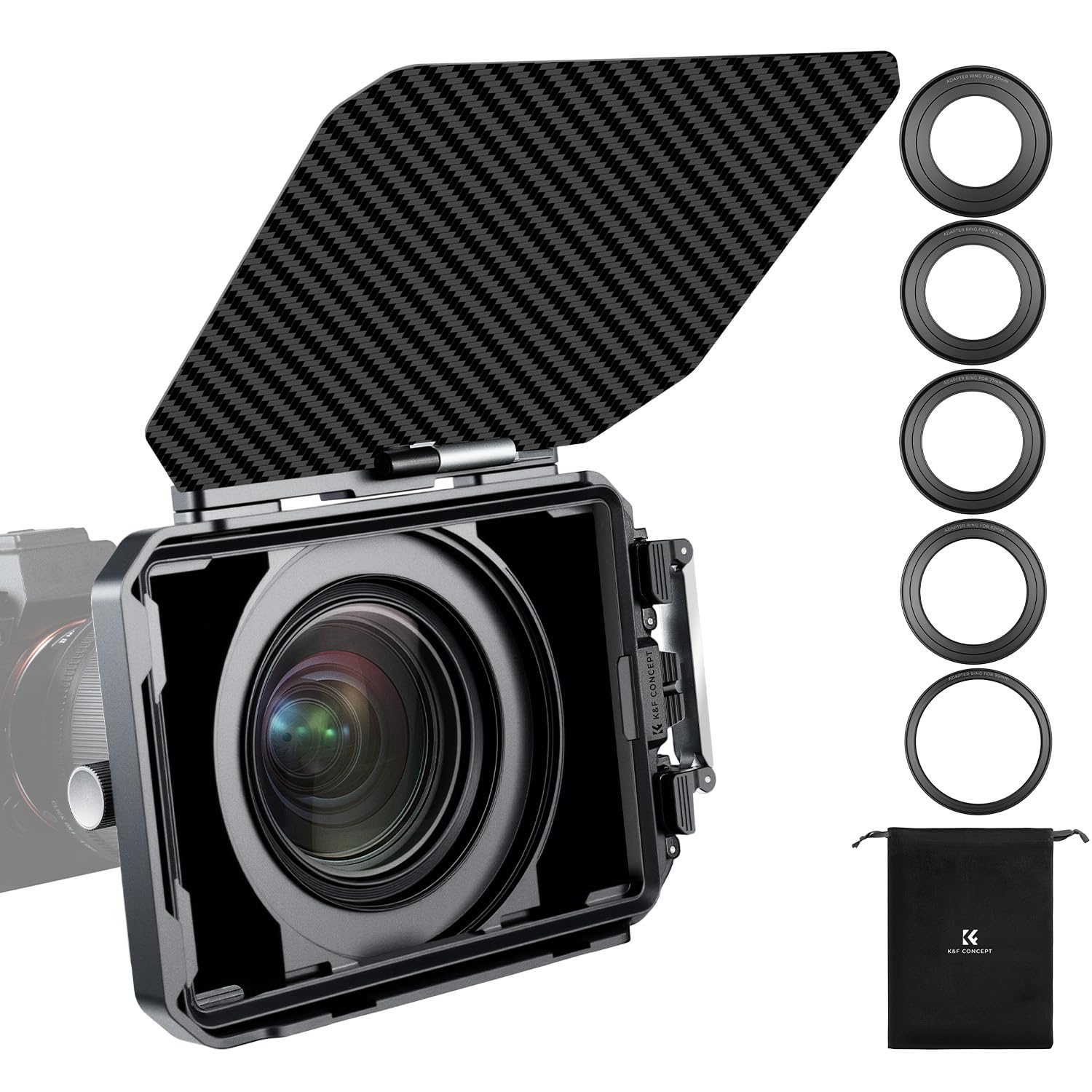
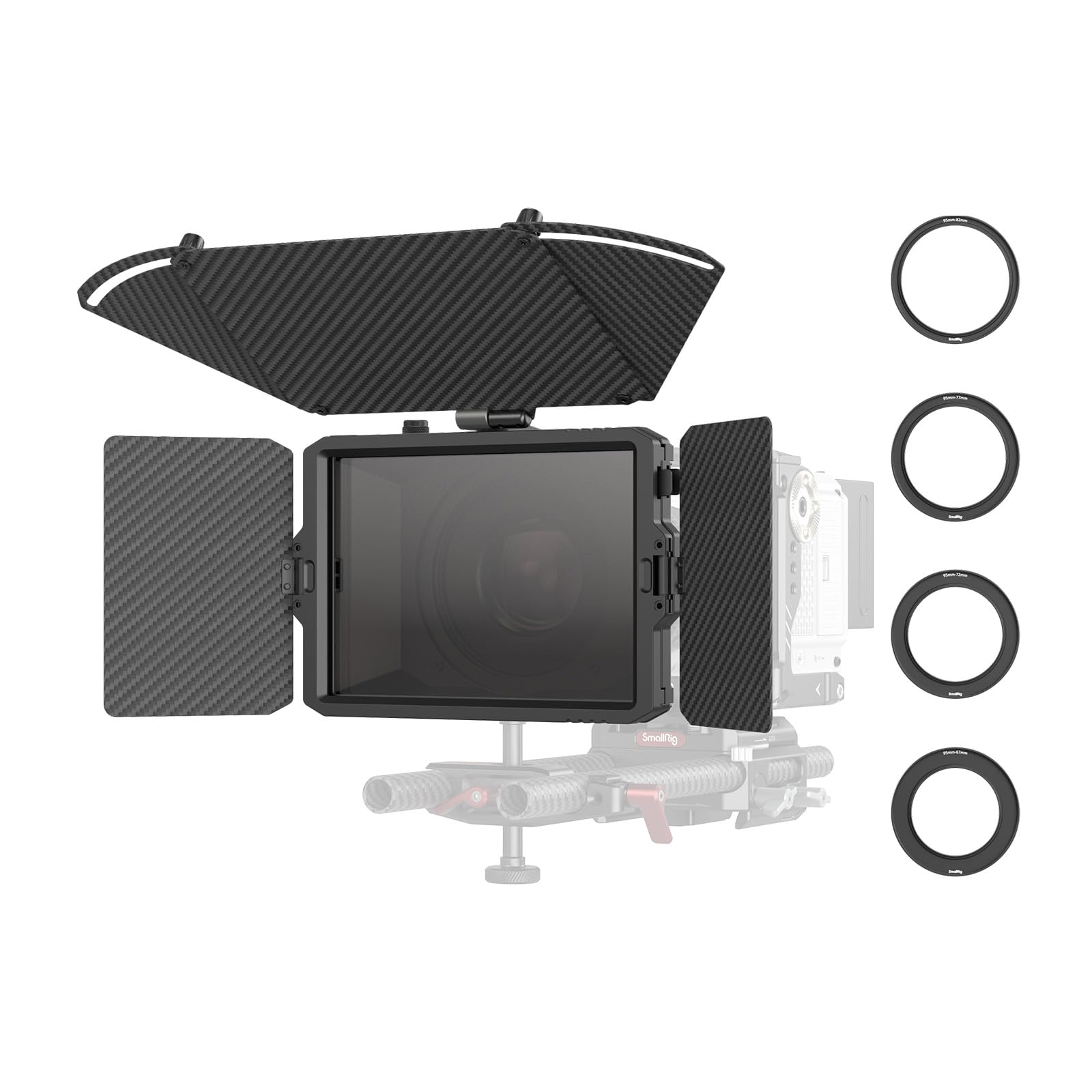
The Tilta Mini Matte Box brings a 140g clamp-on body plus 67mm, 72mm, 82mm, and 95mm adapter rings, covering the thread range found across mirrorless and DSLR lenses. Mounting uses the matching ring on the lens, with the box sliding over it and the clamp locking it in place. The result adds minimal front weight, which matters for gimbal motors already taxed by a cage and monitor. Dual cold shoes on top accept a monitor or wireless receiver without extra mounting hardware.

The 4x5.65 tray slot takes standard cinema filters, while the front threads accept stacked circular filters for quick glass changes without swapping trays. Shooters who own screw-on VNDs or diffusion filters can thread them directly onto the front and skip the tray entirely. The adjustable top flag angles to block overhead glare from practical lights or direct sun. The included 15mm rod adapter gives rig shooters a second mounting path straight out of the box — useful for longer lenses where a clamp-on alone puts too much torque on the barrel. Between the tray and the circular threads, the box supports both cinema-style filter use and photographer-style screw-on setups.

The mini box is aimed at the mirrorless or DSLR shooter who wants one matte box that mounts on the lens and grows into a rod setup later. Gimbal users benefit from the 140g body, and studio users can leave the box mounted without adding noticeable front weight. Hybrid shooters moving between photo and video can swap the adapter ring when changing lenses, keeping the same box through the shoot. Shooters who need two 4x5.65 trays in the path at once — a graduated ND stacked with a full ND, for example — will hit the single-slot limit and should consider a dual-tray model instead.

Against dual-tray modular boxes, the Tilta keeps the total package lighter and simpler. Against variable-ND boxes, it keeps standard tray filters and a lower price point. The complete kit — four adapter rings, top flag, and rod mount — ships in the box, so the budget price covers the essentials without add-on purchases. The machining and finish look more expensive than the price suggests, which matters when the matte box rides on the front of a camera all day. Run-and-gun operators shooting normal to medium telephoto lenses will find the tray and circular stack handle their standard filter setups.

Pros

  • Machining and finish exceed expectations for a matte box at this price.
  • Four adapter rings, a 15mm rod adapter, and an adjustable top flag ship together as a complete kit.
  • 140g body suits gimbal and handheld rigs where extra front weight upsets balance.
  • Clamp, adapter rings, and flag hardware feel sturdy enough for daily studio and field use.

Cons

  • Vignetting can appear on lenses wider than 17mm on APS-C or 24mm full frame, which rules out some ultra-wide setups.
  • Small tightening knob can be hard to fasten securely on certain lens barrels, especially with gloves or when working quickly.
Our verdict

The Tilta Mini Matte Box is the compact choice for shooters who want low weight, broad adapter coverage, and rod support in a single kit.
Check Latest Price
2

Best Budget Dual-Tray

K&F Concept Carbon Matte Box

89 /100
Studio Score Strong Evidence

Key details

Mount Type
Clamp-on adapter rings
Filter Format
2x 4x5.65
Lens Diameter
67-95mm adapters
Flag Adjustability
Non-removable top flag
Check Price on Amazon

Two 4x5.65 trays and five adapter rings covering 67-95mm deliver the most filter flexibility in this group at the entry-level price. The second slot is the key advantage: stack a diffusion filter with an ND or keep a protective filter mounted while swapping effects. It's a lightweight clamp-on, so it suits handheld and gimbal work better than a full rod-mounted cine box.

The carbon top flag blocks overhead glare and sun flare cleanly, and the 34mm profile keeps the rig short enough for travel. The clamp-on body feels secure on the included rings, and the expansion ports accept common 1/4-inch, 3/8-inch, and cold shoe accessories without needing a cage. Build quality lands above the entry price for a two-slot box.

This is for budget-conscious hybrid shooters with threaded 67-95mm lenses who want two filter slots and a light flare hood for run-and-gun work. The fixed top flag and the 67-95mm clamp define the boundary: filter-only purists and 114mm cinema-barrel rigs will need a different matte box. It remains a strong match for DSLR and mirrorless rigs that already carry step-up rings.

Pros

  • Two 4x5.65 filter slots accept stacked ND and diffusion in one compact tray setup.
  • The carbon top flag blocks overhead glare and sun flare.
  • Five adapter rings from 67-95mm and 1/4-inch, 3/8-inch, and cold shoe ports broaden lens and accessory fit.
  • Build quality reads above the entry price, with a carbon top flag and expansion ports.

Cons

  • The top flag's angle can drift position during transit, so it needs a quick check before each shot.
Our verdict

For a hybrid shooter who wants two filter trays and a flare hood on threaded still lenses, this is the most flexible way to spend entry-level money.

Check Latest Price
3

Best Lightweight Modular

SmallRig Mini Matte Box Pro

83 /100
Studio Score Strong Evidence

Key details

Mount Type
Clamp-on adapter rings
Filter Format
2x 4x5.65, circular
Lens Diameter
67-82mm threaded, 95mm cine
Flag Adjustability
Top + side quick-release
Check Price on Amazon

The SmallRig Mini Matte Box Pro is a 368g clamp-on with quick-release top and side flags and two 4x5.65 filter frames. That combination puts a dual-tray matte box in a weight class reserved for single-slot compacts. For gimbal shooters, the second tray is the gain: you can keep a variable ND and a clear filter staged without bolting on a rod-mounted cage.

The included adapter rings cover 67, 72, 77, and 82mm threaded still lenses plus a 95mm clamp ring for cine barrels; owners of 95mm threaded mirrorless lenses will need a different mount. Adapter changes happen at the lens mount, so moving the box between lenses takes less time than removing and reinstalling a full matte box.

Top and side flags release without tools, letting the kit run as a bare tray or a fully flagged box depending on the shot. That keeps the rig compact when overhead flare is not a factor, and it expands coverage quickly when direct sun moves in.

Gimbal and run-and-gun users who set filtration between takes are the right fit. Some units can show out-of-box cosmetic damage, so inspect the frame and tray edges when it arrives.

💡 Set the box on a flat surface before sliding trays; this keeps the locking tabs aligned.

Pros

  • Light 368g build keeps a dual-tray box practical on a gimbal.
  • Solid three-flag matte box controls flare without adding full-cine bulk.
  • Two 4x5.65 trays plus adapter rings deliver strong value for the money.

Cons

  • Plastic frame can feel fragile under heavy mounting pressure.
  • Filter trays can be stiff, which slows mid-shoot filter changes.
Our verdict

Dual-tray capacity at this weight makes it a legitimate alternative to adding a second filter stage on a rod-mounted rig.

Check Latest Price
4

Best Integrated VND

Tilta Mirage Matte Box VND Kit

86 /100
Studio Score Strong Evidence

Key details

Mount Type
Clamp-on, 15mm LWS support
Filter Format
VND, 4x5.65, circular
Lens Diameter
67-82mm threaded
Flag Adjustability
Modular top flag
Check Price on Amazon

The Mirage's integrated 95mm VND cartridge puts variable ND inside the matte box itself, which changes the shooting rhythm. Instead of threading a separate VND onto the lens, you rotate the control ring for exposure or attach the optional motor for remote adjustment. The cartridge slides into the chassis cleanly, and the modular design accepts 4x5.6 filters and 95mm circular filters in the same compact package. The VND glass keeps the center of the frame clean, and the overall finish holds up under field use.

Included adapter rings for 67, 72, 77, and 82mm cover common mirrorless and DSLR front threads, and 15mm LWS support lets the box ride on rod-mounted rigs. The top flag blocks overhead flare, and the box's modest weight makes it a practical fit on gimbal setups that would struggle with bulkier rod-mount cinema boxes. Filter swaps are faster than tray-based designs because the cartridge filter path avoids the usual tray fiddling.

Run-and-gun shooters with 67-82mm lenses are the natural fit, especially when working at 24mm or longer on full frame. At 20mm and wider, the VND can vignette at higher strengths, so ultra-wide shooters should treat that as a real boundary. The system is built around fast exposure changes, which matters more on gimbal moves than on a locked-off tripod.

Pros

  • VND glass keeps the image sharp and the overall finish feels substantial on the rig.
  • Built-in VND control lets you adjust exposure without adding or removing a screw-on filter.
  • Light enough for gimbal and drone work while still accepting standard matte-box filters.
  • Modular shell and motor-ready VND control allow remote exposure changes on supported rigs.

Cons

  • The premium price only pays off with the integrated VND; plain matte-box buyers pay for a mechanism they won't use.
  • Top flag hardware can feel flimsy on some units, with the flag shifting from the angle you set.
Our verdict

Owners of 67-82mm lenses who want integrated ND and modular filter mounting have a clear reason to choose the Mirage over a plain matte box.

Check Latest Price
5

Best Professional Rod-Mount

JTZ DP30 Cine Carbon Matte Box

83 /100
Studio Score Strong Evidence

Key details

Mount Type
15mm/19mm rod mount
Filter Format
2x 4x5.65, rotating
Lens Diameter
Up to 114mm cine
Flag Adjustability
French flag, side wings
Check Price on Amazon

The DP30 starts with a genuine 114mm front end, so it seats directly on large cine lenses without step-up rings. Its 15/19mm rod mount and swing-away hinge clear the lens for quick swaps, and one of the two 4x5.65 trays rotates 360 degrees for hard-edge grads that need precise alignment. Carbon-fiber panels keep weight down while the body stays rigid enough for production work.

On an FS7, RED, or Canon C-series rig, the DP30 behaves like a production matte box rather than an adapted still-camera accessory. The rod block accepts both 15mm and 19mm standards, so the same head can move between a lightweight field cage and a heavier studio build. The foldable French flag and adjustable side wings cut stray light from practicals and overhead sources, and the swing-away action leaves filters in place when the lens comes off.

This matte box suits professional cinema rigs on 15/19mm rods with lenses up to 114mm; compact mirrorless run-and-gun shooters should choose a lightweight clamp-on instead. Budget buyers should pass unless they already have rods and cine glass.

The swing-away tab can feel loose, and cosmetic scuffs may show up on the finish, so operators who check the latch before each take will not be slowed down.

Pros

  • Rigid carbon-fiber body and metal rod block give the DP30 a production-grade feel in the hand.
  • For a full-size 114mm matte box with two 4x5.65 trays, the price sits below equivalent cinema-house brands.
  • Swing-away hinge clears 114mm lenses, and one filter tray rotates 360 degrees for precise grad placement.

Cons

  • Filter stages may sit slightly crooked on individual units, which shows up mainly with hard-edge grads.
  • The latch can feel loose until it seats fully, so a quick check before each take is part of the workflow.
Our verdict

For working crews with 15/19mm rods and 114mm cine lenses, the DP30 is the full-size matte box to rig without stepping up to house-brand pricing.

Check Latest Price
6

Best Budget Rod-Mount

Proaim MB-600 Matte Box

82 /100
Studio Score Strong Evidence

Key details

Mount Type
15mm rod mount
Filter Format
2x rotating 4x4
Lens Diameter
Up to 95mm
Flag Adjustability
Top + side flags
Check Price on Amazon

The Proaim MB-600 is a traditional 15mm rod-mount matte box that brings two rotating filter stages and 4:3/16:9 masks to the budget side of the cine-accessory market. It does not try to be a compact clamp-on for gimbal shooters; the rod mount defines the design and keeps the price accessible. Compared with the swing-away budget box in this set, the Proaim trades quick filter access for a lighter build with independently rotating trays and a lower entry point.

Sun shielding is the strongest part of the package: the top flag and side flags block direct light well, which is the core flare-control job this type of box is supposed to do. Two rotating filter stages let you align a polarizer or graduated ND without breaking the frame, and the included 4:3/16:9 masks reduce cropping time in post. That combination covers the standard rod-rig workflow without forcing a move to premium cine hardware.

The right buyer is a budget-conscious shooter who already owns 15mm rods and needs flare control plus filter holding without spending cinema-house money. The hardware is functional rather than premium: screw feel and flag tension are adequate, which fits working rigs better than showcase builds. Lenses up to 95mm are supported, so common DSLR and cinema-style glass sits comfortably behind the front opening. If you want a clamp-on for a compact gimbal, this rod-mount design is not the answer.

💡 Rotate both filter stages to your preferred angle before mounting the box; the trays move freely when unlocked.

Pros

  • Blocks direct sunlight effectively with top and side flags.
  • Two rotating filter stages let you align filters without breaking the shot.
  • Includes 4:3 and 16:9 masks for quick framing.
  • Entry-level rod-mount pricing fits budget rig builders.

Cons

  • 4x5.65 filter systems are out of scope here.
  • The supplied cinch donut is less robust than the rest of the kit.
Our verdict

The traditional rod-mount value pick: rotating trays and framing masks for budget rig owners already on 15mm rods.

Check Latest Price
7

Side-Wing Shooters

K&F Concept Matte Box Pro

87 /100
Studio Score Strong Evidence

Key details

Mount Type
Clamp-on adapter rings
Filter Format
2x 4x5.65
Lens Diameter
67-95mm adapters
Flag Adjustability
180° top, side wings
Check Price on Amazon

The active-light-control version of the K&F compact clamp-on adds 40° side wings to the familiar 180° top flag, so side flare gets blocked without needing a rod-mounted box. Two 4x5.65 trays hold a pair of filters at the same time, and the included case keeps rings and trays organized between setups. The top flag cannot close fully with more than two trays installed; over-tightening the thumbscrews can snap them, so hand-tighten only. If side-wing control isn't part of your setup, the entry dual-tray K&F provides basic top-flag filtering for less money.

Pros

  • Adjustable 40° side wings cut side flare while the 180° top flag controls overhead light.
  • Built with a professional feel for a mid-priced clamp-on.
  • Two-tray layout and storage case make it a complete location kit.

Cons

  • Costs more than the entry two-tray K&F when side-wing control isn't needed.
  • Largest adapter is 95mm, so 114mm cinema-barrel lenses need a rod-mounted box.
Our verdict

Buy it when side-wing flare control and two filter trays matter more than the entry price; the basic dual-tray K&F is the money-saving alternative when side wings stay in the bag.

Check Latest Price
8

Budget Two-Tray Users

NEEWER Mini Matte Box PG002

84 /100
Studio Score Strong Evidence

Key details

Mount Type
Clamp-on, optional rods
Filter Format
2x 4x5.65, circular
Lens Diameter
67-82mm adapters
Flag Adjustability
180° carbon top flag
Check Price on Amazon

The PG002 bundles two 4x5.65 trays, a 180° carbon top flag, and a 92.5mm rear circular slot into a 295g clamp-on body. Four threaded adapters from 67mm to 82mm cover typical mirrorless zoom and prime lenses, and the SmallRig-compatible pattern allows easy side-flag or rod-base expansion. The modular layout is the main draw: two filter stages plus a rear slot beat a single-tray mini box for stacking options.

The K&F entry dual-tray in this same budget space comes with five adapter rings, so the NEEWER makes sense when SmallRig-compatible expansion and a 180° carbon flag matter more than ring coverage. Treat it as a spec-driven buy and keep the return policy handy until you have checked tray and flag action on your own lenses.

Pros

  • Two 4x5.65 trays plus a 92.5mm rear slot allow multi-filter stacking without swapping holders.
  • The 180° carbon top flag lets you position shading without moving the whole box.
  • Four adapters from 67mm to 82mm fit common mirrorless and DSLR lens threads.

Cons

  • No 95mm threaded circular filter support; the rear circular slot is 92.5mm only.
  • Rod support requires the optional 15mm LWS base, so a two-tray stack relies on the lens thread until added.
Our verdict

If two-tray stacking and a rotating carbon flag are the priority on a mirrorless rig, this is a budget-friendly place to start — after a hands-on check.

Check Latest Price
9

Budget Swing-Away Rigs

Fotga DP3000 M3 Swing-Away

79 /100
Studio Score Established

Key details

Mount Type
15mm rod swing-away
Filter Format
2x 4x4, rotating
Lens Diameter
Flag Adjustability
French flag, side flags
Check Price on Amazon

The Fotga DP3000 M3 is a low-cost entry into rod-mounted swing-away matte boxes: it attaches to 15mm rods, swings clear for lens changes, and its rotatable 4x4 tray holds filters securely. The mostly plastic build can jiggle on the swing arm, and the flag tension and adjustment screws may lose their hold, so the flag can drift until re-tightened. That places it below full-size rod-mount alternatives for shooters who need positive-lock flags or 4x5.65 filter support, but for budget filmmakers building a 15mm rig who accept occasional re-tightening, it is a functional first matte box.

Pros

  • 4x4 filters sit securely in the rotatable tray, so the matte box stays functional on a budget rig.
  • Low-cost way to add a rod-mounted swing-away matte box to a 15mm follow-focus setup.
  • Swing-away arm clears the lens for quick swaps without unmounting the whole box.

Cons

  • Mostly plastic build can jiggle on the swing arm, so the rig feels less rigid than metal-bodied options.
  • Flag tension and adjustment screws can lose their hold, leaving the flag to drift back until re-tightened.
Our verdict

Pick this if you're building a budget 15mm rod rig and want swing-away swaps plus a rotatable 4x4 tray — just plan on re-tightening the flag hardware between setups.

Check Latest Price

How to Choose

Clamp-On vs Rod Mount

Clamp-on matte boxes screw into the lens's front threads with an adapter ring. They are fast to install, but the whole assembly hangs from the lens barrel, which can add leverage and make the box shift while you pull focus.

Rod-mounted designs transfer that weight to 15mm or 19mm rails attached to the camera cage or baseplate. They also allow swing-away arms, so you can flip the box aside for lens swaps without loosening everything.

Filter Format and Trays

4x5.65 filters are the cinema standard and give you more surface area than 4x4. A dual-tray box lets you stack an ND and a diffusion filter, but each tray increases thickness and can push into ultra-wide frames.

Integrated variable ND adds speed because you adjust density by turning a knob instead of swapping glass. That convenience comes with limits: VND can vignette on wide lenses and produce polarization artifacts at high strengths.

Lens Front Diameter

The most common compatibility trap is the word 95mm. A 95mm threaded lens takes a 95mm screw-in adapter, while a 95mm cinema barrel is a non-threaded outer diameter that may need a rod-mounted unit or custom donut.

Large cinema lenses with 114mm fronts require full-size matte boxes. Measure the front of your lens and check whether it has filter threads before choosing a clamp-on.

Flag Adjustment and Locking

Flags do the obvious job of blocking flare, but the hardware that holds them matters just as much. Screws and knobs that loosen during a take let the flag sag into frame, especially on plastic bodies.

A removable top flag helps when you only need a filter tray, and side wings give extra control when the sun is low. Positive locks are worth more than a wide range of angles if the mechanism creeps.

Depth and Wide-Angle Clearance

Thin matte boxes sit closer to the front element and reduce the chance of vignetting. Deeper filter trays and thick flags eat into the field of view, which is why a box that works on a 35mm lens can crop at 16mm.

Check the vendor's stated minimum focal length for your sensor format and leave a little margin for stacked filters.

Frequently Asked Questions