9 Best Pan-And-Tilt Tripod Head in 2026: Match Load to Real Use

Which pan-and-tilt tripod heads stay smooth under a real camera load, and which compact 'fluid' designs are better left for light mirrorless kits.

Many pan-and-tilt heads advertise smooth fluid motion, but the mechanism inside determines whether that holds up with a telephoto lens or a fully rigged mirrorless camera. Fixed friction or spring-assisted dampers can feel fine with a light body and then stiffen or creep the moment you add weight.

Load rating matters just as much as the head's size. A 6.6 lb rated compact head suits a body and light zoom, while a 150-600mm combo needs a head closer to 13 lb before the pan and tilt stay predictable. The real trade-off in this category is portability versus payload headroom: the smallest heads are the easiest to pack, but they run out of damping fast with heavier optics.

This guide separates true fluid heads from friction-based designs and matches each pick to a realistic use case, so you can choose based on the camera you own, not the one in the listing photo.

1

Best Overall

Cayer H8

90 /100
Studio Score High Confidence

Key details

Base Mount
60mm base
Load Capacity
13.2 lb
Quick Release
DJI RS / 501PL
Damping Quality
Adjustable drag
Check Price on Amazon

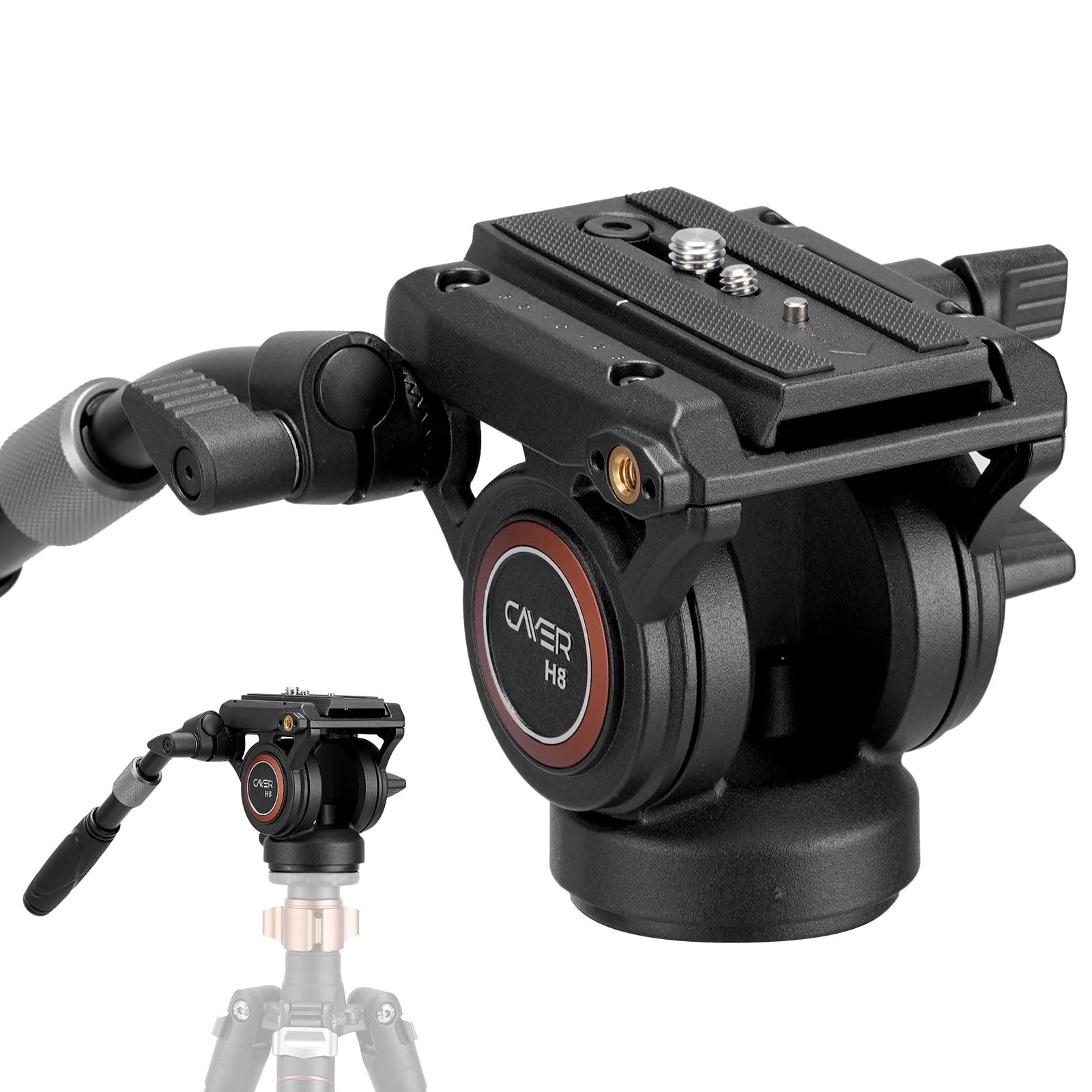
The Cayer H8 supports a 13.2 lb load on a 60mm base and delivers pan and tilt movement that feels genuinely fluid for a budget head. That capacity covers telephoto DSLR and mirrorless combos, spotting scopes, and camcorders without sag or stutter during slow sweeps. The 360° pan range and -50° to +90° tilt provide enough freedom for birding, sports, and scope work, while the 1.7 lb head weight keeps the overall setup manageable on a field tripod. Its 60mm flat base fits common flat-base tripod plates without an adapter.

With a long lens mounted, the head holds position without visible droop, and the 60mm flat base mates cleanly with a range of tripod platforms. The quick-release plate is compatible with DJI RS and 501PL receivers, so it can share a plate with gimbal or slider setups. That plate style keeps integration simple with existing camera supports. Build quality at this price comes across as sturdy: metal knobs, a rigid body, and no flex when you lock down a heavy rig. The pan damping stays controlled even when you feather the drag knob toward the looser end.

This is a standalone fluid head for shooters who need load capacity more than compactness. Wildlife and bird photographers with telephoto lenses, budget videographers running heavier mirrorless kits, and spotting scope or telescope users are the right fit. It is not the head for an integrated leveling base — uneven terrain calls for a leveling tripod or a separate base — and it is not a genuinely tiny travel head. The drag and base-plate lock adjustments can be finicky, and dialing in tension takes practice, so budget a few minutes before the first shoot to set the head up the way you want it.

For the price, the H8's combination of load headroom, smooth damping, and sturdy construction makes it a strong value in this category. It sits above ultra-compact heads in capacity and stability, making it the strongest match for buyers who need a manual pan-and-tilt head rather than a motorized or flexible multiway solution. The core value is simple: it gives heavy kits a stable base without dragging you into the next price tier. Shooters who need a built-in leveling base or ultralight travel dimensions should look elsewhere, but the tradeoff is easy to accept when the job is holding a heavy lens or scope steady on a tripod.

💡 Set the drag knob with the quick-release plate loose, then tighten the plate once the head moves at your preferred resistance.

Pros

  • Holds telephoto DSLR and mirrorless kits without sag, giving wildlife shooters a stable platform.
  • Metal build and rigid knobs feel durable enough for regular outdoor use.
  • Fluid pan and tilt stays smooth through the full 360-degree range.
  • Delivers load capacity and smooth damping at a budget price that undercuts comparable heads.

Cons

  • Drag tension and base-plate lock adjustments can be finicky until you learn the right feel.
Our verdict

The Cayer H8 is the head to choose when your camera, lens, or scope needs more load support than compact heads can offer without pushing into premium pricing.

Check Latest Price
2

Best Budget Compact

NEEWER GM24

88 /100
Studio Score Strong Evidence

Key details

Base Mount
37mm base
Load Capacity
6.6 lb
Quick Release
Arca-Swiss type
Damping Quality
Pan friction, tilt fluid
Check Price on Amazon

The NEEWER GM24 puts a 6.6 lb-rated pan-and-tilt fluid head into a 310 g body, pairing an Arca-Swiss quick-release clamp with pan and tilt locks plus a drag knob. That footprint keeps it practical for mirrorless run-and-gun work without adding the bulk of a traditional video head.

On a lightweight mirrorless body, the GM24 holds its position between shots and the Arca plate seats cleanly in the clamp. The all-metal build feels more substantial than the price suggests, and the 37 mm base fits travel tripods that would struggle with the larger footprint of the top pick.

Travel and run-and-gun mirrorless videographers are the right fit: the GM24 works as a budget-friendly upgrade from a kit ball head when portability matters more than a leveling base or telescoping handle. The tilt axis is the smoother of the two, and the horizontal pan can feel stiff or non-fluid in some units, so this head suits users who adjust the drag knob rather than expect stepless pan resistance.

For the price, the GM24 gives mirrorless shooters a light alternative to a ball head without locking them into a proprietary plate. Budget-conscious hikers get the core fluid-head controls in a package light enough to leave in a bag all day, which is what separates it from bulkier budget 3-way heads.

💡 Set pan drag with the camera mounted and the knob slightly loose, then tighten until the pan move feels controlled.

Pros

  • A 310 g body keeps a full pan-and-tilt fluid head practical for hiking and travel.
  • Arca-Swiss quick-release plate makes camera changes quick and secure.
  • All-metal build feels solid for a compact head.
  • Provides stable support for lightweight mirrorless camera setups.

Cons

  • Rated for 6.6 lb, so a heavy telephoto zoom or cage can push the head beyond its intended load.
Our verdict

For travel-first mirrorless shooters, this is the one to slip into a backpack before a hike; the top pick only becomes necessary when your kit outgrows it.

Check Latest Price
3

Best for Quick Leveling

NEEWER GM27

86 /100
Studio Score Strong Evidence

Key details

Base Mount
Leveling base +/-10°
Load Capacity
8.8 lb
Quick Release
Arca-Swiss type
Damping Quality
Fluid pan/tilt
Check Price on Amazon

An integrated +/-10° leveling base is what separates the GM27 from the slimmer budget heads in this group. That base lets you bring the pan axis to horizontal on a slope before touching the pan and tilt locks, and the telescoping handle gives enough leverage for controlled pans. It is not the most minimal option — the smaller GM24 in the same line is lighter — but the leveling range is what earns the extra weight.

Pan and tilt action stays smooth through the working range, covering typical mirrorless and DSLR video kits without the sag you feel on cheaper spring-loaded heads. The 370 g body keeps the package compact, yet the base and clamp feel stable when locked. Arca-Swiss compatibility means the bundled plate works with existing clamps, which is a practical convenience for interchangeable-plate owners.

This is the head for shooters on uneven terrain who want a quick leveling base without stepping up to a full-size video tripod. Travel vloggers with mirrorless or DSLR kits up to 4 kg will find the compact footprint and extending handle a good match. The one thing to learn is the quick-release clamp: plates need to be fully tightened before mounting, or the clamp can loosen during use.

Pros

  • Full-featured control in a 13 oz body that packs down small.
  • Pan and tilt movement stays smooth across the working load range.
  • Feels stable and solid at a budget price point.
  • Compact footprint and integrated base keep travel kits light.

Cons

  • The 8.8 lb max load leaves long-telephoto and 75mm-bowl rigs out of range.
Our verdict

The integrated leveling base makes the GM27 the right compromise for anyone who wants compact travel support without sacrificing quick setup on slopes.

Check Latest Price
4

Best Ultra-Compact / Spotting Scope

SmallRig CH10

88 /100
Studio Score Strong Evidence

Key details

Base Mount
3/8 and 1/4 thread
Load Capacity
6.6 lb
Quick Release
Mini Arca-Swiss
Damping Quality
Fixed pan/tilt damping
Check Price on Amazon

At 279 g, the CH10 is the lightest standalone fluid head in this roundup and still supports a 50-65 mm spotting scope without the flimsy feel you might expect at this weight. It is the head to reach for when gram-counting matters more than payload, especially next to the higher-capacity leader in this set. The 360° pan range covers a full sweep without repositioning the tripod.

This head suits birders, backcountry hunters, and travel video shooters running light mirrorless cameras. The 3 kg maximum load covers compact scopes and small lenses, but full-size cinema cameras and long telephoto rigs are beyond the intended range. The miniature Arca clamp is not fully standardized; thick or non-standard plates may seat poorly, so test the fit before trusting it on uneven ground.

Pan movement stays smooth when scanning, and the tilt axis holds its position once you stop. The 3/8-inch and 1/4-inch base threads cover standard tripod mounts without adapters, and the compact metal body feels denser than its weight suggests. The finish reads above the budget tier, which is why it fits naturally into an ultralight field kit rather than feeling like a stopgap head.

Pros

  • Stable support for 50-65 mm spotting scopes in field use.
  • Smooth pan and tilt action for tracking birds and scenery.
  • 279 g weight keeps backcountry and travel kits light.
  • Compact metal build feels secure for a head of this size.

Cons

  • Fixed tilt damping can feel stiff on some units, making fine framing adjustments less predictable.
Our verdict

For a 279 g fluid head, the CH10 is a budget-friendly fit for ultralight scope users.

Check Latest Price
5

Best Value Accessory Bundle

INNOREL F20

90 /100
Studio Score High Confidence

Key details

Base Mount
50mm base
Load Capacity
11 lb
Quick Release
Two Arca plates
Damping Quality
Fluid pan/tilt
Check Price on Amazon

The F20 stands apart from the compact pan-and-tilt heads in this roundup by including two Arca plates, a magic arm, and a phone clip in the box. With an 11 lb capacity and a 0.91 lb body, it covers mirrorless cameras, telephoto lenses, and moderate spotting scopes without becoming the heaviest part of your kit. Pan and tilt motion is smooth once the drag is set, and the 360° pan range keeps re-framing simple.

With two Arca plates in the box, you can keep one on a camera and one on a spotting scope, then use the magic arm and phone clip when you want a second angle. The whole bundle stays light enough for a daypack, and the plate clamp releases cleanly for quick swaps. That combination makes this head a candidate for a travel kit rather than a dedicated studio setup.

This setup is aimed at travel video and photo hybrid shooters, plus spotting scope users with moderate loads. If you need quick leveling on uneven ground, the flat 50 mm base has no integrated leveling bowl—pair it with a leveling tripod or column instead. Heavy telephoto, gimbal, or cinema rigs fall outside this head's load class, so keep those on a larger fluid head.

Pros

  • Stable build with an 11 lb rating supports mirrorless bodies, telephoto lenses, and moderate scopes.
  • Bundled two Arca plates, magic arm, and phone clip cover photo, video, and phone capture in one kit.
  • Smooth pan/tilt motion once drag is set, with a full 360° pan range for re-framing.
  • Controls on both axes work without fuss, so switching between stills and video is quick.

Cons

No notable drawbacks to flag.

Our verdict

For hybrid shooters who want one head on the tripod instead of separate camera and phone mounts, the F20's accessory bundle and 11 lb capacity make it a practical travel companion.

Check Latest Price
6

Best Geared Precision

Manfrotto MHXPRO-3WG

86 /100
Studio Score Strong Evidence

Key details

Base Mount
Load Capacity
8.8 lb
Quick Release
Manfrotto RC2 plate
Damping Quality
Geared micro-adjustment
Check Price on Amazon

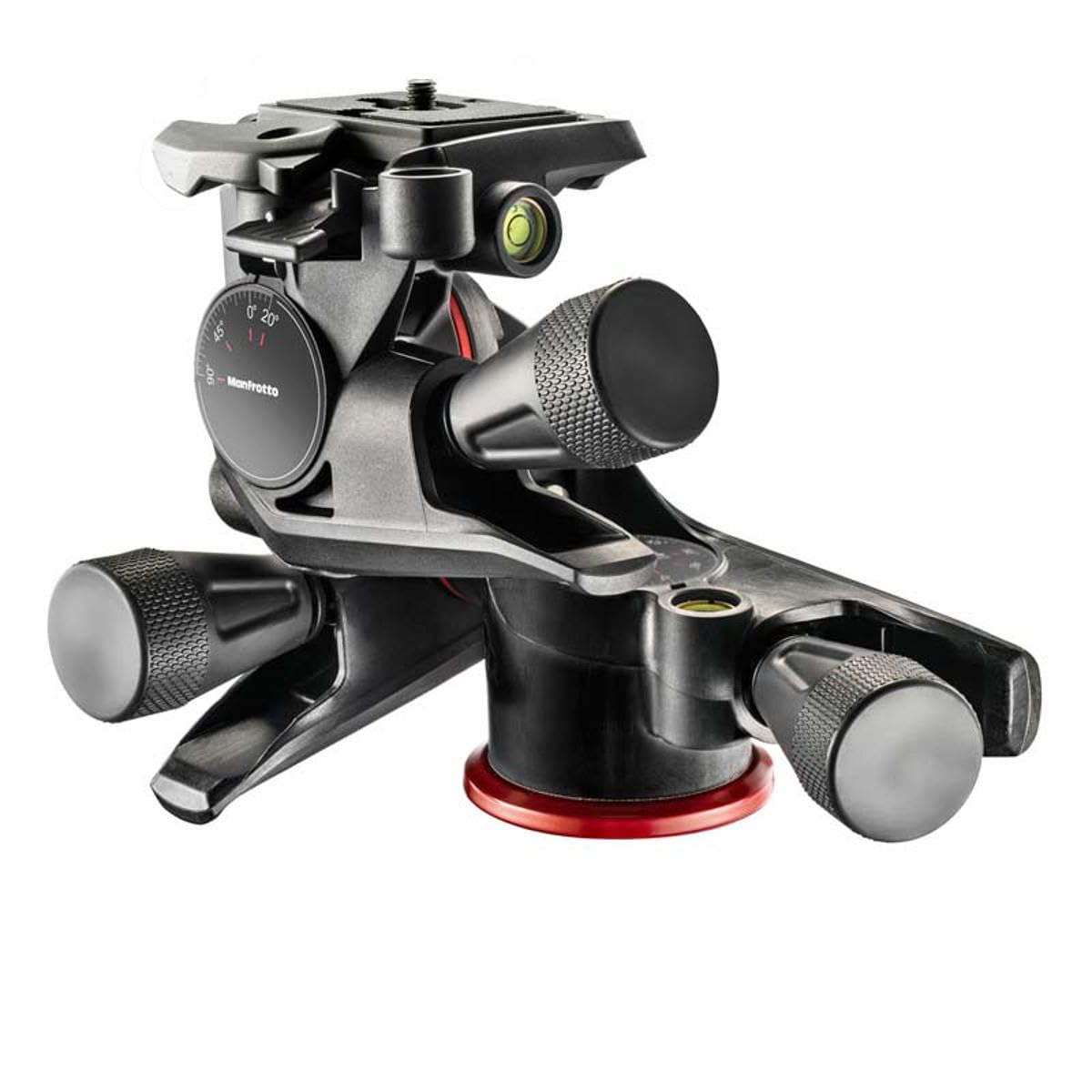
Geared micro-adjustment on all three axes is the defining trait here, and the RC2/200PL quick-release system lets Manfrotto owners reuse plates from existing heads. The knobs move in small, repeatable increments, so framing changes stay controlled rather than overshooting the composition. The value-priced geared head in this set offers Arca-Swiss plates, but the Manfrotto's RC2 ecosystem is the better fit for shooters already stocked with 200PL plates. This is a head for photographers who think in fractions of a degree, not for those who grab a quick pan.

Panning covers a full 360 degrees, and the 1.65 lb head supports standard full-frame bodies with a zoom lens without complaint. Nudge one axis at a time, and the horizon stays level; this makes panoramas and astro grids easier to align. The geared resistance also slows accidental bumping, so once a composition is set, it holds through a long exposure or burst.

This head fits studio, macro, landscape, and astro photographers already using Manfrotto's RC2 plates and comfortable with deliberate adjustments. Geared mechanisms can loosen after extended daily use, and the premium price makes it a working tool rather than a casual accessory. It is not a fluid head, so video panning and run-and-gun framing belong on a different product.

For product photography, the geared knobs make centering a bottle or aligning a watch face a matter of small, predictable turns. Landscape shooters can level the horizon before each frame without re-setting the whole head. This is where the MHXPRO-3WG does its most precise work.

💡 Make sure the 200PL plate is fully seated before locking; a loose plate cancels geared precision.

Pros

  • Suits macro, landscape, astro, and studio stills with micro-adjustments on every axis.
  • Geared knobs move in small, accurate steps, so fine composition stays under control.
  • Horizon leveling is predictable; pan and tilt return to the same framing without drift.
  • Once the geared controls become familiar, deliberate adjustments feel intuitive.

Cons

  • Large framing moves require repeated turns of the geared knobs, so quick repositioning is slower than a fluid head.
  • 8.8 lb load ceiling leaves no headroom for heavy telephoto primes or fully built video rigs.
Our verdict

For photographers who treat framing as a slow, deliberate step, the MHXPRO-3WG delivers a controlled and repeatable geared workflow.

Check Latest Price
7

Budget Travel Video

K&F Concept FH-03

84 /100
Studio Score Strong Evidence

Key details

Base Mount
3/8 and 1/4 thread
Load Capacity
11 lb
Quick Release
Arca-Swiss plate
Damping Quality
Fluid pan/tilt
Check Price on Amazon

The compact body and 11 lb rating make this a practical pairing for mirrorless or lighter DSLR kits on the road, while heavy telephoto and cinema rigs exceed that envelope. Fluid drag is smooth enough for controlled pans, and the Arca plate plus removable telescopic handle reduce setup friction. Unit variance is the limiting factor: the handle-mounting screw and full 360° pan rotation are the two areas to check on arrival. A sound unit delivers better portability than heavier alternatives for less money. This is not the head for geared stills adjustment or built-in leveling; those jobs belong to the K&F GD-3W or the GM27.

Pros

  • Good build quality for a compact 1.06 lb head, with the lightweight shell feeling secure in the field.
  • Arca-Swiss plate and removable telescopic handle make mounting and packing faster.
  • Pan and tilt action stays smooth enough for controlled video with light mirrorless kits.

Cons

  • Full 360° pan rotation can fall short on a given unit, limiting clean panorama work.
  • The small handle-mounting screw can strip under torque, making the removable arm less secure.
Our verdict

For travelers and light video shooters who can inspect the unit on arrival, this is a worthwhile budget head.

Check Latest Price
8

Value Geared Precision

K&F Concept GD-3W

85 /100
Studio Score Strong Evidence

Key details

Base Mount
Load Capacity
13.2 lb
Quick Release
Arca-Swiss plate
Damping Quality
0.1° geared precision
Check Price on Amazon

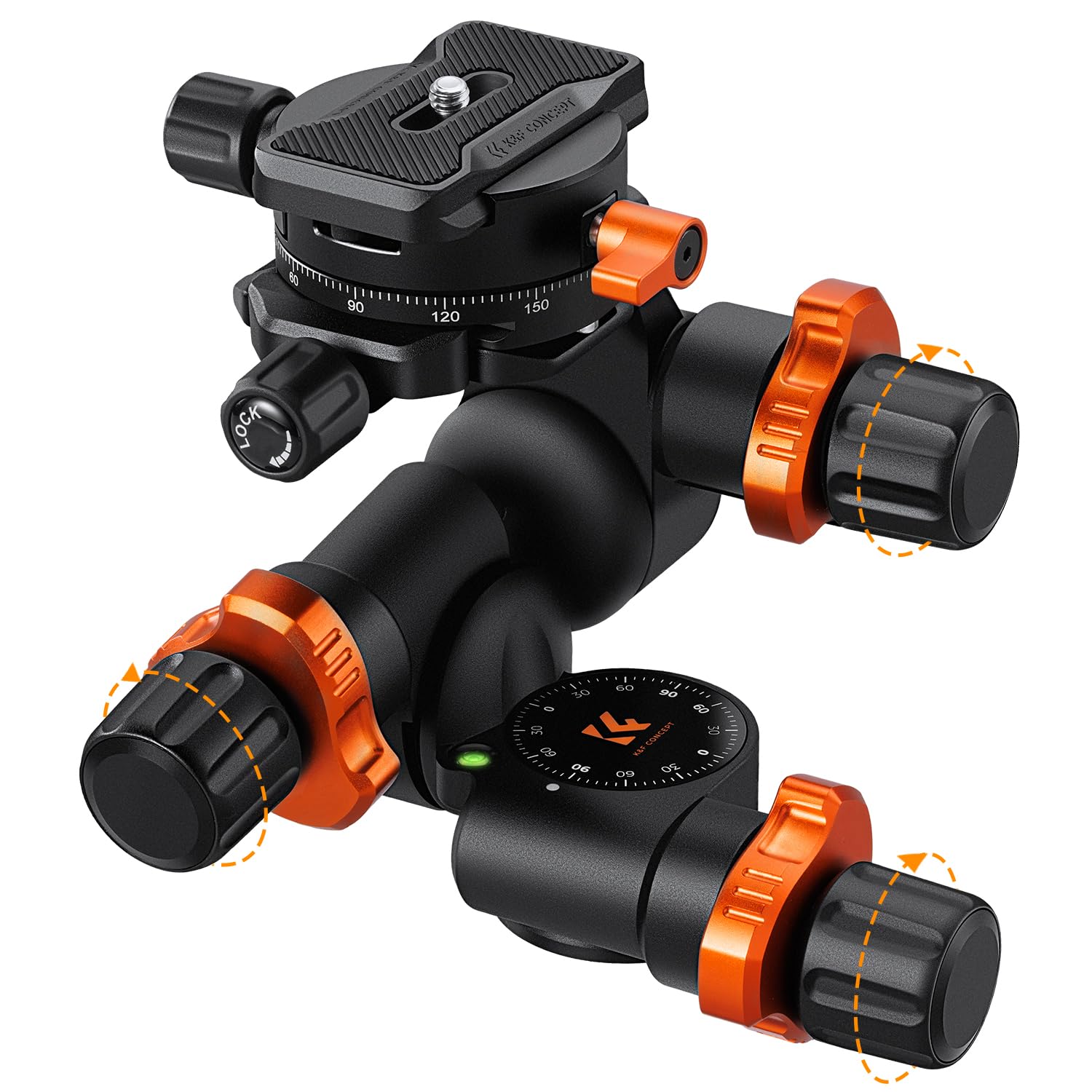
The K&F Concept GD-3W is a budget-priced geared three-way head for stills photographers who need 0.1° micro-adjustment on all three axes; the Arca-Swiss plate and dual 360° pan make it a practical alternative to the usual Manfrotto geared head for architecture, macro, astro, and real estate work. The 6 kg load rating and solid build support deliberate framing on a standard tripod. Geared heads require careful handling; forcing a locked knob can create slack in the mechanism over time, a tradeoff that matters less when composition happens slowly. This is an also-consider rather than the top pick because its audience is limited to deliberate stills work.

Pros

  • Solid, stable construction holds a 6 kg camera and lens combo with minimal flex.
  • Fine geared knobs provide repeatable micro-adjustment on all three axes.
  • Accurate framing holds without drift once the composition is set.

Cons

  • Video pans will feel stepped because the geared mechanism offers no fluid drag.
  • At 1135 g, the head is heavier than compact travel heads; field kits will notice the added weight.
Our verdict

For architectural, macro, and astro shooters who frame slowly, this is a cost-effective route to geared precision without the Manfrotto brand premium.

Check Latest Price
9

Monopod Video

iFootage Komodo K5S

87 /100
Studio Score Strong Evidence

Key details

Base Mount
Load Capacity
11 lb
Quick Release
Upgraded quick plate
Damping Quality
Counterbalance fluid movement
Check Price on Amazon

The Komodo K5S pairs 5.29 lb of counterbalanced rebound with smooth fluid damping, which makes it a compact head for monopod shooters who need stable pan-and-tilt movement. Its 1.81 lb weight and 11 lb rating suit mirrorless and DSLR kits, and the upgraded quick-release plate adds compatibility across camera bases. The premium price is the main boundary: budget compact heads cost less, and the counterbalance is specifically tuned for monopod-style work rather than heavy studio setups. The premium price and specialized monopod focus keep it out of the top tier. Confirm that the head’s mounting base matches your monopod before purchase, since compatibility depends on the specific pole.

Pros

  • Counterbalanced fluid movement keeps a monopod-mounted camera stable through pans and tilts.
  • Compact 1.81 lb body suits solo videographers who want a premium head without adding bulk.
  • Secure clamping and solid construction handle mirrorless and DSLR kits up to 11 lb.

Cons

  • The premium price is a boundary for budget-focused buyers, though the counterbalance explains it.
  • The head’s mounting base must match your monopod; confirm compatibility before purchase.
Our verdict

Best for monopod shooters who value counterbalance and don’t mind the premium; tripod-first buyers will find better value in a more general-purpose head.

Check Latest Price

How to Choose

Load Capacity

Rated capacity is not a cliff; a head rated for 6.6 lb will hold more, but damping and lock-up become unpredictable past the sweet spot. A telephoto lens shifts weight forward, multiplying torque on the tilt axis and causing creep or flop even with the lock tightened.

Look for at least 8-13 lb if you use telephoto, a cage, or a gimbal. Extra margin keeps the mechanism away from its limit during every shot.

Damping Quality

True fluid heads use sealed cartridges with adjustable drag, while many budget 'fluid' heads use fixed friction or spring-assisted tilt. They feel smooth with a light camera, then stiffen or bounce as load grows.

If you shoot video, check whether drag is adjustable. A fixed-friction head works for photos and occasional pans, but cannot keep a consistent pan speed with heavier rigs.

Quick-Release Compatibility

Arca-Swiss is a common standard, but mini fluid heads often use a smaller clamp that rejects thicker plates. A loose plate can rotate or drop mid-shoot.

Use the included plate until you confirm compatibility with your existing Arca plates. Proprietary plates like Manfrotto RC2 need matching receivers.

Base Mount

Base diameter and thread decide which tripod or monopod the head can join. A 60mm base sits more stably than a 37mm base with telephoto leverage.

A +/-10° leveling base is a separate adjustment below the pan/tilt mechanism. It saves you from leveling tripod legs on uneven ground, but adds height and weight.

Weight and Portability

Every extra ounce sits on top of your tripod and inside your pack. A 280g head disappears in a backpack; a 1.7 lb head is still fine for a day hike but noticeable on a monopod.

Compact heads also have smaller knobs, harder to use with gloves or cold fingers. Buy the lightest head that still gives enough load capacity and base stability.

Frequently Asked Questions