9 Best Macro Lens of 2026: Picks With True Magnification

Find the best macro lens for your camera and shooting style, with real magnification and working-distance trade-offs spelled out.

The word 'macro' gets used loosely in lens marketing. Some lenses labeled macro stop at 0.5x, which is close-up range but not life-size. Phone attachments often claim 10x while delivering a fraction of that. Sorting out true 1:1 and 2x magnification is the difference between a lens you keep and one you replace.

Magnification is only the first split. Working distance determines whether you can photograph a live insect without casting your shadow over it, and a manual-focus-only lens can be sharper per dollar but demands patience and a tripod.

The main trade-off in the upper tier is between extreme magnification and cost. A lens that reaches beyond life-size costs more and shrinks depth of field to fractions of a millimeter, while a well-corrected 1:1 lens covers most macro needs and doubles as a portrait lens. Buy the minimum magnification your subjects require, then spend the rest on working distance and focus behavior.

1

Best Overall

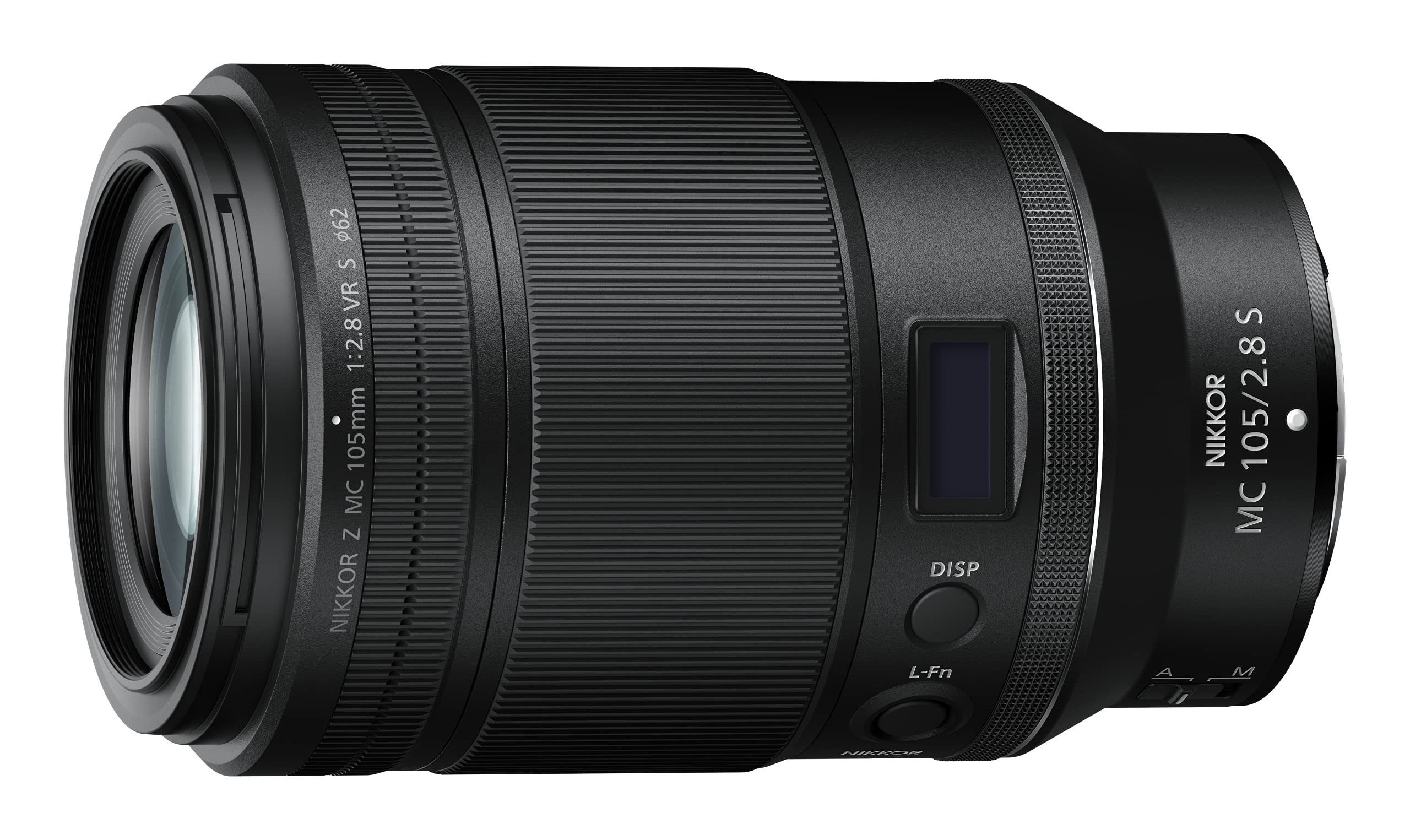
Nikon Z MC 105mm f/2.8 VR S

93 /100
Studio Score High Confidence

Key details

Autofocus
AF
Lens Mount
Nikon Z
Max Magnification
1:1
Check Price on Amazon

The Z MC 105mm f/2.8 VR S is a true 1:1 macro for Nikon Z bodies, and the detail it resolves at minimum focus distance is immediately apparent. Life-size magnification separates it from close-focus primes that borrow the macro label; 0.5x is not the same benchmark. Edge-to-edge sharpness holds through the frame, and the S-Line construction, weather-sealed barrel, and solid control feel make it a field-ready lens. The 105mm focal length also adds useful subject clearance, so you are not hovering directly over a flower or product.

VR takes a lens that could demand a tripod and makes handheld close-ups practical. At life-size magnification, small movements are amplified, so the stabilization is a genuine framing aid. The same optical design doubles as a portrait lens: f/2.8 at 105mm produces soft backgrounds and natural compression. It is light enough to stay in the bag as a carry-around option rather than a specialty tool reserved for macro days.

Nikon Z owners who shoot nature or product close-ups and also want a portrait lens will find this matches their workflow. The AF is calibrated for accuracy before speed, so tiny, low-contrast subjects can cause hunting, and moving subjects can feel slow to lock. Static flowers, small parts, and posed portraits do not strain that behavior. Buyers whose priority is tracking fast-moving subjects should look elsewhere; Canon RF and Sony E bodies are outside the mount entirely.

The focus ring gives you direct control over the final plane of focus, which matters at 1:1 where depth of field is thin. Manual precision is easy to apply without leaving the shooting position. For standard nature and product work, 1:1 magnification is the benchmark, and this lens clears it without needing a second setup.

Compared with other macro lenses in the dedicated class, working distance and mount support are where usability is decided. The Z MC 105 offers enough subject clearance for small creatures without feeling like a short-range adapter, and the native Z mount keeps communication and weather sealing intact. It also avoids the compromise of clip-on attachments: no step rings, no alignment guessing, just a native Z lens. If beyond-life-size magnification is a requirement, a competing 1.4x macro goes further; for conventional macro work, 1:1 is the standard this lens meets.

πŸ’‘ Use a single AF point on high-contrast detail and fine-tune with the focus ring when shooting at 1:1.

Pros

  • Shoots true 1:1 with edge-to-edge sharpness at macro distances.
  • S-Line construction and weather sealing hold up in outdoor field work.
  • VR steadies handheld close-ups, reducing the pull toward a tripod.
  • Light enough for a carry-around lens, and it doubles for portraits.

Cons

  • Accuracy-first AF can feel slow on moving subjects and may hunt at close range on low-contrast targets.
Our verdict

Nikon Z nature and product shooters get life-size macro, handheld stability, and portrait reach without carrying a second prime.

Check Latest Price
2

Best Canon RF Pro Macro

Canon RF100mm f/2.8 L Macro

91 /100
Studio Score High Confidence

Key details

Autofocus
AF
Lens Mount
Canon RF
Max Magnification
1.4x
Check Price on Amazon

Canon's RF 100mm f/2.8 L reaches 1.4x magnification, so it records flower stamens and product texture beyond life-size. The spherical aberration control ring shifts bokeh from smooth to more characterful, and 5-stop Hybrid IS steadies the frame at working distances where handholding normally gets shaky. This is the specialist RF macro in the group, distinct from the compact RF 85mm f/2 close-focus prime that leans toward portraits.

L-series color, contrast, and sharpness show up wide open, which reduces post-processing. The 1.4x setting offers enough working distance to arrange product lighting without the lens shadowing the subject. Bokeh is creamy in ordinary macro shots, while the SA ring adds a separate adjustment for background smoothness. All of that makes the lens a strong partner for controlled close-up sessions.

Serious flower and product photographers on Canon RF are the right fit. The premium price, the separate tripod collar, and occasional close-range AF hunting are part of the package, so the lens suits shooters who plan focus and tripod arrangements rather than grab-and-go users. It is not the everyday RF prime for casual close-ups; it is the RF macro that gets you beyond 1x.

Pros

  • L-series color, sharpness, and creamy bokeh make close-ups look complete straight out of camera.
  • True 1.4x magnification captures more detail than a standard 1:1 macro lens.
  • Autofocus stays quick and smooth across the normal RF macro range.
  • Product and macro sessions get a dual-purpose prime that also carries portrait duty.

Cons

  • Tripod collar is not included, so tripod-head users need to buy the accessory separately.
  • At macro distances, autofocus can hunt before locking at 1.4x.
Our verdict

Canon RF shooters building a dedicated macro kit get the highest magnification and L-series rendering here, ahead of the lighter close-focus RF primes.

Check Latest Price
3

Budget Macro for Nikon DSLRs

Nikon DX 40mm f/2.8 Micro

93 /100
Studio Score High Confidence

Key details

Autofocus
AF
Lens Mount
Nikon F DX
Max Magnification
1:1
Check Price on Amazon

The Nikon AF-S DX Micro 40mm f/2.8G delivers genuine life-size macro for APS-C Nikon DSLRs at an entry-level price, and the 40mm focal length also covers normal-prime duty for everyday shooting. It provides real 1:1 magnification rather than a close-focusing 0.5x approximation, with the f/2.8 aperture suiting close portraits and product shots.

Sharpness and color are strong for a lens in this price range, and the 40mm focal length frames small objects naturally. The same close-focusing design works for portraits and products, so it earns its keep beyond dedicated macro sessions.

This is for Nikon DX/DSLR beginners who want a first true macro for product, flower, and close-up portrait work on a budget. The working distance at 40mm is short, so skittish insects are a poor match, and autofocus may hunt at close range in low-contrast scenes; a 90-105mm macro is the better tool for insect shooters who need more room.

Pros

  • True 1:1 macro magnification for Nikon APS-C DSLRs at a budget price
  • Sharp close-ups with strong contrast and color
  • Compact 40mm focal length doubles as a normal prime for everyday shooting

Cons

  • Autofocus can hunt at close range in low-contrast scenes; manual focus restores control.
  • At 1:1 the 40mm working distance forces a close approach, which limits skittish insect subjects.
Our verdict

A genuine 1:1 macro for Nikon DX shooters who want sharp close-ups and a usable normal focal length without moving up to a longer telephoto macro.

Check Latest Price
4

Best 2:1 Manual Macro for Sony

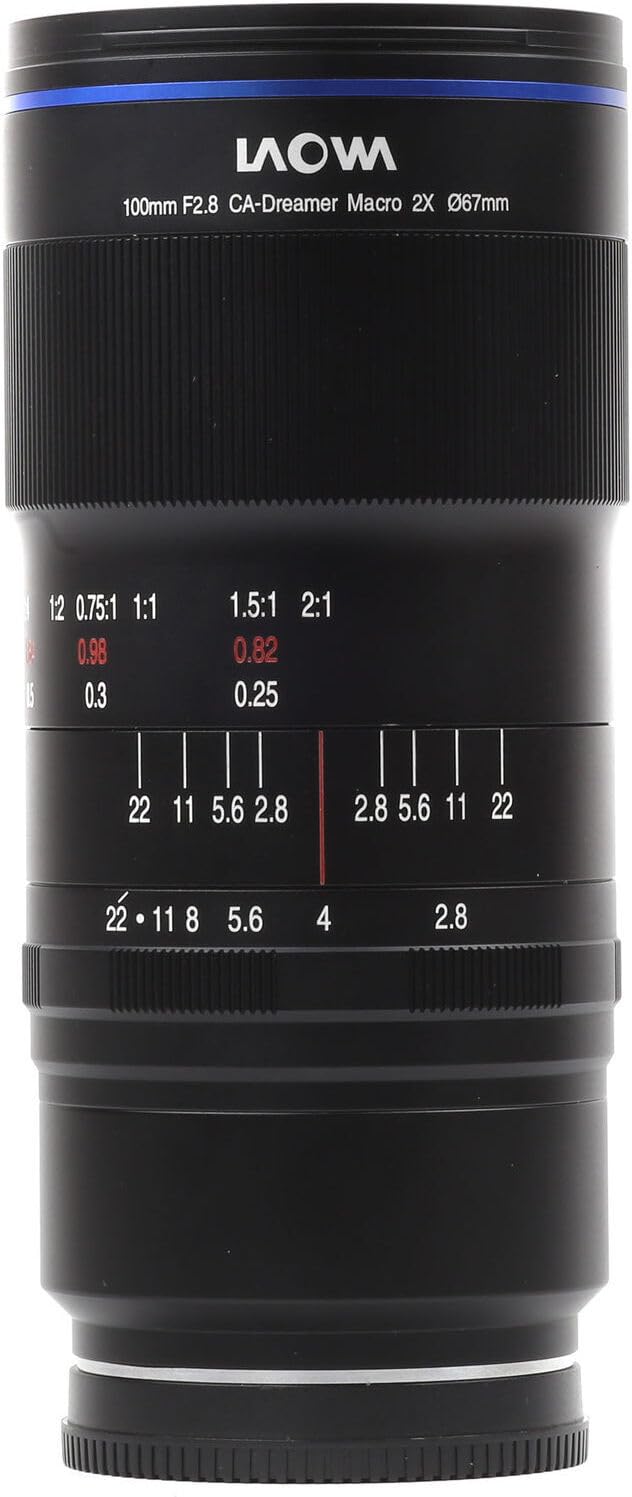
Laowa 100mm f/2.8 2X Macro

87 /100
Studio Score Strong Evidence

Key details

Autofocus
Manual
Lens Mount
Sony E
Max Magnification
2:1
Check Price on Amazon

The Laowa 100mm f/2.8 is the Sony E lens in this set that reaches true 2:1 magnification, and it does so with APO optics and a 13-blade aperture. The apochromatic design keeps color fringing close to invisible in high-contrast leaf veins and metal edges, while the rounded aperture gives backgrounds a smooth, non-distracting feel for product and nature work. The result is clean color separation at the exact plane of focus.

The focus ring turns with enough resistance for precise adjustments, which matters when the focus plane at 2x is measured in millimeters. At close focus, the lens holds edge-to-edge sharpness even when the subject fills most of the frame, so small details like pollen or fabric texture come through clearly. This is where a 1:1 macro has to stop; the extra magnification here is the whole point. Working at 2x, the depth of field is narrow enough that focus placement becomes part of composition.

Sony E full-frame shooters who want maximum macro magnification for the money are the core audience. Product and botanical close-ups get the most benefit from the added magnification, and this lens rewards a patient, composed approach more than quick handheld use. The right buyer already prefers a controlled setup; for them the tradeoff is not a compromise.

πŸ’‘ Use focus peaking or magnified live view at 2x, then adjust the camera or subject for final composition.

Pros

  • True 2:1 magnification is tack-sharp with near-zero chromatic aberration.
  • Strong value compared to OEM macro lenses at a mid-range price.
  • Manual focus ring turns smoothly for fine adjustments.

Cons

  • Fully manual focus with no lens stabilization, so sharp 2x shots can require a tripod or controlled setup.
Our verdict

A true 2:1 full-frame macro for Sony E that rewards deliberate shooters; the value holds when maximum detail per dollar is the goal.

Check Latest Price
5

Best Snap-On Macro Adapter

Raynox DCR-250 Snap-On Macro

91 /100
Studio Score High Confidence

Key details

Autofocus
Varies by lens
Lens Mount
52-67mm filter
Max Magnification
2.5x diopter
Check Price on Amazon

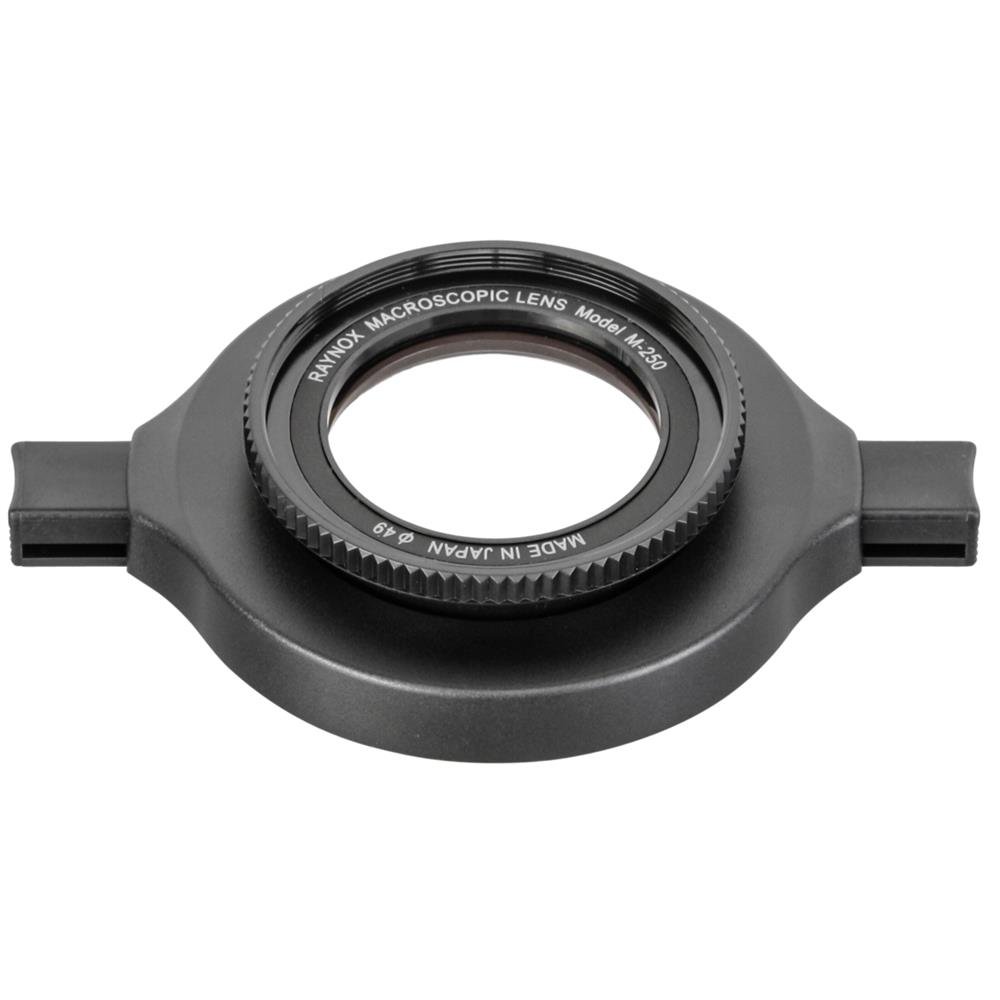
The DCR-250 is a snap-on 2.5x diopter adapter that clips onto 52-67mm filter threads and turns a kit zoom into a macro setup. It adds strong magnification without adding a second lens to the bag, and it leaves your aperture controls untouched. This is the core appeal: more macro reach from gear you already own.

The most useful approach is to set the zoom near the telephoto end and move the camera to find focus. When it lands, the adapter produces crisp close-ups with detail a kit lens alone cannot resolve. The magnified view is dramatic, so a slow, controlled shooting pace gives the cleanest results.

Depth of field is extremely shallow and the universal mount can be flimsy without a step-down ring. Neither is a dealbreaker; both are accepted tradeoffs of a clip-on adapter that relies on the lens you already own.

This adapter suits photographers with a compatible zoom lens who want macro capability without a dedicated lens purchase and are willing to take a slower approach. The payoff is serious close-up detail for less than the price of a new lens.

Pros

  • Turns a kit zoom into a macro setup for less than most dedicated lenses.
  • Crisp close-up detail with no meaningful image-quality loss.
  • Light clip-on attachment switches between normal and macro shooting quickly.

Cons

  • Autofocus is not a practical route at macro distances; manual focus gives consistent control.
  • The working distance stays short, which limits insect subjects.
Our verdict

If a compatible zoom lens is already in your kit, this adapter is a cost-effective route to macro detail without adding a dedicated lens.

Check Latest Price
6

Best RF Portrait Lens With Macro

Canon RF 85mm f/2 Macro IS

92 /100
Studio Score High Confidence

Key details

Autofocus
AF
Lens Mount
Canon RF
Max Magnification
0.5x
Check Price on Amazon

The Canon RF 85mm f/2 Macro IS STM is a portrait-first RF prime: it pairs f/2 rendering with 5-stop stabilization and a compact barrel for hybrid shooters. In this macro-focused lineup, the specialist RF macro reaches 1.4x magnification; this lens trades some close-up reach for a lighter, more affordable build.

At f/2, the lens delivers sharp, high-contrast images with smooth background blur. The compact design balances well on EOS R bodies or a gimbal, and the close-focusing range is comfortable for product shots without crowding the subject.

This fits Canon RF shooters who want one lens for portraits and the occasional product or flower shot. If your search is specifically for dedicated macro magnification, the boundary is clear: 0.5x is close-focusing, not life-size, and the STM autofocus can be slow and noisy in low light. A true 1:1 macro remains the better tool for tiny subjects that need to fill the frame.

This lens sits in the middle of the RF lineup: more affordable than L-series primes, but priced above entry-level glass. It makes sense as a first RF prime for shooters who want a fast short-telephoto without jumping to the premium macro tier.

Pros

  • Sharp f/2 rendering with smooth bokeh for portrait work.
  • Cost-effective RF prime with strong image quality for the price.
  • Close-focusing range covers product shots and wedding details.

Cons

  • Video shot in quiet rooms can pick up focus motor noise.
  • At maximum magnification, tiny subjects need cropping to fill the frame.
Our verdict

Portrait-focused RF shooters get one lens for people, product details, and stabilized video. Dedicated macro hunters should choose the specialist 1.4x RF option in this lineup.

Check Latest Price
7

Fuji X Macro

Laowa 65mm f/2.8 2X Macro

90 /100
Studio Score High Confidence

Key details

Autofocus
Manual
Lens Mount
Fujifilm X
Max Magnification
2:1
Check Price on Amazon

The Laowa 65mm f/2.8 is a real 2:1 macro lens for Fujifilm X, not a close-up attachment that merely focuses nearer. It reproduces subjects at twice life size, and the all-metal barrel keeps the setup light while delivering the kind of defined detail that macro work demands.

The routine rewards a deliberate pace: manual focus gives direct control over a very thin focus plane, and a tripod removes camera sway. It is also APS-C-only, which is why this compact Fujifilm X optic sits as a specialist alternative rather than the category’s main recommendation.

Pros

  • True 2:1 magnification captures twice life-size detail for close-up work.
  • Compact all-metal body is easy to carry in an APS-C Fujifilm kit.
  • Mid-range price offers strong value for a dedicated 2x macro optic.

Cons

  • No autofocus for moving subjects; this lens is built for static macro scenes.
  • No electronic contacts or EXIF data, so lens info stays out of image files.
Our verdict

If your macro work is stationary and you already shoot Fujifilm X, the Laowa 65mm delivers true 2:1 detail at a mid-range price.

Check Latest Price
8

Osmo Pocket B-Roll

K&F 10X Macro for Osmo Pocket

85 /100
Studio Score Strong Evidence

Key details

Autofocus
Manual
Lens Mount
DJI Osmo Pocket
Max Magnification
10x claimed
Check Price on Amazon

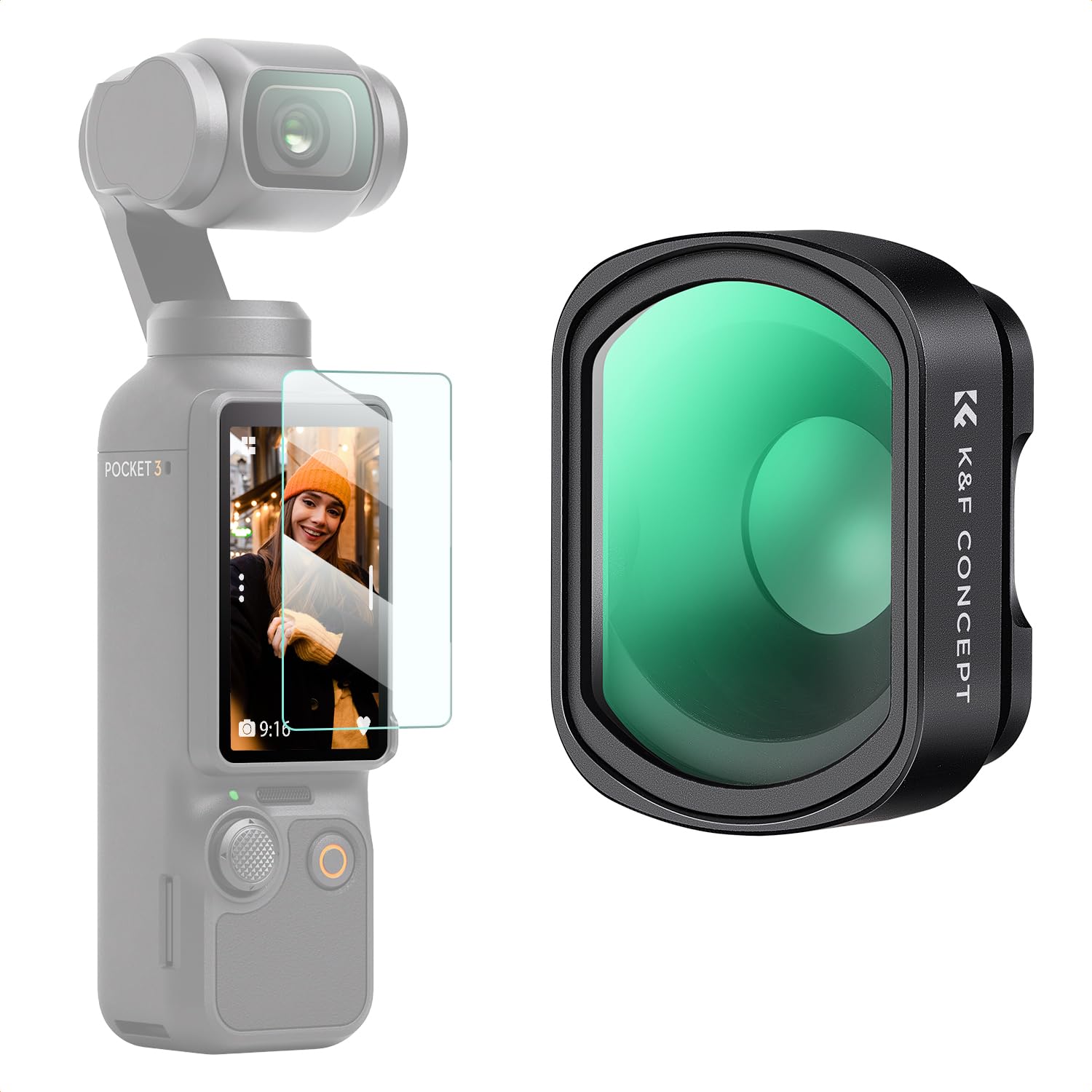
The K&F Concept 10x macro adapter is a low-cost way to get crisp close-ups from a DJI Osmo Pocket 3/4. With a 20-40mm focusing distance, it suits product details, textures, and b-roll, and the build quality feels above the price tag.

The catch is scope: this adapter only mounts to Osmo Pocket 3/4, so it is not a general-purpose macro attachment. Magnetic alignment is the other thing to watch; off-center mounting will soften the already shallow depth of field. Osmo Pocket owners who need dedicated close-up shots will still get a useful niche add-on.

Pros

  • Crisp close-up detail on Osmo Pocket 3/4 at a working distance that suits product b-roll.
  • Well-made lens construction at a budget-friendly price.

Cons

  • Magnetic centering needs a careful hand; off-center placement softens focus at 10x.
  • Only fits DJI Osmo Pocket 3/4, so other cameras and phones are out.
Our verdict

Osmo Pocket 3/4 owners who want close-up product and detail shots will get the most from this adapter; anyone outside that mount system should pass.

Check Latest Price
9

17Mm Phone Creators

ULANZI CL-003 Phone Macro

81 /100
Studio Score Strong Evidence

Key details

Autofocus
Manual
Lens Mount
17mm thread/clip
Max Magnification
10x claimed
Check Price on Amazon

The CL-003 is a solid aluminum macro attachment for creators already using 17mm phone cages/cases. Close-up product and beauty clips for TikTok or Instagram can come out sharp, and the clip-on mount works without tools. Its position below the top picks comes down to scope: it is a secondary tool for a specific phone ecosystem rather than a primary lens. Phone compatibility depends on the mount or case alignment, and focus consistency can vary with subject distance. Buyers who want a dedicated macro attachment for close-up content and can take a few frames will get reasonable results; a clear gain over a phone's built-in macro mode is not guaranteed.

Pros

  • Sharp close-ups for phone-shot beauty and product clips.
  • Clip-on or 17mm-thread mounting installs without tools.
  • Machined aluminum body gives the lens a solid feel.

Cons

  • Manual focus is the only focus option, so quick set-and-forget macro shots are off the table.
  • Claimed 10x magnification is not a universal spec; results depend on the phone's own lens.
Our verdict

This fits best when you already have a 17mm phone cage/case and want a dedicated macro attachment for close-up product or beauty content. Outside that mount ecosystem, a simpler clip-on may serve you better.

Check Latest Price

How to Choose

Magnification Ratio

True macro starts at 1:1, meaning the subject is life-size on the sensor. A 0.5x lens captures half that size, which is good for products but won't fill the frame with a small subject.

Lenses that reach 2:1 reveal detail no 1x lens can show, but depth of field shrinks to fractions of a millimeter. Buy 2x only if you are prepared to brace the camera or use a tripod.

Working Distance / Minimum Focus

Working distance is the space between the front element and the subject at minimum focus. A 40mm macro forces you very close, which casts shadows and scares off insects. A 90-105mm lens gives you room to light the subject without disturbing it.

Longer focal lengths also simplify backgrounds. The cost is size and weight: 100mm macro lenses are bulkier and pricier than 40mm designs. Use the shorter lens for products and flat objects; use the longer lens for anything alive.

Autofocus Reliability

Macro autofocus is not action autofocus. Many lenses slow down or hunt at minimum focus because tiny subjects offer little contrast, especially in low light.

Manual focus gives precise control but demands practice and a tripod. If you shoot handheld still subjects, focus peaking helps. If you photograph moving subjects, accept close-range AF limits or choose a lens known for quiet, decisive autofocus.

Lens Mount Compatibility

The mount decides which cameras can use the lens. Canon RF, Nikon Z, Sony E, Fujifilm X, and DSLR F-mount versions are not interchangeable without adapters, which can change focus speed and handling.

Check full-frame versus APS-C coverage. A 65mm APS-C macro behaves like a 97.5mm lens on full-frame, changing working distance and framing. Ignoring coverage can produce heavy vignetting.

Stabilization and Sealing

Image stabilization matters because magnification amplifies movement: at 1:1, a tiny sway becomes large blur. VR or hybrid IS lets you shoot handheld in conditions that would otherwise force a tripod, but it does not freeze subject movement.

Weather sealing protects against dust and moisture outdoors. Sealed lenses cost more, but for dewy flowers and forest floors, it reduces risk of internal dust. Studio shooters can skip it.

Frequently Asked Questions