8 Best Long-Range Drone of 2026: Range That Matches Real Flights

Find a long-range drone whose real-world transmission and battery life actually match the marketing and fit your aerial photography style.

A 10km video link sounds impressive on paper. In real outdoor shooting, range is shaped by line-of-sight, local Wi-Fi congestion, and the antenna system in the remote. Most long-range drone listings quote ideal-condition numbers, so the spec sheet is only a starting point. The real question is what remains when you fly in a real place.

Flight time follows the same pattern. The advertised minutes are measured in zero-wind, controlled flights; practical endurance usually lands closer to 70–80 percent of that per pack. The buyer who plans around that reality ends up with enough batteries and fewer surprises.

This guide is built around that gap between marketing and outdoors. It treats camera stabilization, transmission behavior, weight class, and included batteries as the factors that actually decide which long-range drone fits your photography, rather than the headline numbers on the box.

1

Best Overall

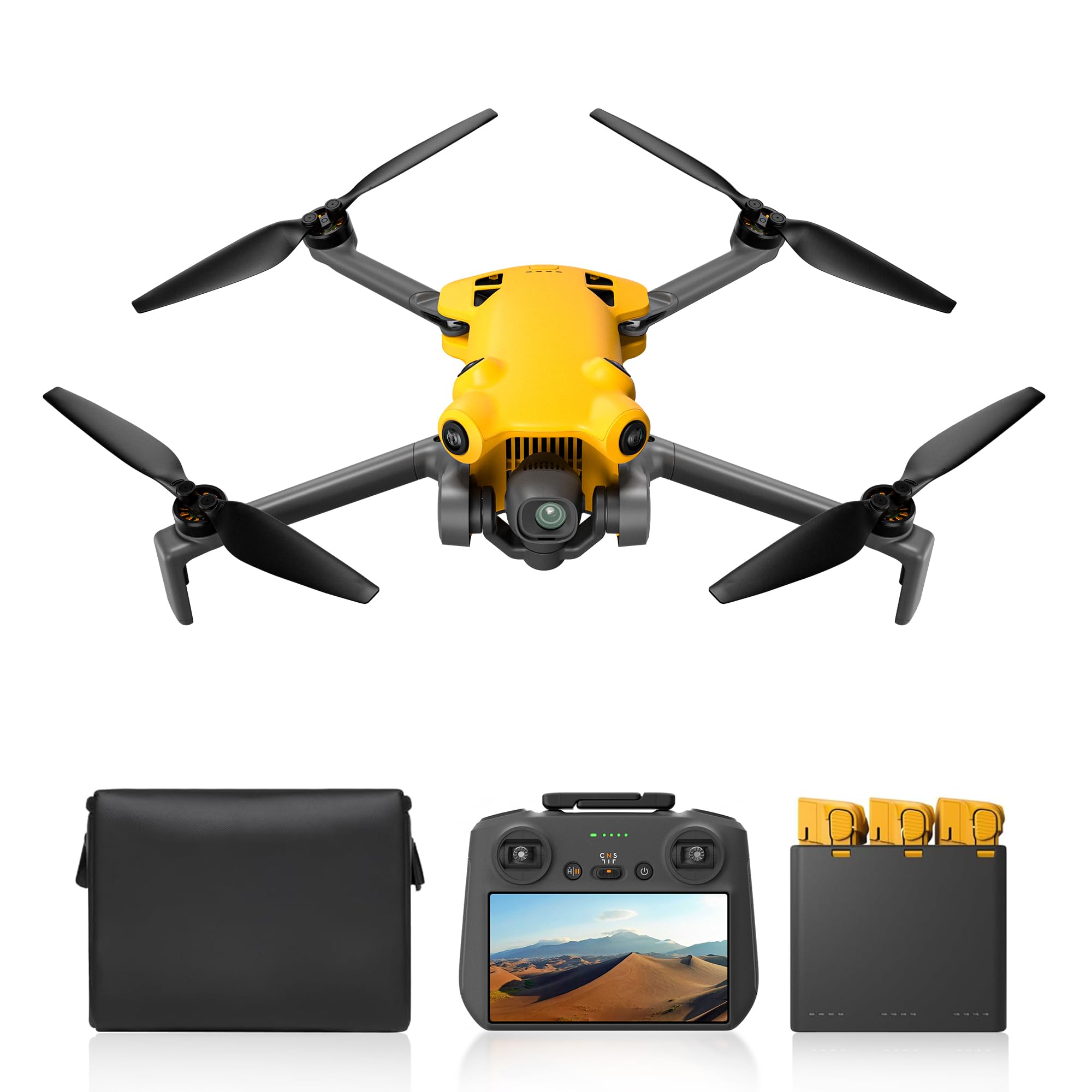
DJI Mini 4K

90 /100
Studio Score High Confidence

Key details

Stabilization
3-axis gimbal
Max Video Range
10 km
Weight / FAA Class
Under 249 g, no registration
Flight Time & Batteries
20-25 min each, 2 included
Check Price on Amazon

The DJI Mini 4K pairs a 10km transmission with a 3-axis mechanical gimbal in a sub-249g airframe, placing it squarely at the center of the long-range outdoor photography market. The camera records 4K UHD and 12MP stills with gimbal stability that keeps horizon lines level in mild wind, and the digital link holds the frame at distances that toy-class drones cannot approach.

First serious buyers get GPS return-to-home, a stable hover, and enough control authority to fly open fields with confidence. The included second battery brings the practical session length to roughly 40-50 minutes of airtime, which is reasonable for a camera drone in this class. The honest boundary is that obstacle avoidance is missing, so you need to clear trees and tight spaces manually; per-pack endurance also lands closer to 20-25 minutes than the advertised 31.

This combo is aimed at travelers and hobbyists who want DJI-grade flight behavior and 4K imagery without stepping up to heavier premium kits. The sub-249g weight covers the no-registration travel use case, and the 10km link is what makes it a long-range outdoor photography tool rather than a backyard toy.

💡 Pack both batteries and keep the return-to-home altitude above local treelines for a smoother session.

Pros

  • 10km link and 3-axis gimbal make long-range 4K shoots practical in open terrain.
  • Three-axis stabilization keeps footage smooth during typical outdoor flights.
  • Beginner-friendly controls and GPS return-to-home create a low-stress step up from entry-level drones.

Cons

  • Per-pack flight time runs 20-25 minutes in real use, not the advertised 31.
  • No obstacle avoidance, so tight spaces and trees demand manual clearance.
Our verdict

For a first serious long-range camera drone, the Mini 4K is the balanced pick: 10km link, steady gimbal, and sub-249g portability at a mid-range price.

Check Latest Price
3

Best Budget Long-Range Workhorse

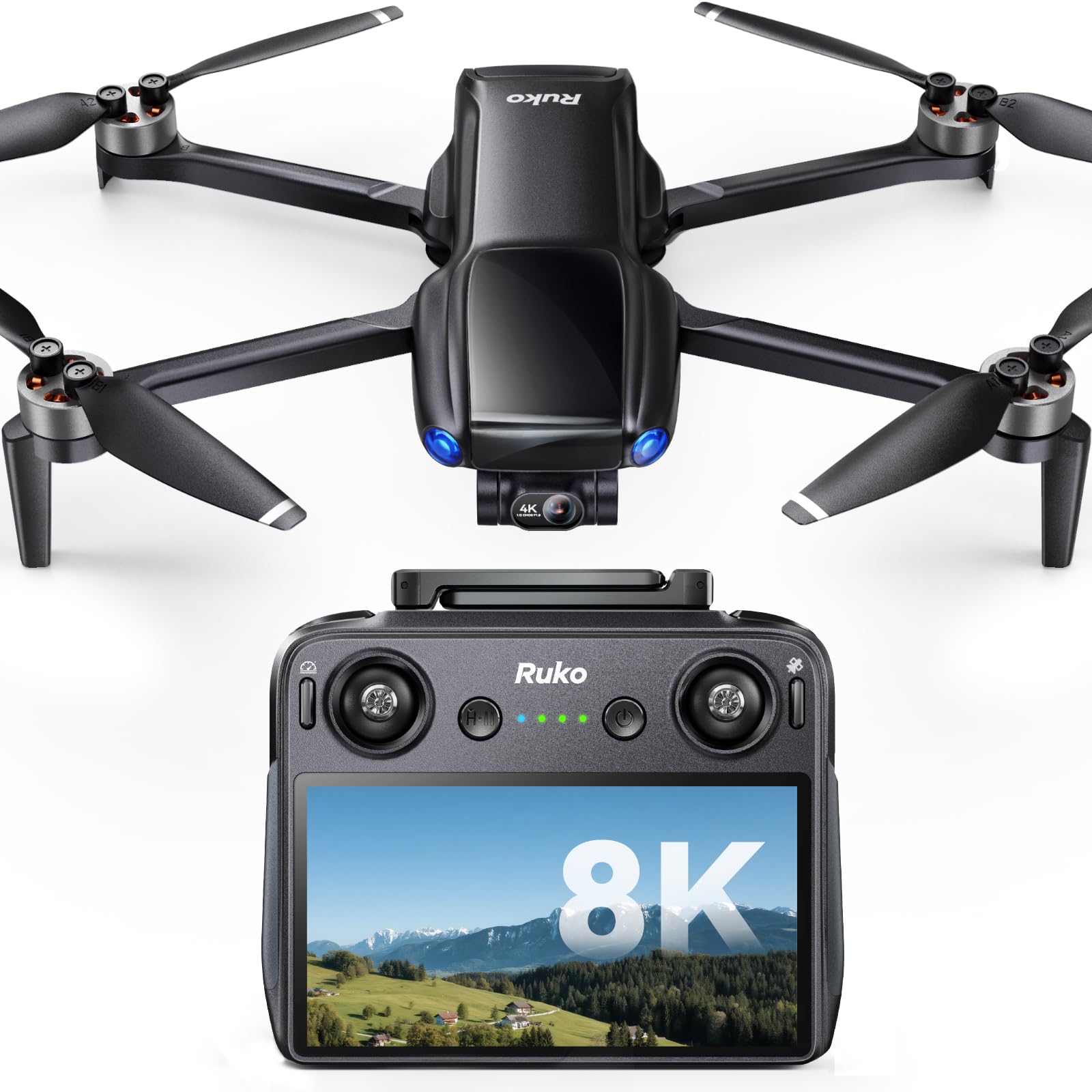
Ruko F11PRO 2

89 /100
Studio Score Strong Evidence

Key details

Stabilization
3-axis gimbal
Max Video Range
10,000 ft
Weight / FAA Class
357 g, requires registration
Flight Time & Batteries
20-28 min each, 2 included
Check Price on Amazon

The Ruko F11PRO 2 pairs a 10,000ft-class range with a 3-axis mechanical gimbal and a two-battery package that totals roughly 70 minutes of flight time at a budget-friendly price. GPS-assisted controls and smart flight modes keep the learning curve short, while the stabilized 4K camera is suited to outdoor photography over fields, fence lines, and livestock.

This drone suits first-time buyers and ranch or farm owners working open country more than pilots who want a sub-249g no-registration aircraft. At 357g it requires registration, and there is no obstacle avoidance, so give yourself room to fly. The digital link can weaken in Wi-Fi-dense areas, so treat the full range as an open-air figure rather than a city guarantee.

Pros

  • Three-axis gimbal keeps 4K video stable over uneven terrain and moving subjects.
  • Two included batteries provide roughly 70 minutes of total flight time without extra accessories.
  • GPS-assisted controls and smart modes make it easy for a first-time owner to fly and return home.

Cons

  • Per-pack flight time can land around 20–28 minutes in real use, below the 35-minute marketing claim.
Our verdict

For first-time buyers and ranch owners working open country, the F11PRO 2 is a practical long-range 4K package that avoids the premium price of lighter competitors.

Check Latest Price
4

Longest Range Under $400

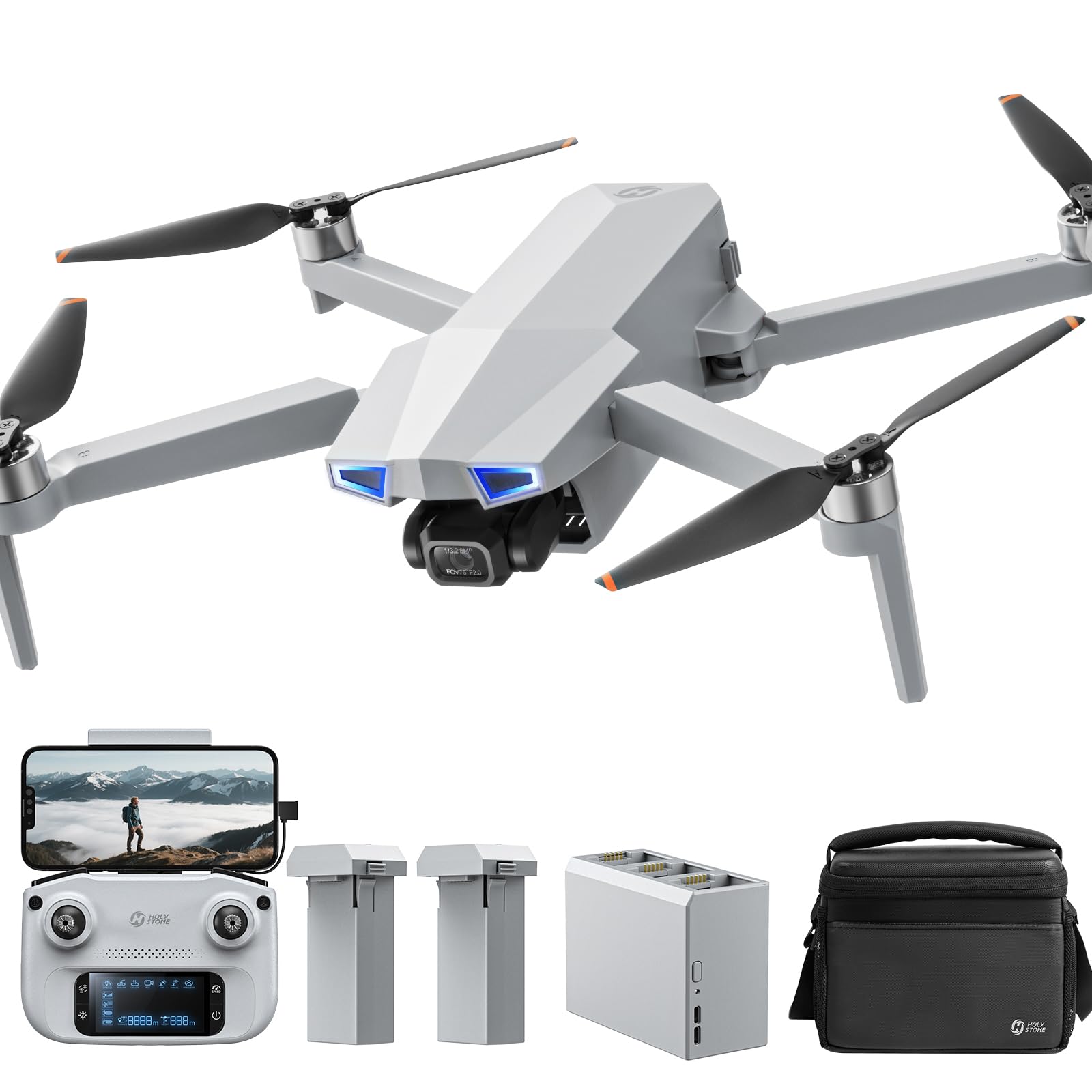
Holy Stone HS790

89 /100
Studio Score Strong Evidence

Key details

Stabilization
3-axis gimbal
Max Video Range
9 km / 30,000 ft
Weight / FAA Class
375.5 g, requires registration
Flight Time & Batteries
60 min total, 2 included
Check Price on Amazon

The HS790's standout is a 30,000 ft claimed video link, backed by a 3-axis gimbal and 60 minutes of total flight time on two batteries. That places it ahead of the lighter sub-249g pick in this guide on pure range, while 6K stills and 4K/30 video cover outdoor photography needs. Flight performance is strong, and the controls suit newer GPS pilots.

This is for outdoor hobbyists who want maximum video-link range per dollar and built-in Remote ID without an extra module. Isolated units can show erratic flight control; calibrate in an open area before the first flight and start in open spaces. The long-range link and gimbal-stabilized 4K make it a fit for open-country flying rather than travel.

Pros

  • 30,000 ft transmission range leaves room to fly far beyond typical entry-level links.
  • Beginner-oriented flight modes keep the long-range package easy to manage.
  • 3-axis gimbal keeps 4K video and 6K stills stable during open-air flights.

Cons

  • 375.5 g weight requires FAA registration, ruling out sub-249g no-registration travel.
Our verdict

The HS790 fits open-country flyers who want the longest claimed link at this price and don't need sub-249g portability.

Check Latest Price
5

Best Sub-249G for Obstacle Avoidance

SKYROVER X1

86 /100
Studio Score Strong Evidence

Key details

Stabilization
3-axis gimbal
Max Video Range
9.32 miles
Weight / FAA Class
Under 249 g, no registration
Flight Time & Batteries
~20 min each, 3 included
Check Price on Amazon

The X1 combines 360° obstacle sensing, a 3-axis gimbal, 4K/60 HDR, and a 5.5-inch screen controller without crossing the 249g threshold. The 9.32-mile transmission keeps the link solid across open ground, covering the long-range aerial photography brief.

The X1 fits travelers who want obstacle avoidance in a sub-249g package and prefer a screen controller to a phone-based app. Real-world battery endurance is closer to 20 minutes per pack. Pilots who lean on DJI's app ecosystem and service network are better served by the top pick. It suits one-bag travel where obstacle safety matters as much as image quality.

💡 Keep a spare pack charged for outings that go beyond one flight.

Pros

  • 4K/60 HDR video from a 1/1.32-inch CMOS keeps highlights and shadows usable in mixed light.
  • 360° obstacle sensing helps protect the airframe on tight travel shoots.
  • Built-in 5.5-inch touchscreen controller removes the need to attach a phone before flight.

Cons

  • Per-pack endurance lands closer to 20 minutes in general flying, below the 32-minute ideal.
Our verdict

Choose the X1 when obstacle avoidance and a built-in screen are the priority for travel shoots.

Check Latest Price
6

Best for Serious Aerial Photographers

DJI Air 3S

88 /100
Studio Score Strong Evidence

Key details

Stabilization
3-axis gimbal
Max Video Range
20 km
Weight / FAA Class
724 g, requires registration
Flight Time & Batteries
~30 min each, 1 included
Check Price on Amazon

Dual 4K cameras with a 1-inch primary sensor, LiDAR obstacle sensing, and a 20km transmission link make the Air 3S the serious aerial-photography pick in this long-range group. The 724g frame stays steadier in wind than lighter sub-249g options, and the medium-tele lens adds framing reach beyond a single wide camera.

This premium drone suits serious hobbyists and semi-pro creators who shoot outdoors and want dual-camera coverage plus low-light quality without insisting on sub-249g no-registration travel. The base kit includes one battery and no charger, so a spare-battery workflow is part of the setup; the camera and sensing results make that trade acceptable.

Pros

  • Strong build quality keeps the 724g airframe predictable in changing outdoor conditions.
  • Dual 4K cameras with a 1-inch primary sensor add low-light capability plus a medium-tele view.
  • Gimbal and flight controls stay easy to manage while using the advanced camera system.

Cons

  • Per-pack flight time is closer to 30 minutes than the advertised 45-minute maximum.
Our verdict

The Air 3S is the dual-camera, LiDAR-equipped choice for the long-range outdoor photographer who wants more from aerial footage than a single wide lens provides.

Check Latest Price
7

Budget Travelers

Potensic ATOM SE

89 /100
Studio Score Strong Evidence

Key details

Stabilization
EIS only
Max Video Range
4 km
Weight / FAA Class
Under 249 g, no registration
Flight Time & Batteries
62 min total, 2 included
Check Price on Amazon

Budget-focused pilots get a sub-249g GPS drone with 4km transmission and 62 minutes of combined flight time, making it a low-friction entry to long-range flying. The 4K EIS camera delivers clean footage in good light, but the lack of a mechanical gimbal shows in low-light and fast-motion clips, and the Atom 2 adds a touchscreen controller this model skips.

Pros

  • Entry-level pricing puts a GPS camera drone with 4K EIS within reach of budget buyers.
  • Simple controls and GPS return-to-home lower the learning curve for first-time pilots.

Cons

  • Control or GPS app glitches can produce unexpected flight behavior.
Our verdict

This fits budget-conscious beginners who want a no-registration 4K long-range first drone for calm, open-field flying.

Check Latest Price
8

Touchscreen Remote Users

Ruko U11MINI 4K

88 /100
Studio Score Strong Evidence

Key details

Stabilization
3-axis gimbal
Max Video Range
20,000 ft
Weight / FAA Class
Under 249 g, no registration
Flight Time & Batteries
64 min total, 2 included
Check Price on Amazon

Ruko U11MINI 4K combines a 5.5-inch touchscreen remote with 20,000-foot-class transmission in a sub-249g airframe, letting you shoot long-range outdoor footage without using a phone. A 3-axis gimbal steadies 4K/30 video, and two batteries extend flight time. Battery and controller QC can be inconsistent, so confirming return and warranty terms matters; that variance keeps it behind the top runner.

Pros

  • Built-in 5.5-inch touchscreen remote keeps your phone stowed during long-range flights.
  • Sub-249g airframe with 20,000-foot-class R2 link and two batteries adds travel-friendly value.

Cons

  • Flight behavior can be erratic in isolated units, which limits confidence in predictable framing.
Our verdict

For buyers who want a screen remote and 20,000-foot-class link in a no-registration airframe, this fits the long-range travel brief when the seller's return terms are confirmed.

Check Latest Price
9

Property Owners

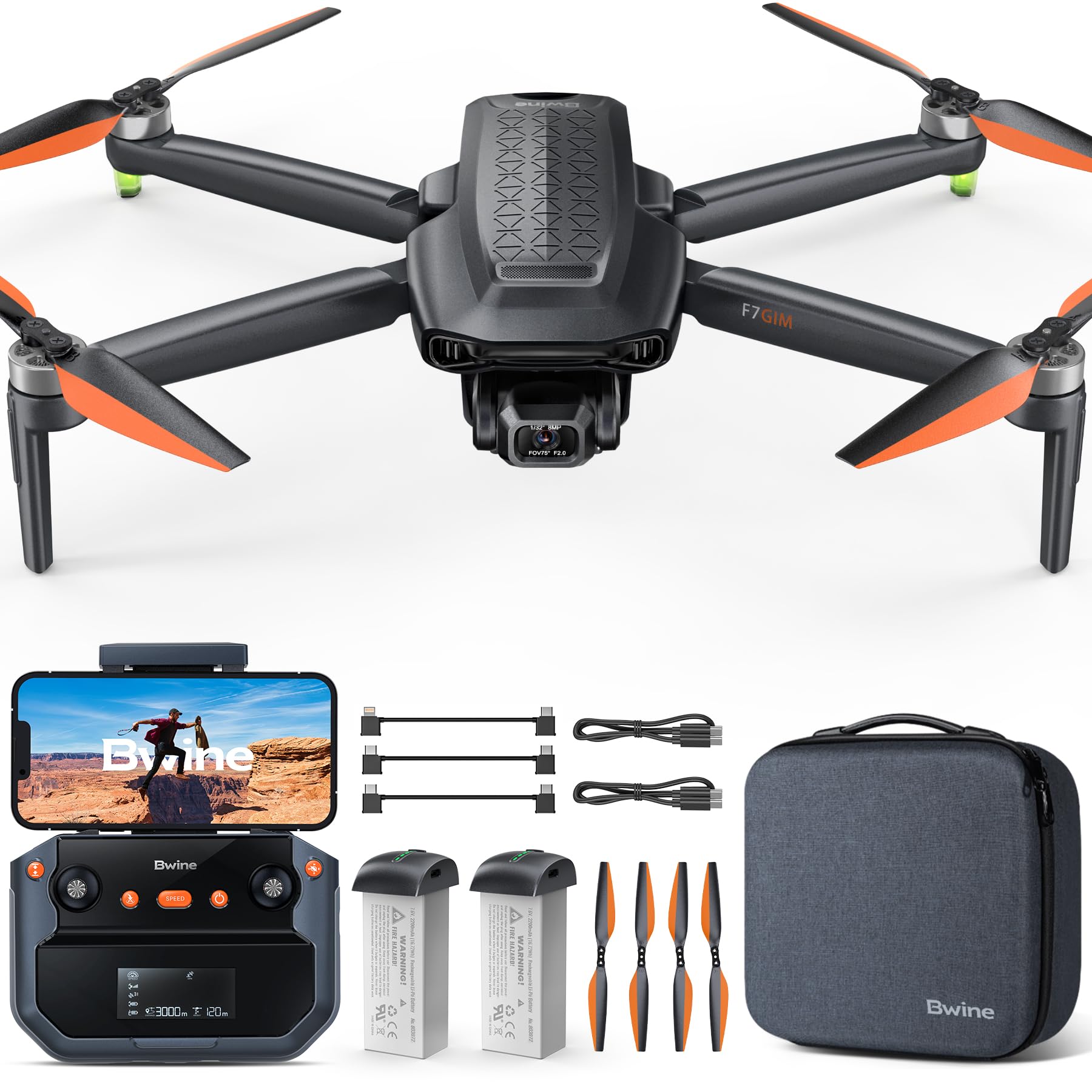
Bwine F7GIM

85 /100
Studio Score Strong Evidence

Key details

Stabilization
3-axis gimbal
Max Video Range
10,000 ft
Weight / FAA Class
357 g, Remote ID built-in
Flight Time & Batteries
70 min total, 2 included
Check Price on Amazon

The F7GIM is a ranch and inspection workhorse: a 3-axis gimbal steadies 4K video, two batteries stretch flight time to 70 minutes, and built-in Remote ID satisfies FAA rules. The wired digital link reaches 10,000ft — useful over acreage, but below the 20km-class transmission on pricier rivals. Phone pairing can be finicky; a controller-first workflow sidesteps that.

Pros

  • Three-axis gimbal keeps 4K video stable over open fields and fence lines.
  • Two-battery package extends total flight to 70 minutes, covering large properties in one outing.

Cons

  • On large-acreage flights, per-battery endurance can run short of advertised figures.
Our verdict

This works for property owners who want gimbal-stabilized 4K and built-in Remote ID without paying for 20km-class transmission.

Check Latest Price

How to Choose

Maximum Video Transmission Range

Transmission range depends on the radio link, antenna gain, and environmental clutter. A 10km figure assumes open air; in a neighborhood, the usable feed can drop well short of that. Treat the listed range as a ceiling.

Digital transmission links handle interference better than generic Wi-Fi. In open fields the high ceiling helps; near homes, prioritize a link that stays clear closer in.

Gimbal and Stabilization

A 3-axis mechanical gimbal physically moves the camera to counter pitch, roll, and yaw, so it remains the standard for smooth aerial video.

Electronic stabilization crops the sensor and corrects motion after capture; it looks fine in gentle flights but shows wobble in wind or fast turns. A gimbal adds weight and cost but keeps the horizon steady outdoors.

Flight Time and Battery Packs

Flight-time claims come from hover tests with a fresh battery and no wind. Real flying, especially with GPS and transmission active, usually lands around 70–80% of that figure, commonly 20–30 minutes per pack.

Bundled battery count matters more than the headline number. A two-battery kit keeps one pack flying while the other charges; a three-battery kit covers a full afternoon.

Weight and FAA Registration Class

The under-249g class avoids separate registration in many regions, but it also means a smaller airframe with less inertia. In gusty conditions, a lighter drone moves more and the gimbal works harder.

Heavier drones that require registration generally need to broadcast Remote ID; many sub-249g models include it as a feature. Read the product's Remote ID status before assuming the weight class answers every rule.

Obstacle Avoidance and Return-to-Home

Obstacle avoidance uses cameras or LiDAR to build a depth map, and coverage varies. Forward-only systems miss branches from the side; 360° sensing adds weight and cost. It is optional for open fields and worth paying extra near trees.

Return-to-home depends on GPS and barometer, but trees and power lines along the path can still cause a collision. Set the RTH altitude above local obstacles before launch.

Frequently Asked Questions