8 Best Lens for Sports Photography in 2026: Pick by Use, Not Price

Choose a sports lens by AF speed, reach, and aperture — not just zoom range or price.

Sports photography separates lenses by two numbers: reach and maximum aperture. Plenty of long zooms reach 300mm or 400mm but close down to f/8 at the long end, which means the shutter speed you need to freeze a wide receiver just isn't there by the fourth quarter.

The same lens that works for a daylight soccer match can be the wrong tool for a high school gym. A 70-200mm f/2.8 costs more and weighs more, but it lets you keep shooting as the lights go down. The right choice comes down to where you'll be standing, what time of day the sport runs, and how much camera you're willing to carry.

That trade-off between reach and light is the real decision. This guide maps lenses to those use cases so you know what you're giving up before you buy, not after.

1

Best Overall

Canon RF 70-200 F2.8

93 /100
Studio Score High Confidence

Key details

Weight
2.6 lb
Focal Length
70-200mm
Max Aperture
f/2.8
Image Stabilization
5 stops
Check Price on Amazon

At 2.6 lb, the Canon RF 70-200mm F2.8 L IS USM is a notably light constant-f/2.8 zoom, and that advantage shows up immediately on a Canon R-series body. The lens holds strong sharpness wide open, so a moving player's jersey number stays readable at f/2.8 in gym light without a heavy post-production pass. Dual Nano USM autofocus keeps pace with sprinting receivers and baseline cuts, with minimal hunting in low light. It is the kind of focus response that lets a photographer stay on a player rather than fighting the lens.

The L-series build is dense and weather-sealed, with controls that stay usable in cold and damp conditions. The 5-stop optical stabilizer steadies the viewfinder during handheld framing at 200mm, and the compact body fits a smaller bag than older EF f/2.8 zooms. That makes it a practical carry for a photographer moving between courts, rinks, and sidelines. The lens does not feel like a compromise in build quality even though it is shorter and lighter than the traditional f/2.8 form.

This lens works best for Canon RF shooters whose sports fit the 70-200mm window: indoor court sports, rink-side hockey, and football from the sideline. Full-frame users who also cover distant field sports should be comfortable with a crop or a teleconverter because there is no 400mm-plus built in. For those assignments, a 100-400 or 200-800 belongs alongside this lens rather than instead of it. If your work stays close enough that 200mm frames the action, the reach is not a problem; it is the tradeoff that keeps the f/2.8 package this light.

The premium price is a real threshold. What it buys is a single RF-native f/2.8 zoom that stays balanced on an R-series body and carries from gym to gym without a backpack rig. The lens is built for the shooter who would rather move a little closer than carry a super-telephoto all day. That tradeoff is exactly why it lands in the top-pick spot for the sports assignments where a fast 70-200 is the right tool.

Pros

  • Pro-grade sharpness wide open across the 70-200mm range.
  • Compact 2.6 lb body keeps constant f/2.8 practical for handheld event work.
  • Fast autofocus holds moving targets with minimal hunting in low light.
  • Solid L-series weather-sealed build for outdoor sideline conditions.

Cons

  • All-day carry can fatigue the arms despite a light-for-its-class body.
Our verdict

The RF 70-200mm F2.8 L IS USM is the f/2.8 zoom to build a Canon RF sports kit around when indoor and sideline assignments are the priority.

Check Latest Price
2

Best Outdoor Reach for Sony

Sony FE 200-600mm G

91 /100
Studio Score High Confidence

Key details

Weight
4.7 lb
Focal Length
200-600mm
Max Aperture
f/5.6-6.3
Image Stabilization
Optical SteadyShot
Check Price on Amazon

The 200-600mm range covers the distances that matter in field sports and wildlife, and the DDSSM autofocus tracks moving subjects with little hunting. Resolution stays strong at 600mm, so cropping into distant players or birds preserves detail. The zoom ring turns smoothly from near to far with enough damping for controlled framing. Direct Drive SSM is quiet enough for a bird blind.

Internal zoom keeps the barrel length fixed while you pull from 200mm to 600mm, so balance does not shift and the lens stays easy to track with. Optical SteadyShot steadies the viewfinder image at full reach, and the AF response holds onto a moving subject through a burst. The zoom action is quick enough to follow a play from midfield to the sideline without losing framing.

Compared with the 500mm alternative in this set, the Sony adds 100mm of reach and an internal zoom that holds its length. That extra reach is what separates it from shorter super-teles when birds or field players are far from the shooting position.

This lens suits Sony full-frame shooters whose action happens outdoors: sideline field sports, motorsports, and birding. The bulk is a real consideration, so plan on a monopod for long sessions.

Pros

  • Internal zoom keeps the lens balanced and the barrel length constant from 200mm to 600mm.
  • Sharpness holds up at the long end, so distant subjects survive heavy crops.
  • DDSSM autofocus keeps pace with sprinting athletes and birds in daylight.
  • Cost-effective compared with super-tele primes of similar reach.

Cons

  • At f/6.3 on the long end, indoor or evening sports require high ISO or a faster lens.
  • Long handheld sessions strain the arms at 4.7 lb.
Our verdict

Sony full-frame shooters who need 600mm reach for daylight field sports get the most usable package here.

Check Latest Price
4

Best Budget Sony Tele Zoom

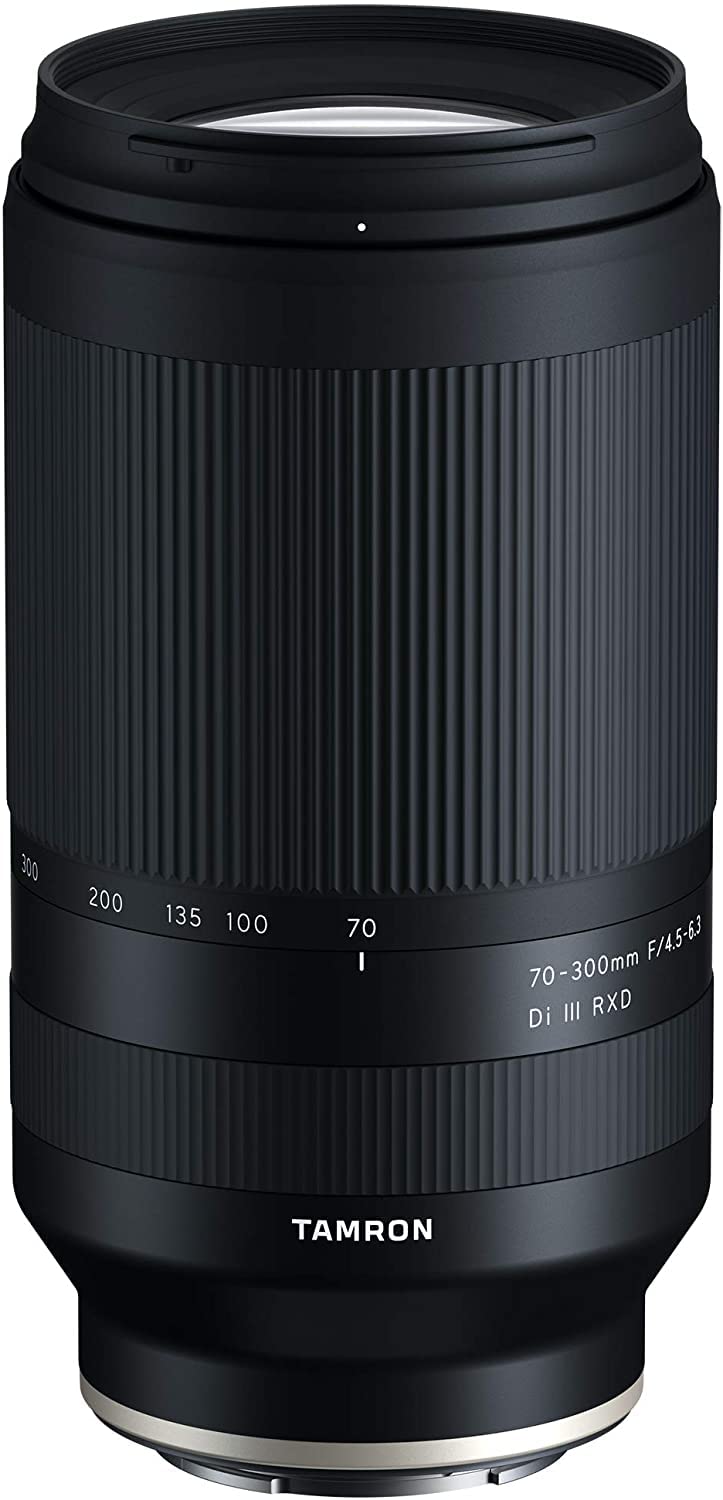
Tamron 70-300mm RXD

90 /100
Studio Score High Confidence

Key details

Weight
1.2 lb
Focal Length
70-300mm
Max Aperture
f/4.5-6.3
Image Stabilization
None
Check Price on Amazon

The 70-300mm RXD weighs 1.2 lb and uses a fast RXD stepping motor, so it keeps up with daytime sports while staying light enough for all-day carry. It doesn't reach into 500mm super-tele territory, but that is the tradeoff for a lens that can ride on the camera all day instead of staying on a monopod.

In bright conditions, the optics hold detail at 300mm and autofocus locks onto moving subjects without the hunting seen in slower budget telephoto zooms. The RXD motor stays quiet on the sideline, which matters when you are trying not to draw attention.

The right buyer is a Sony mirrorless shooter who wants a lightweight travel and tele zoom for daylight sports and wildlife on a budget. No image stabilization means high shutter speeds or a stabilized body are mandatory at the long end; that is a workable discipline for outdoor shooting, not a hidden limitation.

Premium f/2.8 zooms solve low-light reach, but this Tamron solves cost and weight. It is not a replacement for a 70-200mm f/2.8; it is a lighter, less expensive alternative for shooters whose action happens outdoors.

Pros

  • Strong value for a 70-300mm Sony E lens
  • 1.2 lb weight makes it easy to carry through a full day
  • Daylight image quality is sharp for the price point
  • Autofocus responds quickly to moving subjects

Cons

  • No optical stabilization; on a body without IBIS, 300mm handheld shots need fast shutter speeds.
  • At 300mm the f/6.3 aperture limits low-light telephoto work.
Our verdict

Daylight sports and wildlife shooters on a budget get a 300mm zoom that is light, sharp, and quick to focus.

Check Latest Price
5

Best Sony Pro 70-200

Sigma 70-200 F2.8 OS

92 /100
Studio Score High Confidence

Key details

Weight
1345 g
Focal Length
70-200mm
Max Aperture
f/2.8
Image Stabilization
OS
Check Price on Amazon

The Sigma 70-200mm F2.8 DG DN OS Sports is a weather-sealed f/2.8 zoom built around the sharpness Sony full-frame shooters expect from native GM-class glass. Its HLA linear autofocus is fast and quiet for sports bursts, and the optical stabilizer keeps handheld event frames steady in lower light. The control layout is intuitive, with AF lock, focus limiter, and customizable buttons close at hand.

This lens is for Sony full-frame sports and event photographers who prioritize optical quality over light weight and want GM-class performance at a more accessible price. It is heavier than the Sony 70-200mm f/2.8 GM and slightly heavier than the Canon RF equivalent, so run-and-gun travel shooters should look elsewhere; a body with a deep grip or a monopod makes all-day use more comfortable. Indoor arenas, basketball, and close sideline action play to its strengths; if your sport requires frequent shots beyond 200mm, a 200-600mm zoom is the better outdoor partner.

At f/2.8 the lens resolves fine detail across the frame, and the dust/splash sealing holds up in light rain and dusty sidelines. In low-contrast or backlit scenes, autofocus can be slightly less decisive than the native GM before settling, which matters less for the intended buyer than for shooters who need absolute AF certainty in every frame. Color rendition stays neutral, so post-processing is minimal.

💡 Pair the optical stabilizer with a monopod for long matches to get the most consistent frames.

Pros

  • Sharp and color-accurate across the frame at f/2.8.
  • Dust- and splash-resistant build handles outdoor and sideline conditions.
  • Fast, quiet HLA autofocus keeps up with sports action.

Cons

  • In low-contrast scenes, AF can be less decisive than the native GM.
  • The 1345g body adds fatigue over a full-day event.
Our verdict

For Sony shooters who value f/2.8 sharpness and weather sealing, this is the lens to reach for before paying the native GM premium.

Check Latest Price
6

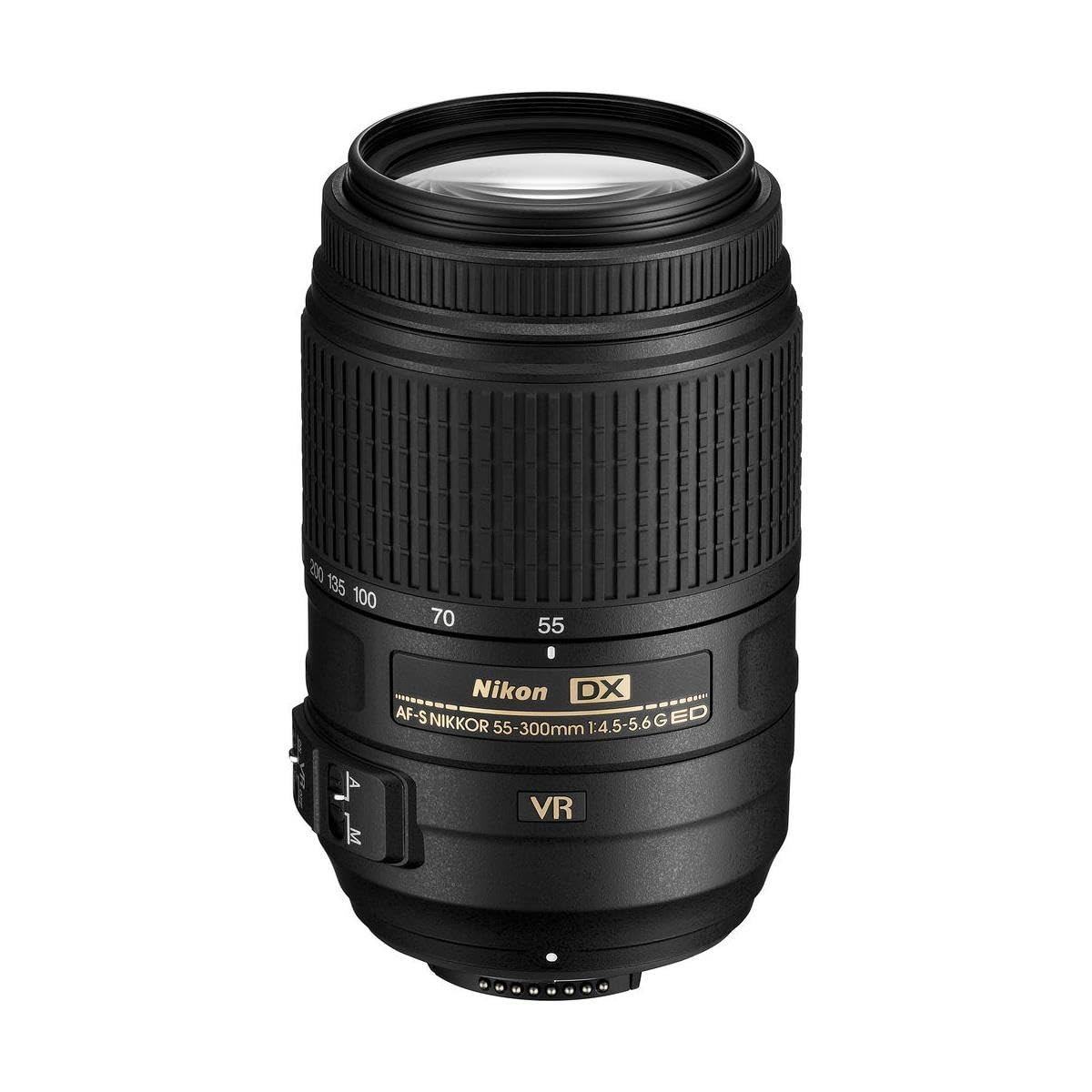
Best Budget Nikon DX Sports Zoom

Nikon 55-300mm DX VR

93 /100
Studio Score High Confidence

Key details

Weight
1.3 lb
Focal Length
55-300mm
Max Aperture
f/4.5-5.6
Image Stabilization
VR II
Check Price on Amazon

VR II stabilization and 55-300mm reach in a 1.3 lb body make this the budget DX telephoto for daylight sideline work. In good light, the lens produces sharp, colorful images, and the VR keeps handheld shots steadier than the older 55-200mm kit lenses it usually replaces. The zoom range covers team huddles at 55mm and isolated plays at 300mm.

On a D3xxx or D5xxx body, the crop factor turns 300mm into a 450mm-equivalent view, enough to fill the frame with a soccer player on the far sideline. The Silent Wave Motor is quiet, and the zoom ring turns smoothly enough to adjust framing without drawing attention. Handheld shots at the long end benefit from the VR II system; a careful stance and a 1/500s shutter speed produce usable stills without a tripod. The 1.3 lb body balances on smaller Nikon DSLRs and fits in a regular camera bag.

This lens suits the Nikon D3xxx and D5xxx sports parent who spends weekend mornings on sunny youth-soccer sidelines. Autofocus speed is not enough for fast, unpredictable action at a high level, but the VR and reach are what those sideline shooters need most. Wildlife and daytime track events also fit the predictable-movement envelope that this lens handles well.

Pros

  • Outstanding value for DX telephoto reach
  • VR II works well for handheld telephoto shots
  • Sharp, colorful images in good light

Cons

  • The DX image circle is limited to crop-sensor Nikon bodies; full-frame shooters need a separate 200-500mm route.
  • At 300mm, the f/5.6 maximum aperture requires bright daylight; evening and indoor sports will push ISO higher.
Our verdict

For a Nikon DX shooter who needs 300mm reach without a super-tele price, this covers the daylight sideline job.

Check Latest Price
7

Sony Value Super-Tele

Tamron 150-500mm VC

89 /100
Studio Score Strong Evidence

Key details

Weight
4.1 lb
Focal Length
150-500mm
Max Aperture
f/5-6.7
Image Stabilization
VC
Check Price on Amazon

Tamron's 150-500mm VC gives Sony shooters 500mm full-frame reach with VC stabilization and fast VXD linear autofocus at a budget-friendly price. It holds detail on distant subjects and fits outdoor sports, wildlife, and airshows under bright skies. The 4.1 lb body is heavy enough that a monopod earns a place for long sessions — heavier than the Sony 200-600 in this comparison, and the main reason it sits below that lens. For a buyer who wants 500mm reach without Sony-scaled prices, the Tamron is the value answer.

Pros

  • Sharp 500mm full-frame reach at a budget-friendly price.
  • VXD linear autofocus tracks moving subjects across the zoom range.
  • VC stabilization helps settle the frame at 500mm without a tripod.

Cons

  • AF handles routine outdoor action, but fast erratic sequences can slip a frame where the Sony 200-600 stays locked.
Our verdict

For daylight outdoor sports and wildlife on a mid-range budget, the Tamron delivers 500mm reach that costs far more in Sony's own lineup.

Check Latest Price
8

Nikon FX Reach

Nikon 200-500mm VR

86 /100
Studio Score Strong Evidence

Key details

Weight
2300 g
Focal Length
200-500mm
Max Aperture
f/5.6
Image Stabilization
VR
Check Price on Amazon

Full-frame Nikon shooters get true 200-500mm constant f/5.6 with VR, giving outdoor sports and wildlife the reach to keep distant action close. Autofocus is fast in good light, and image quality holds up well for the price tier. The renewed condition is the main caveat: individual units may show zoom-ring or AF inconsistencies, so testing zoom lock and autofocus on arrival is the smart move. At 2.3 kg, a monopod or tripod is more practical than handholding through a long shoot. That condition variance and weight are exactly why it isn't ranked higher. For a Nikon F shooter who wants 500mm without new-lens cost, it still delivers once those boundaries are accepted.

Pros

  • High-quality images at a price that undercuts typical super-tele lenses.
  • Constant f/5.6 and true 500mm reach keep exposure steady across the zoom range.
  • Autofocus is fast and accurate, tracking outdoor action in good light.

Cons

  • At 2.3 kg, handholding for a full game is tiring; a monopod or tripod is a practical addition.
  • Zoom or AF inconsistencies can appear on renewed units, so testing shortly after arrival separates a good copy.
Our verdict

Best for Nikon F shooters who need 500mm on a budget, accept the weight, and can verify the renewed copy soon after delivery.

Check Latest Price
9

Tripod-Based Outdoor

Sigma 150-600mm

77 /100
Studio Score Established

Key details

Weight
2860 g
Focal Length
150-600mm
Max Aperture
f/5-6.3
Image Stabilization
OS
Check Price on Amazon

The Sigma 150-600mm Sports brings 600mm reach to Nikon F bodies with quick HSM autofocus and a solid Sports-line build that suits outdoor field sports and wildlife. It resolves fine detail at the long end for the asking price, and autofocus keeps up with moving subjects in daylight. The main constraint is the 2860g body, which shifts the intended use toward stationary outdoor positions. QC variance has been noted, so a return-window test is practical before relying on it for a full season. Nikon shooters who can accept that workflow get a lot of reach for the money.

Pros

  • Sharp at 600mm for the price, so distant subjects hold fine detail.
  • HSM autofocus tracks field-sport action well in daylight.
  • 600mm reach at a cost-effective tier gives Nikon F users super-tele access.

Cons

  • Handheld run-and-gun is a poor fit; a tripod or monopod is effectively required for sustained use.
  • Autofocus and build consistency can vary between copies.
Our verdict

For Nikon shooters chasing 600mm reach without super-tele prime pricing, the Sigma Sports trades portability for focal length and image quality.

Check Latest Price

How to Choose

Focal Length Reach

Reach is the first filter because it decides what sports are even possible. A 70-200mm covers sideline work and courtside positions, while 400-600mm is what you need for soccer, football, and motorsports from the stands.

Crop-sensor bodies effectively multiply reach: a 55-300mm on a Nikon DX body frames like 82-450mm on full-frame. That is a genuine advantage for budget shooters, but it does not change the physical aperture or the amount of light the lens lets in.

Maximum Aperture

The maximum aperture controls how much light reaches the sensor and therefore how fast a shutter speed you can hold. An f/8 lens at 400mm forces you into high ISO values on overcast afternoons, while an f/2.8 zoom gives you four times the light.

That extra light is what freezes motion in gyms, indoor arenas, and twilight games. If a lens closes down as you zoom, you are effectively losing shutter speed exactly when the action gets farther away — the opposite of what a sports shooter needs: longer reach plus faster shutter speed.

The trade-off is size and cost. Constant f/2.8 zooms are heavier, bulkier, and more expensive than slow variable-aperture telezooms. Shooters who only photograph daylight outdoor sports can skip the f/2.8 premium and put that money toward reach or a better camera body.

Autofocus Speed and Accuracy

A lens's autofocus system must move heavy glass elements fast enough to track a runner or a ball carrier. Ring-type ultrasonic motors and linear actuators are the standard for sports because they are quick, quiet, and hold the focus point precisely as subjects move across the frame.

Budget telephoto zooms often use slower stepping motors or micromotor drives that hunt in low contrast and lose focus when a subject changes direction. That is why the cheapest lens with enough reach can still fail at the decisive moment.

On used or renewed lenses, check that the autofocus motor performs consistently, since older ultrasonic motors can become sluggish. A lens that focuses well in a store may behave differently across a cold, crowded, fast-moving sideline.

Image Stabilization

Stabilization compensates for the tiny shakes your hands introduce when you hold a long lens. At 300mm, camera shake becomes visible at shutter speeds above roughly 1/500s, depending on your technique and your body's support.

Stabilization does not freeze a moving subject — only shutter speed does that. It helps you keep the viewfinder steady at long focal lengths and makes it easier to track fast action smoothly. On a monopod, stabilization is less critical, but it never hurts.

For sports, the practical rule: prioritize shutter speed first, then stabilization. A stabilized lens with a slow aperture is fine for daylight games, but a fast shutter speed is what actually stops the action.

Weight and Balance

Weight is the hidden spec that becomes obvious in hour three of a tournament. A 2.3kg super-telephoto lens changes your shooting style: you will need a monopod or tripod collar, and you will move more slowly down the sideline.

Lighter lenses like the 816g Canon RF100-400mm let you shoot all day without a support, but they achieve that portability by using slower apertures and smaller glass. There is no free lunch: light, fast, and long are three corners of a triangle.

Match the weight to your actual stamina and shooting position. Parents shooting their kids' soccer games do not need a 6lb sports-line lens unless they are also photographing high school football from the stands every week.

Mount Compatibility

The mount determines whether a lens physically works on your camera body and what features like autofocus and stabilization survive the connection. A Canon RF lens will not mount on a Nikon F body, and a DX lens may not cover a full-frame sensor without heavy vignetting.

Lens makers like Sigma and Tamron offer the same optical formula across multiple mounts, but autofocus performance can differ between brands. If you are buying for a mirrorless system, check that the lens is native to your mount or you may need an adapter that can slow down autofocus.

Also consider whether the mount is a dead end for your upgrade path. A Canon EF lens can be adapted to RF bodies, but a Sony E-mount lens is permanently locked into that system. The lens you buy today should fit the camera you plan to own in five years.

Frequently Asked Questions