Best Overall
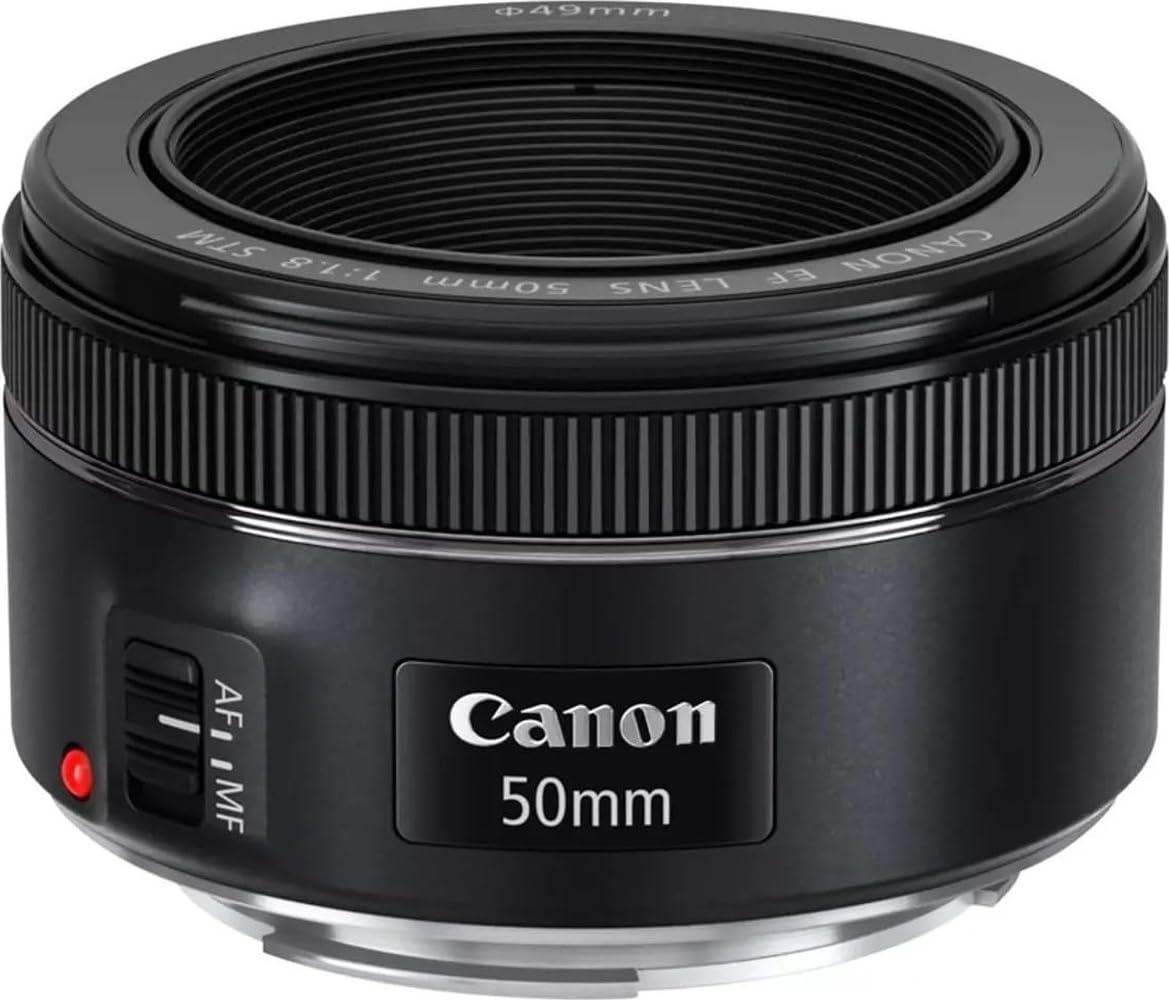
Canon 50mm f/1.8 STM
Key details
- Focus Type
- Autofocus (STM)
- Mount Type
- Canon EF
- Focal Length
- 50mm (80mm equiv)
- Max Aperture
- f/1.8
The Canon EF 50mm f/1.8 STM gives Rebel owners the most visible image-quality jump for the money: f/1.8 gathers light, separates subjects from backgrounds, and does so in a compact prime that leaves the camera easy to carry. The STM autofocus handles everyday shooting without fuss, and the lens pairs naturally with Rebel bodies for portraits and low-light moments.
At f/1.8, this prime collects noticeably more light than a kit zoom at 50mm, so dim indoor scenes no longer force the camera to max out its ISO. The 80mm-equivalent field of view on a Rebel favors head-and-shoulders portraits and single-subject framing; indoor group shots are not its strength. The 0.35m minimum focus distance handles close detail shots, though this is not a macro lens. For the price, the sharpness wide open holds up well against much more expensive primes.
This lens is for the stills-first Rebel owner who wants a first prime for portraits, low light, and everyday shooting without spending on a zoom. Video work and low-contrast live view may expose slower, noisier autofocus, and there is no image stabilization, so handheld low-light results depend on shutter speed and a steady hold. Those are boundaries, not deal-breakers, for the portrait and daily-use buyers this lens serves best.
The f/1.8 aperture also lets you blur away cluttered indoor backgrounds in a way a kit zoom cannot, giving casual portraits a more finished look. The shallow depth of field and smooth bokeh make subjects pop without requiring complicated lighting setups, and the budget price leaves room in the bag for a dedicated telephoto when reach matters more than speed.
The Canon EF mount lets this lens work across the Rebel line, so it stays useful if you change bodies later. If your plan is wildlife or wide-angle work first, this 50mm should not be the only lens you buy; the telephoto and wide-angle options in this set cover those jobs.
Pros
- Sharp images wide open with strong focus pop on Rebel bodies.
- Portrait rendering separates subjects from backgrounds with smooth, flattering blur.
- Everyday shooting gains a fast prime without adding bulk to the bag.
- Budget-prime sharpness outdoes the kit zoom for a modest investment.
Cons
- In video or low-contrast live view, autofocus can be slow to lock and may make audible noise.
- Without image stabilization, handheld low-light shots depend on shutter speed and a steady hold.
For a first prime on a Rebel, this is the highest-leverage way to get f/1.8 portraits and low-light shots without paying for a zoom.


