9 Best Insta360 Camera of 2026: 8K Picks That Fit Real Shoots

Which Insta360 camera fits the way you actually shoot: 360 reframing, POV clips, or single-lens action, and which 8K models handle real runtimes.

Insta360's current lineup leans on 8K and AI-assisted editing, but live use is defined by thermal limits and exposed lenses. 8K 360 is a powerful burst mode, not an endless record mode: long clips can trigger heat shutdowns, and lens protection determines how long the camera holds up. The practical question is which shooting style those limits fit.

That means choosing between 360 reframing and a conventional single-lens action camera, or between a tiny wearable and a pocket gimbal. The biggest price jump in the 360 line buys better low-light processing and replaceable lenses; the value pick trades those for near-identical 8K resolution and a deeper track record. Decide which trade belongs to your workflow before spending.

The camera that gets carried is the one that fits your day: a lightweight body for the mountain, a sealed body for the ocean, or a premium sensor for night shoots. Pick the boundary you can live with.

1

Best Overall

Insta360 X5

92 /100
Studio Score High Confidence

Key details

Form Factor
360 action cam
Battery & Heat
208 min claimed, heat limited
Video & Sensor
Dual 1/1.28 CMOS, 8K30
Waterproofing & Lenses
Waterproof, replaceable lenses
Check Price on Amazon

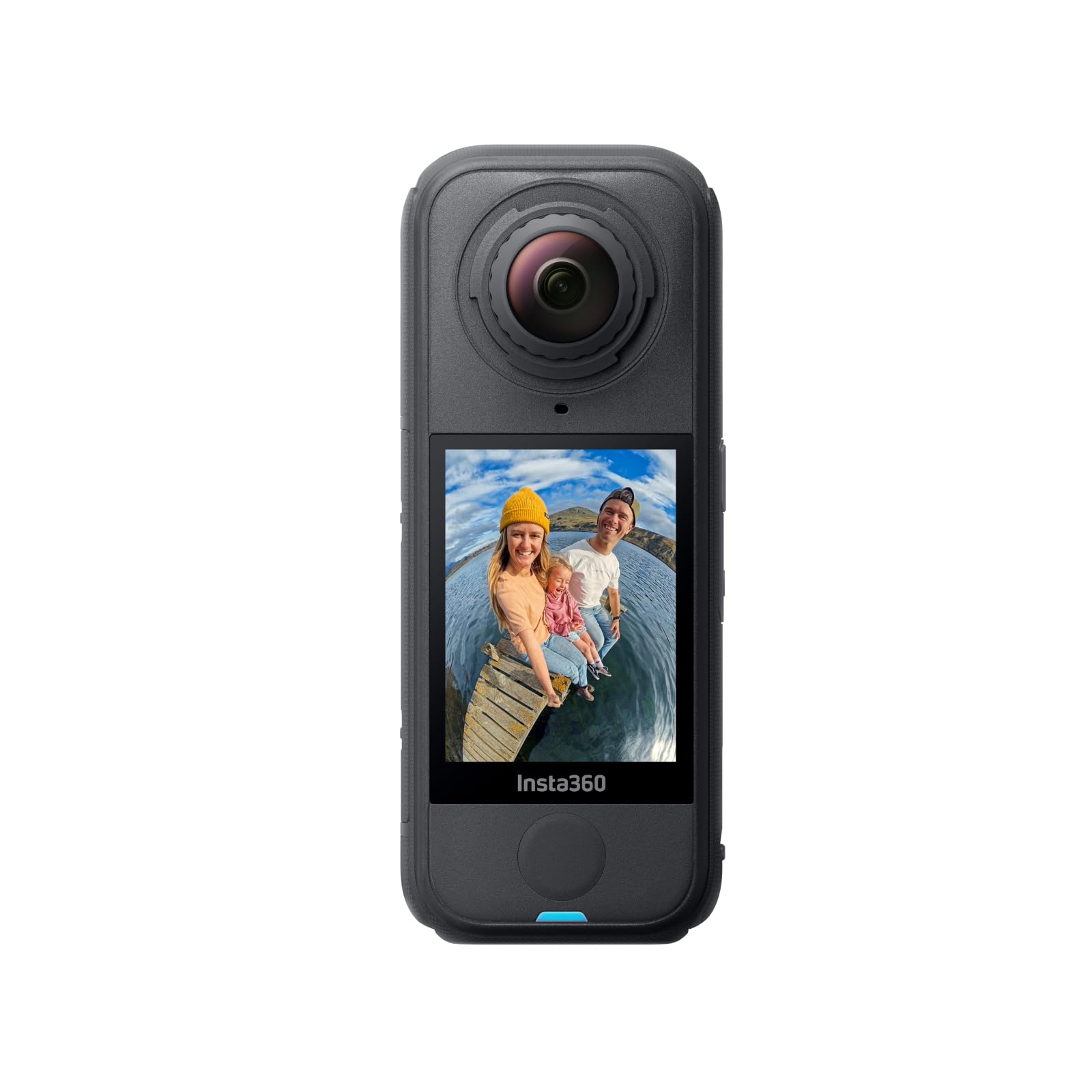
The Insta360 X5 produces the sharpest 360 footage in the current lineup, with dual 1/1.28-inch sensors and 8K30 capture that stays crisp when you reframe in post. Low-light performance is the clearest step forward from the previous 8K model: night scenes keep more detail and noticeably less smear, so indoor and dusk shooting is no longer the weak link. The 8K file also leaves room to crop into a clean 4K frame, so one take can serve horizontal and vertical formats without losing quality.

The replaceable lens system answers the biggest durability concern with 360 cameras, so scratches no longer force a full body replacement. Menus and setup move quickly; about 10 minutes is a realistic unboxing-to-recording time. The menu structure is not just fast; it also reduces the fiddling that usually comes with 360 cameras. The AI-assisted editing workflow keeps a 30-minute clip manageable when you are hunting for the right angle.

On the photo side, 360 capture preserves wide scenes and lets you choose the composition after the moment has passed. That flexibility covers real estate walkthroughs, group events, and family moments where the best angle is not obvious at shutter time. Still-photo capture is a genuine reason to carry the X5 instead of a separate camera.

This is the camera for serious 360 creators who need low-light flexibility, long days in the field, and a lens that can be swapped after a scratch. Vloggers get the invisible selfie-stick effect from a clean 8K source, and travelers can cover photo and video with one body. Budget-focused buyers who do not need those upgrades can save with the previous 8K model. If you expect continuous 8K in warm conditions and three full hours under heavy load, plan around those limits rather than treating them as marketing numbers. If you want a traditional single-lens action camera body, this dual-lens design is not that.

Compared with the previous 8K model, the X5's premium is tied to low-light headroom, replaceable lenses, and longer claimed runtime. If those three map to how you shoot, the extra cost is reasonable; if they are nice-to-haves, the older model is the value anchor in the lineup. That calculation is the right way to approach this category: the right 360 camera is the one whose limits match your shooting habits.

Pros

  • Crisp, detailed 8K 360 video that holds up when you reframe in post.
  • Professional build and output that match what long-term owners expect from a flagship.
  • Approachable interface and fast menus get you shooting in about 10 minutes.
  • Night footage stays markedly cleaner than earlier X-series cameras.
  • 360 photos preserve wide scenes and let you compose after the moment.

Cons

  • Runtime under heavy 8K use can fall short of the 3-hour claim.
  • Continuous 8K recording in warm conditions may stop for thermal management around 15 minutes.
Our verdict

The X5's low-light processing, replaceable lenses, and longer claimed runtime make it the strongest standalone 360 package in the lineup. Serious 360 shooters who plan around its 8K limits get the cleanest reframing flexibility available.

Check Latest Price
2

Best Value 360

Insta360 X4

93 /100
Studio Score High Confidence

Key details

Form Factor
360 action cam
Battery & Heat
135 min claimed, thermal limit
Video & Sensor
8K30, 72MP photos
Waterproofing & Lenses
10m waterproof, plastic lens guards
Check Price on Amazon

The X4 captures true 8K 360 with a touchscreen workflow that keeps the process approachable, and it does so at a price below the next-tier flagship. The 2.5-inch Gorilla Glass display, 72MP stills, and 4K60 wide-angle mode handle non-360 shots, while built-in HDR, slow motion, and timelapse modes cover creative options without a second camera. The phone app's guided reframing turns 360 footage into usable clips quickly, removing the traditional editing bottleneck.

This is the 8K 360 for travel and family creators, real-estate walkthroughs, and event videographers who want one-shot coverage and a lower price than the flagship. The 135-minute battery claim and 10m waterproofing support longer shoots and wet conditions without a housing. For real estate, a single 360 sweep captures the whole room, and reframing later keeps walkthroughs simple.

The tradeoffs are practical: standard plastic lens guards can scratch or crack in abrasive environments, and the battery may dislodge under hard vibration and interrupt a take. These are manageable with a case or careful mounting, but they set the boundary between this camera and a rugged action-cam replacement. Gimbal, tripod, and handheld work will not stress either point; aggressive mounts are where you need to check the setup.

Pros

  • 8K 360 footage stays sharp and colorful across a wide range of shooting situations.
  • The body feels well built, with an interface that is easy to learn on the 2.5-inch touchscreen.
  • AI-guided editing in the phone app makes reframing and export fast enough for everyday use.

Cons

  • Long continuous 8K recording can build heat, so sustained high-res sessions are best broken into shorter takes.
  • Low-light performance sits below the flagship, and the core lens elements are not user-replaceable.
Our verdict

The X4 is the practical 8K 360 for travel, family, and one-shot event work; the flagship premium is reserved for niche needs.

Check Latest Price
3

Best Traditional Action Camera

Insta360 Ace Pro 2

86 /100
Studio Score Strong Evidence

Key details

Form Factor
Single-lens action cam
Battery & Heat
Heat shutdown possible
Video & Sensor
8K30, 1/1.3 CMOS
Waterproofing & Lenses
12m waterproof, Leica lens
Check Price on Amazon

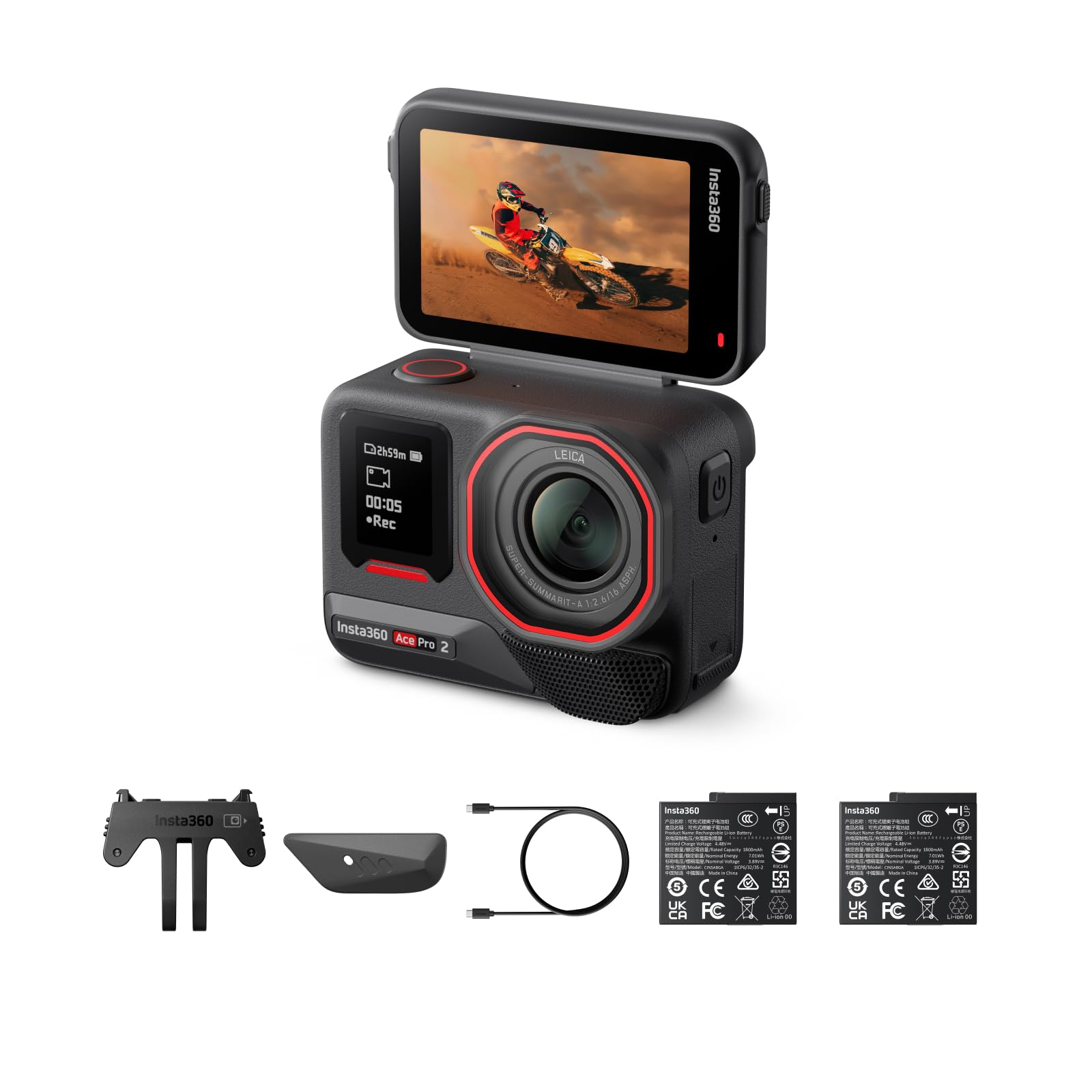
The Ace Pro 2 is the traditional action camera in the current Insta360 range: a single Leica Summarit lens, a 2.5-inch flip touchscreen, and 8K capture in a body that needs no 360 stitching. This is the model for shooters who want the brand's color science without the reframing workflow. The 12m waterproof rating is enough for diving and wet-weather sports without an extra housing.

Image quality is the main attraction. The 1/1.3-inch CMOS sensor turns out sharp 8K30 footage in daylight, and 4K60 Active HDR handles high-contrast scenes well. In dim conditions, PureVideo mode keeps shadows usable while preserving natural color, which makes evening rides and indoor filming more workable than with smaller sensors.

Motorcycle, diving, and winter sports shooters are the natural audience, especially those who prefer a conventional editing flow over 360 capture. The boundaries are battery and heat: long shoots require spare batteries, sustained recording in warm conditions can trigger a shutdown, and durability can vary between units. The 360 flagship in this lineup is the better route when reframing or maximum recording time is the priority.

On a handlebar mount or selfie stick, the flip screen keeps framing simple, and the touch response is quick enough for on-the-fly mode changes. That ease of use is a large part of the appeal for solo shooters who do not want to carry a separate monitor.

Pros

  • Delivers a solid action-cam build with 8K Leica-engineered output in a familiar form factor.
  • Produces sharp, vibrant footage straight out of camera, especially in outdoor light.
  • PureVideo mode lifts low-light shots without the color shift seen on smaller sensors.
  • Flip touchscreen makes framing and menu control quicker than button-only alternatives.

Cons

  • Battery life can run short on long shoots, so spare batteries are part of the kit.
  • Sustained recording in warm conditions may end with a heat shutdown.
  • Durability can vary between units, so checking your specific camera before a major trip is worthwhile.
Our verdict

For action-cam shooters who want Leica-tuned 8K without the 360 workflow, the Ace Pro 2 is the Insta360 to buy.

Check Latest Price
4

Best Ultra-Compact POV

Insta360 GO 3S

86 /100
Studio Score Strong Evidence

Key details

Form Factor
Tiny wearable POV
Battery & Heat
10-30 min standalone, heat
Video & Sensor
4K, 128GB internal
Waterproofing & Lenses
IPX8 to 10m camera
Check Price on Amazon

The GO 3S is the smallest real POV camera in this lineup at 39g, yet it records 4K while clipped to a hat, collar, or bag strap. The magnetic mount makes attaching it to gear or a pet harness nearly instant, and the Action Pod adds a touchscreen remote for framing and start/stop control.

Footage from the tiny sensor is clearer than the size suggests: 4K clips hold up well for social media and travel memories, and the Action Pod extends total runtime to a claimed 140 minutes. The kit behaves like a complete mini setup, with the camera ready for quick grabs rather than tethered to a phone. For a day of casual clip-making, that combination keeps the workflow light.

For short, hands-free moments, this is an easy carry; for long shoots, it has clear limits. Standalone battery life is very short — a single clip may last 10–30 minutes before the Action Pod is needed — and continuous 4K capture can overheat and stop recording in under 20 minutes. Pet owners, parents, and travelers who want a camera in their pocket rather than a backpack will find the tradeoff acceptable.

Pros

  • Tiny 39g body clips onto hats, pets, and gear for hands-free POV footage.
  • 4K video stays sharp for quick clips, exceeding what a thumb-sized sensor can deliver.
  • Magnetic pendant and clip make mounting fast, so you can be recording in seconds.

Cons

  • Underwater POV is limited: the 10m waterproofing applies to the camera only, not the Action Pod.
  • The full kit weighs 128g with the Action Pod, so the pocketable promise lives in the bare 39g camera.
Our verdict

The GO 3S is the grab-and-go POV camera for creators who shoot in short bursts and want the least equipment between them and the clip.

Check Latest Price
5

Best Lightweight 360

Insta360 X4 Air

89 /100
Studio Score Strong Evidence

Key details

Form Factor
Lightweight 360 cam
Battery & Heat
—
Video & Sensor
8K30, 165g body
Waterproofing & Lenses
Not water resistant, replaceable lenses
Check Price on Amazon

The X4 Air is the lightest 8K 360 body in this comparison at 165g, and that weight makes it feel more like a wearable than a camera-bag item. On a ski day it can ride on a lightweight pole mount or in a jacket pocket without changing your carry. The replaceable lens system turns a scratched front element from a full-service repair into a simple swap, which matters on a travel camera.

Clear-day footage is strong: 8K30 360 capture reframes into 4K or 1080p clips with FlowState handling handheld movement and 360 Horizon Lock keeping the horizon level. The tradeoff for the light body is a non-sealed chassis, so rain, splash, and underwater use are outside its operating envelope. Shooters who need an all-weather body should look at the sealed 8K models in the lineup.

This is the entry point for first-time 360 buyers who want 8K without flagship pricing and shoot mostly outdoors in good conditions. Low-light scenes come out soft and less usable, which rules out serious night shooting, but for skiing, hiking, and fair-weather travel the X4 Air delivers a lightweight 360 workflow.

💡 Keep the lens caps on when stowing the X4 Air between shoots - the replaceable lenses are easy to swap and worth protecting during travel.

Pros

  • Lightweight 165g build makes this the easiest 8K 360 body to carry on a ski trip or travel day.
  • Sharp 8K video with FlowState stabilization reframes into smooth 4K or 1080p clips.
  • Overall image quality impresses for daylight and outdoor scenes in a body this small.

Cons

  • Low-light scenes come out soft and less usable for night shooting.
  • The body is not water resistant, so rain, splash, and underwater use are off the table.
Our verdict

For a skier or traveler who wants 8K 360 without the weight, the X4 Air is the portable pick - mid-range price, replaceable lenses, and a body light enough to forget on a chairlift.

Check Latest Price
6

Best Vlogging Gimbal

Insta360 Luna Ultra

84 /100
Studio Score Strong Evidence

Key details

Form Factor
Gimbal vlogging camera
Battery & Heat
4h claimed, heat stops
Video & Sensor
1-inch and 1/1.3 CMOS, 8K30
Waterproofing & Lenses
Dual Leica lenses, not waterproof
Check Price on Amazon

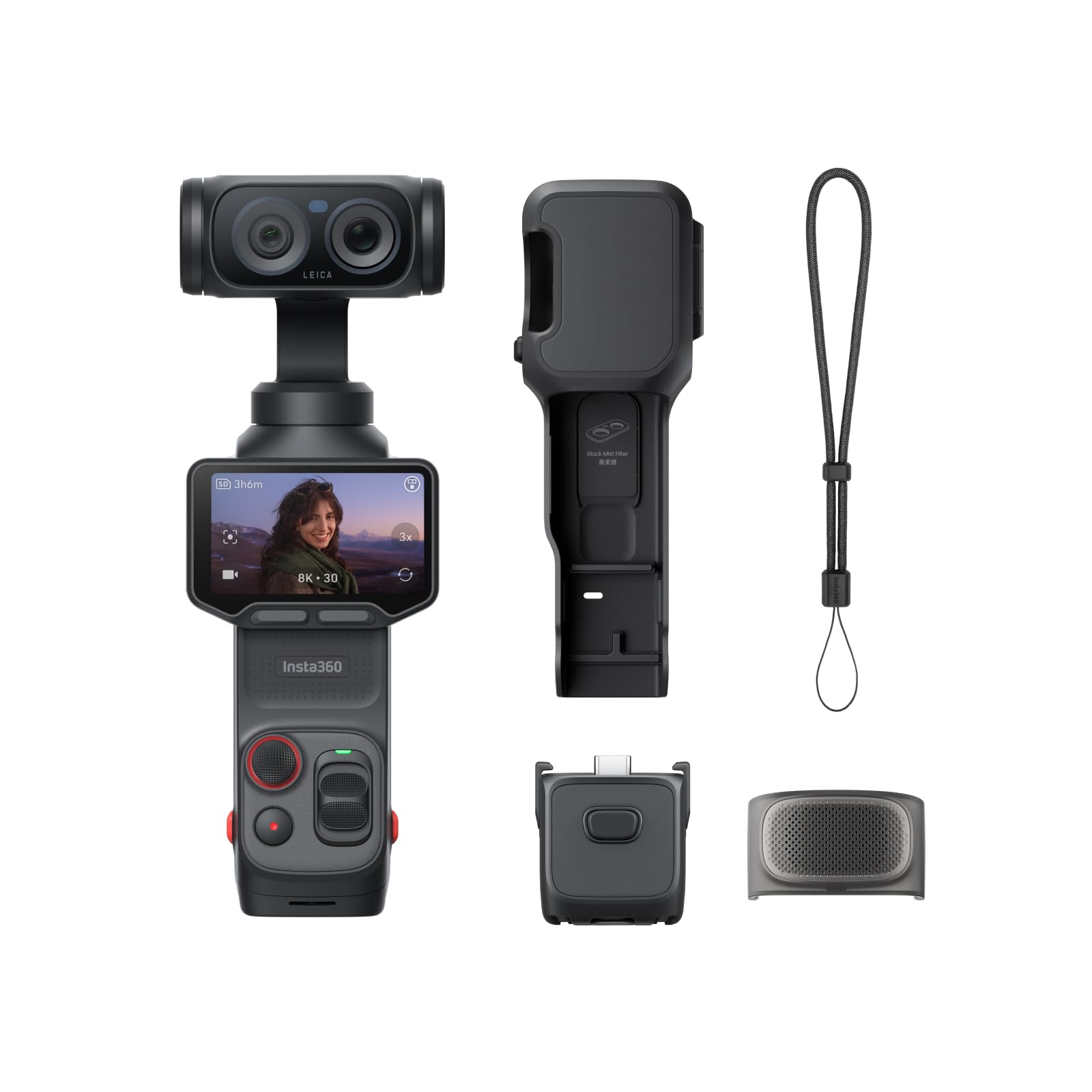
The Luna Ultra pairs dual Leica lenses with a 12x zoom range and a 3-axis mechanical gimbal in a pocket-sized body. Unlike the top pick's 360 reframing workflow, this is a fixed-lens vlogging tool for creators who want telephoto reach and stabilized framing without stitching. The detachable 2-inch OLED screen doubles as a remote, so solo framing and group shots work without touching the camera.

Sharp 8K capture holds up in good light, and the 10-bit Log profile gives colorists room to grade without losing highlight detail. Subject tracking keeps a moving person in frame indoors and outdoors, which matters when you are framing yourself with the detachable remote. The telephoto lens reaches subjects a selfie-stick shot cannot, making this a better fit than a 360 camera for interview-style or travel vlogging.

Solo vloggers who produce planned takes get the most from this camera: telephoto reach, gimbal stability, and Leica color in one unit. It is not the tool for action-sports users who need a rugged waterproof body, and the gimbal plus detachable screen need careful handling. Random recording stops, overheating, and screen disconnects can occur, so shorter clips are the safer workflow. Within those boundaries, the Luna Ultra offers a distinct vlogging option that action cams and 360 models do not.

💡 Use the detachable screen as a remote when framing from the front of the camera.

Pros

  • Premium build quality that feels solid in hand and supports daily vlogging.
  • Sharp 8K video with Leica color and a 12x zoom range for detailed telephoto shots.
  • Fast and accurate subject tracking for solo shots indoors and outdoors.
  • Detachable screen doubles as a remote for framing solo shots and group setups.

Cons

  • Screen connection can drop or freeze during a take, so confirm framing before rolling.
  • Battery life can fall short of the 4-hour claim during demanding shoots, so plan a mid-day top-up.
  • Continuous recording may stop unexpectedly near the 10-minute mark with heat buildup.
Our verdict

For solo vloggers who want telephoto reach and gimbal stability without 360 reframing, that is exactly what this camera delivers.

Check Latest Price
7

Budget 360

Insta360 X3

93 /100
Studio Score High Confidence

Key details

Form Factor
360 action cam
Battery & Heat
Requires spare batteries
Video & Sensor
5.7K 360, 4K single-lens
Waterproofing & Lenses
Waterproof, non-replaceable lenses
Check Price on Amazon

Insta360 X3 is the budget-friendly entry point for 360 capture, pairing an intuitive touchscreen and app with strong action-camera handling for motorcycle, ski, and travel shots. The 360 field of view lets you shoot first and choose the frame later, which keeps the learning curve low for newcomers. Compared with the 8K models in this lineup, the X3's older sensor limits fine detail, and its only pricing advantage is the lower entry cost. Exposed lenses scratch easily and are not user-replaceable, and battery runtime trails newer models, so this is best for casual trips and short adventure clips rather than all-day shoots.

Pros

  • Immersive 360 field of view lets you capture surroundings with no aiming needed.
  • Intuitive touchscreen and app make the 360 workflow approachable for beginners.
  • Action-camera handling suits motorcycle trips, skiing, and outdoor adventures.

Cons

  • Unit-to-unit reliability can vary; occasional units may require replacement.
  • In dim interiors or evening shots, low-light quality trails the newer 8K models in this lineup.
Our verdict

First-time 360 shooters and casual travelers on a budget will get the most from this X3 before moving up the lineup.

Check Latest Price
8

Hands-Free POV

Insta360 GO Ultra

87 /100
Studio Score Strong Evidence

Key details

Form Factor
Wearable POV camera
Battery & Heat
Action Pod 200 min
Video & Sensor
4K60, 1/1.28 CMOS
Waterproofing & Lenses
IPX8 to 10m
Check Price on Amazon

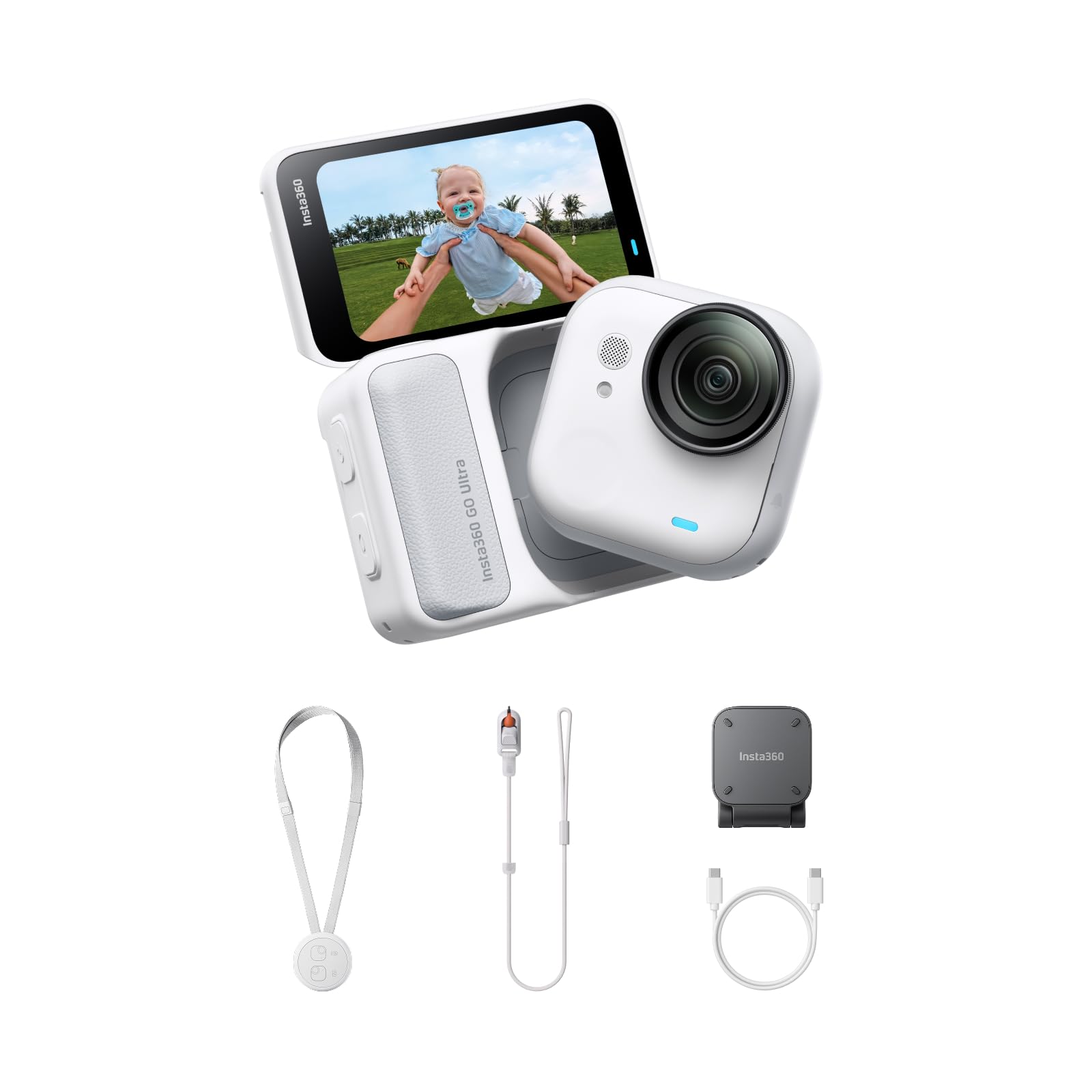
GO Ultra's larger sensor and 4K60 Active HDR give hands-free cyclists, runners, and travelers a real image-quality step up from the 39g GO 3S while keeping the magnetic, clip-and-go form factor. The price tag lands closer to an 8K 360 model, so it sits in an also-consider position for standalone Insta360 buyers rather than the default pick. Those who need the largest magnetic POV sensor and are okay with a pocketable body will find the step up worthwhile, even with the wearable-POV limits listed below.

Pros

  • Large-sensor 4K POV footage with natural color and steady handheld motion.
  • Pocket-sized magnetic body that clips onto gear without adding bulk.
  • Quick start and intuitive app make it easy to capture and edit on the fly.

Cons

  • Battery life without the Action Pod is limited, so the pod is the practical carry.
  • Extended 4K60 can overheat, so high-bitrate clips are best kept short.
Our verdict

Fits the active hands-free shooter who wants larger-sensor POV image quality from a standalone body and is comfortable paying a premium for it.

Check Latest Price
9

Budget Waterproof 360

Insta360 ONE X2

89 /100
Studio Score Strong Evidence

Key details

Form Factor
360 action cam
Battery & Heat
80 min claimed
Video & Sensor
5.7K 360, 1440p Steady Cam
Waterproofing & Lenses
IPX8 to 10m, fixed lenses
Check Price on Amazon

ONE X2 delivers 10m waterproofing and a touchscreen at a budget-friendly price, making it a sensible entry point for casual travel and family 360 memories. FlowState stabilization keeps handheld shots steady, and the touchscreen simplifies review between takes. Older image processing, a roughly one-hour runtime, and reliability concerns keep it in the budget tier rather than current-gen contention, so it suits shorter sessions instead of all-day shooting. For a buyer who wants a low-cost waterproof 360 camera and can skip the latest image quality, this still does the job.

Pros

  • 10m waterproofing and a touchscreen make this a budget-friendly entry into 360 video.
  • FlowState stabilization keeps handheld 360 footage steady without extra gear.
  • The touchscreen simplifies framing and playback when you are on the move.

Cons

  • Exposed lenses scratch easily, so a protective sleeve or padded case is worth budgeting for.
  • Water intrusion remains possible in some submerged uses despite the IPX8 rating, so seals need a check.
Our verdict

Keep it for road trips, family gatherings, and wet-weather clips where a touchscreen 360 camera at a budget price is enough.

Check Latest Price

How to Choose

Form Factor

360 cameras capture every direction at once, which removes aiming but adds an editing step because every clip must be reframed. Single-lens action cameras show the frame while recording, so riders and divers get finished clips straight from the camera. Wearable POV models sit at the other end: hands-free first-person footage, but short recording times.

Video and Sensor

Resolution and sensor size set starting quality, but heat is the real constraint. 8K sensors run hotter than 5.7K sensors, so sustained 8K recording is often interrupted by thermal shutdown. A larger sensor helps low light, yet it also creates bigger files and shorter continuous recording in a compact body. Prioritize a larger sensor for night shooting; choose mid-size sensors for all-day daylight action.

Waterproofing and Lens Protection

Insta360 360 lenses are exposed in two directions, so scratches are a category issue, not a rare defect. User-replaceable lenses let you swap a scratched element; fixed lenses leave the damage permanent. Waterproofing sets another boundary: IPX8 bodies can go in the sea, while non-waterproof models must stay out of spray. Skiers can pick lighter non-waterproof cameras; surfers and divers need sealed bodies.

Battery and Heat

Battery claims come from moderate settings, so a three-hour rating can shrink in 8K or cold weather. Small bodies cannot dissipate heat quickly, which is why high-bitrate capture hits thermal shutdown before the battery empties. Short-clip shooters can pick the most powerful sensor; long-session shooters need a cooler-running model and spare batteries.

Stabilization and Workflow

FlowState stabilization smooths handheld movement by using sensor data, and in 360 mode it also hides the selfie-stick line. The hidden trade-off is workflow: 360 clips need stitching and reframing in the Insta360 app, so they do not drop straight into any editor. Choose a single-lens action camera if you want finished footage from the mount; choose 360 if you enjoy picking the angle after the shoot.

Frequently Asked Questions