8 Best GoPro Alternative of 2026: Picks That Survive Real Outings

Match a GoPro alternative to your real riding, diving, or vlogging needs: waterproofing, stabilization, and battery matter more than 4K labels.

Every action camera claims 4K and a waterproof case. The real separation shows up in details: stabilization on a bumpy trail, battery for a half-day outing, and a housing you can trust after repeated dives. Those details matter more than the resolution printed on the box.

Buyers also face a split between proven basics and premium polish. A modest budget can deliver 4K30, a remote, and enough mounts to start shooting. Spending more adds larger sensors, stronger stabilization, and native waterproofing, but it does not automatically make the camera easier to operate if the app or charging routine gets in the way. A front screen and touchscreen are handy upgrades, but they matter less than knowing the camera will keep recording when you need it.

2

Best Premium Alternative
DJI Osmo Action 4

92 /100
Studio Score High Confidence

Key details

Battery
1770mAh, 160 min
Accessories
Essential combo
Video Specs
4K120, 155° FOV
Stabilization
RockSteady, HorizonBalancing
Check Price on Amazon

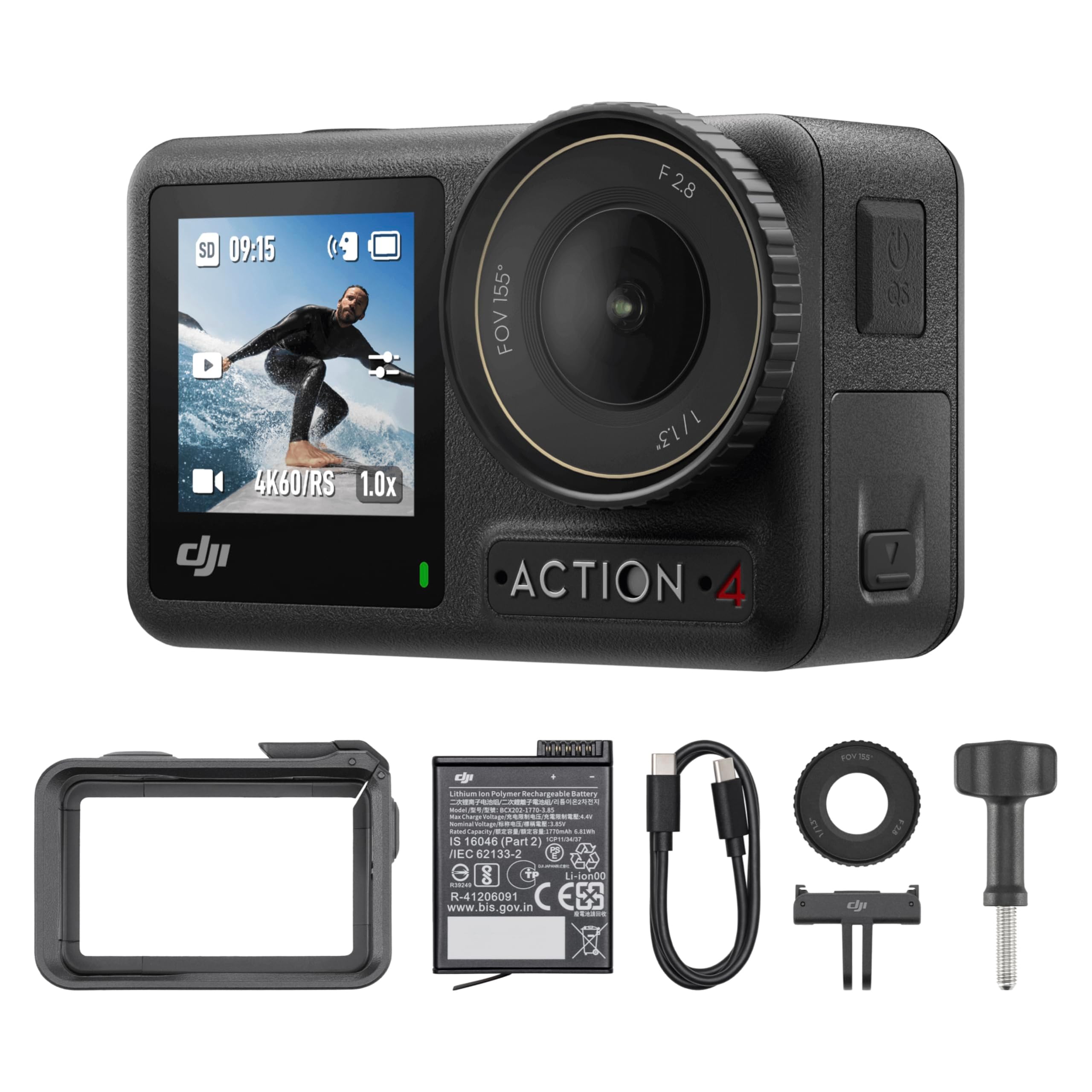
The 1/1.3-inch low-light sensor puts the DJI Osmo Action 4 ahead of budget action cams in dusk, indoor, and night travel footage, while 4K120 and a 155° FOV cover fast sports and wide POV framing. RockSteady and horizon balancing keep the horizon level on moto and bike mounts, so the footage holds a clean line during hard acceleration and rough pavement. The body is waterproof to 18m without a housing, which simplifies snorkel, surf, and rain-ride shots compared with case-dependent rivals.

The shell is dense and weather-sealed, with controls large enough for gloved hands. Because this is a previous-generation flagship, the large low-light sensor and RockSteady modes carry over without the newest-model premium. For sports, travel, and POV use, that places it clearly above cased budget cams and a step below the current flagship.

The natural buyer is a moto vlogger, cyclist, or travel creator who treats stabilization and low-light capability as the deciding factors. One-time setup runs through the DJI Mimo app, so anyone who refuses phone-app activation should filter themselves out. Budget-first shoppers should stay with the cheaper top pick; this premium body pays for its sensor and stabilization advantages.

💡 Complete DJI Mimo activation on a stable Wi-Fi connection at home, then update the firmware before the first field recording.

Pros

  • Low-light sensitivity keeps dusk scenes clean where budget action cams become noisy.
  • RockSteady and horizon balancing keep moto and bike footage level without extra software.
  • Dense, weather-sealed body holds up to repeated mounting and outdoor exposure.
  • Previous-generation pricing brings the large sensor core below the newest model.

Cons

  • Initial setup requires the DJI Mimo app, and login steps can stall.
  • Long 4K days can outlast the 1770mAh battery, so a spare is practical.
Our verdict

Moto vloggers and low-light travel creators get flagship-grade stabilization and bare 18m waterproofing without paying the newest-model premium.
Check Latest Price
3

Best for Vlogging & Selfie Framing

AKASO Brave 7 LE

89 /100
Studio Score Strong Evidence

Key details

Battery
2 x 1350mAh
Accessories
Case included
Video Specs
4K30, 20MP
Stabilization
6-axis EIS 2.0
Check Price on Amazon

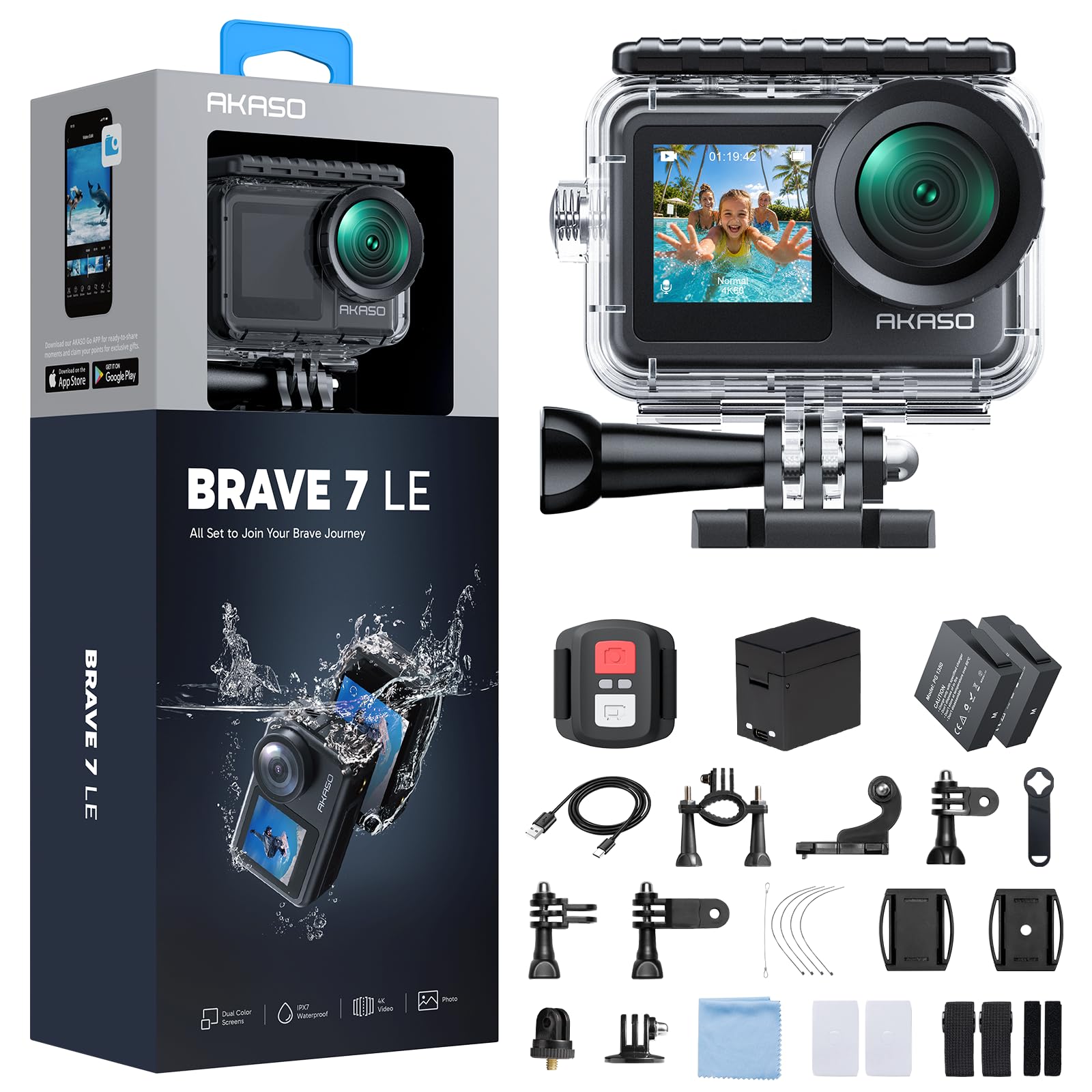
The Brave 7 LE is the usability upgrade in AKASO's value lineup: a front screen for vlogging, a touchscreen for quick adjustments, and IPX7 weather resistance that the entry-level model skips. Where the top pick keeps the interaction simple, this one lets you frame yourself without guessing and change settings without pairing a phone. The newer EIS 2.0 stabilizer also gives handheld and mount-cam footage a smoother feel than AKASO's older budget stabilizers.

This suits vloggers, hikers, cyclists, and snorkelers who want GoPro-style framing and controls in a mid-range package. The IPX7 body handles rain and splashes, and full submersion still requires the included case, so scuba-sized depth is not this camera's job. For someone shopping with a 4K action-cam budget, the front screen is the feature that justifies the step up from the no-frills starter model.

Video at 4K30 is clean in daylight, and 20MP stills hold up for online albums and small prints. The touchscreen responds without the lag that used to plague budget action cams, and the two included batteries keep a mixed day of short clips going without a charger.

Pros

  • Front screen and touchscreen make vlogging and on-camera adjustments faster than on entry-level AKASO models.
  • Included waterproof case handles full submersion to 131ft, so snorkeling and wet-weather shoots are covered.
  • 4K30 video and 20MP stills are clear enough for travel edits and social sharing.
  • Packs a feature-rich package at a price well below GoPro's premium tier.

Cons

  • Maxes at 4K30; slow-motion edits need a 4K60/120 camera.
  • Budget-only buyers can get similar core 4K30 basics for less from the entry-level model.
Our verdict

The Brave 7 LE makes sense for regular vloggers and outdoor shooters; the entry-level model still covers pure budget needs.

Check Latest Price
4

Best Budget 4K60

ODDV Action1

82 /100
Studio Score Strong Evidence

Key details

Battery
Accessories
Wrist remote, case
Video Specs
4K60, 30MP
Stabilization
6-axis EIS
Check Price on Amazon

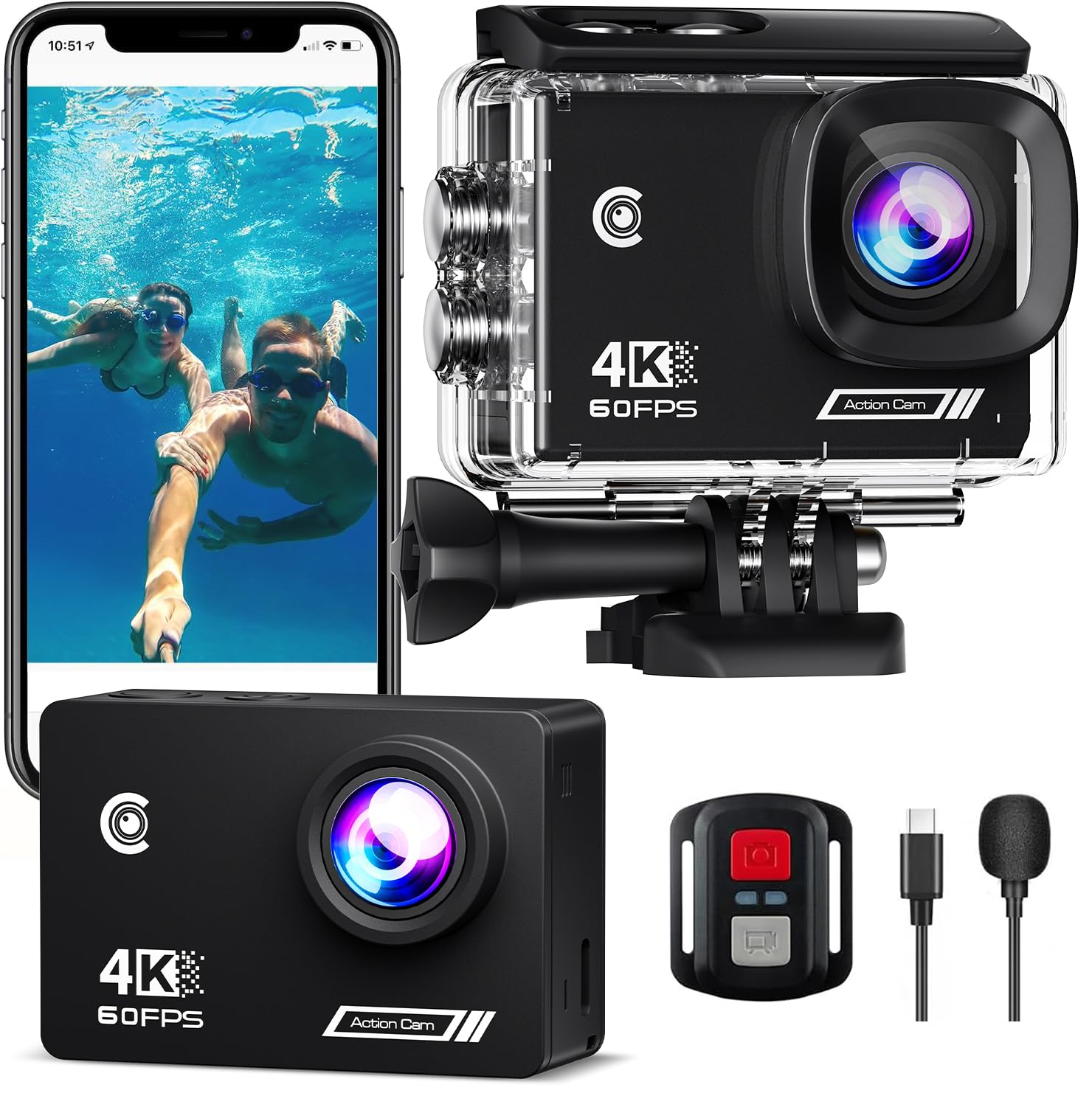
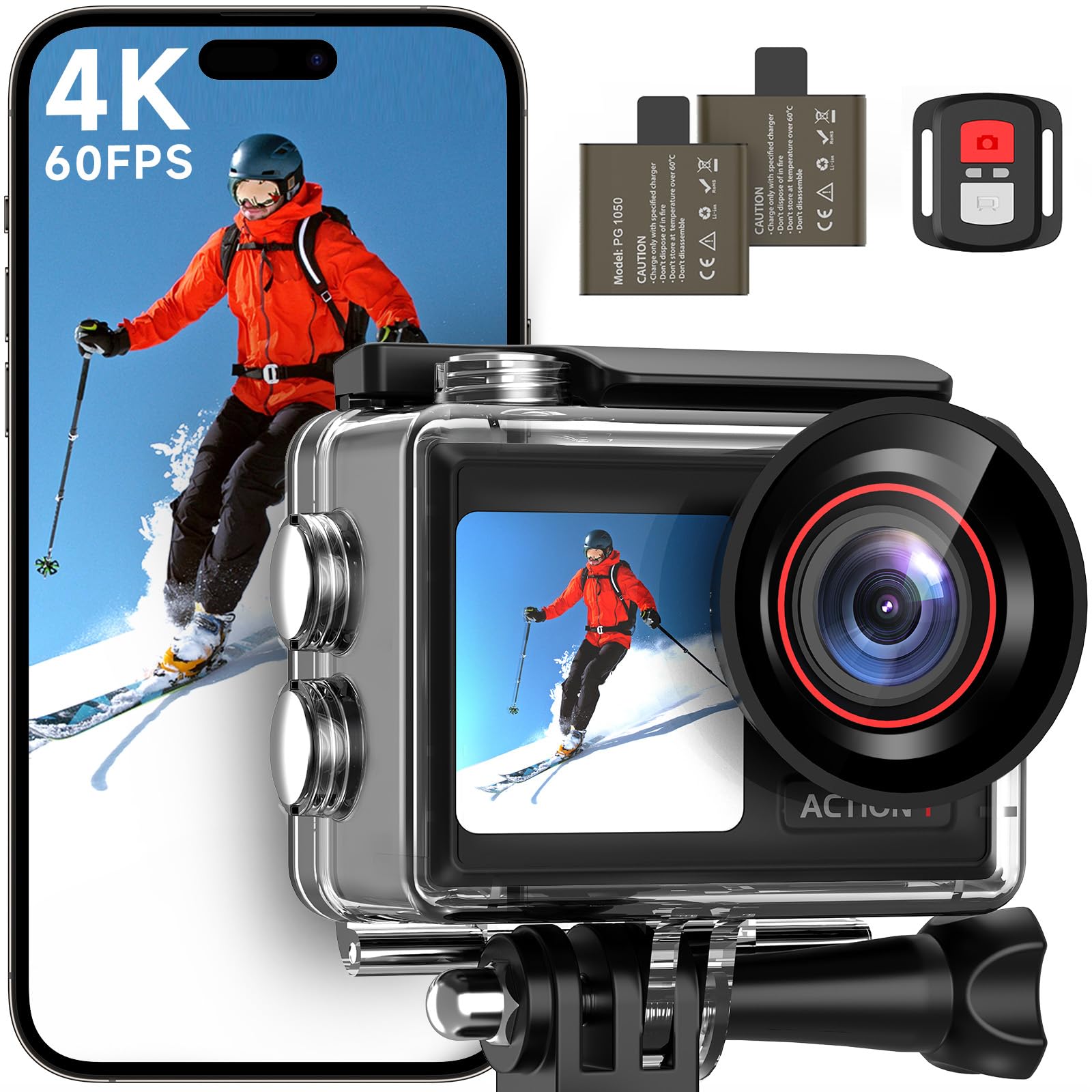
At a budget-friendly price, the ODDV Action1 pairs 4K60 recording with a 2-inch touchscreen, a 1.4-inch front screen, and a 2.4G wrist remote. That combination puts dual-screen framing within reach without jumping to a premium tier. The body feels denser than the price suggests, and beginners can capture usable footage after a quick setup.

This is the right fit for skiers, snowboarders, and selfie shooters who want high frame rates at a lower cost. The front screen helps with pre-run framing, and the wrist remote starts recording without reaching around a helmet mount. Real-world 4K60 sessions run about 25–30 minutes, so treat it as a short-burst camera for one run or a quick sequence, not an all-day recorder.

The included waterproof case has held up in snorkeling and wet weather, so the camera can ride along in rain or surf without extra worry. Six-axis stabilization smooths moderate shake on handheld POV clips, and the touchscreen keeps menu changes quick when you are working with cold hands. This is not a premium stabilizer, but at this price the footage remains watchable for sports, travel, and underwater use.

Pros

  • 4K60 video at this price, with stabilization that keeps action footage watchable.
  • Build quality feels more substantial than the price suggests.
  • Waterproof case seals well for snorkeling and rainy days.
  • Beginners can get usable footage after a quick setup.

Cons

  • The built-in microphone is not the strong point; voice-heavy vlogs will struggle to sound clear.
Our verdict

The ODDV Action1 is the budget answer for 4K60 action clips with front-screen framing.

Check Latest Price
5

Best Budget Starter Kit

icefox i8

84 /100
Studio Score Strong Evidence

Key details

Battery
2 x 1350mAh
Accessories
Remote, mounts, extra battery
Video Specs
4K, 2.7K, 1080P60
Stabilization
EIS
Check Price on Amazon

The icefox i8 puts the essentials of a GoPro-style action cam in one budget-friendly box: 4K video, electronic image stabilization, a WiFi wrist remote, and a waterproof housing rated to 98 feet. Unlike listings that sell a bare camera and a few clips, it includes two 1350mAh batteries and a complete mount set, so a first-time buyer can unpack it and start shooting without a parts run. That completeness is what makes this kit a sensible entry point for casual outdoor use.

Daytime footage is the i8's comfort zone. The 4K mode delivers sharp detail on trails and city walks, and the EIS smooths out moderate shake from handlebar or selfie-stick use. The WiFi remote starts and stops recording from the wrist, which keeps the camera useful when it is mounted out of reach. A second battery in the box extends a shoot day without needing a power bank, and the menu is laid out clearly enough for a new owner to find EIS and resolution settings quickly.

This is a sensible first action camera for budget cyclists, hikers, parents equipping a child, and travelers who want a replaceable POV camera for casual clips. The camera body is not waterproof on its own, so the included housing must be closed and sealed for any water use; the 98-foot rating is the ceiling, not a suggestion. Low-light work is outside what this price bracket should promise, so treat the i8 as a daylight-and-snorkel tool rather than an evening vlogging camera.

💡 Use the included remote as the primary trigger and leave the Snap-Pro app for transferring files later.

Pros

  • Complete kit right out of the box: dual batteries, remote, mounts, and waterproof case included.
  • Overall quality holds up to a much higher price point.
  • Daytime 4K clips are sharp enough for casual edits and sharing.
  • Menus are intuitive, so new owners can set resolution and turn on EIS quickly.

Cons

  • The built-in microphone is fine for ambient sound but thin for spoken narration.
  • The Snap-Pro WiFi app can be slow to pair, and the interface may lag when changing modes.
Our verdict

The i8 is the camera to grab when the goal is a full kit rather than a bare body: 4K, dual batteries, remote, and mounts are handled in one purchase.

Check Latest Price
6

Best Complete Starter Bundle

TIMNUT C16

85 /100
Studio Score Strong Evidence

Key details

Battery
2 included
Accessories
64GB card, remote, case
Video Specs
4K30, 20MP
Stabilization
EIS
Check Price on Amazon

The C16 bundles a usable 64GB card, a remote, two batteries, a waterproof case, and a mount kit, so first-time buyers can start shooting without a separate accessory purchase. That built-in storage turns the purchase into a complete kit rather than a camera you need to equip; the remote also makes it easy to start and stop recording without touching the camera.

Daylight 4K30 footage comes out sharp for the price, and the basic EIS smooths handheld walking shots well enough for casual travel clips. The 2-inch LCD is simple to navigate, and the included waterproof case extends the camera to snorkeling depths without needing another housing. The dual batteries let you swap and keep shooting instead of stopping to recharge.

This suits families, budget vacation shooters, and first-time buyers who want a complete package without shopping for memory cards. Vloggers who need a front display or touchscreen, and users who want adjustable stabilization controls, will find the C16 too limited. The two-battery setup gives spare power, but swapping batteries resets the date and time, so the camera may stamp clips with the wrong timestamp until you set it again.

Pros

  • Included 64GB card removes the extra memory-card purchase that catches new buyers.
  • 4K30 video stays sharp in daylight at a budget price.
  • Bundle covers the basics: two batteries, remote, mounts, and waterproof case.
  • Controls are simple enough for beginners and young users.

Cons

  • Swapping batteries clears the date and time, so clips can be timestamped wrong until reset.
Our verdict

For a first action camera, the C16 is the convenient starting point: storage, mounts, remote, and waterproofing arrive in one budget-friendly box.

Check Latest Price
7

Cold-Weather Shooters

DJI Osmo Action 5 Pro

91 /100
Studio Score High Confidence

Key details

Battery
1950mAh, up to 4h
Accessories
Essential combo
Video Specs
4K, 40MP
Stabilization
360° HorizonSteady, RockSteady
Check Price on Amazon

Subject tracking, 40MP stills, and 360° HorizonSteady make this the leading action camera in this set. It covers the GoPro-style duties of sports, travel, underwater, and POV shooting with sharp 4K video, strong stabilization, and a 20m bare waterproof rating. The long battery life supports full-day outings better than comparable models.

The positioning keeps it from being the automatic pick. The previous-gen model delivers nearly all the everyday shooting experience for less, so the premium price makes sense only if you will actually use subject tracking, 40MP stills, or the extended runtime. This step-up suits serious action creators rather than budget-first buyers; if you don't need the latest-gen extras, the previous-gen model is the smarter spend.

Pros

  • Subject tracking holds a moving athlete or diver in frame, reducing manual re-framing while recording.
  • 40MP stills give underwater and travel shooters high-res frames that crop more cleanly than typical action-cam stills.
  • The 1950mAh battery outlasts comparable action cams on a full charge.

Cons

  • Third-party remote users will find Bluetooth control limited to official DJI accessories.
  • Long 4K sessions can trigger an overheating shutdown in some units, so monitoring is wise for continuous recording.
Our verdict

For sports, travel, or underwater creators who will use subject tracking and 40MP stills regularly, the premium is a fair trade for the extra capability. If your shooting fits the previous-gen model, skip this step-up.

Check Latest Price
8

Travel Vloggers

SJCAM C400

80 /100
Studio Score Strong Evidence

Key details

Battery
460 min
Accessories
Controller, case, tripod
Video Specs
4K Ultra HD
Stabilization
6-axis gyro, EIS
Check Price on Amazon

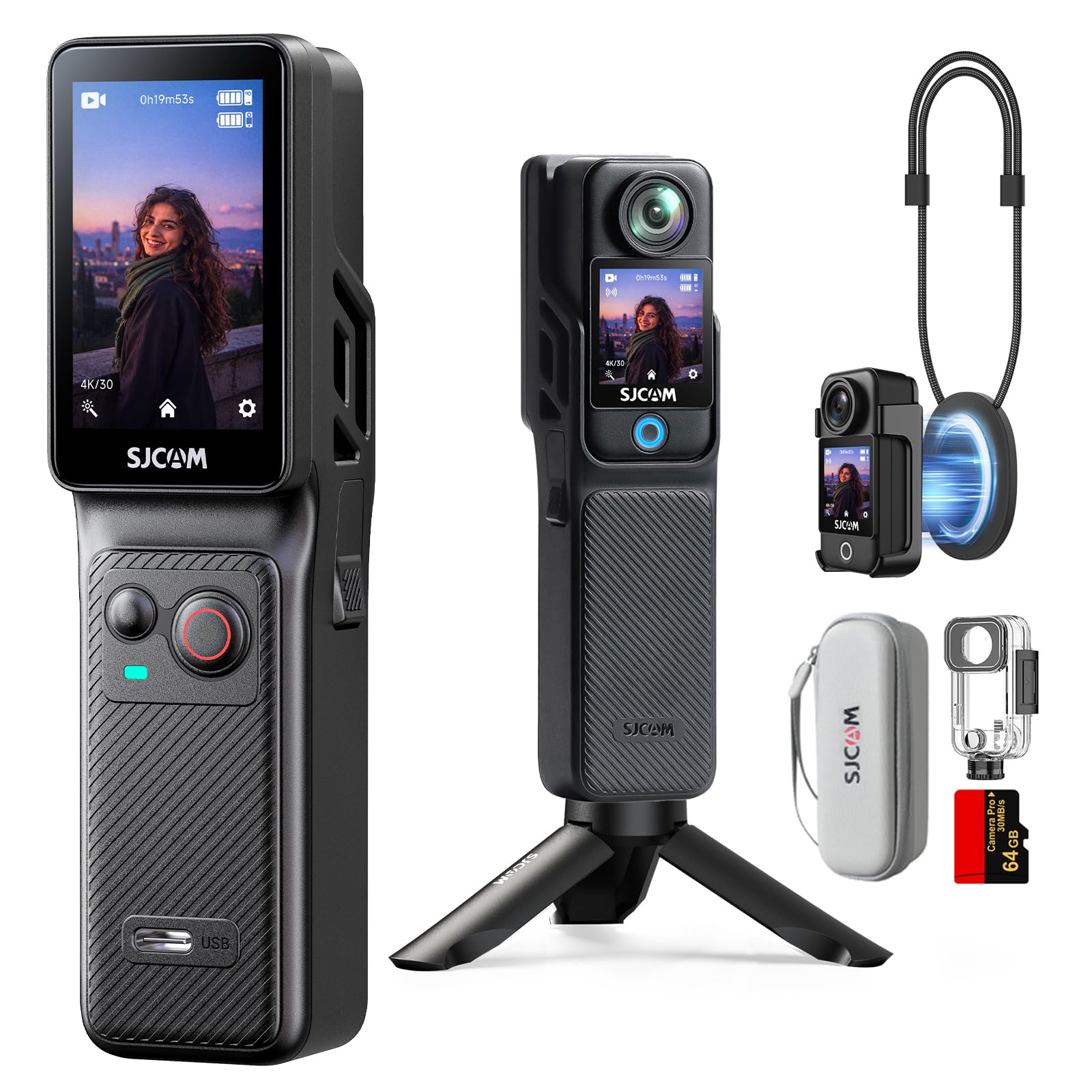
The C400's defining feature is the detachable controller: the rotatable touchscreen body can be clipped to a pack strap while the controller stays in hand for easy framing and recording. The 7-hour claimed battery, bundled 64GB card, case, tripod, and mounts form a genuinely travel-ready kit. What keeps it below the action-cam leaders is a form-factor mismatch: this is a wearable body cam, not the conventional bar-shaped camera that sports and underwater buyers expect. Travel vloggers who want detached control and vertical/horizontal framing flexibility will appreciate the design; the general action-cam buyer should stay with the bar-style picks.

Pros

  • Detachable controller lets you start and frame recordings while the camera sits on a pack strap.
  • Long battery runtime (7-hour claim) covers full travel days without stopping for charges.
  • Kit includes a 64GB card, case, tripod, and mounts, so nothing else is needed to start.

Cons

  • App pairing and stream setup may need repeated attempts before a connection holds.
  • Wind noise and weak internal audio may require an external mic for clear voice capture.
Our verdict

The C400 fits when a detachable controller and flexible framing matter more than the bar-style action-cam convention — a travel-vlogging purchase, not a sports-and-underwater one.

Check Latest Price
9

Budget Tinkerers

Apexcam M80 AIR

84 /100
Studio Score Strong Evidence

Key details

Battery
2 x 1350mAh
Accessories
Mounts, batteries, charger
Video Specs
4K60, 64MP
Stabilization
EIS
Check Price on Amazon

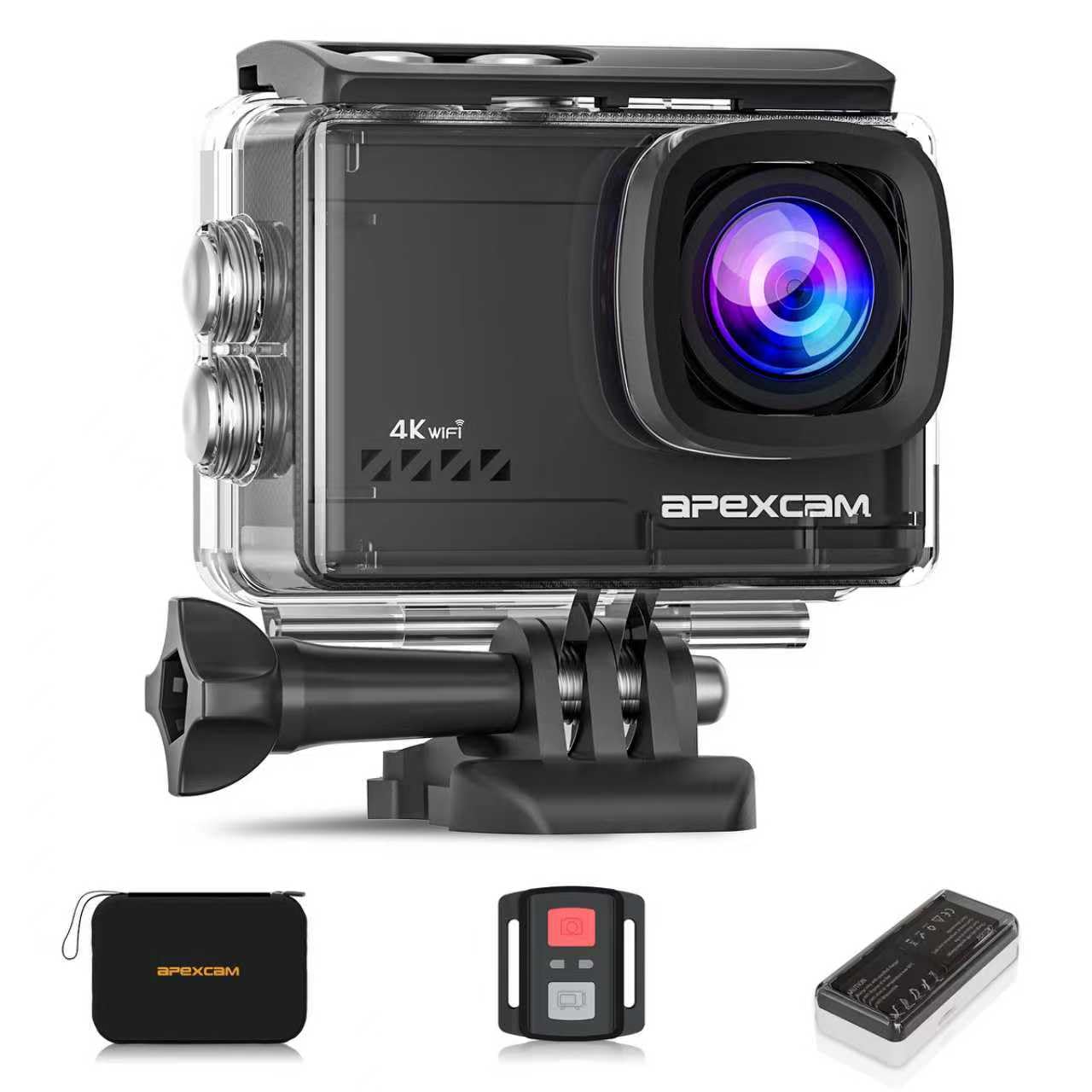
The M80 AIR's appeal is the full kit at a super-low price: 4K60, two batteries, mounts, and a carrying case are all in the box. It captures usable daytime footage and provides a first-time buyer everything needed to experiment with action-cam angles. The advertised 4K60 can look soft in low light or fast motion, and unit-to-unit consistency is the main concern — a given camera may not power on or may end recordings without warning, so a pre-trip test of the camera and included housing is part of the workflow. That combination makes it an experiment starter rather than a dependable trip companion; the more consistent entry-level kit in this category offers a safer bet for a similar budget.

Pros

  • Entry price includes usable camera hardware plus a full starter accessory set.
  • The bundle's mounts, batteries, charger, and carrying case cover the first few outings without extra purchases.
  • The storage case keeps the camera, mounts, and spare batteries organized in one place.

Cons

  • Spare battery is necessary because a single cell may run low before the day is over.
  • Waterproof housing seal should be checked before each dive; a leak can soak the camera and end a session.
Our verdict

The M80 AIR suits a first-time buyer who wants the full accessory kit and a low entry cost, not a shooter who needs one camera for once-in-a-lifetime footage.

Check Latest Price

How to Choose

Video Resolution & Frame Rate

4K30 is enough for most travel and snorkeling clips, but 4K60 matters for fast motion like ski runs and motorcycle passes. The extra frame rate consumes more processing power and battery, so a 4K60 camera can run out of steam before a 4K30 model with a larger battery.

High frame rates also increase heat. A camera that records 4K60 for ten minutes may need a cooldown before the next take, while 4K30 can run much longer. Choose the frame rate that matches the action, not the biggest number on the box.

Waterproofing & Housing

A waterproof case rated to 131 feet protects the camera, but it adds a routine: clean the silicone seal, check for grit, and latch it carefully. Even a well-sealed case can leak if sand gets trapped or the gasket ages.

Native waterproofing removes that ritual and lets a camera go from pool to bike without a housing. It costs more and is usually limited to 10–20 meters. For shallow snorkeling a case is fine; for frequent water use a bare-rated body is worth the upgrade.

Stabilization & Smooth Footage

Electronic image stabilization crops into the sensor and shifts the frame to cancel shake. The stronger the correction, the tighter the field of view becomes, so a highly stable image may not look as wide as the lens suggests.

Basic EIS smooths light handshake on walks. RockSteady-style systems handle rough trails and high-speed vibration with less distortion. If you ride or ski, look for a camera with a named stabilization system rather than a generic gyro setting.

Battery Life & Spare Packs

Action cameras are small, so their batteries are small. A compact pack can record 30–45 minutes of 4K before the camera stops, and cold weather makes it worse.

The practical fix is buying a camera that ships with two batteries or budgeting for a second pack and dual charger. Ignoring battery capacity turns a full adventure into a series of short clips.

Mounts & Remote Control

The best footage comes from a camera that is actually attached to the activity. Helmet, handlebar, and chest mounts each change the angle and the story, and a kit that includes several mounts saves money later.

A remote solves a different problem: starting and stopping the recording without reaching for the camera. On a bike, a wrist remote is worth more than an extra megapixel.

Frequently Asked Questions