7 Best Action Camera for Skiing 2026: Cold-Ready Picks That Last

The best action camera for skiing in cold conditions: battery endurance, stable POV, and low-light quality without premium waste.

Manufacturer spec sheets put 4K and waterproofing first, but ski footage lives or dies on smaller details. Cold air drains lithium-ion batteries faster than any lab test suggests. Stabilization decides whether a bumpy descent looks like a run or a washing machine. App pairing can go wrong in a lift line.

That is why the best ski camera is not simply the one with the highest resolution. It is the one that keeps recording through a full morning, holds the horizon when your weight shifts, and wakes up without a phone argument. Resolution matters, but it is the starting point, not the deciding factor.

The real trade-off sits between budget and cold-weather endurance. Spending more buys extended battery life and steadier low-light footage; spending less leaves you carrying spare batteries and accepting softer stabilization. Match that choice to how long you stay on snow.

1

Best Overall for Skiing

DJI Osmo Action 5 Pro

91 /100
Studio Score High Confidence

Key details

Video
4K / 1080P
Stabilization
RockSteady / HorizonSteady
Waterproofing
20m / IP68
Mounting System
Magnetic quick-release
Check Price on Amazon

Cold-weather battery endurance is the Osmo Action 5 Pro's defining edge for mountain work. At -20°C, a single charge holds around 3.6 hours, enough for a full morning of lift-served laps. HorizonSteady keeps the horizon locked on steep descents, and the 1/1.3-inch CMOS sensor with 13.5-stop dynamic range protects snow highlights in bright sun while retaining shadow detail under trees. That combination matters more than a higher resolution number when the light is flat or the run is long.

On a helmet or chest mount, the body feels built for repeated use. Dual OLED touchscreens respond quickly with gloved fingers, the 20-meter waterproof rating removes the need for a housing in slush or creek crossings, and phone or DJI mic pairing is quick when you want a framing check or wind-reduced audio. Subject tracking holds a moving skier in frame during solo shooting, which cuts down the number of times you stop to reposition the mount between runs.

The cold-resistant cell shifts pack strategy: one spare battery in a chest pocket is enough for a full day, rather than a pocket full of cells. The camera also holds full output in moderate cold, so a morning of short clips does not end with a dead battery before lunch. That behavior is what separates a ski camera from a fair-weather camera.

For moto vloggers, RockSteady plus HorizonSteady handles handlebar vibration and lean without introducing the jelly effect that cheaper stabilization can leave behind. The same stabilization keeps ski POV steady without the extra weight of a gimbal.

This is the right camera for serious skiers and snowboarders who spend full days outside and need footage that stays usable in cold air. It is not the value pick; a lower-priced sibling covers similar image quality for less, and advanced remote features only work with official DJI accessories. Long continuous 4K recording can trigger overheating in some units, so treat it as a run-by-run POV tool rather than a single-stream broadcaster. Low-light shooters get the same benefit: the large sensor keeps night and overcast footage from turning into noise. For riders who want minimal time spent fiddling with batteries and menu settings, that is the point of this tier.

💡 Carry one spare battery in a chest pocket; the cold-resistant cell covers full days, and a backup handles extra laps.

Pros

  • Cold-weather battery covers full mountain days without constant cell swaps.
  • 4K / 1080P footage holds crisp detail in bright snow and low-light trees.
  • Body, controls, and OLED touchscreens hold up to helmet, chest, and handlebar mounts.
  • Subject tracking and HorizonSteady keep skiers and moto riders framed while the horizon stays level.
  • The 20-meter waterproof shell handles wet snow and stream crossings without an extra housing.

Cons

  • Advanced remote control only works with official DJI accessories; third-party remotes won't access full features.
  • Long continuous 4K recording may trigger overheating in some units, so run-length clips are the safer pattern.
Our verdict

For full days on the mountain, the premium price is tied to battery endurance and level stabilization — the two things that make POV footage watchable.

Check Latest Price
2

Best Budget All-Rounder

AKASO EK7000 Pro

89 /100
Studio Score Strong Evidence

Key details

Video
4K30 / 1080P60
Stabilization
EIS
Waterproofing
131ft / 40m with case
Mounting System
Remote, mounts, grip
Check Price on Amazon

The EK7000 Pro wins this roundup's budget slot by packaging a touchscreen, EIS, wireless remote, floating grip, carrying case, and two 1350mAh batteries into one kit. That bundle is what separates it from the older dual-screen workhorse that used to occupy this budget position.

On ski runs, 4K30 footage holds up well, with EIS taking the edge off moderate chatter. The remote is the standout on the mountain: start or stop a clip without unzipping a jacket, and use the touchscreen for quick settings before dropping into a run.

This is for budget-conscious skiers, families, and first-time action cam owners who want one complete package rather than a project. Battery performance can vary between units, and digital stabilization is not gimbal-grade — so if you expect HorizonSteady-level lock on hard carves or plan to record all day on a single cell, this isn't the right mountain partner.

Pros

  • Complete kit includes touchscreen, remote, floating grip, case, and two batteries.
  • 4K30 footage with EIS delivers smooth POV video for the price.
  • Feature set outruns its budget-friendly price tag in everyday use.

Cons

  • Full 40m waterproofing depends on the included case, adding a step before wet snow or creek crossings.
  • No 4K60 or 4K120, so high-frame-rate slow-motion is limited to 1080P60.
Our verdict

For a ski-trip grab-and-go kit at a budget-friendly price, this puts the touchscreen and remote where they matter most — on the mountain — without asking you to buy extra gear.

Check Latest Price
3

Best Value Premium

DJI Osmo Action 4

92 /100
Studio Score High Confidence

Key details

Video
4K120 / 4K60 / 4K30
Stabilization
RockSteady / HorizonBalancing
Waterproofing
18m without case
Mounting System
Magnetic quick-release
Check Price on Amazon

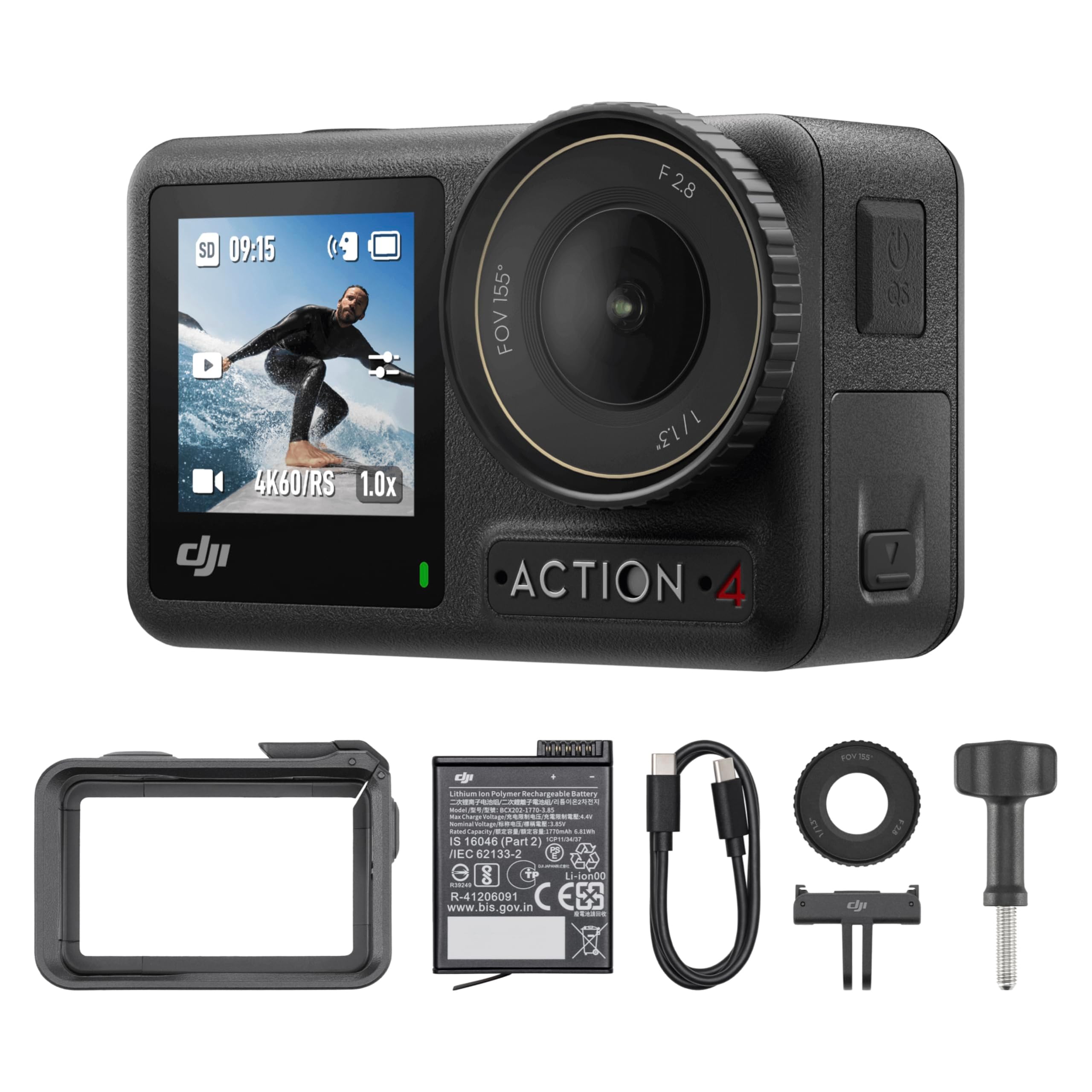
The Action 4 brings near-flagship recording quality to a mid-range price: a 1/1.3-inch sensor paired with RockSteady image stabilization delivers the kind of smooth, low-light-capable ski footage that usually costs more. It sits below the top pick but shares the sensor class and stabilization approach. That combination keeps ski edits from looking shaky.

Magnetic quick-release mounting makes helmet-to-chest changes fast on the lift, and the 1/1.3-inch sensor handles overcast or shaded runs without looking washed out. RockSteady, RockSteady+, and HorizonBalancing keep the horizon level on uneven terrain, while 4K120 slow-motion is there when you want it. That steadiness is what keeps the footage usable for a quick edit after the trip. The 18m waterproof rating covers wet snow without a case.

The main boundary is setup and endurance: activation goes through the DJI app, so buyers who refuse app-required setup should pass, and skiers who need all-day cold-weather battery life should step up to the top pick. For intermediate skiers who want professional-looking footage and value quick magnetic mounting, the Action 4 holds a mid-range position with picture quality close to the premium tier.

💡 Record at 4K60 for longer runs and save 4K120 for the specific bits you want in slow motion.

Pros

  • A water-sealed body rated to 18m without a case means spring slush won't end the shoot.
  • Low-light and mixed-light scenes stay clear, so shaded runs and overcast days still produce usable footage.
  • RockSteady and HorizonBalancing smooth out uneven snow without needing a gimbal or extra gear.
  • Magnetic quick-release mount lets you switch helmet and chest angles between runs without tools.

Cons

  • The DJI app is required for activation, and the login or pairing step can be a hurdle before the first recording.
  • At high frame rates, runtime may fall below the 150-minute rating, so a spare battery is worth carrying.
Our verdict

The Action 4 is the mid-budget pick for skiers who want near-flagship footage and steady POV without the premium price.

Check Latest Price
5

Best Ultra-Compact Wearable

Sixmou i3 4K Thumb Cam

86 /100
Studio Score Strong Evidence

Key details

Video
4K / 2K / 1080P
Stabilization
Digital EIS
Waterproofing
131ft / 40m with case
Mounting System
Magnetic body, clip, lanyard
Check Price on Amazon

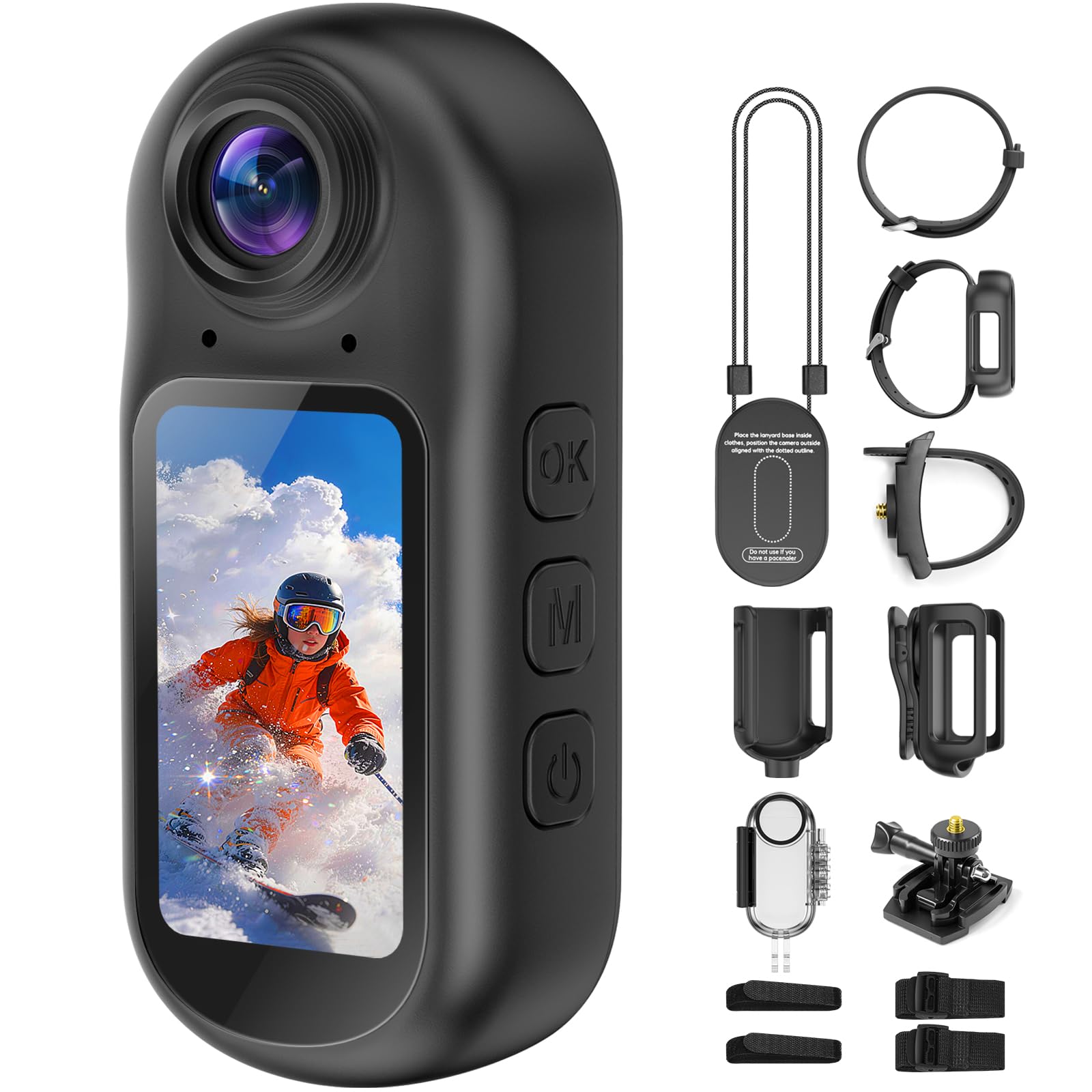
The Sixmou i3 is a magnetic thumb camera that disappears on a jacket collar or strap and still records crisp 4K from a hands-free vantage point. The spring clip, lanyard, and seven accessories let you move between helmet, chest strap, and backpack strap without thinking about a rig.

Digital stabilization smooths hard-pack chatter, though rough terrain will show some bump; the waterproof case adds confidence for wet snow and shallow water. Image clarity is strong for the budget tier, and the bundle gives you more mounting angles than a conventional bar-mounted action cam. The 4K, 2K, and 1080P modes give quick flexibility for social clips and backups.

This is best for skiers who want a barely-noticeable camera for quick POV clips, or casual vloggers who want a pocketable second angle. The magnetic body and accessory bundle make it a light-carry companion; choose a larger action cam when a primary recorder is the main need.

The build quality is reassuring for a camera this small, and the magnetic body stays put on metal surfaces. That solidity matters when the camera is clipped to a moving layer rather than mounted on a rigid handle.

💡 Shoot 1080P for longer sessions and reserve 4K for the runs you want in the edit.

Pros

  • Thumb-sized body clips to a collar or strap for a true hands-free angle.
  • Crisp 4K video with digital stabilization in a lightweight package.
  • Magnetic body, clip, lanyard, and waterproof case cover most outdoor mounting needs.
  • Solid build and image clarity hold up in mixed snow light.

Cons

  • Phone app pairing and file transfers can be inconsistent when you want quick clips off the mountain.
  • 4K battery runtime is modest; short runs are fine, full ski days need a backup camera.
Our verdict

The Sixmou i3 is the light-carry choice for hands-free POV when a full-size action cam feels like too much gear.

Check Latest Price
6

Budget First-Timers

AKASO Brave 4

89 /100
Studio Score Strong Evidence

Key details

Video
4K30 / 1080P60
Stabilization
EIS gyroscope
Waterproofing
131ft / 40m with case
Mounting System
Accessory kit included
Check Price on Amazon

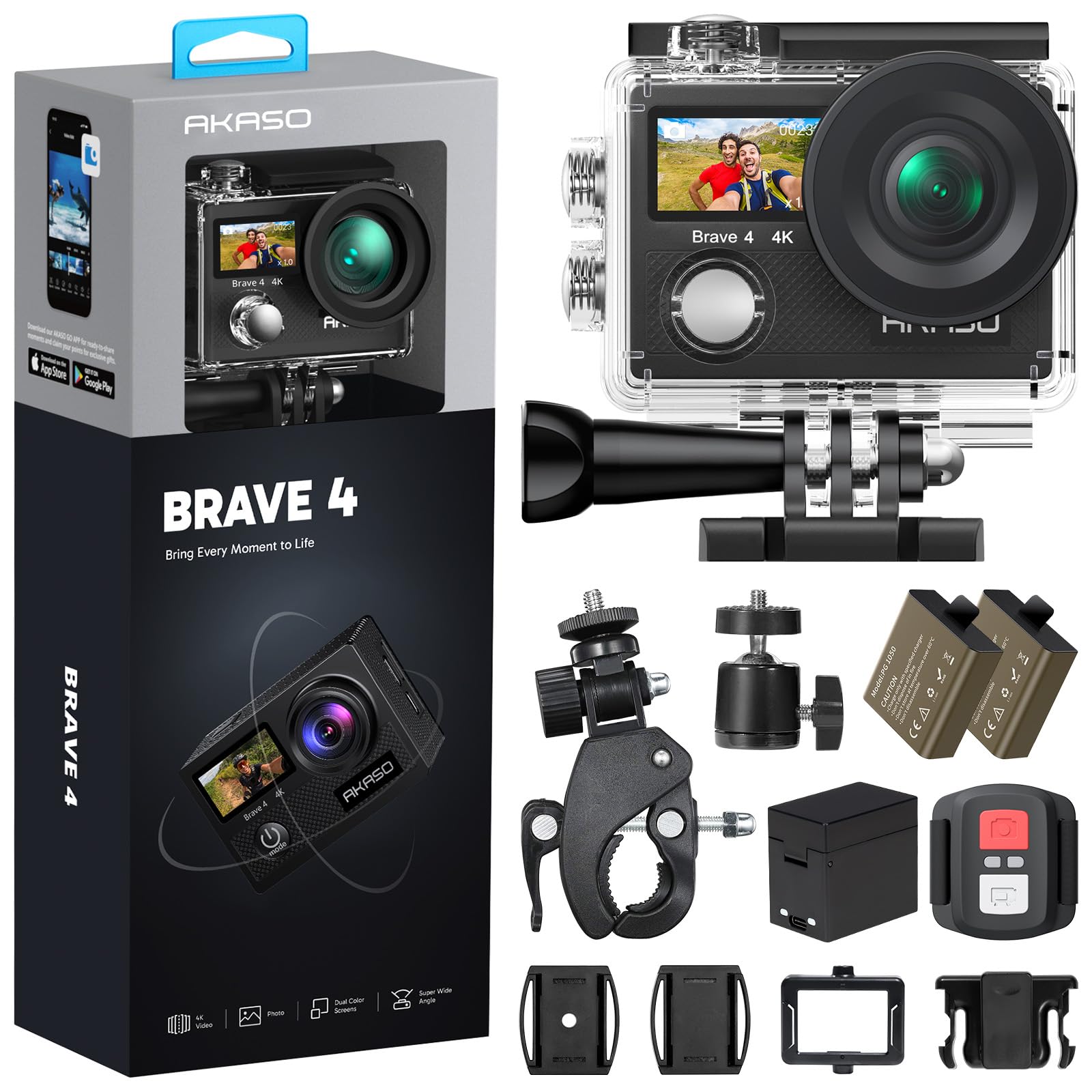
The Brave 4 is a dual-screen 4K30 action camera with a broad mount kit, so it covers the basics for a first ski or board camera: clear daylight footage, digital stabilization for minor shake, and helmet or chest mounts out of the box. The package is older and button-driven, with no touchscreen; the newer model in this lineup adds that interface plus a more complete bundle. The waterproof case gasket needs a check before wet days. Skiers who want 4K60 or gimbal-smooth carving shots should move up — for moderate runs and family resort days, this budget kit is still a fit.

Pros

  • Clear 4K30 video with digital stabilization for daylight outdoor sports.
  • Generous accessory kit includes helmet, chest, and handlebar mounts for POV use.
  • Dual screens make it easy to frame shots for beginners and family members.

Cons

  • Low-light performance is limited, so flat or dusk light can soften detail.
  • At 4K, battery runtime can be short; two included batteries may not cover a full day on the mountain.
Our verdict

For first-time skiers and boarders on a budget, this kit offers a full mount package and a low-commitment way to start recording POV runs.

Check Latest Price
7

Entry-Level 4K60

ODDV Action1 4K60

82 /100
Studio Score Strong Evidence

Key details

Video
4K60 / 2.7K / 1080P
Stabilization
6-axis EIS
Waterproofing
132ft / 40m with case
Mounting System
Check Price on Amazon

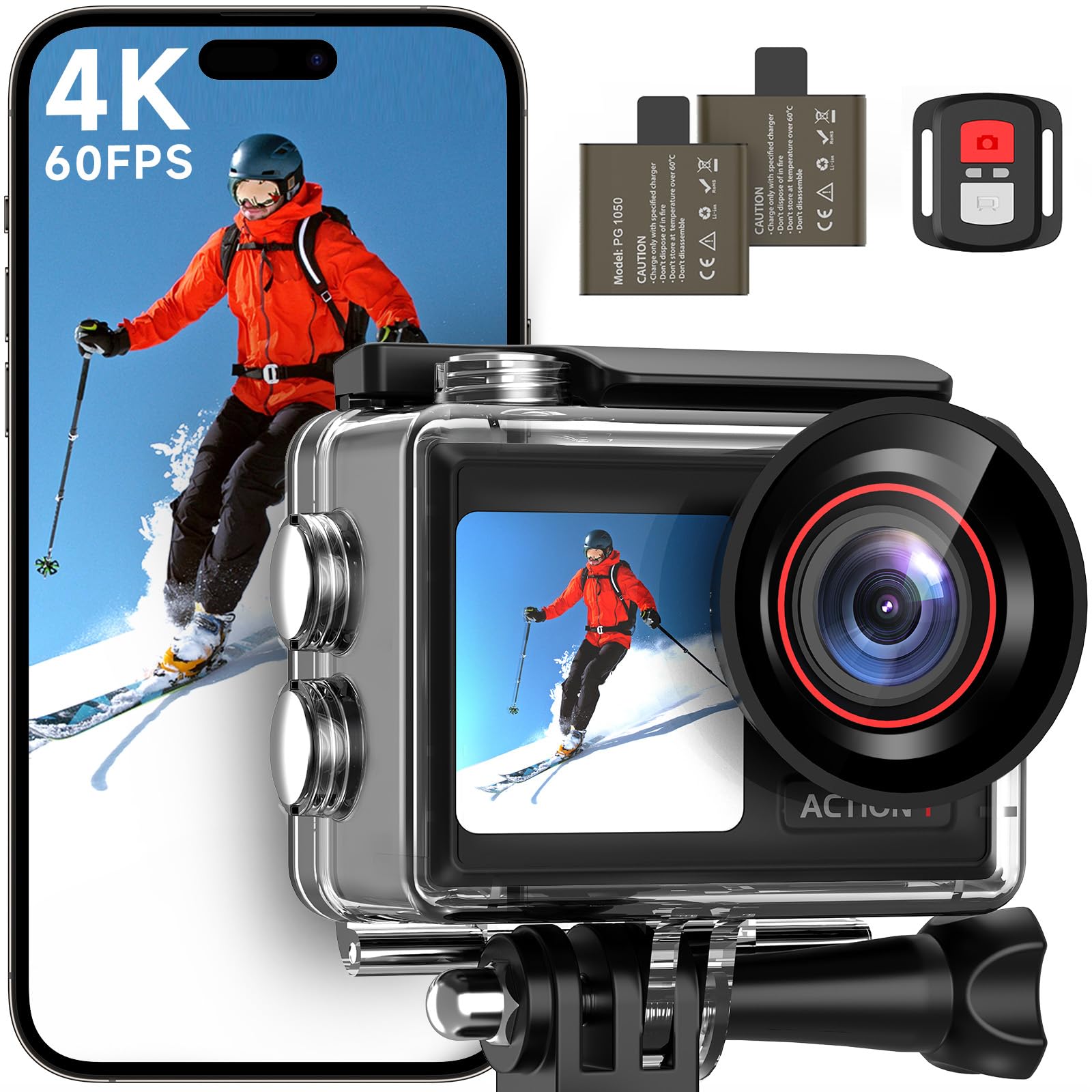
The Action1 takes sharp 4K video with 6-axis EIS, packs a front screen for self-framing, and ships with a 40m waterproof case — all at entry-level pricing. Setup and menu navigation stay simple for first-time buyers. The catch at 4K60 is that recording time drops to about 25–30 minutes, which makes it a better match for short ski laps than full-day backcountry missions. For casual resort days, that tradeoff is easier to accept: switching to 1080p stretches runtime and keeps the camera useful between runs.

Pros

  • Sharp 4K video at 60 fps delivers clean detail for action clips.
  • Solid build quality in a compact body that rides a helmet mount without feeling bulky.
  • Waterproof case rated to 40m protects against snow, spray, and wet weather.

Cons

  • Companion app is basic; skiers who rely on a polished mobile workflow will hit its limits.
Our verdict

For short resort laps and casual POV clips, the Action1's 4K60 and front screen make it a sensible budget pick.

Check Latest Price
8

Mini Wearable POV

acgiewo D07 Mini Cam

83 /100
Studio Score Strong Evidence

Key details

Video
4K30 / 1080P
Stabilization
EIS 3.0 6-axis
Waterproofing
Waterproof case
Mounting System
35 g magnetic mount
Check Price on Amazon

The D07's 35g body, magnetic mount, and 1.5-inch preview screen make it the lightest way to capture framed 4K POV on a helmet or chest strap, and 6-axis EIS smooths resort-run footage. The non-replaceable battery is the main boundary: a single charge covers short mornings, but full-day snow sessions need a power-bank stop. That tradeoff is acceptable for a skier who wants a tiny second angle or social clips, but the niche wearable format keeps it below the do-everything action cams in this guide.

Pros

  • 4K30 footage holds detail well, and 6-axis EIS takes the edge off helmet movement.
  • At 35g, it stays unobtrusive on a helmet or chest strap, keeping long runs comfortable.
  • The built-in 1.5-inch screen makes framing immediate without pulling out a phone.

Cons

  • Waterproofing is only available with the included case, so the bare body is not a sealed action cam.
  • The light shell suits careful handling; repeated hard falls over many seasons are outside its role.
Our verdict

For skiers who want a tiny second camera for social clips or a quick helmet angle, the D07 fits — as long as the primary recording duty stays on a heavier action cam.

Check Latest Price

How to Choose

4K Resolution and Frame Rates

4K is the baseline for modern ski footage, but frame rate does more for action than resolution. 4K60 freezes quick turns cleanly and leaves room for slow motion, while 4K30 is enough for mellow groomers. Higher frame rates create bigger files and shorter recording times, so match the mode to the run.

Image Stabilization

Stabilization smooths the bouncing that comes from helmet mounts and chest straps. Gimbal-grade systems such as DJI RockSteady or Insta360 FlowState keep the horizon level and handle fast direction changes, while basic EIS crops the frame and can soften footage in low light.

If you plan to edit after the run, horizon-locking stabilization saves you from rotating every clip. Without it, you can straighten in post, but the crop cuts into resolution and makes the shot feel tighter.

Battery Life in the Cold

Cold air slows the lithium-ion reactions inside the battery, so a camera that records happily at home can drop to a fraction of that time on a chairlift. Look for a cold-resistant rating around -20°C or a camera with swappable cells.

Even with a cold-rated battery, store spares in an inner pocket. A warm battery can be swapped mid-day, but a camera with a sealed battery needs a power bank and a weather break.

Waterproofing and Housing

Snow falls on the lens, spring slush sprays the housing, and unprotected cameras have to handle moisture without fogging. A 40m-rated case is great for water sports but the seal is the weak link; a single grain of grit can prevent a solid close.

If you mostly ski, case-free waterproofing in the 10-20m range is enough. If you also swim, choose a model with a proven housing and test the seal before a travel day.

Mounts, Weight, and Accessories

Mounting determines whether you actually use the camera. Magnetic quick-release mounts make it easy to move between helmet and chest, while threaded mounts are universal but slower. A camera with a limited mount selection will not end up on your helmet very often.

Weight changes how a camera feels on a helmet or chest strap. A heavier camera with stronger stabilization records smoothly but can bounce on a lightweight helmet; a 35g thumb cam is easier to forget but has less room for sensors and battery.

Frequently Asked Questions