7 Best Action Camera for Scuba Diving in 2026: Real Depth Claims

Which action cameras for scuba diving actually deliver their depth ratings? Pick a dive-ready model that keeps video stable and colors true.

Many action cameras list waterproof ratings that sound dive-ready. On budget models, that 40m figure usually comes from the included plastic case, not the camera body. The real test underwater is whether that case seals cleanly and whether the sensor can handle the low light below the surface. Depth claims alone do not tell you how the footage will look at 60 feet.

The practical choice is between cameras with bare waterproofing around 18-20m for ordinary recreational dives and budget bundles that reach 40m with a sealed case. Both work, but they create different expectations. A larger sensor and accurate white balance matter more underwater than raw resolution, especially once you leave bright, shallow water.

Battery life, stabilization, and case reliability decide whether you capture a full dive or spend the trip fiddling with settings. Match the camera to the dives you actually plan, and the right model is easier to find.

2

Best 360 Dive-Ready

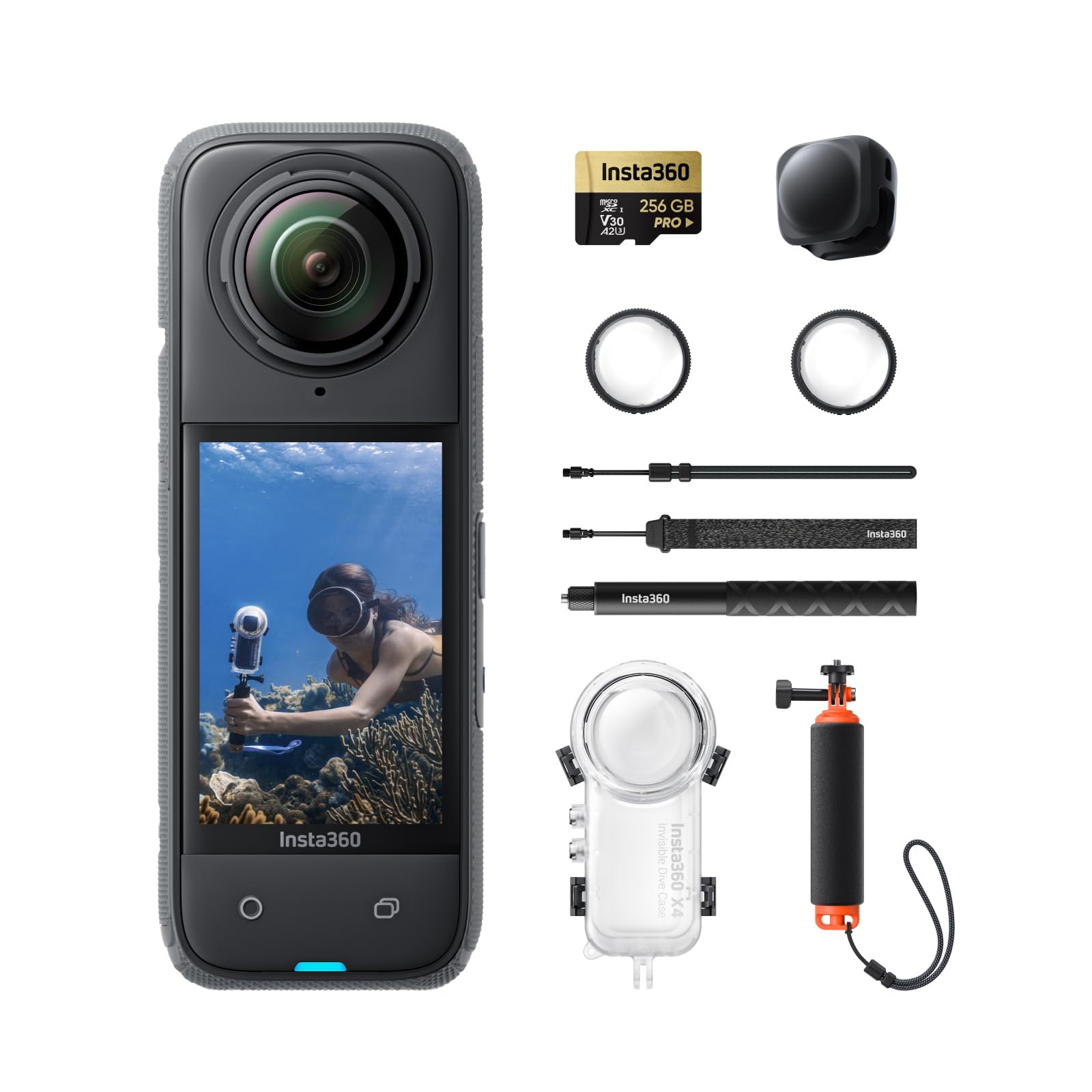
Insta360 X4 Dive Bundle

95 /100
Studio Score High Confidence

Key details

Accessories
256GB card included
Battery Life
135 min, 2290mAh
Stabilization
FlowState, Horizon Lock
Waterproof Depth
50m included dive case
Check Price on Amazon

Insta360 X4 Dive Bundle is the only camera here with a bundled 50m dive case wrapped around an 8K 360 sensor. That adds a full-sphere perspective no standard-format action camera in this lineup can match. The included 256GB card offers enough room for long days of 8K captures, while FlowState stabilization keeps the horizon level underwater.

The included 50m case turns the X4 into a scuba tool rather than a surface sports camera. FlowState and Horizon Lock keep the horizon level while you swim, and the 360 stitch hides the selfie stick, so shots can look like they came from a second diver. The bundled 256GB card gives the storage headroom that 8K/360 files demand.

This is the right pick for dive content creators who want the invisible selfie stick effect and plan to edit after the dive. It is not the right pick for divers who want a simple point-and-shoot, because 360 capture becomes a composed video only after an app session. Lens guards need more care than the rest of the marine kit, including a fresh-water rinse and a visual check after saltwater use.

Pros

  • Best 360 image quality among the dive-ready cameras in this set
  • 8K 360 capture holds detail when you crop into the frame
  • Controls and menus are intuitive enough to adjust during a dive
  • AI-guided editing tools shorten the time between raw footage and finished clips

Cons

  • Battery runtime at 8K/360 falls short of the 135-minute maximum, so spare cells are the practical answer.
  • A unit can arrive non-responsive or eject the battery mid-session; check it fully before a dive.
Our verdict

The bundled 50m case and 8K 360 capture make this the creative diver's pick among the dive-ready cameras here.
Check Latest Price
3

Best Value DJI

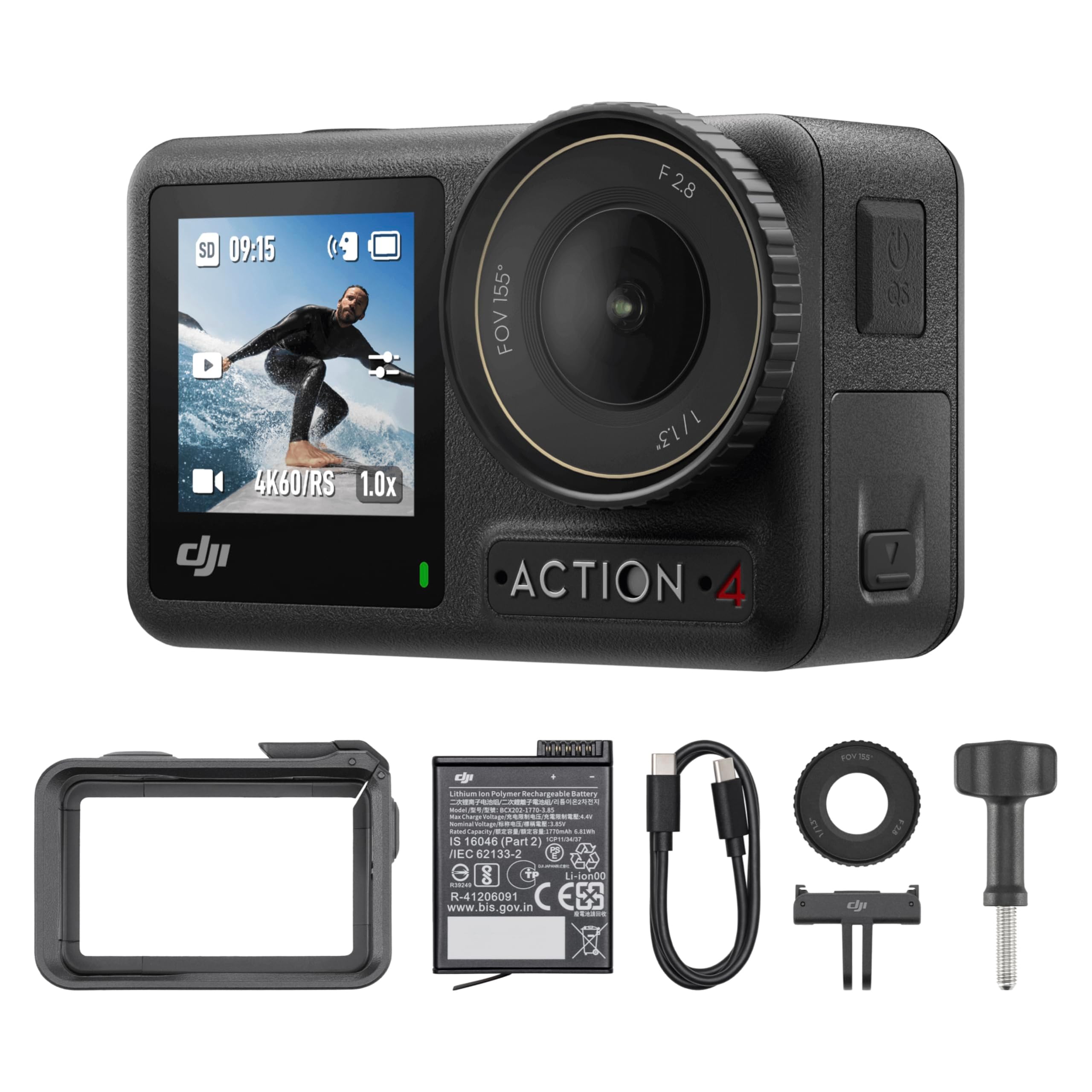
DJI Osmo Action 4

92 /100
Studio Score High Confidence

Key details

Accessories
—
Battery Life
160 min, 1770mAh
Stabilization
RockSteady, HorizonBalancing
Waterproof Depth
18m bare, no case
Check Price on Amazon

DJI's Osmo Action 4 pairs the 1/1.3-inch sensor and RockSteady stabilization from the newer flagship with a body that costs less. Footage stays sharp and color looks natural in bright water, and the 18m bare rating covers recreational scuba profiles without adding a housing. 4K120 capture gives dive clips enough headroom for slow-motion surface shots. The tradeoff is spec: the newer DJI model extends battery life and improves low-light capture, which matters if you regularly shoot deeper or darker sites.

This is the right action camera for recreational scuba divers, snorkelers who want out-of-the-box color, and travelers who want one camera for land and water. The body is compact enough to pack as a second dive camera, and the 1770mAh battery is rated to 160 minutes; a spare is useful for multi-dive days.

For recreational scuba and snorkeling, the image quality and stabilization carry the experience. The setup path is less plug-and-play: first-time activation requires the DJI Mimo app, and the internal microphone is average — fine for a quick surface clip, less so for serious vlogging without an external mic.

Pros

  • Brings the DJI image signature to a mid-range price.
  • 4K video stays sharp with natural color in bright water.
  • RockSteady keeps handheld and surface swim clips stable.
  • Build quality feels premium without the flagship price.

Cons

  • After setup, the phone app may require repeated logins and includes features you may not use.
  • Below 18m, a separate dive housing is required; the bare body is not a deep-dive camera.
Our verdict

This combo delivers the DJI color and stabilization for scuba and travel footage at a lower price than the newer model.

Check Latest Price
4

Best Budget Dive Bundle

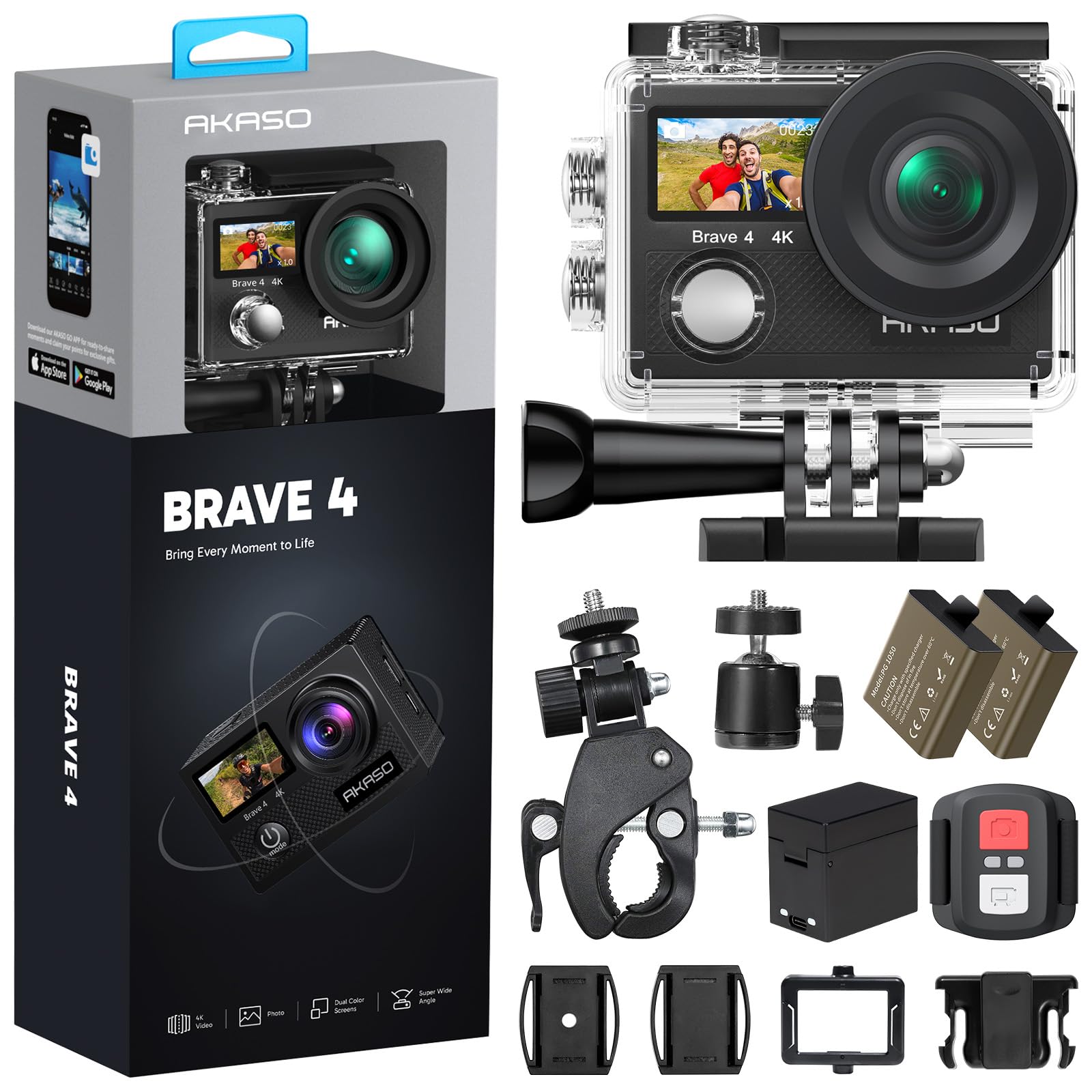
AKASO Brave 4

89 /100
Studio Score Strong Evidence

Key details

Accessories
Accessory kit included
Battery Life
90 min each, 2x1050mAh
Stabilization
Gyroscope EIS
Waterproof Depth
40m included case
Check Price on Amazon

The Brave 4 is the budget scuba bundle to beat: the 40m housing, spare batteries, mounts, and assorted accessories arrive in the box, so first-time divers do not need to piece together a kit. The camera itself is a conventional budget action cam, but the package delivers a complete underwater setup for roughly what a premium housing alone costs.

Underwater footage is clear in bright reefs and pools, with colors that satisfy casual snorkelers and open-water divers. The gyro EIS keeps handheld clips steady enough for social sharing, and the front screen helps with framing while the camera is sealed in the case.

The right buyer is a beginner diver or a family that wants a scuba-capable camera without a premium investment. Battery life is modest and 4K can be finicky, so the included spare batteries are essential; treat 4K as a short-clip mode and 1080p will stretch every dive. If that tradeoff fits, the Brave 4 is a low-cost way to start shooting underwater.

Pros

  • 40m housing, spare batteries, and a full accessory kit ship together, so the first dive doesn't require extra purchases.
  • Clear, satisfying video in outdoor and underwater settings for a budget-priced camera.
  • Basic controls and clear menus make it easy for kids and first-time users to get going.
  • Build quality and performance hold up well to beach, pool, and boat use at this price.

Cons

  • 4K low-light footage is soft, so night dives and dark wrecks fall outside this camera's comfort zone.
  • The waterproof housing seal needs a clean gasket and a firm close; a rushed closure can fog the lens or let water in.
Our verdict

For a first scuba camera, the Brave 4 delivers the complete dive bundle at entry-level pricing; spend the savings on a dive light or spare SD cards.

Check Latest Price
5

Best Budget Touchscreen

AKASO Brave 7 LE

89 /100
Studio Score Strong Evidence

Key details

Accessories
Remote, mic support
Battery Life
2 x 1350mAh
Stabilization
EIS 2.0
Waterproof Depth
40m included housing
Check Price on Amazon

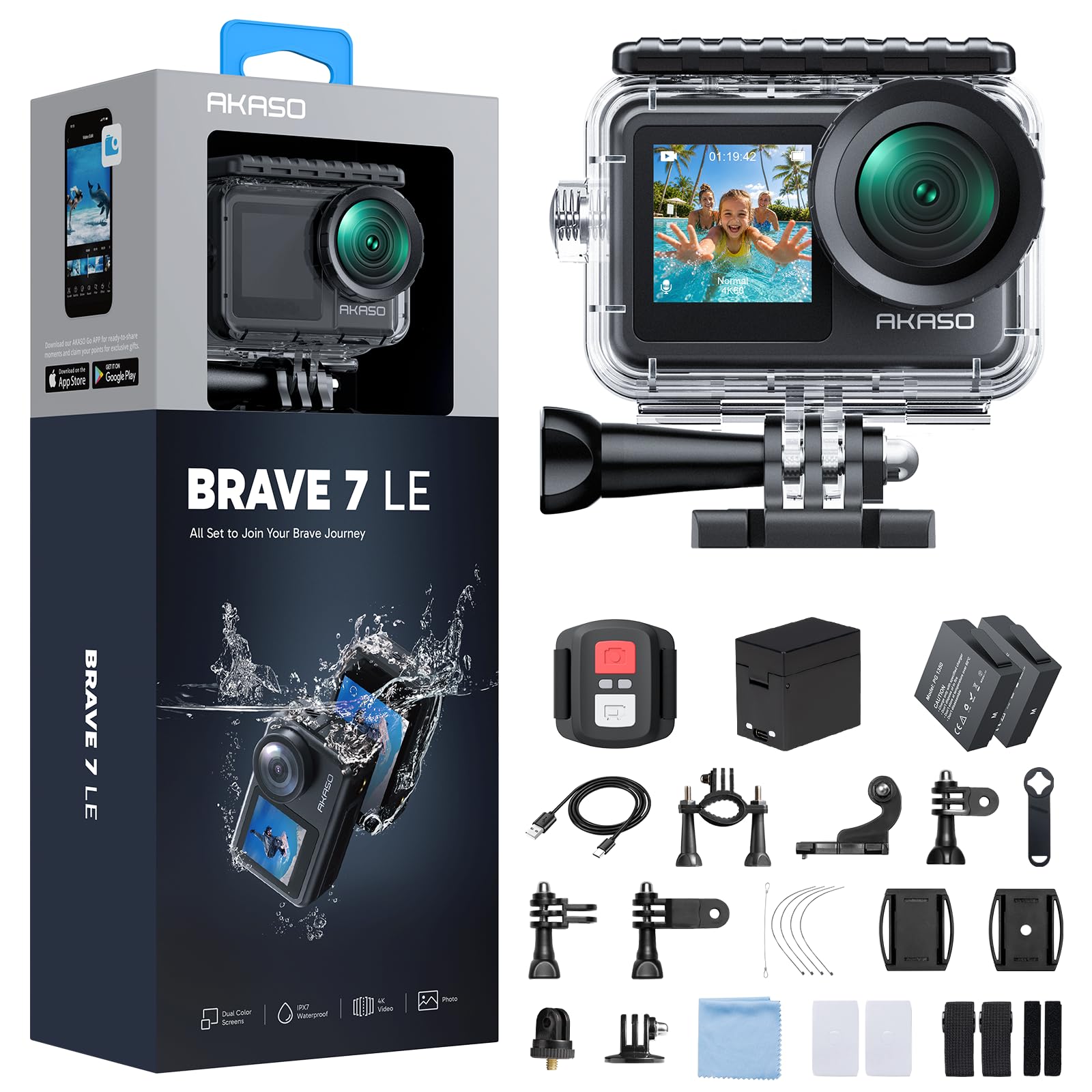
The AKASO Brave 7 LE is the most complete budget scuba bundle in this comparison: the included 40m housing, rear touchscreen, front display, wrist remote, and external mic input pack a lot of diver-friendly gear into one box.

The buyer this suits is a budget scuba diver who wants a touchscreen and a 40m case, plus a vlogger who needs external mic support on land. If you mostly shoot in daylight and seat the housing latch fully before each dive, this is the most scuba-focused kit at this price. Divers going beyond 130 feet or expecting strong low-light 4K will hit its limits.

EIS 2.0 keeps footage stable enough for recreational dives, and the touchscreen makes camera setup noticeably easier than the button-only dive cams in the same price range. Bright, shallow-water shots come out crisp, which is what most snorkelers and recreational divers want.

Pros

  • Includes 40m housing, rear touchscreen, front display, wrist remote, and external mic input.
  • Underwater footage stays clear and stable for recreational dives.
  • Touchscreen menus are easy to use, with a front screen for framing vlogs.
  • Daylight images look good for the price in shallow-water and open-air shots.

Cons

  • 4K footage can look soft or grainy in dim underwater conditions.
  • The housing latch needs a deliberate check before each dive; a rushed close invites leaks.
Our verdict

For anyone building a first scuba setup on a budget, this is the bundle to start with.

Check Latest Price
6

Low-Light Shallow Divers

Insta360 Ace Pro 2

88 /100
Studio Score Strong Evidence

Key details

Accessories
Dual battery bundle
Battery Life
—
Stabilization
FlowState
Waterproof Depth
12m bare, no case
Check Price on Amazon

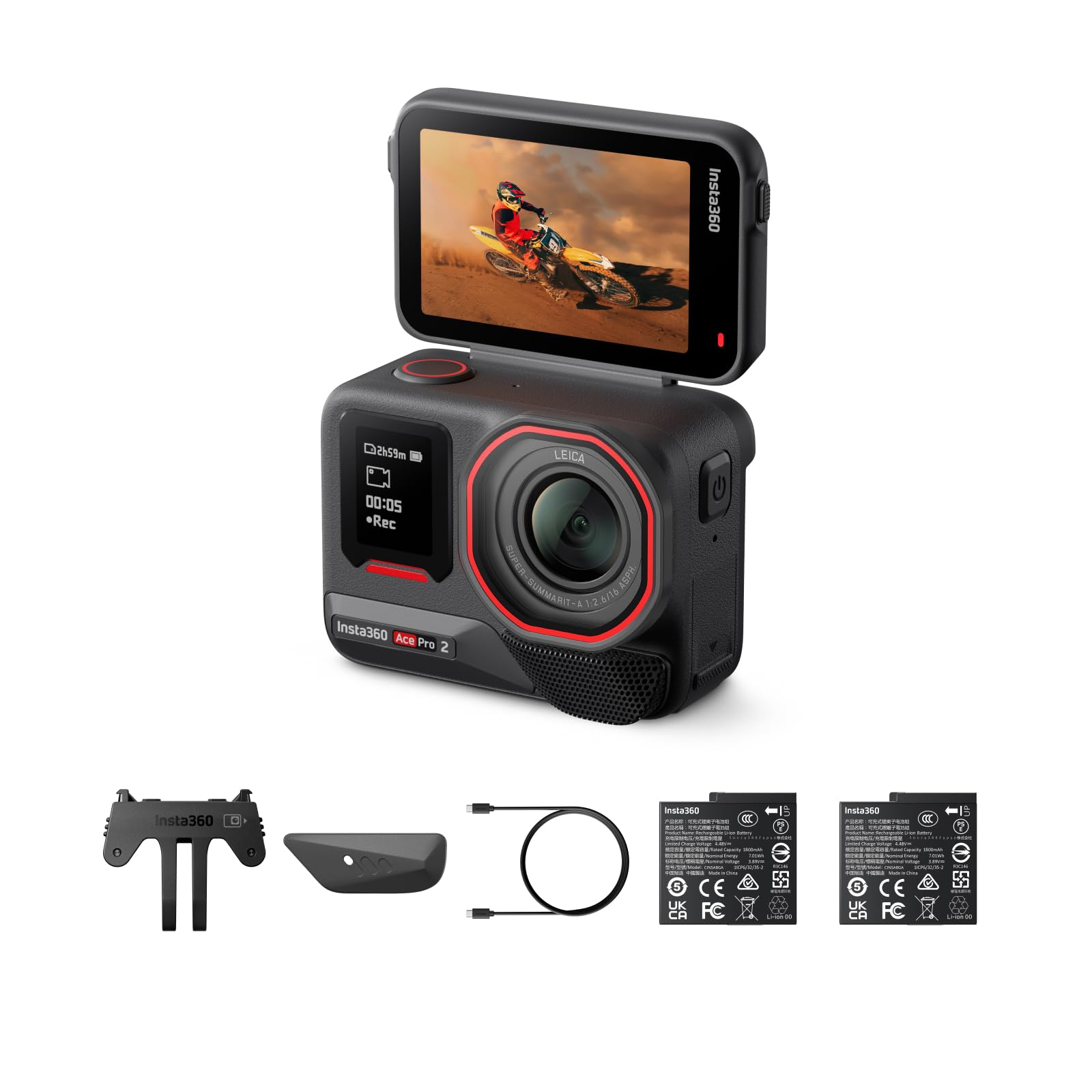
Leica-tuned color and PureVideo low-light mode give the Ace Pro 2 a clear edge for shallow-water footage: skin tones stay natural, reef colors hold, and 8K resolution leaves room to crop. FlowState stabilization keeps footage steady in current. It is a standard-format action cam, not a 360 camera, and the bare 12m waterproofing means scuba below that depth requires an accessory dive housing. Snorkelers and divers who stay within that limit get sharp stabilized video without a case, which is the real draw here.

Pros

  • Solid build quality with a finished, premium feel.
  • FlowState stabilization keeps underwater footage smooth without a gimbal.

Cons

  • Unit durability can vary, and heavy use may reveal wear earlier than expected.
  • Battery endurance can vary, and thermal shutdowns may interrupt sustained recording.
Our verdict

If your dives stay in snorkel depths and you prefer a standard action-cam body, this is the stronger fit.

Check Latest Price
7

Ultra-Budget Backup

ODDV Action1

82 /100
Studio Score Strong Evidence

Key details

Accessories
WiFi remote included
Battery Life
~25-30 min 4K60
Stabilization
EIS
Waterproof Depth
40m included case
Check Price on Amazon

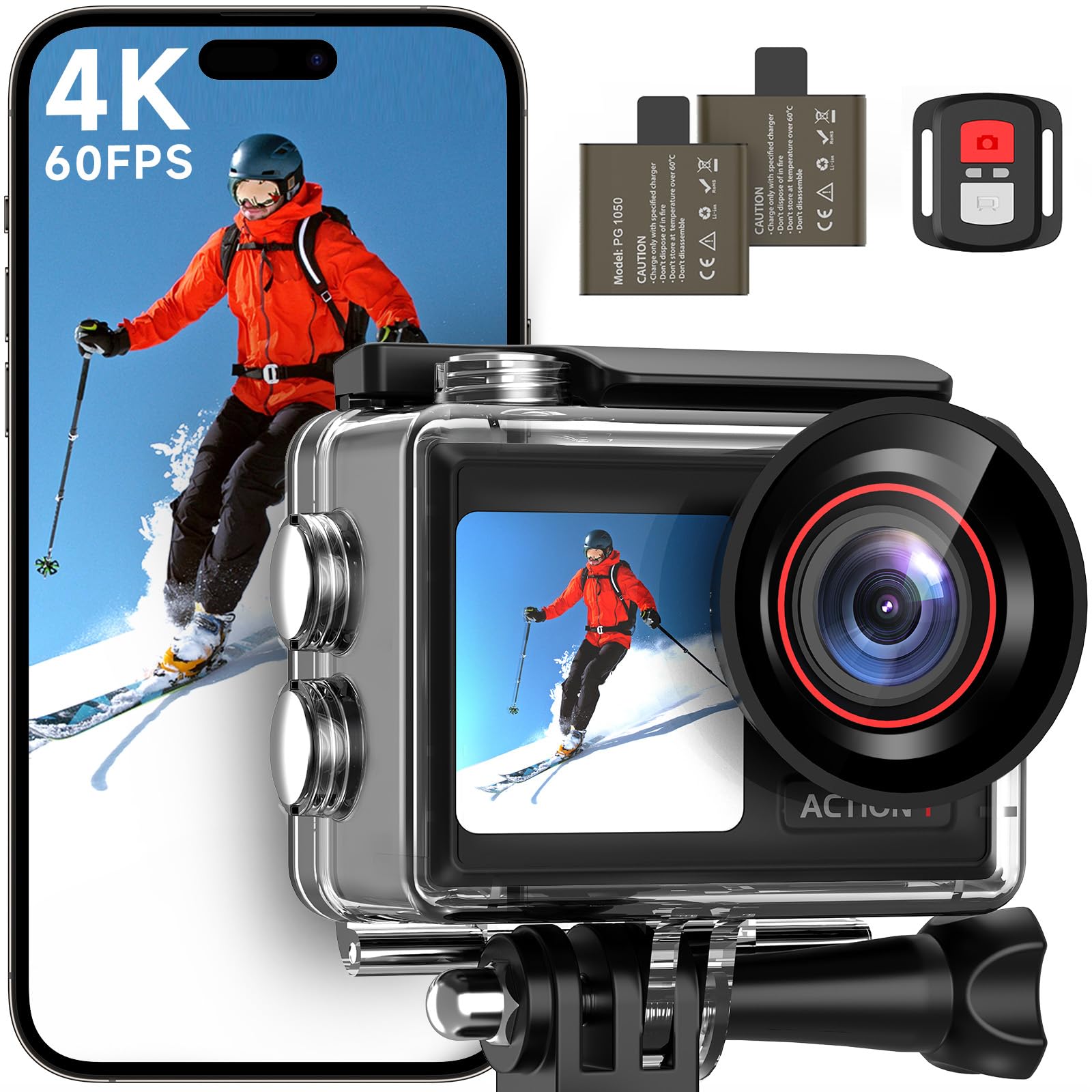
ODDV's Action1 brings 4K60, dual screens, and a 132ft waterproof case to the entry-level aisle. The rear touchscreen is easy to navigate, the WiFi remote covers quick start/stop, and the price makes it a low-risk first action camera or beach-day spare.

The battery ceiling is the main boundary: 4K60 delivers only about 25-30 minutes per charge, so long sessions depend on spares. Underwater depth comes from the included case, which must be sealed with care. That keeps it below more established dive bundles, but casual underwater clips and travel backups are well within its reach.

Pros

  • Sharp 4K video and dual screens at an entry-level price.
  • Included 132ft case handles real underwater use when properly sealed.
  • Compact body and simple controls make it a good grab-and-go camera for kids and first-timers.

Cons

  • 4K60 recording runs about 25-30 minutes per charge, so spare batteries are part of the deal.
Our verdict

As a starter or backup camera for shallow water clips and travel, the Action1 offers real value; keep spare batteries handy and mind the case seal.

Check Latest Price
8

Complete Budget Kit

SVBONY SVGo3

80 /100
Studio Score Strong Evidence

Key details

Accessories
128GB card included
Battery Life
150 min, 2x1800mAh
Stabilization
6-axis EIS
Waterproof Depth
100ft with case
Check Price on Amazon

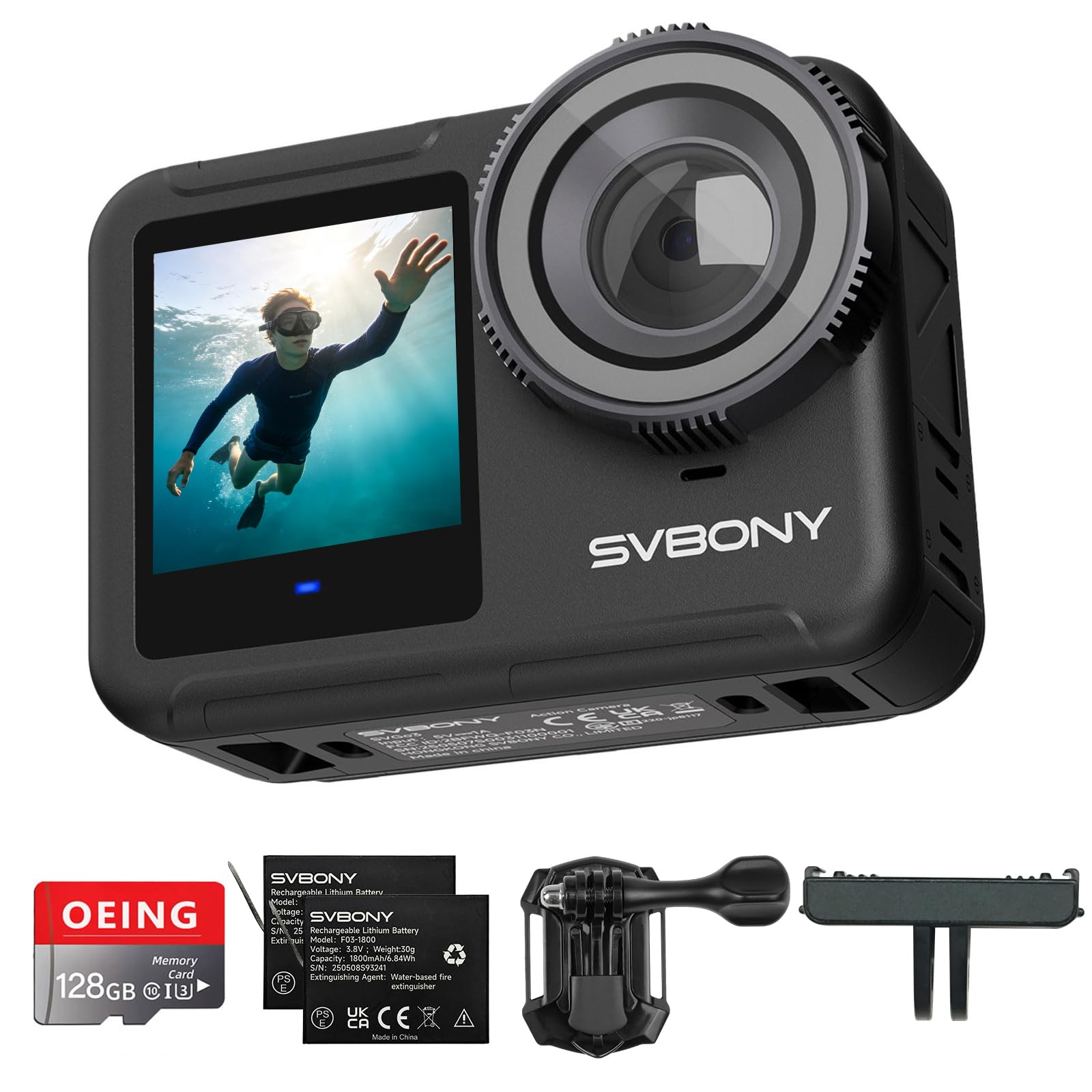
SVBONY's SVGo3 bundles 4K60 recording with a 128GB U3 card, two 1800mAh batteries, and a 100ft waterproof housing at an entry-level price. The included accessories make it feel ready for the water immediately, and captured footage shows strong color and sharpness in daylight with 6-axis EIS smoothing out motion. What keeps it from ranking higher is the preparation required before relying on it in open water: the housing and recording behavior need a test run rather than an assumption. That makes it a backup or starter dive camera for budget-focused divers who will practice with the kit first.

Pros

  • Bundle includes a 128GB U3 card and two 1800mAh batteries, covering multi-dive days right out of the box.
  • 4K60 footage is sharp and colorful in daylight, with 6-axis EIS smoothing out motion.
  • The included 100ft housing covers typical recreational dive depths.

Cons

  • Waterproof housing assembly is fiddly and the manual explains the seal poorly, so a practice run is needed.
  • Recording consistency can vary between units; footage may stop or drift out of audio sync.
Our verdict

Best as a backup or starter dive camera for budget-focused divers who will prepare the kit before open water.

Check Latest Price

How to Choose

Waterproof Depth and Dive Case

Check whether the depth figure is bare or case-only. Budget bundles often quote 40m because the included plastic housing reaches that depth, while the camera itself may only be rated for pools and light rain. The case seal is the real gate: a slightly out-of-place O-ring or half-closed latch can defeat any rating.

Bare waterproofing around 18-20m covers most recreational scuba profiles, since typical no-decompression dives stay above 20m. If you routinely go deeper, pick a model that ships with a rated dive housing instead of relying on the camera body alone.

Stabilization

Underwater movement comes from surge and fin kicks, not just camera shake. Good electronic stabilization smooths that drift, but low-cost gyroscope EIS can produce jelly distortion as the lens moves through water.

Look for footage that keeps the horizon steady while you are kicking slowly, not just when standing still. That distinction separates dive-worthy stabilization from marketing specs.

Low-Light Sensor

Water absorbs red light quickly, which is why footage below 10m often turns blue-green regardless of resolution. A larger sensor with a solid white-balance algorithm recovers natural color because it captures more light per pixel.

This matters more than 4K versus 8K in murky water or at depth. A camera that looks sharp on a sunny beach can still look flat and grainy once the light drops.

Battery Life

Advertised runtimes are best-case numbers with screens off and limited recording. 4K and 360 capture draw more power, and leaving the camera on between dives drains cells faster than actual shooting.

Plan around real recording time rather than the sticker. A second battery or a camera with three-plus hours of rated runtime is the difference between covering a whole dive trip and rationing shots.

Accessories and Mounts

A generous bundle only helps if the mounts work with wet gloves and moving water. Cheap plastic frames can flex, adding wobble to footage and making buttons harder to find.

Prioritize a floating grip, spare batteries, and quick-release arms over a bag full of novelty mounts. Those three pieces solve the problems divers actually meet.

Frequently Asked Questions