5 Best Helmet Camera of 2026: Stable 4K, Clear Audio, Real Mounts

The best helmet camera for cyclists and riders who want stable 4K, helmet-friendly mounting, and audio that doesn't disappear in wind.

Almost every helmet camera box now says 4K and 131-foot waterproof. Those numbers tell you little about whether a mount stays put at highway speed, whether wind noise buries the audio, or whether the battery dies before the ride ends.

The cameras that earn a spot on your helmet do more than list high resolution. They pair stabilization that smooths handlebar vibration with spare batteries, dependable app connections, and external mic options where the ride demands clean audio. This guide separates the specs that matter for cycling, motorcycling, and everyday POV recording from the copy on the box.

If you are buying your first helmet camera, the smarter move is to ignore the race for higher resolution and prioritize the features that keep footage watchable across a real ride: secure mounting, honest battery life, and sound that does not disappear in wind.

1

Best Overall Helmet Camera
AKASO EK7000 4K

89 /100
Studio Score Strong Evidence

Key details

Mounting Kit
Helmet mounts, remote, case
Stabilization
EIS
Video Resolution
4K30, 2.7K30, 1080P60
Waterproof Rating
131 ft with case
Check Price on Amazon

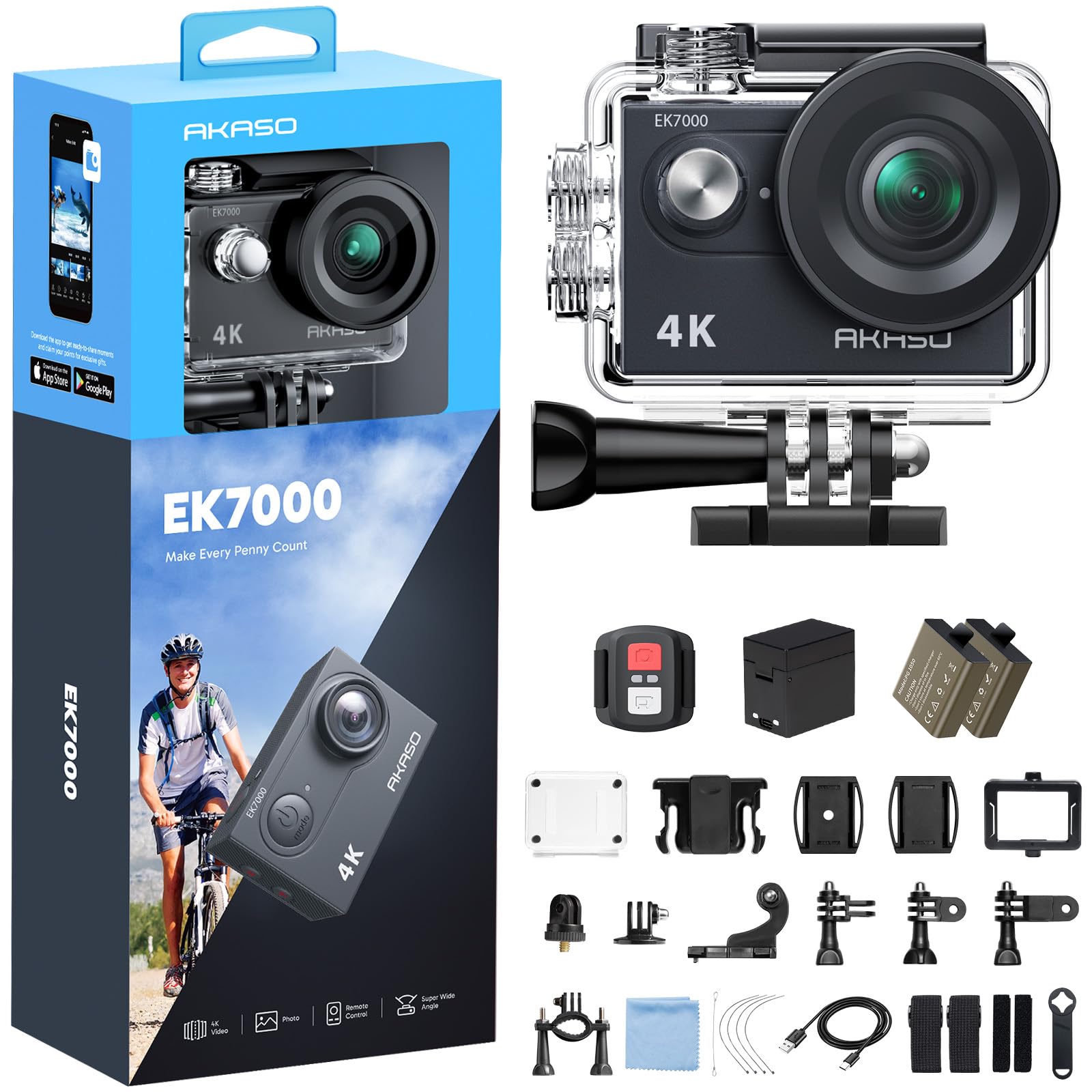
The EK7000 ships as a complete helmet-camera kit: 4K30 video, 20MP stills, electronic image stabilization, a 131-foot waterproof case, and a wrist remote are all in the box. External microphone input separates it from budget rivals that rely on built-in audio, making it a practical wired-helmet audio option for motovloggers. Button-driven controls keep setup accessible for a first action camera.

A wired mic path matters on a helmet because it reduces the wind buffeting that built-in microphones pick up. Riders who use a compatible helmet or collar mic can keep voice commentary clear while the camera stays mounted, and the external mic support works without adding a separate recorder. Because the connection is wired, there is no wireless audio pairing step; riders can plug in and start recording.

Daylight 4K30 footage is sharp enough for ride recaps and vacation edits, while 2.7K30 and 1080P60 provide frame-rate options for smoother motion. The 20MP stills pull double duty for off-bike snapshots, and color output favors direct sharing straight from the card. That makes it a practical travel camera for ride logs, beach days, and snorkeling.

On a helmet or handlebar, EIS reduces vibration enough for watchable POV footage, though it does not replace a gimbal. The waterproof case adds bulk but keeps rain, spray, and underwater use covered to 131 feet, and it also keeps dust and mud off the body on gravel rides. The wrist remote handles start/stop without reaching for the camera at speed, and the second battery is already in the box rather than sold as a separate add-on.

This camera fits cycling and motorcycle riders who record first-person video and want wired external microphone support without paying premium prices. It also works for vacationers and underwater shooters who want a full accessory bundle rather than a bare body. Keep the second battery charged for longer rides, and treat 4K60 high-bitrate grading as a boundary outside this model's focus. The result is a helmet camera that prioritizes wired audio and out-of-the-box completeness.

๐Ÿ’ก Charge both batteries before a long ride and treat the second as the session extender rather than a backup.

Pros

  • Crisp 4K30 video and 20MP stills cover daylight ride, vacation, and underwater recording.
  • External microphone input allows clean wired helmet audio for motovlogging and ride commentary.
  • Kit includes two batteries, a 131-foot waterproof case, and a wrist remote out of the box.
  • Button-based controls and menu keep first-time setup manageable without a touchscreen.

Cons

  • No touchscreen, so settings changes rely on button navigation and can feel slower.
  • Battery endurance can run short during continuous recording, making the included spare battery essential for long rides.
Our verdict

For helmet-mounted ride footage with clean wired audio and a complete accessory kit, this camera covers the basics without pushing into premium-priced territory.
Check Latest Price
2

Best Dual-Screen Motorcycle Cam

AKASO Brave 4 4K

89 /100
Studio Score Strong Evidence

Key details

Mounting Kit
Helmet mount kit, case
Stabilization
Gyro-assisted EIS
Video Resolution
4K30, 1080P60
Waterproof Rating
131 ft with case
Check Price on Amazon

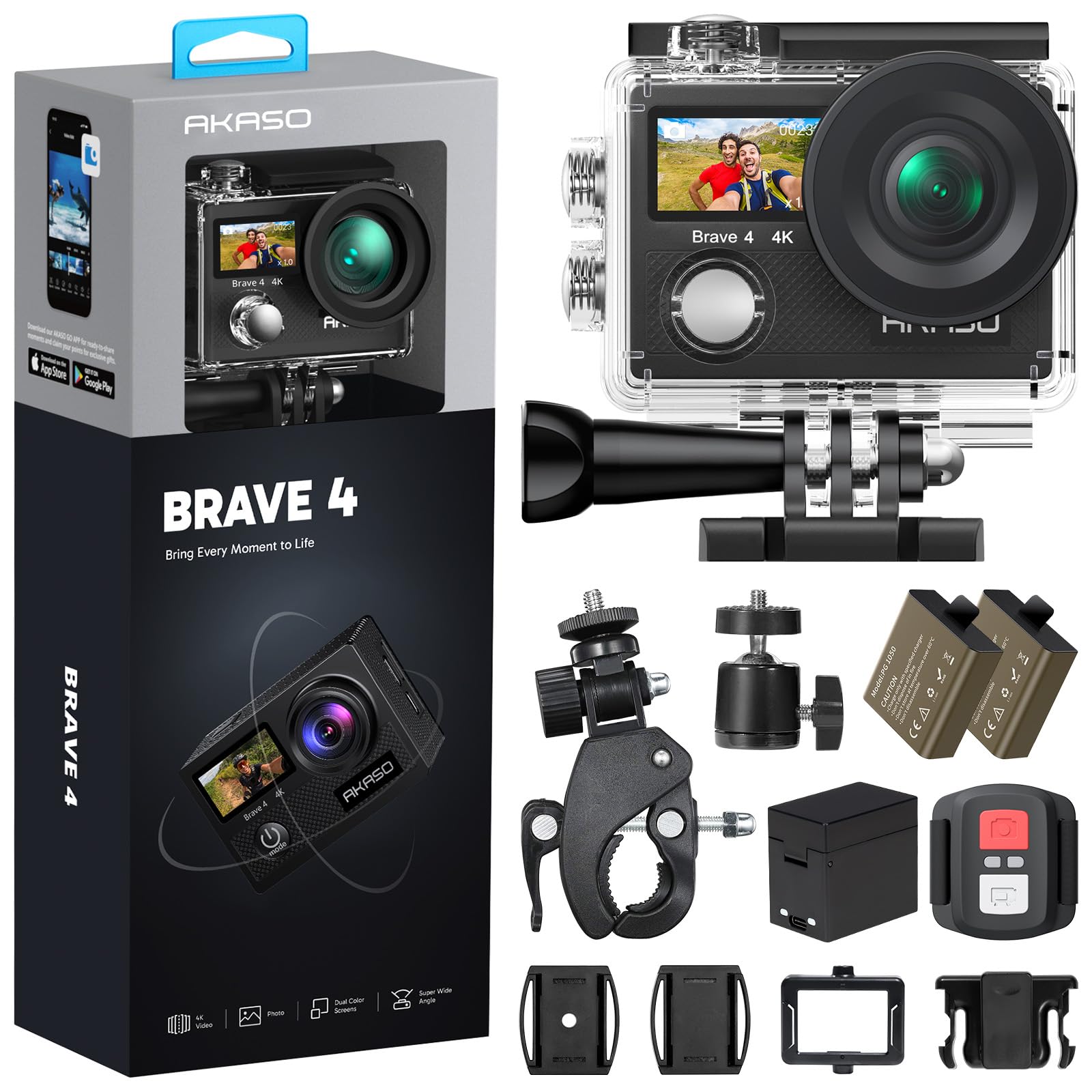
The 0.96-inch front screen makes mirror framing practical for motorcyclists, while the 2-inch rear display keeps menu changes and playback readable at a glance. A 170-degree adjustable lens pulls in wide riding lines or tighter vlog compositions, and gyro-assisted EIS helps keep bumpy road footage steadier than fixed-lens competitors in this price band. The front screen is small but clear enough for helmet mirror framing, while the rear screen handles playback and settings.

Daylight 4K30 footage is sharp enough for route documentation and vlog clips, with the 20MP photo mode available for stills. The included mount set covers helmet, bar, and chest positions without extra purchases, and the waterproof housing extends use to snorkeling depths. That bundle removes the usual accessory shopping step for new riders.

Motorcycle riders, cycling commuters, and snorkeling users get the most from the dual-screen layout and adjustable FOV. Riders who need an external microphone input should choose the top pick in this set, which includes that connection. Battery endurance can vary; carrying both 1050mAh batteries is prudent for longer rides, and riders who dislike helmet mass may prefer a lighter body.

๐Ÿ’ก Keep both 1050mAh batteries charged and swap them at rest stops rather than mid-ride.

Pros

  • Strong build quality holds up to helmet vibration and wet conditions.
  • Sharp 4K30 video with gyro-assisted stabilization holds detail on bumpy roads.
  • Included waterproof housing and mount set cover helmet, bar, and snorkeling use without extra purchases.
  • Mid-range price undercuts premium action cameras while still bundling dual batteries.

Cons

  • Motovloggers who want clean voice tracks cannot plug in an external microphone.
  • Helmet wearers may notice the 159g body on longer rides.
  • Continuous 4K recording can drain the 1050mAh battery sooner than expected.
Our verdict

The dual-screen layout, adjustable FOV, and bundled waterproof kit make this a strong second option for motorcyclists and snorkelers.

Check Latest Price
3

Best Ultra-Compact Helmet Cam

Sixmou i3 Thumb Cam

85 /100
Studio Score Strong Evidence

Key details

Mounting Kit
Magnetic mount, helmet strap
Stabilization
โ€”
Video Resolution
4K30, 2K30, 1080P
Waterproof Rating
131 ft with case
Check Price on Amazon

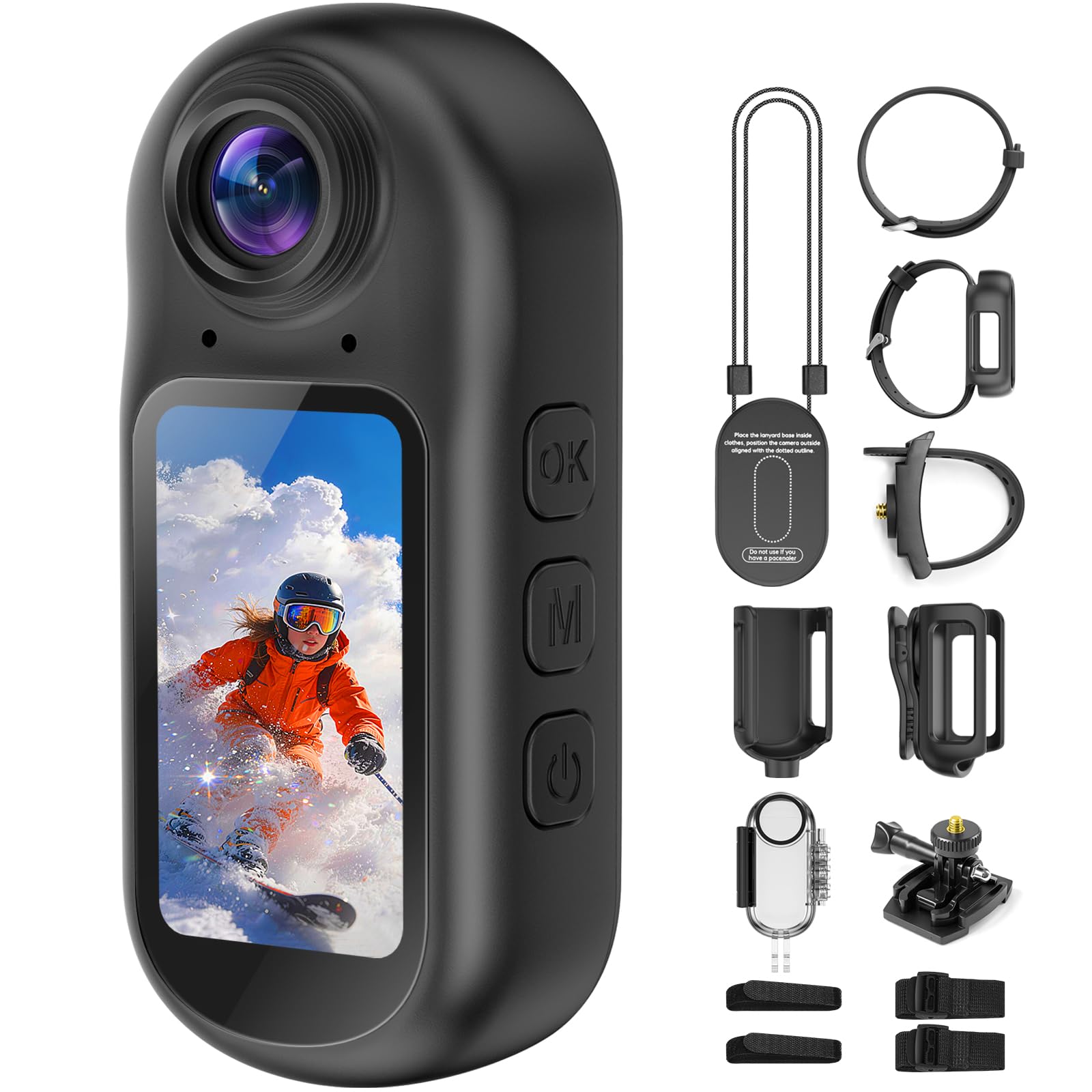
The Sixmou i3 strips helmet recording down to a 35.7g magnetic body and a 360-degree rotating clip. That is the central trade: it eliminates helmet bulk and leaves live-screen framing to the tiny POV camera with a display in this set. The mount kit covers magnetic surfaces, clips, and helmet straps, so hands-free POV capture starts without a multi-part rig.

Video quality is stronger than the thumb-size body first suggests. 4K30 footage works for bright, short social clips, while 1080p is the more practical setting for commuting and longer rides. The tested style includes a 64GB card, which handles a full session without an immediate extra purchase.

What keeps it from top-pick status is the wireless and endurance boundary: Wi-Fi and app pairing can be inconsistent, and 4K battery life drops to about 90 minutes. Those limits sit alongside a magnetic mount that holds its position through moderate handlebar vibration, so this is best treated as a short-session, app-free POV tool rather than a live-monitored action camera.

Commuters, cyclists, and travelers who value pocketable size and quick magnetic mounting will get the most from this camera.

๐Ÿ’ก Top up the battery before longer rides and carry a small power bank if you plan to shoot 4K beyond one session.

Pros

  • Hands-free POV stays discreet on a helmet, jersey, or bag without a bulky rig.
  • 4K30 and 1080p footage capture clean first-person video for social clips.
  • Magnetic mount and rotating clip speed up angle changes and mounting positions.
  • Included 64GB card covers a full ride without a separate storage purchase.

Cons

  • No live preview screen, so framing depends on the rotating clip angle.
  • No external microphone input for motovloggers who want direct helmet audio.
  • Battery and charging performance can vary between units, so check charge before long rides.
Our verdict

For commuters and casual riders, this is the low-profile hands-free option in the set; audio-critical motovlogging remains a job for the top pick.

Check Latest Price
4

Tiny POV with Real-Time Preview

acgiewo D07 4K

83 /100
Studio Score Strong Evidence

Key details

Mounting Kit
Magnetic body, included case
Stabilization
EIS 3.0 6-axis
Video Resolution
4K30
Waterproof Rating
Case included
Check Price on Amazon

The acgiewo D07 gives helmet-cam users a 1.5-inch HD preview screen inside a 35g magnetic body, a feature the screenless magnetic thumb cam in this set omits. That live view handles framing and playback without a phone, while Wi-Fi and Bluetooth cover file transfer and settings. The 6-axis EIS 3.0 works alongside 4K30 capture for smoother first-person clips on a bike or handlebar. The screen also simplifies checking clips after a ride, when phone access is awkward on a trail or road.

Sharp 4K output and the compact build define the core experience. The camera stays light enough for helmet mounting, and the included waterproof case extends use beyond dry rides. Direct controls and the screen let riders confirm the angle before rolling, while Bluetooth pairing adds convenience for casual outdoor use. Swapping the magnetic mount between helmet, handlebar, or backpack strap takes a few seconds.

Casual cyclists and outdoor creators who want a tiny POV camera with a live preview and Bluetooth convenience are the core buyers. The internal battery is sealed and capped at 150 minutes, so full-day rides require charging stops or a top-up plan. The compact form and live-screen framing outweigh that limitation for shorter rides and content capture.

Pros

  • Sharp 4K30 video in a tiny body, with 6-axis EIS for smoother first-person clips
  • 35g magnetic build keeps helmet and handlebar mounting light and low-profile
  • 1.5-inch HD screen allows framing and playback without pulling out a phone
  • Bluetooth and Wi-Fi pairing makes settings changes and file transfers fast from a phone

Cons

  • No external microphone input, so motovloggers who want clean audio need a separate recording path
  • Water protection relies on the included case; the bare magnetic body cannot handle wet rides alone
Our verdict

Riders who want a live screen and magnetic 35g build for POV clips will find this model tailored to that priority.

Check Latest Price
5

Fire Helmet Documentation

Fire Cam MINI1080

87 /100
Studio Score Strong Evidence

Key details

Mounting Kit
BlackJack helmet mount
Stabilization
โ€”
Video Resolution
1080P30, 720P60
Waterproof Rating
33 ft underwater
Check Price on Amazon

The Fire Cam MINI1080 is built for one job: recording clear, heat-exposed POV from a US-style fire helmet. The heat-resistant body and included BlackJack mount attach directly to brim-style helmets, and the 1080p footage is adequate for documenting live fire training and emergency scenes. That specialization comes with clear boundaries: 1080p only, 5-minute clip segments, and occasional startup or recording inconsistencies at a premium price keep it from being a general cycling or motorcycle action camera. For fire and industrial helmet documentation, it is the only product designed for the job.

Pros

  • Heat-resistant body and dedicated BlackJack mount fit US-style fire helmets securely.
  • 1080p helmet-cam footage stays clear enough for fire scene documentation.
  • Compact 3 oz body stays out of the way on a brim-style helmet.

Cons

  • Recording splits into 5-minute clips, which adds file management after a shift.
  • Some units can have startup or recording inconsistencies that require reformatting the card.
Our verdict

Choose the Fire Cam MINI1080 if your camera stays on a US-style fire helmet and lives in heat exposure; for cycling or motorcycle POV, the top pick remains the better fit.

Check Latest Price

How to Choose

Video Resolution and Frame Rate

4K30 captures detail, but 1080p60 can look smoother when speed is the point. Higher resolution increases heat and data throughput; if the microSD card cannot sustain the write speed, the camera may stop recording.

Stabilization

Electronic image stabilization crops into the sensor to smooth vibration, which is why helmet footage looks less shaky. The compromise is a tighter field of view and, in low light, possible motion blur from rolling shutter.

Look for gyro-assisted EIS rather than a generic stabilization label, because the physical smoothing hardware and algorithms matter more than the badge.

Waterproof Housing

A 131-foot rating almost always applies only inside the supplied plastic housing, not to the bare camera. That case protects against rain and submersion but can muffle audio and trap heat during long recording sessions.

For helmet use in light rain, a waterproof case is useful; for clear audio, an external mic port matters more than a deeper case rating.

Battery and Spares

Continuous 4K recording drains batteries faster than box ratings suggest because stabilization and Wi-Fi run in parallel. Lithium-ion cells also deliver shorter runtimes in cold weather.

Spare batteries, especially ones included in the box, remove the need to end a ride early. A camera with a hot-swappable battery beats a sealed internal cell for all-day use.

Mounting and Form Factor

Helmet footage becomes unwatchable if the mount shifts. A curved or flat adhesive mount, a strap, or a magnetic clip must fit your helmet shape and keep the lens level.

Ultra-compact thumb cameras reduce strain on the neck, but smaller bodies usually mean smaller batteries and fewer ports.

Wi-Fi and External Mic

Built-in microphones capture mostly wind noise at road speed; an external mic input or a furry wind cover is the only route to clean motovlog audio.

Wi-Fi transfer is convenient, but pairing can be inconsistent when the camera is mounted on a helmet. Check that the camera saves directly to a removable card so footage isn't trapped in an app.

Frequently Asked Questions