8 Best Front and Rear Dash Cams 2026: Pick Reliable Video

Find a front and rear dash cam that captures clear, low-light video and transfers clips without app frustration — matched to the way you drive.

A front and rear dash cam sounds simple: one lens watches the road ahead, another watches what happens behind. The complications show up after installation, when a '4K' image turns out to be upscaled 1440P and transferring a clip over Wi-Fi becomes a test of patience.

What separates a useful dual-channel system from a frustrating one is how it performs in the moments that matter: low-light plate readability, stable recording, a mount that stays put, and storage that survives summer heat. Most drivers don't need a luxury price tag; they need a camera that records consistently and lets them get footage off the card without a fight.

The trade-off is often feature density versus long-term simplicity. Loaded dash cams with touchscreens, voice commands, and remote monitoring add convenience, but a quieter design with fewer moving parts can be the better daily driver over a few years of windshield sun and cold starts.

1

Best Overall

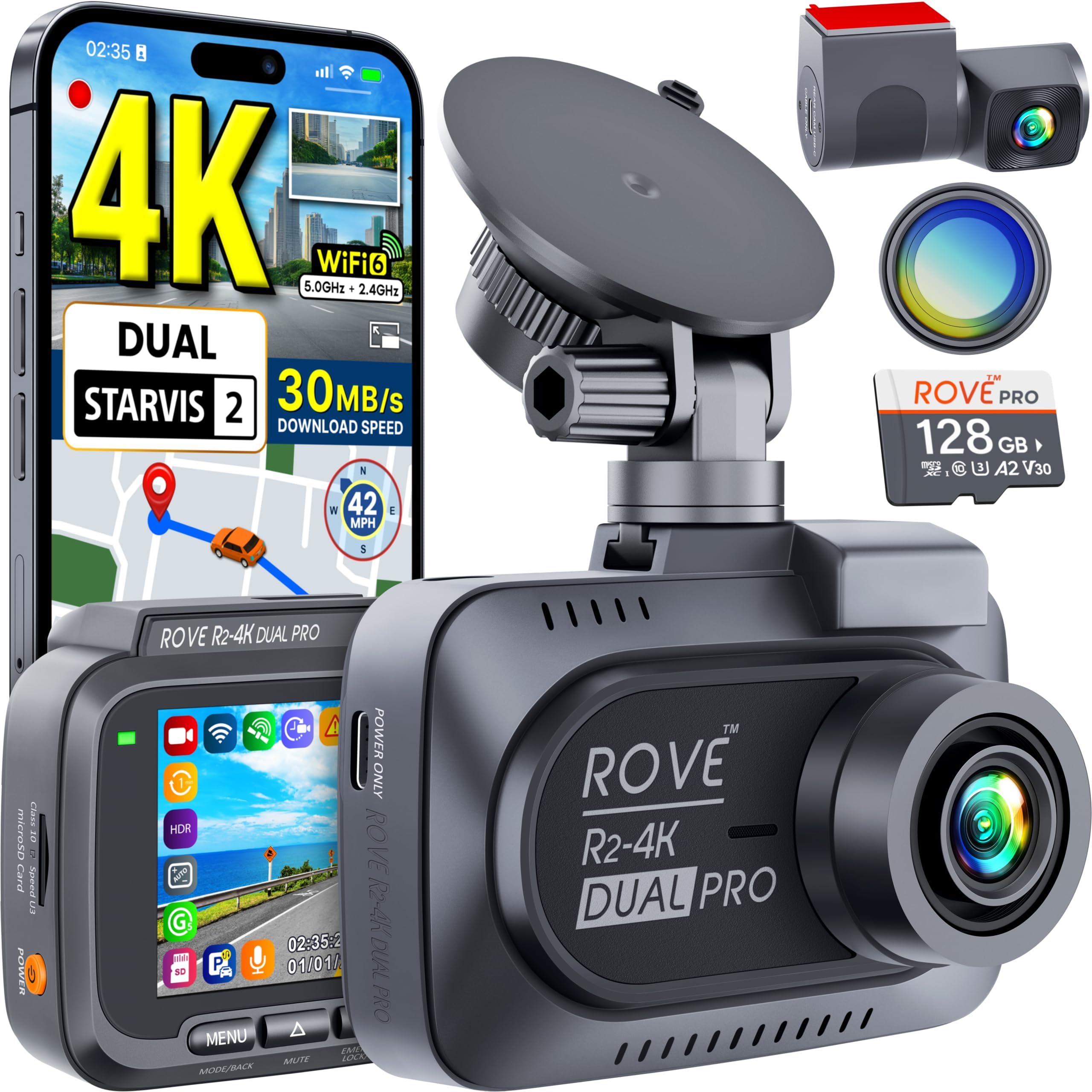
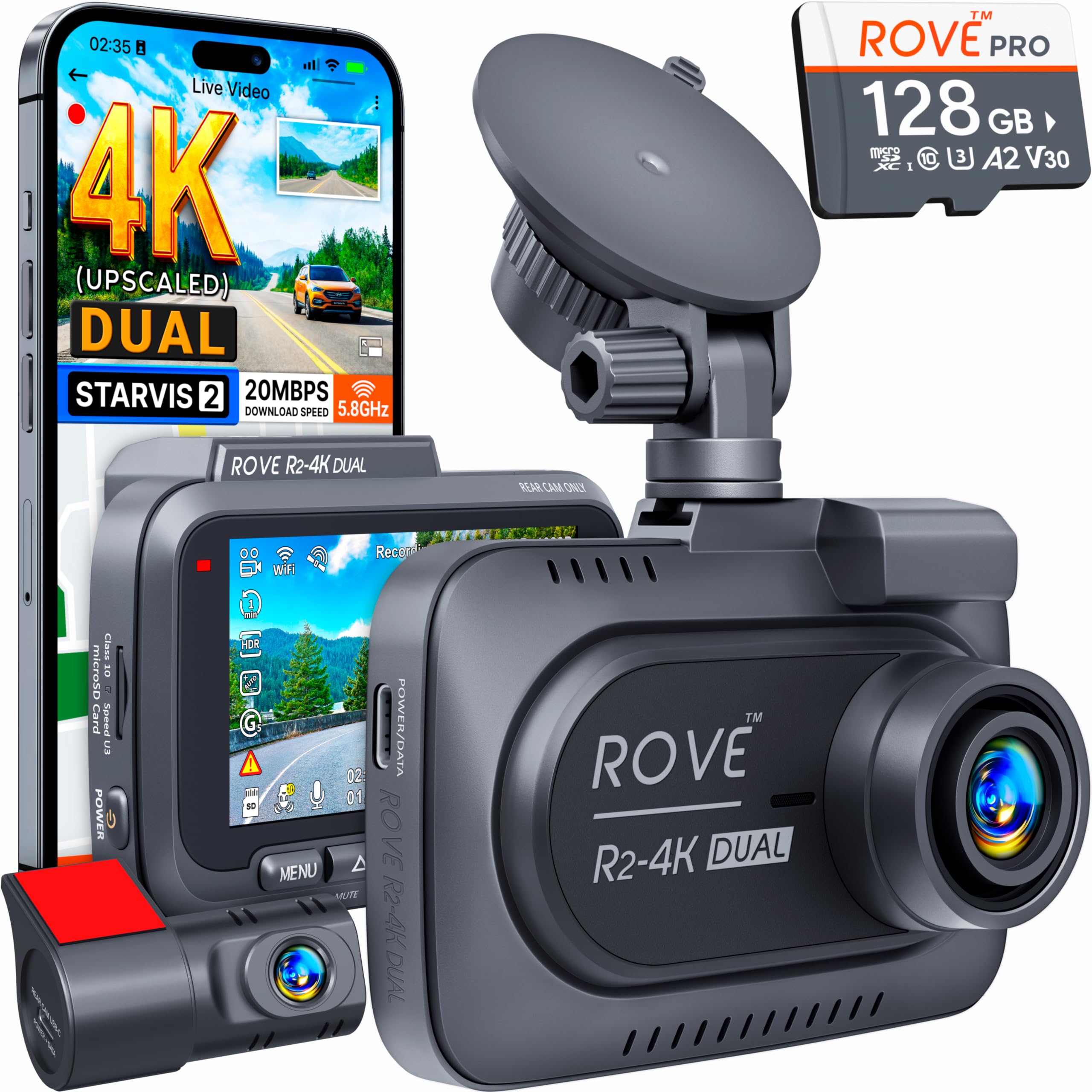
ROVE R2-4K Dual

91 /100
Studio Score High Confidence

Key details

Storage
128GB included, 1TB max
WiFi/App
5.8/2.4GHz Wi-Fi
Resolution
1440P front, upscaled 4K
Night Performance
STARVIS 2, F1.5, HDR
Check Price on Amazon

The ROVE R2-4K Dual is the balanced all-rounder in this dual-cam group. Its Sony STARVIS 2 front sensor records 1440P video, the rear camera handles 1080P, and the 3-inch IPS display makes quick review easy. Daytime footage stays sharp enough to identify plates and signs in normal traffic, and the STARVIS 2 sensor adds enough low-light headroom to capture street-lit nighttime driving without the grain seen on entry-level cams. The unit's day-to-day build quality holds up under regular commuting, and the HDR front channel keeps bright skies from washing out shadowed plates.

Installation is approachable for a first-timer. The quick-start guide is genuinely helpful, and the rear-camera cable tucks under trim without specialized tools. The front '4K' label is an upscale of the native 1440P sensor, so it will not match the true 4K detail of the pricier dual-STARVIS flagship in this lineup. For accident documentation, that distinction matters less than the box suggests, but anyone comparing spec sheets should set expectations accordingly. The rear 1080P channel gives a clear view of tailgaters and lane changes, which is exactly what a rear camera is for.

This ROVE is for daily commuters and first-time dash cam owners who want a complete dual-channel system without add-on shopping. Buyers who need flawless WiFi/app transfers should filter this one out; pairing and downloads can be unstable in some cases. Occasional random power-offs are possible on some units. Those are the two boundaries that keep this from being a zero-maintenance purchase, but they are easier to accept when the rest of the package is already in the box.

The bundled 128GB card and built-in GPS are the kind of inclusions that make this a strong value against dual-cams that ship without storage. The simple on-screen menus keep adjustments quick, and the system can be up and recording in a single sitting, which matters more than the upscaled 4K label for daily-driver use. Value-focused drivers get a camera that documents both ends of the car without a separate accessory order, and the GPS data embedded in each clip helps when reconstructing a route or verifying speed.

💡 After installation, check the recording light to confirm the camera is running.

Pros

  • Complete out-of-box kit: bundled 128GB card, GPS, and rear camera cover the essentials.
  • Daytime clips stay sharp enough to read plates and signs.
  • Installation fits a first-timer's schedule, with a helpful quick-start guide.
  • Day-to-day build quality holds up in regular commuting.
  • Manual and quick-start guide answer setup questions without guesswork.

Cons

  • Front '4K' is upscaled from 1440P, so fine detail trails true 4K front systems.
  • App-based transfers can stall or require retries; a card reader is the more direct route.
  • Some units may power off or reboot on their own.
Our verdict

The ROVE R2-4K Dual is the daily-driver pick in this dual-cam class: clear front and rear footage, built-in GPS, and bundled storage come together at a mid-range price.

Check Latest Price
2

Best for Video Quality & Night Driving

VIOFO A229 Plus

86 /100
Studio Score Strong Evidence

Key details

Storage
No card, 512GB max
WiFi/App
5GHz Wi-Fi
Resolution
2K front, 2K rear
Night Performance
Dual Sony STARVIS 2, HDR
Check Price on Amazon

VIOFO's A229 Plus is the footage-first pick in this dual-cam field, pairing Sony STARVIS 2 sensors with HDR on both the front and rear channels. The rear camera keeps the same low-light pedigree as the front, so a plate or cyclist appears with usable clarity after dark without the rear-end softening typical of two-channel kits. Compared with the all-rounder that tops this list, you trade a bundled memory card and a smoother app for sharper night capture at both ends.

Installation is a strong point: the front mount grips firmly, the rear cable reaches standard sedans and compact SUVs, and the wiring tucks away without special tools. Once running, the dual HDR keeps both channels legible in mixed lighting, an area where typical dual-cams soften. Build quality feels substantial for the price, and the 2.4-inch LCD gives a clear view without needing the app.

This is a purchase for owners who already have a high-endurance SD card and treat dash cam footage as evidence rather than a toy. No card ships in the box, so the effective cost sits above the sticker. The Wi-Fi app can be stubborn when you need a quick transfer, and an occasional power or screen hiccup may require a restart — boundaries that matter less to someone focused on after-dark clarity than to a buyer expecting a fuss-free out-of-box experience.

Pros

  • Dual 2K HDR keeps low-light detail consistent across front and rear.
  • Rear STARVIS 2 sensor gives the back camera the same night pedigree as the front.
  • Solid hardware and a clear 2.4-inch LCD hold up in daily use.
  • Cable routing and mounting are easy enough for a first-time owner.

Cons

  • No memory card is included, so the effective cost runs above the sticker.
  • Pulling a clip over Wi-Fi can be fiddly; the app may require multiple pairing attempts.
  • Occasional power or screen glitches can interrupt a session until a restart.
Our verdict

For video-quality purists and night drivers, the dual 2K HDR output makes this the focused alternative to the all-rounder above.

Check Latest Price
3

Best Touchscreen 4K Dual Cam

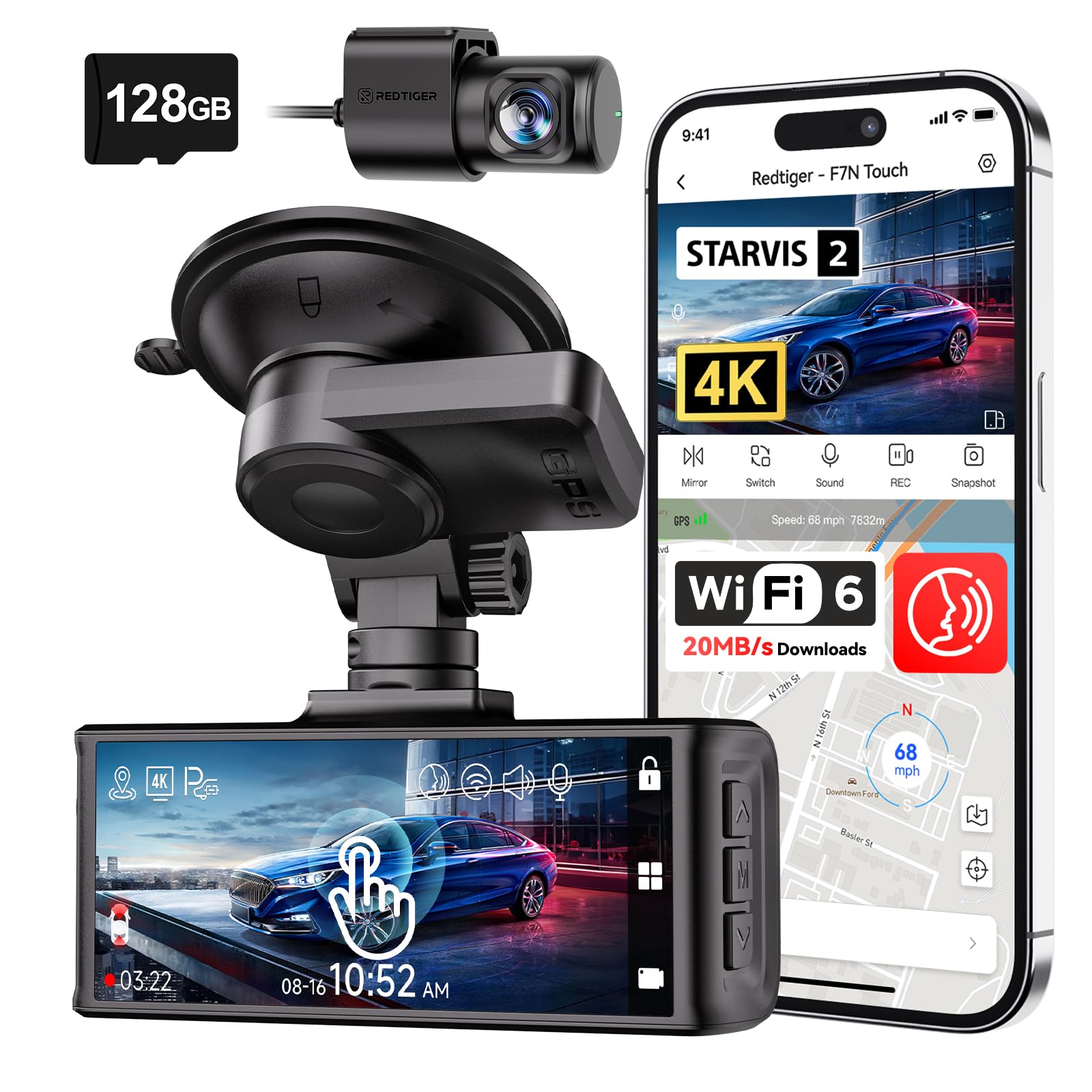
REDTIGER F7N Touch

89 /100
Studio Score Strong Evidence

Key details

Storage
128GB included
WiFi/App
5.8GHz Wi-Fi
Resolution
4K front, 1080P rear
Night Performance
STARVIS 2, F1.8, WDR/HDR
Check Price on Amazon

Touchscreen control and voice commands set the F7N apart in a category where physical buttons are the usual control scheme. The 3.18-inch screen brings menu changes and clip review closer to phone-style interaction, and voice prompts let you capture a shot without reaching toward the windshield. That interface also makes switching between front and rear views feel less like a chore, which matters when you need to check surroundings quickly.

Front 4K footage holds its detail in daylight, and the 1080P rear camera gives useful lane-change and following-distance context. Setup is manageable for a first-time owner: mount the front unit, route the rear cable, and the included 128GB card handles storage from the first drive. Built-in GPS stamps the video with speed and route data, so you don't need to pair a phone for basic location tracking.

Drivers who want touchscreen control and voice commands without entering the premium tier will find the F7N fits their routine. Long-term durability can vary between units, and the WiFi app may need a couple of attempts before connecting to the phone. The bundled 128GB card, built-in GPS, and intuitive menus balance those boundaries in daily use.

Pros

  • Touchscreen controls and voice commands simplify on-the-fly adjustments without menu diving.
  • Setup requires little more than mounting the front unit and routing the rear cable.
  • Front 4K video delivers crisp daytime footage with usable rear 1080P detail.
  • Included 128GB card and built-in GPS boost out-of-box value at a mid-range price.

Cons

  • Phone pairing can require a few attempts before the app sees the camera.
  • Clips you expect can be missing during review, so periodic file checks are a sensible habit.
Our verdict

The F7N gives touchscreen and voice-control features to drivers who want them without the premium outlay, and the bundled card and GPS keep the value proposition sharp.

Check Latest Price
5

Best for Smart/Remote Monitoring

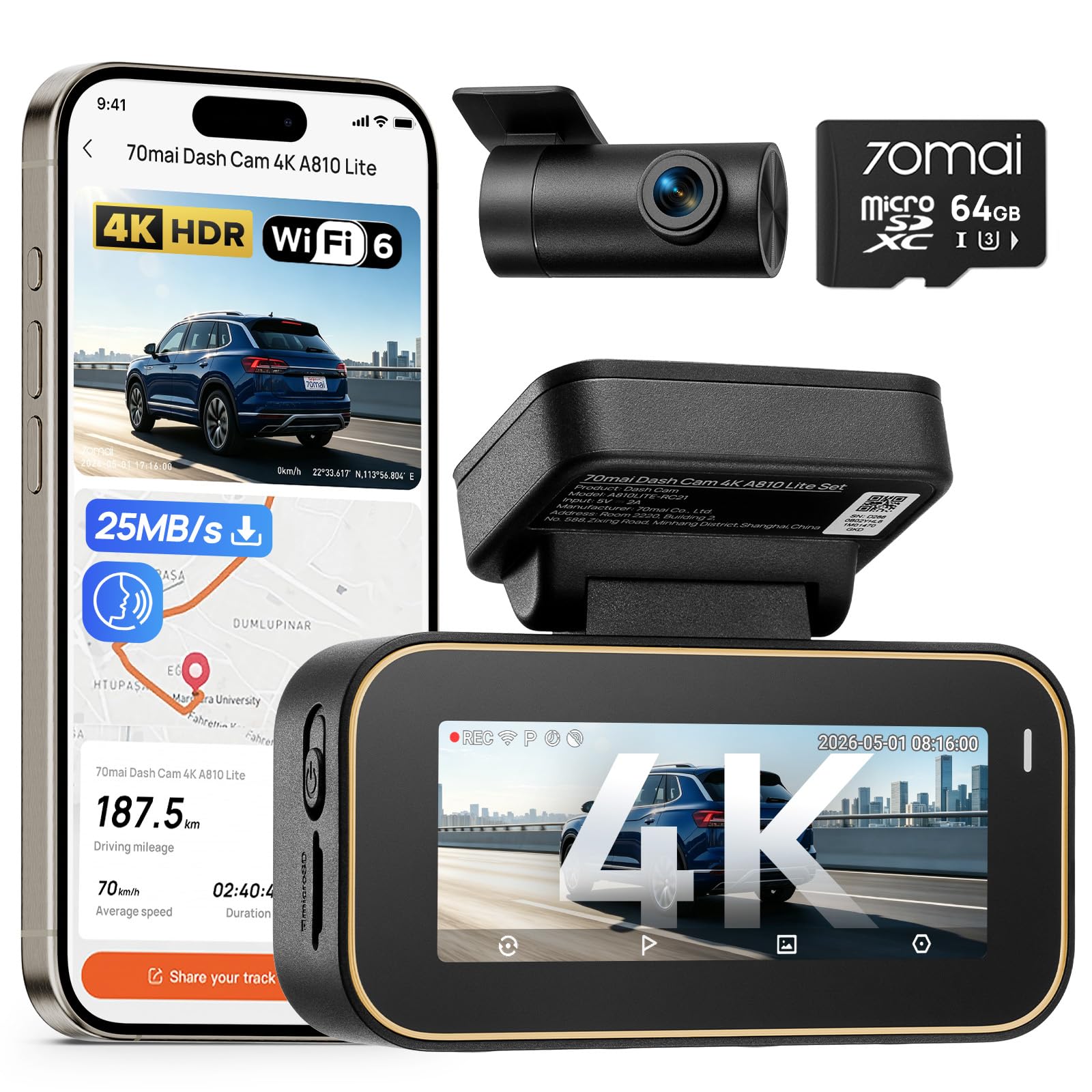
70mai A810 Lite

84 /100
Studio Score Strong Evidence

Key details

Storage
64GB included, 512GB max
WiFi/App
Wi-Fi 6, optional 4G
Resolution
4K front, 1080P rear
Night Performance
F1.55, HDR
Check Price on Amazon

Remote live view over 4G LTE and fast 5GHz Wi-Fi 6 transfers make this compact dual-cam feel like a connected gadget rather than a passive recorder. The front sensor records 4K with an F1.55 aperture and HDR night vision, while the rear camera adds clear 1080P coverage. A 64GB card is included.

Installation is eased by the small body tucking behind the mirror and leaving little clutter on the glass. The app handles setup and clip retrieval, voice commands cover basic actions, and the 3.18-inch screen is enough for quick checks without dominating the cabin.

This is aimed at tech-oriented drivers who want phone access to a parked car without jumping to a flagship price. Large-vehicle owners should verify rear-cable reach before buying, and touchscreen fans will find the small button-driven interface restrictive.

Built-in GPS logs route and speed data with each clip. Night footage remains readable thanks to HDR, though plate clarity at speed follows the usual limits for this price class.

Pros

  • Solid build quality and responsive controls keep day-to-day operation fuss-free.
  • Compact body eases placement and makes installation less intrusive.
  • 4K front capture plus clear 1080P rear footage covers both ends of the vehicle.
  • Wi-Fi 6 transfers clips quickly and the app keeps camera settings within reach.

Cons

  • Remote live view needs the 4G LTE hardwire kit, which adds install time and cost.
  • The adhesive mount may lose grip on hot windshields, so a firmer mounting method may be needed.
Our verdict

The A810 Lite is the connected-cam specialist of this group, pairing remote-access focus with Wi-Fi 6 in a compact body that suits smaller vehicles.

Check Latest Price
6

Best Ultra-Budget Dual Cam

E-YEEGER S60

85 /100
Studio Score Strong Evidence

Key details

Storage
No card, 256GB max
WiFi/App
5GHz Wi-Fi
Resolution
2.5K front, 1080P rear
Night Performance
F1.8, WDR/starlight
Check Price on Amazon

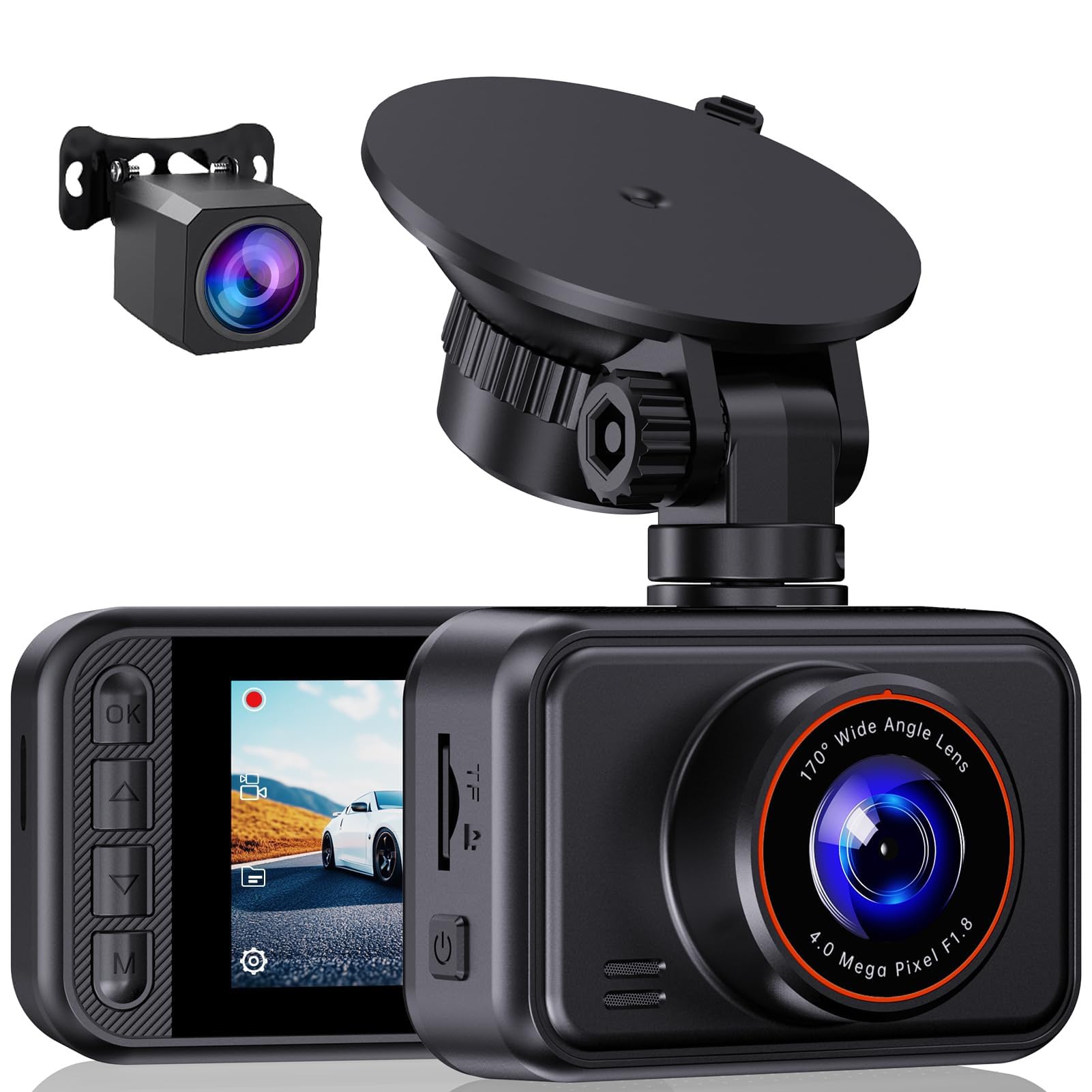
A 170° front lens and a body that tucks behind the rearview mirror set the E-YEEGER S60 apart from bulkier budget kits. Front 2.5K and rear 1080P capture punchy daytime footage at a price that undercuts comparable dual-camera sets, and the 360° suction mount makes aiming simple. Buyers who value a clean install over a giant dashboard screen will appreciate the small footprint.

The 2-inch IPS display keeps menus and playback usable without requiring the phone app. An optional 24-hour parking monitor via a Type-C hardwire kit can extend coverage when the car is off, though that kit is sold separately. The F1.8 lens and WDR/starlight sensor help with low-light street scenes, which matters more than raw resolution at this price.

This is for budget drivers who want a discreet front/rear setup and plan to pull footage with an SD card reader rather than the phone app; WiFi/app pairing can be inconsistent, so card transfers are the smoother path. Occasional missed recordings are possible, so a quick glance at the recording light before setting off is a reasonable habit. Buyers who value a compact camera and clean daytime video over hands-off file management will find that tradeoff acceptable.

💡 Use an SD card reader for file transfers and treat the phone app as a secondary preview tool.

Pros

  • Daytime front and rear clips look clear and well-exposed for the price.
  • The body is small enough to sit behind the mirror and stay out of the line of sight.
  • Button controls and on-screen menus are simple enough to learn without a manual.
  • Entry-level pricing keeps the cost of adding front and rear coverage low.

Cons

  • No memory card is included, so budget for a high-capacity card separately.
  • At highway speed in low light, plates can become hard to read; slower city scenes are more usable.
Our verdict

A small, affordable dual cam that covers the basics without demanding phone-app time.

Check Latest Price
7

STARVIS 2 Value

BOTSLAB G300H Plus

86 /100
Studio Score Strong Evidence

Key details

Storage
64GB included, 256GB max
WiFi/App
App + voice control
Resolution
4K front, 1080P rear
Night Performance
STARVIS 2, F1.5/F2.0
Check Price on Amazon

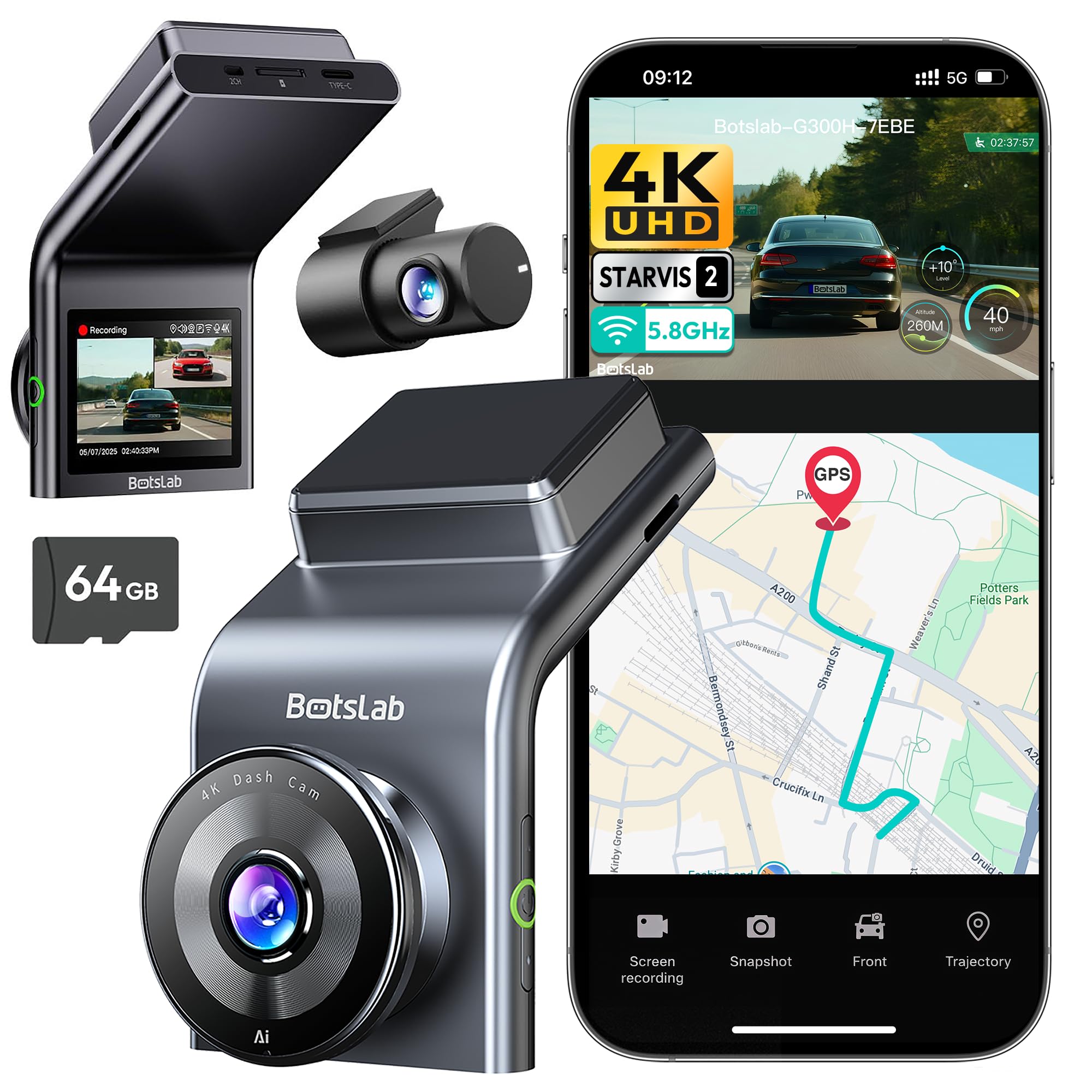
BOTSLAB G300H Plus pairs a STARVIS 2 4K front sensor with voice commands, built-in GPS, and a 64GB card at a mid-range price. Footage quality tracks with the spec sheet: clear daytime detail and usable low-light capture for a dual-channel kit. The camera core is strong enough to justify the cost; the compromises that keep it from a higher recommendation sit in the supporting hardware rather than the lens.

Pros

  • 4K front and 1080P rear recording with a STARVIS 2 sensor delivers clear day/night footage without flagship pricing.
  • Voice commands handle recording adjustments without requiring a reach toward the windshield.
  • Bundled 64GB card and built-in GPS mean the out-of-box kit covers storage and location logging.

Cons

  • Wi-Fi/app transfers can drop mid-session, which makes pulling clips on the phone less convenient.
  • Anti-static film may not hold on curved windshields; adhesive mount grip can vary between installs.
Our verdict

Best for drivers who want STARVIS 2 4K front clarity and voice control at a mid-range price, and who can accept occasional app or mount maintenance.

Check Latest Price
8

Budget Big Screen

Yonvim DC339S

87 /100
Studio Score Strong Evidence

Key details

Storage
64GB included
WiFi/App
Built-in Wi-Fi
Resolution
2.5K QHD front, rear
Night Performance
F1.8, WDR
Check Price on Amazon

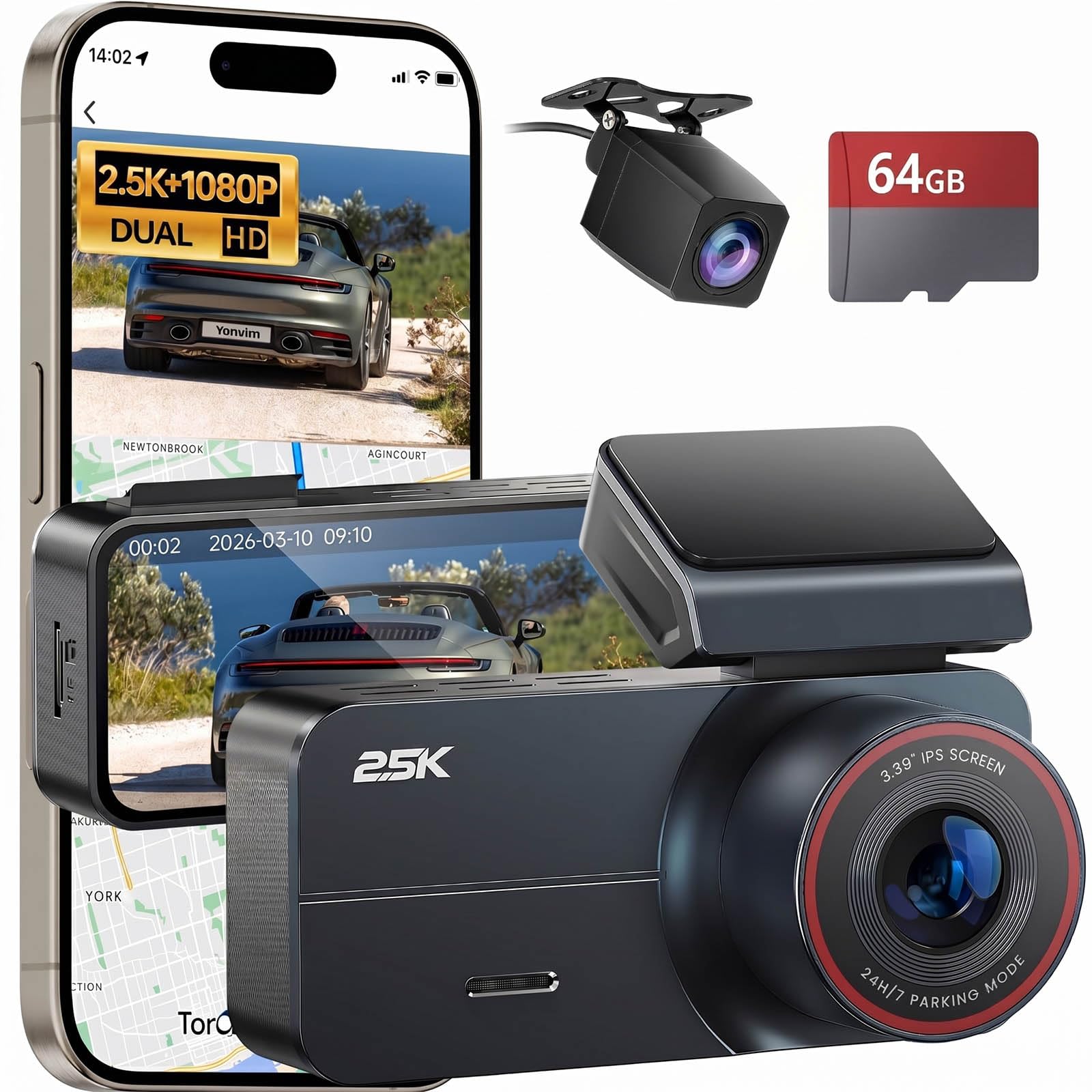
The Yonvim DC339S puts 2.5K front and rear recording, a 3.39-inch IPS display, and a 64GB card in one entry-level package, making it one of the least expensive dual-channel kits here. Setup takes minutes, the large screen makes aiming the lenses simple, and daytime footage comes through with strong clarity. The supplied adhesive mount is what keeps it out of the runner-up slot: on a windshield left in direct summer sun, it can lose hold, so this is a better fit for moderate climates or drivers willing to swap in a third-party mount. The large screen and included storage make the compromise easier to accept for a minimum-spend install.

Pros

  • Setup is plug-and-play and gets both channels recording in minutes.
  • Clear and vivid front and rear video for the entry-level price.
  • Strong value with bundled storage and dual coverage.

Cons

No notable drawbacks to flag.

Our verdict

Pick this when maximum coverage for minimum spend matters more than added features.

Check Latest Price
9

Maximum Detail

ROVE R2-4K Dual PRO

84 /100
Studio Score Strong Evidence

Key details

Storage
128GB included, 1TB max
WiFi/App
Wi-Fi 6, 5GHz/2.4GHz
Resolution
4K front, 2K rear
Night Performance
Dual STARVIS 2, HDR
Check Price on Amazon

Native 4K from the front and 2K from the rear on dual STARVIS 2 sensors gives this ROVE a genuine resolution edge over the upscaled 4K systems in this lineup. The bundled CPL filter cuts windshield glare before it reaches the lens, and Wi-Fi 6 speeds up clip transfers for commercial drivers who review footage regularly.

The premium price and mixed reliability reports mean the extra cost carries real risk, so this is a specialist upgrade rather than a general recommendation. Shoppers who just want a steady everyday dual-cam should weigh the all-rounder in this lineup first.

Pros

  • Native 4K front and 2K rear on dual STARVIS 2 sensors deliver sharp plate-level detail in daylight and low light.
  • The bundled CPL filter and 128GB card cover the key accessories out of the box.
  • Wi-Fi 6 with dual-band transfer makes pulling clips less tedious than typical dash-cam Wi-Fi.

Cons

  • Parking-mode monitoring requires a separately purchased hardwire kit.
  • Some units can shut down or drop the rear feed intermittently; at this price, that behavior is harder to accept.
Our verdict

Choose the R2-4K Dual PRO when native 4K/2K clarity and glare control outweigh the occasional glitch risk.

Check Latest Price

How to Choose

Resolution and Real 4K

Many dual cams advertise 4K, but the front sensor is often 1440P upscaled to 2160P. Upscaling does not add detail; it only changes how the file is encoded. For plate reading, native 1440P with a strong sensor beats upscaled 4K from a weak sensor.

Night Performance and Sensors

Night performance comes down to sensor quality, aperture, and HDR. Larger sensor pixels capture more light, a wider F1.5 aperture lets more photons in, and HDR balances bright headlights against dark shadows. A camera with these features can read plates at moderate distance; one without them turns night footage into motion blur.

STARVIS 2 sensors are common on mid-range models and materially improve low-light rolling footage. If you drive at night regularly, prioritize that sensor and an F1.8 or faster aperture over a higher front-resolution number.

Storage and Card Endurance

Included cards are convenient, but regular SD cards degrade quickly in hot parked cars. Dash cams write constantly, and heat accelerates wear. A high-endurance card designed for continuous recording reduces the chance of a corrupted file when you need it.

Check the camera's supported capacity, but don't treat the maximum as a performance feature. A 256GB high-endurance card is enough for most drivers and avoids the cost of an oversized card that may not be supported.

Wi-Fi and App Transfer

Wi-Fi on a dash cam is for transferring clips, not for watching live footage. Many models use low-power modules that drop the connection after a few seconds of large file transfer. If reliable app transfer matters, look for Wi-Fi 6 or 5GHz-only support; otherwise plan to remove the SD card and use a card reader.

Parking Mode and Mount Quality

Parking mode requires a hardwire kit that connects the camera to the car's fuse box. Most kits are sold separately, and installation can take about an hour. A camera without parking mode will still record while driving, but it will not catch a bump in a parking lot.

Mount quality also determines whether the camera stays aimed at the road. Adhesive mounts can soften in heat and let the lens droop; a screw-type or suction mount often holds better in hot climates. That small detail decides whether your footage is usable.

Frequently Asked Questions