9 Best Dash Cam with Parking Mode of 2026: Pick One That Records

The right dash cam with parking mode depends on hardwire-kit inclusion, true channel resolution, and app reliability, not the 4K label on the box.

Most dash cams advertise 4K and 24-hour parking mode, but the feature that determines whether you get usable evidence is not the number on the box. Hardwire-kit inclusion, actual resolution of each camera channel, and whether the app can pull footage without dropping the connection matter more than the headline spec.

A parking-mode dash cam also forces a trade-off between native 4K front sensors and long-term consistency. Upscaled 4K still reads plates in good light, while a native 4K sensor with random shutdowns is less useful when it matters.

If you park on a street or in a lot, side-channel coverage can catch a hit-and-run that a front-only cam misses; if you park in a driveway, front/rear may be enough. Match the camera channels to where your car actually sits overnight.

1

Best Overall

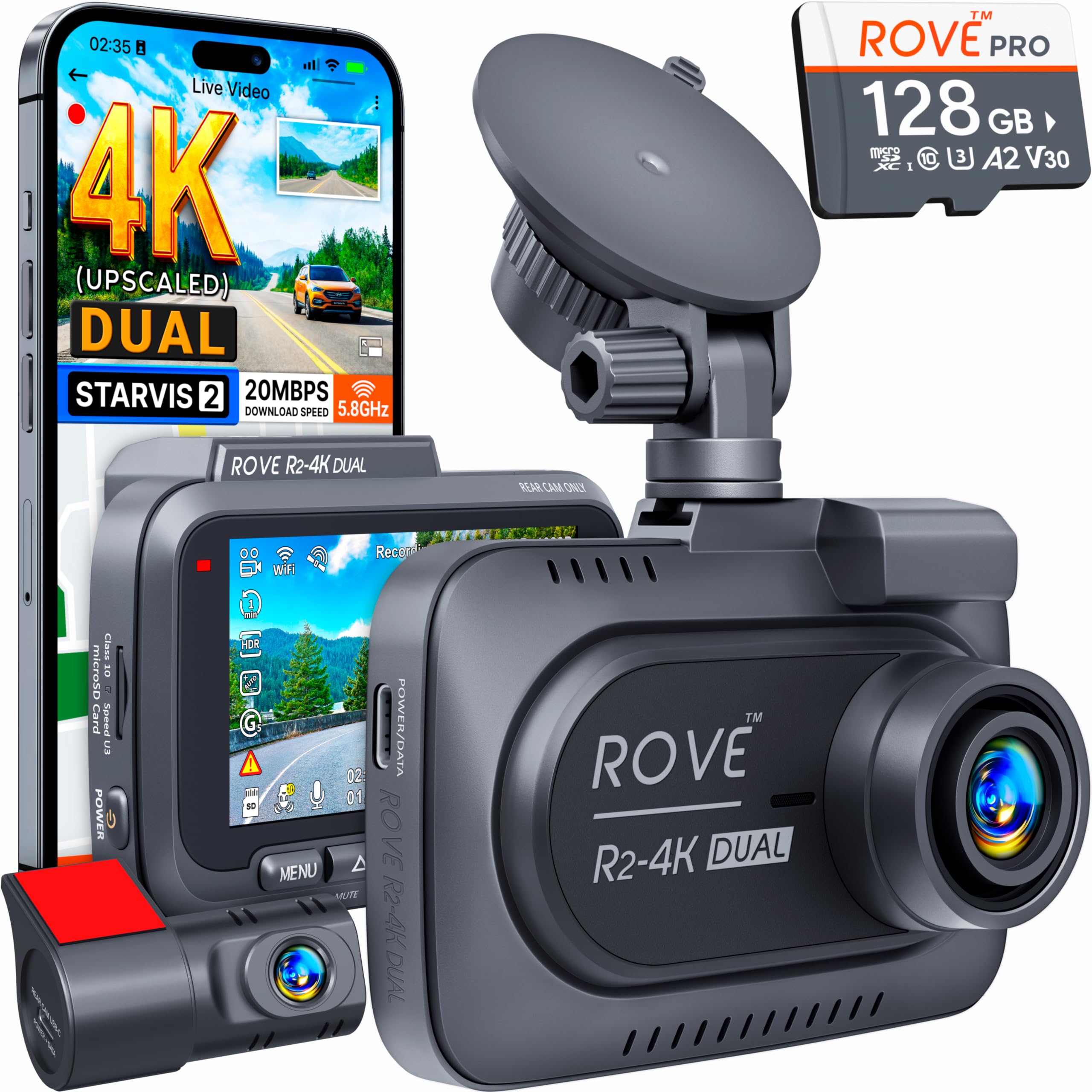
ROVE R2-4K Dual

91 /100
Studio Score High Confidence

Key details

Storage
128GB included; 1TB max
Channels
Front + rear
Resolution
Front 2.5K upscaled; rear 1080P
Connectivity
Wi-Fi, GPS
Check Price on Amazon

ROVE’s R2-4K Dual pairs 24-hour parking monitoring with a front/rear camera package that logs the road without much fuss. Parking mode runs at 1fps time-lapse while motion and collision detection decide what to keep, so a parked car gets continuous watch without filling the card. The bundled 128GB card covers the first storage upgrade, and capacity can go as high as 1TB if you want more history before overwrite.

Video output is crisp for a mid-range dual-cam: the front STARVIS 2 sensor and F1.5 aperture keep low-light detail usable, and the 150° front / 140° rear fields of view cover the important angles. The rear camera records 1080P, which is enough to identify following traffic even though it won’t match the front. Mounting hardware and cable clips reduce install time, and the accessory kit includes the trim tools and adhesives needed for a standard front/rear run.

This setup fits drivers who want front and rear evidence plus 24-hour parked-vehicle coverage without adding a cabin camera. The front sensor records 2.5K and upscales to 4K, so buyers who measure specs strictly should adjust expectations. That boundary matters less for the intended use: the rear cam and parking modes cover the incidents a two-channel street-parking setup is likely to capture, and there is no cabin channel to manage or ignore.

Long-term behavior is where this package separates itself from budget alternatives. The system wakes quickly with ignition, loop recording runs without constant card errors, and the parking modes trigger from motion or collision when the vehicle is off. That everyday steadiness matters more than a resolution spec when the footage is meant to settle an insurance question.

The value case is completeness rather than a single headline spec. A compatible hardwire kit is required for the 24-hour parking modes, so factor that into the install plan. The parking modes are not an afterthought: time-lapse, motion, and collision triggers work from the same recording loop, so a bump in a lot leaves a clip without requiring a separate sentry box. For front-only budgets this may be more camera than needed, but as a dual-channel package it leaves few gaps for parking-conscious drivers.

Pros

  • Build quality holds up in daily use.
  • The complete accessory kit makes front/rear installation easier.
  • STARVIS 2 front sensor and F1.5 aperture deliver crisp video in daylight and low light.
  • The bundled 128GB card and multi-mode parking feature set give strong mid-range value.
  • Owners pass this along as a first-dash-cam suggestion.

Cons

  • Phone connection can be patchy during app pairing and file transfer.
  • Occasional power-cycling or freezing can interrupt a recording session.
Our verdict

Parking-mode shoppers who don’t need cabin recording can treat the R2-4K as a complete front/rear package.
Check Latest Price
2

Best Value Dual Cam

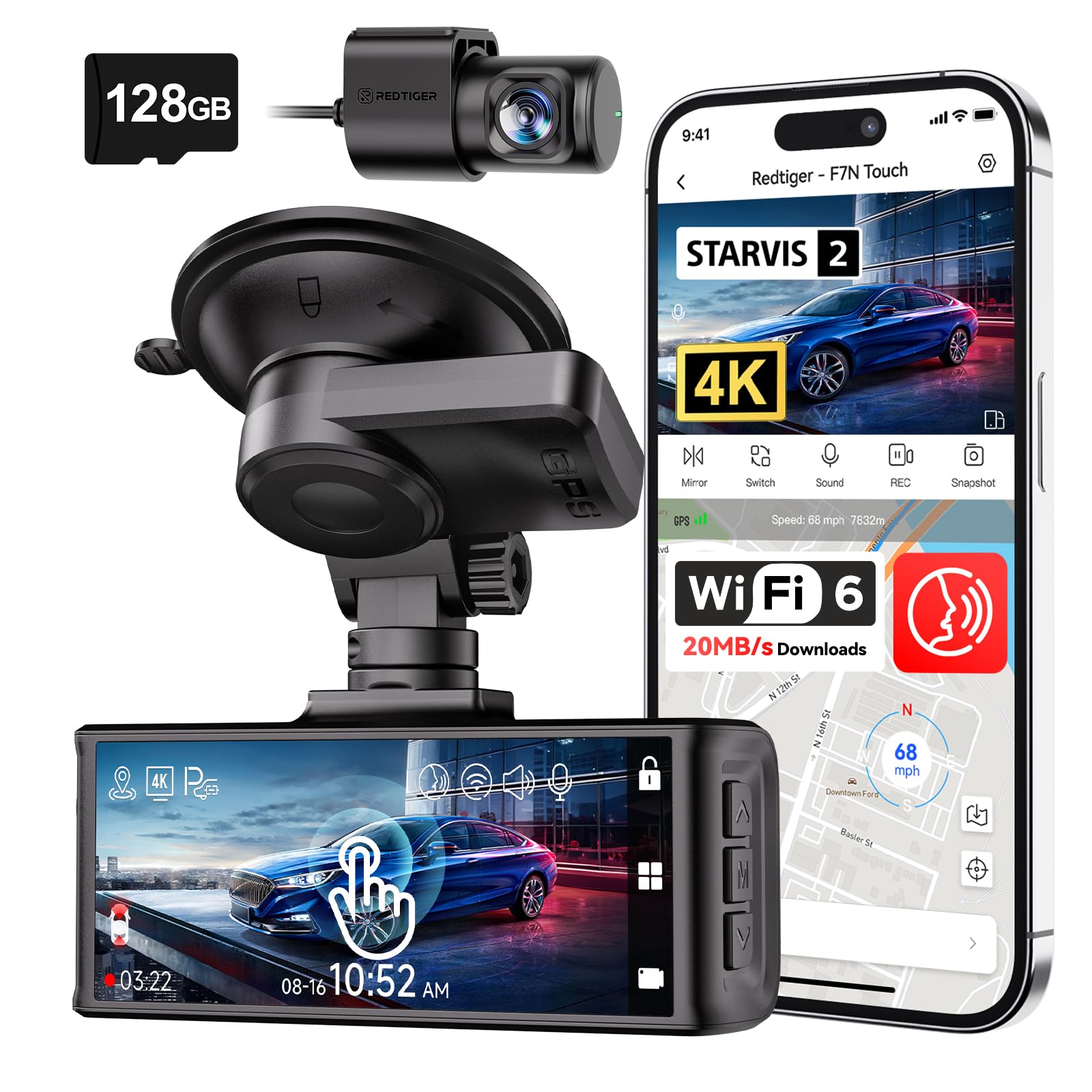
REDTIGER F7N Touch

89 /100
Studio Score Strong Evidence

Key details

Storage
128GB included
Channels
Front + rear
Resolution
Front 4K native; rear 1080P
Connectivity
5GHz Wi-Fi, voice control
Check Price on Amazon

The REDTIGER F7N Touch delivers a native 4K front camera, a 1080P rear, and a 3.18-inch touchscreen in one dual-channel package. Voice control and the included 128GB card round out a kit that is easy to operate from day one, while the STARVIS 2 front sensor carries the 4K channel through low-light stretches. The rear camera is 1080P FHD, keeping the second channel clear without the file-size burden of 4K.

Setup is approachable for a first-time owner: the mount, rear-cable routing, and initial menu configuration take less effort than typical dual-cam systems. The touchscreen makes clip review and menu changes faster than button-based rivals. During daily driving, the F7N records and saves clips without requiring much attention. For parked-vehicle coverage, G-sensor and time-lapse parking modes are available.

The F7N suits first-time dashcam buyers who want native 4K front video, a 1080P rear, touchscreen control, and 24-hour parking mode without paying for a cabin camera. The tradeoff is long-term consistency: some units may develop shutdowns or freezes over time, and Wi-Fi pairing can be inconsistent. If your priority is absolute predictability across years of ownership, a different model in this set will serve you better.

Pros

  • Native 4K front footage stays sharp, with the 1080P rear covering traffic behind without bloating file sizes.
  • Mounting, routing the rear cable, and setting up menus take little time even for a first-time owner.
  • The 3.18-inch touchscreen and voice control make day-to-day operation simpler than button-driven rivals.
  • The bundled 128GB card, voice control, and dual-channel 4K front make the kit a strong value.

Cons

  • 24-hour parking mode requires a separately purchased hardwire kit, adding wiring work.
  • Intermittent recording may appear in some units; reformatting the memory card can clear it.
Our verdict

For a first dashcam with dual-channel 4K and 24-hour parking mode, the F7N Touch is the value pick.

Check Latest Price
3

Best Full-Surround 4-Channel

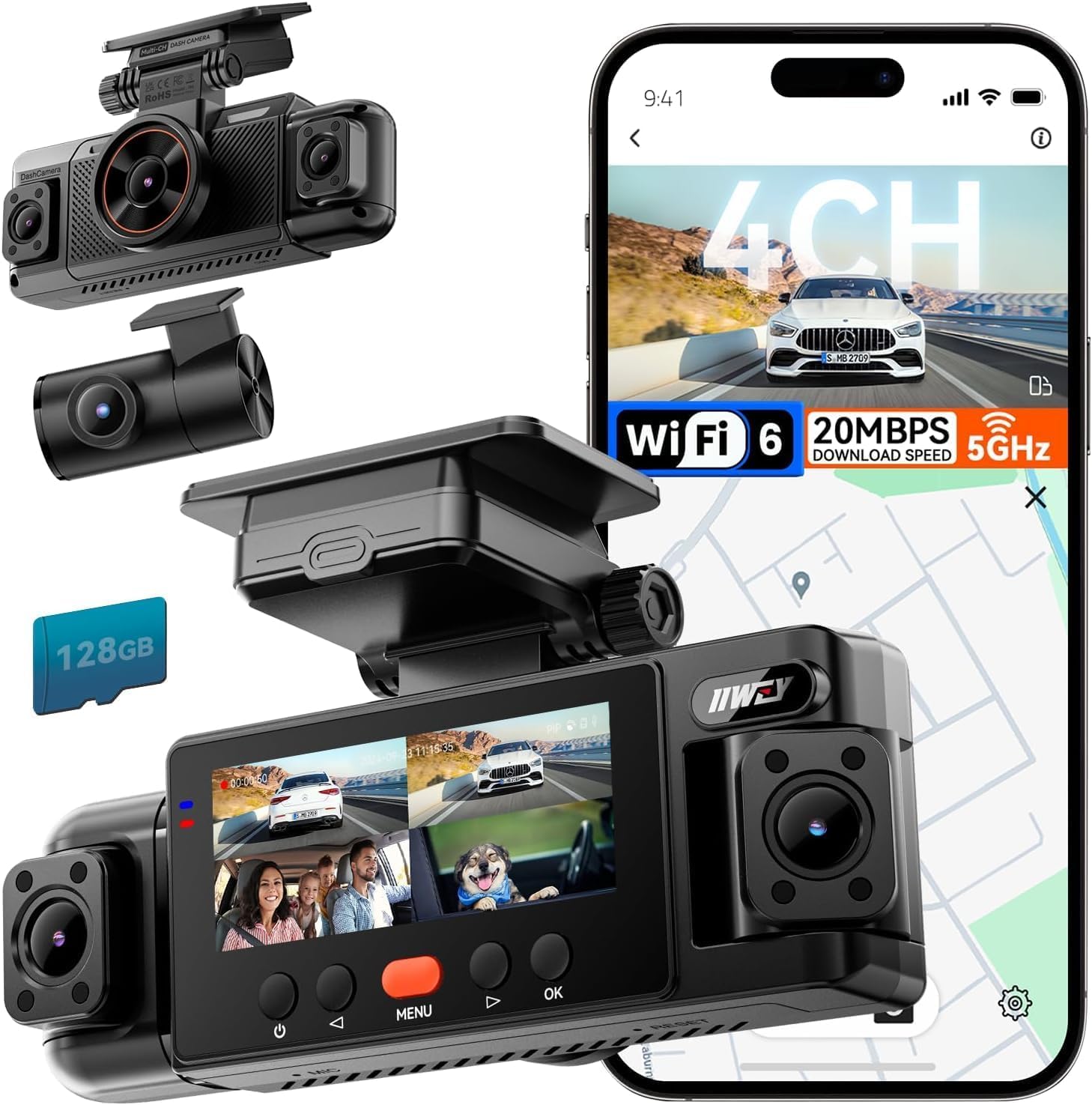
IIWEY N6 360° 4CH

88 /100
Studio Score Strong Evidence

Key details

Storage
128GB included; 256GB max
Channels
4CH 360° front/rear/side
Resolution
1080P on all four channels
Connectivity
Wi-Fi 6, GPS
Check Price on Amazon

The N6 records front, rear, and both sides simultaneously, so a parking-lot door ding or a close pass in a narrow lane is captured rather than missed. It combines that four-channel view with IR night vision, built-in GPS, and Wi-Fi 6 at a mid-range price — a feature set the entry-level 360° cameras in this roundup leave out.

Parking surveillance is the main draw. Time-lapse mode handles up to roughly 48 hours of parked recording, and impact detection wakes the system when the car is bumped; both need the separately sold hardwire kit. That puts the N6 in the right place for rideshare, fleet, or street-parking drivers who want side coverage and can accept the extra kit cost. The Wi-Fi/app connection can be inconsistent during pairing, so phone access is best treated as a convenience rather than the main control surface.

The camera body has a solid, finished feel, and the included 128GB card is enough to start recording immediately. The mount holds its position on rough pavement, and the system feels like a permanent fixture rather than a temporary accessory.

💡 If the Wi-Fi connection drops during pairing, power-cycle the camera and reconnect; the recorded clip stays on the memory card.

Pros

  • Front, rear, and side channels cover the whole perimeter, so parking incidents rarely leave the frame.
  • Eight IR LEDs keep night-time parking captures legible in low-light lots.
  • Body and mount finish feel substantial enough for daily vehicle use.
  • Installation is manageable with the included hardware, and the bundled 128GB card saves an immediate trip.

Cons

  • Multi-day 24/7 use can hit the 256GB storage ceiling quickly, especially with all four channels writing.
  • Wi-Fi and app stability can be inconsistent during phone pairing, which makes clip preview a retry-prone process.
Our verdict

The N6’s reason to be is full-surround visibility while parked and driving; side-channel coverage and IR night vision make it the 360° pick for operators who want the whole vehicle documented.

Check Latest Price
4

Best 3-Channel Cabin Coverage

70mai T800E 3CH 4K

88 /100
Studio Score Strong Evidence

Key details

Storage
64GB included; 512GB max
Channels
Front, interior, rear
Resolution
Front 4K; interior/rear 1080P
Connectivity
Wi-Fi 6, GPS, voice
Check Price on Amazon

Three-channel coverage from a known name: the 70mai records the road ahead in 4K, the cabin and rear in 1080P, and includes Wi-Fi 6 for faster clip transfers. Voice control captures clips hands-free, and the supercapacitor keeps the camera stable in hot interiors. Built-in GPS tags clips with route and speed data, and the 24/7 parking monitor works with a G-sensor and a separately sold hardwire kit for vehicle-off surveillance.

Rideshare and family drivers benefit from this layout because the cabin channel documents passenger behavior alongside front and rear traffic. The interior and rear cameras are 1080P, so buyers who need high-resolution rear footage should look elsewhere.

Front 4K video resolves fine details in daytime driving, though plate readability can vary with angle and lighting. If you regularly need to read tags at night, that variability is the main boundary. The included 64GB SD card covers ordinary looped driving without an immediate purchase.

💡 A hardwire kit is required for 24/7 parking monitoring; the bundled 64GB card is enough for ordinary looped driving.

Pros

  • Three-channel coverage records the road, the cabin, and what's behind you without a second unit.
  • Setup is quick for drivers who don't want a wiring project.
  • Front daylight footage is clean enough to read lane markings and traffic details.

Cons

  • Plate text from sharp angles or low light may not resolve clearly despite the 4K front sensor.
  • Phone-based clip review can be frustrating when the app drops the Wi-Fi connection during pairing or transfers.
Our verdict

For rideshare and family drivers who want cabin coverage with 4K front and heat-resistant parking monitoring, this is a sound mid-range buy once the hardwire kit is installed.

Check Latest Price
5

Best Parking-Ready Hardwire Kit

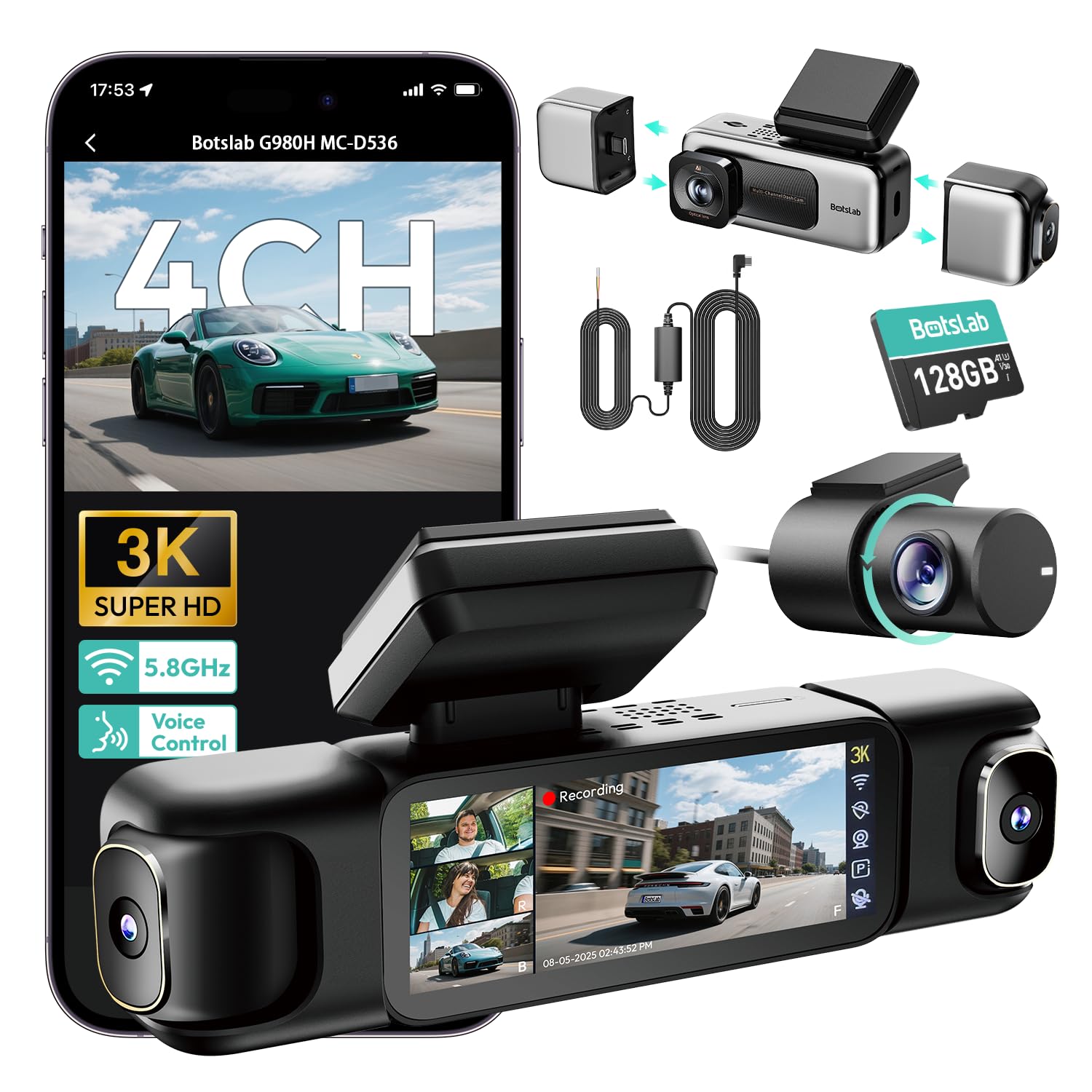
BOTSLAB G980H 4CH

85 /100
Studio Score Strong Evidence

Key details

Storage
128GB included; 512GB max
Channels
4CH front/interior/side/rear
Resolution
Front 3K; other 1080P
Connectivity
5.8GHz Wi-Fi, GPS, voice
Check Price on Amazon

BOTSLAB G980H 4CH is the parking-ready four-channel system in this lineup: the hardwire kit ships in the box, so true 24/7 sentry, time-lapse, and collision-triggered parking mode are available from the first install. Four cameras cover front, cabin, side, and rear, and the included 128GB card handles the multi-stream workload without an immediate storage purchase.

Voice control and a 5.8GHz WiFi link make clip review and menu changes more convenient than older 2.4GHz cams. Once installed, the system runs steadily through multi-day parking stints.

The buyers this suits are commercial or fleet drivers who need four-channel documentation, plus owners who want overnight parking protection without chasing a separate hardwire kit. The front sensor records 3K rather than 4K, and rear/night clarity is mid-tier, so this is not the unit for evidence-grade night plates.

Pros

  • Strong daytime camera quality holds up across all four channels.
  • Steady multi-day operation after installation, including overnight parking.
  • Included 128GB card supports the four-stream workload immediately.

Cons

  • App and hardwire setup can require a few attempts before parking mode is fully active.
  • Premium price is higher than entry-level four-channel systems, which matters for budget-focused buyers.
Our verdict

Commercial and fleet drivers who need four channels plus overnight monitoring should start here.

Check Latest Price
6

Best 4K 3-Channel Value

REDTIGER F17 3CH 4K

89 /100
Studio Score Strong Evidence

Key details

Storage
64GB included
Channels
Front, interior, rear
Resolution
Front 4K; interior/rear 1080P
Connectivity
5GHz Wi-Fi, GPS
Check Price on Amazon

The REDTIGER F17 puts a STARVIS 2 4K front sensor ahead of a 1080P cabin camera and a 1080P rear camera, so rideshare and family drivers get full cabin context in one mount. The front channel handles HDR daytime and low-light scenes well, while the interior cam points into the cabin. Triple parking modes - time-lapse, motion detection, and collision detection - are built into the system.

Setup is quick because the 64GB card is included, so the first recording can happen right out of the box. The built-in GPS adds route and speed data to each clip, and the 5.8GHz Wi-Fi handles transfer without removing the card. For a 3-channel package, the F17 sits at a competitive price point.

Rideshare drivers and families with rear-seat passengers are the right fit here; the cabin camera adds context beyond the road. For 24/7 vehicle-off monitoring, budget for the separate hardwire kit - parking modes only run when the camera is hardwired. Some units may shut down or overheat during hot-weather driving, so anyone who demands maximum long-term stability should weigh that before buying.

💡 Connect the camera's Wi-Fi before CarPlay takes over the phone's connection; re-enable the camera network if the phone drops it.

Pros

  • Three channels cover front, cabin, and rear, giving rideshare and family drivers a full interior view.
  • STARVIS 2 4K front sensor produces sharp daytime footage and usable low-light images.
  • Setup starts with the included 64GB card, so there is no storage purchase before the first drive.
  • For the channel count and front image quality, the F17 sits at a competitive price point.

Cons

  • Cabin and rear cameras cap at 1080P; only the front channel records true 4K.
  • Occasional recording gaps have been noted, so checking clip continuity after the first few drives is worthwhile.
Our verdict

For rideshare and family drivers, the F17 delivers 4K front, cabin, and rear coverage with parking modes in a single dash-mount system.

Check Latest Price
7

High-Res 3-Channel Buyers

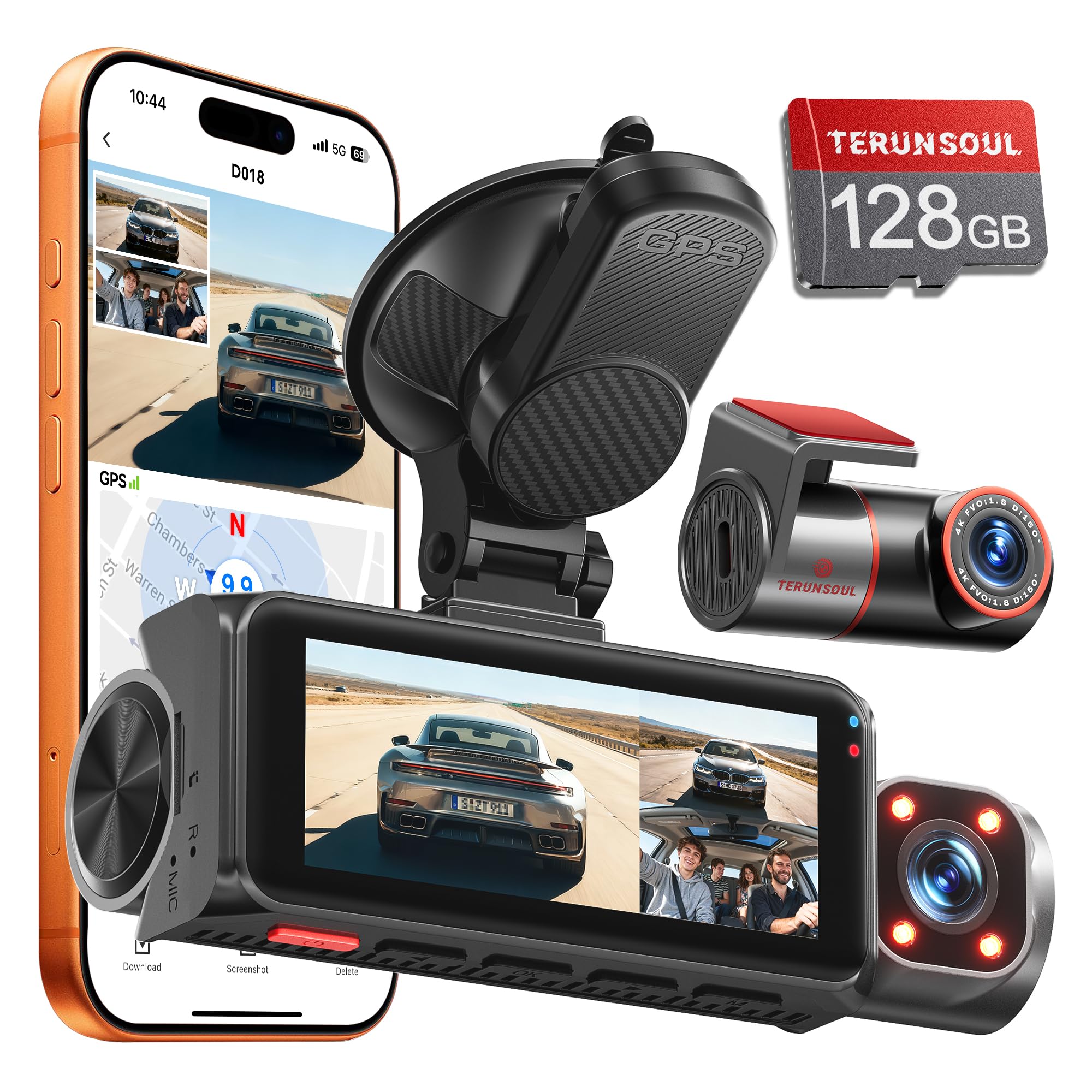
TERUNSOUl D018D 4K+4K

89 /100
Studio Score Strong Evidence

Key details

Storage
128GB included; 512GB max
Channels
Front, rear, cabin
Resolution
4K front/rear; cabin 1080P
Connectivity
Wi-Fi 6, GPS
Check Price on Amazon

The D018D records 4K on both front and rear channels while the cabin cam runs 1080P, and the 24H time-lapse/collision parking mode covers vehicle-off surveillance. An included 128GB card, Wi-Fi 6, GPS, and AProX night processing make it a strong match for night drivers who want plate detail from both primary channels. The 1080P cabin channel supplies usable interior context alongside the two 4K cameras. The value sits in the resolution ceiling rather than the accessory list, and the mid-range price reflects that focus.

Pros

  • Front and rear 4K cameras deliver detailed footage on the two primary channels.
  • The resolution ceiling justifies the mid-range price.
  • Day-to-day operation is smooth and setup is manageable.

Cons

  • The windshield unit is visually bulky and can crowd mirror clearance in smaller cars.
  • Parking mode needs a separately sold hardwire kit, so vehicle-off surveillance is not plug-and-play.
Our verdict

This is the mid-range pick for night drivers who want the highest front and rear channel resolution in a three-channel parking cam.

Check Latest Price
8

Budget Front-Only Drivers

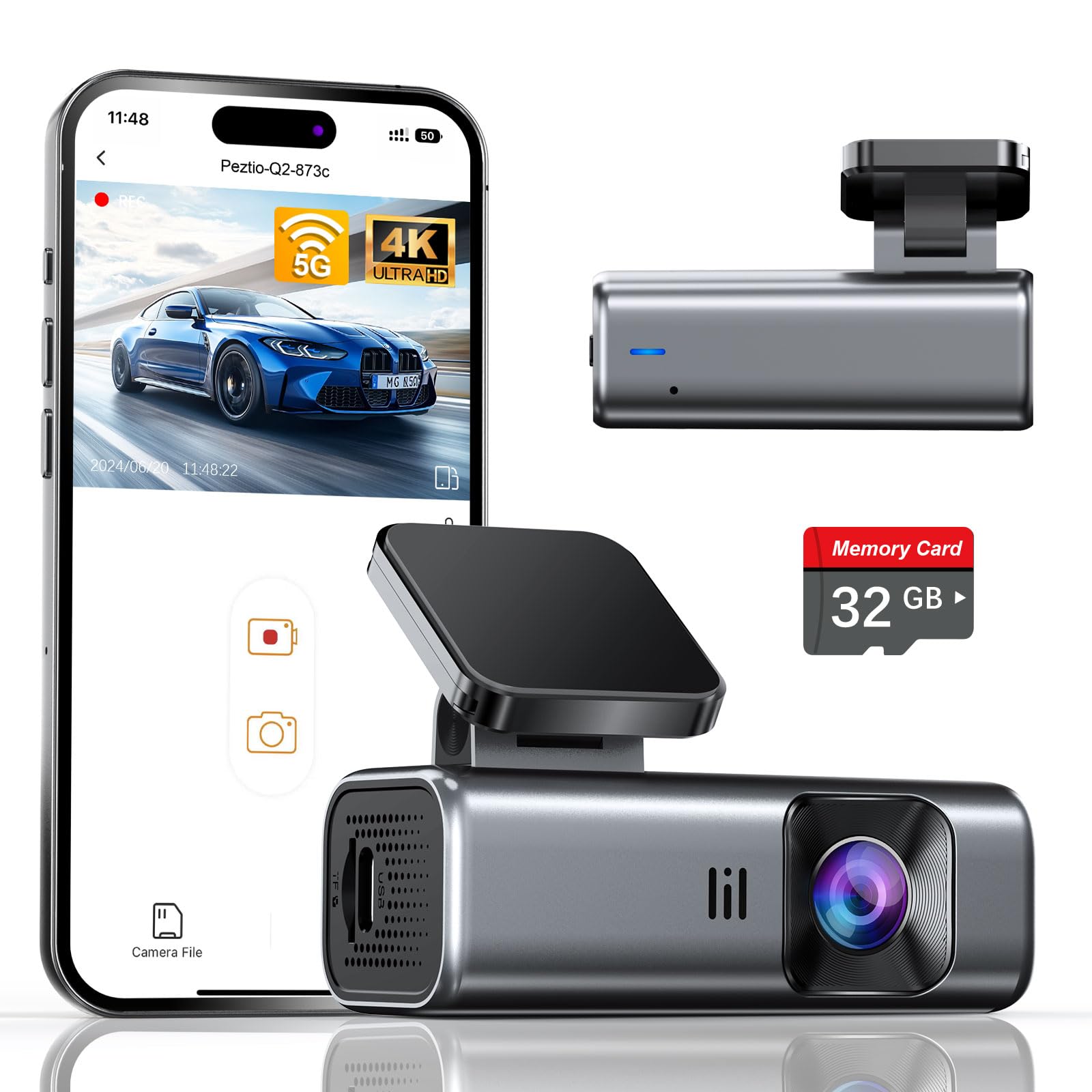
galphi Q2 4K Mini

88 /100
Studio Score Strong Evidence

Key details

Storage
32GB included; 256GB max
Channels
Front only
Resolution
Front 4K
Connectivity
5GHz Wi-Fi
Check Price on Amazon

At this price, the Q2 4K Mini delivers clean front-facing 4K footage in daylight, a compact shell that hides cleanly behind the mirror, and a solid budget feel. The 24-hour parking mode uses time-lapse capture, which keeps the recording slim while the car sits. The tradeoff for that tiny footprint is a front-only camera with no display and a 32GB included card that is fine for commutes but modest for heavy parking recording. It also lacks rear or cabin views, so buyers who want full vehicle coverage should look at multi-channel options. What it does well is discrete daily front-evidence capture at a low entry price.

Pros

  • 4K front footage stays sharp in daylight and low light.
  • Small body hides behind the mirror without a display to clutter the windshield.
  • Sturdy shell with a premium feel for a budget-priced camera.

Cons

  • Initial Wi-Fi pairing can be troublesome on individual phones; re-pairing is a possible fix.
  • Parking mode requires the separately sold Type-C hardwire kit, so out-of-box recording is driving only.
Our verdict

Fits the front-only buyer who wants a low-cost, low-profile cam for front-facing evidence and 24-hour time-lapse parking mode.

Check Latest Price
9

Budget Dual-Cam Drivers

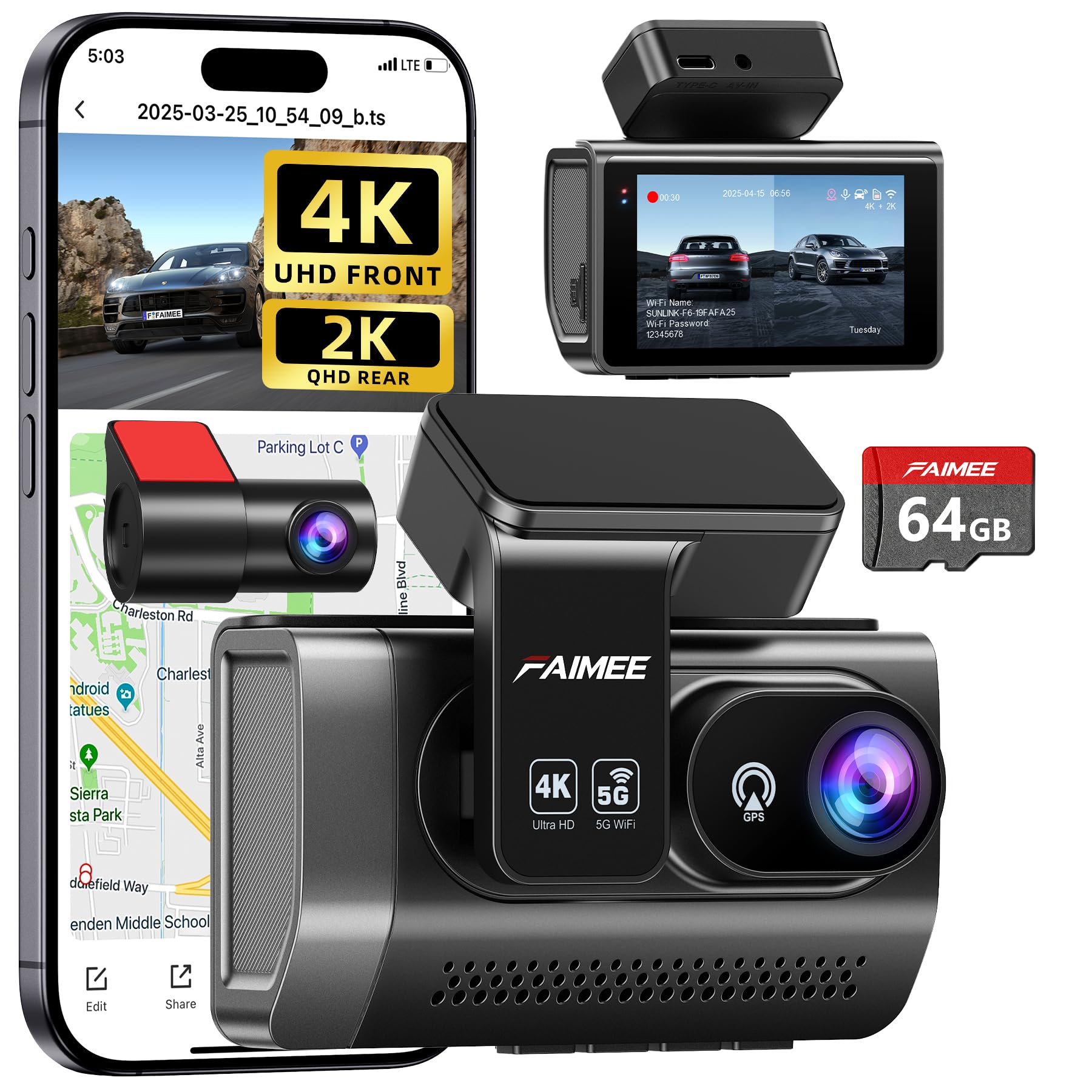
FAIMEE F6 4K Dual

89 /100
Studio Score Strong Evidence

Key details

Storage
64GB included; 256GB max
Channels
Front + rear
Resolution
Front 4K; rear 2K
Connectivity
Wi-Fi
Check Price on Amazon

FAIMEE's dual-cam package records 4K up front with strong low-light performance that keeps night footage usable. The parking-monitor need is met through a 24/7 time-lapse/impact mode, and the bundled 64GB card lowers first-time cost. A hardwire kit is required to activate that parked-vehicle surveillance, so budget for the install. The dual-channel layout covers front and rear without a cabin camera, which is why rideshare drivers or buyers expecting full 360° coverage should pass. This is a cost-effective front/rear value for drivers who mainly want night-time plate clarity and basic parked-vehicle monitoring.

Pros

  • Strong low-light performance keeps front and rear footage usable after dark.
  • Front channel records 4K UHD with solid detail in daytime and low-light scenes.
  • Bundled 64GB card lowers the first-time cost and the two-channel install stays simple.

Cons

  • Rear camera tops out at 2K, so rear plates won't match front-level detail.
  • Wi-Fi/app pairing can be inconsistent during setup or while transferring footage.
Our verdict

For drivers who need only front and rear channels, this budget cam covers 24/7 parking duty and night-time clarity.

Check Latest Price

How to Choose

Parking Mode and Hardwire Kit

Most parking modes use time-lapse or event-triggered recording. Both save storage, and both need power after the ignition is off.

The hardwire kit delivers that power through a constant fuse and includes low-voltage protection to stop the battery from draining. If the kit is sold separately, add that cost and installation effort to the real price.

Channel Coverage

Channel count defines the blind spots. Front plus rear covers the most common collision angles; a third camera adds the cabin, and a fourth adds side lenses for parking-lot swipes.

Each extra channel divides the storage and processing budget. Side and interior lenses usually record at lower resolution than the front, so do not assume every channel captures the same detail.

True Resolution

Headline resolution almost always applies only to the front camera. Native 4K carries more real detail than an upscaled 2.5K sensor, especially in fast motion and at night.

Rear and side cameras commonly max out at 1080P or 720P, enough for situational evidence but not always enough to read a plate at night.

Memory and Card Handling

An included card is convenient, but endurance matters more than capacity. Dash cams write constantly, and ordinary cards can degrade under heat and rewrite cycles; high-endurance cards handle that load.

Capacity sets how much looped footage remains before older files are overwritten. Check the camera's bitrate and channel count before choosing a replacement card.

GPS and Wi-Fi

GPS embeds speed and location data into footage, useful when proving where an incident happened. Wi-Fi transfers clips to a phone, but speed depends on the camera's Wi-Fi generation and app connection.

Dash cam Wi-Fi is a direct camera network, not home internet. Phones often switch back to cellular and drop the link; a card reader is usually faster and more reliable for pulling clips.

Frequently Asked Questions