4 Best Fixed-Lens 35Mm Film Cameras in 2026: Simplest Path to Film

The best fixed-lens 35mm film cameras for beginners and budget shooters who want dependable, pocketable analog photos without manual controls.

Most fixed-lens 35mm film cameras under $100 share the same core promise: point, shoot, and let the camera handle the rest. The catch is that half-frame models double your shots per roll, but they also shrink the negative, which means less sharpness and more grain than full-frame shooters often expect.

The practical difference between a camera that gets used and one that collects dust usually comes down to three things: reliable film transport, a lens that can handle daylight, and a flash that works when you need it. Budget plastic bodies can do all three, but not every model delivers.

This guide focuses on proven, pocketable options that match the right trade-offs to the right shooter, whether that means a focus-free half-frame for a first roll or a glass-lens upgrade for noticeably sharper snapshots.

1

Best Overall

Kodak EKTAR H35

87 /100
Studio Score Strong Evidence

Key details

Lens
Focus-free fixed lens
Flash
Built-in, lens-ring
Frame Format
Half-frame 35mm
Check Price on Amazon

The H35 clears the path to a usable first roll. It shoots half-frame 35mm, so a standard 36-exposure roll yields 72 frames, and the focus-free lens lets a new shooter point and shoot without learning zone focusing or exposure math. The built-in flash toggles through the lens ring, keeping the controls minimal enough for pocket-camera spontaneity. For a beginner, the camera does the heavy lifting: the main decisions are film ISO, whether to use flash, and when to press the shutter. That is the whole control set, and it is exactly why the H35 suits someone who wants results on the first roll rather than another gadget to learn.

A fixed 1/60s mechanical shutter keeps exposure simple, and the lens ring activates the built-in flash without hunting through menus. The camera is happiest in daylight and responds well to being carried in a pocket; the half-frame format cuts per-shot film cost in half, so experimenting is welcome.

First-time film shooters get a camera that removes focusing and exposure choices, leaving composition and film loading as the only real tasks. The fixed focus and 1/60s shutter mean low-light success depends on using the flash close to the subject, so this is a daylight-and-flash camera rather than a night-street camera. If manual focus or exposure control is a requirement, this camera will hit its limits immediately.

The camera sits at the budget end of the fixed-lens 35mm market, and that low entry price matters because film and processing costs add up quickly. For a casual travel or street-snapshot habit, the H35 is a low-commitment way to decide whether film photography is a hobby worth keeping.

Pros

  • Focus-free operation lets a beginner shoot immediately without learning zone focusing or exposure math.
  • Half-frame format delivers 72 frames per 36-exposure roll, lowering the cost of practice shots.
  • Built-in flash toggles via the lens ring, keeping controls minimal for travel and street snapshots.

Cons

  • Half-frame negatives are half the area of full-frame 35mm, reducing enlargement and scan detail for large prints.
  • The focus-free lens is locked to a fixed distance zone, so close-up portraits and distant landscapes will not be critically sharp.
Our verdict

The H35 is the first film camera to hand to someone who wants usable shots without learning exposure theory; the half-frame economy keeps that practice affordable.
Check Latest Price
2

Best Step-Up for Sharper Images

Kodak Snapic A1

84 /100
Studio Score Strong Evidence

Key details

Lens
3-element glass lens
Flash
Auto with red-eye
Frame Format
Full-frame 35mm
Check Price on Amazon

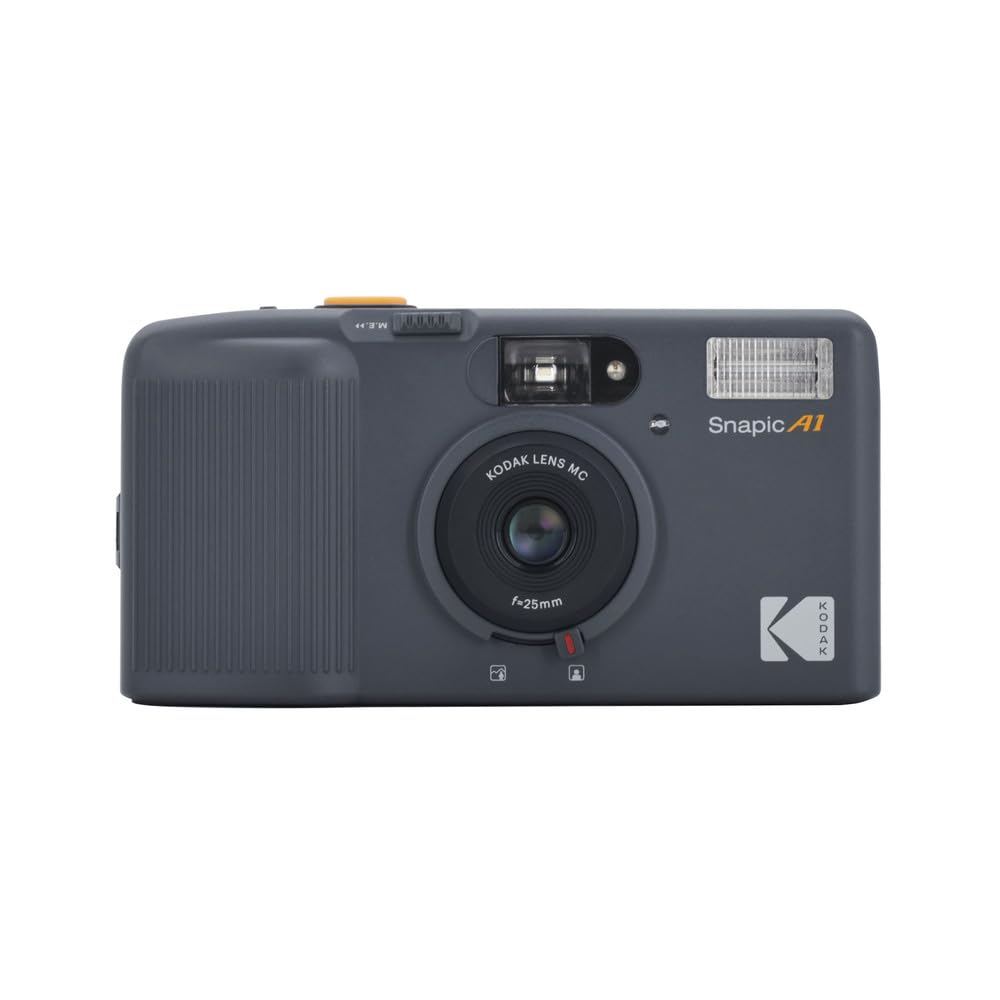
The Snapic A1 steps up from the focus-free half-frame option in this set with a 3-element glass lens and a 2-zone focus. Daylight shots come back with noticeably more detail, and you can switch between near and far focus instead of relying on one fixed zone. Multiple-exposure mode adds creative options, and the body stays light enough for a jacket pocket. The multiple-exposure control is as simple as the rest of the camera, so creative experimentation doesn't require a manual dive.

This is for a beginner ready to move beyond disposable-style cameras who wants simple auto exposure and sharper daylight frames from a pocketable body. The auto-only system keeps controls minimal, but exposure is fully automatic, and occasional film-load or power issues have been noted, so a test roll before a long trip is wise. Manual-control purists and anyone who depends on consistent indoor flash metering will find the limitations here more significant.

๐Ÿ’ก Set the focus zone to match your subject distance before shooting; the glass lens rewards the extra second.

Pros

  • 3-element glass lens produces noticeably sharper daylight photos than the plastic-lens compacts.
  • Light body slips into a jacket pocket and stays comfortable for everyday carry.
  • Simple point-and-shoot operation suits beginners moving up from disposable-style cameras.

Cons

  • Plastic body feels light and can flex under pressure; it suits pocket carry more than rugged travel.
  • Mid-range pricing sits above entry-level compacts; budget buyers may not need the lens upgrade.
Our verdict

Choose the Snapic A1 when the focus-free top pick feels too limited and you want a real lens upgrade without going vintage.

Check Latest Price
3

Best Budget Panorama

RETO PANO

77 /100
Studio Score Established

Key details

Lens
22mm ultra-wide
Flash
Built-in
Frame Format
35mm panorama
Check Price on Amazon

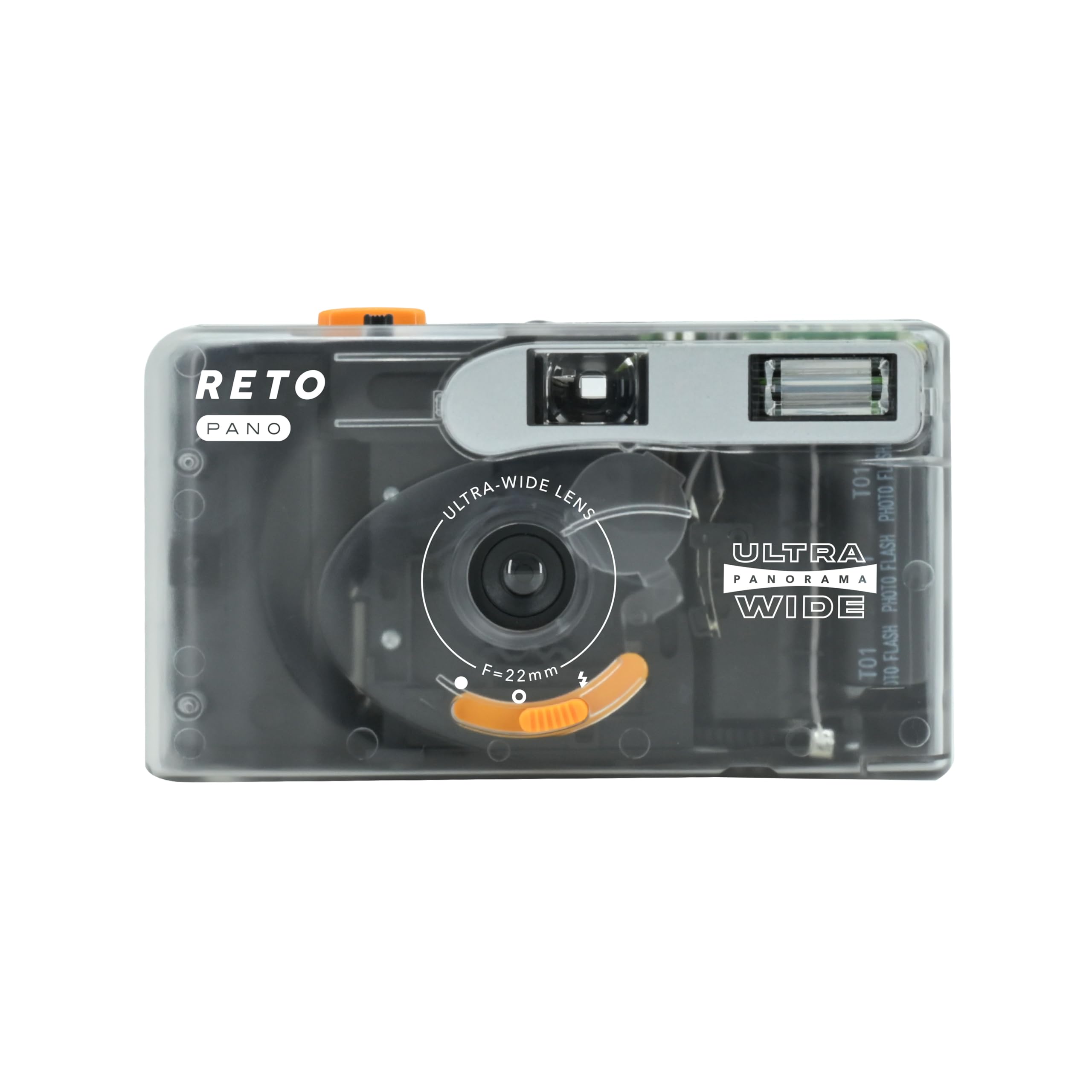
The RETO PANO stands out in this set for its 22mm ultra-wide fixed lens and one-touch panorama switch. It frames broad landscapes and tight street corners in a way the half-frame options here cannot match, and the basic controls keep the photographic process direct. That makes it a less intimidating way to learn composition than the slightly more complex alternatives here. The lightweight plastic shell makes it easy to toss into a daypack for casual trips.

Budget travelers and wide-angle experimenters will find plenty of value here, especially if they want to test whether panorama composition fits how they shoot. Accept the limits: film transport and shutter QC can cause blank frames, and the built-in flash can wash out indoor shots. For daylight and close-range subjects this is a low-stakes beater; for indoor party coverage, it is the wrong tool.

๐Ÿ’ก Keep indoor subjects within a few feet of the flash and brace the camera on something solid.

Pros

  • 22mm ultra-wide lens and panorama switch deliver a distinctly wider frame than the other fixed-lens compacts here.
  • Low-pressure entry point for film beginners who want to experiment without a heavy camera.
  • Budget-friendly way to test wide-angle composition before spending on a bigger system.

Cons

  • Plastic shell reads more like a disposable camera than a precision tool.
  • Fixed 1/60s shutter keeps the camera in daylight territory; indoor or action shots need deliberate technique.
Our verdict

Budget travelers who want the widest 35mm frame at the lowest cost can treat this as a landscape experiment, not a daily carry.

Check Latest Price
4

Best Budget Half-Frame Starter

1 Shot Half Frame

81 /100
Studio Score Strong Evidence

Key details

Lens
50mm f/5.6 fixed
Flash
Built-in
Frame Format
Half-frame 35mm
Check Price on Amazon

The 1 Shot Half Frame doubles the shot count of any 35mm roll and includes one roll of ISO 400 black-and-white film in the box, so the first roll is in hand before you load it. That makes it the lowest-commitment way to test half-frame shooting without a separate film purchase. The 50mm f/5.6 lens keeps operation simple, and a built-in flash is part of the package.

Budget beginners and travelers who want a disposable-style camera without the single-use waste are the natural buyers. The fixed-focus lens and 1/120s shutter are best in bright daylight, and indoor shots rely on the built-in flash and close subject range โ€” a boundary casual daytime shooters can live with. The included 18-exposure roll is a small sample, but 36 half-frame frames are enough to learn the basics before investing in more film. This is a set-and-shoot body, not a manual-control tool.

Pros

  • Includes one roll of ISO 400 black-and-white film in the box
  • Half-frame format doubles the number of shots from any 35mm roll
  • No separate accessories are required before the first roll

Cons

  • Half-frame negatives are smaller than full-frame, so large prints and heavy crops may show grain
  • Flash recycle takes 10โ€“15 seconds, which can slow consecutive indoor shots
Our verdict

For the budget buyer deciding whether half-frame is worth pursuing, this kit makes the first roll effortless.

Check Latest Price

How to Choose

Film Transport

A budget camera can have a decent lens and flash, but if the film advance skips or the rewind jams, every frame on the roll is at risk. The mechanism that pulls film across the gate and winds it back into the cartridge is what actually protects your shots.

Look for a camera with a smooth manual advance lever and positive click stops. If a body feels loose at the advance, or reviewers consistently mention blank frames, that model can waste an entire outing regardless of how good the specs look.

Lens Construction

The lens is the difference between a snapshot and a photo you want to print. Single-element plastic lenses produce soft, dreamy images with visible fringing in daylight; multi-element glass lenses hold more contrast and resolve finer detail.

Fixed-focus lenses are the most forgiving for beginners because there is nothing to adjust, but they are happiest in strong light and at specific distances. Two-zone focus systems add a small learning curve while giving you sharper results at close range and at infinity.

Frame Format

Half-frame cameras expose a vertical 18x24mm frame instead of the full 24x36mm negative, which means you get 72 shots from a 36-exposure roll. That is a real cost per shot advantage, but the smaller negative has less detail and more visible grain when enlarged.

Full-frame compacts deliver the classic 35mm look with better tonality and easier scanning, but they go through film twice as fast. Buyers who assume every 35mm camera shoots full-frame negatives are often surprised by the difference.

Built-in Flash

Budget flashes are simple: they fire at full power and rely on subject distance to avoid blown-out faces. That is why indoor shots look washed out when the subject is too close, or dark when the subject is too far.

A flash with a red-eye reduction or a two-position control gives you a bit more predictability. Treat the flash as a 1.5-to-3-meter tool, not an indoor lighting solution for an entire room.

Creative Modes

Multiple exposure and bulb mode turn a basic point-and-shoot into a tool for intentional experimentation. These modes decode a single extra button or switch, so they do not complicate the shooting experience.

Panorama switches typically crop the frame rather than expand the field of view, so compare the stated lens width. A true 22mm wide lens gives you a genuinely wider scene; a panorama mask alone simply crops away the top and bottom of a standard frame.

Frequently Asked Questions