9 Best Drone for Real Estate Photography in 2026: Gimbal-Stable 4K

Find a drone for real estate photography that balances true 4K, stable footage, and flight time for complete property shoots.

A 4K badge no longer tells you whether a drone can handle real estate work. Many sub-$500 listings deliver the resolution on paper but rely on electronic stabilization or a fixed camera angle, which shows up as wobble in slow flythroughs. The practical distinction is the gimbal: a mechanical 3-axis gimbal keeps the horizon level and the footage smooth in ways software cannot fully fix.

The other hidden decision is battery math. A single pack rarely covers a full shoot, and advertised flight times assume no wind, no quick repositioning, and no hovering. Kits with three batteries and real-world endurance around 20-25 minutes per pack are the practical floor for listing work.

Newer models often bring better sensors and obstacle sensing, but they may have fewer long-term owner reports than the mature alternatives they replace. That does not make them risky; it just means the buying decision should weigh image quality against field-proven reliability.

1

Best Overall

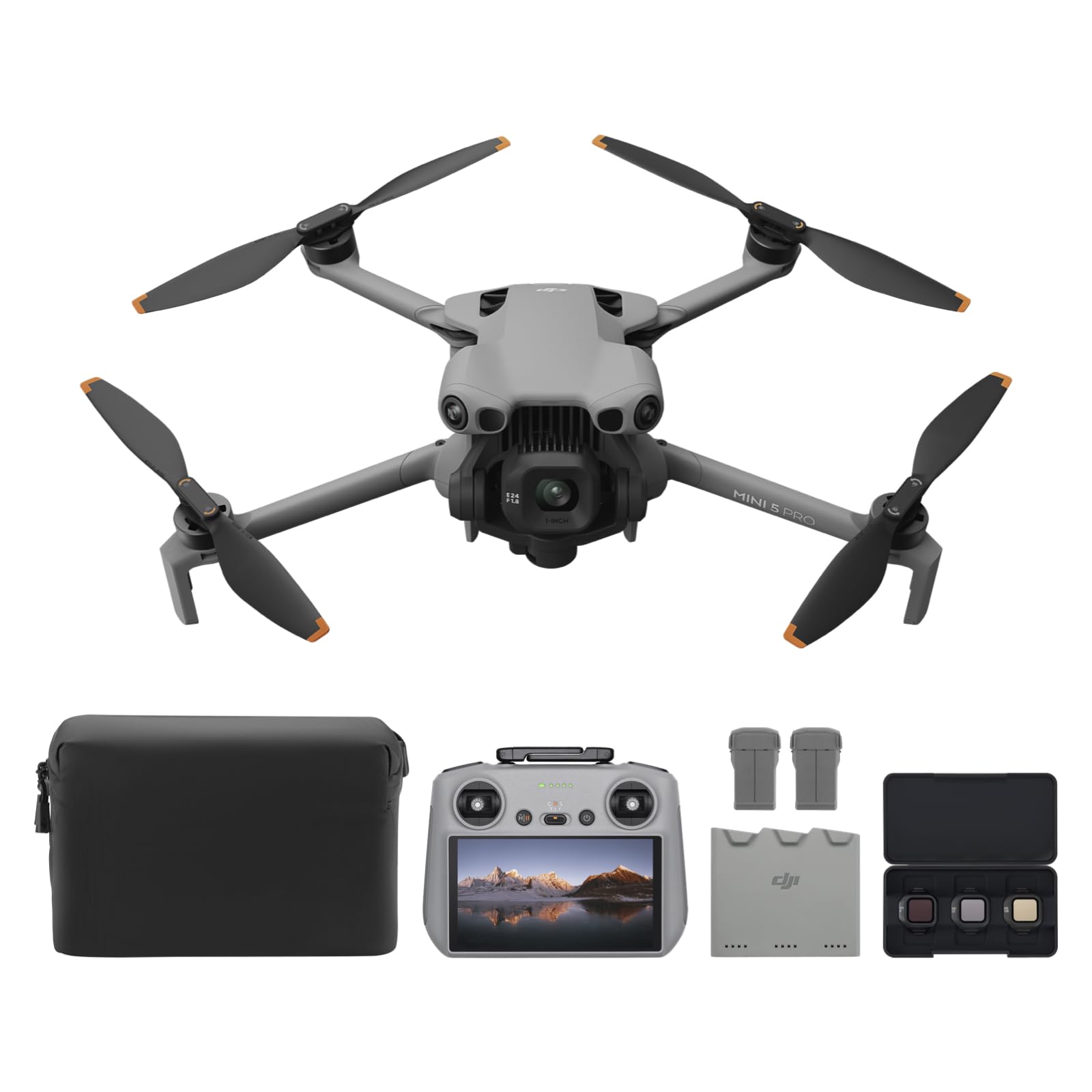
DJI Mini 5 Pro

88 /100
Studio Score Strong Evidence

Key details

GPS/RTH
GPS, RTH
Flight Kit
3 batteries, 36 min each
Weight Class
Under 249 g
Stabilization
3-axis gimbal
Check Price on Amazon

The DJI Mini 5 Pro Fly More is a ready-to-fly bundle that puts a 1-inch CMOS sensor and 4K/60 HDR video into a sub-250g airframe, and the footage preserves line detail and texture in the interior flythroughs that dominate real-estate listings. The 50MP stills give exterior establishing shots enough resolution for wide crops, while the 3-axis gimbal and 225-degree flexible roll allow vertical passes through stairwells and tight hallways without tilting the whole aircraft. The bundle undercuts the previous Mini 4 Pro Fly More combo while adding the larger sensor, so the 1-inch upgrade does not feel like a luxury upsell.

The omnidirectional obstacle sensing matters more on a real job site than on a spec sheet: it lets a solo operator hold a closer line along eaves, porch rails, and fence lines while keeping eyes on the shot instead of the rotor tips. The three-battery Fly More kit and the DJI RC 2's built-in screen remove the usual pressure of a low phone battery and a low pack count; a full listing session can be covered without a charging break. The included ND filters keep daylight video at a controlled shutter speed, which is when gimbal smoothness and 4K resolution turn into a finished walkthrough.

This is the package for professional real-estate photographers and content creators who want 1-inch image quality in a portable setup and already plan a basic post-processing pass. The 1-inch sensor is a major upgrade for a Mini, but it is still not a large-format camera; demanding low-light interiors and high-dynamic-range exteriors require good piloting and some post-processing. The light airframe keeps the setup portable; paid work still carries Part 107 and Remote ID requirements below the 250g threshold.

Pros

  • 1-inch CMOS and 50MP stills give real-estate shots more dynamic range than other Mini-class cameras.
  • Fly More kit includes three batteries, ND filters, and an RC 2 screen; no extra purchase for a multi-listing day.
  • The 3-axis gimbal and 360 obstacle sensing make early flights controlled enough for solo agent work.
  • Rated flight time up to 36 minutes per battery and three packs in the bundle for longer on-site sessions.

Cons

  • Strict budget buyers may find a cheaper single-battery DJI drone more appropriate.
  • No telephoto zoom; compact airframe is less suited to distant detail or heavy wind than larger Mavic-class drones.
Our verdict

The real-estate brief is this drone's home turf: 1-inch image quality, three-battery endurance, and obstacle sensing in one portable kit.

Check Latest Price
2

Best Budget DJI

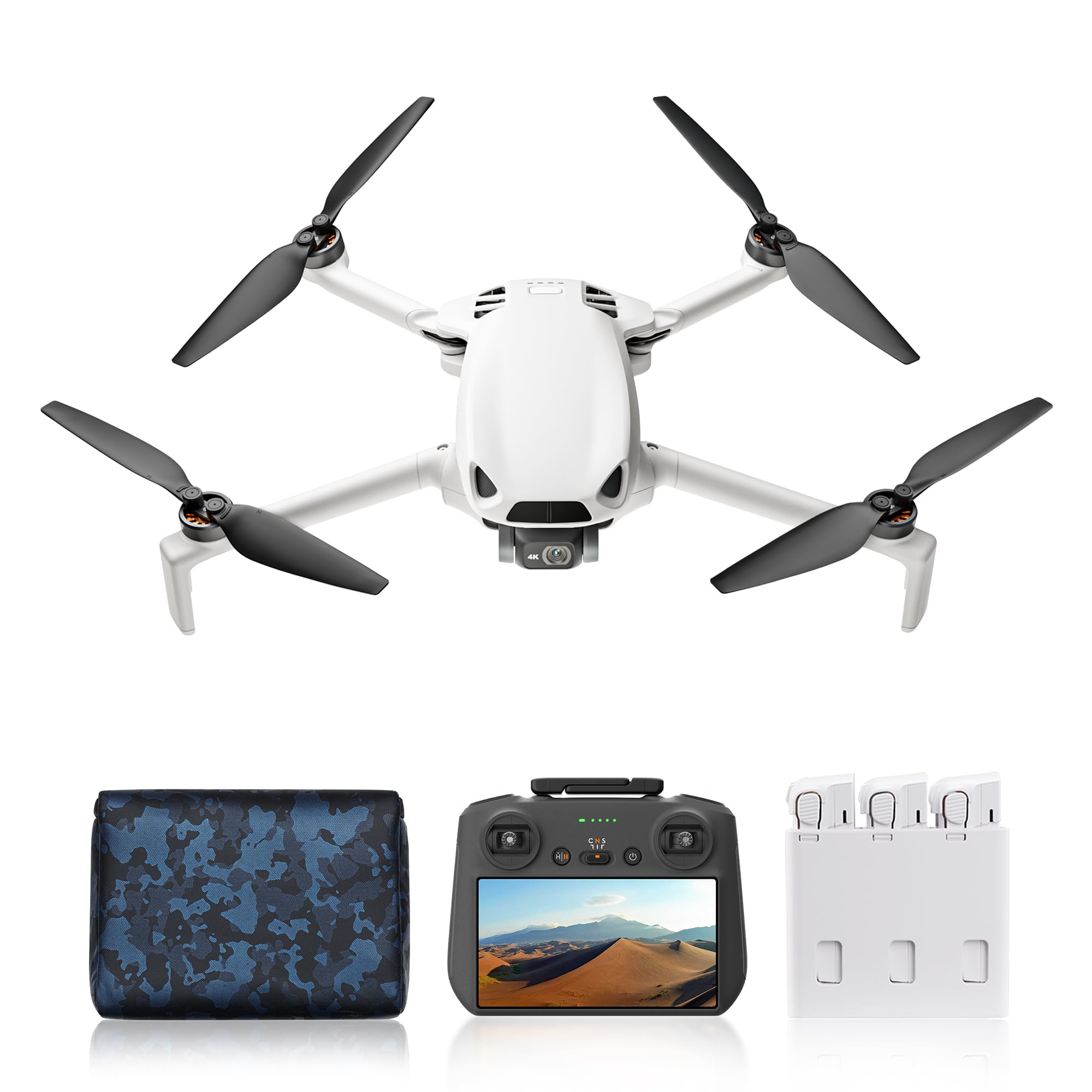
DJI Mini 4K

91 /100
Studio Score High Confidence

Key details

GPS/RTH
GPS, RTH
Flight Kit
1 battery, 31 min max
Weight Class
Under 249 g
Stabilization
3-axis gimbal
Check Price on Amazon

The Mini 4K delivers true 4K UHD on a 3-axis mechanical gimbal for less than any other current DJI model, and the sub-249g airframe slips into a camera bag. The 12MP stills and smooth flythrough footage cover the core needs of a listing shoot, and GPS return-to-home is present for basic safety. Video transmission reaches 10 km under ideal conditions, which is far more than a typical property flight needs; the practical limit is visual-line-of-sight flying, not the link.

Budget-first agents get a lightweight, easy-to-fly camera platform that raises listing quality without a steep learning curve; new pilots benefit from forgiving control response and stable gimbal footage. The single included battery makes spare packs a practical expense for multi-property days, and there is no obstacle sensing, so the pilot is the safety system near eaves, trees, and power lines.

Pros

  • Sharp 4K UHD video with a 3-axis mechanical gimbal at the lowest entry price in DJI's current Mini line.
  • Beginner-friendly flight behavior and return-to-home make the first listing flights less stressful.
  • Cost-effective gateway to DJI camera drones without sacrificing gimbal stabilization or GPS safety features.

Cons

  • In wind, per-pack flight time can fall from 31 minutes to roughly 20-25 minutes, which cuts into a full exterior shoot.
  • No 4K/60 capture for agents who want smooth slow-motion or high-frame-rate cuts in post.
Our verdict

Budget-first property flyers get a true 4K gimbal platform at an entry-level price, and the Mini 4K keeps the essential listing workflow affordable.

Check Latest Price
3

Best Value Two-Battery Kit

Ruko F11PRO 2

89 /100
Studio Score Strong Evidence

Key details

GPS/RTH
GPS, RTH
Flight Kit
2 batteries, 70 min total
Weight Class
Over 249 g
Stabilization
3-axis gimbal
Check Price on Amazon

The Ruko F11PRO 2 combines a 3-axis mechanical gimbal, GPS return-to-home, and a two-battery 4K/30 package at a budget-friendly price. The airframe feels sturdier than the price suggests, and beginner-friendly controls keep the learning curve short. For real-estate walkthroughs, the gimbal delivers smooth footage without the premium cost of the top pick.

This kit fits budget-conscious real-estate shooters and landowners scouting suburban or rural property, especially those who don't need the top pick's obstacle sensing or larger sensor. Per-battery endurance varies and may fall short of the 35-minute expectation, and the airframe sits above the sub-249g class, so registration rules apply in many countries.

Pros

  • Build quality feels sturdy for a budget-priced drone.
  • Beginner-friendly controls get new pilots airborne quickly.
  • Camera quality is well regarded for the price, with stable 4K/30 footage for listing clips.

Cons

  • No mechanical obstacle avoidance; pilots need to keep extra clearance around trees, rooflines, and porches.
  • Per-battery endurance can land closer to 20 minutes than the advertised 35 in mixed real-world flying.
Our verdict

The F11PRO 2 is the budget pick for real-estate shooters who want a stabilized camera and two-battery flight time without paying for obstacle sensing or a larger sensor.

Check Latest Price
4

Best Sub-250G Feature Pack

SKYROVER X1

86 /100
Studio Score Strong Evidence

Key details

GPS/RTH
GPS, RTH
Flight Kit
3 batteries, 96 min total
Weight Class
Under 249 g
Stabilization
3-axis gimbal
Check Price on Amazon

The SKYROVER X1 packs a Mini-Pro-style feature sheet into a sub-249g airframe: 4K/60 HDR, 48MP stills, a 3-axis gimbal, and 360° obstacle sensing at a mid-range price. That combination gives real-estate pilots a gimbal-stabilized camera and full-coverage safety net without the DJI price multiple.

For listing work, the smooth gimbal and predictable flight behavior handle yard flythroughs and roof checks without much stick correction. The three-battery combo extends total flight time across a multi-property day. This kit suits value-focused real-estate photographers who want the top pick's feature set for less; the support network is younger than DJI's and per-battery endurance can land near 20-25 minutes in real flying, so keep spare packs charged for full property shoots.

The camera holds its own in daylight, but the 1/1.32-inch sensor is a step behind a 1-inch imager when interiors run dim. Dusk exteriors and dark rooms will need manual exposure or light post-grading, which suits photographers who already edit listing galleries.

Pros

  • Handles smoothly in tight yard spaces and holds a stable line during flythroughs.
  • 4K/60 HDR and 48MP stills produce clean daylight footage that suits real-estate listings.
  • 360° obstacle sensing keeps the airframe clear of eaves, gutters, and tree lines.

Cons

  • The 1/1.32-inch sensor trails a 1-inch-class imager for dim interiors, so low-light scenes need extra grading.
Our verdict

For real-estate buyers who want three-battery range, full obstacle sensing, and gimbal-stabilized 4K without the top pick's premium, this is the pick.

Check Latest Price
5

Best for Wind & Rural Properties

Bwine F7GB2 Pro

85 /100
Studio Score Strong Evidence

Key details

GPS/RTH
GPS, RTH
Flight Kit
3 batteries, 75 min total
Weight Class
Over 249 g
Stabilization
3-axis gimbal
Check Price on Amazon

Level 6 wind resistance and a 3-axis gimbal make the F7GB2 Pro a stable platform for exposed acreage and ranch work, and the built-in FAA Remote ID removes one compliance step. The 550g airframe is heavier than the sub-250g minis in this comparison, so it won't slip into a jacket pocket, but that mass is what keeps the horizon steady when gusts hit during a property flythrough. The 4K UHD camera holds detail in rooflines and fence lines during a typical listing tour.

This drone fits a real-estate shooter whose listings sit on large lots, hillsides, or farmland where wind is the rule. Three batteries provide roughly 75 minutes of total flight time, enough to cover multiple structures in one session. Phone pairing and Remote ID activation are part of the launch sequence, so set them up before the first paid flight; this is not the pick for buyers who want a no-phone controller or a pocketable mini.

💡 At 550g, this falls above the sub-250g class, so check local registration rules before your first flight.

Pros

  • Wind stability keeps the horizon steady over open fields and hillsides, where lighter drones get pushed around.
  • 4K UHD footage for sale listings holds fine detail in rooflines, fence lines, and property boundaries.
  • The three-battery bundle adds substantial total airtime for multi-structure shoots and lowers the cost per flight minute.

Cons

  • Per-battery endurance is adequate rather than class-leading, so a long estate shoot will rotate through the included spares.
  • The app connection can be inconsistent during setup, which can stretch the time between unpacking and first takeoff.
Our verdict

If your listings are measured in acres rather than square feet, this is the wind-resistant, Remote-ID-compliant kit to bring.

Check Latest Price
6

Best Lightweight Budget Combo

Potensic ATOM SE

89 /100
Studio Score Strong Evidence

Key details

GPS/RTH
GPS, RTH
Flight Kit
3 batteries, 93 min total
Weight Class
Under 249 g
Stabilization
EIS only
Check Price on Amazon

The ATOM SE is a sub-250g three-battery kit with 4K EIS and GPS return-to-home, built for travel-friendly real-estate shoots. ShakeVanish electronic stabilization keeps slow exterior and interior passes presentable, and the bundled batteries remove the need to buy spare packs before a full listing day. The 4 km video downlink holds a live view when framing a property from across the street, and the sub-250g frame avoids registration weight in many regions.

Expect a slight crop from electronic stabilization; for slow listing passes and calm conditions, that tradeoff is acceptable. This is not a mechanical-gimbal platform, so buyers who fly a deliberate, measured style get the most from the ATOM SE. The 12MP Sony CMOS stills hold up for listing thumbnails and brochures, especially when the job is exterior walkthroughs and establishing shots rather than fast tracking moves.

Pros

  • Three batteries in the kit cover a full listing shoot without extra accessories.
  • 4K EIS camera and GPS return-to-home deliver usable listing footage at a budget price.
  • Beginner-friendly controls and a lightweight frame make it an easy first real-estate drone.

Cons

  • Electronic stabilization can wobble on fast panning moves; slow listing passes are the right use.
  • In some cases, control or software glitches can cause uncommanded movement.
Our verdict

The ATOM SE is the three-battery budget kit to grab when your property shoots are calm, slow, and under 249 grams.

Check Latest Price
7

Dusk Exterior Shooters

Ruko F11PRO 2 Plus

89 /100
Studio Score Strong Evidence

Key details

GPS/RTH
GPS, RTH
Flight Kit
2 batteries, 74 min total
Weight Class
Over 249 g
Stabilization
3-axis gimbal
Check Price on Amazon

The 48MP stills and larger 1/2-inch CMOS give dusk exterior shots more latitude than the base F11PRO 2, making this a focused real estate choice for evening curb-appeal work. It stays ready to fly with GPS return-to-home, a 3-axis gimbal, and 4K/30 video, but the higher price steps outside the budget-value slot. The seller's support quality matters as much as the camera spec here. That keeps it niche: low-light stills over all-around consistency.

Pros

  • Dusk exterior stills carry more shadow latitude than the base F11PRO 2, thanks to the 48MP sensor and 1/2-inch CMOS.
  • Introductory controls are approachable enough for a first-time pilot to produce usable property footage quickly.

Cons

  • On a long shoot, charging consistency can vary between units, so a spare pack may not be ready when you need it.
  • Gimbal and camera output can vary between units.
Our verdict

For dusk-heavy real estate work, this is the right trade: 48MP stills with more low-light latitude in exchange for a narrower use case. If your shooting schedule is daytime-only, the base F11PRO 2 covers the same ground for less.

Check Latest Price
8

Screen-Controller Pilots

Skyrover S1 Mini

84 /100
Studio Score Strong Evidence

Key details

GPS/RTH
GPS, RTH
Flight Kit
3 batteries, 120 min total
Weight Class
Under 249 g
Stabilization
3-axis gimbal
Check Price on Amazon

The Skyrover S1 Mini Combo removes the phone from the field workflow with a 5.5-inch 700-nit touchscreen controller, and its three-battery kit supplies enough total flight time for multi-stop property shoots. The 3-axis gimbal, 4K/60 camera, and GPS return-to-home deliver smooth flythroughs, and the controller undercuts similar DJI packages. Obstacle sensing is forward-only, so side, rear, and top protection is absent and tight indoor or tree-lined maneuvers demand pilot judgment. Per-battery endurance can be closer to 35 minutes than 40, though the included spares offset that.

Pros

  • Performs like a DJI Mini 3 for notably less money.
  • Built-in 5.5-inch touchscreen keeps total kit price under comparable DJI controller bundles.

Cons

  • Endurance can land closer to 35 minutes than 40, so the included third battery becomes the buffer for longer shoots.
  • Only forward-facing obstacle sensors are fitted; lateral and reverse moves remain a manual pilot responsibility.
Our verdict

For open-lot property shoots and predictable flight paths, the screen-controller convenience and three-battery kit make this a worthy mid-range option.

Check Latest Price
9

Budget Gimbal Beginners

Gleesfun G11PRO

85 /100
Studio Score Strong Evidence

Key details

GPS/RTH
GPS, RTH
Flight Kit
2 batteries, 70 min total
Weight Class
—
Stabilization
3-axis gimbal
Check Price on Amazon

Budget-minded real estate shooters get a rare combination here: a 3-axis brushless gimbal, true 4K/30 video, two batteries, and built-in FAA Remote ID in one kit. The camera and airframe behave well for listing flythroughs, but occasional connection errors can interrupt preflight checks. Updating the app before shoots reduces that friction. This limits its standing next to the established value picks, yet the mechanical gimbal makes it an under-the-radar choice for property work.

Pros

  • High-quality build and clean video output make it a credible tool for property flythroughs.
  • Camera produces detailed 4K/30 images that hold up for listing stills and video.

Cons

  • Phone-dependent flight app leaves no built-in-screen controller option for pilots who prefer that workflow.
Our verdict

For a budget real estate shooter who can accept phone-app setup, the G11PRO delivers a true gimbal and two-battery kit at a price the bigger names rarely match.

Check Latest Price

How to Choose

Video Quality

A 4K badge on a listing can hide a sensor that records 2.7K and upscales the file. That loss of real resolution shows up on rooflines and window mullions, where fine detail looks soft. True 4K also gives you room to crop in post without the image falling apart.

For property work, the camera spec that matters is the actual recording resolution, not the marketing line. Compare the camera sensor and output settings rather than trusting the title.

Stabilization

A mechanical 3-axis gimbal physically holds the camera level while the airframe pitches and yaws. That is why straight walls and vertical lines stay straight during a slow flythrough.

Electronic image stabilization crops the sensor and tries to correct motion in software. It can smooth small shakes, but fast panning and wind can smear detail or bend lines. For listing work, a gimbal is worth more than a higher-number 4K badge.

Flight Kit

Advertised flight times come from ideal windless conditions with steady throttle. Real-estate flying uses hovering, climbing, and repeated repositioning, all of which drain the pack faster. A 30-minute battery often delivers 20-25 minutes in the field.

The practical unit of purchase is the battery kit. One pack is enough for a quick walkthrough, but a full exterior and interior shoot needs two or three packs in rotation.

GPS / RTH

GPS does two jobs: it holds the drone in position while you frame the shot, and it enables return-to-home if the signal drops or the battery crosses the low threshold. Without GPS, a camera drone drifts and becomes difficult to compose from.

Return-to-home needs a clear path and enough battery to reach the takeoff point. On a property shoot, that means launching away from tall trees, power lines, and roof overhangs.

Weight Class

The sub-250g class is a portability advantage, not a shortcut for commercial work. In the US, paid real estate photography falls under Part 107 even when the drone weighs under 249g.

Recreational registration rules change at 250g, but a business flight still requires a Remote Pilot Certificate, drone registration, and Remote ID compliance. Check local rules as well, especially when flying over neighboring properties.

Frequently Asked Questions