8 Best Camera for Hiking and Backpacking in 2026: Trail-Ready Picks

Which camera for hiking and backpacking fits the trail: waterproof compacts and action cams that balance weight, battery life, and real recording time.

Camera listings lead with waterproof depth and 4K specs, but the trail reveals different priorities: battery life on a cold ridge, how cleanly a camera clips to a pack strap, and whether the app actually connects when you need it.

No single camera covers every hike. Waterproof compacts suit stills-first hikers who want optical zoom and macro. Action cams favor video-first hikers who want smooth POV footage and pack-strap mounting. The real choice is between those two shooting styles, not between spec sheets.

Match the camera to how you want to remember the trip — video clips of the trail ahead or stills of the details beside it. The battery, lens, and body that fit that goal are the ones worth packing.

1

Best Overall

DJI Osmo Action 4

92 /100
Studio Score High Confidence

Key details

Image & Video
4K/120, RockSteady
Weight & Size
Zoom & Stills
Fixed wide-angle lens
Waterproof Rating
18m
Check Price on Amazon

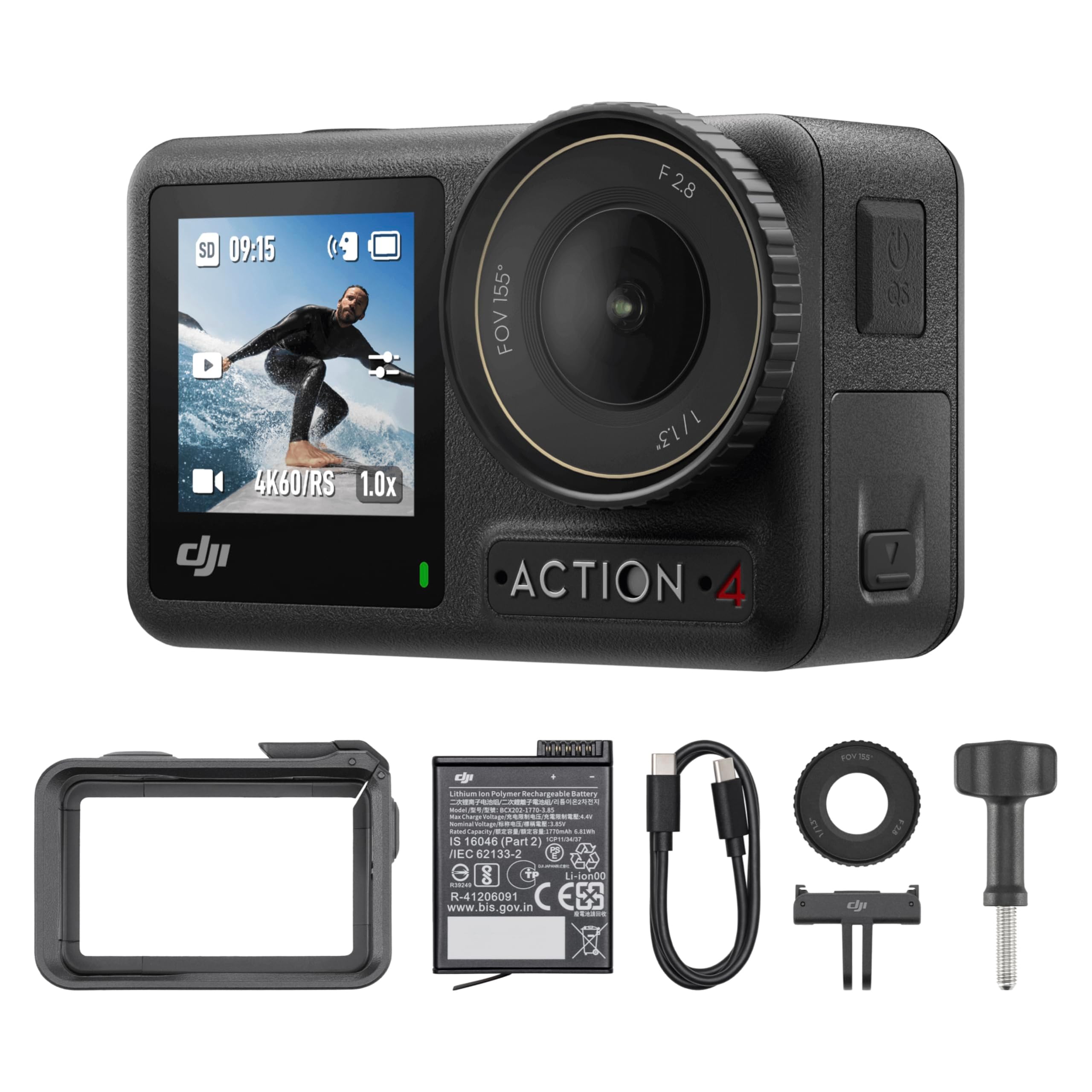
The DJI Osmo Action 4 records 4K/120 footage with RockSteady stabilization and carries an 18-meter waterproof rating without a housing. On rocky descents the frame stays smooth, and wet stream crossings or rain showers don't force you to fish a case out of your pack. That combination makes it the natural video-first answer in the hiking-camera set.

The touchscreen handles clip review and quick setting changes on-trail, and the clip-on mounts seat firmly on helmet, chest-strap, and pack-strap locations. Day-to-day playback and adjustment don't require pulling out a phone, which matters on wet or dusty sections. The body's compact footprint also means it can stay mounted when you stop, so you aren't fumbling with a case at the next overlook. For hikers who shoot short clips rather than continuous recording, this is a low-friction camera to live on a pack strap.

This is the pick for video-first hikers, backpackers, trail runners, cyclists, and kayakers who want smooth POV footage without a gimbal. Vloggers get the same body for walking-and-talking shots, though still-photo purists should look elsewhere: no optical zoom, no macro, and a rugged compact remains the better route if your pack is for images rather than motion. First-time setup can require activation through the DJI Mimo app, so confirm that app is available on your phone's store before buying.

At a mid-range price, the Action 4 undercuts flagship action cams while keeping the core settings trail shooters actually use. The cost-per-feature balance is clear when the same money buys a less stabilized budget body or a pricier rugged compact with weaker video. That leaves room in a gear budget for the mounts that turn a trail camera into a usable POV rig, along with the storage and accessories a weekend pack can absorb.

The genuine fork in this category is video-first versus stills-first. A rugged waterproof compact provides macro, optical zoom, and better still-photo controls, but it costs more and cannot match the Action 4's stabilization on moving trail footage. If your output is clips from the trail, the Action 4's combination of price, waterproofing, and stabilized 4K is the strongest balance here.

💡 Install DJI Mimo at home before your first hike so activation is finished before you reach the trail.

Pros

  • RockSteady and HorizonBalancing hold the frame steady on uneven trail footage.
  • 4K/120 capture and stills hold up in mixed outdoor light.
  • Mid-range price keeps it below premium action cams without cutting core trail features.
  • 18m waterproofing works without an extra housing for stream and rain exposure.
  • Compact body and clip-on mounts make POV setup quick on a pack or helmet.

Cons

  • First-time setup can require activation through the DJI Mimo app, which is a hurdle if your phone's store lacks it.
  • Continuous 4K in cold air can shorten the claimed ~150-minute battery life, so long days call for spares.
Our verdict

The Osmo Action 4 is the reference hiking action camera for video-first trail use: stabilized 4K, 18m waterproofing, and mid-range pricing in a package that fits a pack strap.

Check Latest Price
2

Best Rugged Compact for Still Photos

OM System TG-7

82 /100
Studio Score Strong Evidence

Key details

Image & Video
4K
Weight & Size
Zoom & Stills
Variable macro
Waterproof Rating
15m
Check Price on Amazon

The OM System TG-7 pairs 15m waterproofing with a shockproof body and a freezeproof rating down to -10°C, all in a compact that reads as a camera rather than an action-cam brick. Underwater modes and physical controls hold up in wet, dirty, and cold conditions, covering the splashes, stream crossings, and rain that show up on a hiking route.

The TG-7 keeps producing stills after repeated splashes, drops on rock, and damp pack time, so it can follow hikers into conditions where a typical compact would need a protective housing. This is the practical side of the rugged compact category: it stays ready through the abuse of a long day outdoors.

Premium-priced and with a menu system that takes time to learn, this is for hikers, snorkelers, and families who want sealed stills and close-up range rather than video-first flexibility. Casual fair-weather walkers will be overspending, and the action-cam top pick is the better match for creators who want smooth 4K instead of underwater stills and macro.

💡 Pre-set the underwater and macro modes before the first trail day to make field operation quicker.

Pros

  • Sealed body handles rain, streams, and full submersion without a housing.
  • Underwater modes and shooting controls respond well in wet conditions.
  • Variable macro captures small outdoor detail that action cams miss.

Cons

  • Menu layout can slow a first outing until controls are familiar.
  • Low-light performance is limited by the small sensor, so dusk hikes are not its strength.
Our verdict

The TG-7 fits hikers who want a sealed stills camera with underwater modes and macro; the action-cam top pick remains the stronger choice when smooth 4K video is the main goal.

Check Latest Price
3

Best Budget Action Camera

AKASO EK7000

89 /100
Studio Score Strong Evidence

Key details

Image & Video
4K30, EIS
Weight & Size
Zoom & Stills
Fixed wide-angle lens
Waterproof Rating
40m with case
Check Price on Amazon

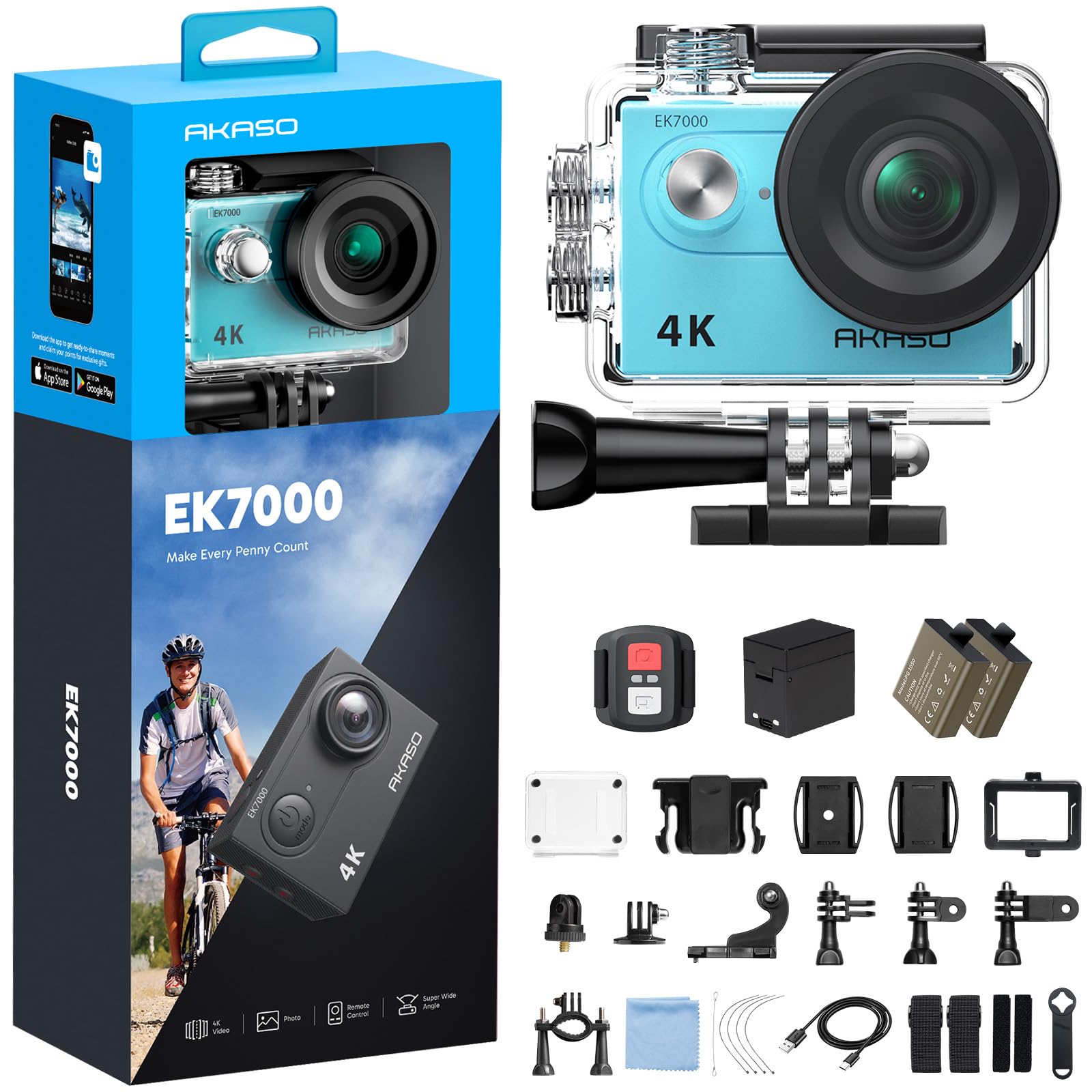
The AKASO EK7000 anchors the budget tier with 4K30 video, electronic stabilization, and a waterproof case in the box. The included mount kit covers helmet, chest, and handlebar positions, and the wrist remote lets a solo hiker start and stop recording without touching the camera.

Daylight footage is clear and punchy, with 4K clips that hold up for phone and social sharing and 20MP stills that suit casual trail documentation. The dual charger and second battery come in the kit, so a weekend outing does not require extra purchases.

This is for budget-conscious hikers, bikers, and snorkelers who want an easily replaceable POV camera rather than a stills-first trail tool. It lives comfortably in daylight; deep shade and dusk are not its strengths. Battery life is modest when you record long 4K stretches, so full-day hiking plans should include the spare battery.

💡 Keep both included batteries charged before a trail day and swap between long 4K segments.

Pros

  • Daylight 4K video and 20MP stills give casual hikers a solid image-quality return at a budget price.
  • The included mount kit, wrist remote, and dual charger cover helmet, chest, and handlebar setups.
  • The waterproof case rated to 40m handles snorkeling and rain-swept trails.
  • Entry-level pricing makes trail damage or loss easier to absorb.

Cons

  • In dim forest light or at dusk, footage can look noticeably softer than daytime clips.
  • Electronic stabilization can show jitter on fast downhill descents.
  • Continuous 4K recording can drain a battery quickly, so full-day hikes need the spare.
Our verdict

The EK7000 is the budget action camera for casual POV clips from the trail and the shallows. Long 4K days mean swapping batteries, but the included kit makes that trade-off easy to manage.

Check Latest Price
4

Best Tiny Hands-Free POV

Insta360 GO 3S

86 /100
Studio Score Strong Evidence

Key details

Image & Video
4K, FlowState
Weight & Size
39g
Zoom & Stills
Fixed wide-angle lens
Waterproof Rating
10m IPX8
Check Price on Amazon

The GO 3S is a 39-gram 4K wearable with FlowState stabilization, and magnetic mounts let you attach it to a hat brim, pack strap, or dog collar in seconds. Pendant and clip mounts keep it secure on moving subjects like dogs or trail runners. The 4K and 1080p modes deliver smooth footage at a weight that disappears on a pack strap or under a beanie. It is the slimmer alternative to the top pick's action-cam body.

The body is waterproof to 10 meters, covering rain, creek crossings, and splash-heavy pet footage without a housing. Mounting points are flexible enough that a hat or pack strap replaces a chest rig for typical hands-free shots, and repositioning takes seconds when the trail view changes.

The Action Pod is necessary for longer sessions, so this is a short-clip companion for ultralight hikers, pet owners, and content creators rather than a continuous all-day trail recorder. Hikers who want one unbroken recording from trailhead to summit should plan around the top pick's larger body. For ounce-counters, the 39-gram camera plus a small pod is a practical trade for hands-free 4K.

Pros

  • 39-gram body clips onto hats, collars, and straps without adding noticeable pack weight.
  • Magnetic pendant and clip mounts allow quick hands-free placement on trail gear.
  • FlowState keeps 4K and 1080p footage smooth, so clips hold up without a gimbal.

Cons

  • Standalone run time is around 10–15 minutes, so short clips are the natural unit of capture.
  • Heat can interrupt continuous recording after about 15 minutes, which matters for long unbroken takes.
Our verdict

For hikers who collect short POV moments instead of one continuous trail log, the GO 3S is an easy 39-gram carry with smooth 4K.

Check Latest Price
5

Best Budget Waterproof Compact

Kodak WPZ2

83 /100
Studio Score Strong Evidence

Key details

Image & Video
1080p
Weight & Size
6.2 oz
Zoom & Stills
4x optical zoom
Waterproof Rating
15m
Check Price on Amazon

The WPZ2 pairs a 16MP BSI CMOS sensor and 4x optical zoom with a body that is waterproof to 15m, shockproof to 2m, and dustproof without a housing. That gives it a reach advantage over fixed-lens action cams and a simpler carry than a compact wrapped in a separate underwater case. Unlike the slimmer everyday compact in this lineup, it does not need to hide from drizzle or dusty trail air; the sealed build is the point.

At 6.2 oz, it rides a wrist strap comfortably, and the sealed body removes the stop-and-zip routine when rain starts. The 15m rating covers snorkeling and beach spray, while 2m drop resistance handles a fumbled grip on loose rock. This is a camera to keep in hand, not sealed inside a bag until the weather clears.

This camera is for hikers who want a simple stills camera they can use in rain, sand, or shallow water. Video tops out at 1080p, so vloggers or anyone expecting 4K should look at the action-cam pick in this lineup instead. For daylight trail stills, that boundary is easy to live with; if you never export video, it disappears from daily use.

Pros

  • Waterproof to 15m without a housing, so rain, beach spray, and snorkeling are covered.
  • Shockproof to 2m, which takes the edge off drops on rock or trail debris.
  • 4x optical zoom reaches trail details that fixed-lens action cameras can't match.
  • 6.2 oz body is light enough for a wrist strap on full-day hikes.

Cons

  • Autofocus can hunt in deep shade or with fast-moving subjects.
  • The small fixed 2.7-inch screen limits image review and video framing in bright outdoor light.
Our verdict

The WPZ2 is a stills-first rugged compact for hikers who want sealed durability and optical zoom without an action-cam body or mount setup.

Check Latest Price
6

Macro Underwater Shooters

Ricoh WG-80

82 /100
Studio Score Strong Evidence

Key details

Image & Video
1080p
Weight & Size
15.2 oz
Zoom & Stills
5x optical zoom
Waterproof Rating
14m
Check Price on Amazon

The WG-80's six LED macro lights set it apart from other sealed compacts: close-up shots of moss, insects, or tide-pool life get even illumination without a separate flash. That array pairs with 14m waterproofing and a 5x optical zoom for practical stills work on wet trails and shallow snorkels.

Video resolution tops out at 1080p and file transfer is USB-only, so hikers expecting 4K clips or quick phone sharing should look at the all-around rugged compact in this lineup. Those limits are acceptable when the LED macro array is the reason to carry a camera.

Pros

  • Six LED lights illuminate close-up subjects evenly without a separate flash.
  • 14m waterproof rating covers rain, stream crossings, and snorkeling in a sealed body.
  • 5x optical zoom reaches from trail scenes to small details without swapping lenses.

Cons

  • The premium asking price is hard to justify for hikers who don't need the macro-light array.
  • The 15.2 oz body adds carry weight, noticeable on long climbs.
Our verdict

For hikers who want close-up stills in a sealed body, the WG-80's macro lighting gives it a specific niche. It is a specialist tool, not a general trail camera.

Check Latest Price
7

Budget Wearable Clips

Intepoll TO 3S

81 /100
Studio Score Strong Evidence

Key details

Image & Video
4K
Weight & Size
1.27 oz
Zoom & Stills
Fixed wide-angle lens
Waterproof Rating
IPX7 with case
Check Price on Amazon

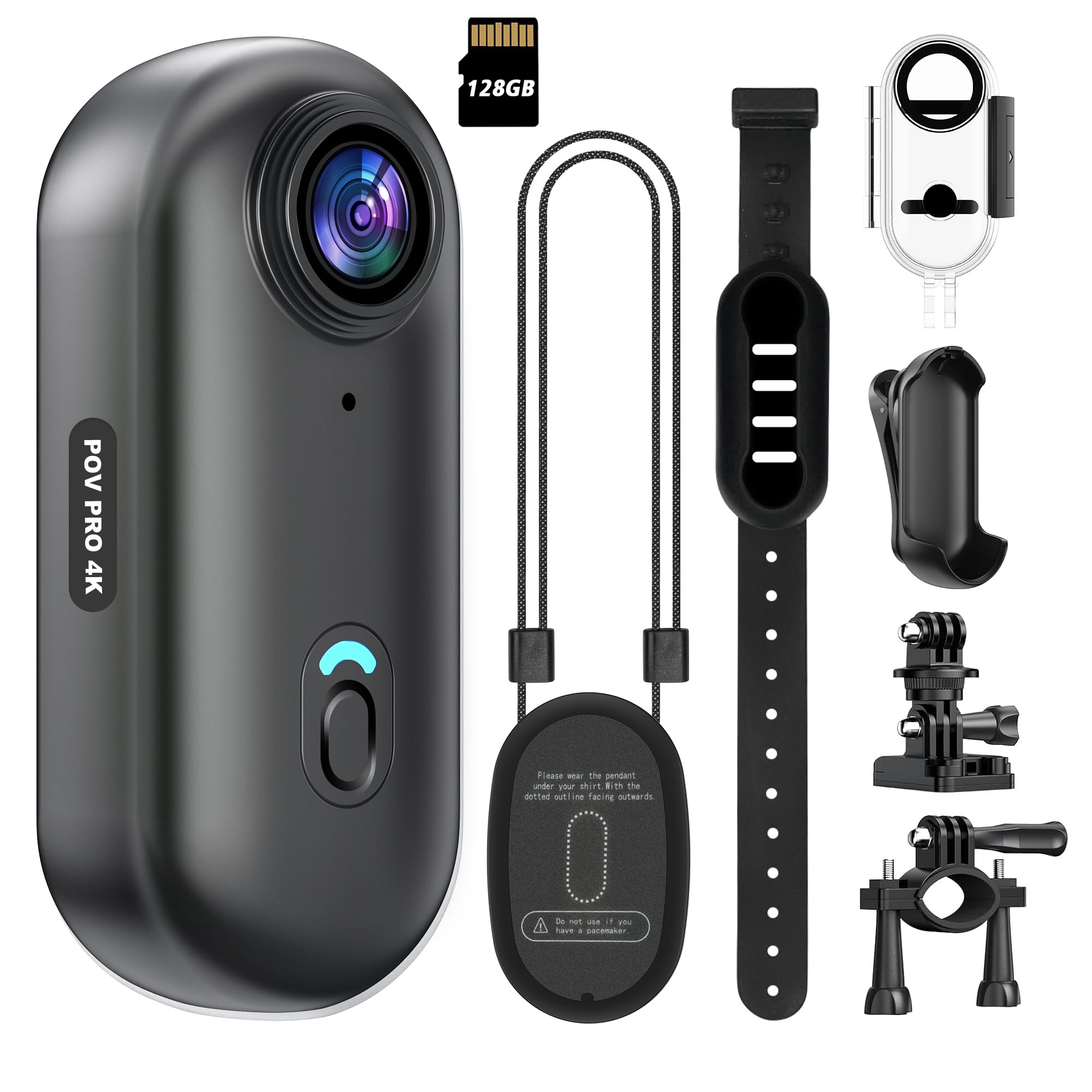
A 1.27-ounce body and included 128GB card make this an easy, low-cost entry to hands-free clips; the 4K label should be taken with caution, but footage is surprisingly detailed for the price. With the included case it is IPX7 waterproof, so rain and splashes are not a concern. Its small size and simple controls keep the learning curve low. That combination makes it a starter wearable for kids and short campsite clips, not a primary hiking camera for full-day trails.

Pros

  • Entry-level pricing plus a 128GB card in the box keeps first-time setup cheap.
  • Compact 1.27-ounce body makes hands-free POV clips easy for kids and first-time users.
  • Budget 4K footage holds up better than expected at this price level.

Cons

  • WiFi/app pairing can drop while previewing or transferring, making phone control a patience test.
  • Continuous 4K recording can fall to around 20 minutes per charge, which is short for full-day hikes.
Our verdict

For kids, first-time users, or quick hands-free clips near the trailhead, this is a low-cost way to try 4K. Longer trips belong to cameras with fewer compromises.

Check Latest Price
8

Fair-Weather Hikes

Kodak FZ55

89 /100
Studio Score Strong Evidence

Key details

Image & Video
1080p
Weight & Size
3.7 oz
Zoom & Stills
5x optical zoom
Waterproof Rating
No rating
Check Price on Amazon

The Kodak FZ55 is an everyday lightweight compact that favors approachable controls and a budget-friendly price. On a fair-weather daypack trip, the 5x zoom and 1080p video are enough for casual trail snapshots, and the menus won't get in the way. The 2.7-inch screen is small but workable for framing, and the 3.7-ounce body disappears in a hip pocket. Daytime snapshots look pleasing, and the built-in flash helps in dimmer spots. Without weather sealing, rain or blown dust is a real boundary, so it falls outside the rugged, multi-day hiking intent of this category.

Pros

  • Menu layout is approachable enough for a first-time owner to start shooting quickly.
  • Daytime and flash shots hold up well for a pocket-sized camera at this price.
  • For a budget casual compact, the everyday image quality is satisfying.

Cons

  • Battery charging can be inconsistent, so the camera may not be fully charged when you reach for it.
  • A camera may not power on after a few months, so verify the unit soon after purchase.
Our verdict

For budget-conscious hikers who keep their camera in a protected pocket for quick snapshots, it works.

Check Latest Price

How to Choose

Waterproof and Shock Ratings

A depth rating tells you how far the sealed body can go, but not how the seals age. Sand, salt, and repeated impacts work into gaskets and port covers. A camera that is waterproof at purchase can flood after a season unless those seals are rinsed and checked. For hikers, 10–15m waterproofing is enough; the limiting factor is seal care, not depth.

Real-World Battery Life

Marketing battery claims assume Wi-Fi off, dimmed display, and short bursts. Continuous 4K or cold weather can cut that drastically. Carry one spare battery or a small power bank, and learn the camera's real recording time before a long trip. Choose based on your longest day, not the marketing number.

Stabilization and Video Quality

Stabilization matters most when you shoot while walking; rocky-trail footage looks shaky without it. Action cameras use electronic stabilization that crops the sensor, which narrows the view. Rugged compacts often lack serious stabilization, so handheld video is best kept short. Check whether stabilization works at your chosen resolution and frame rate.

Weight and Mounting

Every ounce counts on a multi-day hike, but the lightest camera is not always the easiest to use. A tiny wearable clips to a hat or strap and stays out of the way, while a heavier rugged compact sits better in the hand for deliberate stills. Match weight to carry style: clipped on a strap for quick POV shots, or in a hip belt pocket for photo stops.

Zoom and Still Flexibility

Action cameras fix a wide-angle lens, so distant peaks stay small in the frame. Rugged compacts with optical zoom pull those details closer, but their small sensors and fixed lenses limit low-light performance. Decide whether your trail photos are landscapes and close-ups or whether you need reach. For macro shots of plants and tide pools, a compact with a dedicated macro mode is the better tool.

Frequently Asked Questions