9 Best Vlogging Camera of 2026: Steady, Self-Framing Picks

The best vlogging camera picks that make self-framing easy and footage steady — from budget flip-screen starter kits to pocket gimbal compacts.

Most vlogging camera listings lead with the same 4K and megapixel numbers, but those specs alone do not tell you whether the footage will stay steady while you walk or whether your face stays centered. The cameras that earn their keep make self-framing easy and hold the shot when the person behind the lens is also the talent.

How much camera you need depends on where your videos live. Travel and street vlogs demand gimbal or mechanical stabilization; desk and casual vlogs can get away with a flip screen and good-enough digital smoothing. Audio access is the hidden split: a mic jack or wireless pairing matters as soon as you care about clear voice.

Look at the limitation that will annoy you first. Long shoots need spare batteries or fast charging, and talking-head vlogs need a microphone connection. Match the spend to that friction, not to the biggest number on the box.

1

Best Overall

DJI Osmo Pocket 3

91 /100
Studio Score High Confidence

Key details

Battery
Mic Support
DJI Mic 2 pairing
Stabilization
3-axis gimbal
Video Quality
4K/120fps
Check Price on Amazon

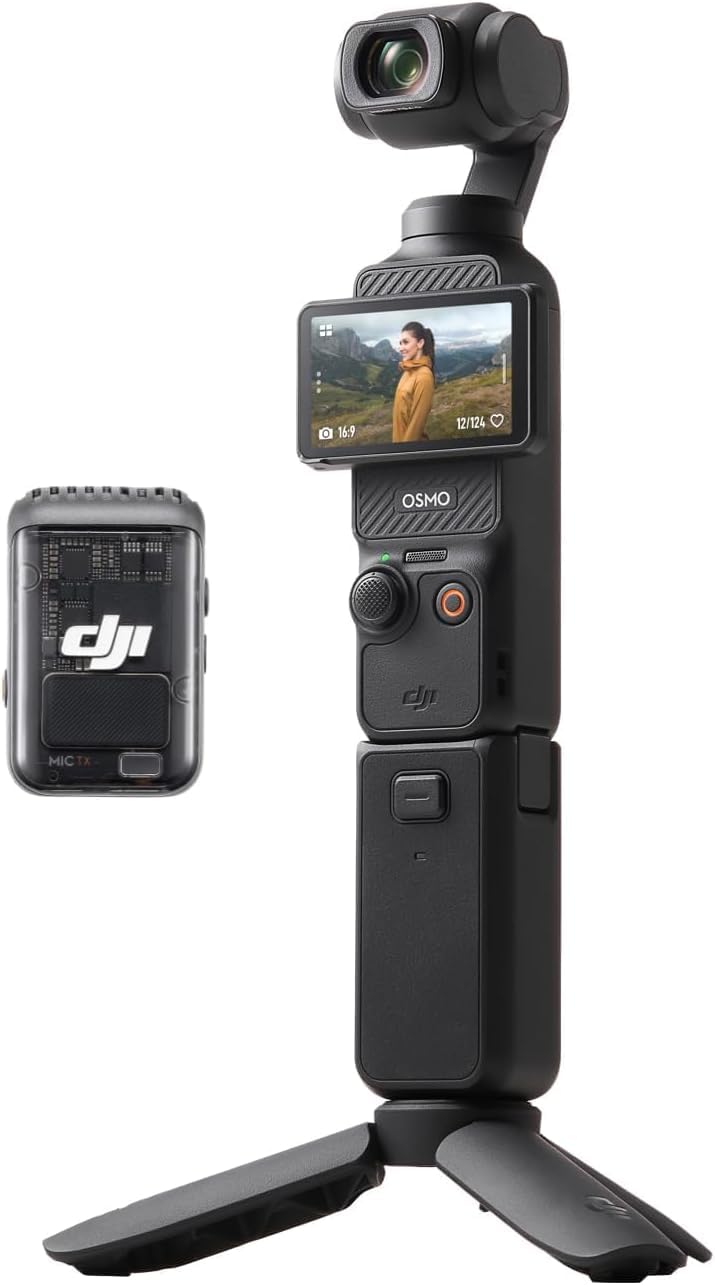
The Osmo Pocket 3 sets the reference point for pocket gimbal cameras aimed at solo video creators. Its 1-inch CMOS sensor and 3-axis mechanical gimbal produce 4K footage at up to 120fps that stays level while you walk or pan, and the 2-inch rotating touchscreen makes self-framing a quick flip rather than a blind guess. The 120fps setting adds slow-motion headroom for transitions or B-roll, so a single body can cover both interviews and movement shots without switching cameras. The 1-inch sensor also gives the Pocket 3 a clear image-quality edge over smaller-sensor compacts, which matters for creators who shoot in mixed indoor or overcast conditions.

Audio is where the Pocket 3 separates from cheaper pocket gimbals. The DJI Mic 2 receiver clicks into the side of the camera, pairs quickly, and syncs sound with video without a separate recorder, so a one-person crew can capture clean voice and stable visuals in the same take. At 179g, the camera is easy to move between handheld shots, waist-level angles, and quick overhead views. The menu is simple enough for someone moving up from a phone, while still offering manual control for creators who want to set exposure or choose a color profile. A typical talking-head clip cuts together quickly because the audio track is already aligned with the footage.

This is aimed at serious YouTube and TikTok creators who want a self-filming rig that doesn't require a bag of gear. Travel vloggers and solo interviewers fit the profile best: the rotating screen frames you quickly, the gimbal absorbs footsteps, and the Mic 2 workflow keeps audio and video in one package. The premium price reflects the stabilizer, sensor, and wireless audio integration, so it makes sense for creators who will put it to regular use. It is a focused tool for mobile creators who plan shots around a compact body, not an entry-level starter for someone still deciding whether regular vlogging is for them.

Power-on behavior can vary between units, so confirm the seller's return window and test the camera before relying on it for a paid shoot. The image quality, stabilization, and Mic 2 integration are strong enough that a few minutes of early verification is a small price to secure the setup.

Pros

  • 4K/120fps from a 1-inch sensor delivers image quality that holds up on YouTube and TikTok.
  • 3-axis gimbal keeps walking shots steady without extra rigging.
  • 179g body with rotating touchscreen makes self-framing fast and natural.
  • Rotating touchscreen flips toward you, so solo setup takes seconds.
  • DJI Mic 2 receiver pairs quickly and keeps audio in sync for talking-head clips.

Cons

  • The fixed lens only offers a 2x digital crop, so closer framing means moving the camera.
  • No interchangeable lens mount, so the field of view cannot be adapted for different shoots.
Our verdict

The Osmo Pocket 3 is the compact rig that replaces a phone-plus-gimbal setup for YouTube and TikTok creators who want steady footage and clean audio without a bag of gear.

Check Latest Price
2

Best 1-Inch Sensor Alternative

Sony ZV-1F

90 /100
Studio Score High Confidence

Key details

Battery
Replaceable battery
Mic Support
3.5mm mic input
Stabilization
No gimbal
Video Quality
4K, 1-inch sensor
Check Price on Amazon

The ZV-1F makes the jump from a phone camera feel like a real camera upgrade: 1-inch CMOS, Eye AF, and a side-flip touchscreen in a body light enough for self-framing. The pocket gimbal option in this set adds motorized steadiness, while this Sony keeps the package simple and leans on autofocus and color instead.

Footage is sharp in 4K, with pleasing color straight out of camera, and the 20mm F2 lens handles moderate available light. The directional 3-capsule microphone keeps the speaker clear at arm's length, and Eye AF holds onto faces as the subject moves.

Beginner-friendly controls keep the learning curve short: touch focus, clear menus, and a side-flip screen cover the basics new vloggers need. The compact body works with a simple selfie stick or small tripod, so the setup stays light.

This is for creators moving up from a phone who want a dedicated vlogging camera without sorting through lenses or a rig. Moderate available light and short-to-medium sessions are its comfort zone; battery life is the main tradeoff, so carry spares for longer shoots.

Pros

  • Strong build quality and brand support give first-time vloggers confidence in the purchase.
  • Sharp 4K video and pleasing color make footage look polished with little editing.
  • A natural step up from a phone for new YouTube vloggers, with a short learning curve.
  • Beginner-friendly controls and clear menus get new users recording quickly.

Cons

  • Handheld walking shots can pick up visible shake; a tripod or post-processing keeps motion smooth.
  • A full day of vlogging can outlast the included battery; keeping a spare charged is part of the workflow.
Our verdict

For phone-camera creators who want large-sensor color and autofocus that holds faces, the ZV-1F delivers without turning the bag into a rig.

Check Latest Price
3

Best Gimbal Value

Xtra Muse 3-Axis Gimbal

84 /100
Studio Score Strong Evidence

Key details

Battery
Mic Support
No wireless pairing
Stabilization
3-axis gimbal
Video Quality
4K/120fps, X-Log
Check Price on Amazon

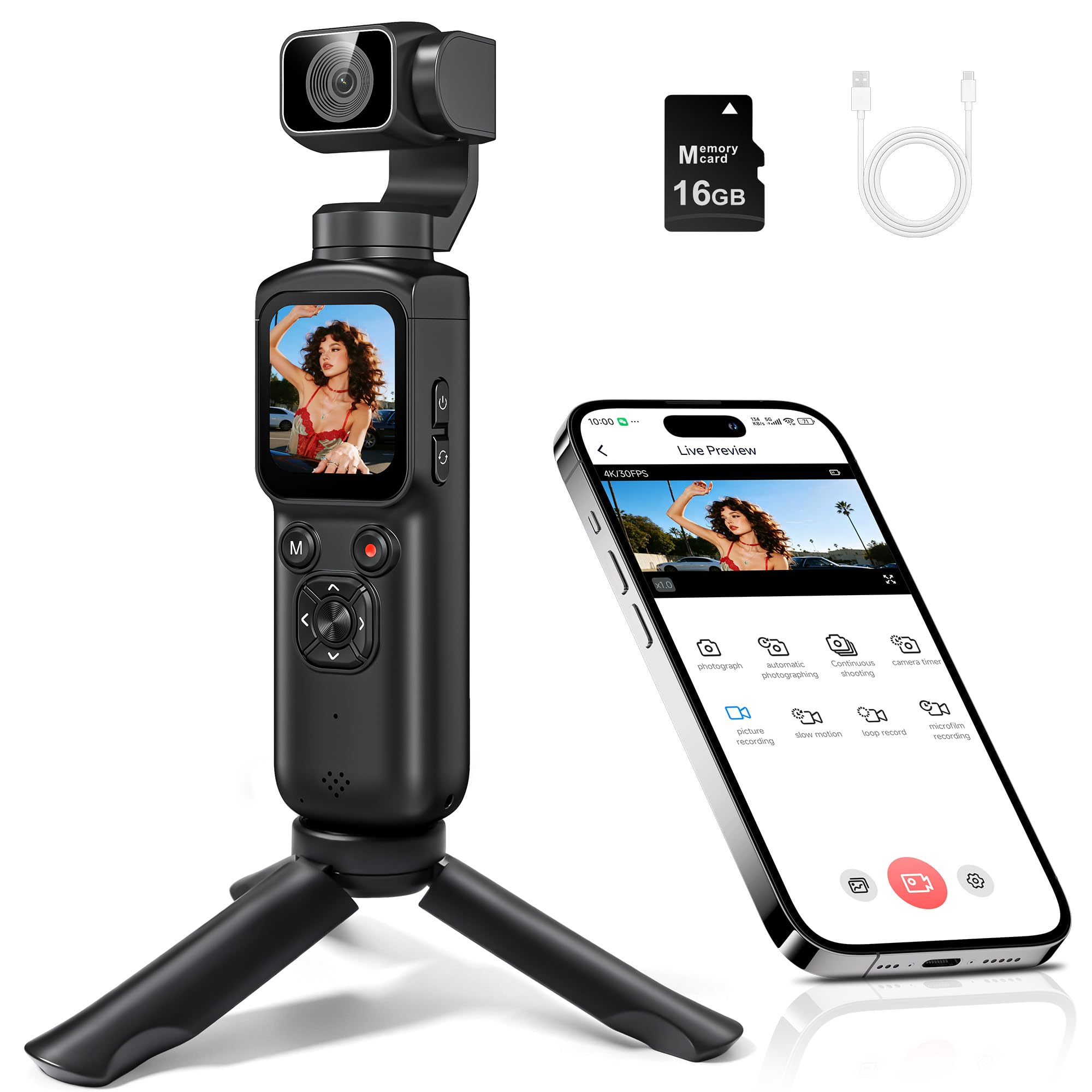
The Xtra Muse brings a 1-inch CMOS sensor, 3-axis gimbal, and 4K/120fps video to a pocket body at a lower price than the top pick. The footage has a cinematic look, and the mechanical gimbal keeps walking shots steady without the jitter of digital-only stabilization. At this price, few rivals combine that sensor size with a motorized gimbal and 10-bit X-Log color.

Face and object tracking keep a moving subject framed, which matters for solo vloggers. The compact body fits in a small bag or jacket pocket, so it can stay with you through a travel day without a separate stabilizer. The light weight also makes long handheld vlogs easier to shoot.

10-bit X-Log color adds grading headroom for creators who want a stylized final image, while the same body records 4K/120fps for slow-motion clips. That combination gives you both talking-head vlogs and b-roll capture in one camera, with the gimbal smoothing transitions between shots.

This suits budget-conscious YouTube and TikTok creators who want gimbal-style footage and accept accessory limits. Buyers who need the tightest quality control should consider another option. Screen durability and wireless mic compatibility can vary between units; inspect and test those areas early.

💡 Keep a spare battery on hand for longer shoots and treat the first week as a test period before relying on it.

Pros

  • 1-inch CMOS and mechanical gimbal produce smooth, cinematic-looking footage from a single pocket device.
  • 4K/120fps captures detailed slow motion while the 3-axis gimbal stabilizes handheld shots.
  • Face and object tracking keep solo creators framed during movement.
  • Pocket-size body removes the need for a separate stabilizer or bulky rig.

Cons

  • Battery drain can vary between units, so a spare pack is worth carrying.
  • Rotating screen hinge tension may be inconsistent, so the flip screen should be tested early.
  • Wireless mics need a dedicated receiver rather than direct pairing, which complicates a phone-free audio setup.
Our verdict

For budget vloggers who want a one-piece gimbal camera without the top pick's price, this is the closest value in the set.

Check Latest Price
4

Best Budget Flip-Screen Starter

FACLAM 4K Flip-Screen

87 /100
Studio Score Strong Evidence

Key details

Battery
2 batteries
Mic Support
None
Stabilization
No gimbal
Video Quality
4K UHD
Check Price on Amazon

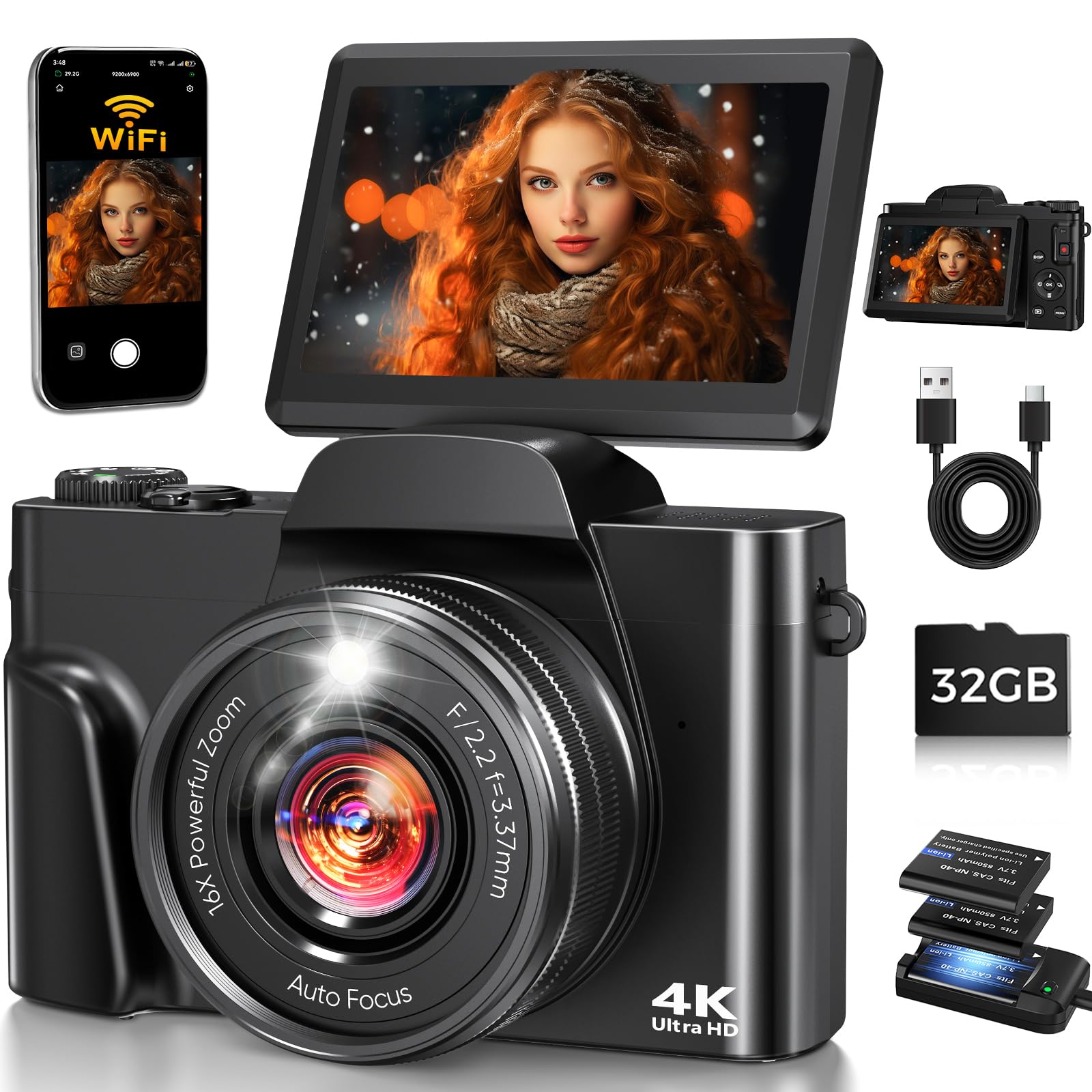
The FACLAM is the budget flip-screen kit that removes the usual first-camera friction: 4K video, WiFi sharing, a 180-degree flip screen, two batteries, and a 32GB card are all in the box. The flip screen is built for self-facing recording, so a first-time vlogger can frame a TikTok or YouTube setup without guessing. Compared with the other budget flip-screen kit in this guide, this version leans a bit more toward ease of use and a complete bundle.

Daylight footage is where this camera earns its keep. The 4K video and 64MP stills produce usable, crisp images for social posts and school projects when the light cooperates. WiFi transfer pulls clips onto a phone with little fuss, and the controls stay accessible for someone picking up a dedicated camera for the first time.

This is the right match for a first-time vlogger, a budget travel creator, or a teen or student who wants a selfie-friendly camera for YouTube or TikTok. The small sensor and digital stabilization are daylight-friendly, not low-light or fast-action tools; keep the camera in good sun or bright indoor light and favor slower movement. For that defined use, the FACLAM is a safe starting point without demanding a serious creator-camera investment.

Pros

  • Budget-friendly bundle with 32GB card and two batteries eliminates the usual starter extras.
  • 180-degree flip screen makes self-framing easy for first-time vloggers and students.
  • Daylight video and photo quality hold up for social posts and budget travel clips.
  • Starter-friendly controls and menus reduce the learning curve for a new camera user.

Cons

  • The 16x zoom is digital only, so long-distance reach is not optical-grade.
  • No external microphone jack is available, so audio is limited to the built-in mic.
Our verdict

A beginner-first vlogging kit that gets new creators recording immediately, without requiring a bigger investment before they know the hobby will stick.

Check Latest Price
5

Best Traditional Camcorder Kit

FJFJOPK 4K Camcorder Kit

87 /100
Studio Score Strong Evidence

Key details

Battery
2 batteries
Mic Support
External stereo mic
Stabilization
No gimbal
Video Quality
4K UHD
Check Price on Amazon

The FJFJOPK 4K Camcorder Kit is the complete traditional camcorder package in this comparison: external stereo microphone, remote control, lens hood, handheld stabilizer, 32GB card, and two batteries ship together. That sets it apart from the large-sensor compact in this set, which puts imaging quality and pocketability ahead of bundled extras. For family event recording and sit-down interviews, this bundle covers the essentials before the first shoot.

4K video stays sharp and detailed in normal indoor and outdoor settings, and the 3-inch 270° rotatable touch screen makes self-facing framing simple. The external microphone brings interview voices forward, while the IR night vision extends the camera into dim event spaces. Controls are easy to learn, so a first-time camcorder user can set exposure and start recording without digging through menus.

This kit suits family event vloggers and interview or tutorial creators who want a stable base, external audio, and one-box convenience. The body is bulkier than pocket vlogging options, so minimalist travel packing is a poor fit; that trade is acceptable when the work happens at a tabletop, desk, or event venue.

Pros

  • External stereo mic, remote, lens hood, stabilizer, 32GB card, and two batteries come in the box—complete setup.
  • 4K video is sharp and detailed for event and interview work, with controls that don't take long to learn.
  • Rotating 3-inch touch screen makes self-facing YouTube or tutorial framing simple.
  • IR night vision and the remote control cover low-light and self-recording situations out of the box.

Cons

  • Long-distance event shots depend on the digital 18x zoom, which crops the sensor instead of adding optical reach.
  • For run-and-gun vlogs, gimbal-smooth stabilization is not built into the body; the included handheld stabilizer is part of the workflow.
Our verdict

This kit delivers a full camcorder setup for event and interview creators without separate accessory purchases; IR night vision and remote control fill gaps that comparable budget kits leave open.

Check Latest Price
6

Best Rotating-Lens Selfie Camera

Lmzour 330° Rotating 4K

84 /100
Studio Score Strong Evidence

Key details

Battery
1.5-hour runtime
Mic Support
None
Stabilization
No gimbal
Video Quality
4K
Check Price on Amazon

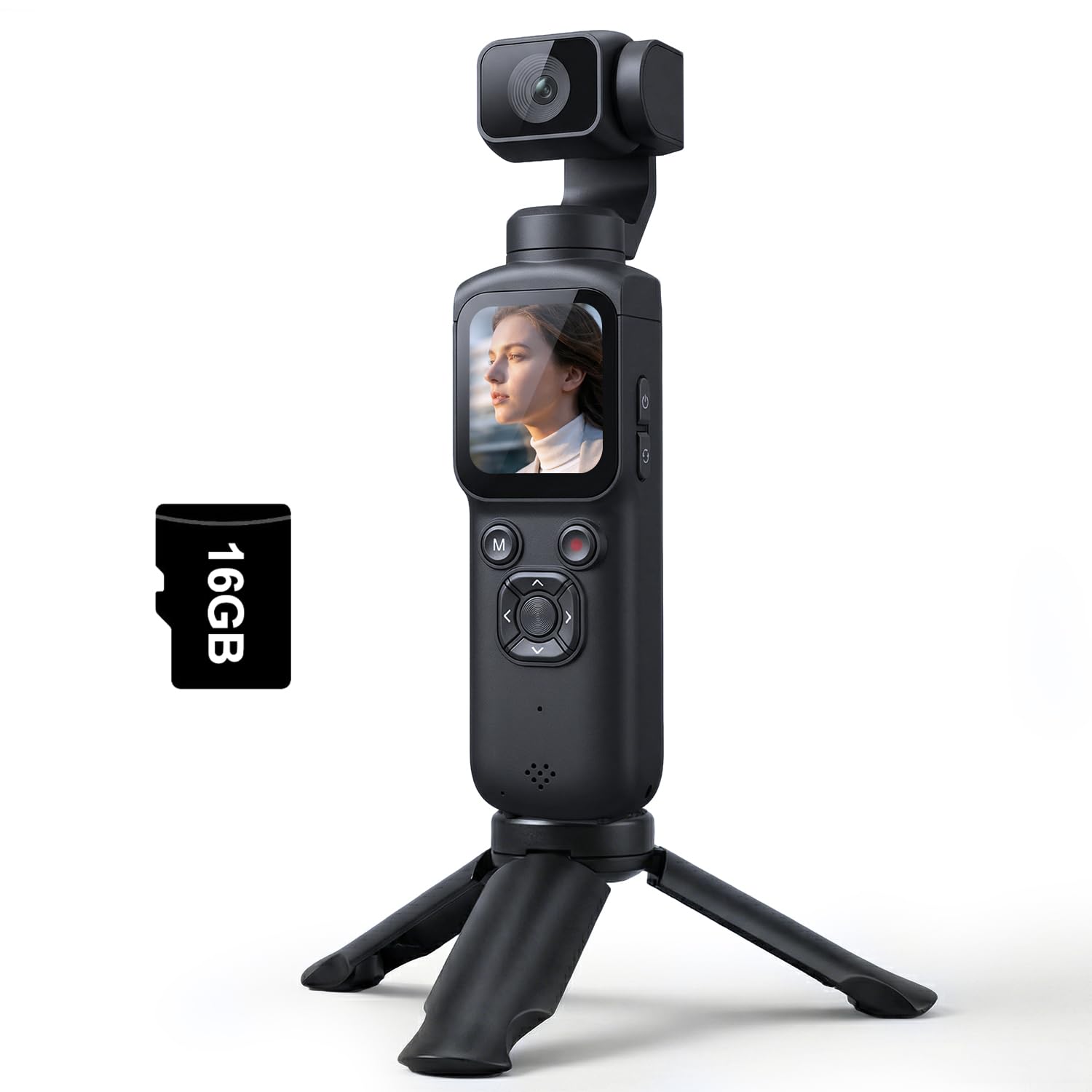
The Lmzour's 330-degree rotating lens and automatic face tracking keep a solo vlogger centered while moving, which removes the most repetitive part of self-filming. The 4K mode produces sharp, vibrant footage at a budget-friendly price, so the image quality does not feel like the weak link in the chain. For a video-first creator, the rotating lens is the main reason to choose this over a fixed flip-screen camera.

Rotating the lens lets you switch from a self-facing frame to a subject view without changing your grip or repositioning a flip screen. The 1.72-inch display is small enough that you will rely on the face tracking for framing, but the tracking holds the subject in the middle of the frame during the 330-degree turn. That makes it a good fit for short-form clips where reframing would otherwise interrupt the take.

This camera fits beginner solo vloggers and travel creators who want a compact self-filming tool for short-form social clips. No external mic input and about 1.5 hours of battery life are the boundaries: casual audio and short shoots work fine, while interviews or all-day sessions call for a separate recorder and spare batteries. The tradeoff is acceptable because the rotating lens removes the setup friction of solo video.

Pros

  • 4K video comes through clear and vivid enough for social uploads without heavy grading.
  • The 330-degree rotating lens and face tracking keep the subject centered as the camera turns.
  • Compact body fits in a day bag, making it easy to bring along for travel clips.
  • Budget-friendly price puts the core self-filming features in one camera.

Cons

  • Card reformatting is limited to the camera; formatting on a computer won't prep it for recording.
  • Deleting clips on a computer can leave the card in a confusing state when it's back in the camera.
Our verdict

For solo creators who want self-framing without extra rigs, the rotating lens and face tracking deliver.

Check Latest Price
7

Budget Starter Creators

Duluvulu 4K Flip-Screen

85 /100
Studio Score Strong Evidence

Key details

Battery
2 batteries
Mic Support
None
Stabilization
No gimbal
Video Quality
4K UHD
Check Price on Amazon

This kit gets new vloggers going immediately: a 32GB card, two rechargeable batteries, flip screen, and 4K capture cover the basics without extra purchases. In good daylight, footage is sharp enough for YouTube and social clips, and the flip screen makes solo framing comfortable. The tradeoff at this budget tier is reliability variance — a small number of cameras may become unusable after limited use, so testing early matters. That variance is the main reason it sits behind the safer ultra-budget flip-screen option, but the complete starter bundle still fits casual creators and travel memory capture.

Pros

  • Complete kit with 32GB card and two rechargeable batteries means no immediate extra purchases.
  • Daylight 4K footage is sharp and detailed, matching what most starter vloggers need.
  • Flip screen makes self-framing and vlogging simple.

Cons

  • Low-light and fast-action vlogs will push this camera past its sensor limits; daylight scenes are clearly better.
  • Creators who need professional audio and color control will outgrow this consumer-oriented kit quickly.
Our verdict

For casual creators and family documenters who shoot mostly in daylight, this complete bundle is a sensible entry point to 4K vlogging.

Check Latest Price
8

Social Media Creators

AUREAPIX 8K Flip-Screen

86 /100
Studio Score Strong Evidence

Key details

Battery
2 batteries
Mic Support
None
Stabilization
No gimbal
Video Quality
8K marketed
Check Price on Amazon

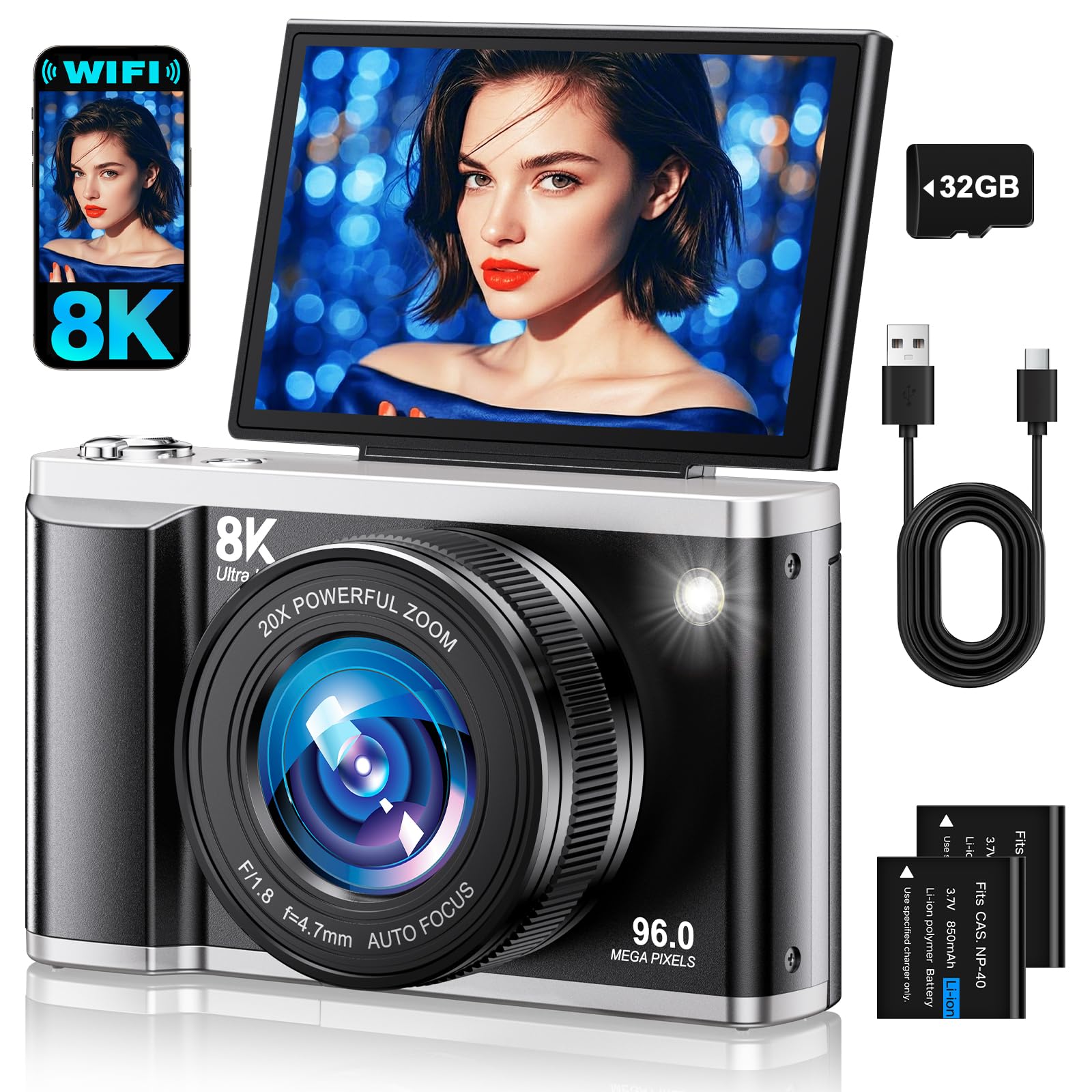
The 3.5-inch flip screen and quick daylight autofocus make solo video framing simple, and phone transfers are genuinely convenient. This is a social-first starter camera: the 8K and 96MP numbers are marketing language rather than real capture spec, and there is no external mic input. It costs a bit more than the entry-level flip-screen kit in this category while adding the bigger screen and WiFi instead of mechanical stabilization. That combination suits a beginner who wants a large self-preview and easy uploads for TikTok or YouTube, with shooting primarily in good light.

Pros

  • Large 3.5-inch flip screen keeps self-framing easy for solo creators.
  • Daylight autofocus responds quickly, so setup stays short in typical conditions.
  • WiFi sharing moves clips to a phone without a card reader.

Cons

  • Digital-only zoom softens distant subjects beyond the base focal length.
  • Color output is 8-bit, so creative grading is limited.
Our verdict

For a beginner who wants a large self-preview and simple phone uploads for casual daytime clips, this is a sensible budget pick.

Check Latest Price
9

Short-Form Creators

VENOPTIX 4K Auto-Rotating

81 /100
Studio Score Strong Evidence

Key details

Battery
3-hour runtime
Mic Support
None
Stabilization
No gimbal
Video Quality
4K/30fps
Check Price on Amazon

The 330-degree motorized horizontal rotation is the reason to look here: a solo vlogger can walk sideways and stay centered without a gimbal or app setup. The 4K/30fps footage is clear and crisp, the 1.72-inch touchscreen is easy to navigate, and the battery covers roughly three hours of casual shooting. Vertical framing is manual only, so this is best treated as a horizontal-first framing tool rather than an automated portrait camera. That boundary is why it sits behind gimbal-style alternatives for vertical-first social video. Budget-conscious selfie shooters working in horizontal format get the core value without paying for premium camera extras.

Pros

  • 330-degree motorized rotation keeps a solo vlogger centered while moving sideways.
  • Clear 4K/30fps footage covers short-form social clips without a heavy editing lift.
  • Budget-level pricing and a touchscreen keep the first vlogging steps uncomplicated.

Cons

  • No external mic input, so the built-in microphone is the only audio source.
  • Motorized framing is horizontal-only; portrait orientation requires manual positioning.
Our verdict

For horizontal self-framing on a budget, this is the value pick; if vertical auto-tracking or external audio matter more, look to a vertical-tracking model instead.

Check Latest Price

How to Choose

Video Quality and Frame Rate

4K is table stakes, but the sensor behind it decides whether footage stays clean in low light. A small sensor with a 4K label can soften in shadows and produce digital noise, so a budget 4K camera is not automatically better than a phone.

Frame rate is what makes slow-motion usable. Recording at 60 or 120fps gives you smooth slow-motion clips; 30fps limits you to real-time capture.

Self-Facing Flip Screen

A flip screen solves composition, but check the rotation axis before buying. Some rotating lenses only move horizontally, which means vertical framing requires you to move the camera instead of the lens.

A side-articulating screen covers more angles but adds a mechanical hinge. Test it in the store or soon after delivery; a hinge that feels loose becomes a liability over time.

Stabilization

A 3-axis gimbal holds the sensor steady with motors and removes walking shake without cropping the frame. Digital stabilization crops into the sensor to create the illusion of steadiness, and it works best for gentle movement rather than fast strides.

If your vlogs involve walking with the camera in front of you, mechanical gimbal is the difference between a clip that looks intentional and one that needs post-editing. If your camera stays on a desk or tripod, digital is enough.

Microphone Support

Camera microphones sit too far from your voice to deliver clean dialog in a noisy room. A 3.5mm mic input or wireless pairing moves the mic closer to you, which changes the audio from hollow to broadcast-ready.

Budget rotating-lens cameras often have no external mic input. If that is your only option, plan to record audio separately or shoot in spaces with little background noise.

Battery Life and Spares

Battery ratings are usually measured with intermittent use, not continuous 4K recording. Stabilization, autofocus, and a bright screen all draw more power than the number on the box suggests.

Two included batteries are a practical feature, not a luxury. A single internal battery becomes the weakest link on a full-day shoot, and rechargeable cells lose capacity as they age.

Frequently Asked Questions