7 Best Camera for Content Creation in 2026: Buy Real 4K Value

The best camera for content creation depends on your workflow; focus on real 4K, self-framing screens, and stabilization instead of inflated megapixel claims.

Shopping for a content camera can feel like a contest of headline numbers: 8K capture, 96 megapixels, 20x digital zoom. On a small sensor, those numbers rarely survive real-world shooting. What shows up in finished footage is usable 4K, a screen that lets you frame yourself, battery stamina, and stabilization that keeps walking shots watchable.

The bigger fork is portability versus system. A pocket gimbal camera delivers smooth video instantly but has a fixed lens; a mirrorless body adds lens options and stills power but asks you to carry more and learn more. Match the camera to the way you actually shoot, not the way the spec sheet makes you feel.

That means deciding what matters on a typical shoot before looking at resolution claims. A solo creator needs self-framing and clean audio; a hybrid shooter needs lens options and stills quality. Define the use case first, and the camera choice narrows quickly.

2

Best Interchangeable-Lens Hybrid

Canon EOS R50 Kit

89 /100
Studio Score Strong Evidence

Key details

Stabilization
Lens IS
Battery & Audio
3.5mm mic jack
Sensor & Low Light
24.2MP APS-C CMOS
4K & Video Features
Uncropped 4K30, 120p HD
Check Price on Amazon

The R50 kit is the Canon RF hybrid entry for creators who want one camera for YouTube and photography. Its 24.2MP APS-C sensor records uncropped 4K30 oversampled from 6K, so the same body produces sharp video and stills without stepping down to a fixed-lens pocket rig. Dual Pixel CMOS AF II with 651 zones tracks faces and eyes, and the vari-angle touchscreen enables self-framing for vlogs.

The RF-S18-45mm kit lens covers standard vlog and interview framing while keeping the whole setup light enough for a lanyard. 4K footage stays sharp across the zoom range, and 120p HD offers slow-motion cutaways for social clips. Because 4K30 is uncropped, the angle of view stays consistent when moving between photo and video modes.

This is for the video-first creator who plans to grow into RF lenses rather than live inside a fixed compact. The body is small enough for one-hand carrying, though larger hands may want to check the control spacing before buying. The kit lens performs well in daylight; for evening indoor vlogs, a faster prime or a small light is a practical add-on. If a pocketable no-lens-rig setup or a strict budget is the starting point, this camera isn't the match.

The wider value shows up in the RF mount. The kit lens is a starting point, and Canon RF-S primes and zooms give a clear upgrade path without changing bodies. That makes the R50 a stronger long-term buy for creators who expect their shooting needs to grow.

💡 Spend a few minutes learning the button layout before a shoot; the compact body rewards practice.

Pros

  • One body handles sharp 4K video and APS-C stills for hybrid YouTube and photo work.
  • Beginner-friendly controls make it usable without prior camera experience.
  • Solid all-around quality for photo and video backs its starter-hybrid role.
  • Light body and lanyard-friendly carry make it convenient for solo shoots.

Cons

  • The compact body has tightly spaced controls, which larger hands may find cramped.
  • The RF-S18-45mm kit lens aperture is modest in low light, limiting indoor evening shots.
Our verdict

For hybrid creators, the R50 kit pairs 4K video quality with an RF lens upgrade path in a compact body.

Check Latest Price
4

Best Budget Mirrorless

Canon EOS R100 Kit

90 /100
Studio Score High Confidence

Key details

Stabilization
Lens IS
Battery & Audio
3.5mm mic jack
Sensor & Low Light
24.1MP APS-C CMOS
4K & Video Features
4K24, 120p HD
Check Price on Amazon

The R100 is the lowest-priced Canon RF mirrorless body, pairing a 24.1MP APS-C sensor with Dual Pixel CMOS AF and a lens system that can grow past the kit zoom. It delivers crisp stills and solid 4K clips for the price, but this is a photo-first hybrid rather than a vlogging camera. For a video-first creator, the R100 is not the lead camera; it is the right way to start building an RF lens system while learning photography.

The RF-S18-45mm kit lens covers a practical everyday range, and the body is compact enough to bring along regularly. New shooters will appreciate the approachable controls and Dual Pixel AF, which keeps faces in focus without fuss. Images hold up well for social posts and small prints, making this a viable first mirrorless camera for stills.

The right buyer is a photo-first beginner who wants a body that can grow into a full RF kit. The fixed rear LCD blocks self-framing for vlogs, and 4K is limited to 24p, so solo YouTube and social-video workflows are better served by the R50 with its vari-angle touchscreen and uncropped 4K30. Treat the R100 as a stills camera that happens to shoot 4K clips when you need them.

Pros

  • APS-C sensor and Dual Pixel AF create clear photos that suit a first mirrorless camera.
  • Sharp stills and solid 4K video at an entry-level Canon RF price.
  • The RF mount gives beginners a real path into Canon's interchangeable lens lineup.
  • Canon's menu system suits first-time interchangeable-lens owners.

Cons

  • A unit can arrive non-functional; test it soon after unboxing to protect the return window.
Our verdict

A photo-first Canon RF starter that treats video as a bonus, not the main act; buy it for the lens mount and stills quality, and step up to a vari-angle body when solo vlogging is the job.

Check Latest Price
5

Best Budget All-In-One Starter

Duluvulu 4K Camera

85 /100
Studio Score Strong Evidence

Key details

Stabilization
Battery & Audio
2 batteries included
Sensor & Low Light
Small CMOS sensor
4K & Video Features
4K/2160p
Check Price on Amazon

The Duluvulu 4K Camera is the least intimidating all-in-one starter in this lineup: a flip-screen 4K/48MP body with two batteries, a 32GB SD card, and webcam mode at a budget price. No separate lens, gimbal, or microphone order is needed before the first vlog or family trip.

This is best for teens, students, and families who want a simple first camera for short vlogs, school projects, or travel clips. The 180° screen makes self-framing easy, and the compact body slips into a day bag. Long recordings split into 10-minute files, and QC can vary between units, so this is a casual short-form tool rather than a production recorder.

Daylight image quality lands where it should at this price: 4K clips and 48MP stills look sharp enough for YouTube and social feeds. Indoor or evening shots are the boundary, with low-light footage coming out softer. The included second battery stretches a full day of shooting, and webcam mode adds a video-call use case without extra software.

The compact body travels easily for air travel or day trips. Compared with the rotating-lens budget option in this set, the Duluvulu uses a conventional fixed-lens layout and arrives with the fuller bundle; the rotating model is a better fit if you want to flip framing without moving the camera.

Pros

  • Flip screen swings a full 180° for easy self-framing in vlogs.
  • Two batteries and a 32GB SD card are included, so a new owner can start right away.
  • Compact body makes it easy to carry on trips and daily outings.
  • 4K video and 48MP stills look sharp in daylight for the money.

Cons

  • Long recordings split into 10-minute files, so longer takes need stitching.
  • Unit-to-unit QC can vary, so a replacement may be needed if a camera stops turning on.
Our verdict

For short vlogs, school projects, and family clips, the Duluvulu provides a complete starter setup that removes the usual upfront shopping list.

Check Latest Price
6

Best Budget Rotating-Lens Pocket Cam

Lmzour 4K Pocket Cam

84 /100
Studio Score Strong Evidence

Key details

Stabilization
Horizontal gimbal, EIS
Battery & Audio
Sensor & Low Light
Small CMOS sensor
4K & Video Features
4K/2160p
Check Price on Amazon

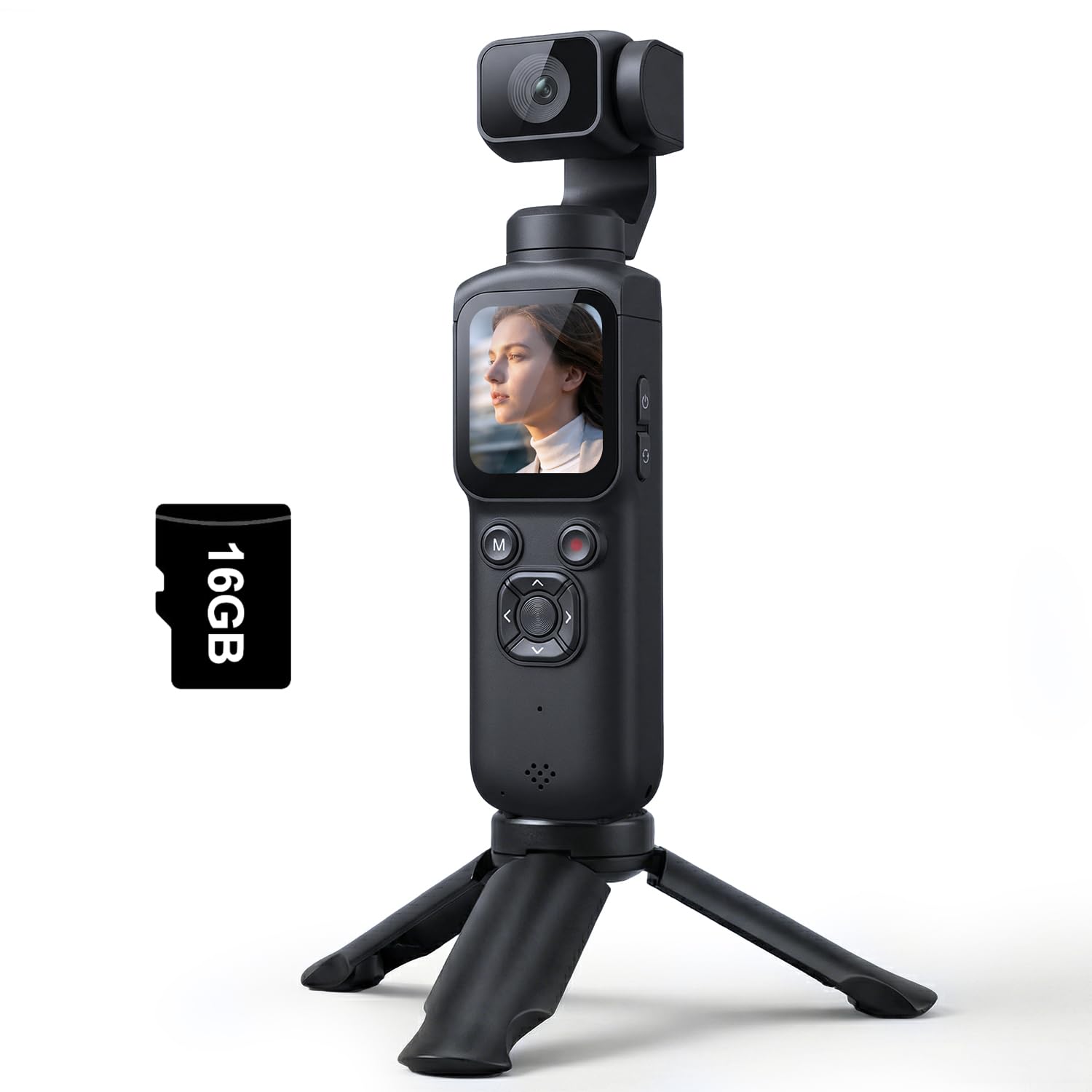
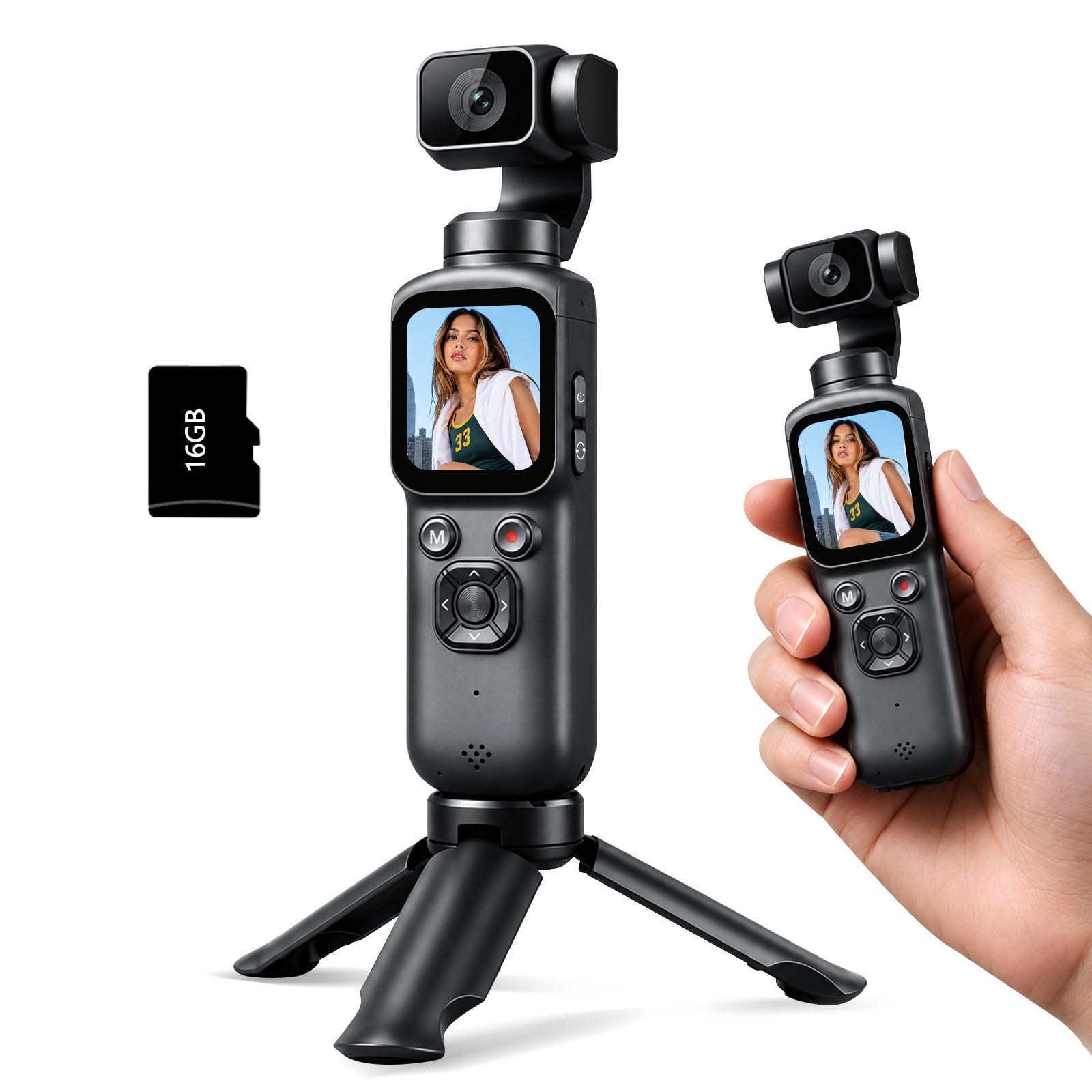
The Lmzour 4K Pocket Cam pairs a 330° rotating wide-angle lens with face tracking, so a solo creator can keep themselves framed while shooting vlogs, YouTube videos, and social clips. The bundle includes WiFi, a 16GB card, and a mini tripod, which lowers the barrier for someone buying their first video camera. At this budget level, the 4K/2160p output stays sharp in daylight and the body is small enough for a pocket or day bag.

Face tracking holds the subject during handheld pans, and the rotating lens covers side-to-side selfie angles without a flip screen. The mini tripod provides a stable base for tabletop shots, and the WiFi connection makes pulling clips onto a phone for social posting simple.

This is the right fit for first-time vloggers on a tight budget, travel creators who want a self-tracking pocket camera for daylight clips, and beginners who value a complete kit. The rotating lens and face tracking carry the solo-shooting workload, so the camera fits a video-first workflow without extra rig gear.

The top pick delivers 3-axis gimbal stability; this camera answers with a lower price and a simpler all-in-one kit. That tradeoff leaves a clear role for budget-first vloggers who want a practical first camera rather than a premium pocket gimbal.

Pros

  • Sharp 4K video for a budget pocket cam, with clear color in daylight scenes.
  • 330° rotating lens plus face tracking makes solo filming easy without a flip screen.
  • Compact body and included mini tripod keep the kit portable for travel vlogging.
  • Budget-friendly all-in-one package with WiFi, 16GB card, and tripod suits first-time creators.

Cons

  • No optical zoom means distant subjects require moving closer instead of zooming.
  • Low-light scenes can soften, which limits night vlogging and dim indoor shooting.
  • Vertical tilt is fixed, so very low and high angles mean repositioning the whole camera.
Our verdict

For a first-time vlogger who wants self-framing 4K without buying extra gear, this is the practical budget starting point.

Check Latest Price
7

Budget Beginners

AUREAPIX 8K Camera

86 /100
Studio Score Strong Evidence

Key details

Stabilization
Battery & Audio
2 batteries included
Sensor & Low Light
Small CMOS sensor
4K & Video Features
8K interpolated
Check Price on Amazon

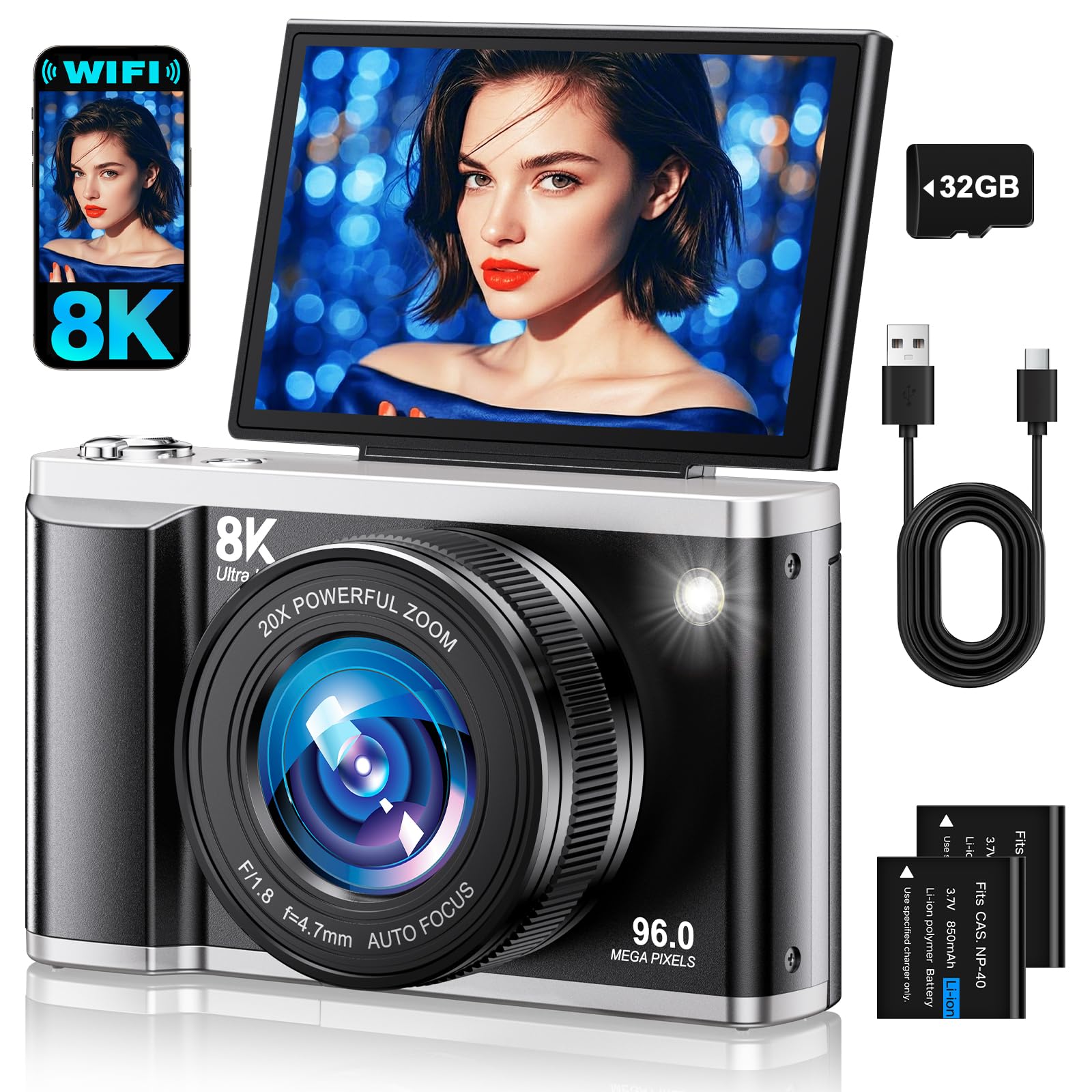
The 180° flip screen and WiFi transfer make self-framing vlogs easy, and the bundled two batteries plus 32GB SD card cover a first session without extra purchases. Daylight footage is sharp and autofocus keeps up with talking-head delivery for a point-and-shoot at this price. The fixed lens has no optical zoom, so distant subjects depend on 20x digital cropping, and the small sensor needs daylight for its best video. That places it as a casual creator starter rather than a serious filmmaking tool.

Pros

  • 180-degree flip screen frames selfies and vlogs without extra viewing gear.
  • WiFi transfer sends clips to a phone for quick social posting.
  • Two batteries and a 32GB card are included, so a first shoot has essentials on hand.

Cons

  • The 8K and 96MP numbers are interpolated, so they overstate the sensor's real output.
  • 4K60 is not available, so motion-heavy clips can't use the smoother high-frame-rate look.
Our verdict

For a first-time vlogger on a tight budget who wants a complete flip-screen kit with WiFi, this is a reasonable starting point.

Check Latest Price
8

Pocket Vloggers

Crxythmenon 4K Pocket

83 /100
Studio Score Strong Evidence

Key details

Stabilization
Horizontal gimbal, EIS
Battery & Audio
Sensor & Low Light
Small CMOS sensor
4K & Video Features
4K/2160p
Check Price on Amazon

Crxythmenon 4K Pocket puts the core vlogging tools in one small kit — a rotating lens with face tracking, EIS, and a horizontal gimbal that smooths walking shots. Daylight footage is sharp and the included tripod and card let a beginner start right away. The feature set is nearly identical to the other rotating-lens budget compact in this segment, so it won't change the decision for someone weighing the two. It's better viewed as an alternative with the same strengths rather than a unique standout.

Pros

  • At this price, the rotating lens, face tracking, and starter bundle are strong value for a first vlogging kit.
  • Daylight footage stays sharp for travel and social clips.

Cons

  • Low-light scenes are not a strength; this is a daylight-first camera.
  • Fixed vertical tilt means low and high angle gimbal shots require moving the whole camera.
Our verdict

Pick this when you want an affordable rotating-lens vlogging kit and shoot horizontal, well-lit clips; it won't replace a gimbal for tilted camera moves.

Check Latest Price
9

Casual YouTubers

FlyFrost 8K Camcorder

84 /100
Studio Score Strong Evidence

Key details

Stabilization
Battery & Audio
2 batteries, ext mic
Sensor & Low Light
Small CMOS sensor
4K & Video Features
8K at 15fps
Check Price on Amazon

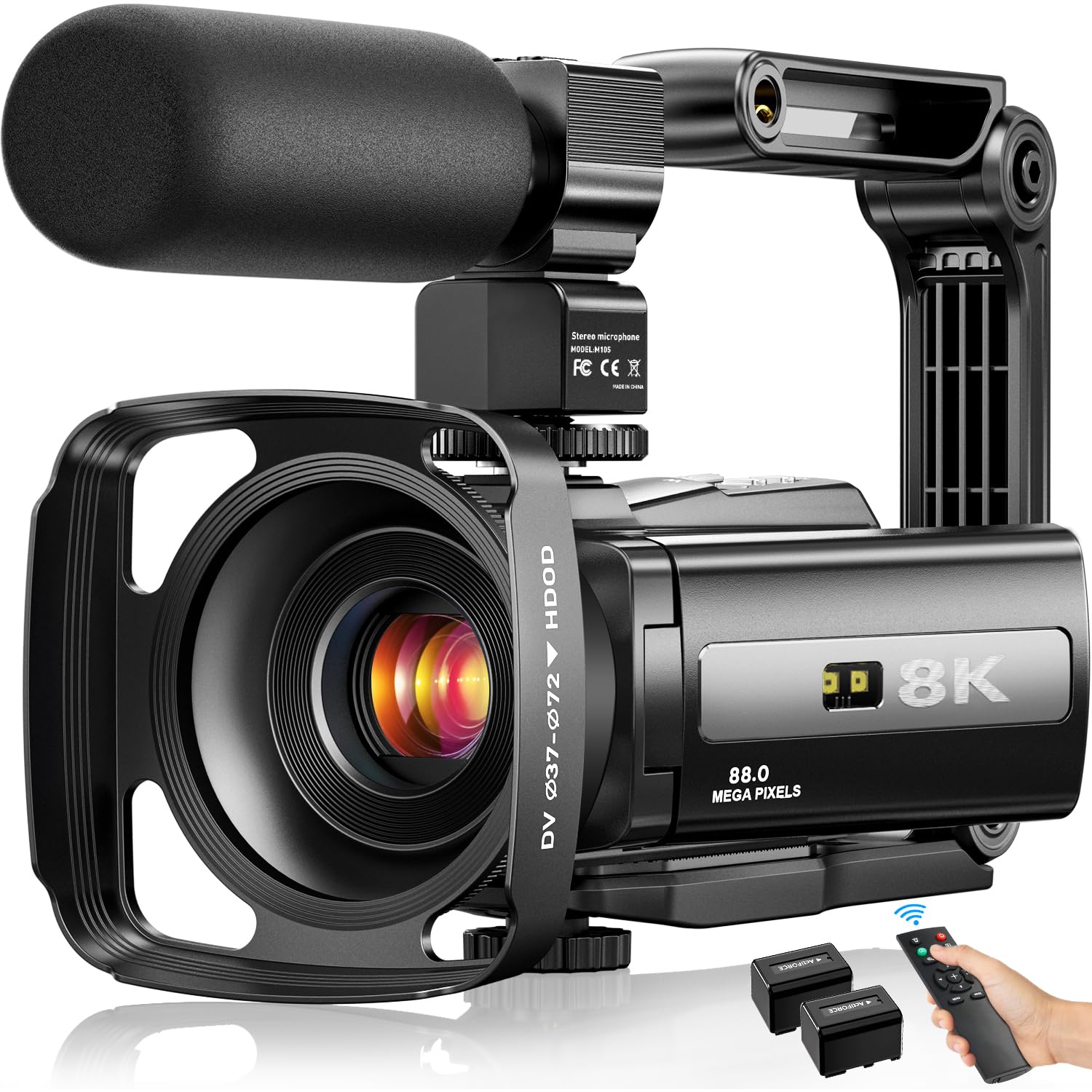
For casual family and event recording, this bundle gets the basics right: plug in the external mic, attach the stabilizer, and the two batteries cover a long day of clips, while the 3-inch touchscreen keeps menu navigation simple. Value is the main story — the accessories are genuinely useful, not filler, and the camera is easy to set up for a first-time user. The practical video ceiling is 4K for smooth footage, which makes this a strong fit for YouTube beginners, holiday gatherings, and home archives, but not for creators who need high frame rates or color-critical image work.

Pros

  • Complete kit with external mic, stabilizer, remote, and two batteries cuts the usual first-accessory purchases.
  • Well-lit scenes produce clear video and photos, which is enough for YouTube and everyday event clips.
  • Touchscreen controls and simple setup make the camera approachable for first-time camcorder buyers.

Cons

  • 8K mode runs at 15fps, so smooth motion requires dropping to lower resolutions.
Our verdict

For families and first-time YouTubers who want a complete kit out of the box, this is a sensible budget buy; creators with higher video expectations should look to the gimbal or mirrorless options in this set.

Check Latest Price

How to Choose

Sensor Size and Low Light

Sensor area determines how much light each pixel can collect. A 1-inch or APS-C sensor has significantly larger pixels than the tiny sensors inside budget 4K cams, which is why it stays cleaner in dim rooms and at dusk.

Megapixel counts do not change that physics. A small sensor pushed to 48MP or 96MP interpolates detail instead of resolving it, so the footage can look sharp on a spec sheet but soft in the edit. For indoor vlogs or evening street shots, choose the larger sensor even if it means lower pixel count.

4K Frame Rates

Frame rate determines how motion looks. 4K30 is enough for standard vlogs, interviews, and social clips; 4K60/120 gives smoother pans, better slow motion, and more flexibility when you stabilize in post.

Higher frame rates also demand more processing power and heat management, which is why budget cams often cap 4K at 24p or advertise 8K at 15fps. If your main deliverable is YouTube or TikTok, a stable 4K30 image from a real sensor beats a high-spec frame rate that produces stuttery or soft footage.

Stabilization Type

Stabilization type changes how you can shoot. A mechanical gimbal physically holds the camera steady, so walking shots stay smooth without cropping. Lens or in-body stabilization compensates for small shake but has limits on quick movement; digital stabilization crops the frame and can lose detail.

For handheld vlogging, stabilization is the difference between watchable B-roll and footage that needs a tripod or post-processing. A built-in gimbal is the most direct solution, but it comes with a fixed lens, so you trade reach for smoothness.

Self-Framing Screens

If you record alone, the ability to see yourself while recording is not a convenience; it is the difference between a usable shot and a wasted take. A flip, vari-angle, or rotating screen lets you check framing, focus, and composition in real time.

Fixed rear LCDs on some entry mirrorless cameras force you to set the frame before pressing record and hope you stay in it. A rotating lens solves the same problem in a different way, which is why budget rotating-lens cams remain popular for solo creators.

Battery Life and Audio

Compact cameras often use small batteries to keep the body pocketable, and 4K recording plus continuous autofocus drains them quickly. A camera that dies after a few hours can interrupt a shoot, so plan around spare batteries or charging breaks.

Audio matters just as much: a directional microphone or external mic input lets you capture speech clearly without extra gear. Built-in mics on budget cameras are acceptable indoors but pick up wind and handling noise outside, so check the audio path before you commit.

Frequently Asked Questions