7 Best 4K Webcam of 2026: True 4K Without the 1080P Default

The best 4K webcams for streamers, remote workers, and creators — with autofocus that stays locked and 4K output that works without a settings detour.

Most 4K webcams ship in 1080p by default. The 4K mode is there, but it often requires opening a companion app, switching a setting in OBS, or using a platform that recognizes the higher resolution. That gap between the box and the default matters more than any spec sheet.

Autofocus is the second surprise. A 4K sensor with a wandering focus looks worse than a sharp 1080p feed, and on budget models the focus mechanism is where complaints concentrate. Buyers end up weighing a proven camera with broad support against a cheaper one with more variance in focus and software behavior.

This guide sorts through those trade-offs: the feature combinations that actually hold up in meetings, streams, and studio use, and the ones that look good on paper but create extra work. The right 4K webcam is the one whose defaults, focus behavior, and compatibility match how you actually use it.

1

Best Overall

Logitech Brio 4K

93 /100
Studio Score High Confidence

Key details

Microphones
Dual omni noise-canceling
Autofocus Type
Auto focus
Sensor & Low Light
Software & Compatibility
Windows Hello
Check Price on Amazon

The Brio pairs a 4K UHD sensor with an IR camera for Windows Hello, making it one of the few webcams in its mid-range tier that can unlock a desktop with a glance. Three field-of-view presets — 65, 78, and 90 degrees — let you switch from a close-up solo call to a group whiteboard frame without touching the mount. Image sharpness and color accuracy hold up against newer 4K models, and the dual omni microphones are clear enough for day-to-day conference calls. Setup is plug-and-play on Windows and macOS: Teams, Zoom, and OBS detect it as a standard UVC device.

The Brio is easy to live with once it is mounted: autofocus handles normal desk movement without constant hunting, and the privacy shade slides closed when the camera is idle. Out of the box it records at 1080p; 4K requires a switch in Logitech's companion app or in the meeting software's video settings, which is standard behavior for 4K webcams rather than a quirk. The 65-degree preset keeps a tidy background for one-on-one calls, while the 90-degree setting covers small groups but needs brighter lighting to keep edges clean.

The Brio suits remote workers who already use Windows Hello on a laptop and want the same login on a desktop, streamers who need 4K output that keeps its quality in OBS or other broadcasting apps, and meeting-room users who value FOV presets. Buy from a return-friendly retailer: Windows Hello and Mac connectivity can vary between individual units, and occasional connection quirks have been noted. If a budget webcam is all you need for basic 4K, a lower-priced model will save money without the IR sensor, FOV switch, or privacy shade.

Autofocus holds a face well and adjusts when you move closer or add a second person, though it is not a tracking system. The dual omni microphones handle voice clearly at ordinary desk distance, but a dedicated microphone will improve stream audio noticeably. HDR and low-light modes are available through Logitech's software; without the app, the camera still outputs clean video in standard programs. The 78-degree preset is a useful middle ground for a typical office, giving enough context without pulling in a cluttered background.

💡 For one-on-one calls, set the camera at eye level so Windows Hello captures your face cleanly.

Pros

  • Sharp 4K video with accurate color for streams and calls.
  • Plug-and-play UVC setup works with Teams, Zoom, and OBS.
  • Windows Hello IR login lets you start a desktop session without typing a password.
  • Selectable FOV presets and a built-in privacy shade cover solo and group camera angles.

Cons

  • Body is bulkier and more dated than newer slim 4K webcams.
  • Mac users who depend on first-party software for every feature will get updates later than Windows users.
Our verdict

The Brio is the camera to start from when one monitor webcam has to cover Windows Hello, group framing, and 4K without a complex setup.

Check Latest Price
2

Best Value 4K Webcam

EMEET C960 4K

90 /100
Studio Score High Confidence

Key details

Microphones
Dual omni
Autofocus Type
PDAF
Sensor & Low Light
8.3MP CMOS
Software & Compatibility
EMEETLINK customization
Check Price on Amazon

The EMEET C960 puts true 4K at 30fps and 1080p at 60fps into a budget price range, with PDAF autofocus and dual omni mics in the same body. EMEETLINK adds exposure and white balance customization that is uncommon at this price, and the feature set stays broad enough for everyday calls while the streamer-focused EMEET model handles a narrower creator niche.

Plug-and-play USB operation gets the camera running in Teams, Zoom, or Meet without driver hunting. The 73-degree field of view frames a single speaker naturally. The 1080p60 mode is the setting to choose for livestreams that need smoother motion, while 4K at 30fps covers video capture and conference calls.

Budget-conscious streamers and remote workers who want 4K on calls and casual content creation fit this camera best. It asks you to accept that autofocus can hunt or lose lock in some units and that some Windows PCs may not recognize it, so confirming the camera on your specific setup before a major event is sensible.

Pros

  • True 4K at 30fps and 1080p at 60fps keeps video crisp and motion smooth.
  • Plug-and-play USB operation gets a clean image without driver setup.
  • Budget pricing offers 4K performance without sacrificing core conference features.

Cons

  • Built-in mics are acceptable for calls but can echo; recording benefits from an external mic.
  • No Windows Hello or IR login means face-unlock convenience is absent.
Our verdict

For everyday 4K conferencing and casual streaming on a budget, the C960 delivers the image quality and software control that count.

Check Latest Price
3

Best Plug-And-Play 4K

UGREEN 4K Webcam

92 /100
Studio Score High Confidence

Key details

Microphones
Dual noise-canceling
Autofocus Type
PDAF
Sensor & Low Light
8MP CMOS
Software & Compatibility
No driver needed
Check Price on Amazon

UGREEN’s 4K webcam needs no driver or app: plug it into a Windows or macOS machine and it delivers 4K@30fps or 1080P@60fps through the included USB-A/USB-C adapter. Teams, Zoom, and WebEx sessions pick it up without extra setup, which sets it apart from the budget EMEET alternative that leans on companion software. That makes IT provisioning easier in managed workplaces where device rollout needs to be quick.

The 8MP CMOS sensor holds clean detail in normal office light, and the dual noise-canceling mics keep speech clear without dragging in keyboard clatter. Autofocus locks within 0.33 to 16.4 feet, which covers a typical desk placement where the camera sits above or beside the monitor.

This is the right fit for no-fuss users who want plug-and-play 4K with wide OS support for home-office calls on Teams, Zoom, or Meet. Manual exposure controls are limited, and there is no AI framing or background effects, so if you need to fine-tune highlights, shoot in consistently bright rooms, or auto-track your face, a creator-oriented camera is a better match. For the home-office buyer, the UGREEN delivers the core 4K calling experience without requiring a separate app or driver setup.

💡 Set up with window light on your face rather than behind you, as the auto-exposure has less headroom for backlit scenes.

Pros

  • Delivers clean 4K video on Teams, Zoom, and WebEx without any driver or app.
  • Works on Windows and macOS with the included USB-A and USB-C adapter.
  • Sits at a budget price point while covering everyday video-call basics.

Cons

  • In bright rooms the 4K image can look washed out, with no fine-tune exposure correction.
Our verdict

For home-office video calls, this UGREEN is the budget-friendly pick that gets 4K working without installing anything.

Check Latest Price
4

Best AI Framing for Streamers

Insta360 Link 2C 4K

89 /100
Studio Score Strong Evidence

Key details

Microphones
AI noise-canceling
Autofocus Type
PDAF
Sensor & Low Light
1/2-inch CMOS
Software & Compatibility
DeskView & Whiteboard modes
Check Price on Amazon

The Link 2C keeps the AI auto-framing of the larger Link 2 Pro in a body without a motorized head. Its 1/2-inch CMOS sensor and phase-detection autofocus produce sharp 4K and capable low-light footage in a package that slips into a pocket. Like other 4K webcams, true 4K output requires switching the camera into 4K mode in the companion software rather than running at that resolution by default.

Gesture control lets you mute or toggle the camera without touching it, and DeskView angles the view straight down onto a desk for product demos. Whiteboard mode crops to the writing surface in view. Built-in AI noise-canceling mics keep calls clear, and the camera switches between these modes without physical adjustment, which keeps a streaming or meeting setup tidy.

This is the right webcam for streamers, content creators, and presenters who want AI framing and desk presentation tools without the size of a PTZ unit. It is not a Windows Hello camera, and ARM Windows devices are unsupported. Those needing physical pan-tilt should pick a motorized model. The software is generally stable but can be quirky, and magnetic mount strength can vary between units, so it pays to test the grip on your monitor before trusting it for long sessions.

Pros

  • AI auto-framing keeps a moving presenter centered without manual camera adjustments.
  • The 1/2-inch CMOS delivers sharp 4K and capable low-light output in a compact body.
  • DeskView and Whiteboard modes make desk demos and board sessions easy without physical tilt.
  • Magnetic mount allows quick repositioning on compatible surfaces.

Cons

  • Magnetic mount strength can vary between units; the camera may not hold securely on some monitor frames.
  • Occasional software quirks can interrupt a long session and require a camera restart.
Our verdict

The Link 2C brings the AI framing and desk presentation features into a compact, mountable body — a better match for mobile streamers than a full PTZ camera.

Check Latest Price
6

Best Large-Sensor for Creators

YOLOLIV YoloCam S3

88 /100
Studio Score Strong Evidence

Key details

Microphones
None
Autofocus Type
PDAF
Sensor & Low Light
1/1.3-inch CMOS
Software & Compatibility
Check Price on Amazon

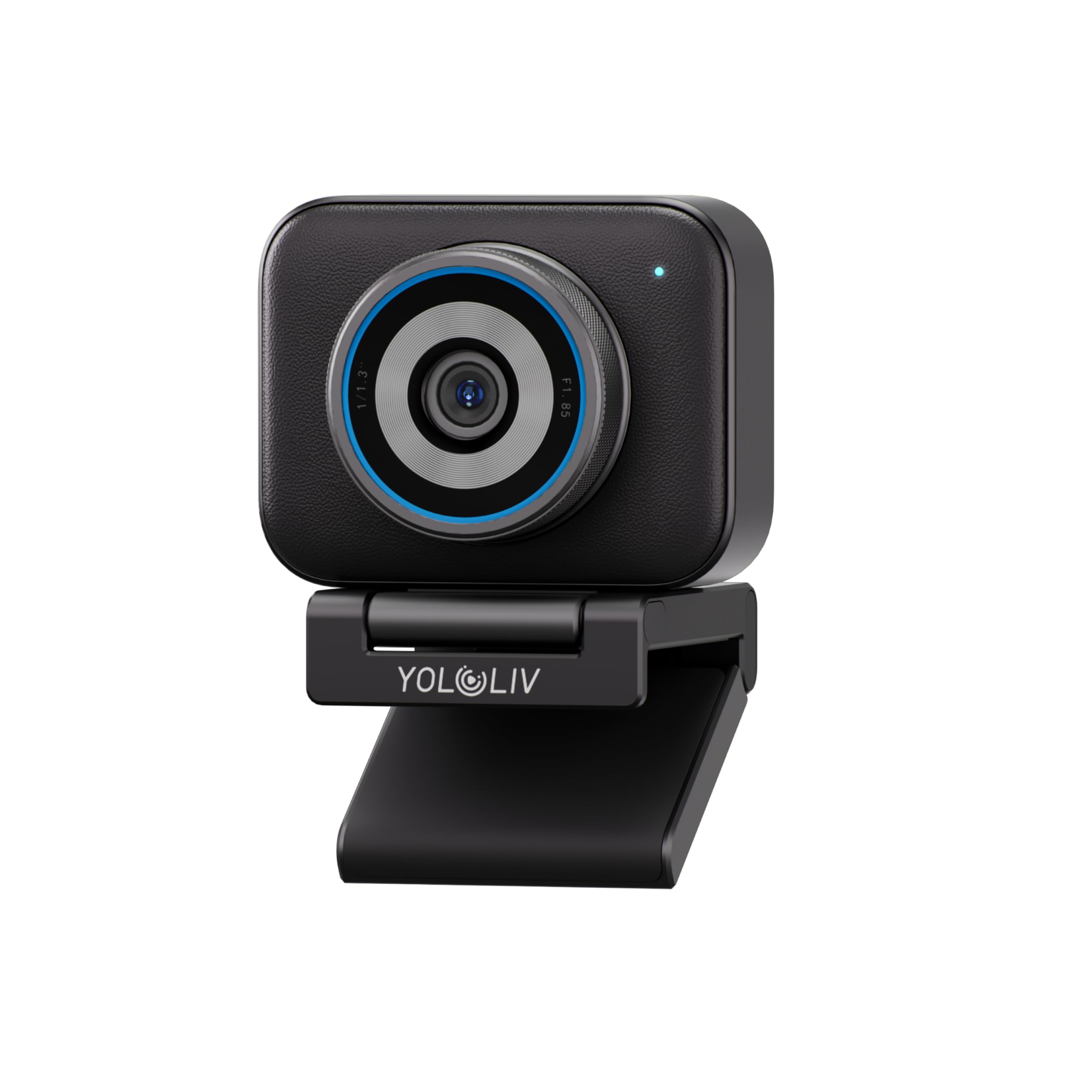
The YoloCam S3 brings a 1/1.3-inch CMOS sensor to a USB webcam, and the image shows it: natural bokeh separates a face from a busy desk or bedroom background in a way most 4K webcams cannot. Uncompressed 4K at 30fps and 1080p at 60fps gives creators a clean signal for streaming or recording, while the metal housing keeps the unit rigid on a monitor mount. The depth-of-field effect is the key distinction here; it is closer to what a dedicated camera produces than the flat, everything-in-focus look of typical conference webcams.

That imaging performance justifies the premium positioning. An 82-degree field of view frames a standard head-and-shoulders shot without the fisheye look of cheaper wide-angle lenses, and the larger sensor holds up well in ordinary indoor lighting. The uncompressed signal also gives streaming software more latitude to adjust color before compression, which matters when you are layering graphics or grading a quick cut.

This is an imaging-first tool for streamers and content creators who already own a microphone and can accept that a dropped connection or an app restart may interrupt a session. Buyers expecting a complete one-cable conference camera should look at the premium Logitech flagship instead; the S3 gives you the image, not the full package. Within that boundary, the sensor and lens combination delivers a coherent reason to choose it over general-purpose 4K cams.

Pros

  • Large-sensor bokeh gives video a DSLR-like depth separation without needing a separate camera.
  • Metal body feels dense and well-constructed compared with plastic webcams.
  • Uncompressed 4K output undercuts the cost of a dedicated mirrorless streaming setup.

Cons

  • Autofocus can hunt or lose lock in some setups, so a quick focus check before longer recordings is wise.
Our verdict

For creators who want large-sensor depth and a clean 4K feed without moving to a dedicated camera, the S3 is a strong imaging-centric option.

Check Latest Price
7

Entry-Level Streaming

EMEET S600 4K

88 /100
Studio Score Strong Evidence

Key details

Microphones
Dual noise-canceling
Autofocus Type
PDAF
Sensor & Low Light
Sony 1/2.55-inch CMOS
Software & Compatibility
Check Price on Amazon

The S600's Sony sensor produces strong color at 1080p60, a practical mode for live streaming, and the adjustable FOV at 1080p allows framing changes without extra software. PDAF autofocus and dual noise-canceling mics round out a tidy package for entry-level broadcasters.

4K delivery is less consistent: not every app recognizes the 4K mode, and some platforms cap the feed at 1440p, so this camera suits streamers who treat 4K as a bonus rather than a guarantee. The tripod mount is shallow, which can frustrate anyone using a standard screw. PS5 and Linux users should verify support before buying; this one fits Windows and Mac streaming workflows.

Pros

  • Strong streaming-focused 4K picture quality for the price.
  • PDAF autofocus and dual mics made setup and talking-head shots hassle free.
  • Adjustable FOV at 1080p adapts to face-only or desk-wide framing.

Cons

  • Tripod mount is shallow; some standard tripod screws won't fully engage.
  • True 4K may not be recognized by every app; some platforms cap the feed at 1440p.
Our verdict

Choose the S600 for a Windows/Mac streaming rig where 1080p60 and Sony color matter more than guaranteed 4K in every app. The all-round EMEET in this lineup remains the better fit for general desktop use.

Check Latest Price
8

PTZ Streaming

Insta360 Link 2 Pro

87 /100
Studio Score Strong Evidence

Key details

Microphones
Directional dual-mic beamforming
Autofocus Type
Auto/manual focus
Sensor & Low Light
1/1.3-inch CMOS
Software & Compatibility
Stream Deck workflow
Check Price on Amazon

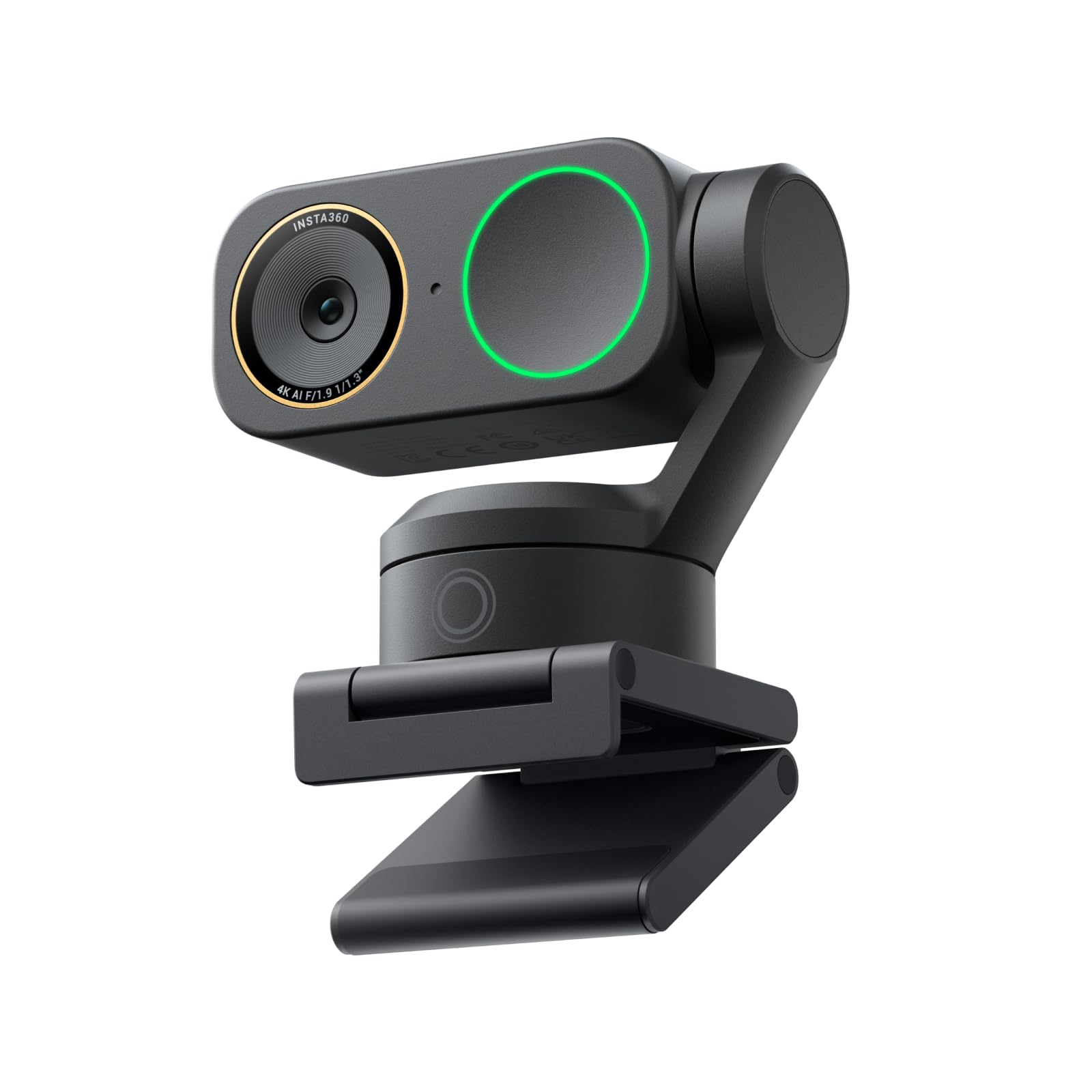
The Link 2 Pro is the physical-PTZ flagship of this group, combining motorized pan-tilt tracking with a 1/1.3-inch low-light sensor and native Stream Deck integration. Image quality stays clean and detailed in dimly lit rooms, and the AI tracking follows a moving subject smoothly. The motorized range is what separates it from the slimmer AI-tracking webcam in this set. The premium price makes sense when the motor is central to the workflow, which points this at streamers rather than general meeting use.

Pros

  • Strong 4K image with clean low-light rendering suits dim studio spaces.
  • Motorized AI tracking keeps a moving presenter framed through a wide pan-tilt range.
  • Stream Deck integration and premium build fit a serious streaming rig.

Cons

  • During a live stream, switching camera modes can cause a brief audio sync lag.
  • TikTok Studio and OBS can crash or refuse to cooperate in certain setups.
Our verdict

The Link 2 Pro fits streamers who need physical PTZ tracking, low-light 4K, and Stream Deck control; casual meeting use is better served by the compact AI option in this set.

Check Latest Price

How to Choose

Sensor Size & Low Light

Sensor size determines how much light the camera can capture at a given resolution. A 1/1.3-inch sensor collects significantly more light than the 1/2.7-inch sensors in entry-level models, which means less noise and better color in dim rooms.

For a home office with a window behind you, a larger sensor gives software more room to recover shadows. If you only stream under controlled lighting, a smaller sensor is acceptable.

Autofocus Type & Reliability

Autofocus is the highest-complaint component in this category. Budget webcams often use contrast-based systems that hunt when you lean forward or hold up a product. Phase-detection autofocus (PDAF) locks onto the subject faster and is the mechanism to look for if you move around.

Even PDAF cameras can drift after months of use, so check whether the focus can be locked manually. A fixed focus at 1080p can look better than a 4K feed that constantly searches.

Field of View & Privacy Shutter

Field of view sets how much of the room appears on camera. A 65-degree lens frames one person closely; a 90-degree lens shows the desk and background. Wide-angle lenses introduce edge distortion, so choose the narrowest FOV that fits your framing.

A physical privacy shutter blocks the lens when not in use. It matters because disabling the camera in software does not guarantee the built-in mics are off.

Microphone Quality & Noise Handling

Built-in mics use omnidirectional or noise-canceling patterns. Omnidirectional mics pick up sound evenly, which can make meetings echo in a hard-walled room. Beamforming mics focus on the speaker's voice and reject off-axis noise, but cannot match a dedicated microphone placed close to you.

For video calls, dual noise-canceling mics are usually enough. For streaming, budget for an external mic.

Software & Platform Compatibility

The companion app controls resolution, exposure, white balance, and sometimes AI framing. Some cameras ship in 1080p mode and only output 4K after you change a setting in the app or OBS. If you do not want to manage software daily, a plug-and-play camera with no driver requirement is safer.

Platform compatibility is separate from software. A camera may work in Teams but not on a specific Mac or Linux setup. Confirm your OS and meeting apps before relying on it.

Frequently Asked Questions