6 Best 135Mm Lens of 2026: Flagship-Level AF for Less

Which 135mm prime for your camera mount delivers f/1.8 sharpness, fast autofocus, and creamy bokeh without overpaying for the first-party badge.

A 135mm prime is the lens photographers reach for when they want the background to melt and the subject to stay tack sharp. The trade-off is usually money and focus speed: fast autofocus at f/1.8 has been a flagship privilege, while budget options meant manual focus and patient technique.

That split is disappearing. Third-party AF versions now deliver wide-open sharpness, smooth bokeh, and weather-sealed builds that were once flagship-only. What separates them is no longer optical quality so much as autofocus behavior in low light and the weight you are willing to carry.

So choose based on your actual shooting: if your subject moves, buy autofocus; if you shoot wide-field astro from a tripod, a manual f/2 is enough and saves real money. The right 135mm is the one that fits both your mount and your tolerance for focusing.

1

Best Overall

Viltrox 135mm F1.8 LAB FE

91 /100
Studio Score High Confidence

Key details

Focus Type
Autofocus
Max Aperture
f/1.8
Optical Design
14 elements, 11 blades
Mount Compatibility
Sony E
Check Price on Amazon

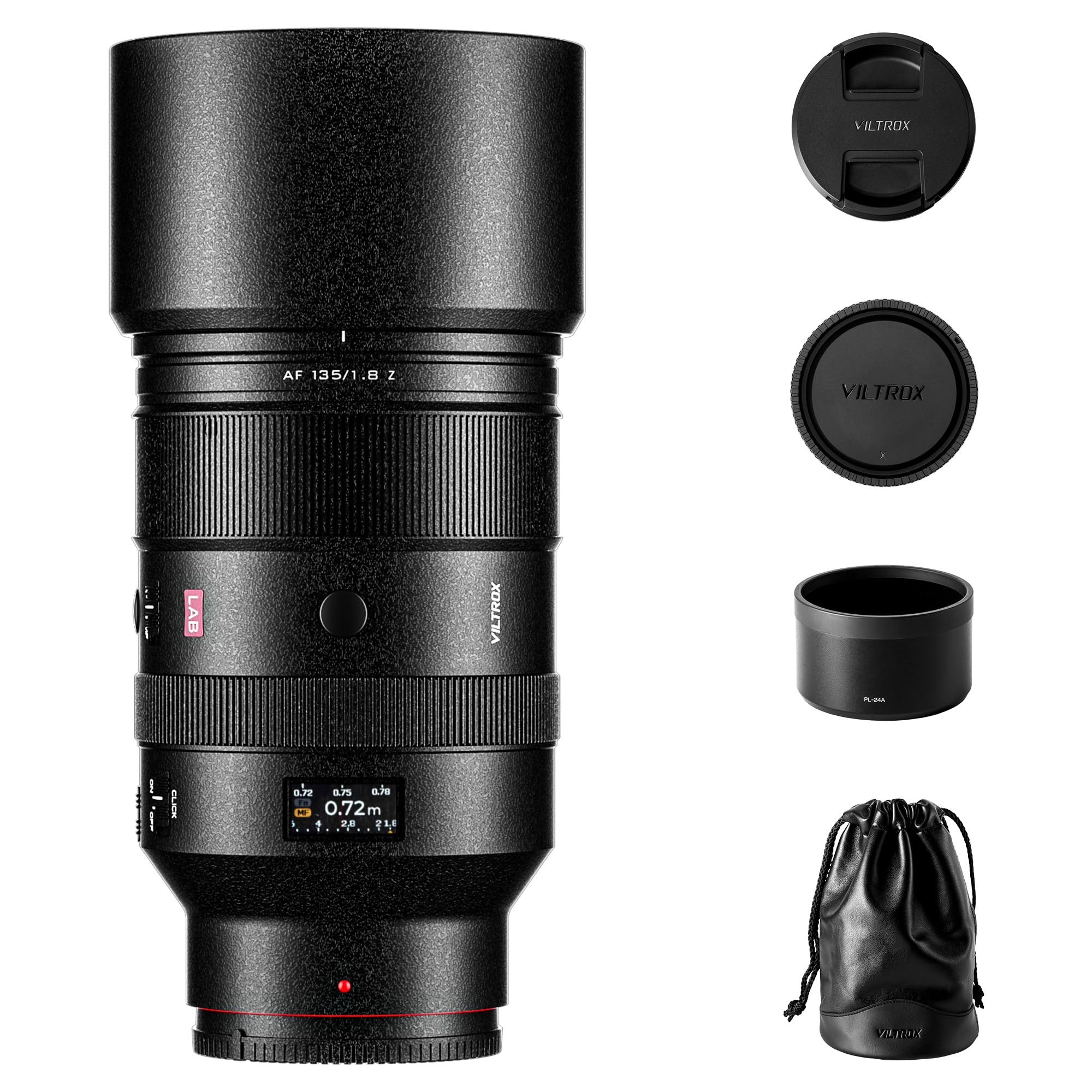
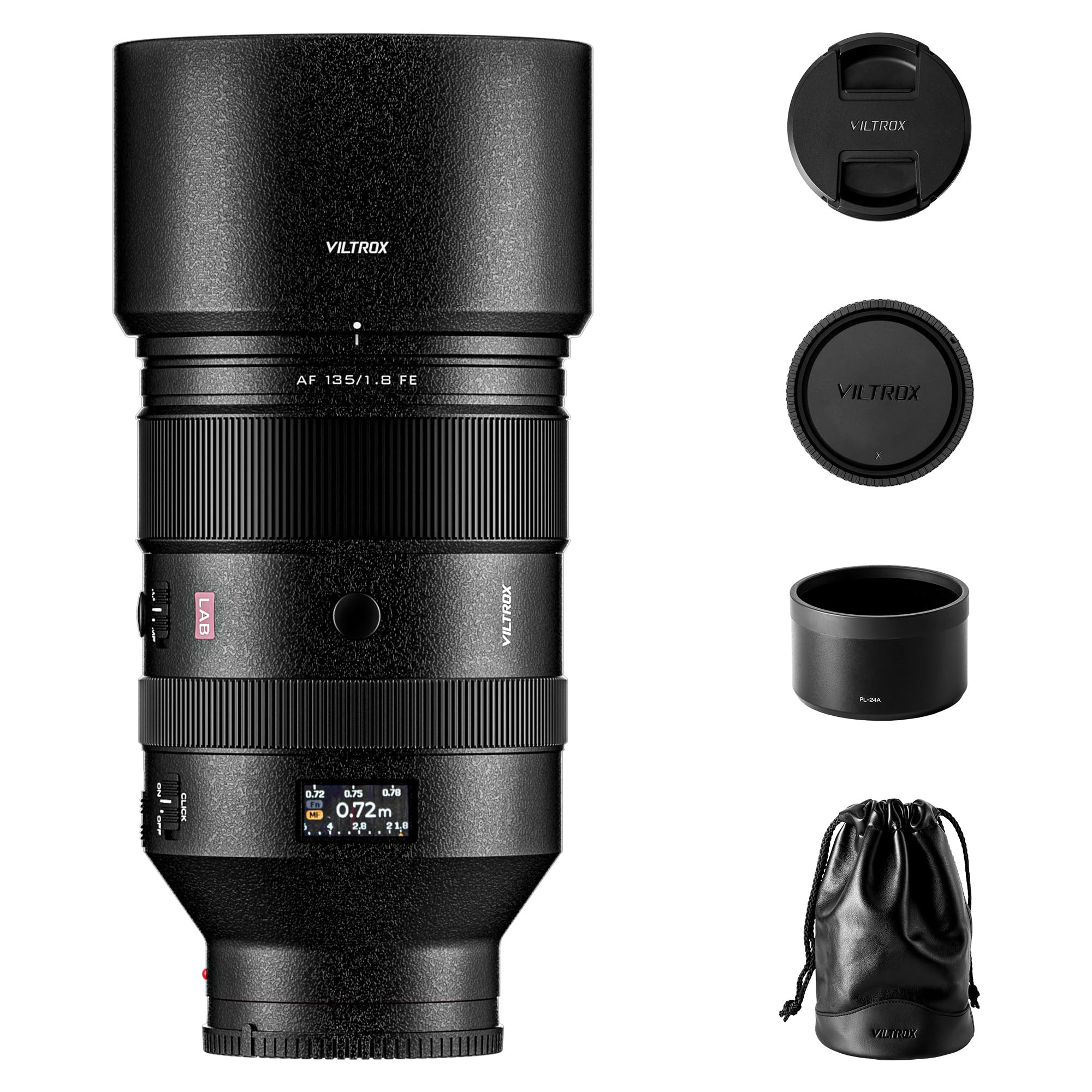
The Viltrox 135mm f/1.8 LAB FE pairs corner-to-corner sharpness at f/1.8 with smooth bokeh, low chromatic aberration, and quiet autofocus in a weather-sealed all-metal body. At a mid-range price, it delivers the optical behavior that once stayed exclusive to first-party flagship primes. The 14-element design keeps high-contrast edges clean, and the 11-blade iris renders background highlights as smooth circles. Subject isolation is the classic 135mm signature: faces stay crisp while backgrounds fall away.

Normal-light focusing is quick and confident. Initial lock is immediate, tracking holds through portrait bursts, and the motor stays quiet enough for video. The focus ring and aperture ring both have a firm, damped feel, and the weather-sealed barrel makes outdoor sessions practical without babying the gear. Controls are positive enough for fast adjustments between shots, and the build quality gives no sense of a cost-cut body.

This lens fits Sony E shooters who want a dedicated 135mm prime for portraits, weddings, events, and hybrid work without paying flagship money. Budget-conscious buyers keep f/1.8 and weather sealing instead of dropping to a manual-focus f/2 lens. Autofocus can slow or hunt in low light and video, so fast action in dark venues still belongs to the original Sony premium lens; for paced portrait and event work, the tradeoff is manageable.

The manual Rokinon primes in this group cost less but require deliberate focusing and no autofocus. The Sony G Master is a premium-priced alternative with first-party polish. The Viltrox lands between them: f/1.8, AF, weather sealing, and sharpness all in one body, which makes it the value benchmark for 135mm shooting on Sony E.

For hybrid shooters, f/1.8 and quiet AF make the lens practical across a full day: a posed portrait session in the morning, an event in the afternoon, and a video interview in controlled light. The fixed focal length forces a specific working distance, which is exactly what a 135mm portrait prime is supposed to do; you move your feet, and the lens rewards you with compression and separation that zooms cannot match.

Pros

  • Flagship-grade f/1.8 optics at a mid-range price, giving Sony E shooters a fast telephoto without a flagship budget.
  • Sharpness holds across the frame wide open, with clean corners and minimal chromatic aberration.
  • Autofocus is fast and quiet in normal light, holding focus through bursts and video work.
  • Weather-sealed all-metal body with firm controls holds up in outdoor sessions.

Cons

  • Low-light and video autofocus can slow or hunt before settling, which is the main gap to the premium Sony lens.
Our verdict

The Viltrox 135mm f/1.8 LAB FE is the Sony E telephoto prime to build a portrait kit around when you want f/1.8, autofocus, and weather sealing without flagship pricing.

Check Latest Price
2

Flagship Performer

Sony FE 135mm F1.8 GM

89 /100
Studio Score Strong Evidence

Key details

Focus Type
Autofocus
Max Aperture
f/1.8
Optical Design
11-blade aperture
Mount Compatibility
Sony E
Check Price on Amazon

The FE 135mm F1.8 G Master is the reference Sony 135mm: four XD linear motors drive focus with authority, and wide-open images are sharp across the frame. The G Master design does not need to be stopped down for critical detail, so the lens is equally useful in dim event spaces and studio work. The 11-blade iris renders backgrounds with a smooth falloff and keeps specular highlights round, which contributes to the bokeh. That combination puts it ahead of slower third-party primes in the mount.

On A9 and A7-series bodies, autofocus tracks moving subjects while staying quiet enough for documentary work. There is no hunting when the camera locks onto a face or eye, and the lens holds that lock through short bursts. The manual focus ring offers enough resistance for deliberate adjustments, and the G Master build quality feels substantial in hand. Native E-mount integration also means body-based corrections and focus information are fully available.

This is for Sony E professionals who need the sharpest wide-open 135mm and the fastest AF the mount offers, and who accept the premium price for that performance. Photographers who do not need that speed can choose slower alternatives without sacrificing image quality.

Pros

  • Extremely sharp even wide open, so f/1.8 is usable for critical detail.
  • Lightning-fast quiet autofocus that tracks moving subjects on A9 and A7 bodies.
  • Smooth bokeh and first-party G Master build quality from a 135mm that feels ready for pro work.

Cons

  • For static portrait work, the autofocus speed advantage has little effect on the final image.
  • The lens is heavy; travel shooters will feel the added weight in the bag.
Our verdict

Sony's 135mm reference, and the choice for assignments where autofocus speed and wide-open sharpness both have to be there.

Check Latest Price
3

Best Budget Manual-Focus Canon

Rokinon 135mm F2 Canon EF

92 /100
Studio Score High Confidence

Key details

Focus Type
Manual
Max Aperture
f/2.0
Optical Design
9-blade aperture, ED glass
Mount Compatibility
Canon EF
Check Price on Amazon

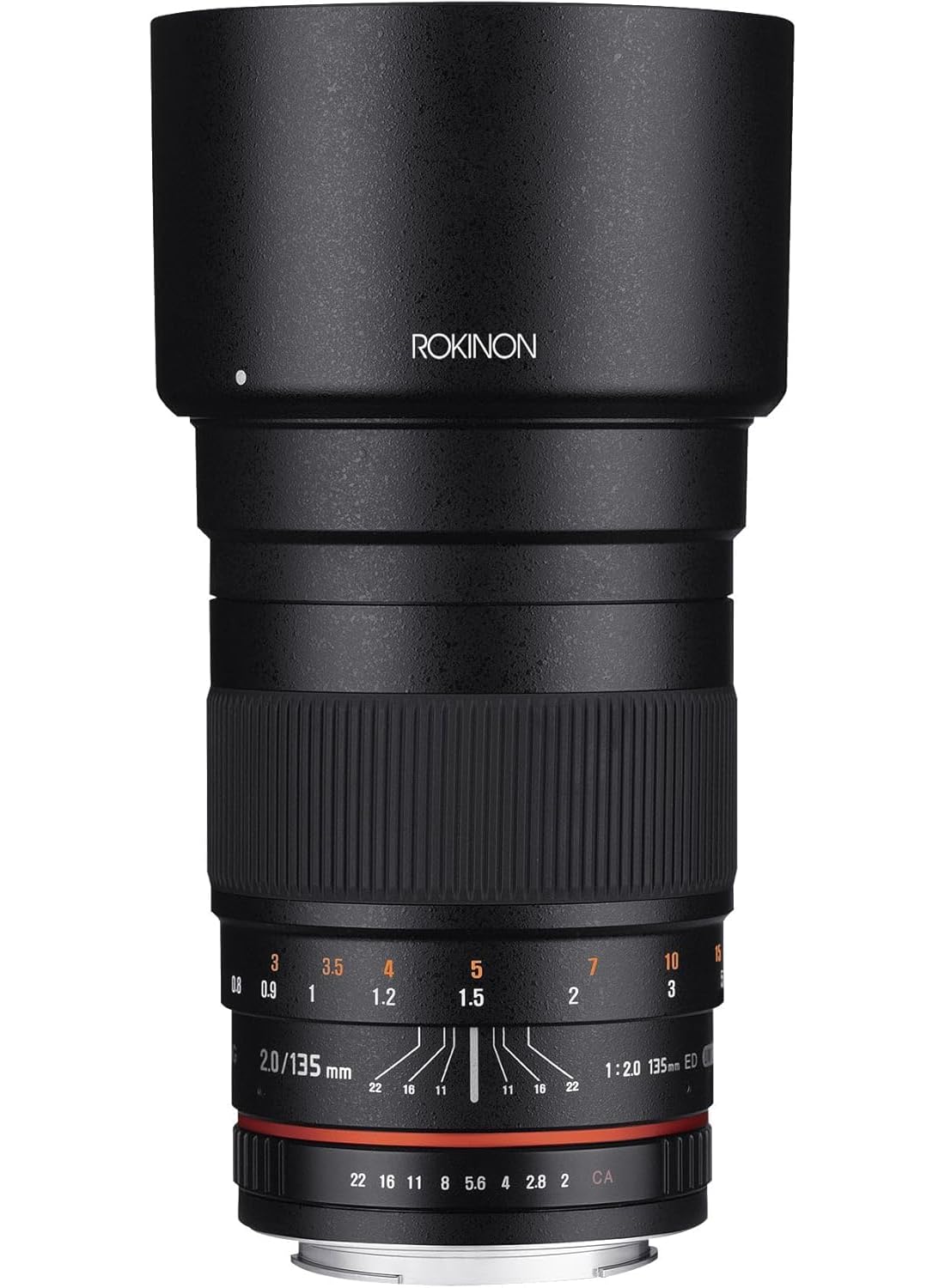
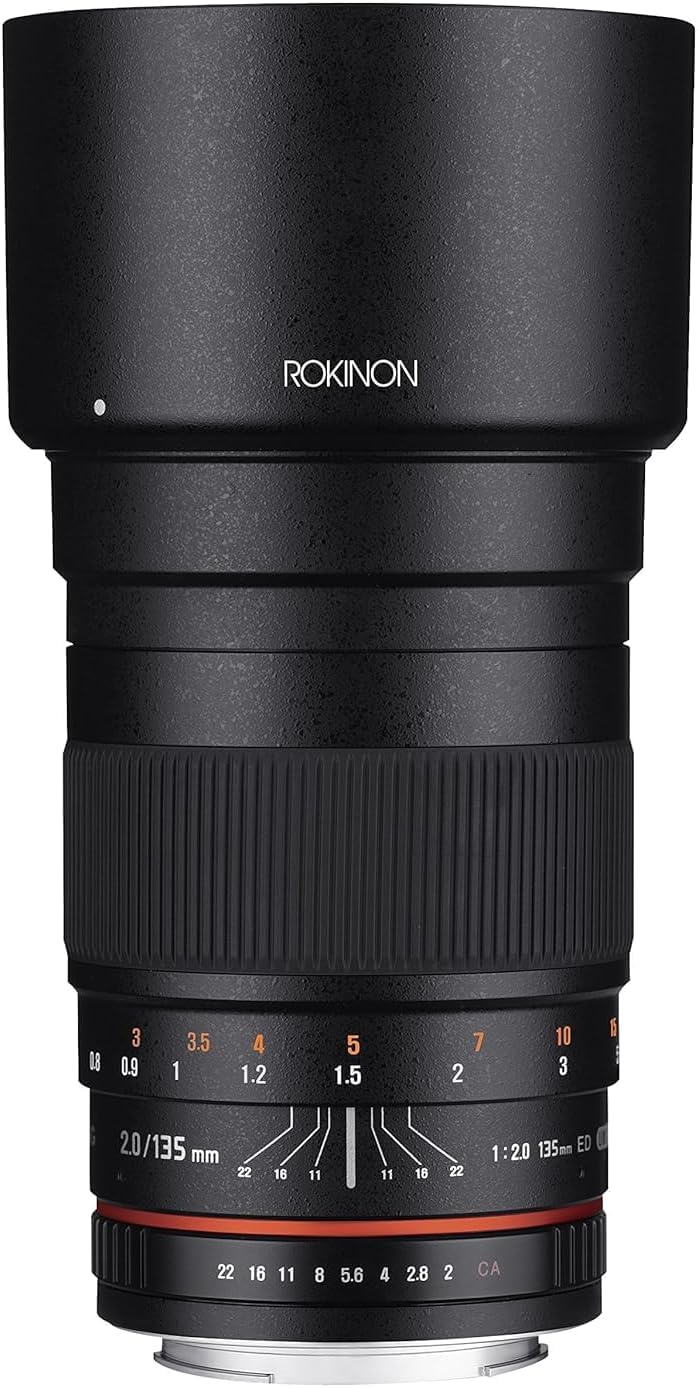
Sharp f/2 optics, a metal housing, and a 9-blade iris give the Rokinon 135mm F2 a clear identity as a budget manual-focus prime for Canon EF shooters. The autofocus primes in this roundup are faster to operate; this lens counters with full-frame f/2 rendering and a damped focus ring at a budget-friendly price. The 9-blade iris keeps out-of-focus highlights smooth, which matters when the lens is used wide open for portraits and stars.

Canon EF shooters who should buy it are already comfortable with manual-only focus and no focus confirmation on Canon EF; live view or focus peaking is the workable path. Portrait photographers working with posed subjects and astrophotographers shooting tracked wide-field images are the natural fit, because the f/2 sharpness and minimal vignetting show up without needing a fast autofocus system. For that buyer, the lack of electronics is not a missing feature; it is simply how the lens keeps the price down.

The focus ring turns with a damped, predictable feel, and the aperture ring clicks through its stops, so the lens handles like a traditional manual prime. It will slow down a shooter who expects AF, but for posed work the manual routine becomes part of the shot.

💡 For critical focus, switch the camera to live view and magnify the focus area rather than relying on the viewfinder.

Pros

  • Sturdy metal housing and a smooth focus ring suit full-frame Canon bodies.
  • Wide-open f/2 sharpness with minimal vignetting on full-frame.
  • A 135mm f/2 prime at a budget price is rare value for Canon shooters.
  • Tracked wide-field astrophotography benefits from f/2 speed and wide-open edge behavior.

Cons

  • No electronic contacts means aperture and focus data stay out of EXIF.
  • Moving subjects have no autofocus fallback; the photographer does all tracking.
Our verdict

Manual focus and no electronics are part of the deal, but the f/2 optical quality makes that a fair trade for Canon EF shooters who work at a deliberate pace.

Check Latest Price
4

Best Native Nikon Z Value

Viltrox 135mm F1.8 LAB Z

86 /100
Studio Score Strong Evidence

Key details

Focus Type
Autofocus
Max Aperture
f/1.8
Optical Design
14 elements, 11 blades
Mount Compatibility
Nikon Z
Check Price on Amazon

Native Z-mount integration is the headline: this 135mm f/1.8 brings sharp wide-open rendering on Nikon's 45MP bodies, a weather-sealed barrel, and autofocus that keeps pace in normal light. The price sits far below the equivalent Nikkor, which makes it the practical value-oriented native-Z option rather than a budget gamble.

The 11-blade iris delivers smooth rounded bokeh, and the weather sealing holds up in light rain and dusty outdoor sessions. At f/1.8, center sharpness stays strong enough for critical detail, so stopping down is not required for portrait work. The lens feels rigid and well assembled.

Focus response is solid in daylight and typical indoor venues, which covers most wedding and event coverage. The AF system is tuned for deliberate shooting rather than fast-moving action, so the lens is happiest with posed subjects and predictable framing. This aligns with its portrait-first personality.

This is the right lens for Nikon Z photographers who want a fast 135mm without first-party pricing. The 1.26 kg weight is manageable on a gripped body, but it will fatigue during long handheld sessions, so studio and short outdoor shoots are the natural setting. Normal-light event work fits it best.

Pros

  • Native Z-mount 135mm f/1.8 at a mid-range price
  • Sharp wide open at f/1.8, resolving 45MP sensors without needing to stop down.
  • Weather-sealed build with focus response that holds up in normal light.

Cons

  • Occasional copy-to-copy variance may show an aperture-control fault where exposure does not change with f-stop.
  • In darker venues or night scenes, autofocus can hunt before locking focus.
Our verdict

Viltrox makes the 135mm f/1.8 a realistic mid-range option for Z-mount portrait work.

Check Latest Price
5

Sigma Art Portrait Specialist

Sigma 135mm F1.8 Art DG HSM

86 /100
Studio Score Strong Evidence

Key details

Focus Type
Autofocus
Max Aperture
f/1.8
Optical Design
9-blade aperture
Mount Compatibility
Sony E
Check Price on Amazon

The Sigma 135mm F1.8 Art DG HSM is a portrait specialist for Sony E shooters: the Art-series rendering is the draw, and it delivers creamy f/1.8 bokeh with a 135mm focal length that flatters facial proportions. This is not a general-purpose prime; it is a lens built around optical character, and its wide-open performance keeps pace with first-party portrait options.

The all-metal Art housing feels solid, and the nine-blade diaphragm keeps out-of-focus highlights smooth. On a tripod, the dense body adds stability; in handheld sessions, the weight makes itself known, but that is a fair trade for photographers who work at a deliberate pace with a monopod or a bracing hand.

Compared with the top pick in this category, the Sigma leans into rendering while the top pick balances speed, weight, and value. The value-focused alternative may be the easier all-around recommendation, but the Sigma keeps the Art-series character that has drawn portrait and studio shooters to this focal length.

The right buyer is a Sony E portrait or studio photographer who values Sigma Art rendering over AF speed or a light kit. Heavy, and autofocus is not as quick as native Sony options, so event shooters needing fast AF and travel photographers trimming pack weight should look elsewhere. For posed portraits with the camera on a support, the slower AF is not a limiting factor.

💡 A monopod or tripod turns the 1.13 kg body into a stable platform for long studio sessions.

Pros

  • Creates smooth, creamy bokeh at f/1.8 for portrait work.
  • Solid Art-series construction with a dense metal barrel.
  • Nine-blade rounded diaphragm contributes to smooth out-of-focus highlights.

Cons

  • Autofocus can fall behind native Sony lenses in low-contrast or fast-moving scenes.
  • The 1.13 kg body can cause arm fatigue during long handheld portrait sessions.
Our verdict

This is the Sony E 135mm to choose when the Art-series rendering matters more than AF speed or pack weight.

Check Latest Price
6

Nikon Manual Shooters

Rokinon 135mm F2 Nikon F

87 /100
Studio Score Strong Evidence

Key details

Focus Type
Manual
Max Aperture
f/2.0
Optical Design
9-blade aperture, ED glass
Mount Compatibility
Nikon F
Check Price on Amazon

This Nikon F Rokinon is a low-cost 135mm f/2 for Nikon DSLR owners who want portrait compression and astro reach without paying autofocus premiums. It shares the sharp glass and 9-blade iris of the Canon sibling, and the AE chip is meant to feed exposure info to F-mount DSLRs. The manual-only focus workflow asks more of the shooter, and the AE chip may not communicate through the Nikon FTZ adapter when adapted to Z bodies. Those two limits keep it out of the runner-up tier, but the optical character is genuine.

Pros

  • Sharp at f/2 with smooth bokeh for portrait and astro work without a premium price.
  • F-mount AE chip gives manual users exposure feedback on Nikon DSLR bodies.
  • Low-cost entry to a fast 135mm prime for Nikon owners who focus manually.

Cons

  • AE-chip communication through the Nikon FTZ adapter may not work, so Z-mount metering may need a manual workaround.
  • Manual focus on moving subjects is only practical with practice and focus aids.
Our verdict

Nikon F shooters already comfortable with manual focus get a budget 135mm f/2 for astro and portrait work; Z-mount users should plan a manual exposure workflow.

Check Latest Price

How to Choose

Mount Compatibility

Mount decides not just physical fit but electrical communication. A native lens gets autofocus, exposure metering, and in-body corrections; an adapted lens can lose one or more of those, and the FTZ adds a compatibility question for Nikon F glass on Z bodies.

Buy for the camera you own, not the one you plan to own someday. A 135mm prime is a long-term tool, and a mismatched mount turns it into a tripod-only lens.

Autofocus vs Manual

Autofocus lenses move internal elements with motors; manual lenses rely on a helicoid you turn by hand. That distinction changes the shooting experience more than sharpness. AF matters when the subject moves, when your eye leaves the viewfinder, or when you shoot events. Manual is viable for tripod astro and posed portraits.

Focus peaking and live view close the gap, but they do not make a manual lens track a moving subject. If your main subject is a toddler or a runner, budget for autofocus first.

Maximum Aperture

f/1.8 versus f/2.0 is about one-third of a stop, not a dramatic low-light difference. The bigger consequences are viewfinder brightness, bokeh softness, and lens size. At 135mm, both can isolate a face from a busy background; the f/1.8 designs simply throw backgrounds softer at the same distance.

Do not overpay for f/1.8 if your subject is static and you shoot from a tripod. If you shoot handheld in dim rooms, the extra light helps once the exposure drops.

Optical Design

Bokeh comes from the aperture blade count, blade curvature, and the optical elements that control spherical aberration and chromatic aberration. Nine blades make acceptable sunstars and round highlights; 11 blades stay rounder when stopped down.

ED and low-dispersion glass suppress purple fringing on high-contrast edges. That matters at 135mm because shallow depth of field puts out-of-focus transitions next to in-focus edges, and color fringing is easy to spot on specular highlights.

Weight and Sealing

Metal-barreled 135mm primes hang heavy on the body, and the weight changes how long you can shoot handheld. Weather sealing adds gaskets and internal seals that keep dust and moisture out of the focus and aperture mechanisms.

A sealed lens is worth it for beach, rain, and event work; a lighter lens is worth it for travel and walkaround shooting. There is no free lunch: sealing adds weight and bulk.

Frequently Asked Questions