9 Best Used Prime Lens of 2026: Find Your Mount, Look, and Budget

The best used prime lens depends on your mount, sensor size, and autofocus expectations — here's how to match one to your camera.

Most used-prime shopping begins with the 50mm f/1.8, but on an APS-C body that focal length becomes a 75-80mm portrait view instead of an everyday normal. Start with focal length equivalence, not price or brand, because it decides whether the lens stays on the camera or stays in the bag.

Budget primes deliver the same bright look but often use older focus motors that hunt and make noise. Video shooters should look for STM, Silent Wave, or linear motors; stills photographers can tolerate more. It also pays to verify image stabilization on the exact model, since some listings credit a prime with VR or OSS it does not have.

The right used prime turns your kit zoom's weakest setting — low light and shallow depth of field — into a strength. If the focal length matches the way you shoot, minor build and focus quirks become easy to live with. If it does not, no discount makes it useful.

1

Best Overall Prime

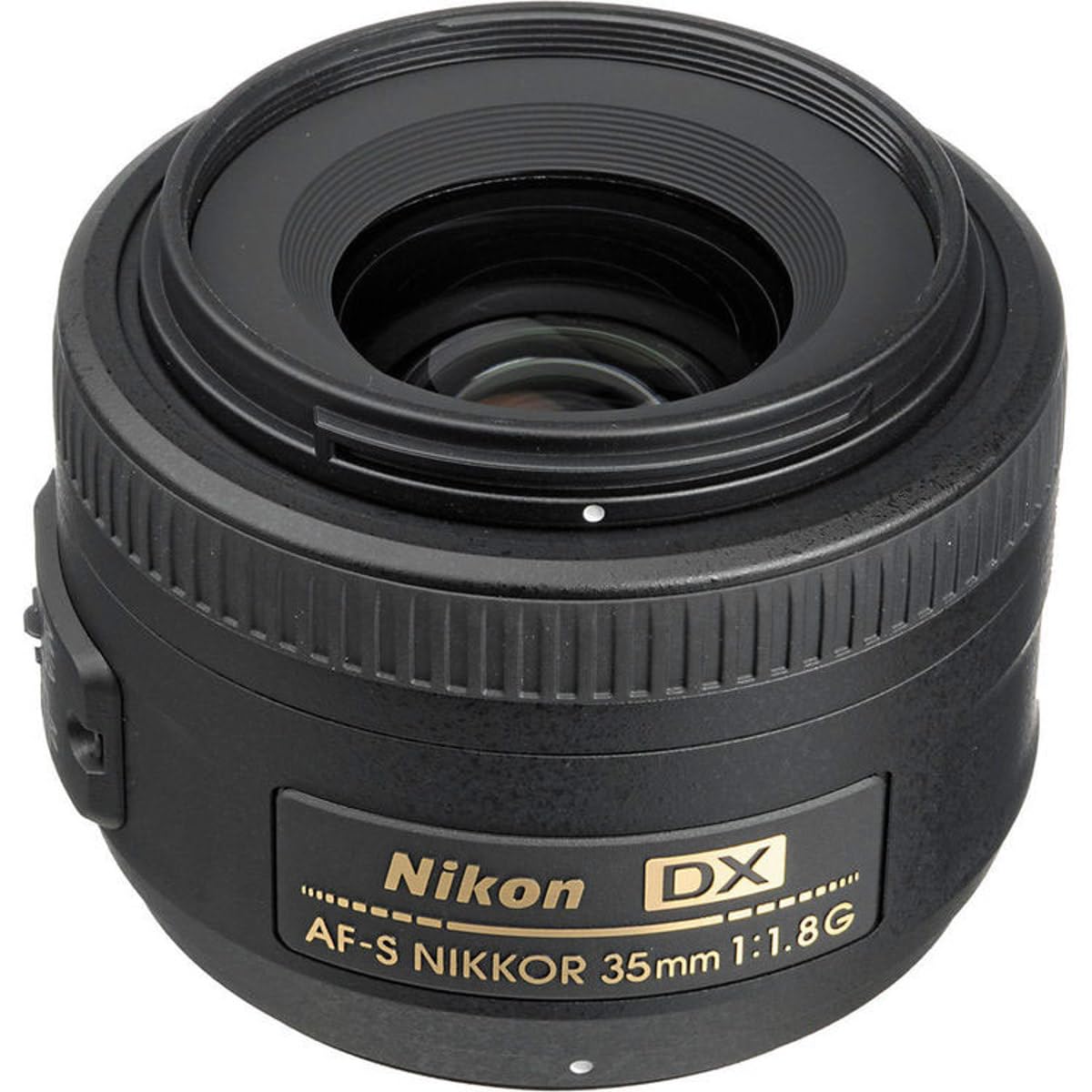
Nikon 35mm f/1.8G DX

96 /100
Studio Score High Confidence

Key details

Mount
Nikon F DX
Max Aperture
f/1.8
Autofocus System
SWM
Image Stabilization
None
Check Price on Amazon

The 35mm f/1.8G DX delivers a true normal view on Nikon APS-C bodies, with a focal length that matches casual framing more naturally than a 50mm lens. The 35mm focal length on a DX sensor produces a field of view close to a natural perspective, so framing feels less engineered than a longer prime. The f/1.8 aperture opens up indoor and evening shooting, and the lens stays sharp at the center wide open while gaining crisp detail across the frame when stopped down. Background blur is smooth and unobtrusive, which gives portraits a cleaner look without turning the lens into a dedicated telephoto.

On a DX camera, this is the prime that ends up left on the body. The compact build keeps it light enough for daily carry, and the 35mm field of view works for street scenes, environmental portraits, and general walk-around photography. Because the lens does not exaggerate distance, moving a step or two closer changes the composition without requiring a zoom ring. That makes it a useful learning tool for photographers who want to develop an eye for framing.

The used market is active enough that a pre-owned copy fits a beginner's budget, and the payoff from a fast prime shows up immediately in low-light shots. This is the lens that turns a kit-zoom habit into a fixed-focal-length workflow without asking you to pay for a second camera system. At its price, the sharpness and f/1.8 aperture deliver a clear upgrade over a standard zoom.

This lens is for the Nikon DX DSLR owner who is ready to move past the kit zoom. It suits beginners who want one prime to learn framing, and it gives low-light shooters a fast aperture without the size or cost of a zoom. If you shoot full-frame FX, this is not the lens for you; the DX image circle is made for APS-C bodies. It is not weather-sealed, so treat it as a fair-weather lens. Because focus calibration can vary between individual copies, set aside a few minutes to check focus when you first mount it.

Pros

  • Sharp, detailed images at f/1.8 on a Nikon DX body
  • Budget-friendly entry point to a fast prime for beginners
  • f/1.8 aperture handles indoor and evening shots without flash
  • Smooth, natural background blur for portraits
  • Compact size and natural 35mm framing suit everyday carry

Cons

  • Autofocus speed can be inconsistent in low light
Our verdict

For Nikon DX shooters, this is the prime that makes the format click: sharp at f/1.8, compact enough to carry daily, and cheap on the used market.

Check Latest Price
2

Best Canon EF Nifty Fifty

Canon EF 50mm f/1.8 STM

95 /100
Studio Score High Confidence

Key details

Mount
Canon EF
Max Aperture
f/1.8
Autofocus System
STM
Image Stabilization
None
Check Price on Amazon

The Canon EF 50mm f/1.8 STM is the nifty-fifty that Canon DSLR owners meet first: quiet STM focus, a 50mm f/1.8 portrait rendering, and a long-used optical formula backed by a deep used market. Used listings are common, which makes this an easy lens to find for anyone shopping the secondhand market. It stays in the budget tier without looking like a compromise once the images are on screen.

At f/1.8, backgrounds separate naturally and portrait subjects stay distinct. The compact barrel balances well on smaller Canon DSLRs, and the images carry the classic 50mm look: natural compression and smooth falloff. The wide aperture also helps in dim interiors without flash.

This is a first prime for Canon DSLR owners who want the f/1.8 portrait look without spending much. The 50mm focal length on APS-C becomes a portrait-length lens rather than a normal view, so a 35mm APS-C prime remains the more flexible first-prime default. Buyers who need manufacturer warranty support should treat this international listing as a seller-policy purchase and confirm return terms before paying.

💡 Stop down to f/2.8 or f/4 for crisper corners; wide open trades edge detail for background blur.

Pros

  • Budget-friendly entry into the f/1.8 portrait look on Canon EF.
  • Quiet STM autofocus works for stills and casual video indoors.
  • Natural background blur flatters portrait subjects without heavy editing.

Cons

  • Plastic barrel and thin manual focus ring feel less refined than pricier primes.
  • No image stabilization; the f/1.8 aperture helps stills, but handheld low-light video can be shaky.
Our verdict

For Canon DSLR owners seeking an affordable f/1.8 portrait prime, this remains the EF entry point.

Check Latest Price
3

Best APS-C Wide-Angle Prime

Sigma 16mm f/1.4 DC DN

96 /100
Studio Score High Confidence

Key details

Mount
Sony E
Max Aperture
f/1.4
Autofocus System
Fast Hybrid AF
Image Stabilization
None
Check Price on Amazon

The Sigma 16mm f/1.4 DC DN is the fast wide-angle specialist among Sony APS-C primes. Its f/1.4 maximum aperture and edge-to-edge sharpness turn a 24mm-equivalent field of view into a genuine low-light landscape and astro tool rather than a casual wide snapshot. That separates it from compact f/2.8 wide primes that need longer exposures to capture the same scene. For indoor or night work, the wide frame also keeps environmental context while holding shutter speeds high enough to freeze subject motion.

Autofocus responds well to Sony Fast Hybrid AF, and the focus ring is predictable when you switch to manual control for stills or video. The barrel is dense enough for tripod and gimbal use, and the build tolerates outdoor conditions without feeling like a budget lens. Vloggers get a wide frame with background context and a fast aperture that keeps the speaker visually distinct from the scene in lower light.

This lens covers APS-C sensors only; full-frame E-mount bodies do not get full coverage. It suits landscape, astro, gimbal video, and event shooters who want a fast wide prime rather than a general-purpose normal. On a6000-series bodies, the size and weight are noticeable, so a tripod, gimbal, or two-handed grip is the comfortable route.

Pros

  • Fast f/1.4 aperture and edge-to-edge sharpness make it a low-light wide-angle tool.
  • Build quality holds up for outdoor field work without feeling like a budget lens.
  • Autofocus is quick and accurate with Sony Fast Hybrid AF for stills and video.
  • Mid-range price buys optical performance well above typical kit zoom quality.

Cons

  • The 24mm-equivalent view is firmly wide; it will not double as a normal or portrait prime.
  • No optical stabilization, so handheld low-light shots on non-IBIS a6000 bodies depend on shutter speed or support.
Our verdict

For the APS-C Sony shooter whose regular work includes night landscapes, astro, or gimbal video, this is the wide prime that covers those assignments in one lens.

Check Latest Price
4

Best Value Portrait Telephoto

Sony 85mm f/1.8 FE

94 /100
Studio Score High Confidence

Key details

Mount
Sony E
Max Aperture
f/1.8
Autofocus System
Double linear motor
Image Stabilization
None
Check Price on Amazon

The 85mm f/1.8 FE is a dedicated full-frame portrait prime with a 9-blade aperture and a double linear motor in a body that stays light on the camera. It gives Sony shooters a near-GM bokeh character without the G Master build premium, and the longer focal length separates it from the stabilized 50mm primes in this market.

Backgrounds render with smooth, rounded highlights, and subject edges hold sharpness wide open. Focus falloff keeps skin tones natural, which suits portrait sessions. The 9-blade aperture keeps out-of-focus highlights round when stopping down, and the lens is most at home framing one person at head-and-shoulders distance. This makes it a predictable tool for paid portrait work where background control matters more than flexibility.

This is for Sony full-frame portrait shooters and wedding or event photographers who want creamy bokeh without moving up to G Master pricing. It is not a first prime for budget-constrained buyers, nor a flexible everyday focal length. No optical stabilization is built into the barrel, so handheld results depend on shutter speed or an in-body stabilization system; on older bodies without IBIS, plan for faster shutter speeds in low light.

Pros

  • Creamy bokeh with sharp detail at portrait distances, and out-of-focus highlights stay smooth.
  • Portrait results show natural skin separation and clean focus falloff wide open.
  • Cost-effective route to near-GM 85mm rendering without the heavier G Master build.
  • AF is quick and quiet, suited to wedding and event work without drawing attention.

Cons

  • Autofocus may hunt briefly in low-contrast scenes before locking.
Our verdict

For Sony full-frame shooters whose primary subject is a person, this 85mm delivers the portrait look without the G Master tax; those wanting a first prime or a flexible everyday focal length should look elsewhere.

Check Latest Price
5

Best Full-Frame Nikon Normal

Nikon 50mm f/1.8G AF-S

96 /100
Studio Score High Confidence

Key details

Mount
Nikon F
Max Aperture
f/1.8
Autofocus System
SWM
Image Stabilization
None
Check Price on Amazon

The Nikon AF-S 50mm f/1.8G is the compact FX normal that pairs a budget price with creamy bokeh and sharp results. Unlike the 35mm crop-sensor normal in this roundup, it covers the full frame, and its AF-S motor keeps focus quiet enough for everyday stills work.

Wide open at f/1.8, the lens delivers a crisp center and smooth background blur; stopping down a step or two tightens the frame edges. Indoors, the combination of a fast aperture and the classic 50mm view makes flash-free shooting practical, while portraits get a gentle separation from the background. Manual focus override is there when the AF lock needs a nudge.

On the used market, the AF-S motor is a practical advantage: it focuses on Nikon DSLRs that lack an in-body focus motor, which older AF-D 50mm primes cannot do. That broadens the list of bodies this lens can live on before an eventual full-frame upgrade.

The best fit is a Nikon full-frame DSLR owner who wants a small normal prime for everyday carry, low-light shoots, and portraits. DX users can also use this as a 75mm-equivalent portrait lens, but with no image stabilization and a longer view than the 35mm normal, it is not the crop-sensor walk-around answer.

Pros

  • Sharp, crisp image quality wide open, with enough resolution for indoor and portrait work.
  • Budget-friendly pricing for a full-frame normal with this optical character.
  • Creamy bokeh that separates subjects from backgrounds in portraits.
  • Strong low-light results with an f/1.8 aperture that keeps shutter speeds usable indoors.

Cons

  • In quiet video scenes, the focus motor can be picked up by the built-in mic.
  • Autofocus can hunt in low-contrast scenes or certain camera modes.
Our verdict

For Nikon FX shooters, the 50mm f/1.8G is the compact normal that delivers the prime-lens look; a used copy is a practical entry point.

Check Latest Price
6

Best Stabilized APS-C Prime

Sony 50mm f/1.8 OSS

93 /100
Studio Score High Confidence

Key details

Mount
Sony E APS-C
Max Aperture
f/1.8
Autofocus System
Stepping motor
Image Stabilization
OSS
Check Price on Amazon

Built-in Optical SteadyShot sets this Sony E 50mm f/1.8 apart from the full-frame 85mm portrait option: on older APS-C bodies without IBIS, the lens itself provides the stabilization. The 75mm-equivalent field of view is a dedicated portrait length, not the everyday normal framing of the top pick, and the compact barrel balances well on a6000-series bodies. It is light enough to stay on the camera for a full day of shooting, which matters for a prime that often becomes the default go-to lens.

Sony APS-C shooters who want a stabilized prime for both stills and handheld video are the core match. The OSS is a real advantage on non-IBIS bodies like the a6000, a6300, and a6400, where lens-based stabilization is the only way to keep handheld footage steady. This is not for those who demand the fastest focus response or pixel-level purity at f/1.8; the lens fits a portrait-first workflow, not a run-and-gun event one.

On an a6000 body, the lens becomes the default choice for headshots, product work, and any scene where subject separation matters. The 75mm view is tight enough for portraits but still short enough for incidental walk-around use, and the OSS steadies handheld video in a way that the non-stabilized full-frame portrait primes cannot. Wide-open shots give the soft background separation buyers expect from an f/1.8 prime, and stopping down a touch sharpens edges without losing the portrait feel.

Pros

  • Delivers noticeably sharper images than the kit lens across the aperture range.
  • Smooth, pleasant bokeh that isolates subjects well at f/1.8.
  • Quick, responsive focus in normal lighting conditions.
  • A compact everyday prime for Sony APS-C bodies.

Cons

  • Wide-open high-contrast edges may show purple fringing at f/1.8.
  • Autofocus can hunt in low-contrast scenes, slowing focus confirmation.
Our verdict

A stabilized 75mm portrait prime that gives Sony APS-C shooters a dedicated headshot and handheld-video lens without moving to full-frame.

Check Latest Price
7

Canon RF Vlogging

Canon RF 16mm f/2.8 STM

92 /100
Studio Score High Confidence

Key details

Mount
Canon RF
Max Aperture
f/2.8
Autofocus System
STM
Image Stabilization
None
Check Price on Amazon

Canon's RF 16mm f/2.8 STM is a tiny full-frame ultra-wide that delivers sharp landscape and vlog footage without L-series size or cost. Its value and portability make it a natural travel companion, and the wide field of view is easy to use on a gimbal. The f/2.8 maximum aperture is a real boundary for low-light shooting, and autofocus can hunt in dim, low-contrast scenes. The 16mm focal length is a specialist view: portrait shooters or buyers wanting one general-purpose prime will get more use from a 50mm STM. For Canon EOS R users who want an everyday ultra-wide for travel, real estate, or handheld vlogging, this remains a strong match despite those limits.

Pros

  • Sharp 16mm field of view in a lens small enough for all-day carry or gimbal work.
  • Cost-effective RF ultra-wide that keeps travel and vlogging kits lighter than L-series glass.
  • Crisp rendering for landscape and real-estate shots in a compact, budget-conscious package.

Cons

  • In dim interiors, the f/2.8 maximum aperture calls for higher ISO or slower shutter speeds than a faster prime.
  • In low-contrast evening scenes, autofocus can wander and may need a manual nudge.
Our verdict

For Canon EOS R vloggers and travel or real-estate shooters, the size and price offset the f/2.8 aperture and occasional focus hunting.

Check Latest Price
8

Budget Canon Portraits

Yongnuo 50mm f/1.8

89 /100
Studio Score Strong Evidence

Key details

Mount
Canon EF
Max Aperture
f/1.8
Autofocus System
DC motor
Image Stabilization
None
Check Price on Amazon

Yongnuo's 50mm f/1.8 delivers the shallow depth of field and creamy bokeh Canon shooters expect from a nifty-fifty at an entry-level price. Image quality, especially stopped down, holds up far beyond its price, so the plastic body is easier to accept. Autofocus can lag and hunt in low-contrast scenes, and focus motor noise is audible enough to matter for video or quiet settings; sharpness consistency can vary between copies. This fits a beginner who mainly shoots stills and can take time to focus. If you need quieter AF or more predictable wide-open sharpness, a Canon STM prime is the cleaner upgrade.

Pros

  • Entry-level price makes a 50mm f/1.8 portrait lens accessible to Canon shooters.
  • Clear images and nice depth of field for the money.
  • Pleasing bokeh for portraits.

Cons

  • Focus motor noise is audible and can be disruptive in quiet shooting environments.
  • Autofocus can lag in low-contrast scenes, making moving-subject shots a challenge.
Our verdict

Works as a budget portrait lens for Canon shooters who can accept a noisy focus drive and are just starting out with prime-glass rendering.

Check Latest Price
9

Budget Sony Full-Frame

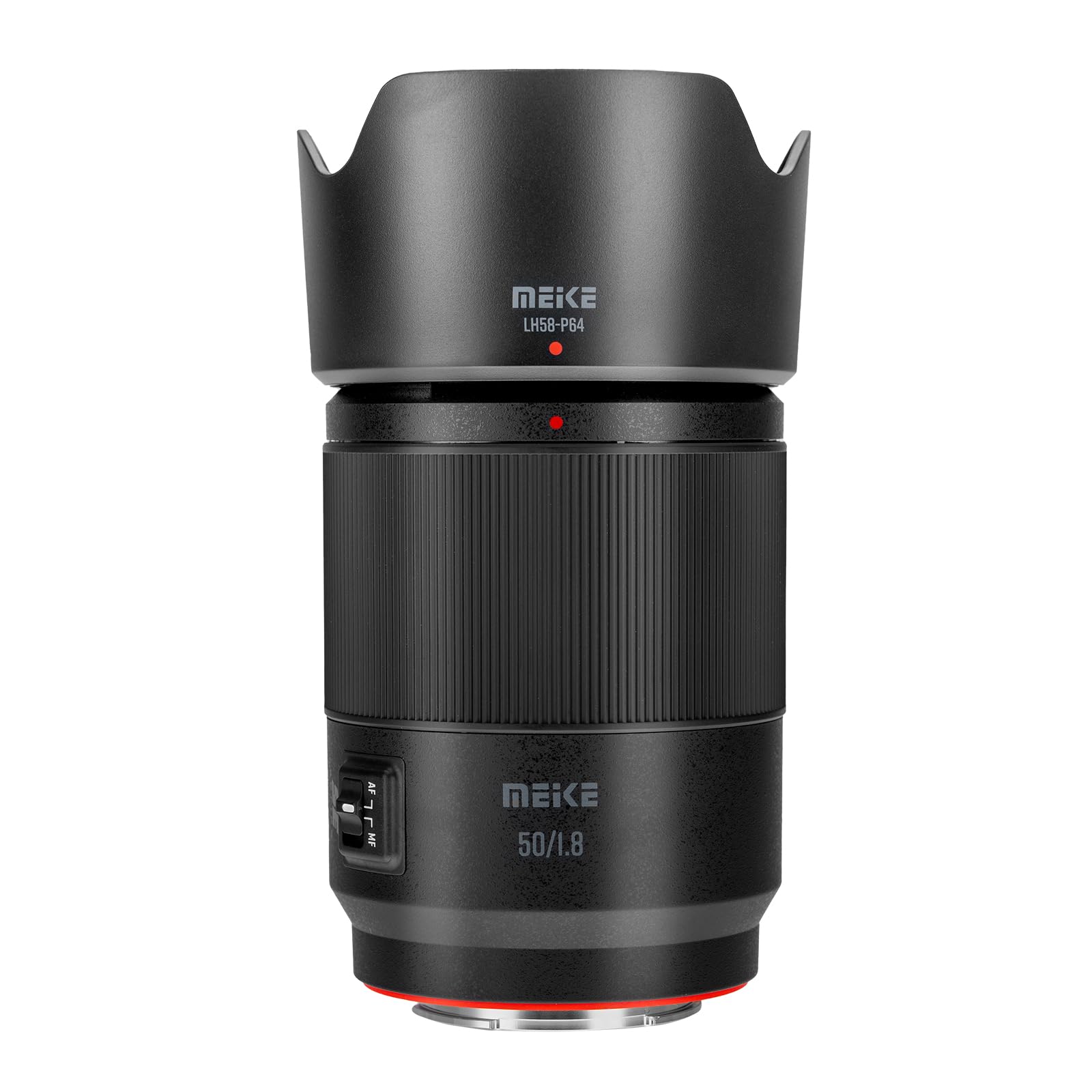
Meike 50mm f/1.8 AF

83 /100
Studio Score Strong Evidence

Key details

Mount
Sony E
Max Aperture
f/1.8
Autofocus System
STM
Image Stabilization
None
Check Price on Amazon

An entry-level full-frame 50mm f/1.8 AF lens with smooth bokeh and genuinely useful autofocus for the price. The value case is strong: f/1.8 light gathering and full-frame coverage without first-party Sony pricing. It trails Sony's own 50mm in overall polish, but for casual portrait and street shooting at this price, the gap is acceptable. The result is a capable portrait-length prime for Sony E users, while APS-C owners should treat the 75mm-equivalent framing as a portrait specialty rather than an everyday normal.

Pros

  • Smooth autofocus for the price, with usable f/1.8 performance in low light.
  • Solid construction and balanced feel on full-frame Sony bodies.
  • Entry-level price gets full-frame E-mount compatibility, f/1.8, and AF in one lens.

Cons

  • Autofocus consistency can depend on lens firmware versions on some Sony bodies.
  • Individual copies can differ in overall quality, so a hands-on check matters for used or refurbished buys.
Our verdict

Sony E full-frame shooters watching costs, especially those open to pre-owned or refurbished units, get a 50mm f/1.8 AF prime for casual portrait and street work.

Check Latest Price

How to Choose

Mount Compatibility

Mount compatibility is non-negotiable because the flange distance and bayonet shape are specific to each system. A Nikon F lens does not fit Canon RF without an adapter, and adapting across systems usually costs autofocus speed or full functionality. Match the mount to your camera body first, then judge the lens itself.

Used-market listings sometimes omit the exact mount version, so verify the full model name before buying. A lens listed as Nikon F may be DX or FX, which changes how it behaves on your sensor.

Focal Length and Crop Sensor Field of View

On full-frame, 50mm is a normal view. On APS-C, the same lens frames like a 75-80mm short telephoto because the smaller sensor crops the image circle. That makes a 35mm prime the closer equivalent to a classic 50mm on crop-sensor bodies.

The practical consequence is simple: if you want one lens for streets, rooms, and everyday carry on APS-C, 35mm is more forgiving. If you want a flattering head-and-shoulders portrait lens, 50mm is the tighter option.

Maximum Aperture

Aperture controls how much light reaches the sensor and how shallow the background blur can be. Going from f/1.8 to f/1.4 adds roughly two-thirds of a stop, which matters for astro and dim interiors but costs more and usually increases size and weight.

Use the aperture you actually need. f/1.8 primes cover most low-light and portrait work; f/1.4 only earns its keep when you regularly shoot in very dark conditions or want the strongest subject separation.

Autofocus Motor Type and Noise

The focus motor determines how fast and how loud a lens hunts. STM, Silent Wave, and linear motors move quietly and smoothly, while older DC motors tend to be audible and slower to lock. For stills, that is a minor annoyance; for video or quiet events, it is a dealbreaker.

Budget primes with noisy motors still work fine when you pre-focus or use manual focus. The best used prime for you is the one whose AF behavior matches the pace of your shooting, not the one with the most impressive spec sheet.

Image Stabilization

Image stabilization only matters if the lens actually has it. Some product pages credit primes with VR or OSS when the specific model lacks the stabilizer, so check the exact lens name before treating it as a feature.

On a 50mm prime, stabilization helps at shutter speeds below roughly 1/80s and during handheld video. If your camera body has IBIS, a non-stabilized prime is still usable; if it does not, built-in OSS or VR is the difference between sharp frames and motion blur.

Frequently Asked Questions