8 Best V-Mount Battery of 2026: Choose the Right Watt-Hours

Find the V-mount battery that matches your camera rig: airline-safe 99Wh bricks for travel, high-capacity packs for lights, and USB-C PD for fast top-ups.

V-mount batteries are the quiet workhorse of a camera rig until the monitor dies mid-take. Spec sheets can make that moment more likely, not less, because most listings advertise milliamp-hours and USB-C wattage while the number that actually decides runtime and airline legality is watt-hours.

That capacity figure splits the category into two real use cases. A 99Wh battery fits in carry-on luggage and powers a mirrorless or cinema-style rig through a long day. A 150Wh or larger brick is a ground-only tool, worth its weight only when your camera, monitor, and lights all draw from the same source.

The remaining trade-off is speed versus proof: faster 100W USB-C charging versus a longer track record and warranty support. Matching capacity, ports, and included accessories to how you actually shoot is the decision. Chasing the largest advertised number usually adds weight you don't need.

2

Best Budget 99Wh

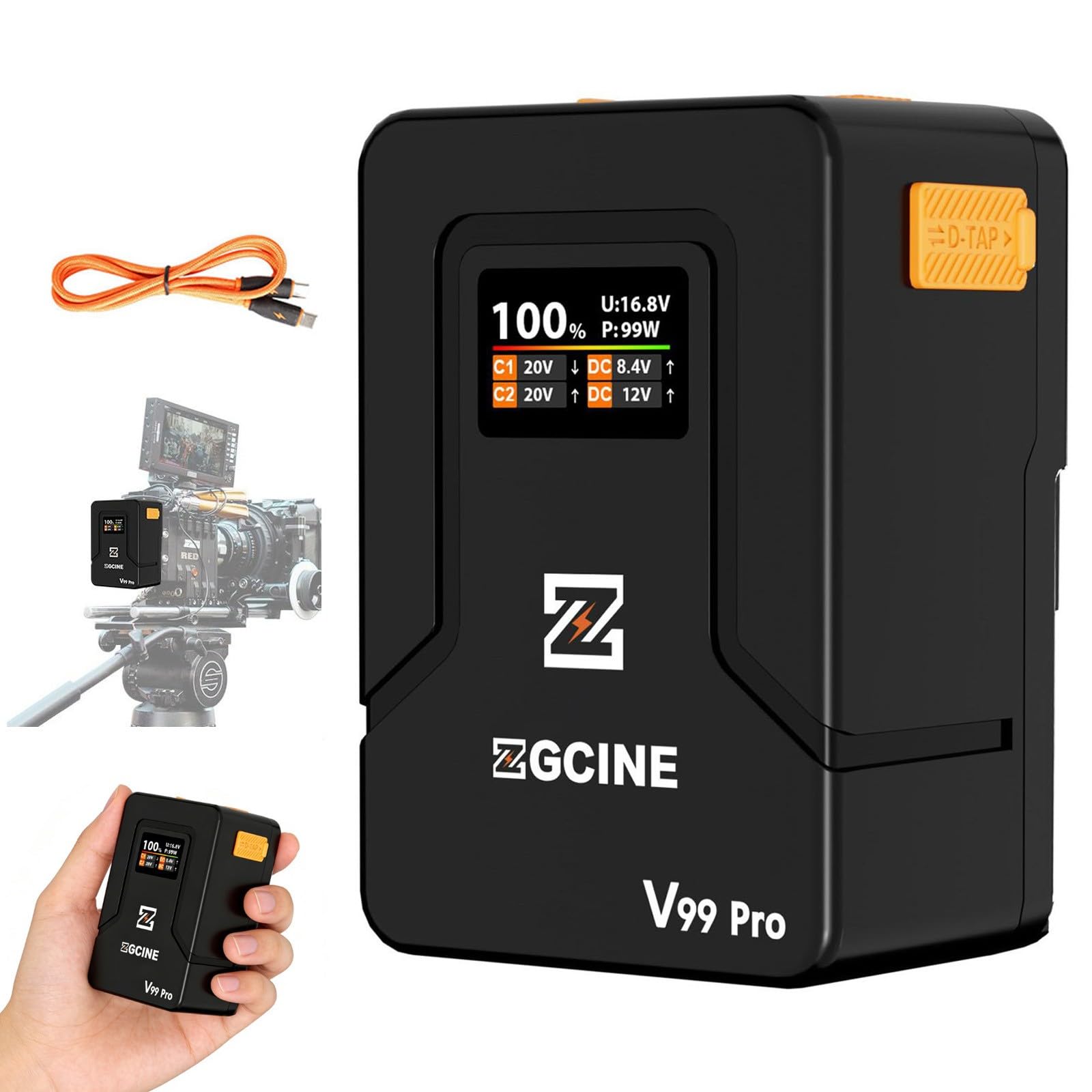
ZGCINE V99 Pro 94Wh

91 /100
Studio Score High Confidence

Key details

Ports
USB-C, DC, BP, D-Tap
Weight
1.32 lb
Display
OLED
Capacity
94.7Wh
Check Price on Amazon

The ZGCINE V99 Pro packs 100W bidirectional USB-C charging and an OLED voltage/wattage readout into a 94.72Wh V-mount that sells at a near-entry price. That combination puts it ahead of the 50–60Wh mini packs while undercutting the price of the all-rounder in this set. The 1.32-pound body balances a mirrorless cage without the bulk of a ground-based brick, and the port selection covers two USB-C, D-Tap, DC 8V/12V, and BP outputs.

On an FX3-class hybrid rig with camera, monitor, and small accessories, a full charge typically runs four to six hours. The bidirectional USB-C port is the practical standout: the same cable that tops up the battery can also feed a camera or laptop. The OLED readout shows remaining capacity, output wattage, and voltage at a glance, so the 'how much runtime is left?' question has a direct answer.

This is for budget-minded hybrid shooters who already own a 100W USB-C PD charger — the V99 Pro ships without one — and want a compact, airline-safe V-mount for camera, monitor, and small accessories. The 94.72Wh rating keeps it under airline limits, so it can ride in carry-on luggage. It is not a high-draw lighting brick; crews needing more than 100Wh should move to a larger ground-only pack.

Pros

  • Constructed with a dense shell and a V-mount plate that locks up solid on camera plates.
  • A full charge runs an FX3-class camera-and-monitor rig for four to six hours.
  • Delivers professional V-mount features at a price that undercuts most 99Wh-class rivals.
  • Port selection covers two USB-C, D-Tap, DC 8V/12V, and BP outputs for typical hybrid rigs.

Cons

  • Crews that need more than 100Wh of continuous power will need a larger ground-only pack.
  • For high-draw LED sessions, 94.72Wh is a backup source rather than a main battery.
Our verdict

A budget-friendly 94.72Wh pack that brings 100W charging and OLED telemetry to mirrorless and cinema hybrid rigs without the premium price.

Check Latest Price
3

Best High-Capacity Power Hub

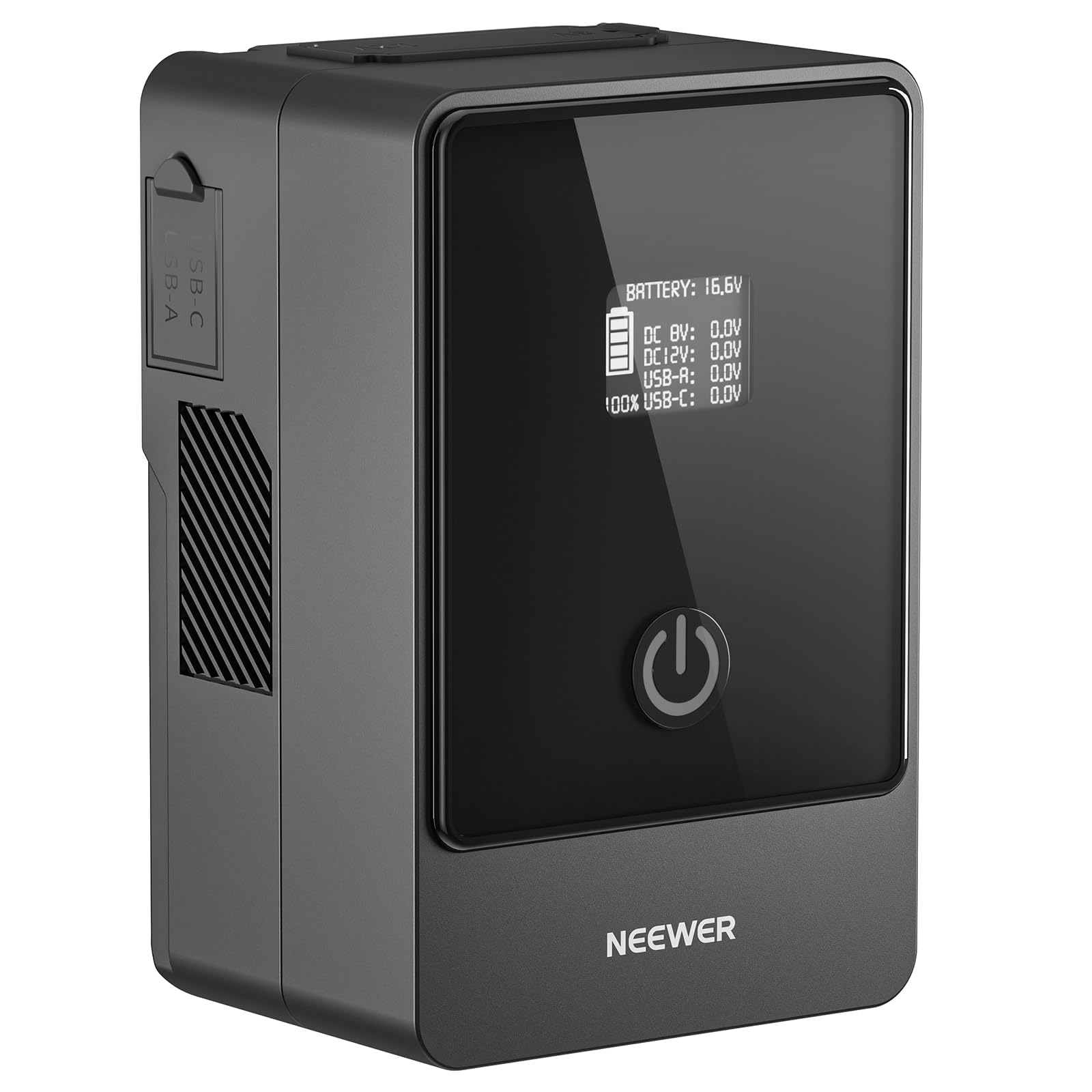
NEEWER PS150E 150Wh

90 /100
Studio Score High Confidence

Key details

Ports
USB-C, USB-A, DC, BP, D-Tap
Weight
1.76 lb
Display
OLED
Capacity
150Wh
Check Price on Amazon

150Wh in a 1.76-pound shell with bidirectional 100W USB-C puts the PS150E a step above the 99Wh packs in this lineup for crews that need extra runtime. It carries camera, monitor, and LED light from one standard V-mount source while keeping the OLED readout and D-Tap connectivity that camera teams expect. Safety certifications including CE, FCC, UL, and UN38.3 cover the basics for a ground-based pack.

An FX6-class camera with monitor and wireless receiver attached can run through a full event day before the pack needs a swap. The spring-loaded V-mount plate feels secure, and the USB-C port handles both camera power and recharging from a high-wattage laptop charger. The budget 99Wh entry in this set offers 65W PD, but this unit's extra capacity and 100W PD make it the better hub for multi-device work.

This is for wedding and event crews that work from a cart or tripod and need one source for camera, monitor, and lights. At 150Wh it falls above the 100Wh carry-on limit, so fly-in shoots need a smaller pack. Paired with the 99Wh top pick in this category, it works as the high-capacity second battery for back-to-back shoot days.

Pros

  • 150Wh capacity carries a camera, monitor, and light through long event days without a mid-shoot swap.
  • Bidirectional 100W USB-C powers cameras and laptops and also refills from a high-wattage PD charger.
  • 1.76-pound shell with OLED, D-Tap, USB-A, and USB-C outputs keeps a full rig connected from one pack.
  • Cost per watt is competitive for the capacity, PD speed, and port selection.

Cons

  • Fastest charging requires a separate 120W USB-C PD charger, not a typical 65W laptop brick.
  • USB-C and D-Tap cables are not included, so the first setup needs a separate purchase.
Our verdict

For event crews working from a cart or tripod, the PS150E is the capacity upgrade that keeps a full rig powered without a mid-day swap.

Check Latest Price
4

Best Value High-Capacity with Charger

REYTRIC 190Wh V-Mount

90 /100
Studio Score High Confidence

Key details

Ports
D-Tap, USB-A
Weight
3.2 lb
Display
4-level LED
Capacity
190Wh
Check Price on Amazon

This 190Wh V-mount delivers roughly double the capacity of a 99Wh pack while keeping the standard V-mount plate and adding a bundled 3A D-Tap charger. Compared with the airline-safe 99Wh top pick, this is the ground-based option: no carry-on approval, but enough capacity for long lighting sessions without a second pack. The included charger removes the first accessory purchase, which matters for budget buyers.

It mounts to any standard V-mount plate, so it seats on camera cages, monitor brackets, and light fixtures without adapters. The D-Tap output carries camera, monitor, and light loads through long sessions, while the USB-A port handles small accessories. This suits budget LED light owners and studio/run-and-gun crews who need all-day capacity from one pack; frequent flyers should look at a 99Wh model instead.

The main caveats are feature-based, not performance-based: there is no USB-C PD port, so modern cameras or laptops that expect USB-C power need an adapter. A unit can also arrive flat or stop accepting a charge, so run a full charge cycle before a paid shoot. The 3.2-pound body rules out long handheld or gimbal work, so treat it as a stand battery. For crews that can plan around those boundaries, the capacity and price still make it a sensible buy.

Pros

  • Long runtime from 190Wh can carry a BMPCC 6K or LED fixture through extended shoots.
  • Charging speed: the included 3A D-Tap charger refills the pack quickly between setups.
  • High capacity for the price keeps budget light owners from needing a second pack.
  • Solid shell and durable cells handle repeated mounting on stands and rigs.

Cons

  • USB-A output is capped at 5V/2.4A, which is slow for modern phones and tablets.
  • Single D-Tap output limits powering several high-draw devices at once.
Our verdict

If your V-mount kit lives on a light stand and needs to survive a long day without a charger visit, this is the value pick in the 190Wh class.

Check Latest Price
5

Best Rugged Smart Battery

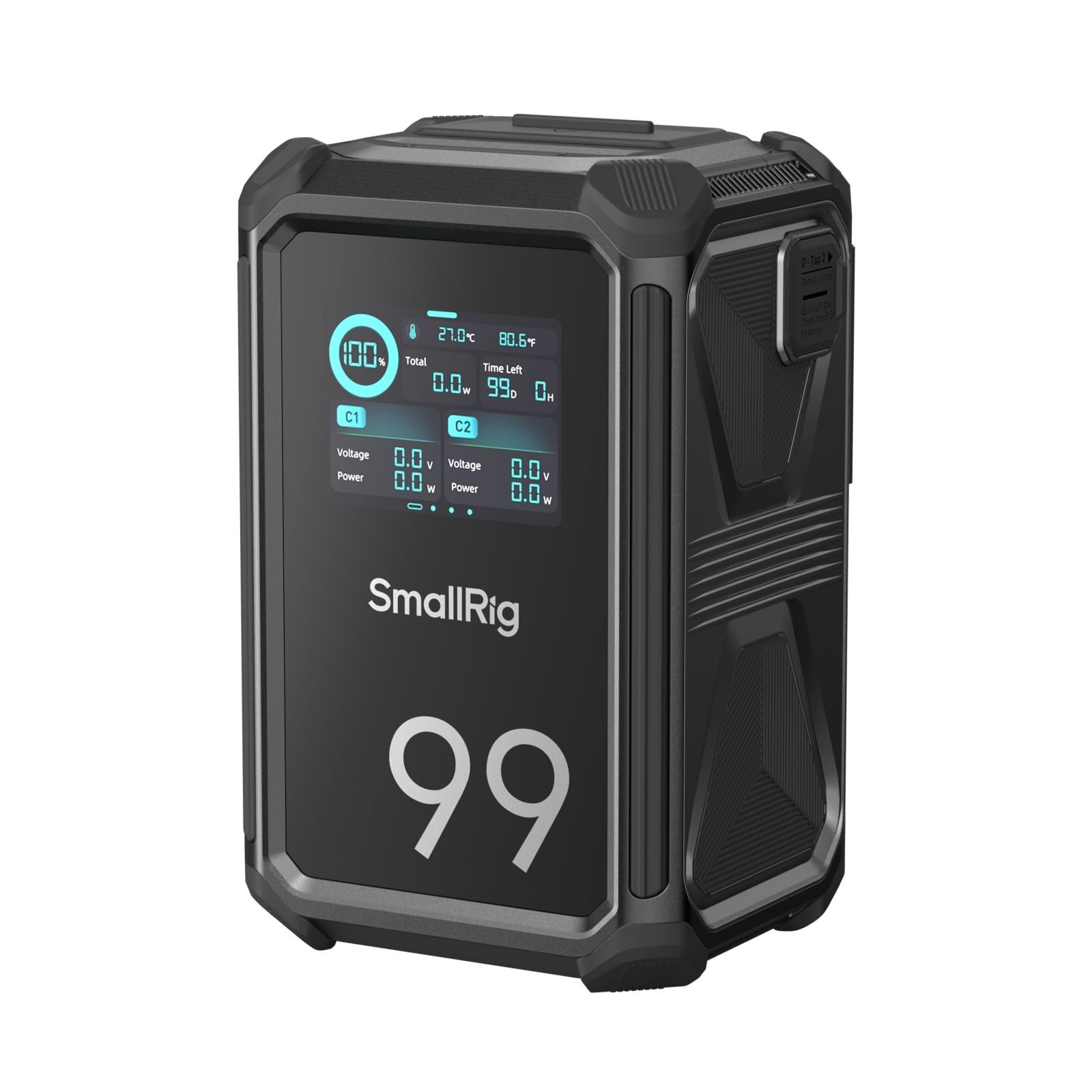
SmallRig X99 99Wh

86 /100
Studio Score Strong Evidence

Key details

Ports
D-Tap, USB-C, BP, DC, USB-A
Weight
1.94 lb
Display
Touchscreen
Capacity
99Wh
Check Price on Amazon

SmallRig's X99 packs IP54 splash protection and a 4.9-foot drop rating into a 99Wh body. The 2-inch touchscreen and companion app let you check remaining capacity and monitor the battery from a phone. That gives it a layer of control the everyday 99Wh brick in this lineup doesn't offer, though it also adds electronics and cost.

Dual D-Tap, two USB-C, BP, DC 8V/12V, and USB-A outputs let one battery feed a camera, monitor, and small lights at the same time. The 100W USB-C PD can fast-charge a laptop or camera body while the D-Tap ports cover monitor and light draws. A mirrorless rig with a monitor can run up to eight hours on a single charge.

This is for outdoor and event shooters who want a rugged V-mount and the ability to check remaining power from a phone without unclipping the battery. The premium price for 99Wh and the lack of a bundled charger are easier to accept if you already own a V-mount charger or need the shell for run-and-gun conditions. If you only need a simple OLED brick, the everyday 99Wh pack in this lineup covers the same capacity at a lower price.

Pros

  • Dual D-Tap, dual USB-C, BP, DC 8V/12V, and USB-A outputs power cameras, monitors, and lights from one mount.
  • Up to eight hours of runtime on mirrorless and camera-monitor rigs.
  • IP54 splash resistance and a 4.9-foot drop rating hold up in outdoor work.
  • Touchscreen and phone app show remaining capacity without removing the battery from the rig.

Cons

  • The touchscreen and app can be unnecessary overhead for shooters who only need a simple power source.
  • For high-wattage LED work, the 99Wh capacity depletes faster than a larger ground pack, so crews need to size up.
Our verdict

For outdoor and event shooters who want a tough V-mount with phone-based telemetry, the X99 delivers; buyers who only need power should pick the simpler everyday 99Wh pack.

Check Latest Price
6

Budget Mirrorless Shoots

NEEWER PS099E 99Wh

92 /100
Studio Score High Confidence

Key details

Ports
USB-A, USB-C, D-Tap, BP, DC
Weight
1.3 lb
Display
OLED
Capacity
99Wh
Check Price on Amazon

The NEEWER PS099E packs genuine 99Wh capacity, 65W USB-C PD, D-Tap, dual DC, and a 1.3-pound shell at a budget-friendly price — the lowest-cost entry point in this set for standard V-mount rigs. Runtime stays steady on mirrorless and cinema-style camera monitor setups, with the compact brick handling extended shooting sessions. The value is real, but the tradeoffs are specific: no charger or cables arrive in the box, and 65W PD is slower than 100W rivals for laptop top-ups or high-speed recharging. For first-time V-mount buyers who want a travel-safe brick without paying a premium, this is a sensible starting point; those who need a higher-powered charging hub should look at the 100W options in this comparison.

Pros

  • Compact 1.3-pound body delivers genuine 99Wh for long mirrorless or cinema-rig sessions.
  • Power delivery remains steady across camera and monitor combos.
  • USB-C PD 65W, D-Tap, and dual DC ports cover common on-camera gear.

Cons

  • No charger or cables included
  • 65W USB-C PD is slower than 100W rivals for laptop charging and battery top-ups.
Our verdict

Best for budget-focused shooters who want a travel-safe V-mount without paying for accessories; pair it with a separate charger.

Check Latest Price
7

Travel D-Tap Rigs

REYTRIC 95Wh V-Mount

92 /100
Studio Score High Confidence

Key details

Ports
D-Tap, USB-A
Weight
1.37 lb
Display
4-level LED
Capacity
95Wh
Check Price on Amazon

This 95Wh V-mount keeps the essentials in place: a standard D-Tap output, USB-A for small accessories, and a D-Tap charger included at a budget-friendly price. It is airline-safe, fits common V-mount rigs, and delivers hours of runtime for cameras, monitors, and modest LED fixtures. The reason it doesn't rank higher is the lack of USB-C PD — newer designs can fast-charge modern cameras and laptops, while this battery sticks to D-Tap output. For crews already running D-Tap accessories, the included charger and 1.37-pound body make it an easy addition to a kit.

Pros

  • Stable cell quality holds up through repeated field and travel use.
  • Hours of runtime on camera, monitor, and modest light rigs.
  • D-Tap charger in the box lowers the upfront cost of a V-mount setup.

Cons

  • D-Tap and USB-A outlets sit close enough that using both at once can feel tight.
  • Charging consistency can vary
Our verdict

A pragmatic choice for travel crews who want a simple D-Tap workflow, a charger in the box, and a pack that clears airline rules.

Check Latest Price
8

Budget Feature Buyers

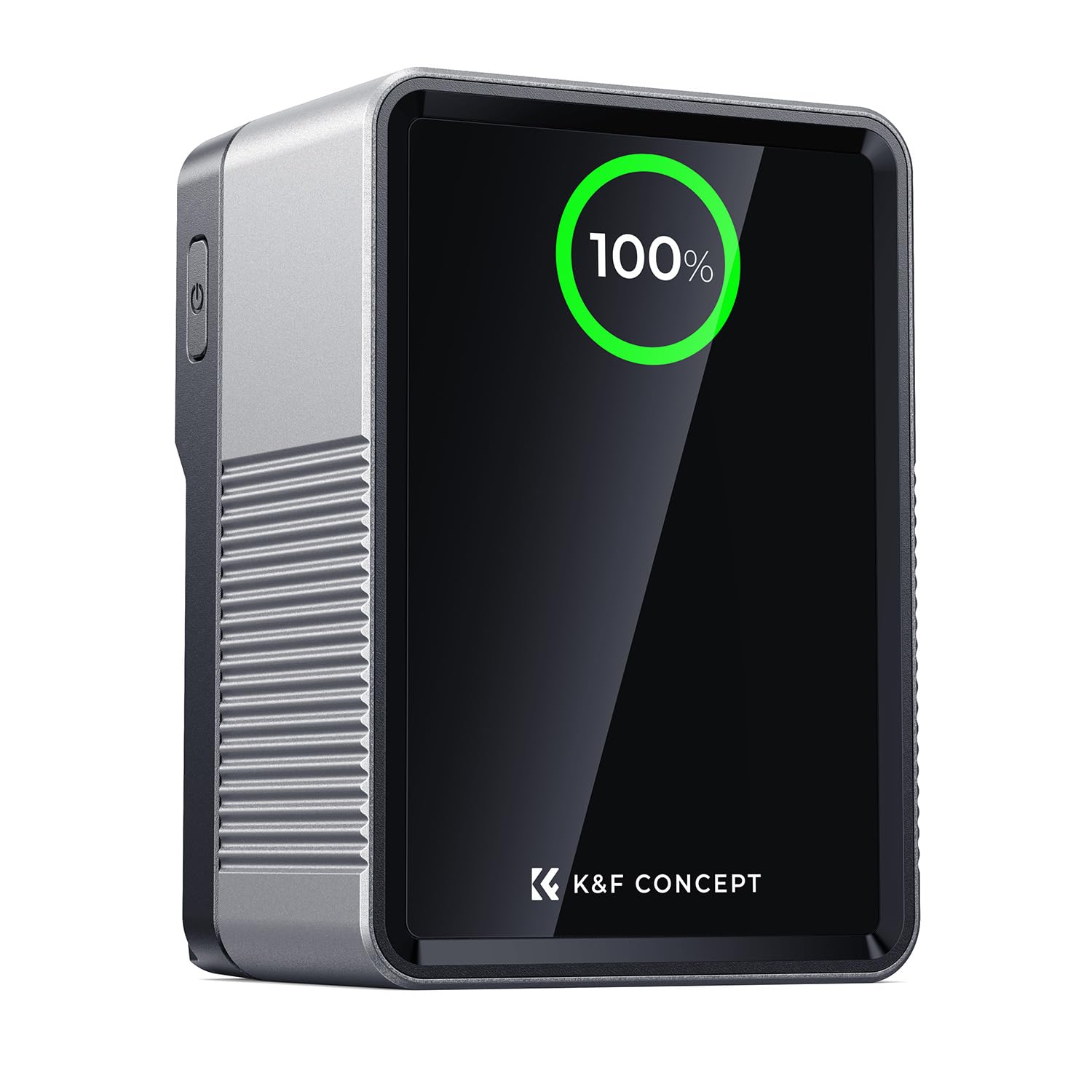
K&F Concept V99 Pro 99Wh

82 /100
Studio Score Strong Evidence

Key details

Ports
USB-C, USB-A, DC, BP, D-Tap
Weight
1.9 lb
Display
TFT color
Capacity
99Wh
Check Price on Amazon

Two USB-C ports with 100W PD make this 99Wh pack a feature-dense pick for vloggers running a camera and monitor from one battery, and the TFT color display gives a quicker read on charge state than basic status lights. The port selection includes USB-A, DC 12V, and D-Tap, which keeps a typical camera rig from needing an external breakout. Overall consistency is softer than the leading 99Wh pack, and USB-C charging can vary between units, so a multi-cable setup deserves an early check. For a run-and-gun shooter who wants two USB-C outlets, a readable display, and a budget price, that tradeoff is acceptable.

Pros

  • Battery build quality feels high-grade for the price, and output stays steady through long takes.
  • The 99Wh capacity covers a full day on a camera-and-monitor rig with a phone attached.
  • Two USB-C ports plus 100W PD at a budget-friendly price make this a strong feature-per-dollar option.

Cons

  • USB-C charging behavior can vary between units, which is worth checking before building a multi-device rig.
Our verdict

Budget-first vloggers who actually use two USB-C ports get a better fit here than from the leading 99Wh pack.

Check Latest Price
9

Budget Studio Rigs

FirstPower 121Wh V-Mount

86 /100
Studio Score Strong Evidence

Key details

Ports
D-Tap, USB-C, USB-A, BP
Weight
1.7 lb
Display
5-level LED
Capacity
121Wh
Check Price on Amazon

The FirstPower 121Wh V-Mount delivers dual D-Tap ports and 60W USB-C PD at a price per watt that undercuts typical mini bricks — a sensible shelf battery for studio cameras, monitors, and LED lights. That port layout lets one pack run a camera and a monitor without a splitter. Its 121Wh capacity puts it above the 100Wh airline threshold, so this is a ground-based pack rather than a carry-on companion. Individual units can vary: this one may arrive without charge or may not take a full charge, so inspect it before a paid shoot.

Pros

  • Low cost per watt keeps entry into V-mount power budget-friendly.
  • Dual D-Tap outputs power a camera and accessory from one battery.
  • Capacity carries mirrorless and monitor rigs through a full shooting day.

Cons

  • Five-step LED readout gives only a rough idea of remaining charge.
  • Slightly bulkier than 99Wh minis, which works against compact gimbal builds.
Our verdict

For studio and hybrid shooters building a ground kit, this battery is the value-priced choice.

Check Latest Price

How to Choose

Capacity and Airline Limits

Watt-hours, not milliamp-hours, determine how long a battery works and whether it can fly. A 99Wh pack is the practical ceiling for carry-on use, while a 150Wh brick holds roughly 50% more energy but cannot be treated as a travel battery. Match capacity to your usual shooting day: mirrorless rigs run for hours on 99Wh, while LED-heavy crews should look at 150Wh or larger.

USB-C PD Wattage

USB-C PD controls both recharging speed and whether the battery can top up a camera or laptop. A 65W port is enough for most mirrorless bodies, but a 100W port recharges the battery itself much faster and supports larger devices. The catch is that the wall charger and cable must also support that wattage, and they are often not included.

Port Selection

D-Tap and DC outputs feed lights and cinema cameras, while USB-C and USB-A handle monitors, phones, and small accessories. One D-Tap and one USB-C covers most hybrid rigs, but port spacing matters because tightly packed outputs can prevent simultaneous connections. Check the layout if you plan to run multiple devices from one brick.

Display and Telemetry

A four-LED meter only shows approximate charge, while an OLED panel displays watt-hours remaining, voltage, and live output. That extra telemetry lets you predict a swap instead of getting caught when a monitor drains the pack. Touchscreens and app control are useful for fleet monitoring but add cost and complexity.

Weight and Handling

Weight changes how a rig balances, especially on a gimbal. A 1.3-pound 99Wh brick sits naturally on a camera plate; a 3.2-pound 190Wh pack shifts the center of gravity forward and is best left on a tripod or light stand. If you shoot handheld, the extra runtime may not be worth the strain.

Included Accessories

Several high-rated batteries ship without a charger, and their fastest input needs a separate USB-C PD wall charger. Factor that into the total cost before deciding between a cheaper battery plus charger and a pricier battery that includes one. The presence of a bundled charger can change which option is actually the better deal.

Frequently Asked Questions