9 Best Thermal Monocular of 2026: The Ones That Identify at Range

Best thermal monocular picks that match recognition range to real hunting and observation use.

A thermal monocular can list a 1,000-yard detection range and still leave you squinting at a gray smudge at 100 yards. Detection range and recognition range are not the same number; the first tells you a heat source exists, the second tells you what it is. Most buyers discover this gap after purchase, not before.

In this class, most models share the same 256x192 sensor, so the real differences are refresh rate, lens reach, battery system, and how the image is processed. A 50Hz unit tracks moving animals smoothly; a 25Hz unit can feel choppy. The trade-off is often between a longer-lasting, fully featured all-rounder and a pocketable unit with image stabilization.

The right choice depends on how far you need to identify, whether you wear glasses, and whether the monocular will stay in your hand all night or in your pocket all day.

1

Best Overall

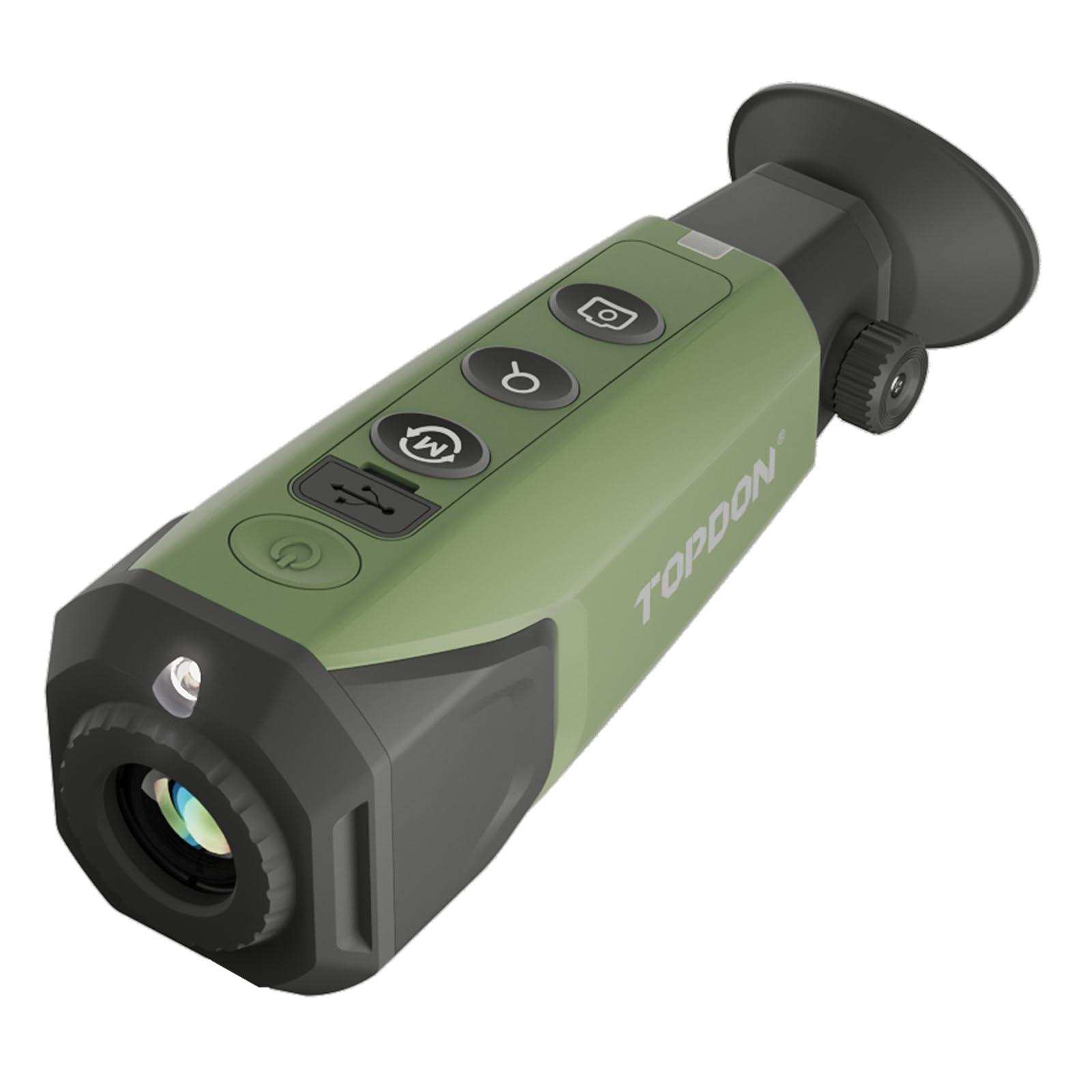
TOPDON TS004

87 /100
Studio Score Strong Evidence

Key details

Refresh Rate
50 Hz
Battery System
11 h, internal
Lens And Range
13 mm, 100 yd ID
Sensor Resolution
256x192
Check Price on Amazon

TOPDON TS004 pairs 50Hz refresh, IP67 waterproofing, an 11-hour battery, and WiFi streaming at a price that sits in the middle of the 256-sensor class. That combination makes it the default recommendation for hunters who want smooth panning, weather protection, full-night runtime, and phone-based viewing without stepping up to a 384-resolution sensor. These are the features that separate 256-sensor models: refresh rate, lens size, battery, and app support. For buyers coming from digital night vision, the passive thermal sensor emits no illumination, so you can scan without giving away your position.

Heat-signature detection is the unit's core strength. Animals, people, drafts, and hot spots show up consistently, and the WiFi link puts the live image on a phone while the monocular records. At practical scanning distances, the image holds enough detail to confirm what you're looking at before you close the gap. The 13mm objective and 50Hz refresh make panning smooth enough to follow movement across a field edge.

This is the unit for a first-time thermal buyer who wants a mainstream feature set without paying for 384 resolution. Clear identification is limited to roughly 100-150 yards despite the 410m claimed detection range, so treat it as a detector that recognizes targets at close-to-moderate distance. Hunters who need to identify body shape beyond 200 yards should look at a 384-class model; anyone scanning fields and checking property will find the TS004's runtime and weather sealing fit.

The TS004's recording and WiFi streaming round out the package. Video and stills are saved on the device and can be pulled up on the app, which makes sharing and later review simple. The 11-hour battery already handles long sits; the app adds a second viewing mode when you want to hand the screen to someone else.

๐Ÿ’ก Use the record function for distant heat signatures and review them on the phone app later.

Pros

  • Build quality that feels more expensive than the price tier suggests.
  • Strong value: 50Hz, IP67, 11-hour battery, and WiFi streaming at a mid-tier price.
  • Heat signatures from animals, people, drafts, and hot spots show up consistently.
  • WiFi streaming and recording work well at practical scanning distances, with the app view a favorite.

Cons

  • Thermal detail can look soft or grainy in low-contrast scenes.
  • The 410m claimed detection range overstates how far a target can be identified.
Our verdict

The TS004 is the thermal to grab for mixed hunting and observation when you want smooth panning, all-night battery, weather sealing, and phone streaming at a fair mid-tier price. If your goal is long-range identification, a 384-class sensor is the answer.

Check Latest Price
2

Best Resolution for Serious Hunters

RIX Pocket K3

84 /100
Studio Score Strong Evidence

Key details

Refresh Rate
50 Hz
Battery System
Replaceable 18650
Lens And Range
15 mm, 300 yd ID
Sensor Resolution
384x288
Check Price on Amazon

The 384x288 sensor is the resolution step up in this set; it resolves animals at ranges where the 256-class compact models show blobs. The 800x600 OLED and 50 Hz refresh keep the image readable while panning, and the replaceable 18650 cell supports long night shifts without needing a charging cable. It pairs a compact body with real 384-class detail, so hunters get jacket-pocket carry without giving up identification reach.

Serious hog and coyote hunters who need positive species identification at 200-300 yards are the match; this premium-priced monocular matters when the job is telling a coyote from a dog at night. Eye relief can be tight, especially for eyeglass wearers, so the phone app becomes the practical viewfinder for extended use. Budget-limited first-time buyers should start with a 256 model rather than stretch for this class; the 384 detail is the reason to pay above entry level, not the packaging.

๐Ÿ’ก When wearing glasses, use the phone app for extended framing sessions.

Pros

  • 384x288 sensor resolves detail at ranges where 256-class units show only blobs.
  • Strong price-to-performance: 384-class imaging priced fairly for its class.
  • Spots raccoons in trees at 200-300 yards and supports nighttime species identification.

Cons

  • Small display can require a precise eye position before the full image appears.
Our verdict

Hunters who need positive identification at distance before committing to a shot will see the K3's price as a fair trade for the only 384 sensor in this set.

Check Latest Price
3

Best Budget Entry Point

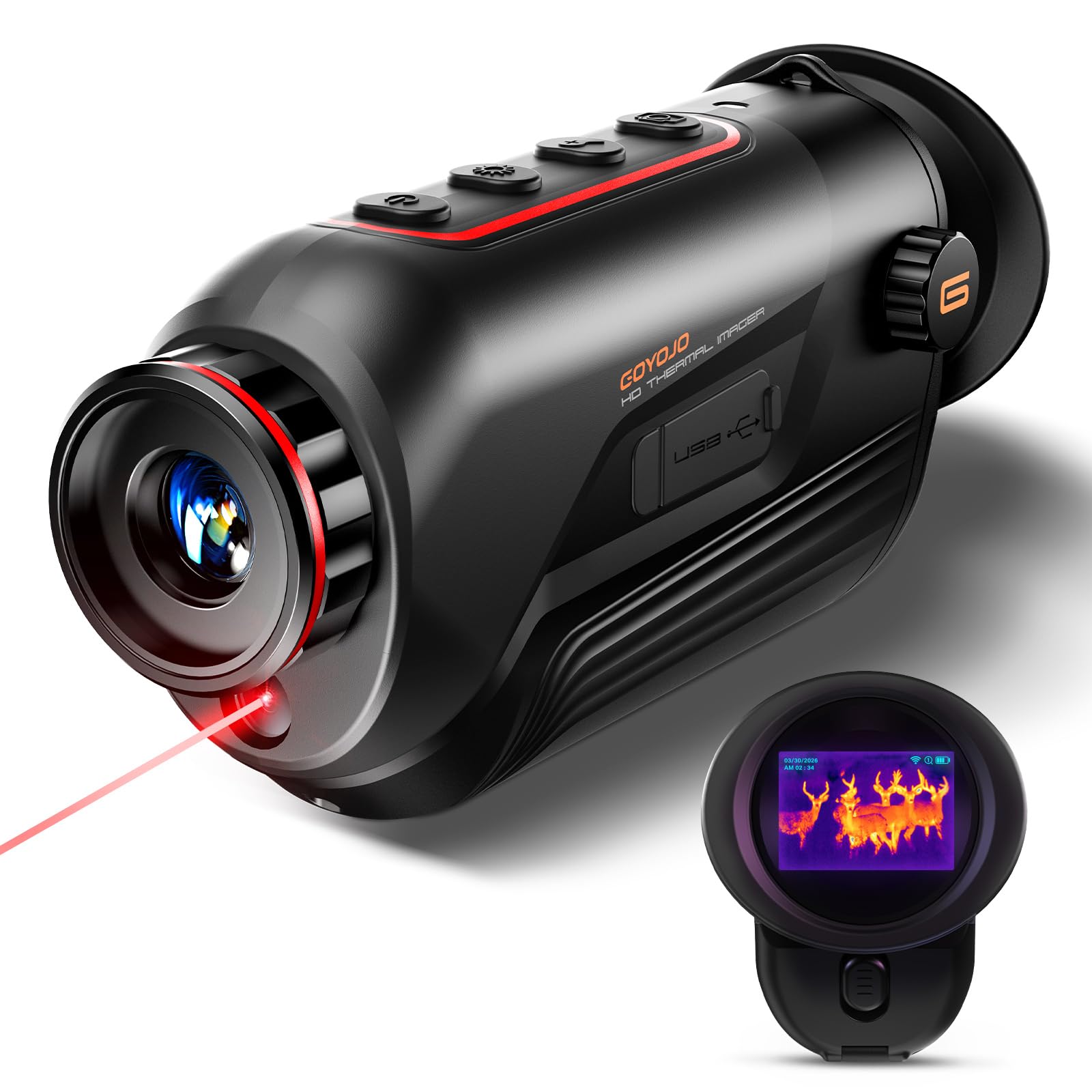
GOYOJO G210

85 /100
Studio Score Strong Evidence

Key details

Refresh Rate
25 Hz
Battery System
6+ h, 18650
Lens And Range
10 mm, 300 yd
Sensor Resolution
256x192
Check Price on Amazon

The G210 is the lowest-cost credible thermal entry in this lineup: simple 25Hz controls, replaceable 18650 batteries, and a solid first-thermal experience. Menus, settings, and recording stay intuitive, and the 256 sensor picks up deer or cows past 300 yards while tracking heat signatures cleanly for close-to-mid scanning. The IP65 body handles light rain and the 16 GB of built-in storage records clips without needing a card.

This suits first-time thermal buyers on a tight budget who want a manageable scanning tool for close-to-mid fields. Hunters can use it to work field edges before switching to a rifle scope. The replaceable 18650 gives around six hours of field time, and carrying a spare extends an outing. Power and charging behavior can be inconsistent from unit to unit, so an early check of the battery and charging port is worth doing.

Pros

  • Simple controls, menus, and recording make this an easy thermal to learn.
  • Picks up deer or cows past 300 yards and tracks heat signatures cleanly at close-to-mid range.
  • Budget-friendly first thermal with replaceable 18650 batteries and a low financial barrier to entry.

Cons

  • At longer ranges the 256 sensor can look soft, so identification stays close-to-mid.
  • 25Hz refresh plus 256 sensor blurs fast-moving subjects when panning; a scanning tool, not a tracker.
Our verdict

For a first thermal on a strict budget, the G210 delivers a usable scanning image and user-swappable batteries without the premium price.

Check Latest Price
4

Best Compact Field Companion

RIX Pocket K2

85 /100
Studio Score Strong Evidence

Key details

Refresh Rate
50 Hz
Battery System
Replaceable 18650
Lens And Range
9 mm, 150 yd
Sensor Resolution
256x192
Check Price on Amazon

RIX Pocket K2 fits 50Hz refresh, electronic image stabilization, RET processing, and an 800x600 OLED into a chassis small enough for a chest pocket. The 256x192 sensor reads heat signatures well at close-to-mid range, and the refresh rate keeps moving hogs and coyotes easier to follow than slower budget thermals. IP67 sealing and a replaceable cell round out a package that suits damp mornings and long walks without needing to be babied.

This unit is built for mobile hunters and hikers who want a thermal that actually rides along. Field-edge scanning, trap checks, and hog or coyote setups inside 150 yards are where it earns its keep; the compact body is the reason it beats a heavier optic in the pack. Buyers leaning on maximum reach should look at the higher-resolution option in this comparison instead, because the Pocket K2's job is smooth, stabilized close-to-mid-range viewing.

Pros

  • Range holds up better than expected for a pocket-size body, covering practical hunting distances.
  • Strong value in the mid-range class with 50Hz, IP67, EIS, and a swappable cell.
  • Compact handling works well for hog hunting and close-range scanning to about 150 yards.

Cons

  • The 256 sensor can get grainy or soft at distance, so identification stays realistic only at close range.
  • Battery and charging QC can vary from unit to unit; test the swappable cell on arrival.
Our verdict

The Pocket K2 is the compact companion for hunters who want 50Hz smoothness and a stabilized view without carrying a full-size optic, and its small body earns a regular spot in the pack.

Check Latest Price
5

Best Long-Endurance Sensor Value

MiLESEEY TNV10PRO

81 /100
Studio Score Strong Evidence

Key details

Refresh Rate
50 Hz
Battery System
12 h, internal
Lens And Range
13 mm, 300 yd
Sensor Resolution
320x240
Check Price on Amazon

The TNV10PRO carries a true 320x240 thermal sensor at a price where 256x192 models dominate, adding meaningful pixel density for buyers who are not ready for 384-class pricing. Deer-sized targets appear at 300 yards, and heat signatures separate from tree cover at night. The 50Hz refresh keeps motion fluid while panning, and the IP65 shell stands up to light rain during a night session.

The 12-hour runtime and 32GB built-in storage make this a natural fit for observers who stake out one position for an entire evening and want their recordings saved without carrying spare cards. It occupies the useful middle: more resolution than entry-level 256 units, less identification reach than the 384-class resolution pick. Buyers who rely on hotspot tracking or expect crisp long-range identification in humid, low-contrast weather are better served by the 384-class option.

๐Ÿ’ก Verify hotspot tracking against a known warm object before a night session, since the feature can sit idle in the menu.

Pros

  • True 320x240 sensor delivers higher pixel density than budget 256 models without the 384 price jump.
  • Deer-sized targets show up at 300 yards, with heat signatures standing out clearly from tree cover at night.
  • Twelve-hour runtime and 32GB built-in storage support long field sessions and recording without spare cards.

Cons

  • Hotspot tracking can remain inactive even when enabled, so it may not serve as a beacon for locating targets.
  • Distant heat sources may appear as softened blobs rather than defined shapes in humid or low-contrast air.
Our verdict

Choose the TNV10PRO for a true 320-sensor upgrade inside the budget tier; reserve the 384-class price for anyone who needs crisp long-range identification in poor weather.

Check Latest Price
6

Best Budget Scanner Before the Shot

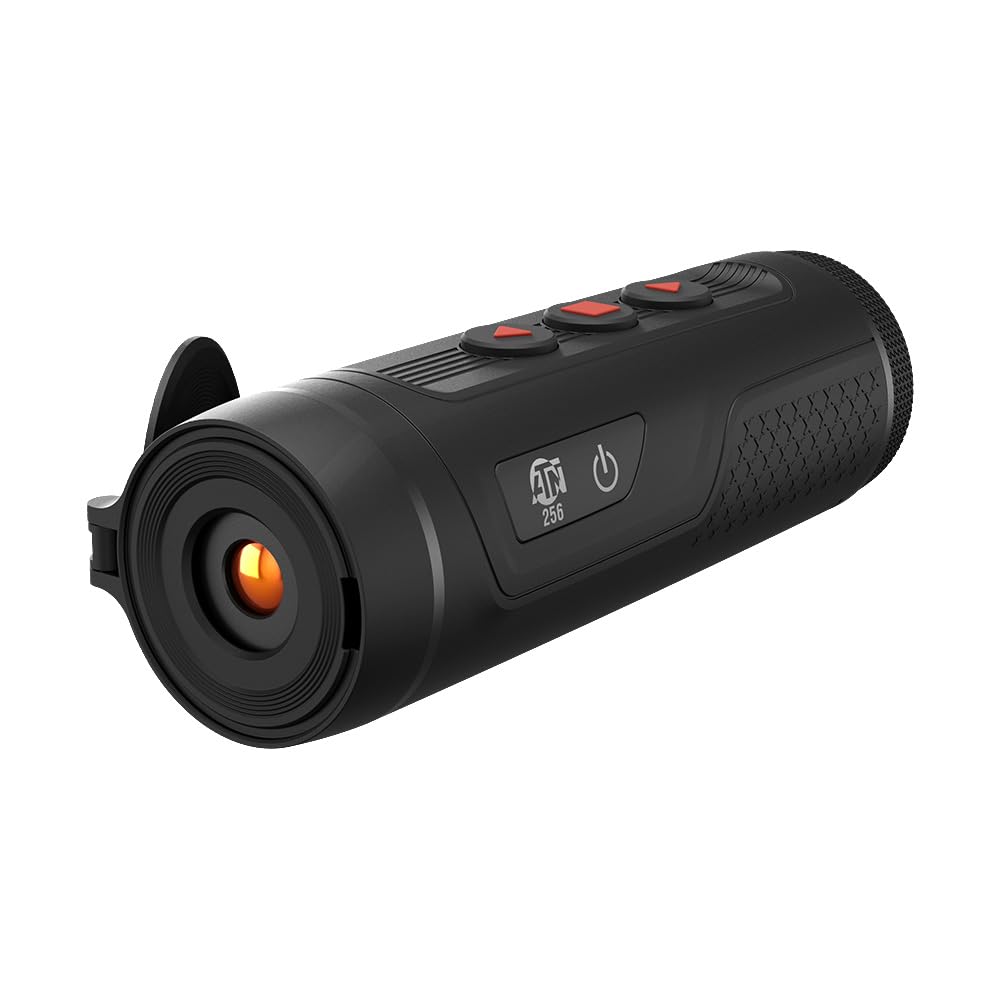
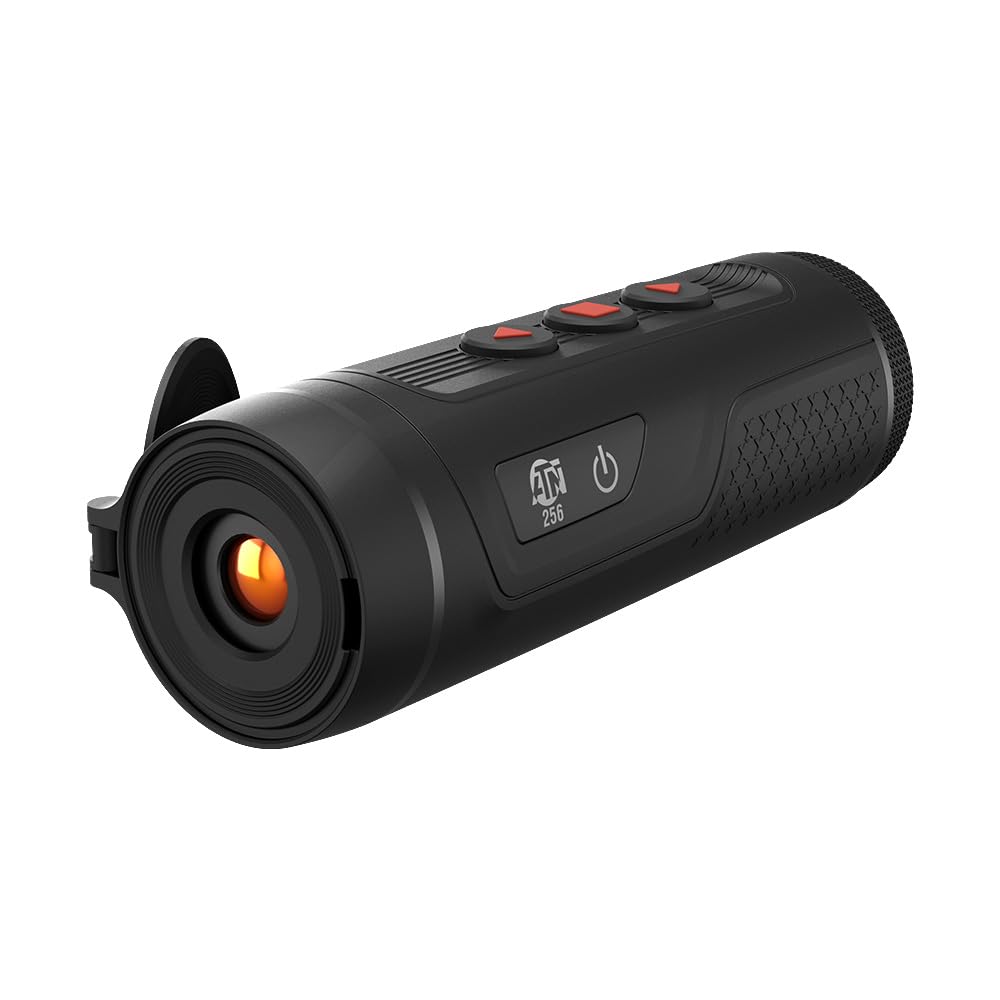
ATN BlazeSeeker 207

81 /100
Studio Score Strong Evidence

Key details

Refresh Rate
25 Hz
Battery System
โ€”
Lens And Range
7/10 mm, 345 m
Sensor Resolution
256x192
Check Price on Amazon

The BlazeSeeker-207 is the practical pick among the budget ATN pair: it stays compact and app-connected while doing the job that matters first โ€” spotting heat in field cover. Its close-range image quality brings out hot spots against brush and treeline, and the solid build feels appropriate for the price. That combination makes it a low-pressure scanning tool rather than a gimmick with a long zoom number. It is made for the moment before the shot, and it stays out of the way while you get there.

The right user is a hunter working field edges who wants a compact monocular before transitioning to a rifle scope. Light weight and simple controls keep the workflow fast, and the app adds a convenient way to adjust settings without fumbling in the dark. The honest boundary is close-range work: clarity drops noticeably beyond roughly 100-200 yards, so it is a detector rather than a long-range identification monocular.

Pros

  • Sturdy build and complete feature set at a budget-thermal price.
  • Useful as a scanning monocular before you pick up the rifle scope.
  • Close-range view finds hot spots clearly along field edges.

Cons

  • Thermal recording captures basic clips, not high-resolution footage for detailed review.
  • Across open ground, the 25 Hz refresh can feel less fluid when panning; it suits scanning more than tracking.
Our verdict

For hunters wanting a compact pre-shot scanner, the BlazeSeeker-207 is the one to grab before the rifle scope comes up.

Check Latest Price
7

Budget 50Hz Hunters

GOYOJO G215

82 /100
Studio Score Strong Evidence

Key details

Refresh Rate
50 Hz
Battery System
6+ h, 18650
Lens And Range
15 mm, 150 yd
Sensor Resolution
256x192
Check Price on Amazon

The G215 pairs 50Hz refresh and a 15mm objective with a near-entry price, plus replaceable 18650 batteries and manual focus. It detects heat signatures past 150 yd and picks up small animals at 40 yd, so budget hunters get usable reach. The 256x192 sensor still caps detail: foliage can blur in certain conditions and very close targets are hard to frame. That keeps it behind the G210, but it adds smoother panning and lens reach for those who want them.

Pros

  • 50Hz refresh and a 15mm objective give smoother panning with more reach than the entry-level G210.
  • Manual focus knob and user-replaceable 18650 batteries add control and field flexibility.
  • Thermal detection covers useful ground: signatures past 150 yd and small animals at 40 yd.

Cons

  • Foliage can look soft or blurred in certain conditions, so detail varies with the scene.
  • Very close targets can be awkward to frame because field of view and zoom require extra working distance.
Our verdict

The G215 fits budget hunters who value 50Hz smoothness and 15mm reach over the entry G210, as long as they accept softer detail and close-range framing limits.

Check Latest Price
8

Property Checks

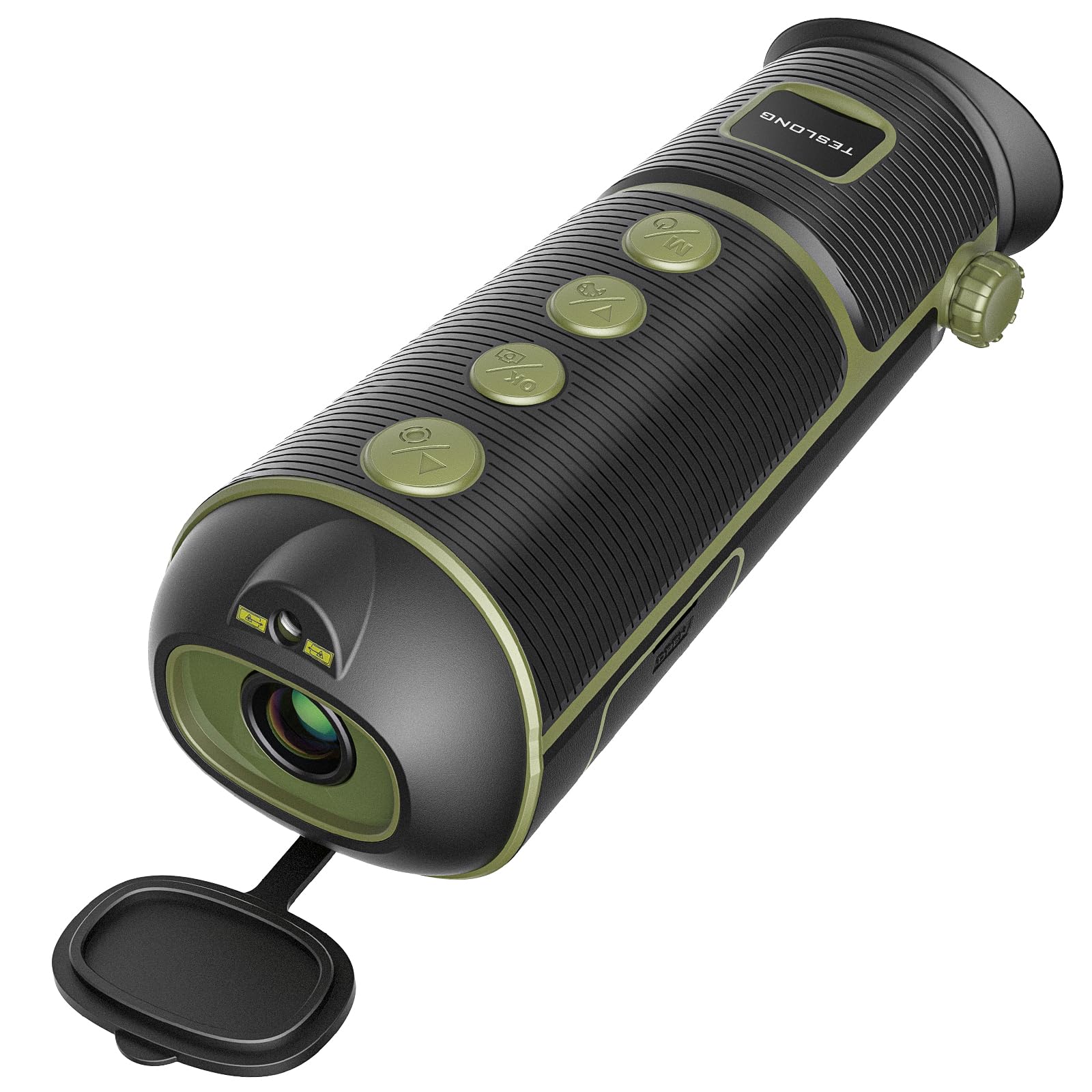
Teslong TTS260

83 /100
Studio Score Strong Evidence

Key details

Refresh Rate
โ€”
Battery System
10 h, internal
Lens And Range
12 mm, 50 yd
Sensor Resolution
256x192
Check Price on Amazon

The TTS260 is a compact all-day spotter: 10-hour runtime, 32GB built-in storage, and an 800x600 OLED suit property checks and casual observation. It is well made and picks up heat signatures quickly for the price. Image detail softens beyond about 50 yards, so treat it as a detector, not a long-range identifier. The small eyepiece can be uncomfortable with prescription eyeglasses. Those limits keep it below the 320-sensor model in this roundup, but budget buyers who value runtime and easy recording get a capable tool.

Pros

  • 10-hour runtime and 32GB internal storage mean fewer stops to charge or offload during long sessions.
  • Well-built, easy-to-operate body with quick heat detection for close-range scanning.

Cons

  • Small eyepiece can make extended viewing uncomfortable for eyeglass wearers.
  • Detail falls off beyond about 50 yards, so recognition range stays short.
Our verdict

Budget buyers who need a long-running property-check spotter with built-in recording will get the most from this model.

Check Latest Price
9

Fixed Scanning

ATN BlazeSeeker 210

78 /100
Studio Score Established

Key details

Refresh Rate
25 Hz
Battery System
โ€”
Lens And Range
7/10 mm, 460 m
Sensor Resolution
256x192
Check Price on Amazon

This passive thermal monocular offers more reach for the price: the 1.5-12x digital zoom and 460m-rated detection suit scanning a field from a tripod or vehicle window. Inside 100 yards it works well as a compact tool for locating heat signatures in darkness before a shot. The limiting boundary is image clarity โ€” definition drops off beyond 30-100 yards, and the digital zoom magnifies a soft image rather than resolving new detail. This keeps it behind the ATN 207 in this lineup.

Pros

  • Close-range scanning is a strong suit; heat signatures near field edges come through clearly enough for hunting and observation.
  • The 1.5-12x zoom range lets a tripod-mounted user hold on a distant heat source without shifting position.

Cons

  • Low-contrast scenes can flatten heat signatures, making target identification less certain.
Our verdict

For a hunt that involves scanning open ground from a stationary spot, this is a fair budget thermal.

Check Latest Price

How to Choose

Sensor Resolution

Sensor resolution sets the detail ceiling. A 256x192 sensor produces roughly 49,000 pixels; a 384x288 sensor produces about 110,000 pixels. That extra density is what changes a distant heat blob into a recognizable body shape.

For scanning fields and confirming that something is there, 256x192 is enough. For identifying species before a shot, the step to 384x288 is the only real upgrade in this class.

Refresh Rate

Refresh rate controls how smoothly the image updates. A 25Hz unit samples the scene 25 times per second; a 50Hz unit doubles that. Fast-moving hogs or coyotes look choppy on 25Hz, especially while panning.

Hunters who sit at a fixed stand may not notice. Hunters who walk with the monocular or scan active fields should treat 50Hz as the practical floor.

Lens and Recognition Range

Objective lens focal length determines how much reach the sensor gets. A 15mm lens concentrates the same 256x192 sensor onto a narrower field, making distant heat signatures appear larger than a 9mm or 10mm lens.

It does not change the pixel count. At some point the lens only enlarges a soft image, which is why a monocular can detect a heat source at 400 yards but still lack the detail to identify it past 150.

Battery System and Runtime

Battery chemistry and power source define how long a unit stays in service. Internal batteries are sealed and convenient, but when they die the monocular is down until it charges. Replaceable 18650 cells let you carry spares and swap in seconds.

A 6-hour unit with spare cells can outlast a 12-hour unit with a dead internal pack. Cold weather and recording bring runtime claims closer to real-world limits.

Display and Eyepiece Comfort

Eyepiece size and display resolution determine how comfortable the image is to view. A compact eyepiece with tight eye relief forces you to press the housing into your eye socket, and glasses wearers often lose part of the image.

An 800x600 OLED looks sharper than smaller panels, but a sharp display behind a tiny lens is still frustrating. If you wear glasses, prioritize eye relief over pixel count.

Frequently Asked Questions