12 Best Night Vision Monocular of 2026: Real-World Range in Focus

Separating real-world night vision reach from marketing specs, so you pick a monocular whose range actually matches how you hunt and scout.

Night vision monoculars are often sold on numbers: 400-meter detection, 8x zoom, 4K recording. In real use, those numbers can become a warm speck on a thermal sensor or a zoomed-in blur. The deciding factor is how far the image stays sharp enough to identify what you are looking at.

That distance depends less on magnification and more on sensor resolution and refresh rate. A 256x192 thermal sensor detects heat at long range but may only deliver positive identification inside 150 yards. A 384x288 sensor pushes that boundary further, while digital IR units trade range for affordability and a wider field of view.

The trade-off is practical: thermal costs more but works in total darkness without an IR glow, while digital IR costs less and can be walkable but shows a narrower, grainier image at distance. Match the technology to how and where you actually scan.

1

Best Overall

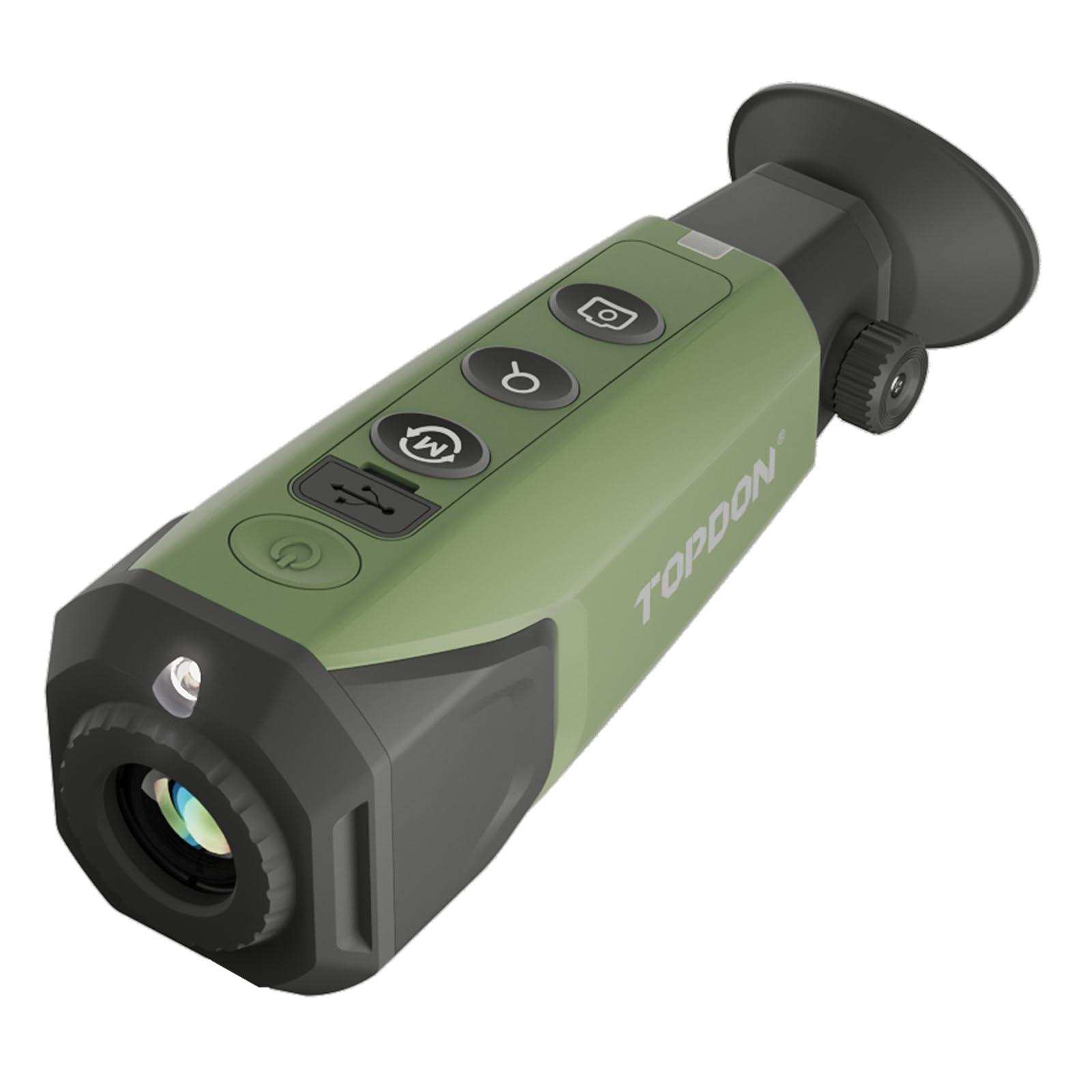
TOPDON TS004

87 /100
Studio Score Strong Evidence

Key details

Battery
5000mAh, 11 hours
IR Illumination
Sensor Resolution
256x192 thermal
Magnification / FOV
Check Price on Amazon

The TOPDON TS004 combines a 50Hz 256x192 thermal sensor, WiFi app sharing, and IP67 sealing at a mid-range price. Close-to-mid range imaging is where it earns its keep: heat signatures from foxes, deer, and other wildlife come through with enough detail to track movement and make reasonable species observations. The refresh and sensor together handle animals that aren't standing still, a spot where budget thermal can struggle.

The app makes pulling stills and clips from the unit quick for later review or sharing, and the 5000mAh battery stretches toward 11 hours — enough for full-night sits or multi-hour hikes. It is a complete package rather than a bare sensor in a tube.

Hunters, campers, and wildlife observers get a rugged field tool if they respect the resolution boundary: practical identification runs about 100–150 yards, while the 410m detection figure is better treated as a heat-source locator, not a species-ID spec. For surveillance and outdoor exploration, the same strengths apply at moderate distances. Buyers needing long-range positive identification or an ultra-light pocket thermal should look to other classes; this one is built for moderate-range fieldwork.

💡 Use the WiFi app to capture stills and clips for a second look when a moving target makes an eyepiece ID tricky.

Pros

  • Close-to-mid range imaging shows foxes, deer, and other heat sources with usable detail.
  • 50Hz refresh, app control, and IP67 combine at a price below comparable thermals.
  • IP67 sealing and 11-hour battery handle weather across long outings.

Cons

  • Quality control can vary between units; a small subset needed early replacement.
  • Image sharpness can look grainy at distance, so identification stays a close-to-mid range affair.
Our verdict

The TS004 is the mid-range thermal to pair with hunt and camp outings when you need smooth viewing, app sharing, and weather protection.
Check Latest Price
2

Best Budget Thermal

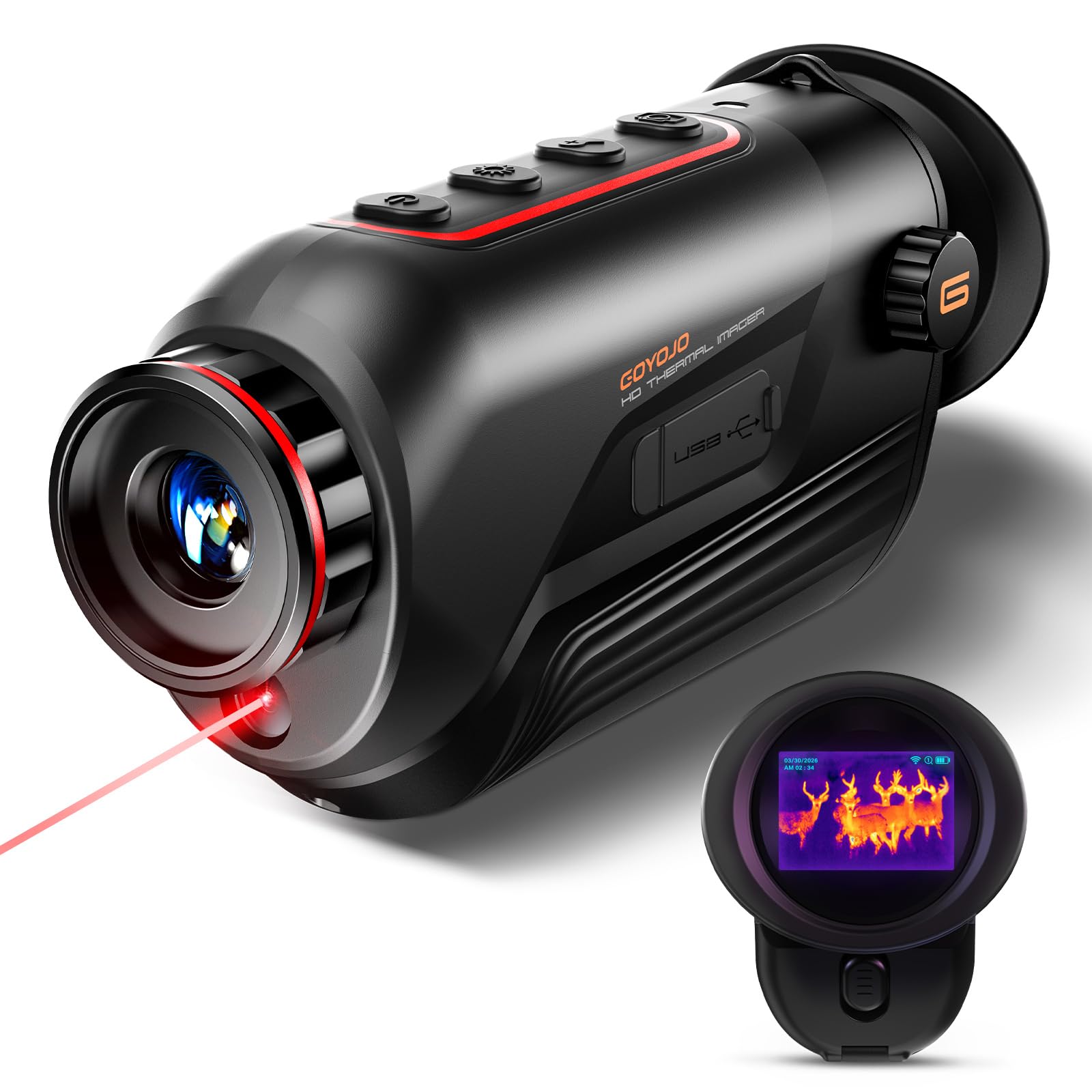
GOYOJO G210

85 /100
Studio Score Strong Evidence

Key details

Battery
Replaceable 18650
IR Illumination
Sensor Resolution
256x192 thermal
Magnification / FOV
17.5° FOV
Check Price on Amazon

The G210 pairs a 256x192 thermal sensor with a replaceable 18650 battery and an IP65 body, keeping field time long and weather out. In total darkness it picks up animals across open ground, which is exactly what a first-time thermal buyer needs from a handheld spotter.

This is the entry-level thermal for price-conscious hunters and campers who want a handheld spotter without helmet mounting. The 25Hz refresh and 256 sensor's modest clarity mean fast-moving targets and distant ID are less fluid and distinct than on a 50Hz thermal; the G210 is best used as a medium-range detection tool.

Pros

  • Rugged IP65 body stands up to field use as a handheld spotter.
  • Replaceable 18650 battery allows quick swaps during long evening outings.
  • Thermal detection works in total darkness for spotting animals.

Cons

  • Some units may require a warranty exchange within the first weeks of use.
Our verdict

A budget-friendly thermal that covers the essentials: dependable handheld detection, replaceable power, and rugged build, with limitations that matter mainly past medium range.

Check Latest Price
3

Most Pocketable Thermal

RIX Pocket K2

85 /100
Studio Score Strong Evidence

Key details

Battery
IR Illumination
Sensor Resolution
256x192 thermal
Magnification / FOV
19.4° FOV
Check Price on Amazon

The RIX Pocket K2 pairs 50Hz refresh with a 200g body, 800x600 OLED, electronic image stabilization, and IP67 sealing in a package that fits a shirt pocket. That combination keeps moving targets smooth while staying easier to carry than comparable thermals. The 256x192 sensor delivers practical detection for hunting and scouting within 100–150 yards.

Backpackers and hunters who want a thermal that disappears in a pocket while hiking or changing positions are the right audience. The small eyepiece and 256 sensor limit all-day comfort and long-range identification, so this is better suited to quick looks than to prolonged glassing.

Pros

  • Useful thermal detail for hunting and scouting inside 100–150 yards.
  • Mid-range price with 50Hz smoothness that undercuts the usual cost for this refresh.
  • 200g body fits in a shirt pocket, so it travels where bulkier thermals stay behind.

Cons

  • Battery contacts and charging behavior can vary between units.
  • Clarity drops past roughly 100 yards, so identification gets soft beyond that range.
Our verdict

For backpackers and hunters who value pocketable weight over long-distance identification, the Pocket K2 delivers smooth 50Hz thermal vision without the bulk. Keep expectations at close-to-mid range and it is a practical travel companion.

Check Latest Price
4

Best Walkable Head-Mounted Digital

Nightfox Prowl

82 /100
Studio Score Strong Evidence

Key details

Battery
IR Illumination
850nm + 940nm
Sensor Resolution
1080p digital
Magnification / FOV
1x, 54° FOV
Check Price on Amazon

The Prowl is a 1x digital monocular with a 54° field of view and a Wilcox-compatible helmet mount, so it stays usable while you move. Single-eyepiece night viewers can force a narrow, magnified tunnel; this one keeps the scene intact for airsoft patrol, night hiking, and other foot-based work. The dual 850nm and 940nm IR modes let you choose brighter illumination or a less visible glow when covert positioning matters.

It suits tactical users and budget-conscious night hikers who want a helmet-mountable monocular for navigation and spotting. The image is pixellated, so faces and animals at distance stay soft; use it to spot movement and navigate, not to identify details. Hunters needing long-range target ID are better served by a thermal viewer.

Pros

  • Walkable 1x field of view with a wide 54° angle keeps the scene visible while moving.
  • Strong value for airsoft and patrol use, with the mount compatibility tactical users expect.
  • Dual 850nm/940nm IR modes balance brightness and a less visible glow for stealth.

Cons

  • Mount and strap stability can be finicky; screws may loosen with repeated use.
Our verdict

For night hiking and airsoft patrol, the Prowl’s 1x walkability is the feature other digital monoculars lack.

Check Latest Price
5

Best Ultra-Compact Digital

Carson MiniAura

83 /100
Studio Score Strong Evidence

Key details

Battery
3 AAA
IR Illumination
Adjustable IR
Sensor Resolution
Magnification / FOV
1x, 19° FOV
Check Price on Amazon

Carson's MiniAura packs a 3.4-ounce, 1x digital monocular with adjustable IR and three AAA batteries into a body small enough for a jacket pocket. It is the compact alternative to the bulkier kit-style digitals in this group, and its IR lighting handles backyard and basic wildlife checks. The adjustable IR keeps close-up targets from washing out, a useful touch for casual observation.

Travelers, hikers, and casual backyard watchers are the natural audience here. AAA batteries are simple to swap anywhere, and the controls are basic enough for first-time night viewers. Narrow field of view and short usable range make this a close-range viewer, not a long-range spotter.

Pros

  • Close-range wildlife checks get simple IR viewing that works in total darkness.
  • At 3.4 ounces, it slips into a pocket without adding bulk to a day pack.
  • Budget-friendly price from a recognizable optics brand.

Cons

  • The image and screen are small, so fine detail takes patience to read.
Our verdict

The MiniAura makes sense when pocketability and simple operation are the priority.

Check Latest Price
6

Best High-Resolution Thermal Upgrade

RIX Pocket K3

84 /100
Studio Score Strong Evidence

Key details

Battery
Replaceable 18650
IR Illumination
Sensor Resolution
384x288 thermal
Magnification / FOV
Check Price on Amazon

The RIX Pocket K3 is the high-resolution thermal upgrade in a pocket format: 384x288 50Hz sensor, 853-yard detection range, replaceable 18650 battery, and USB-C charging in a compact body. Field use shows animals at 200-300 yards and aircraft at night with more usable detail than 256-sensor thermals can deliver. The 384 sensor resolves shape and movement where lower-resolution thermals remain indistinct.

Buy it when you need thermal detail for scanning 300-plus yards, not just heat-source detection. The compact eyepiece and screen trade all-day viewing comfort for portability, so glasses wearers should test the fit before committing.

Pros

  • Detects animals at 200-300 yards and aircraft at night with detail that 256-sensor thermals miss.
  • Premium price buys a real jump in sensor resolution without stepping up to a full-size high-end thermal.
  • Replaceable 18650 battery and USB-C extend field sessions; swapping cells is easy.

Cons

  • For glasses wearers or helmet mounting, eye relief is tight; the small eye box can be hard to square up quickly.
Our verdict

For wildlife viewers who routinely scan 300-plus yards, the extra sensor resolution is the draw; the compact body keeps it pocketable.

Check Latest Price
7

Helmet-Mounted Patrol

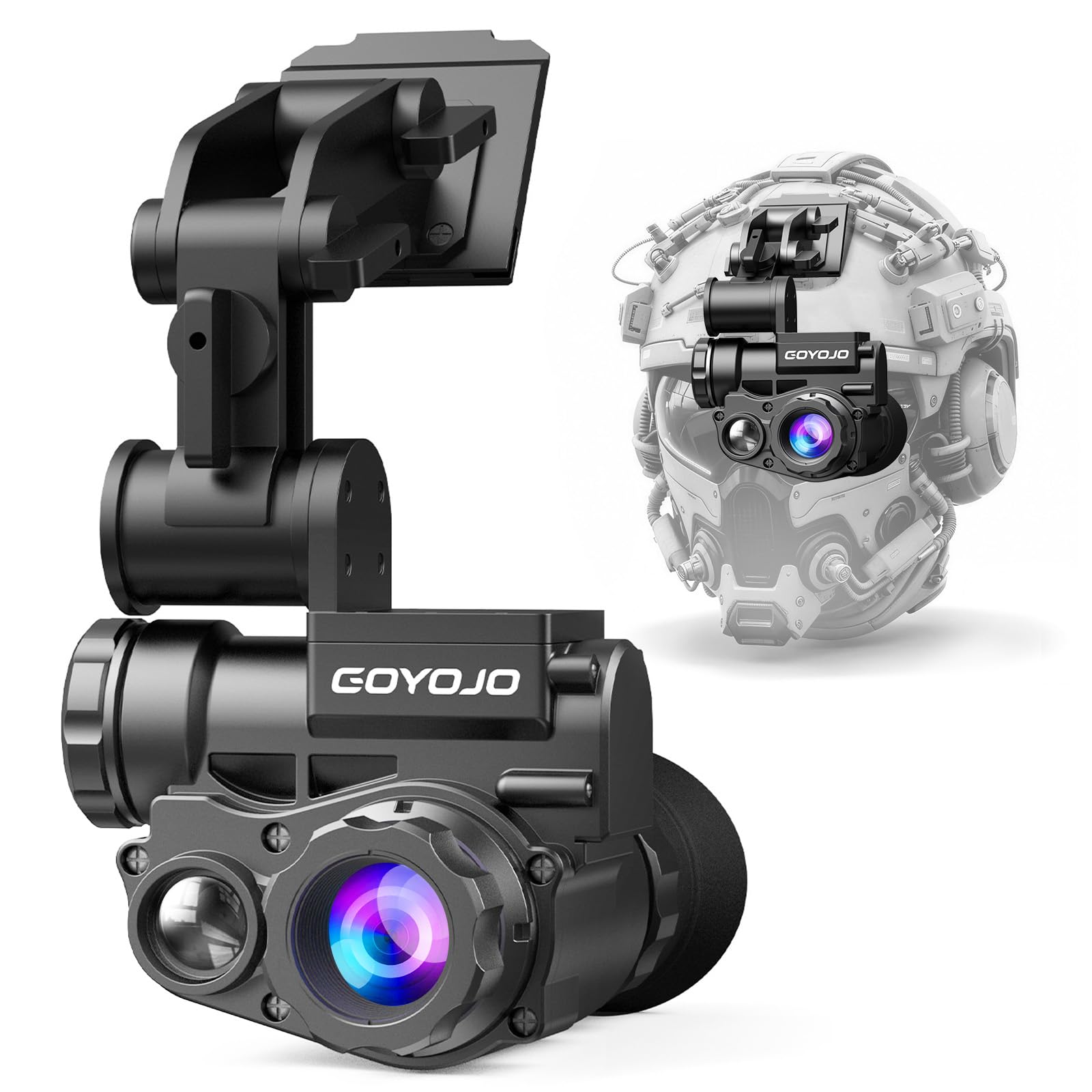
GOYOJO NVG10

84 /100
Studio Score Strong Evidence

Key details

Battery
IR Illumination
850nm, 3-level
Sensor Resolution
1080p HD
Magnification / FOV
1x optical, 3x digital
Check Price on Amazon

The NVG10 pairs a rugged helmet-ready body with sharp 1080p HD imaging and 850nm IR for total darkness. Recording and IP66 sealing suit airsoft and home patrol. Field of view is narrow for walking, and helmet mounting may need custom adjustment, so it suits stationary or slow scanning.

Pros

  • Rugged helmet-ready body withstands airsoft impacts and patrol wear without losing alignment.
  • Sharp 1080p HD imaging keeps close-range targets identifiable through the single eyepiece.

Cons

  • Narrow field of view limits movement to deliberate head scanning rather than walking at speed.
Our verdict

Airsoft players and patrol users who need hands-free helmet-mounted night viewing from a stationary post will get the most from this unit.

Check Latest Price
8

Budget Kit Beginners

YUANZIMOO IR Monocular

81 /100
Studio Score Strong Evidence

Key details

Battery
2000mAh rechargeable
IR Illumination
850nm, 7-level
Sensor Resolution
Magnification / FOV
2x optical, 8x digital
Check Price on Amazon

The YUANZIMOO is an approachable first digital IR monocular: 7-level IR, 2x/8x zoom, and photo/video with a 32GB card and tripod serve beginners at the campsite. Narrow FOV, finicky focus, and visible screen glow keep it below the next tier, but the bundled extras and budget price make it worth considering for casual use.

Pros

  • Usable IR night vision from 100 to 150 yards, so total darkness doesn't end the session.
  • Bundled 32GB SD card and tripod make this a ready-to-go recording kit for first-time buyers.

Cons

  • Distant subjects can blur, especially when digital zoom is pressed beyond the 2x optical stage.
Our verdict

For a beginner camp observer who wants a recordable night-view starter kit, this is the budget pick to consider — provided close-to-mid-range use is the goal.

Check Latest Price
9

Starter Night Viewing

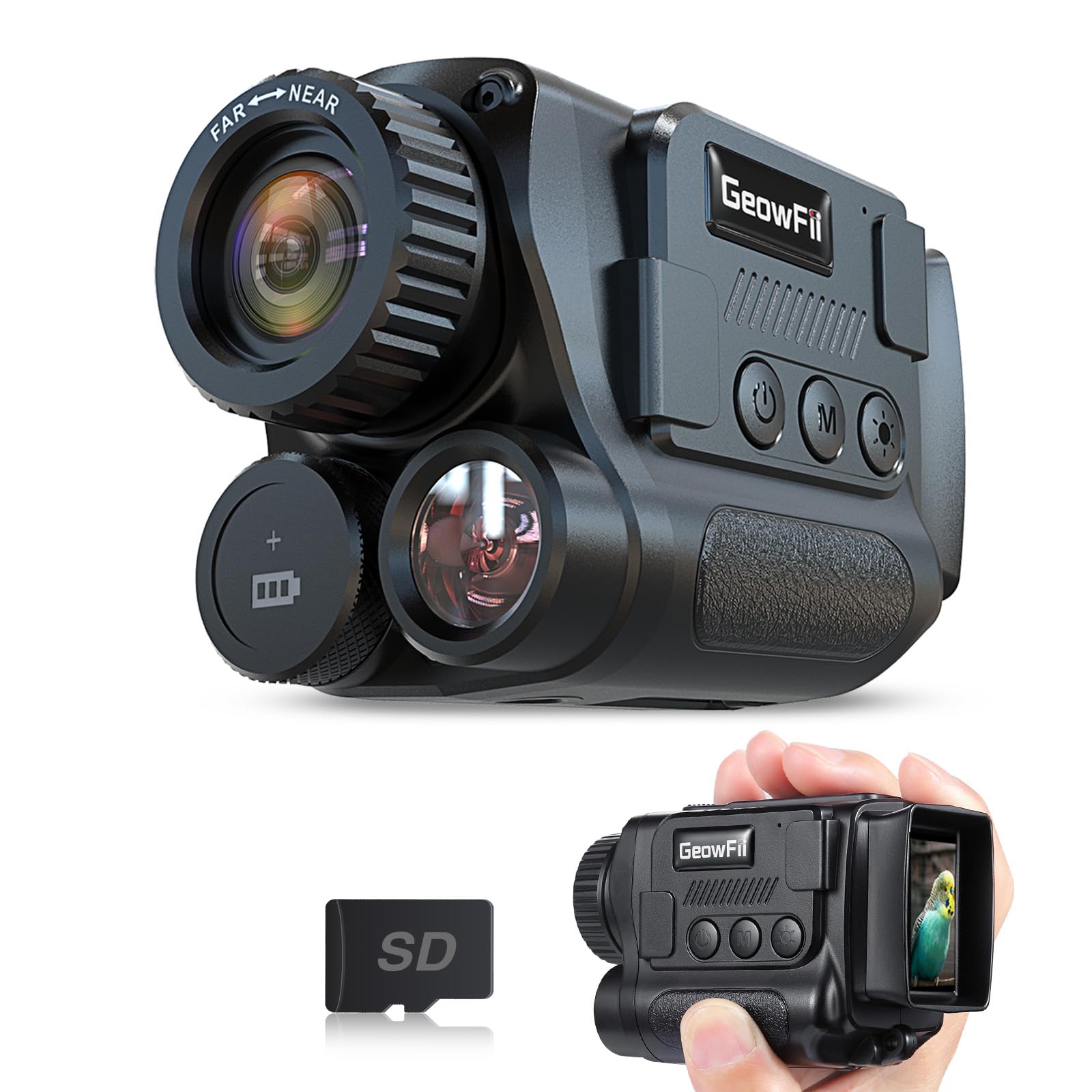
GeowFiiTech 4K NV

80 /100
Studio Score Strong Evidence

Key details

Battery
2000mAh, 10 hours
IR Illumination
850nm, 7-level
Sensor Resolution
1.3MP CMOS
Magnification / FOV
8x digital zoom
Check Price on Amazon

GeowFiiTech's Night Vision Monocular is one of the cheapest usable ways to explore digital night vision, with a 2-inch IPS screen and long battery life for backyard observation. The '4K' label overstates the image; effective clarity lands near 720p, and the buttons can misfire on occasion. That makes it a first-step starter rather than a serious hunting or surveillance tool.

Pros

  • Entry-level price removes the usual barrier to trying digital night vision.
  • Long battery life supports extended backyard sessions without frequent recharging.

Cons

  • For spotting animals across a field, the 8x zoom runs out of clarity before it helps.
Our verdict

As a low-commitment first night viewer for backyard wildlife checks, it fits when expectations stay at entry level.

Check Latest Price
10

Also Great

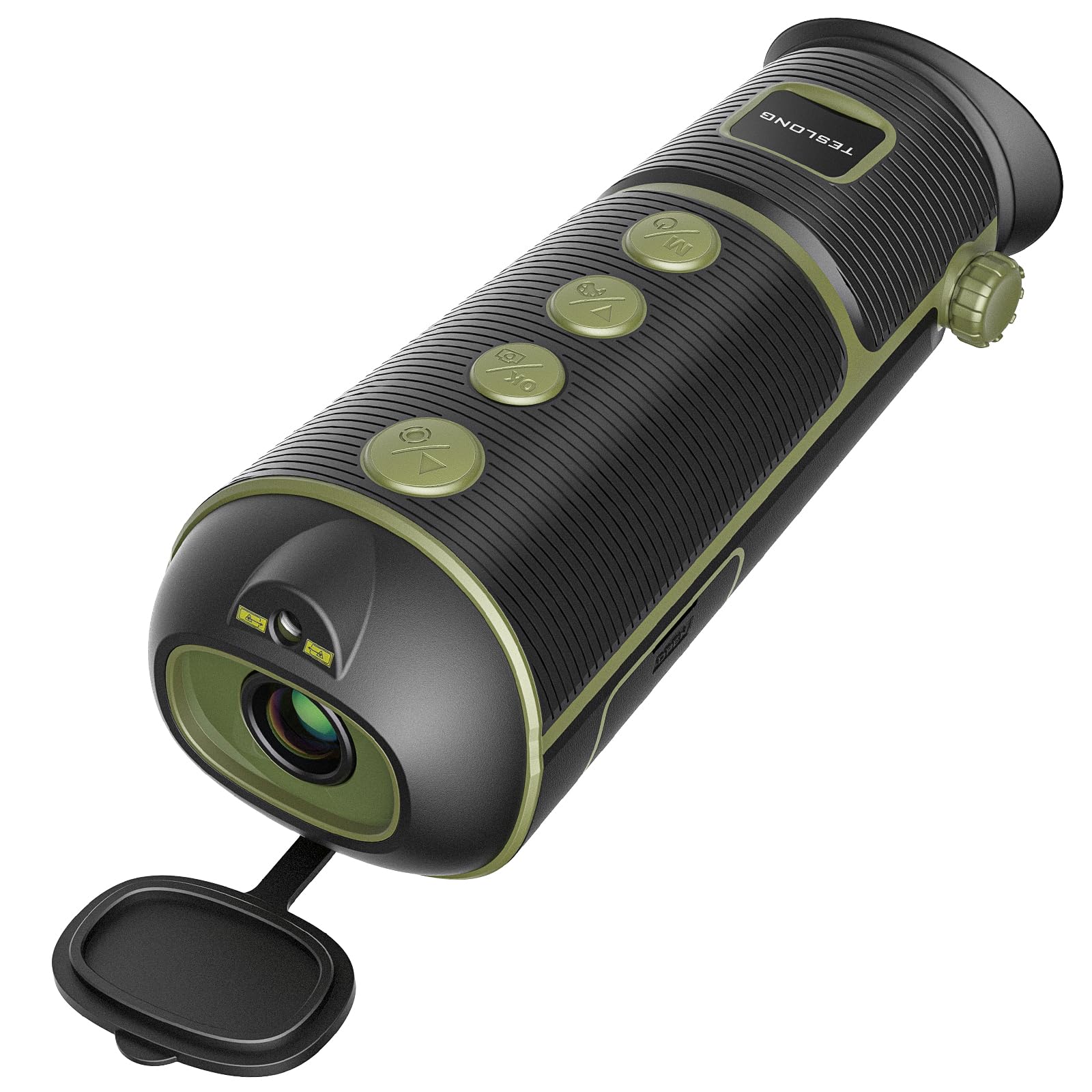
This thermal monocular records and upscales to 512x384 on an 800x600 OLED, which suits checking heat signatures around a property. Super Resolution boosts detail during closer inspection. Built-in 32GB storage handles photos and video. Clarity fades beyond roughly 50 yards, so it is a short-to-mid-range tool rather than a long-range identifier. Within that range, it handles property checks well.

Pros

  • The build feels solid, and the control layout is simple enough for quick field operation without menu hunting.
  • Thermal performance and built-in recording offer strong value among mid-range monoculars for short-range property checks.

Cons

  • The small eye window can be tight for glasses wearers and may need practice to align comfortably.
Our verdict

Fits property owners who want recorded heat-signature scans without paying for a higher-resolution sensor.

Check Latest Price
11

Hands-Free Camp Viewing

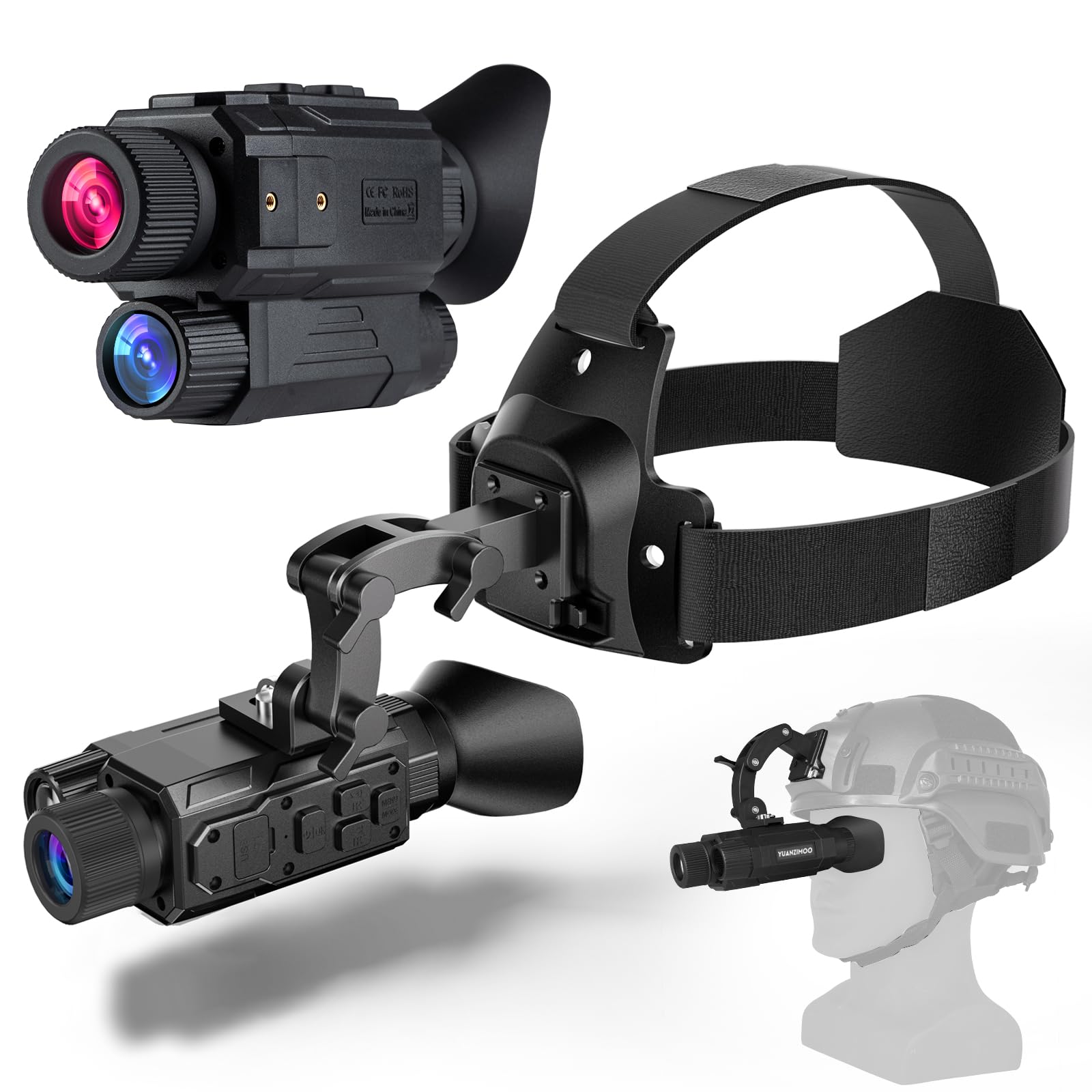
YUANZIMOO Head-Mount

79 /100
Studio Score Established

Key details

Battery
2200mAh rechargeable
IR Illumination
850nm, 7-level
Sensor Resolution
Magnification / FOV
2x optical, 8x digital
Check Price on Amazon

The YUANZIMOO head-mount delivers clear hands-free night viewing and records day/night video at a budget price, with comfortable ergonomics for casual wear. It is best treated as a stationary or slow-scan tool rather than a walkable monocular.

Pros

  • Head-mounted IR delivers a clear image in total darkness for stationary observation.
  • Day/night photo and video recording keeps both hands free.

Cons

  • Minimum zoom is fixed high, leaving a narrow field of view that limits wide-area scanning.
Our verdict

A sound budget choice for hands-free camp and backyard viewing when your spot is fixed.

Check Latest Price
12

Budget Long-Zoom Viewing

ESSLNB 6x32 NV

79 /100
Studio Score Established

Key details

Battery
IR Illumination
5-level IR
Sensor Resolution
1080p FHD
Magnification / FOV
6x optical, 18x digital
Check Price on Amazon

The 6x32 digital monocular delivers strong IR brightness in total darkness and records 1080p video at a budget-friendly price. The field of view is extremely narrow, so fixed-position observation beats field scanning. Focus and image consistency can vary between units, which keeps this in the entry-level tier rather than a primary spotter.

Pros

  • Strong IR illumination makes objects clearly visible in total darkness.
  • Records 1080p video with 5-level IR at a budget-friendly price.

Cons

  • Long-range clarity is limited, making this a close-to-mid-range viewer rather than a distant spotter.
Our verdict

Best used as a fixed-position viewer for close-to-mid-range dark observation where strong IR and recording are the priority.

Check Latest Price

How to Choose

Sensor Resolution

A 256x192 thermal sensor spreads about 49,000 pixels across the scene; a 384x288 sensor roughly doubles that. At distance, a deer may occupy only a few pixels, enough to detect heat but not to identify the animal.

For digital IR, the effective resolution comes from the sensor and display, not a '4K' label. Use the sensor class as a range guide: 256x192 for about 100 to 150 yards of identification, 384x288 for longer reach.

Refresh Rate and Motion Smoothness

A 25Hz thermal looks fine when holding still but stutters when panning; 50Hz tracks moving animals with far less lag.

Hunters who scan or track should buy 50Hz. If your target stays still near a feeder, 25Hz saves money and works.

Magnification and Field of View

Magnification and field of view trade against each other. A 1x unit with a 50° FOV walks and scans naturally; a fixed 7x or 8x zoom shows a narrow slice and feels like a rifle scope.

Digital zoom enlarges pixels without adding detail. For moving use, choose 1x wide FOV; for stationary spotting, higher zoom can be acceptable.

IR Illumination and Stealth

An 850nm IR illuminator is bright and reaches far, but gives off a visible red glow. 940nm is covert but shorter-range.

If stealth matters, seek 940nm or adjustable IR; a bright screen can also leak light.

Battery Life and Field Power

Thermal monoculars draw constant power, and cold weather cuts run time. Replaceable 18650 cells let you carry spares; an integrated battery means waiting for a recharge.

Many digital IR units run longer per charge, but still need a full charge before a night out. Field users should prioritize replaceable batteries.

Mounting and Hands-Free Use

Helmet mounts free both hands, but a narrow-FOV monocular on your head is disorienting when walking. Handheld units with tripod sockets are better for scanning.

Helmet-ready models suit airsoft and patrol; budget head straps are best for stationary use, not moving quickly over uneven ground.

Frequently Asked Questions