9 Best Retro Cameras of 2026: Match the Vibe, Skip the Hype

Separate retro styling from real image quality: retro digital, film, and instant cameras that fit how you actually shoot, with honest trade-offs like film costs and low-light limits.

Retro styling has become a shortcut for selling cameras, but a leather-textured shell doesn't change what's inside. Many budget 'vintage' digitals pair their looks with small sensors, digital zoom, and megapixel claims that don't survive contact with actual files. The useful question isn't whether a camera looks like 1985; it's whether the hardware and shooting workflow fit how you want to shoot.

Film and instant cameras solve that differently: they deliver an analog process at the price of film packs, processing, and unpredictable results. Screen-free digitals strip away the playback display to recreate the discipline of film without ongoing consumables. Each option is a real tool for a specific job.

The purchase decision is a workflow decision: film and instant cameras add ongoing costs but deliver a physical artifact; retro digitals cost less per shot but their sensors cap image quality. Knowing which trade-off you accept is what makes the buying decision satisfying.

1

Best Retro Camera for Most People

CHUZHAO M1 Retro Mini TLR

85 /100
Studio Score Strong Evidence

Key details

Camera Type
Digital mini point-and-shoot
Image Specs
12MP sensor
Included Extras
16GB card, charging cable
Lens Flexibility
Fixed wide-angle
Check Price on Amazon

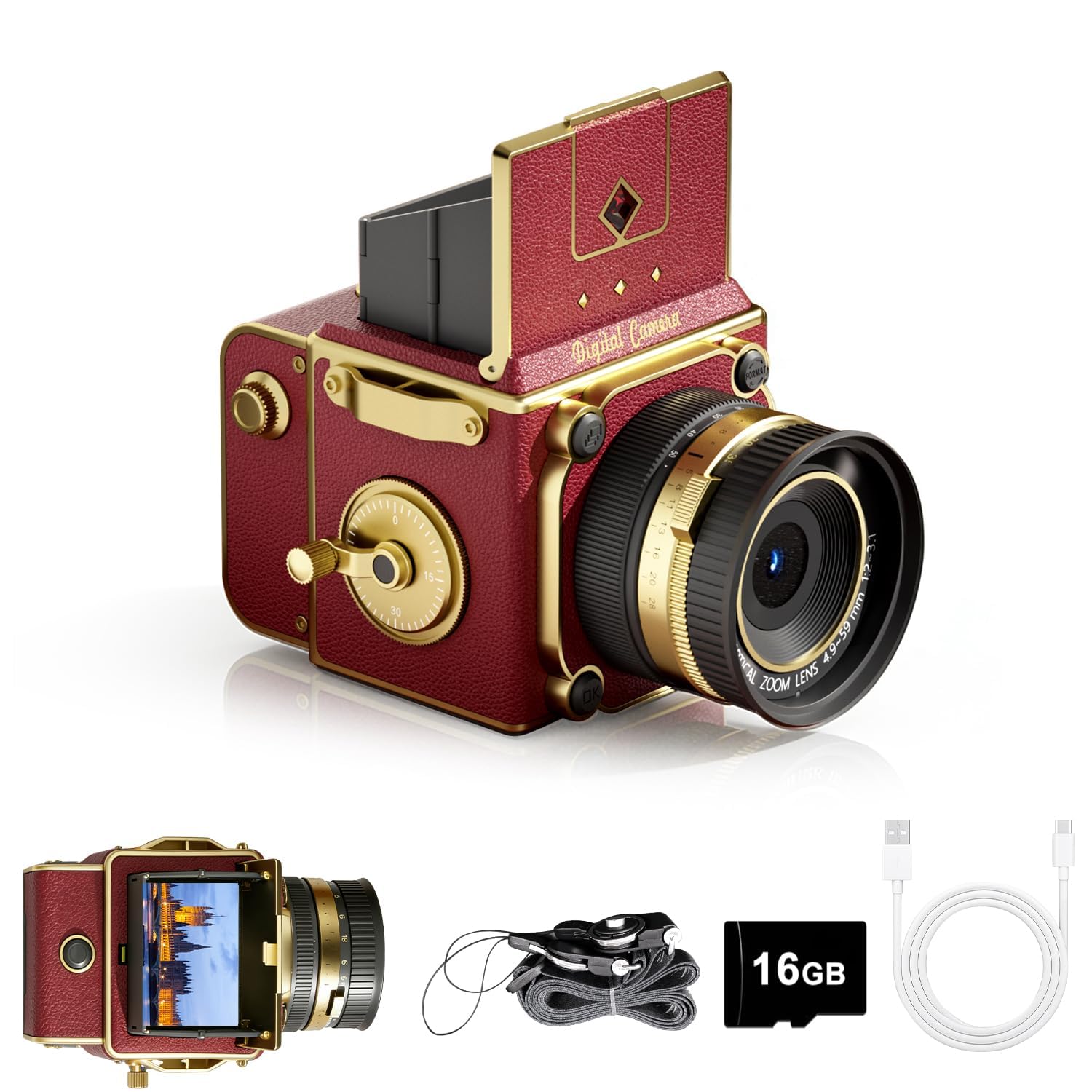
The CHUZHAO M1 delivers genuine waist-level TLR-style shooting from a body small enough to slip into a pocket. Its 12MP sensor produces textured, retro-looking files in daylight, and composing from above makes the camera feel like a working vintage camera rather than a phone-screen substitute. The fixed wide-angle lens keeps the shooting simple, and the top-down viewfinder encourages a slower, more deliberate approach to framing. That combination is what sets this miniature camera apart from the usual budget digital point-and-shoot, which tend to lean on specs rather than handling.

The waist-level workflow changes how you handle a shot: you hold the camera low, frame from above, and shoot from a more candid angle. It is not as fast as raising a phone to eye level, but the slower pace suits the camera's retro spirit. The miniature build makes it easy to keep nearby on a table or in a bag, and the retro body draws attention in a way that fits parties, travel, and casual outings. The shooting process is fun and nostalgic, and the small size means it can sit on a wrist strap without becoming a burden. The camera is not a fast action tool, but that is not the point; it suits walking around a city or a park, stopping for a frame, and moving on.

This is for teens, beginners, and vintage TLR collectors who want retro handling without film costs or SLR complexity. It suits casual daylight shooting, and buyers who need a large, readable screen will find the tiny display limiting. For that audience, the M1 is a camera you carry because you enjoy the act of shooting, not because you need maximum resolution.

The camera's charm is in how it makes a simple photo feel deliberate. The M1 does not pretend to be a serious imaging instrument; it is a retro-flavored digital that succeeds by keeping the experience light and entertaining. Used within its daylight comfort zone, it delivers consistent vintage character and a genuinely pleasant shooting process. That personality keeps the novelty from wearing off quickly, which is more than can be said for many budget cameras with a vintage paint job. The waist-level interaction, pocketable footprint, and unfiltered retro output combine to make the M1 feel less like a gadget and more like a small ritual.

πŸ’‘ The USB-charged battery lasts roughly four hours, so a quick top-up keeps it ready for a full day of casual shooting.

Pros

  • Pocketable size makes it easy to carry on a strap or in a bag without becoming a burden.
  • Waist-level TLR-style viewing makes the shooting process hands-on and gives every shot a nostalgic feel.
  • Daylight images carry a soft, textured retro look straight out of the camera with no editing needed.
  • Vintage miniature body appeals to collectors and casual users who want character from their camera.

Cons

  • Low-light images lose detail and sharpness, so evening shooting is not this camera's strength.
  • The button layout and included manual can take time to learn, especially for younger users.
Our verdict

At a budget-friendly price, the M1 is the most enjoyable way to get TLR-style handling in a pocketable digital camera.

Check Latest Price
2

Best Film Camera for Beginners

KODAK EKTAR H35 Film Camera

86 /100
Studio Score Strong Evidence

Key details

Camera Type
35mm film half-frame
Image Specs
35mm half-frame
Included Extras
No film or battery
Lens Flexibility
Focus-free fixed
Check Price on Amazon

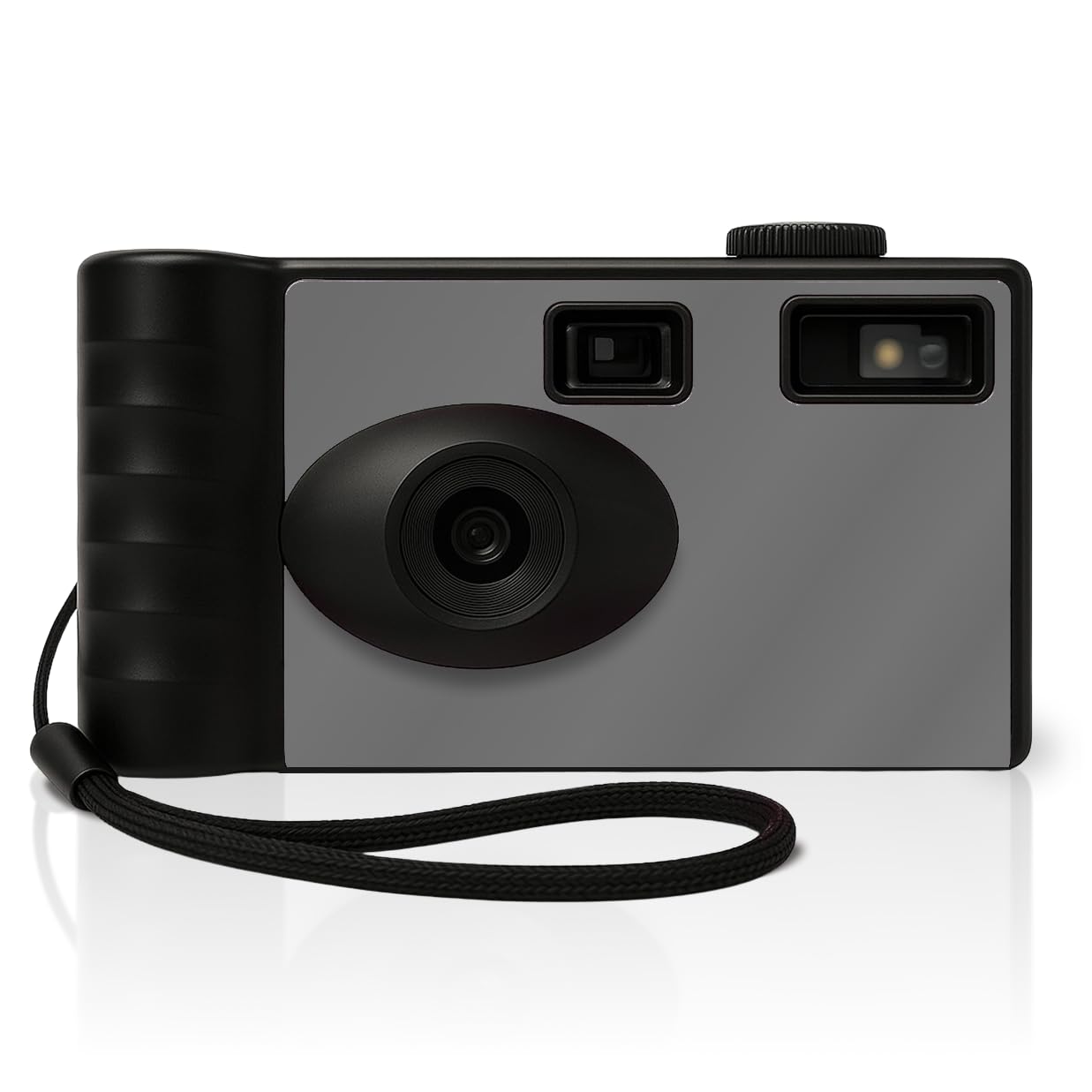
The EKTAR H35 turns a standard 36-exposure 35mm roll into roughly 72 frames, lowering the per-shot cost of learning real film photography. Where the flip-screen digital compact in this set offers instant review and no consumables, the H35 requires a deliberate analog chain: load film, advance each frame, keep track of shots, and wait for development. The result is a camera that rewards measured shooting rather than rapid-fire capturing.

The focus-free lens removes focusing decisions, and the simple exposure system keeps controls minimal for someone on a first roll. The built-in flash adds a close-range option indoors, while the half-frame format stretches a 36-exposure cartridge to about 72 shots. Fewer reloads make it a practical travel companion.

First-time film shooters who want a low-cost entry into analog, enthusiasts curious about half-frame cameras, and anyone looking for an everyday travel snapshot camera fit this profile. Film and a AAA battery are not included, and processing costs remain part of ownership. The fixed, focus-free lens means there are no focus errors to troubleshoot, which is a genuine advantage for a beginner, but advanced photographers looking for manual exposure control should consider a different body.

Pros

  • Roughly 72 frames on a standard 36-exposure roll cuts the cost per shot compared with full-frame 35mm.
  • Focus-free operation removes focusing decisions, so a first-time shooter can start without a learning curve.
  • Built-in flash adds an indoor option when available light gets low.

Cons

  • Half-frame negatives are smaller than standard 35mm frames, so very large prints can look softer.
  • Bright daylight is the dependable zone; the focus-free lens and basic exposure have little headroom elsewhere.
Our verdict

The EKTAR H35 is a true analog starter camera for people who want half-frame economy and a deliberate shooting pace, and who are comfortable with film costs as part of the experience.

Check Latest Price
3

Best Retro-Style Digital Compact

KODAK PIXPRO C1 Retro

80 /100
Studio Score Strong Evidence

Key details

Camera Type
Digital point-and-shoot
Image Specs
13MP BSI CMOS
Included Extras
β€”
Lens Flexibility
26mm f/2.0, 4x digital zoom
Check Price on Amazon

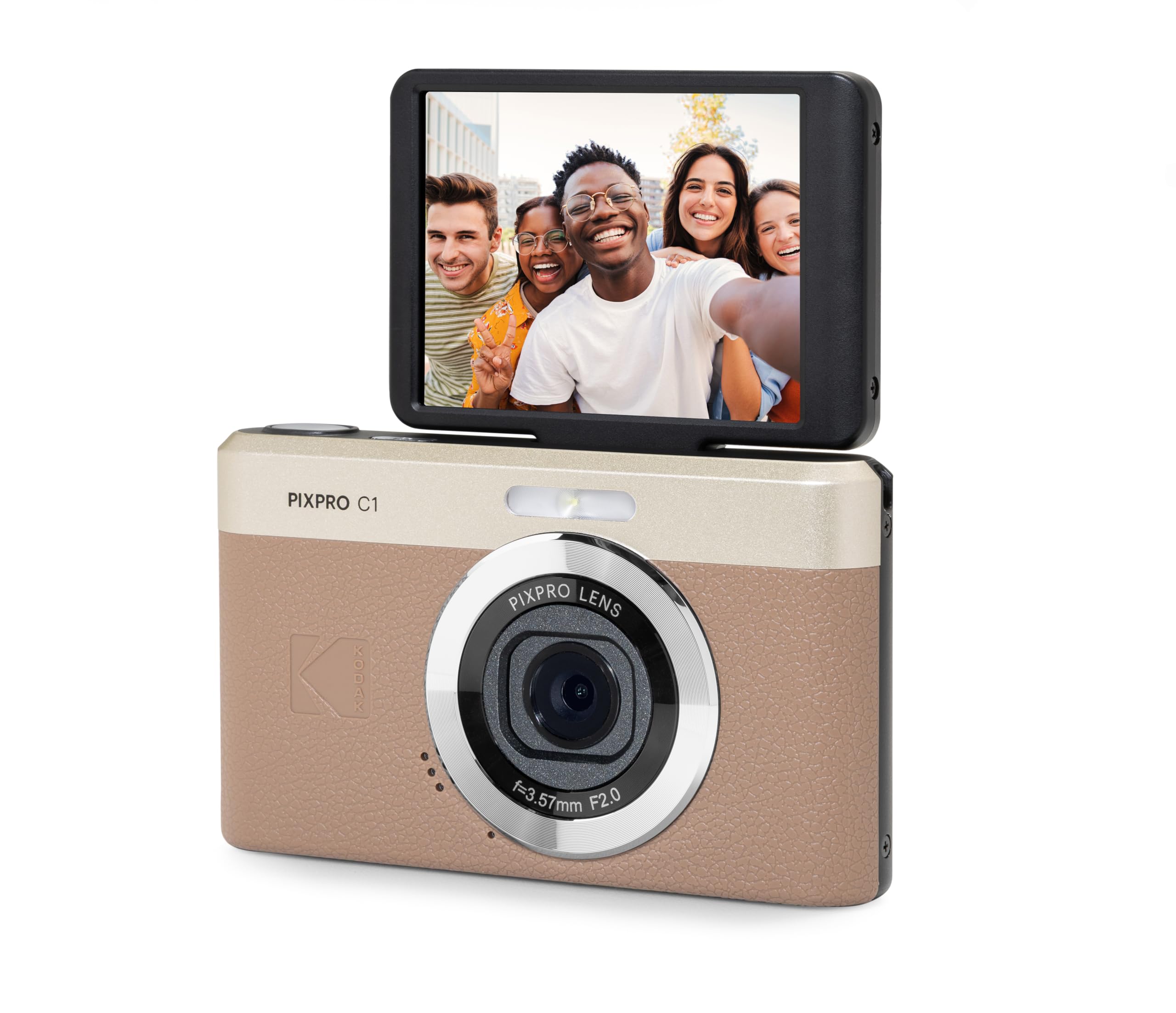
The KODAK PIXPRO C1 is the most useful retro-styled digital in this set, with a 180-degree flip screen and a fixed 26mm f/2.0 lens that simplify framing for casual photographers. The 13MP BSI CMOS sensor handles daylight scenes cleanly for social sharing, and the compact shell slips into a small bag or pocket. This is a point-and-shoot for buyers who want the retro look without buying film or maintaining a vintage camera.

Best suited to teens, students, and casual travelers who want a flip-screen compact for daytime outings and quick selfies. Low-light performance and stabilization are limited, so this is not a night-shooting tool or a steady handheld video camera; some units may power down unexpectedly. The tradeoff is acceptable for a daylight-first budget compact, especially when the alternative is film and processing costs.

The flip screen makes selfie and low-angle framing feel natural, and the fixed f/2.0 lens keeps the shooting flow simple: frame, press the button, and move on. The 1080p video records casual clips, and the light body is easy to carry all day. The fixed lens removes zoom decisions, so the camera stays ready for quick grabs. This is a social-first camera that leans on its retro styling and easy controls rather than raw resolution.

πŸ’‘ Use the digital zoom only when you cannot move closer; in-camera cropping lowers detail.

Pros

  • Flip screen makes selfies and low-angle shots comfortable to frame.
  • Lightweight body is easy to bring along for travel and daily use.
  • Controls are beginner-friendly and simple to learn.
  • Fixed f/2.0 lens gives a brighter baseline than typical budget compacts.

Cons

  • Night and low-light scenes can turn out dark or soft.
  • Handheld motion may blur frames as light drops.
  • Some units can power down unexpectedly during a shoot.
Our verdict

The C1 is the right Kodak for anyone who wants the retro-digital look, a flip screen, and no film workflow.

Check Latest Price
4

Best Classic Film SLR

Canon AE-1 35mm SLR

84 /100
Studio Score Strong Evidence

Key details

Camera Type
35mm film SLR
Image Specs
35mm film
Included Extras
Body and 50mm lens
Lens Flexibility
Canon FD 50mm f/1.8
Check Price on Amazon

The Canon AE-1 pairs a Canon FD 50mm f/1.8 with TTL metering and shutter-priority or manual exposure in a renewed 35mm SLR body. It uses full-frame 35mm film rather than a half-frame format, so every shot makes use of the full negative. The aperture ring turns with the feel of a classic SLR, and the viewfinder needle keeps exposure control inside the frame. This is a working film camera, not a shell for retro styling.

The shooting loop is simple: set the shutter, let the meter pick the aperture, or take manual control when the light demands it. The shutter-priority route is forgiving enough for handheld shooting, while manual mode is there when you want to override the meter. The FD 50mm f/1.8 is a normal prime that rewards a deliberate eye, and the shutter-speed dial plus aperture ring keep settings visible without a digital display. Photographers with older SLR muscle memory will adapt quickly.

The AE-1 belongs with film purists and Canon FD collectors who want the original body rather than a retro-styled digital imitation. Anyone expecting point-and-shoot film operation should look elsewhere; renewed condition can vary from body to body, and film plus processing add an ongoing cost on top of the initial purchase.

Pros

  • The included Canon FD 50mm f/1.8 gives the AE-1 a classic normal lens ready to shoot.
  • Shutter-priority and manual exposure let you choose between quick aperture selection and full control.
  • TTL metering keeps exposure feedback inside the viewfinder.
  • The 35mm SLR body is a real film camera, not a retro-styled digital imitation.

Cons

  • The bundle is fixed to a 50mm normal lens; wider or telephoto work means buying added FD glass.
  • The premium price rests on AE-1 heritage and renewed condition; value depends on collector mindset, not raw specs.
Our verdict

The AE-1 is the classic Canon FD body to buy when the task is deliberate film photography.

Check Latest Price
5

Best Instant Camera

Polaroid Now Instant Camera

82 /100
Studio Score Strong Evidence

Key details

Camera Type
Instant film camera
Image Specs
i-Type / 600 film
Included Extras
16-film starter pack
Lens Flexibility
Twin-lens autofocus
Check Price on Amazon

Instant-film nostalgia gets modern controls: the Polaroid Now pairs classic i-Type/600 film with twin-lens autofocus, self-timer, double-exposure mode, and a USB-C rechargeable battery, and the bundle includes a 16-color-photo starter pack so you can begin shooting immediately. That makes it one of the easiest ways into authentic Polaroid photography without hunting for vintage hardware.

The print ritual is the product: photos develop in minutes, and hand-me-around prints fit parties, family gatherings, and gift exchanges better than a phone screen ever will. The retro body gets people curious, and the modern controls β€” autofocus, self-timer, double-exposure β€” remove the guesswork of older Polaroids. Everyone wants a turn when the print comes out, and the physical result is the payoff. The shared moment is as much the image as the photograph itself.

This is for families, nostalgic gift-givers, and party hosts who want an immediate physical keepsake and accept that film packs make each shot expensive. It is not for anyone wanting clinical sharpness in every frame; the half-frame film camera in this set stretches a roll further, and a digital retro compact is more predictable. Those who buy it as a party camera rather than a precision tool will get the experience they're after.

πŸ’‘ Charge it over USB-C before an event; the battery covers a long session of casual shooting.

Pros

  • The instant-print ritual is a crowd-pleaser, and the retro format makes gatherings feel more memorable.
  • Autofocus, self-timer, and double-exposure add useful control to classic instant-film shooting.
  • USB-C charging and an included 16-photo starter pack reduce first-use friction.

Cons

  • Low-light shots can come out dark or slightly soft even with the flash.
  • Occasional black frames can appear from a fresh pack, leaving a blank print instead of a keepsake.
Our verdict

Buy it for the moment when the print lands in someone's hands; that is where the value lives.

Check Latest Price
6

Best Budget Vlogging Camera

Gavonde WD08 4K Vlogging

80 /100
Studio Score Strong Evidence

Key details

Camera Type
Digital vlogging point-and-shoot
Image Specs
64MP claim, 4K mode
Included Extras
32GB card, two batteries, bag
Lens Flexibility
18x digital zoom
Check Price on Amazon

The Gavonde WD08 is the budget vlogging starter in this retro-styled set, and its appeal is less about the body and more about the complete kit: two batteries, a 32GB card, a 180-degree flip screen, WiFi, and webcam mode are all included from the start. The everyday retro compact in this lineup remains the better choice for casual stills, while this camera points its energy at self-recording and social video. For a family or young creator, that trade-off is easy to accept.

Webcam mode expands the camera's usefulness beyond vlogging, turning the same budget device into a video-call camera without extra software. Battery life covers a full casual session, and the second battery means a recharge wait doesn't interrupt the day. The 18x zoom reaches far, but because it is digital, detail drops as you extend it; the camera is strongest at moderate zoom lengths where the flip screen framing is easy to enjoy.

This is for a first-time vlogger or a teen who wants a selfie-friendly camera with the accessories included and no film costs to manage. The spec sheet's resolution numbers are best understood as broad marketing claims, and the focus system is better suited to slow, well-lit scenes than to fast action. Those limits are easier to live with when the bundle and flip screen are part of the package.

Pros

  • Starter bundle includes two batteries and a 32GB card, so a new vlogger can begin recording right out of the box.
  • Flip screen swings a full 180 degrees, making selfie framing and vlog recording simple.
  • Priced for beginners, with an accessory kit that gives the camera a practical everyday role.
  • Webcam mode covers both casual vlogging and video calls with one low-cost device.

Cons

  • The 4K and 64MP labels promise more detail than the sensor actually delivers.
  • In dim indoor scenes, autofocus can hunt and a unit may power down unexpectedly.
Our verdict

For a young creator on a tight budget, the Gavonde is the bundle-first way to start vlogging, with the flip screen and included kit doing the heavy lifting.

Check Latest Price
7

Budget Beginners

EJXHKNF M31 Retro Digital

81 /100
Studio Score Strong Evidence

Key details

Camera Type
Digital point-and-shoot
Image Specs
64MP claim, 12MP actual
Included Extras
16GB card included
Lens Flexibility
16x digital zoom
Check Price on Amazon

The waist-level IPS screen gives this retro-styled digital a playful top-down angle that stands apart at the budget end of the market. The shell feels more solid than the entry-level price suggests, and daylight photos come out better than expected. That makes it a fun second camera for travel or social-media snaps rather than a serious photographic tool.

This camera suits budget-conscious beginners, kids, and casual travelers who want the waist-level retro look without film costs. The 64MP label on the box is marketing, not sensor reality; buyers who need true high-resolution files or dependable indoor low-light coverage should look elsewhere. Durability can vary between units, so treat it as an inexpensive lifestyle camera rather than a long-term workhorse.

Pros

  • Build quality feels more solid than its budget price suggests.
  • Daylight photos and 2.7K video perform better than expected at this price tier.
  • Compact and easy to carry, so it works as a grab-and-go camera.

Cons

  • No built-in flash leaves indoor evening shots dark without an external light source.
  • AVI video files may need conversion to play natively on a Mac.
Our verdict

For casual shooters who want the waist-level retro look without film costs, this camera delivers the experience at a budget price.

Check Latest Price
8

Screen-Free Families

Voxcamy DC053 Screen-Free

92 /100
Studio Score High Confidence

Key details

Camera Type
Screen-free digital
Image Specs
12MP sensor
Included Extras
8GB microSD card
Lens Flexibility
Fixed focus
Check Price on Amazon

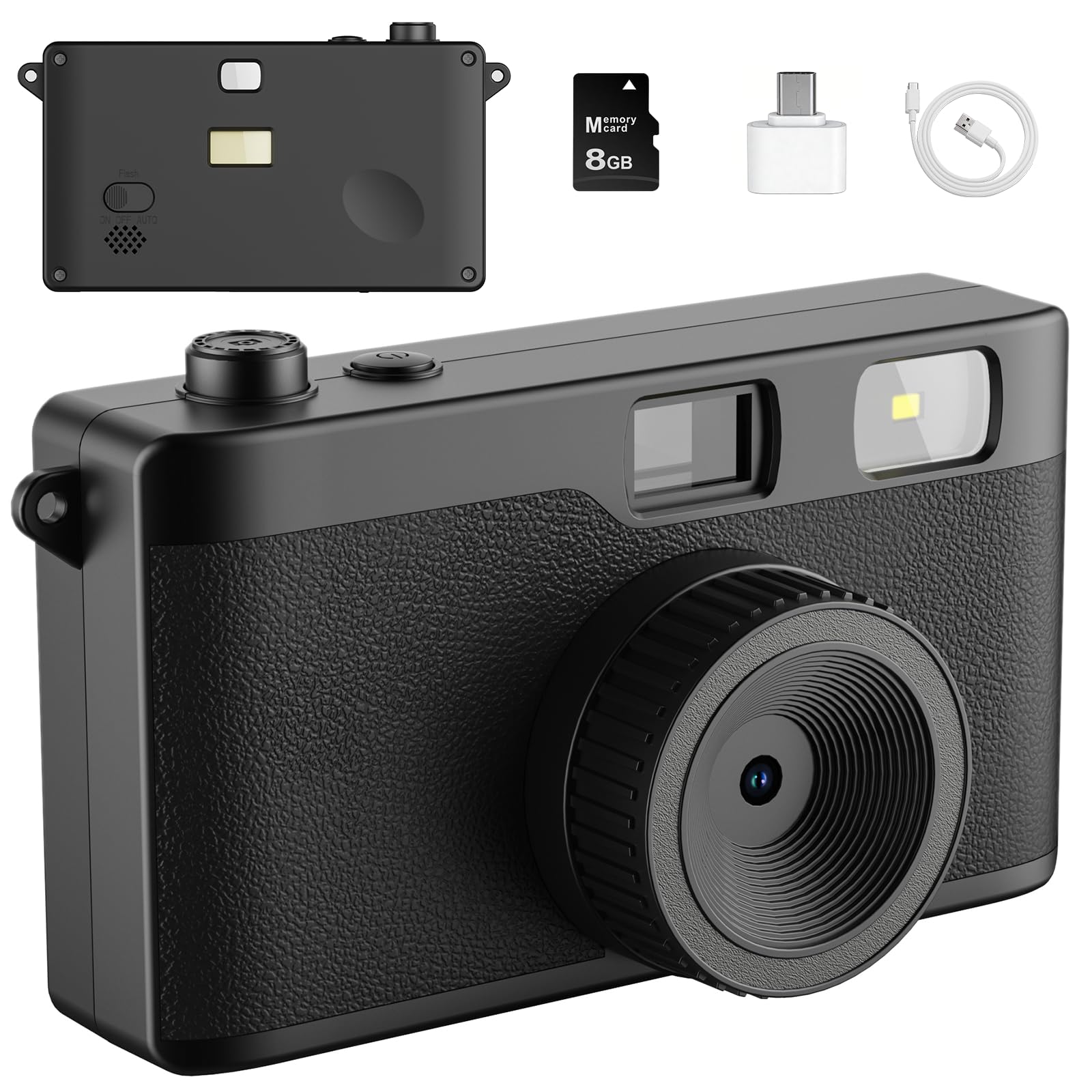
The Voxcamy DC053 pairs a screen-free 12MP sensor with OTG transfer so you can shoot without an LCD and move photos to a phone or computer later. The retro body, built-in flash with toggle, custom filters, and included 8GB microSD card make it a self-contained way to get vintage-look digital files. This is a lifestyle camera for families and campers who want a digital-detox experience, not a zoom or manual-control tool. No playback, no zoom, and no manual exposure control make it a niche choice; buyers who need instant image confirmation or composition control should look elsewhere. For those who accept a fixed-focus, screen-free workflow, it delivers a simple, engaging way to photograph a trip without film costs.

Pros

  • Vintage styling and packaging add charm to the everyday camera grab-and-go experience.
  • Lightweight body suits camp, travel, and carrying by younger hands.
  • Screen-free operation keeps attention on the moment instead of the last shot.

Cons

  • No zoom or manual exposure controls; composition depends on moving closer or farther.
  • No on-camera playback; each photo appears only after OTG transfer to a phone or computer.
Our verdict

For a family or camp trip where unplugged shooting is the goal, the Voxcamy DC053 fits well; anyone needing instant review or zoom control should pass.

Check Latest Price
9

Creative Teens

LENSY Screen-Free Digital

77 /100
Studio Score Established

Key details

Camera Type
Screen-free digital
Image Specs
8MP sensor
Included Extras
4GB TF card
Lens Flexibility
Fixed focus
Check Price on Amazon

The LENSY pairs a screen-free body with four built-in filters that create the vintage look at capture time, not in editing. Image quality is easy-going and fun, and the included 4GB card holds around 2,000 shots without film costs or phone time.

This is a good fit for creative teens and digital-detox shooters. The main compromises are shutter/menu sounds that cannot be muted and iPhone transfer that requires a computer/iPad instead. Fun filters, but these constraints keep it behind the top screen-free pick in this set.

Pros

  • Built-in Classic, Retro, Analog, and Black & White filters deliver finished looks at capture time.
  • Easy-going image quality with a fun, casual look that suits social sharing.
  • Simple operation makes it a low-fuss camera for creative teens and first-time shooters.

Cons

  • iPhone users won't get direct phone transfer; computer/iPad transfer works.
  • Shutter and menu sounds are loud and cannot be muted, which may feel noisy in quiet rooms.
Our verdict

For a first camera or a gift, the four built-in filters add a distinctive screen-free twist at a budget price.

Check Latest Price

How to Choose

Camera Type

Retro styling does not make a digital camera analog. Most budget vintage digitals use small sensors and digital zoom, so the image character comes from filters, not optics or film grain.

Film and instant cameras are the only true analog paths. They make a physical negative or print, but every roll or pack adds cost, and results are less predictable.

Image Resolution

Budget listings often claim 64MP or 4K, but the sensor inside is typically 8MP to 13MP. Those numbers describe upscaled output, not real resolving power.

For film, negative area sets the ceiling. A half-frame 35mm camera doubles shots per roll, but each frame captures less detail than a full 35mm frame, which limits large prints.

Lens Flexibility

A fixed-focus lens is sharp within a set distance range, but cannot handle close-ups or moving subjects. Digital zoom only crops the image, so it lowers effective resolution instead of adding reach.

For casual outdoor snapshots, fixed focus is enough. For indoor shots or close-up details, a camera with optical zoom or autofocus earns its price.

Viewing Experience

Flip screens help with selfies and vlogging, but drain battery and wash out in sunlight. Waist-level screens mimic old TLR framing but are usually too small for precise composition.

Screen-free cameras remove playback entirely, which changes behavior more than image quality. You frame once and move on, so the missing screen is a deliberate workflow choice.

Included Extras and Ongoing Costs

A camera's price is only the entry fee. Film and instant cameras add consumable costs per shot, while budget digitals usually include a card and cable, making extra shots nearly free.

Check what is in the box. A bundle with batteries, card, case, or film changes the real cost, while a bare body can force an immediate accessory purchase.

Frequently Asked Questions