8 Best microSD Card for GoPro in 2026: Steady 4K Recording

Choose the best microSD card for GoPro by focusing on sustained write speed, capacity, and real-world reliability, not just headline specs.

A GoPro writes video continuously, so a card's sustained write speed matters more than the peak read speed printed on the package. Cards that look fine for photos can drop frames or stop recording after a few minutes of 5.3K. The fix is knowing which speed-class labels actually guarantee continuous recording.

The confusion is fair: most product pages lead with read speeds, and almost every card claims GoPro compatibility. In practice, the bigger concern is whether a card keeps writing without interruption and still works after weeks of heavy use. That is why V30/U3 certification, sustained write performance, and warranty support should drive the choice.

Format the card inside the GoPro before the first shoot: most 'dead card' complaints are actually formatting and file-system issues. With a properly formatted V30/U3 card, you can rely on continuous 4K and 5.3K recording without guessing whether the card is up to it.

1

Best Overall

SanDisk Extreme 256GB

96 /100
Studio Score High Confidence

Key details

Read Speed
190 MB/s
U3/V30 Class
U3/V30/A2
Warranty / Recovery
Sustained Write Speed
130 MB/s
Check Price on Amazon

The SanDisk Extreme 256GB pairs 190 MB/s reads with 130 MB/s writes and carries V30/U3/A2 certification, which is the speed class GoPro needs for 4K and 5.3K recording. For action-cam buyers, the write number is what separates a card that keeps pace from one that causes buffering; this card holds that speed across a full session, so the camera can focus on recording rather than waiting on storage. The V30/U3 rating also means it is not the component you have to second-guess when the camera is set to its highest recording mode.

The A2 rating extends the card's usefulness beyond the camera. When the same card moves into a Steam Deck, phone, or drone, small-file performance stays responsive, which makes this a single-card solution for mixed gear rather than a dedicated camera accessory. The 190 MB/s read speed also shortens offloads, so a card packed with 4K clips transfers to a laptop without stalling the editing workflow. That is a real advantage for creators who shoot in the field and hand files to an editor the same day.

Compatibility is broad without re-formatting friction. The card is recognized by GoPro, DJI, Switch, Steam Deck, and mirrorless cameras, and the V30/U3 rating applies across those devices, so a card pulled from a drone can go straight into a camera body. The 256GB capacity holds a long day of 4K footage; 5.3K sessions still have room for multiple takes before an offload becomes necessary. For a rotating multi-device setup, this single card can cover most of the storage needs on a shoot without requiring a separate card for each gadget.

This card suits first-time GoPro owners and content creators who want one 256GB microSD for everyday 4K/5.3K shooting and fast offloads. The honest boundary is that some units can stop being recognized after heavy use, so format the card in-camera before the first shoot and keep a spare for anything irreplaceable. That precaution is part of owning any high-capacity microSD, not a reason to avoid this card. If you need one size for everything and are willing to carry a spare for critical jobs, the tradeoff is easy to manage.

At a mid-range price, this card undercuts the premium 512GB tier while delivering the certification most action cameras ask for. Buyers who only need an occasional backup card can spend less elsewhere; shooters who treat the card as part of the main workflow get a faster, broader-compatible option without overpaying for capacity they won't use. The 256GB size is the middle ground between a small spare and a 512GB flagship, which is why it fits the first serious GoPro purchase better than either extreme.

Pros

  • Dependable behavior across repeated action-cam sessions makes it an easy default for daily shooting.
  • Fair mid-range price for the capacity and transfer speeds, especially when the card moves between camera and phone.
  • Fast offloads shorten the wait after a 4K or 5.3K shoot, while write speed keeps up during recording.
  • 256GB stores a full day of 4K clips and a sizable amount of 5.3K before a swap becomes necessary.
  • One card works across GoPro, DJI, Switch, Steam Deck, and mirrorless cameras.

Cons

  • Budget-first GoPro owners can find lower prices on basic V30 cards, though they give up peak read speed.
  • The 256GB ceiling means marathon single-card sessions belong on the 512GB tier, not this card.
Our verdict

For GoPro owners who want a single 256GB card with the right speed class and no compatibility guesswork, this is the default buy.

Check Latest Price
2

High-Capacity Pro Choice

SanDisk Extreme PRO 512GB

96 /100
Studio Score High Confidence

Key details

Read Speed
200 MB/s
U3/V30 Class
U3/V30/A2
Warranty / Recovery
2-year + RescuePRO
Sustained Write Speed
140 MB/s
Check Price on Amazon

The 512GB Extreme PRO separates itself from the 256GB Extreme in this set by carrying a full day of 4K/5.3K footage on one card. Read and write speeds of 200 and 140 MB/s sit at the high end of UHS-I, and the bundled RescuePRO Deluxe license provides a recovery path for corrupted or accidentally wiped footage. This is the capacity-and-speed flagship for professionals who cannot stop to swap cards.

The card sustains high-bitrate recording in GoPro Hero 13, DJI Osmo, and Mavic 3 Pro without dropped frames. Offloads move at the fastest UHS-I pace available, which shortens the gap between a full card and the next shoot. Large file transfers stay consistently quick, making it a practical workhorse for drone pilots and camera operators cycling through footage.

The premium price assumes you will fill the card; budget buyers and casual shooters should stick with the 256GB Extreme in this comparison. Occasional units may become unrecognized after extended use, so a spare card is part of a serious workflow. If your shoots run long enough to exhaust 512GB, the capacity and offload speed make the outlay worthwhile.

💡 Format the card in-camera before first use and keep a second card in the kit for shoots where downtime is not an option.

Pros

  • 512GB capacity holds hours of 4K/5.3K footage without card swaps.
  • 200 MB/s reads and 140 MB/s writes make offloads faster than most UHS-I cards.
  • Handles continuous recording in GoPro Hero 13, DJI Osmo, and Mavic 3 Pro.
  • Supports 4K 120fps recording without interruptions.

Cons

  • Premium-priced against the 256GB Extreme, so value depends on actually using the capacity.
  • Occasional units may become unrecognized after extended use; a spare card mitigates the risk.
Our verdict

For professionals who exhaust 512GB in a session, this is the UHS-I card that makes the most of every minute; lower-volume shooters can save money with the 256GB Extreme.

Check Latest Price
3

Best Budget GoPro Card

Amazon Basics 128GB

95 /100
Studio Score High Confidence

Key details

Read Speed
100 MB/s
U3/V30 Class
U3/V30/A2
Warranty / Recovery
Sustained Write Speed
60 MB/s
Check Price on Amazon

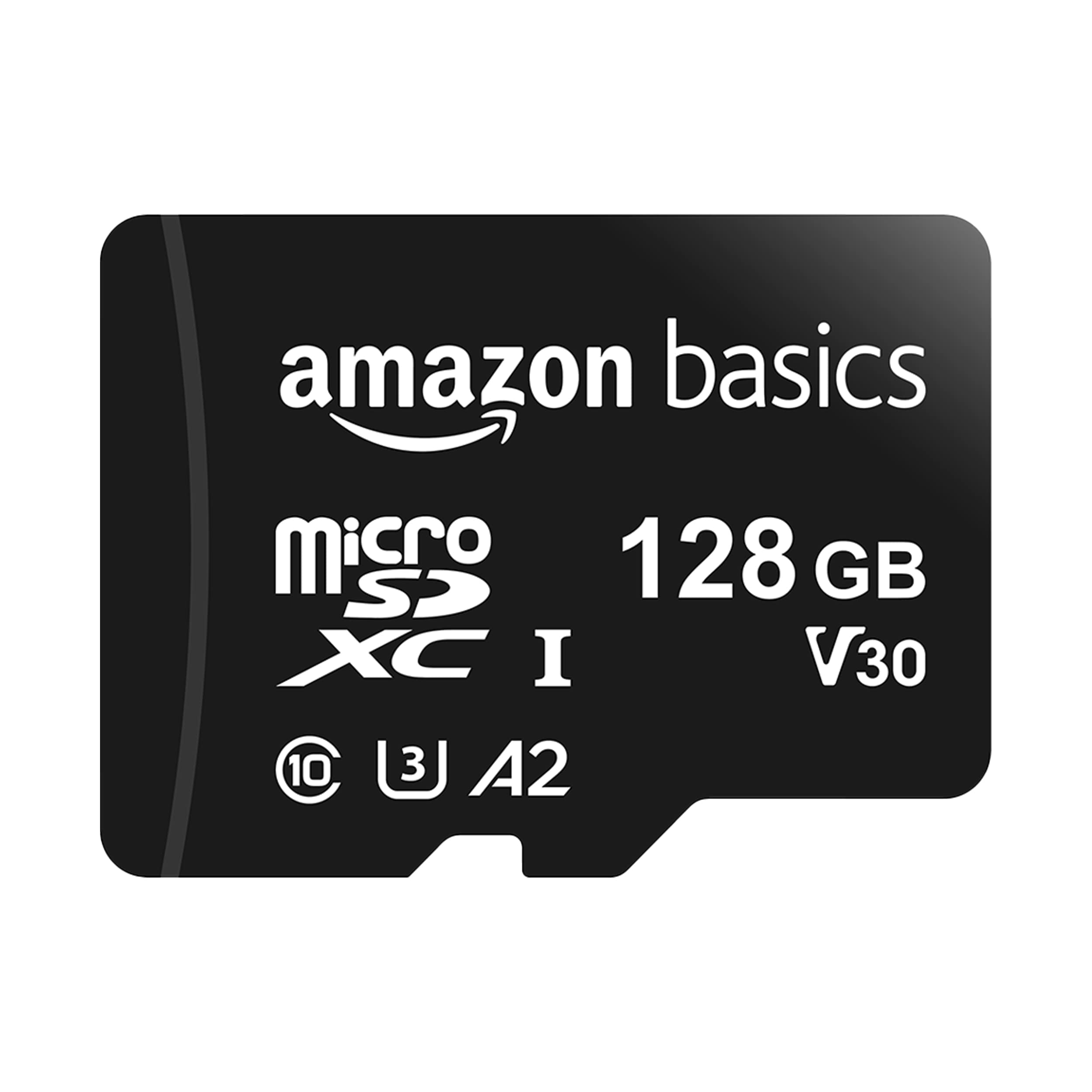
The Amazon Basics 128GB carries the V30/U3/A2 certification that budget GoPro recording needs, with 100 MB/s reads and 4K-ready write speeds at a price well below the higher-priced 256GB top pick. It delivers the core action-cam requirements without the usual flagship markup, making it the sensible default for a first GoPro card.

Setup asks nothing of you: the card formats in seconds and works in GoPro, drones, Switch, and dashcams with no extra software. The included full-size adapter adds compatibility with laptops and card readers, and the 128GB capacity covers a full day of casual 4K clips or a large photo library.

Budget GoPro owners and casual action-cam users are the natural fit here, especially when 4K clips are backed up after each session. It also covers dashcam and security-cam duty, where a single 128GB card can hold days of looped footage. This card is not for 256GB-or-larger workflows or for shoots where footage has no secondary copy; those jobs call for the top pick or a premium card. Keep it as a non-critical backup card for daily use.

The A2 rating is a welcome bonus for Switch owners, keeping app and game data reads quick while the adapter makes the same card work in a laptop. That combination stretches a single budget purchase across camera and handheld duty.

💡 Format the card in your camera before first use to align with the device's file system.

Pros

  • V30/U3/A2 certification brings 4K-ready write speeds to entry-level action cameras.
  • 128GB capacity stores plenty of photos and video without an immediate upgrade.
  • Plug-and-play setup works across GoPro, Switch, drones, and dashcams without extra software.
  • Budget-friendly price per gigabyte makes it a low-cost entry into 4K recording.

Cons

  • The 100/60 MB/s read/write speeds fall short of premium cards when offloading large 4K clips.
  • Occasional corruption after weeks of heavy use makes it a backup card, not a primary archive.
Our verdict

This 128GB V30 card covers daily action-cam duty without the flagship price, as long as you pair it with a backup habit.

Check Latest Price
4

Budget 256GB Alternate

TEAMGROUP GO 256GB

93 /100
Studio Score High Confidence

Key details

Read Speed
100 MB/s
U3/V30 Class
U3/V30
Warranty / Recovery
Sustained Write Speed
50 MB/s
Check Price on Amazon

The TEAMGROUP GO 256GB is the least expensive route to a 256GB V30 card for GoPro, Insta360, and DJI owners who want 4K-ready storage. It works in GoPro, Insta360, Nintendo Switch, and dashcams, and the U3/V30 rating clears the bar for action-cam 4K. The GO undercuts the other budget-friendly V30 card in this set on price, making it the true entry option for GoPro owners.

4K capture works in GoPro and Insta360 cameras, and the card's waterproof, dustproof, x-ray, and cold-resistant ratings cover the abuse an action camera can take. The 256GB size gives casual vloggers room for multiple 4K sessions before they need to offload, which matters more than a benchmark score on a shoot day. Physical tolerance matters when the card lives inside a camera mounted to a bike or helmet.

This card fits budget-first GoPro users and casual vloggers who want 256GB of V30 capacity without the premium of a flagship card and stay ready with a spare for shoots they cannot repeat. Some cards can become unrecognizable or lose data within days to months, so this is a value-at-risk option rather than a primary workhorse. Shooters who need absolute certainty should take the top pick instead.

Pros

  • Lowest entry price to a 256GB V30 card for action-cam 4K recording.
  • Works across GoPro, Insta360, Nintendo Switch, and dashcams without compatibility friction.
  • Physical durability ratings cover water, dust, x-ray, and cold for active shooting.

Cons

  • Offload speeds trail the higher-throughput card in this set, so bulk transfers take longer.
Our verdict

A casual vlogger on a tight budget gets 256GB of V30 4K capacity here without overpaying.

Check Latest Price
5

Best Backup Two-Pack

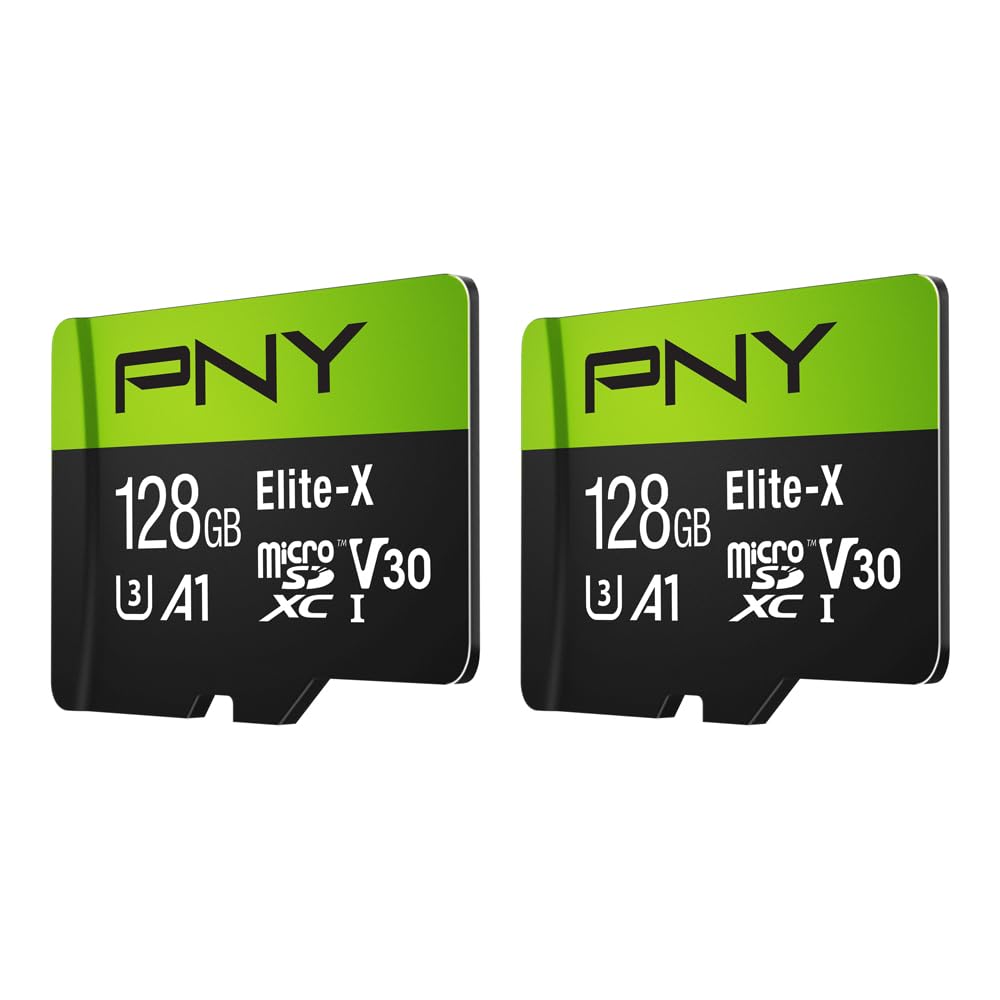
PNY Elite-X 128GB 2-Pack

93 /100
Studio Score High Confidence

Key details

Read Speed
100 MB/s
U3/V30 Class
U3/V30/A1
Warranty / Recovery
Lifetime limited
Sustained Write Speed
30 MB/s min
Check Price on Amazon

Two 128GB U3/V30 cards make this a backup-first set for GoPro owners who want a spare ready before a shoot. The lifetime warranty adds coverage beyond typical multi-pack bundles, and the per-card cost stays below a single flagship card. Both cards meet the V30/U3 floor for 4K and 5.3K recording, so the set is ready for action-cam duty.

GoPro shooters who treat one card as the active card and the other as a dedicated spare will get the most from this set. A1 speed class limits app-loading performance, so these are for camera files rather than phone app storage. Test both cards before a shoot; when both pass, the set gives you a true backup without flagship pricing.

Read transfers reach the advertised 100 MB/s in everyday use, and 4K footage plays back smoothly. Sustained write speed is not published, so the V30 rating is the only official write guarantee; for GoPro 4K/5.3K that floor is enough.

💡 Format both cards in-camera before the first shoot.

Pros

  • Two 128GB U3/V30 cards keep a backup ready for GoPro 4K and 5.3K shoots.
  • Each card holds plenty of 4K footage and photos without immediate offloading.
  • V30 write speed supports 4K recording and smooth playback on a GoPro.

Cons

  • Per-card capacity stops at 128GB, so a single high-capacity workflow needs a different card.
  • Some cards can arrive unusable.
Our verdict

For GoPro shooters who want a spare card without going premium, this two-pack delivers the V30 floor and a lifetime warranty.

Check Latest Price
6

Multi-Camera Households

Lexar E-Series 64GB 3pk

95 /100
Studio Score High Confidence

Key details

Read Speed
100 MB/s
U3/V30 Class
U3/V30/A1
Warranty / Recovery
10-year card, 1-yr adapter
Sustained Write Speed
up to 30 MB/s
Check Price on Amazon

Three 64GB U3/V30 cards with a 10-year warranty give multi-camera households a low per-card option for keeping dedicated storage in every device. The set is a natural fit for dashcams, security cams, and casual GoPro use, where swapping one card between cameras is more hassle than it saves. The 64GB per-card size suits shorter sessions; marathon 5.3K recording belongs on a larger single card. Durability can vary between individual cards, so this sits in the also-consider tier rather than atop the action-cam list. As a house pack for everyday recording, it still delivers strong value.

Pros

  • Each 64GB card stores hours of footage and thousands of photos, which suits typical dashcam and action-cam sessions.
  • A three-pack allocates one card per camera, so a Wyze cam and dashcam can each keep dedicated storage.
  • Works across dashcams, phones, Raspberry Pi, and GoPro-style cameras, so the set can move between projects.

Cons

  • The 10-year warranty covers the cards only; included adapters are covered for one year.
  • Write speed tops out at 30MB/s, so offloading large 4K/5.3K files takes longer than premium cards.
Our verdict

For multi-camera households that want a dedicated card in each dashcam or security cam, this three-pack is the cost-effective fit.

Check Latest Price
7

Warranty-Conscious Buyers

Gigastone 256GB Pro

95 /100
Studio Score High Confidence

Key details

Read Speed
100 MB/s
U3/V30 Class
U3/V30/A2
Warranty / Recovery
5-year + data recovery
Sustained Write Speed
60 MB/s
Check Price on Amazon

Five-year limited warranty with data recovery gives this 256GB V30 card a safety net few competitors include. The U3/V30/A2 class is comfortable for GoPro 4K and 5.3K recording, and the mid-range price makes it a reasonable one-card travel companion. It trails the leading card in read speed (100MB/s vs 190MB/s), which is why it sits below the top pick in this roundup. Some cards may become unreadable or unformattable after a few months, so a backup card matters for critical shoots.

Pros

  • 5-year limited warranty with data recovery protects footage that a lost card would otherwise take with it.
  • 256GB capacity handles long GoPro sessions and vacation clips without constant card swaps.
  • U3/V30/A2 certification is enough for 4K and 5.3K action-cam recording.

Cons

  • Write speed tops out at 60MB/s, leaving less headroom than the 130MB/s leaders for demanding recording.
  • Available only in 256GB, so shooters who need 512GB+ in one card should look elsewhere.
Our verdict

For a 256GB GoPro card with data-recovery support, this is the version to prioritize.

Check Latest Price
8

Casual Backup Use

Silicon Power 128GB

91 /100
Studio Score High Confidence

Key details

Read Speed
100 MB/s
U3/V30 Class
U3, no V30
Warranty / Recovery
5-year limited
Sustained Write Speed
~20 MB/s
Check Price on Amazon

The Silicon Power 128GB is a budget-friendly UHS-I card that covers dashcams, security cameras, the Switch, and light photo storage without trading away functional basics. Read/write performance is modest but adequate for photos, music, and app storage, and the low price makes it an easy spare to keep in a bag. For someone who mainly records security footage or stores music on a Switch, the 128GB size is plenty. This is a backup/security-cam card rather than a primary action-cam card, so it belongs outside the GoPro 5.3K selection boundary.

Pros

  • Budget-friendly 128GB capacity that works across dashcams, security cams, and handheld gaming.
  • Build quality is better than the entry-level price suggests for basic storage tasks.
  • Casual read/write performance is enough for photos, music, and app storage.

Cons

  • For a primary GoPro 5.3K recording workflow, the missing V30 certification leaves this card out of the running.
  • For hours-long dashcam or security-cam use, some cards can turn unreadable or unformattable after a few months.
Our verdict

Use this as a low-cost spare for dashcams, security cams, or everyday device storage.

Check Latest Price

How to Choose

U3/V30 Speed Class

Speed class labels are the contract between the card and the camera. U3 guarantees a minimum sustained write speed of 30 MB/s; V30 guarantees the same threshold specifically for video. A U3-only card can miss the video-specific testing that GoPro-style writes require.

The GoPro writes continuously; if the card cannot keep pace, recording stops or the file corrupts. V30 is the safe floor for 4K and 5.3K; cards below it belong in dashcams or backup duty.

Sustained Write Speed

Advertised write speed is a peak number, not a promise for continuous recording. A 130 MB/s card holds its speed longer than one that peaks at 60 MB/s and then slows under load. That margin prevents dropped frames in long clips.

For a primary GoPro card, aim for a sustained write speed of 60 MB/s or higher. Cards at the 30 MB/s V30 floor can work, but they leave little headroom for bitrate spikes.

Capacity vs Card Count

Capacity is a workflow trade-off, not just a storage number. A 512GB card holds a full day of 5.3K without swaps, but if it stops being recognized you lose a large chunk of footage. Two 128GB cards split the risk and let you rotate cards between shoots.

Smaller cards force more frequent offloads, which keeps footage safer. Most shooters settle at 256GB as the balance between runtime, replacement cost, and footage at risk.

Warranty and Data Recovery

Warranty coverage matters because no microSD card is immune to controller issues or data loss. A five-year warranty with free data recovery can turn a card that stops working into a path back to your footage.

Flagship cards sometimes include recovery software; budget cards usually cover replacement only. Factor recovery support into the price for paid work.

Read Speed for Offloads

Read speed does not affect recording, but it shapes how fast footage moves from the card to your computer. The difference between 100 MB/s and 200 MB/s can cut a large offload nearly in half.

The bottleneck may be your card reader. If you transfer through the GoPro's USB port, the camera's port speed can limit the card's read speed, so a fast reader matters.

Frequently Asked Questions