9 Best Landscape Lenses of 2026: Match Your Camera Mount

The best landscape lenses for DSLR and mirrorless cameras, matched to your mount, budget, and hiking style.

Landscape photography is a lens decision before it is a camera decision. Many shooters assume a big telephoto or fast prime is the answer, but the focal lengths that actually capture a scene are wide zooms and versatile standards that cover the ground in front of you.

The real trade-off is between focal-range fit and lens weight. A 70-200mm f/2.8 delivers excellent compression, but it is heavy and will not capture a sweeping vista. An ultra-wide zoom with a variable aperture is lighter, less expensive, and far more practical for a day on the trail.

This guide is built around that fit: matching a lens to your camera mount, your typical shooting distance, and how far you are willing to carry it.

1

Best Overall Landscape Value

Canon EF-S 10-18mm f/4.5-5.6

94 /100
Studio Score High Confidence

Key details

Mount
Canon EF-S
Focal Length
10-18mm
Max Aperture
f/4.5-5.6
Image Stabilization
Yes
Check Price on Amazon

Canon's EF-S 10-18mm f/4.5-5.6 IS STM gives Canon APS-C shooters a genuine ultra-wide field of view at a budget-friendly price, with image stabilization included rather than left as an afterthought. The 10-18mm range translates to roughly 16-29mm on a crop body, enough to frame mountain vistas, city streets, and tight interiors without stepping back into a wall. The zoom range is deliberately short, so this lens does not attempt all-purpose walkaround duty; it commits to wide scenes and lets the rest of your bag handle normal and telephoto framing. For a landscape-first photographer, that narrow focus is the reason to pick it over a standard zoom with a wider range. It is not a replacement for a normal zoom; it fills the wide end of a landscape kit and pairs naturally with a telephoto or standard zoom.

Sharpness is strong from the center through the mid-frame, and the compact build keeps it comfortable on a long hike or a camera strap. At 10mm, edge detail and vignetting are visible until you stop down to f/8, a normal landscape aperture that also extends depth of field. Interior photographers working wide open will notice those corners more than tripod-based outdoor shooters, who are at f/8 anyway. Image stabilization helps with handheld city work in daylight, where it offsets the modest maximum aperture without turning the lens into a night shooter. The maximum aperture is moderate, but stabilization covers enough handheld daylight use to keep the lens practical when a tripod stays at home.

The right buyer is a Canon EF-S APS-C landscape photographer who wants wide coverage without moving into premium-priced glass. Real-estate and interior photographers get the same 10-18mm field of view, and budget travelers gain from a light barrel that does not weigh down a walking kit. Full-frame Canon bodies cannot use the EF-S mount, so this is not a universal Canon lens. The f/4.5-5.6 maximum aperture limits handheld low-light work; a tripod or daytime shooting removes that constraint, which is why it suits landscape-focused photographers more than event shooters. If you are on a Canon RF-S mirrorless body, the native ultra-wide in this set is the slimmer alternative, but it does not change what this lens accomplishes for EF-S DSLR owners.

Within this set, the EF-S 10-18mm is the value-minded route for Canon DSLR owners who have settled into the EF-S system. The mirrorless-oriented wide zoom is lighter, but the EF-S version undercuts it on price while following the same practical f/8 landscape workflow. Buyers who need a lens for interior work at medium apertures, travel scenes in daylight, or wilderness views from a tripod get a direct match for those uses. It does not try to be the fastest lens in the group, and it does not need to be.

Pros

  • Ultra-wide 10-18mm coverage frames broad landscape and interior scenes without changing lenses.
  • Budget-friendly price puts real ultra-wide capability within reach for Canon EF-S shooters.
  • Image quality holds up across a wide range of outdoor and interior shots.
  • Light build is easy to carry on long hikes and travel days.

Cons

  • At 10mm, corner detail and vignetting are visible until the lens is stopped down to f/8.
  • The f/4.5-5.6 aperture pushes ISO in handheld low-light scenes; support removes the issue.
Our verdict

For a Canon EF-S APS-C shooter who wants a true wide angle for landscape and interior work, this is the value pick among the wide zooms in this set.

Check Latest Price
2

Best Canon Mirrorless APS-C Landscape

Canon RF-S 10-18mm f/4.5-6.3

87 /100
Studio Score Strong Evidence

Key details

Mount
Canon RF-S
Focal Length
10-18mm
Max Aperture
f/4.5-6.3
Image Stabilization
Yes
Check Price on Amazon

The RF-S 10-18mm is the native ultra-wide zoom for Canon's APS-C mirrorless lineup, pairing a 10-18mm range with built-in stabilization in a lens slim enough for a walk-around pouch. R50, R10, and R7 owners get the same perspective as Canon's older EF-S ultra-wide without a mount adapter, and on APS-C the 10mm end is far wider than the usual 15-45mm kit zoom. That makes it a direct travel-friendly upgrade for a two-lens outdoor kit.

Landscape files stay sharp across the frame at typical f/8 settings, and the lens is light enough to stay mounted all day. At 10mm, there is generous room for foreground-and-sky composition without stepping back. The built-in stabilizer steadies handheld video and static shots, which matters more on long hikes than on a tripod.

This is for R50/R10/R7 landscape and travel shooters who want a compact wide zoom for daytime scenery. The f/6.3 long end is acceptable for daylight and tripod work but not for low-light action, and full-frame RF bodies are outside its native coverage. Autofocus can stall after first use in isolated cases, so a quick AF check on delivery is a practical habit.

Pros

  • Compact, light barrel that fits a hiking pouch or small camera cube.
  • True 10mm ultra-wide view on RF-S bodies at a budget-friendly price.
  • Detail holds up well across the frame for landscape stills.

Cons

  • Autofocus can stall after first use in isolated cases, so testing on arrival is worthwhile.
  • Maximum aperture narrows to f/6.3 at 18mm, so hand-held dusk shots need higher ISO or a tripod.
Our verdict

R-series APS-C shooters who hike with a lightweight kit get a native 10-18mm landscape zoom with stabilization; DSLR owners should stick with the top-pick EF-S version.

Check Latest Price
3

Best Nikon DSLR Wide Zoom

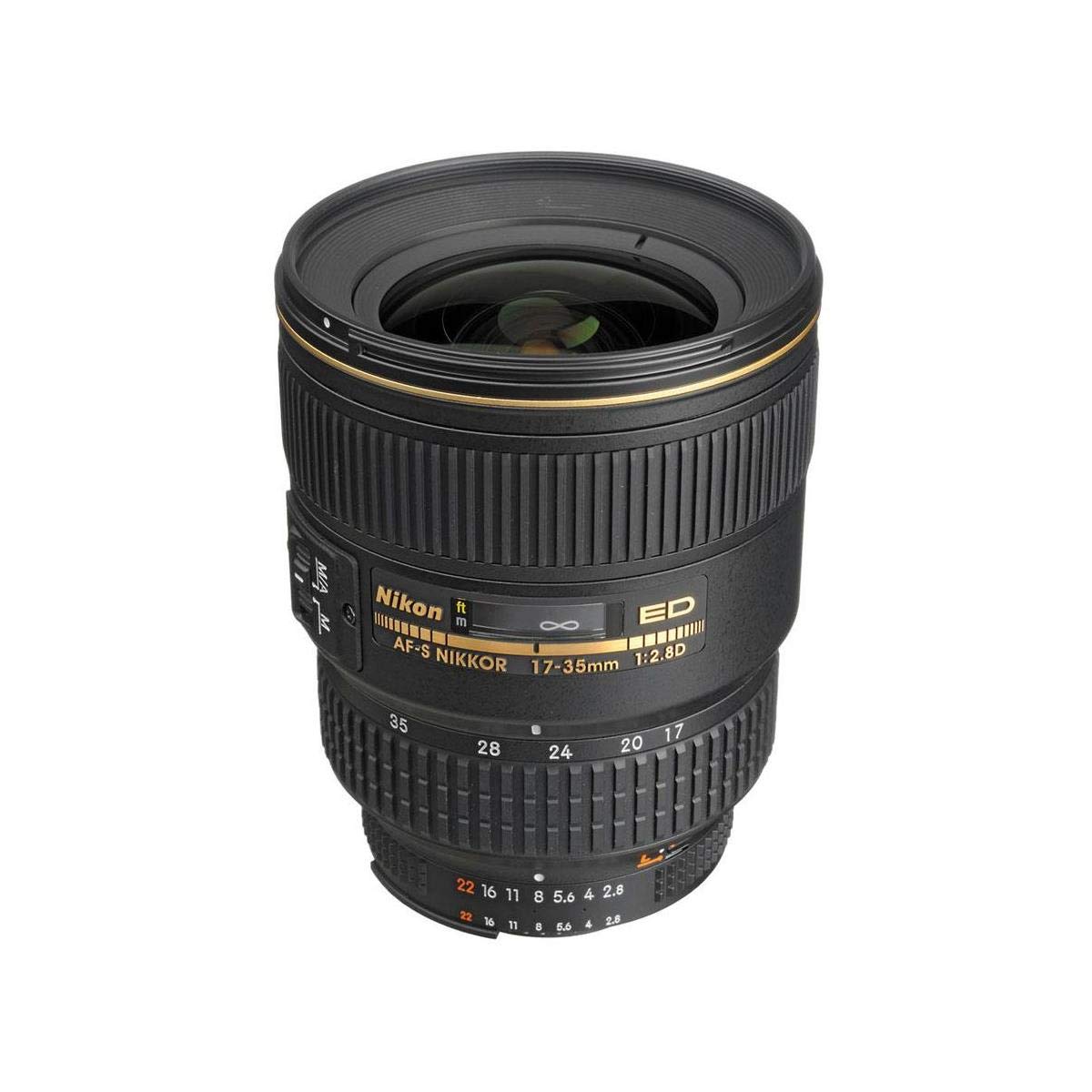
Nikon 17-35mm f/2.8D ED

84 /100
Studio Score Strong Evidence

Key details

Mount
Nikon F
Focal Length
17-35mm
Max Aperture
f/2.8
Image Stabilization
No
Check Price on Amazon

The Nikon 17-35mm f/2.8D is a fast constant-aperture wide zoom for Nikon F FX bodies, offering 17-35mm coverage in a barrel sized for field work. It frames the wide landscape and architectural scenes that a long telephoto in this set cannot.

The constant f/2.8 aperture keeps light gathering even across the zoom range, which helps when composing in open shade or before sunset. Image quality is strong at the wide-to-mid settings where landscape work lives, and autofocus responds quickly enough for event-style shooting.

This is for Nikon F DSLR shooters who want a fast wide zoom for outdoor scenery and architecture and are comfortable managing a pre-VR design: a tripod or braced stance is the workaround for long exposures. The older focus motor is worth checking on a used copy before purchase, and Nikon mirrorless Z users need an adapter to mount it.

Pros

  • Sharp, crisp rendering across the 17-35mm range for landscape detail.
  • Fast autofocus keeps up with event and outdoor shooting.
  • Sturdy build quality handles regular field use.

Cons

  • Hand-held low-light shots at 17mm need a higher shutter speed or a tripod because there is no VR.
  • A used copy can develop an audible focus-motor squeal, so testing AF before purchase is worthwhile.
Our verdict

For Nikon F shooters who want f/2.8 light gathering across a wide zoom range, this is the lens to keep mounted for landscape and architecture work.

Check Latest Price
4

Best Canon EF All-Rounder

Sigma 24-105mm f/4 Art OS

90 /100
Studio Score High Confidence

Key details

Mount
Canon EF
Focal Length
24-105mm
Max Aperture
f/4
Image Stabilization
Yes
Check Price on Amazon

The Sigma 24-105mm f/4 Art OS delivers Art-series sharpness and weather sealing in a constant-f/4 zoom range that handles landscape, travel, and people on Canon EF bodies. It covers 24mm for wide scenic shots through 105mm for compressed mountain layers, reaching farther than the ultra-wide top pick in this set while giving up that lens's extreme wide end. The fixed aperture keeps exposure predictable when you zoom between foreground and background elements.

This lens suits a Canon EF photographer who wants one sharp standard zoom for tripod landscapes and outdoor portraits. It also handles close portrait work without forcing a lens swap. The all-metal barrel is heavy for a standard zoom, so travel use comes down to how much weight you are willing to carry. Autofocus can hunt on some bodies or adapters, and a firmware or compatibility check is wise before relying on it in the field.

The optical stabilizer steadies hand-held shots at moderate shutter speeds, and the weather seals add confidence in coastal or dusty conditions. A tripod remains the better base for critical edge-to-edge sharpness, but the stabilizer helps when light shifts and there is no time to set one up. Bracketed sequences stay simpler with the constant f/4 aperture.

💡 Keep firmware current and test autofocus on your specific body or adapter before a critical shoot.

Pros

  • Art-series sharpness keeps fine detail crisp across the frame.
  • Weather-sealed barrel suits coastal and dusty outdoor conditions.
  • 24-105mm range covers landscape scenes, compressed details, and portraits.

Cons

  • Autofocus can hesitate in low contrast or on adapters without current firmware.
  • The all-metal barrel adds noticeable heft for hikers who count every gram.
Our verdict

This is the Canon EF standard zoom for landscape photographers who want Art-series sharpness and weather sealing without packing a bag of primes.

Check Latest Price
5

Best Travel Superzoom for Canon APS-C

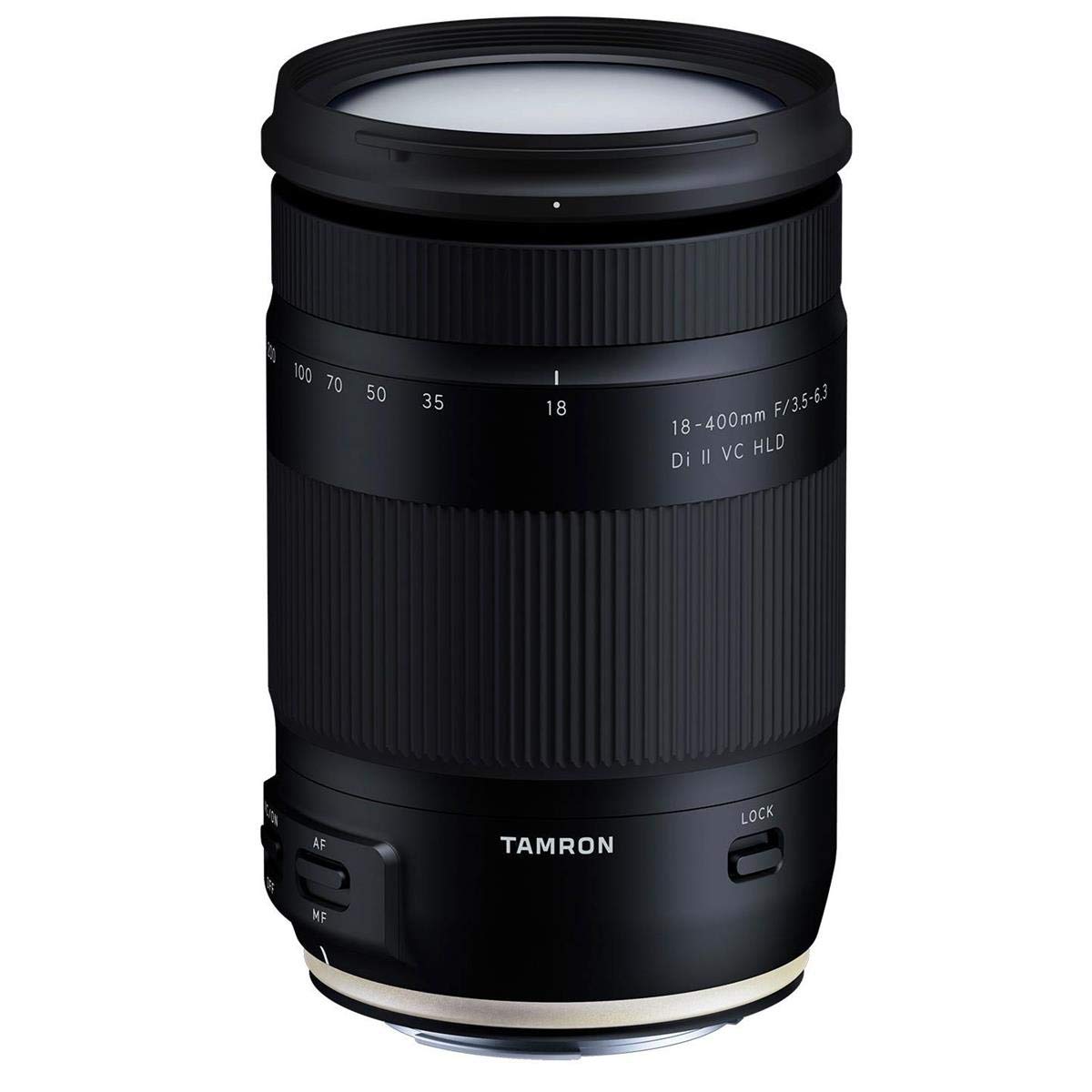
Tamron 18-400mm f/3.5-6.3 VC

88 /100
Studio Score Strong Evidence

Key details

Mount
Canon EF-S
Focal Length
18-400mm
Max Aperture
f/3.5-6.3
Image Stabilization
Yes
Check Price on Amazon

The 18-400mm focal span pairs a broad 18mm view with serious 400mm reach, so a landscape hike can go from a wide valley foreground to a compressed distant peak without changing lenses. No fixed ultra-wide in this comparison gives you that range, and the barrel stays manageable for the coverage it packs.

VC image stabilization steadies the long end, and the f/3.5-6.3 aperture range is enough for bright daylight shooting. On a mixed outdoor trip, that means fewer interruptions to compose the scene and more time using the exact focal length the landscape calls for.

The mid-range price makes this a practical alternative to packing a separate wide zoom and telephoto, and it gives Canon APS-C shooters an easy way to try long-reach landscape photography before committing to a pricier telephoto.

This is for Canon APS-C owners who want one lens on the camera for an entire outing and do not need professional landscape sharpness or fast birds-in-flight capability. In exchange, one barrel covers more ground than any wide-only option in this set, which is the point for landscape-minded travelers.

💡 Bracing against a solid support or raising shutter speed helps when you want the cleanest distant framing.

Pros

  • The 18-400mm range covers wide landscapes and distant peaks without carrying a second lens.
  • Travel and vacation shooting in bright daylight gets nearly any outdoor scene the lens can frame.
  • Cost-effective way to add landscape, portrait, and distant-subject reach to a Canon APS-C kit.

Cons

  • Autofocus can hunt with fast-moving subjects and in some lighting conditions, limiting the action-photo role.
  • At 400mm, distant detail softens enough that large prints and heavy crops expose the compromise.
Our verdict

For one-lens outdoor trips, this zoom makes sense; for landscape-only print work, a dedicated wide or telephoto is the better fit.

Check Latest Price
6

Long-Reach Landscape

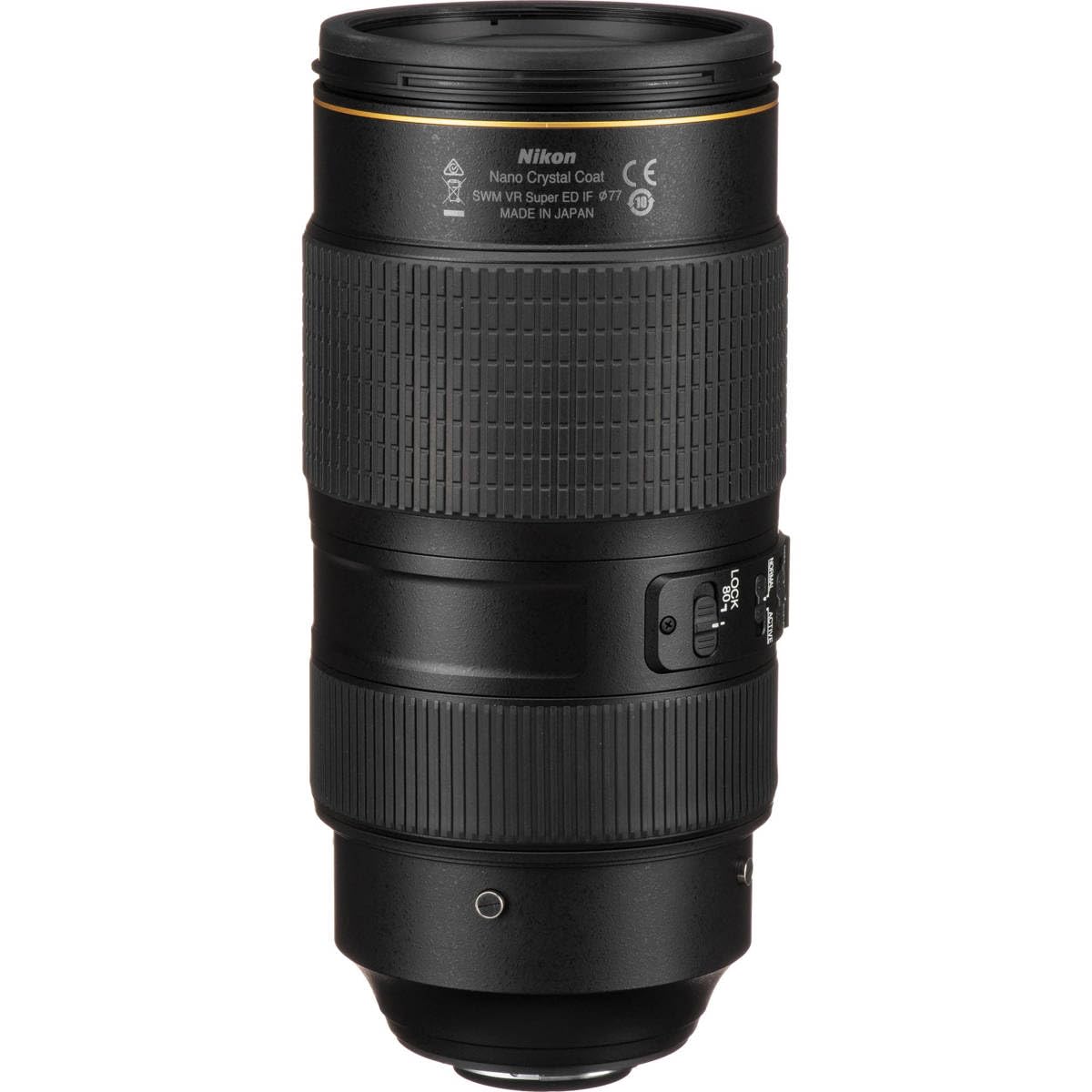
Nikon 80-400mm f/4.5-5.6G VR

81 /100
Studio Score Strong Evidence

Key details

Mount
Nikon F
Focal Length
80-400mm
Max Aperture
f/4.5-5.6
Image Stabilization
Yes
Check Price on Amazon

The 80-400mm range frames distant ridgelines with compressed depth, and its AF and VR handle hand-held telephoto work well. Weight shows on long hikes, and 400mm sharpness can vary by copy — those two traits, not the 80-300mm optics, keep it below top outdoor landscape picks. For Nikon FX shooters who want to isolate peaks and compress canyon walls, this telephoto delivers reach that a wide zoom cannot, but it is a specialized second lens rather than a first landscape lens.

Pros

  • Tightly frames distant landforms with strong image quality through most of the zoom range.
  • Autofocus keeps pace with moving subjects, and VR steadies hand-held telephoto shots.
  • Covers close and distant outdoor subjects in a single barrel, reducing lens swaps.

Cons

  • Premium price strains a landscape-only budget.
  • Requires a separate wide-angle lens to cover sweeping foregrounds.
Our verdict

Nikon FX shooters who focus on distant peaks and canyon walls get a compression tool that makes those long views feel deliberate.

Check Latest Price
7

Portrait Compression

Tamron SP 70-200mm f/2.8 VC

85 /100
Studio Score Strong Evidence

Key details

Mount
Canon EF
Focal Length
70-200mm
Max Aperture
f/2.8
Image Stabilization
Yes
Check Price on Amazon

The Tamron SP 70-200mm f/2.8 VC is the compression lens of this group: constant f/2.8, stabilization, and sharp telephoto rendering for Canon EF shooters who want to isolate a distant ridgeline without paying OEM prices. The limitation is a focal-range mismatch: its 70-200mm reach serves portrait and event work better than sweeping wide landscapes, so it will not replace an ultra-wide on an outdoor shoot. The heavy barrel and occasional autofocus calibration quirks are part of the trade-off; they will be felt by hikers who want a single lens for every terrain type.

Pros

  • Sharp optics hold detail at telephoto distances, making compressed landscape shots clear.
  • Bokeh renders backgrounds smoothly, so layered ridges and foreground subjects separate well.
  • Canon shooters get f/2.8 and image stabilization below typical OEM telephoto-zoom pricing.

Cons

  • The barrel is heavy for a walk-around lens, although normal for f/2.8 70-200mm zooms.
  • Focus consistency can vary on some Canon bodies, and backfocus may need microadjustment for crisp details.
Our verdict

For Canon shooters whose landscape style is compressed ridgelines and subject isolation, the Tamron brings f/2.8 and VC to a telephoto perspective. If the goal is one lens for wide, near, and far on a hike, the superzoom in this set covers that use case better.

Check Latest Price
8

Budget Full-Frame

Sony FE 50mm f/1.8

93 /100
Studio Score High Confidence

Key details

Mount
Sony E
Focal Length
50mm
Max Aperture
f/1.8
Image Stabilization
No
Check Price on Amazon

The Sony FE 50mm f/1.8 is a sharp, budget-friendly normal prime for full-frame Sony bodies, and its f/1.8 aperture makes it a capable low-light lens for street and portrait work. The wide aperture also helps keep handheld shots usable when daylight fades.

It is not a wide landscape lens, so buyers seeking broad scenery should pick an ultra-wide instead. What the 50mm offers landscape shooters is compressed mid-distance detail and layered compositions where a tighter view helps. Autofocus and motor noise keep it out of quiet video work, but for stills these are handling quirks rather than deal-breakers. For a Sony full-frame shooter on a budget, it remains a sensible low-cost prime.

Pros

  • Budget-friendly full-frame prime with solid sharpness for stills.
  • Cost-effective entry into Sony E mount primes without the premium price.
  • Compact build keeps the kit light when hiking to a viewpoint.

Cons

  • Focus motor noise is audible and may intrude in quiet settings.
  • Autofocus speed trails higher-end Sony primes on moving subjects.
Our verdict

For a Sony full-frame shooter whose landscape style leans on 50mm framing and compressed distance, this budget prime is a cost-effective fit.

Check Latest Price
9

Budget Telephoto

Sony E 55-210mm f/4.5-6.3 OSS

91 /100
Studio Score High Confidence

Key details

Mount
Sony E
Focal Length
55-210mm
Max Aperture
f/4.5-6.3
Image Stabilization
Yes
Check Price on Amazon

The Sony E 55-210mm f/4.5-6.3 OSS is a compact budget telephoto zoom that expands Sony APS-C reach for outdoor scenes. It is light enough for travel, includes optical stabilization, and gives landscape shooters a way to isolate distant ridges or compress layered scenery. The 55mm short end rules out broad landscape views, so treat it as a complement to a wider lens rather than a primary landscape optic. Autofocus speed is modest, which matters less for stationary scenery but may be felt with moving wildlife. The long end at 210mm can soften, yet the middle range remains sharp and the lens is easy to pack for day hikes. That keeps it below the dedicated wide-angle landscape picks in this set.

Pros

  • Sharp images at the middle of the zoom range for a budget telephoto.
  • Good value for Sony APS-C shooters who need extra reach without a heavy investment.
  • Lightweight enough to carry on nature walks and travel shoots.

Cons

  • Fast-moving wildlife can outrun the focus system on older A6000-series bodies.
  • At 210mm, distant landscape detail can be the least crisp part of the range.
Our verdict

For Sony A6000-series owners who already carry a wide zoom, this compact telephoto fits as a second lens for far-off landscape details and wildlife on the same walk.

Check Latest Price

How to Choose

Focal Length Range

Focal length controls how much of the scene fits in the frame. A 10-18mm ultra-wide zoom captures the full sweep of a valley or foreground rocks with a dramatic sense of depth, while a 24-70mm standard zoom gives a more natural perspective.

Buyers often overestimate how much telephoto reach they need for landscapes. A 70-200mm is useful for compressing distant ridges, but it cannot capture the wide scene you see with your eyes. Decide whether your primary shots are sweeping vistas, intimate details, or a mix before choosing a focal range.

Maximum Aperture

A wide aperture like f/2.8 lets in more light, but landscape work usually relies on small apertures like f/8 or f/11 to keep the entire scene sharp. The real trade-off is weight. Constant f/2.8 zooms require large glass elements, making them significantly heavier than f/4 or f/4.5-5.6 alternatives.

For a hiker, the slower f/4.5-5.6 lens can be the smarter choice when paired with a tripod. A fast aperture matters more if you plan to shoot handheld at dusk or want to isolate foreground details. Know which scenario dominates your shooting before paying a weight penalty.

Image Stabilization

Image stabilization freezes small camera shake during hand-held shots. It helps at telephoto focal lengths and in low light, but it does not freeze a moving subject or replace a tripod for long exposures.

For landscape, stabilization is a convenience rather than a necessity. A 10-18mm lens with IS lets you shoot a canyon interior at 1/8 second without a tripod, but a stable tripod will still deliver better corners at f/8. If you always pack a tripod, IS can be a secondary priority.

Lens Mount Compatibility

The mount determines whether a lens physically attaches to your camera and covers the sensor. Canon EF lenses fit Canon DSLRs and adapt well to mirrorless, while RF-S lenses only fit Canon APS-C mirrorless bodies. Nikon F lenses need a Nikon DSLR or a F-to-Z adapter.

Using an APS-C lens on a full-frame body often produces heavy vignetting because the image circle is too small. Check the sensor format and mount carefully before buying. An ultra-wide that works perfectly on a crop-sensor Canon may be useless on a full-frame body without a dedicated crop mode.

Zoom vs Prime Design

Zoom lenses offer compositional flexibility, while prime lenses often have a small weight advantage and a wider maximum aperture at a fixed focal length. A 50mm prime is sharp and light, but it cannot capture a wide valley without stepping far back.

For landscape, the zoom is usually the more practical tool because you cannot control where the trail ends or where the viewpoint sits. Primes make sense when you know the exact focal length you use repeatedly, but most landscape shooters benefit from a zoom's flexibility in changing terrain.

Frequently Asked Questions